Why Every Traveler Should Use an eSIM Abroad in 2025
This article contains affiliate links. If you purchase through these links, I may earn a small commission at no extra cost to you. Thank you for supporting the site!
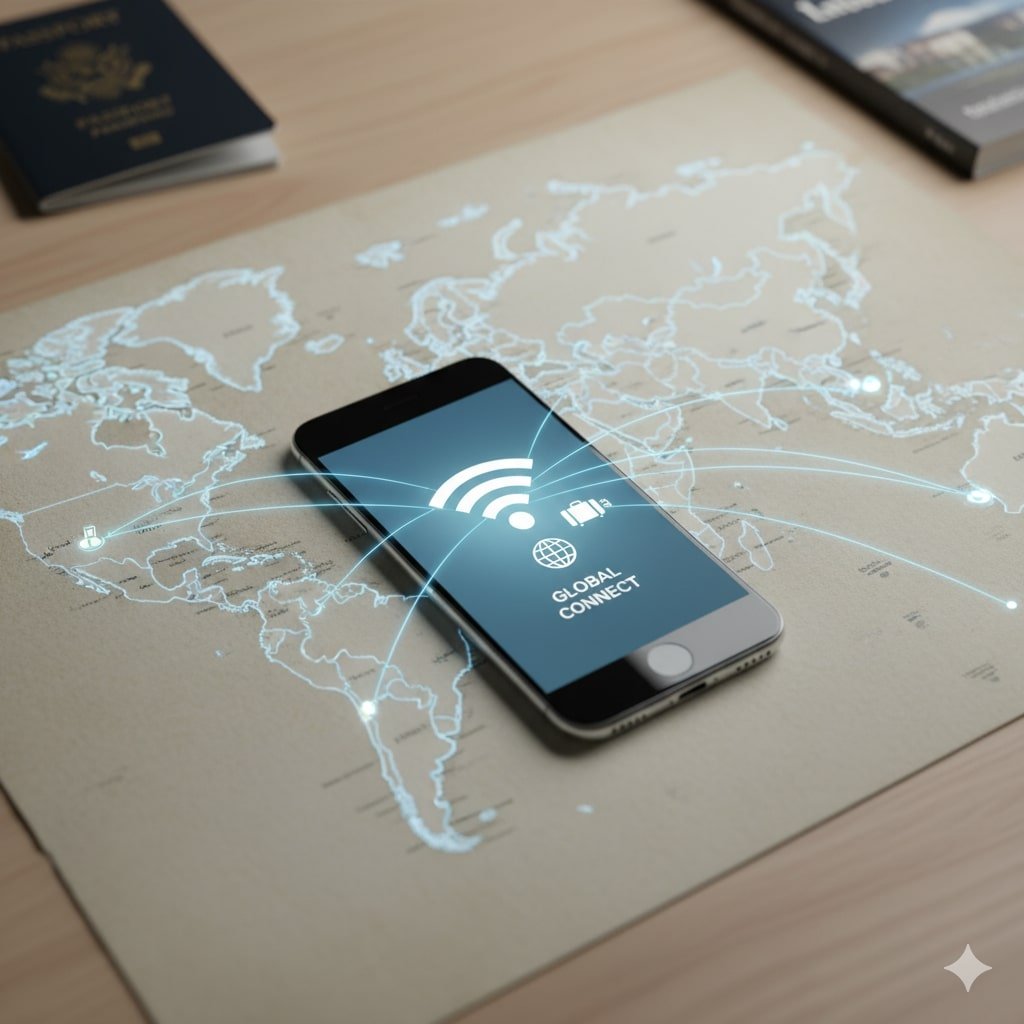
Using an eSIM for international travel is one of the easiest ways to stay connected and avoid roaming fees in 2025.
Traveling today is easier, cheaper, and more connected than ever — yet the moment you land at your destination, you’re suddenly hit with one of the most frustrating parts of international travel: how do you get online without getting ripped off? You switch off airplane mode and your phone immediately warns you about roaming charges. Your home carrier might charge €10–€15 per day. Airport SIM shops are crowded and overpriced. Free WiFi is slow, unstable, and not exactly secure. And all of this is happening while you’re tired, standing in a foreign arrivals hall, trying to navigate to your hotel.This is the exact moment where an eSIM changes everything.
Instead of searching for a kiosk or opening your SIM tray in a crowded airport, you can install a digital SIM card before you even leave home. With one scan, you’re connected instantly when the plane touches down. Brands like Ubigi, Yesim, Airalo and SimOptions make this process effortless. These are just examples of widely trusted eSIM providers that can eliminate the exhaustion, cost, and confusion travelers face the moment they land.
If you’ve never used an eSIM before — or you’re curious why so many travelers are switching — this guide will walk you through everything you need to know in a natural, clear, human way. No jargon. No hype. Just the practical advantages that matter when you’re far from home.
What Is an eSIM and Why It Matters for Travelers
An eSIM (embedded SIM) is a digital version of the physical SIM card that has been used in phones for decades. Instead of inserting anything into your device, you simply download your mobile plan directly onto your phone.
Most modern phones already support it — iPhones, Samsung Galaxy models, Google Pixel devices, and nearly every premium smartphone from the past few years.
For travelers, the biggest benefit is instant activation. You no longer have to hunt for a SIM card in an unfamiliar airport, switch cards in a crowded terminal, or worry about losing your original SIM. You install an eSIM at home, scan a QR code, select the plan, and your internet connection activates automatically the moment your phone connects to the local network. More travelers today are choosing an eSIM for international travel because it activates instantly and eliminates the need for roaming.
One of the biggest reasons travelers switch to eSIMs is to avoid unexpected roaming charges, which I break down in detail in my guide on how to avoid roaming fees when traveling.
It feels as seamless as using WiFi — but with the freedom and security of mobile data.
Why an eSIM for International Travel Makes Your Trip Easier
What makes eSIMs so compelling isn’t just convenience. It’s how many pain points they solve at once.
You never have to open your SIM tray again. No fiddling with tiny pins. No risk of dropping your SIM on the airplane seat or airport floor.
Activation is instant — even before you leave home. You can purchase and set up your eSIM in your living room. When you land, it just… works.
eSIM plans are generally much cheaper than roaming. Roaming fees are famous for draining wallets. In many cases, travel eSIM plans are 70–90% cheaper than your home-carrier’s roaming package, cheaper than most airport SIM counters, and often cheaper than renting a pocket WiFi router.
They are also perfect for multi-country trips. If you’re traveling across several countries — in Europe, Southeast Asia, or Latin America — a single eSIM can cover the entire region, so you don’t have to keep swapping SIM cards at every border.
On top of that, using an eSIM is more secure than relying on public WiFi. Free airport or café WiFi is convenient, but it’s not ideal for banking, bookings, or anything sensitive. With a travel eSIM, you use encrypted mobile data instead of insecure networks.
eSIMs are also ideal for digital nomads, backpackers, and business travelers. Whether you’re uploading Instagram photos, checking in with clients, or jumping onto a quick video call, having stable mobile data is essential.
Another important advantage: you can keep your home number active. Your eSIM handles data, while your physical SIM stays active for banking verification codes, WhatsApp, emergency calls, and receiving messages from home. This dual-SIM flexibility is a huge plus for frequent travelers.
How eSIMs Compare to Roaming, Physical SIMs & Pocket WiFi
Every traveler needs data — but not all options are equal. Here’s how eSIMs stack up in the real world.
Roaming is the easiest to “set and forget,” but also the most expensive. Most home carriers charge a daily roaming fee, often around €10–€15 per day. On a 12-day trip, that’s €120–€180 — for a single country — and it’s very easy to forget you even turned it on. If you’ve never used an eSIM for international travel before, you’ll be surprised by how simple and cost-effective it is.
Physical local SIM cards can be cheap, but they require a bit of effort: finding a shop, showing your passport, getting the right size SIM, swapping cards, and keeping your original SIM safe somewhere in your wallet or bag. It works, but it’s not always convenient, especially after a long flight or with kids in tow.
Pocket WiFi routers are often overpriced and inconvenient. You have to charge them, carry them around, and worry about losing them. Speeds can drop when multiple people connect, and deposits or rental fees add up quickly. They can make sense for certain groups, but they’re not ideal for everyone.
eSIMs are the clear winner for most people. There is no hardware to pick up, no waiting in line, no paperwork, and no need to visit a store. You avoid roaming surprises, you can often cover multiple countries with a single plan, and setup is as simple as scanning a QR code.
If you want a side-by-side comparison of coverage, pricing, and real-world performance, this guide to the best eSIMs for international travel breaks down the most reliable options available today.
How to Install an eSIM Step-by-Step
Installing an eSIM is much simpler than most people think. The process usually takes only a couple of minutes from start to finish.
First, you choose an eSIM provider such as Ubigi, Yesim, Airalo or SimOptions. Then you purchase the travel data plan that matches your destination or region.
After payment, the provider sends you a QR code by email or displays it on the confirmation page. On your phone, you go to Settings → Mobile / Cellular → Add eSIM (wording may vary slightly by device), then you scan the QR code. Your phone will guide you through installing the plan.
Once the eSIM is installed, you can usually choose whether to activate it right away or wait until you arrive. When you land at your destination, you simply turn on the eSIM line, make sure data is enabled for that line, and turn off roaming on your physical SIM to avoid extra charges.
That’s it. You now have a fully functional travel data plan, ready to navigate from the airport to your accommodation without hunting for WiFi or local SIM shops.
Best eSIM Options for International Travel (Comparison Table)
Below is a clear comparison of some of the most trusted international eSIM providers. These are widely used by travelers around the world and cover different travel styles, destinations, and budgets.
| Provider | Countries | Best For | Activation | Plans |
|---|---|---|---|---|
| Ubigi | 190+ | Global travel & premium networks | QR instant setup | View plans |
| Yesim | 120+ | Prepaid simplicity with app | One-tap install | View plans |
| Airalo | 200+ | Multi-country packs | QR or app install | View plans |
| SimOptions | 130+ | Network SIMs via eSIM | Instant online setup | View plans |
Swipe left or right to view the table →
Which eSIM Should You Choose?
Every traveler is different — but here’s a helpful way to choose your plan quickly.
If you want premium global reliability, Ubigi is an excellent starting point. Ubigi is extremely strong in popular destinations such as the U.S., much of Europe, Japan, and the Middle East, and their setup is seamless.
If you want a beginner-friendly app with clear, straightforward plans, Yesim is a great choice. It’s perfect for short trips or first-time eSIM users who just want something that works without overthinking it.
If you’re traveling across multiple countries or regions, Airalo is very hard to beat. Their regional plans — for example, Europe-wide or Asia-wide data packs — make it easy to cross borders without changing anything.
And if you prefer traditional SIM brands offered as eSIM, SimOptions is ideal. You get the familiarity of well-known mobile operators, but with the convenience of eSIM.
When an eSIM Is Especially Useful
eSIMs shine in many different travel scenarios.
On multi-country trips, such as backpacking through Europe, Southeast Asia, or Latin America, a single eSIM plan can cover multiple countries. You don’t have to worry about buying new SIM cards every time you cross a border.
For solo travelers, having an eSIM means you don’t have to rely on unsecured WiFi when you’re navigating alone at night, booking transport, or contacting your accommodation. You have a stable connection in your pocket at all times.
For business trips, fast, reliable data is essential. With an eSIM, you can connect quickly to check emails, sync files, hop on calls, or join virtual meetings without hunting for a decent connection.
Families also benefit: parents can install eSIMs on teenagers’ phones to stay connected on sightseeing days, in theme parks, or during day trips, without worrying about surprise roaming bills when they return home.
eSIMs are also perfect for last-minute travel. You can buy an eSIM at home, in a cab to the airport, or even after boarding your flight. As long as you have a connection to download the profile before takeoff (or access to on-board WiFi), you’re good to go.
In short, eSIMs don’t just make travel more convenient — they reduce stress, keep you safer, and make the entire experience smoother from the moment you land until the moment you fly home.
If you’re planning your next adventure, you can explore more destinations and travel stories in my Travel Journal.
FAQs
Can I use an eSIM and my regular SIM at the same time?
Yes — your physical SIM can stay active for calls and texts while your eSIM provides data when you’re traveling. This setup is especially useful for receiving banking verification codes or important messages from home.
Does an eSIM work in every phone?
Most modern phones support eSIM, including many recent iPhones, Samsung Galaxy models, and Google Pixel devices. If you’re unsure, check your phone’s specifications or the settings menu for an “Add eSIM” or “Add mobile plan” option.
Do I need to remove my physical SIM to use an eSIM?
No, you don’t have to remove your physical SIM. An eSIM simply adds a digital data plan to your device. You can keep your original SIM in place, which means you can continue to receive calls and texts on your normal number while using the eSIM for data.
Can I install multiple eSIMs?
Yes — most eSIM-compatible phones can store several eSIM profiles at once. You may only be able to use a certain number of them simultaneously, but you can switch between stored profiles in your device settings as you travel.
Is eSIM data fast?
In most cases, yes. eSIMs connect to local networks just like a physical SIM, so you’re getting the same speeds that local users enjoy, as long as you choose a plan with good coverage in your destination.
Final Thoughts & How to Get Started
If you want reliable, affordable, instant data when you travel, starting with a trusted eSIM provider is one of the easiest upgrades you can make to your travel routine. Instead of worrying about roaming charges, hunting for WiFi, or juggling plastic SIM cards, you simply land, switch on your eSIM, and get on with enjoying your trip.
You can explore plans from:
Ubigi |
Yesim |
Airalo |
SimOptions.
Once you’ve tried traveling with an eSIM, there’s a good chance you’ll never want to go back to the old way of doing things.
This blog post was created with the assistance of AI to enhance quality and detail.
Disclosure: This post may contain affiliate links. If you purchase through them, we may earn a commission at no extra cost to you. I only share recommendations I believe are genuinely useful, and all opinions are my own.
Travel Resources to Plan, Book & Stay Connected
Use these tools and guides to stay connected abroad, find inspiration for your next trip, and book your flights, stays and gear with confidence.


Comment (0)