
How to Stay Connected Abroad Without Paying Roaming Fees
- Main goal: avoid roaming fees while keeping reliable mobile data
- Biggest mistake: relying on your home SIM abroad
- Best solution: use an international eSIM for travel
- Backup option: combine eSIM with Wi-Fi and offline tools
Staying connected while traveling is no longer complicated, but many travelers still end up paying unnecessary roaming charges. The problem is not access to data — it is using the wrong setup. If you rely on your home provider abroad, even basic actions like maps, messaging, or email can trigger expensive roaming fees within minutes.
If you want a full breakdown of how these charges happen and how to avoid them completely, start with this guide to avoiding roaming fees when traveling. Understanding the mechanics behind roaming makes it much easier to prevent it.
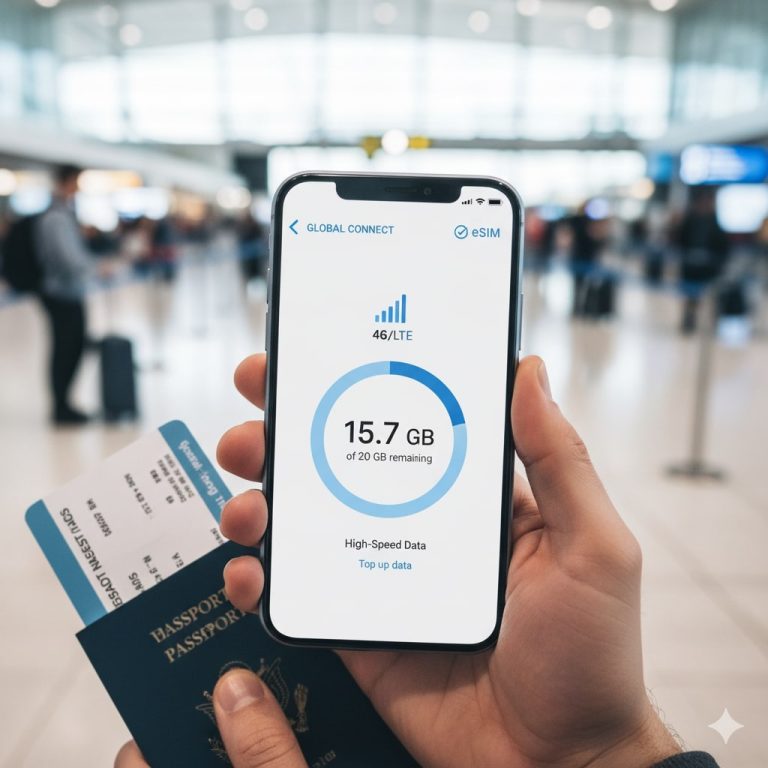
For most travelers, the simplest and most reliable solution today is to use an international eSIM. Instead of connecting through your home provider, an eSIM gives you direct access to local or regional mobile networks at transparent prices. You install it before your trip, activate it when you arrive, and use mobile data without worrying about hidden charges.
If you are not sure which provider to choose, this comparison of the best eSIMs for international travel breaks down coverage, pricing, and real-world use cases so you can pick the right option for your route.
How to Set Up Your Phone for Travel Data
A simple setup gives you the best balance between cost, convenience, and reliability:
- Keep your main SIM active for calls, SMS, and WhatsApp
- Use your eSIM for mobile data to avoid roaming charges
- Disable data roaming on your primary SIM to prevent accidental fees
- Install your eSIM before departure so you are connected immediately on arrival
This setup allows you to stay reachable on your normal number while using affordable travel data in the background. It is one of the easiest ways to avoid roaming fees without losing functionality.

Additional Ways to Reduce Data Usage Abroad
- Download offline maps before your trip
- Disable automatic app updates and cloud syncing
- Use Wi-Fi for large downloads when available
- Save important locations in advance
These small adjustments help you extend your data plan and reduce unnecessary usage, especially on longer trips or multi-country itineraries.
Choosing the Right eSIM for Your Trip
Not all eSIMs are the same. The best choice depends on how you travel:
- Multi-country travel: choose a regional or global eSIM
- Single destination: a local plan is often the cheapest option
- Short trips: simple app-based providers work best
- Frequent travel: flexible providers with global coverage save time
Providers like Yesim, Ubigi, Airalo, and SimOptions all offer different strengths depending on your route and travel style.
Final Takeaway
You do not need to accept roaming fees as part of travel anymore. With a basic setup and the right eSIM, you can stay connected across countries with predictable costs and reliable coverage.
The key is to prepare before you leave, choose the right data plan, and avoid relying on your home network abroad. Once you do that, staying connected becomes simple.

Best eSIM Providers to Avoid Roaming Fees (Quick Comparison)
- Best overall: flexible global eSIMs for multi-country travel
- Best for reliability: stable connections in major destinations
- Best for short trips: simple country-based data plans
- Best for easy comparison: straightforward tourist bundles
Once you decide to avoid roaming fees, the next step is choosing the right eSIM provider. Not all eSIMs are the same. Some are better for multi-country travel, others are designed for short trips, and some focus on simple, easy-to-use plans.
If you want a full breakdown, this comparison of the best eSIMs for international travel explains coverage, pricing, and which option fits different types of trips.
Quick Provider Overview
- Yesim — best for flexible global and regional plans across multiple countries
- Ubigi — strong reliability in Europe, Japan, and major travel hubs
- Airalo — simple and affordable options for short trips and single destinations
- SimOptions — easy comparison of tourist-friendly data plans
Choosing the right provider depends on your route. If you are visiting multiple countries, a regional or global eSIM is usually the best option. For shorter trips, a local plan is often the cheapest and simplest choice.
Final Step Before You Travel
Before you leave, make sure you install your eSIM, disable data roaming on your main SIM, and test your setup. This prevents accidental charges and ensures you are connected as soon as you land.
If you have not yet reviewed how roaming charges work, go back to this complete guide on avoiding roaming fees to make sure your setup is fully optimized.
Final Thoughts on Avoiding Roaming Fees
Roaming fees are still one of the easiest ways to overspend while traveling, but they are also one of the easiest problems to avoid once you understand how they work. The key is not reacting after you land, but preparing before your trip begins.
For most travelers, relying on a home mobile plan abroad is no longer necessary. Modern alternatives such as international eSIMs make it possible to stay connected across countries with predictable pricing and without the risk of unexpected charges.
The simplest approach is to set up your phone in advance, disable data roaming on your main SIM, and use a dedicated travel data plan. This allows you to keep your number for calls and messages while using affordable mobile data wherever you go.
If you want to make sure your setup is correct before your next trip, review this complete guide to the best eSIMs for international travel and choose the option that fits your route and travel style.

Frequently Asked Questions About Roaming Fees and eSIM for International Travel
-
What are roaming fees and how do they work when traveling internationally?
Roaming fees are extra charges your mobile provider applies when your phone connects to a foreign network outside your home country. Instead of using your provider’s infrastructure, your phone uses a partner network abroad, and those costs are passed on to you, often with a markup. -
How can I avoid roaming fees when traveling abroad?
You can avoid roaming fees by turning off data roaming, using Wi-Fi, buying a local SIM card, or using an international eSIM. For most travelers, using an eSIM is the easiest and most flexible solution. -
Is using an eSIM better than international roaming?
Yes, in most cases an eSIM is cheaper and more predictable than international roaming. It allows you to access local or regional data networks directly instead of paying your home provider’s roaming rates. -
What is the best eSIM for international travel?
The best eSIM depends on your trip. Regional and global eSIMs are ideal for multi-country travel, while local eSIM plans are usually cheaper for single-destination trips. -
Can I use an eSIM and my normal SIM at the same time?
Yes, most modern smartphones support dual SIM functionality. You can keep your physical SIM active for calls and messages while using the eSIM for mobile data abroad. -
Will my phone work with an eSIM when traveling internationally?
Most recent iPhone and Android devices support eSIM, but you should check your device settings or the manufacturer’s specifications before purchasing a plan. -
When should I install and activate my eSIM before traveling?
You can install your eSIM before departure and activate it when you arrive at your destination. This ensures you have immediate access to mobile data without relying on roaming. -
Can I use mobile data immediately after landing with an eSIM?
Yes, once your eSIM is installed and activated, your phone will connect to a local network as soon as you turn off airplane mode, allowing you to use data instantly. -
Are international eSIM plans cheaper than roaming charges?
In most cases, yes. eSIM plans are priced closer to local data rates, while roaming charges often include additional fees and markups from your home provider. -
What is the difference between local, regional, and global eSIM plans?
Local plans cover one country, regional plans cover multiple countries within a region, and global plans work across several continents. The best choice depends on your itinerary. -
Can I travel to multiple countries with one eSIM?
Yes, many providers offer regional or global eSIM plans that work across multiple countries, making them ideal for multi-destination trips. -
Is it safe to rely only on Wi-Fi to avoid roaming fees?
Relying only on Wi-Fi can help avoid roaming fees, but it is not always reliable or secure. Public Wi-Fi networks may be slow or unsafe, so having mobile data through an eSIM is usually a better option. -
Do I need to turn off data roaming if I use an eSIM?
Yes, it is recommended to disable data roaming on your primary SIM to avoid accidental charges while using your eSIM for mobile data. -
Can I top up or change my eSIM plan while traveling?
Most eSIM providers allow you to top up data or switch plans through their app, making it easy to adjust your usage while traveling. -
Is an eSIM suitable for long-term travel or digital nomads?
Yes, many eSIM providers offer flexible plans that are ideal for long-term travel, remote work, and digital nomads who move between countries.
Travel Resources to Plan, Book & Stay Connected
Use these tools and guides to stay connected abroad, find inspiration for your next trip, and book your flights, stays and gear with confidence.


Comment (0)