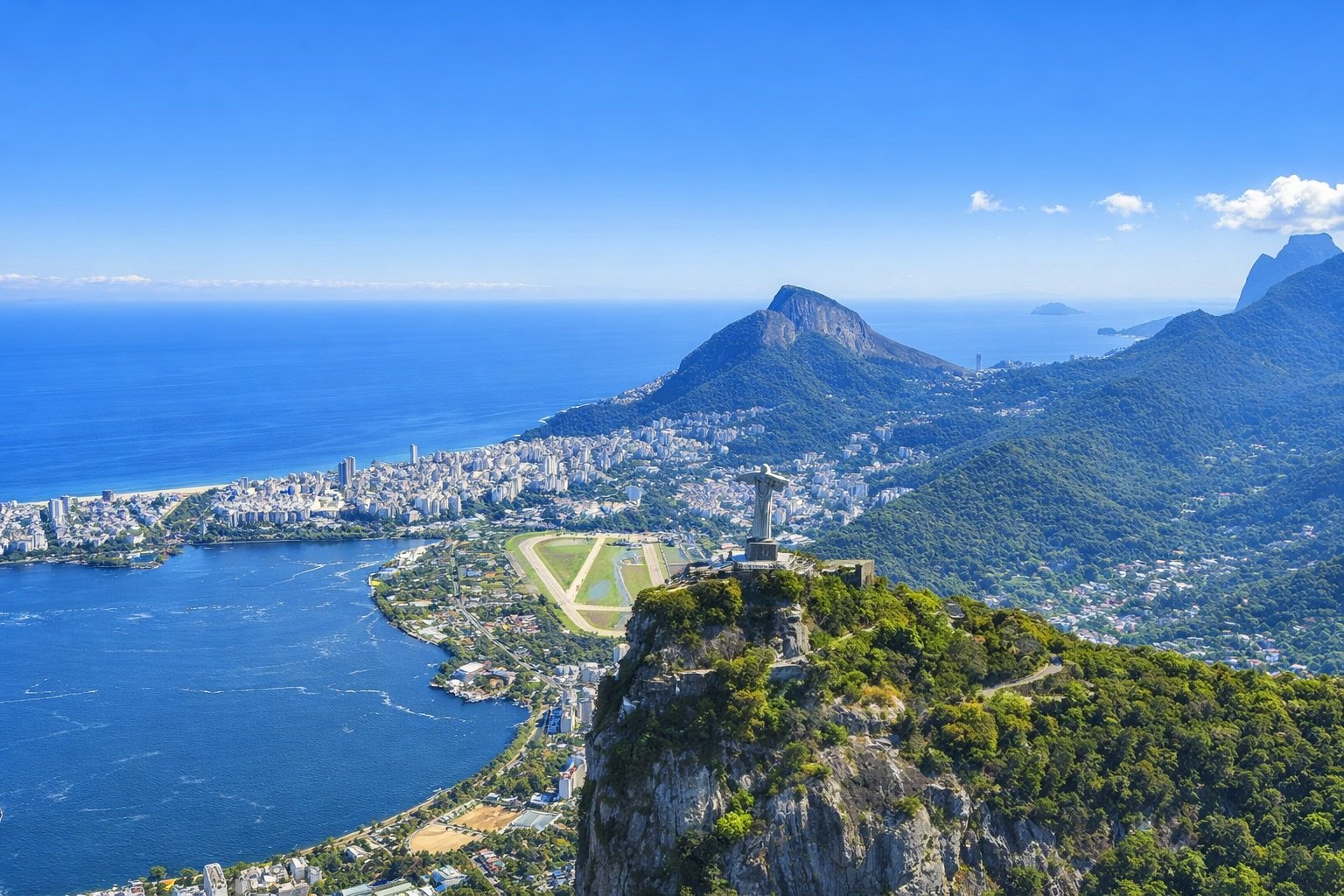
🇧🇷 What This Brazil Itinerary Covers
Planning a Brazil itinerary can feel overwhelming at first, so this guide gives you a clear, realistic route you can follow without overthinking every detail.
- 7, 10, and 14 day Brazil itinerary options (so you can match your time and pace)
- A logical city flow: Rio de Janeiro → São Paulo → Salvador
- Landmark highlights, including Christ the Redeemer and Sugarloaf Mountain
- Simple guidance on how to move between cities without wasting full days in transit
- Seasonality notes so you know when this itinerary works best
- Easy internal links to deeper city and landmark guides when you want more detail
If you want a trip that feels iconic but still practical, this itinerary gives you the structure first, then lets you customize the details.
Brazil Itinerary: Where to Start?
Designing the perfect Brazil itinerary is not about seeing everything, it is about choosing the right rhythm. Brazil is vast, diverse, and layered with culture, coastline, energy, and history. The key is structuring your route intelligently so you experience the highlights without spending half your trip in airports.
This Brazil travel itinerary focuses on the country’s most compelling contrasts: the drama of Rio de Janeiro, the urban intensity of São Paulo, and the colonial color and Afro-Brazilian heritage of Salvador. The only real question is how much time you have because that decides how deep you go.
If you have one week, the smartest plan is to stay in Rio and experience it properly with the 7-day Brazil itinerary. If you can stretch to ten days, you can add São Paulo and Salvador for a trip that feels complete without feeling rushed. Start with the 10-day Brazil itinerary. And if you have two full weeks, you unlock the version that slows everything down and finishes with an unforgettable nature finale, jump straight to the 14-day Brazil itinerary.
Instead of overwhelming you with endless destinations, this guide shows you how to connect Brazil’s most iconic places into one cohesive journey, efficient, realistic, and memorable. And when you are ready to choose accommodation, you can also skip ahead to where to stay in Brazil by city and budget.

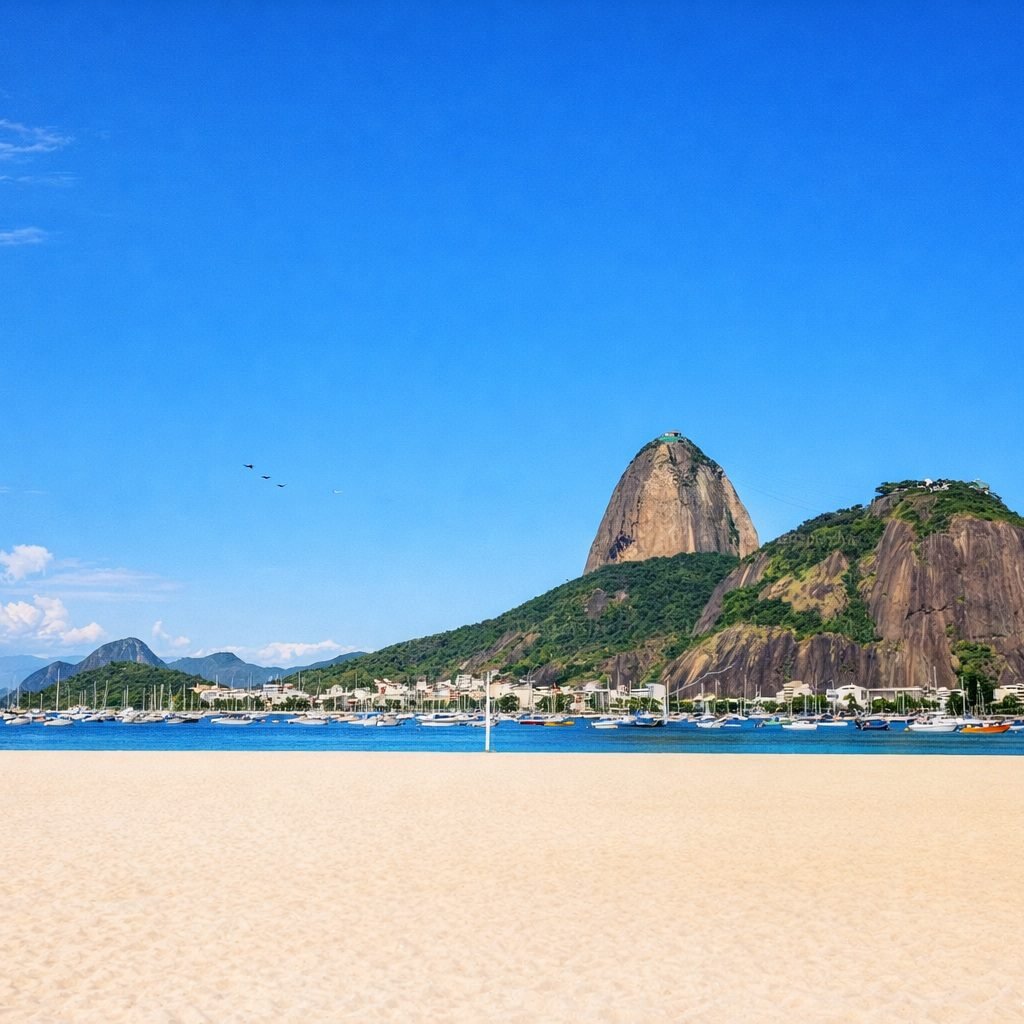
7-Day Brazil Itinerary (Rio de Janeiro Focus)
If you have one week in Brazil, the smartest move is to give it entirely to Rio de Janeiro. A rushed multi-city plan wastes time in airports and leaves you feeling like you skimmed the surface. Rio alone delivers beaches, mountains, architecture, nightlife, and culture in a way that easily fills seven days, without ever feeling repetitive.
This version of the itinerary is built around rhythm. Some days are landmark-focused. Others are about atmosphere. Rio is not a city you conquer with a checklist. It is one you experience in layers.
Day 1: Arrival, Beach Orientation, and a Gentle First Night
After landing at Galeão International Airport, resist the temptation to “do something big.” Your only goal today is orientation. Rio rewards travelers who arrive softly, learn the city’s rhythm, and save their intensity for later.
Drop your bags, then head toward the coastline, Ipanema or Copacabana depending on where you are staying. Start with an unhurried walk along the promenade rather than settling immediately. Watch how the city uses the beach: volleyball games forming without a plan, vendors balancing trays of iced drinks, runners weaving through the late-afternoon crowds, families carrying folding chairs as if this were their living room.
As you walk, pay attention to how quickly Rio changes in small distances. The beach atmosphere shifts from block to block, and the mountains never leave your peripheral vision. This is the first “Rio lesson”: the city is always both urban and wild at the same time.
Make your way toward Arpoador for sunset. When the sun dips behind the hills and strangers clap as it disappears, you will understand immediately why Rio feels different from anywhere else. It is not a performance. It is a shared habit.
For dinner, keep it iconic but relaxed at Garota de Ipanema, the restaurant that inspired the famous song. It is not fine dining, it is Rio tradition. Order grilled seafood or a hearty Brazilian plate with rice, beans, and farofa. Pair it with a classic caipirinha and let the week begin without pressure.
Day 2: Historic Rio, Santa Teresa, and Your First Proper Samba Night
Day two moves inland, into the layers of Rio that many beach-focused visitors never fully explore. Begin in Centro early, before the heat rises and before the business-day rush peaks. This is where colonial façades, imperial-era buildings, and sharp modernist lines sit beside each other without apology.
Start around Praça XV and work your way toward the Arcos da Lapa, pausing at landmarks that genuinely interest you rather than trying to exhaust the district. Step inside a historic church. Wander through narrow side streets where tiled buildings show their age. If you enjoy architecture, the contrast between old Rio and bold 20th-century interventions tells its own story about how the city reinvented itself over time.
From there, take a short ride uphill into Santa Teresa. The atmosphere changes immediately, streets narrow, houses become colorful and irregular, and the pace softens. Wander without urgency. Visit the Selarón Steps, but then continue beyond them. Small ateliers, hidden cafés, and quiet viewpoints reward those who move a few blocks further than most visitors.
As evening approaches, stay in Santa Teresa. If you want one refined culinary experience during your week, book a table at Oro. This is Rio’s high cuisine moment, modern Brazilian flavors presented with precision. It feels celebratory without being theatrical.
After dinner, walk to Bar dos Descasados for cocktails overlooking the city lights. The terrace view feels cinematic, with the coastline glowing in the distance. If you still have energy, continue toward Lapa for live samba. This is where Rio’s nightlife becomes communal rather than staged, music spilling into the street, strangers dancing without invitation, rhythm replacing conversation.
Day 3: Christ the Redeemer and Understanding Rio From Above
Today is not just another attraction day. It is the morning you understand Brazil’s most iconic image in context. Go early. The experience changes dramatically depending on light, visibility, and crowd density. Clear skies matter here more than almost anywhere else in the city.
The journey up Corcovado is part of the experience. Whether you take the official train through the dense greenery of Tijuca National Park or travel by licensed van, the city slowly disappears behind layers of forest. The climb builds anticipation quietly with Rio’s coastline flashing through gaps in the trees before vanishing again.
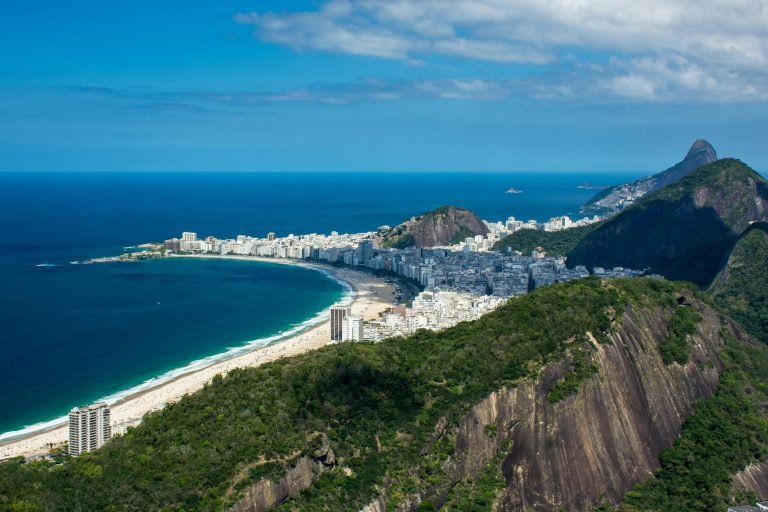
And then, suddenly, the statue appears. Up close, Christ the Redeemer feels larger and more architectural than photographs suggest. The scale becomes real. But it is not only the monument that moves people, it is the perspective. From this height, Rio’s geography reveals itself completely: Copacabana and Ipanema stretching south in a pale arc, Guanabara Bay opening wide to the east, Sugarloaf rising dramatically from the water, and mountains rolling inland like a natural fortress.
Spend time here without rushing. Walk the perimeter. Shift angles. Notice how the city looks different from each side of the platform. Here, Rio stops being a collection of neighborhoods and becomes one unified landscape shaped by water, rock, and improbable topography.
After descending, resist the urge to stack another headline attraction. The power of this morning deserves contrast. Head to Lagoa Rodrigo de Freitas for a relaxed waterfront walk, rent a bike for an easy circuit, or return to the beach for a reset. If you prefer something botanical and shaded, the nearby Jardim Botânico offers a quieter counterpoint to the altitude you just experienced.
Dinner tonight should feel uncomplicated. Choose somewhere near your hotel, keep it local, and let the day settle. The goal is balance, landmark intensity in the morning, breathing room in the afternoon.
Day 4: Sugarloaf Mountain and the Geometry of Rio
Sugarloaf is not just another viewpoint. It is the place where Rio finally makes visual sense. Plan to arrive mid-afternoon, when the light begins to soften and the crowds thin slightly compared to the morning rush.
Before taking the cable car, spend time walking around the Urca neighborhood itself. It feels almost village-like compared to Copacabana and Ipanema with quieter streets, low-rise buildings, and locals sitting along the seawall facing Guanabara Bay. This contrast prepares you for what you are about to see from above.
The ascent happens in two stages. First to Morro da Urca, then onward to the summit of Sugarloaf itself. Do not rush between platforms. Each level reveals a different geometry of the city: Botafogo’s curved bay, downtown’s skyline in the distance, Christ the Redeemer perched across the forested mountains, and the Atlantic stretching south.
Stay through sunset if the sky is clear. Watching the light fade over Guanabara Bay with the mountains turning from green to violet is one of Rio’s defining moments. It is less about the photograph and more about understanding how dramatically water and rock shape the city’s identity.
From this height, Rio stops feeling like a destination and starts feeling like a living landscape, coastline, forest, and skyline layered into one continuous scene.
After descending, walk to Bar Urca. Order seafood snacks and a cold beer, then stand by the water with locals as boats drift slowly across the bay. It is informal, affordable, and deeply Rio.
If you want something more polished afterward, head to The Rooftop at Yoo2 Rio in Botafogo. From here, you look back toward Sugarloaf, now illuminated, creating a quiet full-circle moment to end the evening.
Day 5: A Real Beach Day
By day five, you are no longer a visitor observing Rio, you are part of its rhythm. Today is not about ticking sights off a list. It is about understanding why the beach is the city’s living room.
Start your morning in Ipanema, ideally near Posto 9, where the atmosphere feels social but still relaxed. Arrive before 10 a.m. if you want space to settle in. Rent a chair and umbrella, order fresh coconut water, and watch how the beach functions as a daily ritual: joggers finishing long runs, retirees reading newspapers under shade, vendors moving easily between conversations.
By midday, walk south toward Leblon. The crowd subtly shifts, slightly quieter, slightly more residential. If the heat builds, take a break for lunch at a casual beachfront kiosk or step inland for a simple Brazilian plate. Nothing elaborate is required. The goal is immersion, not performance.
Later in the afternoon, change your perspective. Leave the sand behind and take a short ride up to the Mirante do Leblon viewpoint. From here, the entire curve of Ipanema and the Two Brothers mountains align in one clean composition, the same beach you just experienced now seen from above. It is one of the most underrated viewpoints in Rio and the perfect visual counterpoint to a day spent at sea level.
Return to your neighborhood before sunset. Shower, slow down, and let the evening unfold naturally. For cocktails, visit Nosso Ipanema. It captures the relaxed elegance of the area without feeling staged, an extension of the beach, simply dressed for night.
Day 6: Into the Forest or Deeper Into the City
By day six, you know what kind of traveler Rio has turned you into. Some visitors crave one more mountain view. Others want to understand the city beyond its postcards. Today is designed to follow that instinct but with structure.
If nature has captured you, dedicate the morning to Tijuca Forest. This is not a landscaped park, it is real forest, dense and unexpectedly wild. Choose one focused experience rather than scattering your energy. A short hike to Cascatinha Taunay waterfall offers easy access and atmosphere, while the Vista Chinesa viewpoint delivers one of the most dramatic panoramas in the city. The drive itself reveals how unexpectedly wild Rio becomes just minutes from the coastline.
If culture feels more compelling, begin in Praça Mauá and explore the revitalized port district. The Museum of Tomorrow (Museu do Amanhã) is as architecturally striking as it is thought-provoking, and the nearby MAR (Museum of Art of Rio) provides historical and contemporary context. From there, wander through Centro’s contrasting architecture, colonial facades beside modernist structures, before pausing at Confeitaria Colombo, where Belle Époque elegance still lingers in the mirrors and stained glass.
In the late afternoon, reconnect with the water. Even if you spent the morning inland, return toward the coast for a final golden-hour walk along Ipanema or a quiet moment at Lagoa Rodrigo de Freitas. This return creates balance between forest and ocean, history and horizon.
For your final thoughtful dinner, choose somewhere that stayed with you during the week. Rio rewards returning to places that quietly impressed you rather than chasing something new simply for the sake of it.
Day 7: A Meaningful Farewell to Rio
Your final day in Rio should not feel rushed or purely logistical. It is about closure, about giving yourself space to notice what the city has become to you over the past week.
Wake early if you can. Rio mornings carry a different energy than the afternoons. Joggers move quietly along the promenade, fishermen cast lines into calm water, and the light over the ocean feels softer and more personal. Walk the beachfront one last time, not to see it again, but to experience it differently now that you understand its rhythm.
If your schedule allows, take a final swim. Even a brief dip in the Atlantic has a way of sealing the memory of the place. Alternatively, settle into a café near the water for a slow Brazilian breakfast: strong coffee, fresh fruit, pão de queijo, and the comfort of not needing to rush anywhere yet.
If you have extra time before heading to the airport, use it intentionally. Pick up the souvenir you hesitated over earlier in the week. Revisit a street you liked. Return to a viewpoint for one last look. Rio rewards repetition, places often feel different the second time.
The same softness that welcomed you on day one is what makes departure feel heavier. Rio rarely overwhelms, it settles into you gradually, until leaving feels more emotional than expected.
When it is time to leave, build in generous transfer time and let the departure feel calm. A week in Rio done this way does not feel like a checklist completed. It feels layered wity beaches, mountains, samba, food, altitude, forest, and skyline blending into one cohesive memory.
Seven days in Brazil gives you contrast, energy, and depth. Rio’s iconic landscapes, São Paulo’s cultural intensity, and Salvador’s rhythm all in one cohesive route. You will move at a steady but realistic pace, with enough time to experience each city rather than simply checking boxes.
If you are still figuring out where to stay, or feeling slightly overwhelmed by the options, that is completely normal. Choosing the right base can shape your entire experience, especially in Rio. To make it easier, we have curated budget, mid-range, and luxury options in our Rio de Janeiro hotels section, so you can pick something that fits your travel style without overthinking it.
🎟️ Top Tours & Experiences in Rio de Janeiro
Want to compare guided tours, attraction tickets, and local experiences in Rio before finalizing your plan? Browse the most popular options in one place.

10-Day Brazil Itinerary (Rio de Janeiro, São Paulo, and Salvador)
A 10-day Brazil itinerary is where the trip starts to feel complete. You still get enough time to experience Rio properly, but you also add two cities that change the entire texture of the journey: São Paulo for big-city energy and food culture, and Salvador for color, coastal rhythm, and the Afro-Brazilian heartbeat of Brazil.
This itinerary is designed to feel realistic. You are not “collecting” cities. You are building a story: Rio’s iconic landscapes first, São Paulo’s urban intensity next, and Salvador’s atmosphere and history to close. If you want deeper detail on any single city or landmark, you can jump into the dedicated guides as you go.
Days 1–5: Rio de Janeiro (Iconic Geography and the Energy of Brazil)
Rio opens the journey because it delivers Brazil in its most cinematic form. Mountains drop into the Atlantic. Neighborhoods curve around beaches. Music rises naturally from bars and street corners. These first five days are not about rushing, they are about understanding how Rio’s geography shapes its personality.
Day 1: Arrival and First Contact with the Coast
After landing, resist the urge to chase a landmark immediately. Head toward Ipanema or Copacabana and walk the promenade instead. Rio reveals itself through movement: runners tracing the coastline, volleyball games forming in the sand, vendors balancing trays of iced drinks. Make your way to Arpoador for sunset. When the crowd applauds as the sun disappears behind the hills, you will understand the city’s collective rhythm without anyone explaining it to you.
Day 2: Christ the Redeemer and the Scale of Rio
Visit Christ the Redeemer early. Timing matters here, clouds can obscure the view and midday crowds dilute the experience. The statue itself is powerful, but the real impact comes from the perspective it provides. From the summit in Tijuca National Park, Rio’s structure becomes clear: Copacabana’s curve, Sugarloaf guarding the bay, downtown rising in the distance, forest pressing into neighborhoods.
After descending, do not stack another major attraction. Walk around Lagoa Rodrigo de Freitas or return to the beach to rebalance the day. Christ is a visual crescendo; let the afternoon breathe.
Day 3: Sugarloaf Mountain and the Geometry of the Bay
If Christ gives you scale, Sugarloaf gives you structure. Arrive mid-afternoon and take the two-stage cable car slowly, pausing at Morro da Urca before continuing to the summit. Each platform reframes the city: Botafogo’s perfect arc, Guanabara Bay stretching wide, Christ visible across the forested hills.
Stay for sunset if the sky is clear. The light over Guanabara Bay softens the city’s sharp lines and turns Rio from dramatic to almost serene. After descending, walk through Urca’s quieter streets before settling by the water for a relaxed seafood snack or drink. This is Rio at ground level after seeing it from above.
Day 4: Beach Culture and Rio’s Everyday Life
Now that you understand the skyline, spend a full day at sea level. Choose Ipanema for energy and style or Copacabana for classic scale, and commit to staying for hours. Rent a chair, order coconut water, and observe how the beach functions as a social ecosystem rather than just scenery.
In the late afternoon, walk toward Leblon or explore a neighborhood beyond the sand. Let the evening unfold naturally, rooftop views or samba bars are stronger when they feel like a continuation of the day rather than a separate event.
Day 5: Culture, Santa Teresa, and Rio After Dark
Use your final Rio day to move inland. Start in Centro to see colonial façades and modernist contrasts, then drift uphill into Santa Teresa, where narrow streets and hillside viewpoints offer a quieter perspective of the city.
As night falls, this is the moment to experience Rio’s communal nightlife properly. Whether it is live samba in Lapa or cocktails overlooking the city lights in Santa Teresa, let the evening feel shared rather than curated. Rio closes Act I not with a monument, but with music.
If you are still deciding where to base yourself in the city, choosing the right neighborhood can shape your entire Rio experience, from beach access to nightlife and daily logistics. To make that decision easier, explore our curated list of hotels in Rio de Janeiro, organized by budget and travel style.
🌅 Explore More of Rio de Janeiro
With extra time in Rio, you may want to add guided visits, food tours, or unique local experiences to your schedule. Compare top rated options before locking in your plans.
Days 6–8: São Paulo (Urban Scale, Food Culture, and Intellectual Brazil)
São Paulo is the contrast city. Where Rio is shaped by mountains and sea, São Paulo is shaped by ambition, diversity, and scale. It is less immediately photogenic, but more layered. If you give it intention, it can become the most intellectually satisfying part of your trip.
Day 6: Arrival and First Impressions of Scale
After landing and checking in, begin with a walk along Avenida Paulista. This is São Paulo’s spine with corporate towers beside cultural institutions, street performers beside business commuters. Stop at the exterior of MASP (São Paulo Museum of Art), whose suspended concrete structure is one of Brazil’s most recognizable pieces of modern architecture.
As evening approaches, head toward Jardins or Vila Madalena to feel the city loosen. São Paulo nights are about conversation and atmosphere more than spectacle. Bar Salve Jorge is a relaxed introduction to the city’s bar culture without feeling theatrical or forced.
Day 7: Culture, Neighborhoods, and São Paulo’s Defining Meal
Start your morning in Liberdade, the heart of São Paulo’s Japanese-Brazilian community. The lantern-lined streets, markets, and specialty shops reveal how global the city truly is. From there, shift toward Pinheiros, where creative spaces, design stores, and independent cafés define the district’s personality.
Keep your afternoon flexible but purposeful. Explore art galleries, browse bookstores, and allow the city’s density to unfold gradually. São Paulo rewards wandering more than rigid scheduling.
In the evening, commit fully to A Casa do Porco. This is not just dinner, it is São Paulo’s culinary confidence expressed on a plate. Build your day around it rather than squeezing it between activities.
If you still have energy afterward, Blue Note São Paulo offers polished live music in a setting that feels distinctly metropolitan.
Day 8: Green Space, Modernism, and a Big-City Farewell
Spend your final morning in Parque Ibirapuera. The park’s open lawns and Oscar Niemeyer-designed buildings provide a different kind of urban beauty, structured, modern, intentional. It is the perfect counterbalance to Rio’s natural drama.
After lunch, use your remaining time to revisit whichever neighborhood felt most compelling: Jardins for upscale polish, Vila Madalena for artistic edge, or Pinheiros for contemporary São Paulo energy.
For your final São Paulo night, go out properly. Bourbon Street Music Club is the kind of venue that makes the city feel international and electric, a fitting close before shifting into Salvador’s warmer rhythm.
Before leaving São Paulo behind, make sure your base in the city reflects the experience you want, whether that is walkable elegance in Jardins, creative energy in Pinheiros, or practical comfort near major transport links. If you are still narrowing down your options, browse our São Paulo hotels section to find a stay that fits your pace and budget.
🏙️ Top Experiences in São Paulo
From food tours and cultural walks to museum visits and city highlights, São Paulo offers more than it first appears. Browse curated experiences to see what fits your time in the city.
Days 9–10: Salvador (History, Coast, and the Afro-Brazilian Soul of Brazil)
If Rio is Brazil’s postcard and São Paulo its engine, Salvador is its soul. The city feels warmer, older, and more overtly rhythmic, where colonial façades overlook an open Atlantic horizon and Afro-Brazilian heritage shapes everything from language and faith to food and music. The pulse here is different: less dramatic than Rio, less metropolitan than São Paulo, but deeper in cultural texture. Even with just two days, Salvador delivers a powerful closing chapter to this itinerary, one built on history, color, coastline, and a rhythm that feels inherited rather than performed. For deeper context as you explore, keep the full guide open: things to do in Salvador.
Day 9: Pelourinho, Elevation, and First Contact with Salvador’s Energy
Begin in Pelourinho, the historic upper town. The pastel-colored colonial facades are not decorative. They represent centuries of layered history. Wander slowly through the cobbled streets rather than marching between landmarks. Step inside Igreja de São Francisco if it is open; its ornate interior contrasts sharply with the sun-bleached streets outside.
From there, move toward Elevador Lacerda, the iconic lift connecting the upper and lower city. The descent reveals how dramatically Salvador sits above the bay. At Mercado Modelo, browse local crafts not as a shopping mission but as cultural observation, fabrics, percussion instruments, and handmade pieces that reflect Afro-Brazilian influence.
As late afternoon approaches, head toward Farol da Barra. The lighthouse marks one of Salvador’s most photogenic coastal points, and sunset here feels different from Rio, softer, warmer, less theatrical. The Atlantic feels wider here, less framed by mountains and more open.
For dinner, choose something rooted. Toca do Cobra delivers traditional Bahian flavors without dilution. Expect bold spices, seafood, and dishes shaped by African culinary heritage. If you prefer a slightly more contemporary atmosphere, CÖA Restaurante Bar balances design with local identity.
If the night pulls you outward, keep it relaxed. Salvador’s evenings are about warm air and music drifting through open streets, not polished spectacle.
Day 10: Afro-Brazilian Culture and a Coastal Farewell
Dedicate your final full day to understanding Salvador beyond its facades. Visit Museu Afro-Brasileiro to contextualize the city’s identity, then return to Pelourinho or nearby neighborhoods to notice details you missed on day one, doorways, balconies, street musicians warming up before small crowds.
In the afternoon, reconnect with the coast. Whether you choose a quiet stretch near Barra or simply walk along the waterfront, this is your moment to slow the entire trip down. Salvador is not rushed and it should not be experienced that way.
For your final meal in Brazil, make it meaningful. Ré Restaurante Dona Suzana offers a deeply personal and rooted Bahian dining experience that feels like a proper farewell rather than just another reservation.
If you want one last toast before departure, Café e Cana Botequim is a fitting final stop, unpretentious, atmospheric, and distinctly Salvador.
With the rhythm of these 10 days mapped out, the final piece is choosing the right place to stay in Salvador. From heritage-filled neighborhoods to relaxed coastal areas, you can compare curated options in our Salvador hotels section to settle in somewhere that fits your style.
🎶 Discover Salvador’s Culture & Coast
From historic walking tours in Pelourinho to beach escapes and cultural experiences, Salvador offers a rich mix of history and rhythm. Compare top rated activities to plan your time smoothly.
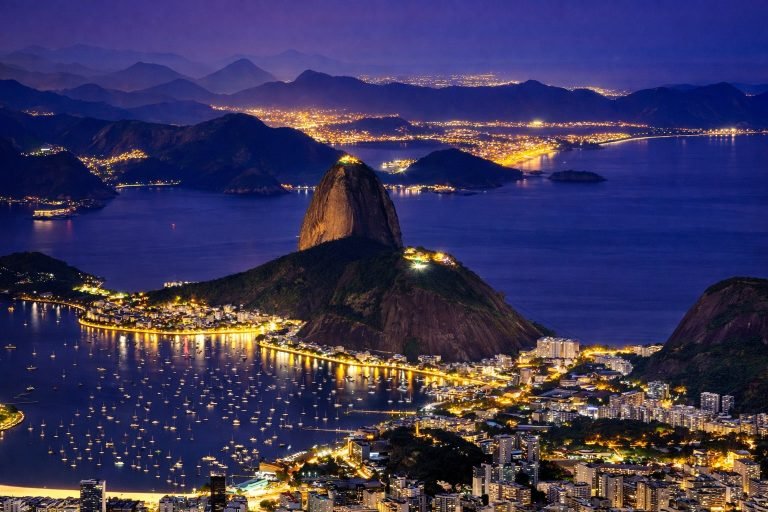
14-Day Brazil Itinerary (Rio de Janeiro, São Paulo, Salvador, and Iguazu Falls)
If you have two weeks, this is where Brazil becomes more than “highlights.” A 14-day Brazil itinerary gives you enough time to slow down, eat well, go out properly, and actually feel the difference between regions instead of rushing through them. The route below is built around a clear balance: about 40% Rio, 35% São Paulo, and 25% Salvador, with a Brazil-side Iguazu Falls finale that adds a completely different kind of wow.
This is also the version that works best for couples. There is room for romantic upgrades without turning the trip into something unrealistic. You can keep it budget-friendly, make it comfortable, or add one or two luxury moments that feel genuinely special.
Days 1–6: Rio de Janeiro (Landmarks, Beach Rhythm, Culture, and Nights Out)
Rio deserves time. The goal here is not to “tick off” Christ and Sugarloaf and move on. With six days, you experience the iconic moments and the everyday beauty: long mornings at the beach, slow lunches, neighborhood wandering, and nights that feel like Rio rather than a generic tourist routine. Keep your Rio guide open for deeper options: things to do in Rio de Janeiro.
Day 1: Arrival and your first Rio evening
Arrive through RIOgaleão International Airport, check in, and make your first mission simple: ocean air and a sunset walk. Head toward Ipanema or Copacabana and walk the promenade until you reach a spot that feels right to stop. If you want a classic first dinner that immediately feels “Rio,” book Garota de Ipanema and start with a caipirinha. The point is not perfection. The point is to feel the city settle into you.
Romantic enhancement: If you are traveling as a couple, this first night is perfect for a slow sunset moment at Arpoador. It is one of the simplest, most romantic “Rio” scenes you can have, and it costs nothing.
Day 2: Centro, Rio’s old-world charm, and a legendary coffee stop
Start inland with Rio’s historic core. Daylight is best for Centro because the city feels more grounded and purposeful here, a mix of colonial façades, civic squares, and bold modernist contrasts. Begin around Praça XV and wander slowly, letting the details pull you in rather than rushing between pins on a map. If you want a true “Rio is older than I expected” moment, step into one of Centro’s historic churches, then continue toward the Arcos da Lapa area to feel how the city transitions from formal to lively within a few blocks.
Mid-morning, pause for coffee and dessert at Confitería Colombo. It is not just a café stop. It is a Belle Époque time capsule, the kind of place that makes Rio’s elegance feel immediate and tangible.
In the afternoon, drift toward Santa Teresa for hillside streets, viewpoints, and a slower pace. Wander beyond the obvious photo spots and let the neighborhood reveal itself in small galleries, quiet cafés, and corners where the city feels more intimate.
For cocktails tonight, you have a great “adventure bar” option in Explorer Bar. It is the kind of place that makes the evening feel intentional without becoming a complicated plan.
Day 3: Christ the Redeemer (make the morning count)
Today is one of the defining mornings of your entire Brazil trip. Christ the Redeemer is not something you squeeze between activities. It is a moment that deserves clear skies, an early start, and your full attention. Go as early as possible and treat the weather seriously. Because the statue sits within Tijuca National Park, visibility can change quickly. If clouds are sitting low over Corcovado, swap this day with Sugarloaf and return when conditions improve. For detailed transport and ticket strategy, review your guide before you go: Christ the Redeemer tickets and visiting guide.
The ascent itself is part of the experience. Whether you take the official train through dense Atlantic forest or arrive by licensed van, the city gradually disappears behind layers of green. Occasional openings in the trees flash glimpses of coastline before closing again, a quiet build-up before the reveal.
And then you step onto the platform. Up close, Christ feels more architectural than photographic. The scale is real. But the deeper impact is the perspective. From this height, Rio becomes legible: Copacabana and Ipanema curve south in a pale arc, Sugarloaf rises dramatically from Guanabara Bay, downtown stretches inland, and mountains press against neighborhoods in improbable formations. You are no longer moving through Rio, you are seeing how it fits together.
Walk the perimeter slowly. Notice how each side reframes the city differently. Turn your back to the statue for a moment and just look outward. This is where Rio shifts from postcard to lived landscape.
After descending, resist the urge to stack another headline attraction. Let the intensity taper. Walk or cycle around Lagoa Rodrigo de Freitas, return to the beach for a few quiet hours, or opt for the calm shade of Jardim Botânico. The power of Christ lands best when the afternoon gives you space to process it.
Day 4: Sugarloaf Mountain and Sunset Over Guanabara Bay
If yesterday gave you altitude and symbolism, today gives you structure and light. Sugarloaf is where Rio stops being dramatic and starts making geometric sense. Plan this for mid-afternoon so you can stay through sunset. Clear skies matter here just as much as they did at Christ, light transforms the experience.
Before boarding the cable car, spend a few quiet minutes in Urca. The neighborhood feels almost village-like compared to Copacabana and Ipanema, low buildings, calm streets, locals sitting along the seawall watching boats drift across the bay. This grounded beginning makes the ascent feel more intentional.
The climb happens in two stages: first to Morro da Urca, then onward to Sugarloaf’s summit. Do not rush between platforms. Pause. Turn around. Each level reshapes the city differently. From one angle, Botafogo Bay forms a perfect curve. From another, Christ stands distant across forested hills. From the summit, the Atlantic stretches south while Guanabara Bay opens wide to the east. Unlike Christ, which centers you around a monument, Sugarloaf centers you around landscape.
Stay for sunset if conditions allow. As the light softens, the city shifts from sharp contrast to layered color, greens fading to violet, water reflecting amber and pink, buildings glowing gently rather than competing for attention. This is one of Rio’s most complete visual moments.
After descending, continue the grounded rhythm by walking to Bar Urca. Order simple seafood snacks and something cold, then stand by the water with locals as the sky darkens. It feels unpolished and real, the perfect counterbalance to the panoramic drama above.
If you want a more polished closing note, finish with rooftop cocktails at The Rooftop at Yoo2 Rio. From here, you look back toward Sugarloaf, now illuminated, completing a quiet full-circle evening.
Day 5: Beach Culture, Viewpoints, and Rio at Sea Level
By day five, you are no longer observing Rio, you are participating in it. Today is not a “photo stop” beach visit. It is a full immersion into the city’s daily ritual. Choose your stretch of sand deliberately. Ipanema offers style and energy. Copacabana feels expansive and iconic. Leblon leans slightly calmer and more residential. Pick one and commit.
Arrive before 10 a.m. if possible. Rent a chair and umbrella rather than hovering awkwardly with a towel. Order coconut water. Watch how the beach functions as a living system: informal football matches forming without negotiation, vendors calling out rhythms you begin to recognize, regulars greeting each other like neighbors in an open-air living room.
Late morning is for swimming. The Atlantic here is not decorative, it is part of the city’s pulse. Even a short swim shifts your experience from spectator to participant.
Around midday, walk rather than leave immediately. Move along the promenade and notice how each block subtly changes tone, fitness-focused zones, quieter family stretches, more social clusters. If you want a slightly elevated beach experience without losing authenticity, reserve a table at Clássico Beach Club - DownWind and let lunch extend into the afternoon. Keep it relaxed; this is not a rushed reservation.
In the late afternoon, gain perspective. Take a short ride up to Mirante do Leblon. From this vantage point, the entire arc of Ipanema aligns cleanly with the Two Brothers mountains behind it. Seeing the beach from above after spending hours at sea level completes the day visually.
As night falls, choose atmosphere over ambition. If samba is calling you, Bar Carioca da Gema offers live music rooted in Rio’s identity, communal, rhythmic, unpretentious. If you prefer something quieter, stay local and let the day end gently. The power of today comes from immersion, not escalation.
Day 6: Your choice day (but make it intentional)
This day is not “empty time.” It is your chance to follow what Rio has been pulling you toward, with enough structure that it still feels like a real itinerary.
If you want nature, go deeper into Tijuca Forest for trails, waterfalls, and viewpoints. This is the side of Rio many travelers miss: dense green canopy, sudden clearings, and the feeling that wilderness sits right behind the skyline. Pair it with a calm late-afternoon reset at Lagoa Rodrigo de Freitas or a final beach walk.
If you want a more iconic, physically rewarding Rio day, choose one dramatic viewpoint hike, the kind of experience that makes the city feel earned rather than simply observed. Aim for an early start, keep water and sun protection with you, and leave space to recover afterward with a long lunch or a slow coffee.
If culture is what you are craving, use today for the places you only skimmed earlier: museums, architecture, and neighborhoods that feel distinctly “Rio” when you give them time. This is also your best day for intentional souvenirs: quality Brazilian coffee, a good bottle of cachaça, locally designed swimwear, Havaianas, and small art prints inspired by Rio’s landscapes. Buy what feels personal, not generic.
Romantic enhancement: If you want a couple-style evening, keep it simple and beautiful: a slower dinner, a walk, and one excellent cocktail rather than a chaotic bar hop. This itinerary leaves space for that on purpose.
By now, Rio has likely set the emotional tone for your entire journey, from mountain-top views to long beach afternoons and late samba nights. If you are still deciding where to base yourself for these first days, take a moment to explore the curated options in our Rio de Janeiro hotels section to match your budget, style, and preferred neighborhood.
🌊 Add Deeper Experiences in Rio de Janeiro
With a longer stay, you can explore beyond the highlights and add food tours, nature outings, or neighborhood experiences. Browse available activities to refine your Rio schedule.
Days 7–11: São Paulo (Food Capital Energy, Culture, and Nights with Music)
São Paulo is Brazil’s deep dive. It is not postcard-pretty in the same way as Rio. It is intense, massive, creative, and ridiculously good for food. The city rewards travelers who like neighborhoods, cafés, museums, and dinners that feel like experiences. Use your São Paulo guide as you go: things to do in São Paulo.
Day 7: Arrival in São Paulo and First Contact with Brazil’s Urban Engine
Fly into São Paulo/Guarulhos–Governor André Franco Montoro International Airport and prepare for a shift in atmosphere. If Rio felt cinematic and open, São Paulo feels vertical, layered, and immense. This is not a city that reveals itself in one sweeping view. It unfolds block by block.
After checking in, orient yourself with a late-afternoon walk along Avenida Paulista. This is the city’s spine, glass towers, cultural institutions, bookstores, street performers, and commuters all sharing the same stretch of pavement. Stop outside MASP (São Paulo Museum of Art), whose suspended concrete structure feels both brutalist and elegant. It is one of Brazil’s most iconic modernist statements and an ideal introduction to São Paulo’s architectural confidence.
As evening approaches, shift into a nearby neighborhood like Jardins or Vila Madalena depending on your mood. Jardins leans polished and refined; Vila Madalena feels creative and slightly bohemian. São Paulo nights are less about spectacle and more about atmosphere, conversation, music, and excellent drinks rather than postcard views.
For your first evening, keep it welcoming and uncomplicated at Bar Salve Jorge. It is lively without being chaotic, social without being forced, exactly what you want after a travel day. Order something local, let the city’s rhythm settle in, and notice how different this energy feels from Rio. The coastline is gone; in its place is ambition, scale, and a sense that São Paulo never fully switches off.
Day 8: São Paulo’s Food Culture and the Neighborhoods That Define It
Today is the day São Paulo proves why it is considered Brazil’s culinary capital. But before dinner becomes the headline, give the city space to unfold properly.
Start your morning in Liberdade, home to the largest Japanese community outside Japan. The lantern-lined streets, small markets, bakeries, and specialty shops immediately signal how global São Paulo truly is. Grab coffee or a light breakfast here and wander without urgency. This neighborhood is less about landmarks and more about atmosphere, signage in multiple languages, grocery stores filled with unfamiliar ingredients, and a rhythm that feels distinct from anywhere else in Brazil.
From there, shift toward Pinheiros or Vila Madalena. These districts showcase São Paulo’s contemporary personality, creative studios, bookstores, independent boutiques, street art layered across concrete walls. Stop often. São Paulo rewards curiosity. Browse design shops. Step into a gallery. Sit at a café longer than planned. The city reveals itself gradually rather than dramatically.
Keep lunch light today. The evening is the true centerpiece. Build your schedule around A Casa do Porco and commit to the experience fully. This is not just dinner. It is São Paulo’s culinary confidence expressed on a plate. The tasting menus are inventive yet rooted in Brazilian tradition, and the atmosphere balances refinement with approachability. Reserve in advance and arrive hungry.
After dinner, keep the momentum without overwhelming the night. Blue Note São Paulo offers polished live music in a setting that feels distinctly metropolitan. It is an elegant contrast to Rio’s samba bars, structured, intimate, and musically focused.
By the end of the night, São Paulo should feel less intimidating and more layered, a city of neighborhoods, flavors, and cultural intersections rather than just scale.
Day 9: Architecture, Street Life, and São Paulo at Human Scale
After yesterday’s culinary crescendo, today shifts focus toward how São Paulo actually functions. This is your day to understand the city beyond restaurants, through architecture, public space, and everyday movement.
Begin along Avenida Paulista in the morning, when the city feels purposeful rather than overwhelming. Step inside MASP (Museu de Arte de São Paulo) if exhibitions interest you, or simply appreciate the building itself, suspended concrete and open air beneath it, one of Brazil’s most recognizable pieces of modern architecture. The contrast between corporate towers, cultural institutions, and street performers defines São Paulo’s character.
From Paulista, move toward Parque Ibirapuera. The park provides breathing room within the density, wide lawns, tree-lined paths, and Oscar Niemeyer’s modernist buildings creating a clean architectural rhythm. Walk slowly. São Paulo reveals its beauty through structure and proportion rather than coastline drama.
In the afternoon, shift into a neighborhood with personality. Pinheiros and Vila Madalena are ideal for browsing bookstores, design shops, and small galleries. Stop for coffee without an agenda. São Paulo rewards lingering. he experience builds through accumulation rather than spectacle.
For dinner, keep it relaxed and urban. Terraço Jardins offers a comfortable, well-executed option if you want refinement without ceremony. If you prefer something more casual and street-driven, grab a bite at Nosh Street Food and let the evening stay loose.
Tonight does not need to be dramatic. Let São Paulo feel lived-in, conversation, good food, and the quiet understanding that this city is about depth rather than postcard views.
Day 10: São Paulo’s Cultural Core and a Proper Night Out
Today is about giving São Paulo the intellectual weight it deserves. This city is not defined by scenery. It is defined by ideas, institutions, and cultural scale. Treat this as your museum-and-neighborhood immersion day.
Start in the historic center if you have not yet seen it properly. Walk through Praça da Sé, pass the Catedral da Sé, and continue toward the Theatro Municipal. The architecture here tells the story of São Paulo’s rapid rise, grand European-inspired buildings standing beside dense modern structures. The contrasts are part of the identity.
If contemporary art interests you, spend time at Pinacoteca do Estado or revisit MASP more deeply. If you prefer something more experiential, explore smaller galleries in Vila Madalena or browse independent bookstores and design studios in Pinheiros. São Paulo rewards curiosity more than strict scheduling.
Keep lunch light. This is a pacing day, you are building toward a full evening.
Tonight is your “big São Paulo night.” Dress slightly sharper than usual and head to Bourbon Street Music Club. The venue feels international, confident, and alive, the kind of place that reminds you São Paulo operates on a global scale. Live music here is not background noise; it is performance with presence.
Let the night stretch. Order another drink. Stay for the second set. São Paulo does not rush and neither should you.
Day 11: A Deliberate Final Day in São Paulo
Your last full day in São Paulo should not feel like leftover time. It is your opportunity to revisit what resonated most and to experience the city at a slightly slower, more reflective pace.
Begin with a relaxed morning in one of the neighborhoods that felt most natural to you. If Jardim Paulista appealed for its refinement, return for a slow coffee and quiet streets before the city fully accelerates. If Pinheiros or Vila Madalena captured your attention, spend the morning browsing design stores, bookstores, and independent boutiques you only skimmed earlier in the week.
This is also a good moment for intentional shopping. São Paulo excels at Brazilian fashion, contemporary design, and specialty food products. Rather than generic souvenirs, look for something that reflects the city’s modern identity, a well-crafted leather piece, locally roasted coffee, or contemporary Brazilian art prints.
Keep lunch relaxed and unhurried. Choose somewhere that allows conversation rather than spectacle. São Paulo’s strength is atmosphere, restaurants here feel lived-in and confident rather than performative.
In the afternoon, consider one final green-space reset in Parque Ibirapuera if you want air and openness before flying onward. The contrast between its structured modernist buildings and open lawns is the perfect closing image of São Paulo: organized energy inside a vast urban organism.
For your final evening, resist the temptation to repeat the previous night’s intensity. Instead, opt for a refined, quieter close, a well-chosen dinner, one excellent cocktail, and a calm walk back to your hotel. São Paulo ends best when it feels composed rather than exhausted.
Before you dive into São Paulo’s food scene, neighborhoods, and long musical nights, take a moment to choose the right base for your stay. Whether you prefer walkable elegance, creative energy, or practical comfort near transport, you can explore the curated options in our São Paulo hotels section to match your style and budget.
🍽️ Explore São Paulo Beyond the Surface
If you have more time in the city, consider adding guided food tours, art experiences, or architectural walks. Compare available activities to make the most of your stay.
Days 12–14: Salvador and Iguazu Falls (Culture First, Nature Finale)
The final stretch of this Brazil itinerary shifts the tone intentionally. Salvador brings warmth, layered history, and Afro-Brazilian identity into sharp focus with colonial streets, drum rhythms, spice-heavy cuisine, and a coastline that feels softer and slower than Rio. Then the journey pivots dramatically. A short flight south delivers you to Iguazu Falls, where culture gives way to raw scale and thundering water.
This contrast is deliberate. Salvador grounds you in Brazil’s cultural soul before Iguazu reminds you just how vast and geographically powerful the country truly is. Even if you have visited waterfalls elsewhere, the panoramic sweep of Iguazu, especially from the Brazilian side, feels less like a viewpoint and more like standing inside a force of nature.
Day 12: Arrival in Salvador and First Contact with Afro-Brazilian Brazil
Arrive via Salvador International Airport and give yourself a softer landing than Rio or São Paulo required. Salvador is not a city that rewards rushing. It unfolds through sound, color, and temperature.
After checking in, head toward Pelourinho in the late afternoon rather than midday. The historic upper town glows best when the sun lowers and the pastel façades warm into deeper tones. Walk without a strict checklist. Let the cobbled streets guide you toward Largo do Pelourinho, Igreja de São Francisco, and the small plazas where musicians casually test rhythms before evening crowds gather.
From the upper city, move toward Elevador Lacerda and descend toward the waterfront. The vertical drop is not just practical. It reveals how dramatically Salvador sits above the Bay of All Saints. Pause at the base and simply watch the harbor light shift.
For dinner, choose something rooted in place. Toca do Cobra leans traditional and deeply Bahian, moqueca, dendê oil, bold flavors that immediately signal you are no longer in the south of Brazil. If you prefer a slightly more contemporary setting without losing local identity, CÖA Restaurante Bar offers a refined but still distinctly Salvador experience.
Keep your first night relaxed. A slow walk back through illuminated streets or a quiet drink near the coast is enough. Salvador’s energy is rhythmic rather than explosive, let it set the tone gently.
Day 13: Salvador’s Culture, Coast, and a Proper Farewell
Today is your full Salvador immersion. If Day 12 was orientation, this is understanding. Start again in Pelourinho, but this time go beyond wandering. Step into the Museu Afro-Brasileiro to understand how deeply African heritage shapes Salvador’s religion, food, music, and identity. Context changes how the city feels and Salvador rewards travelers who take that step.
Afterward, slow down in the historic center rather than rushing onward. Watch capoeira circles form. Notice percussion rhythms building in side streets. Salvador’s culture is not staged; it rehearses itself in public.
In the afternoon, shift toward the coast. Head to Farol da Barra and walk the waterfront promenade. The Atlantic feels wider here than in Rio, less framed, more open. If the weather cooperates, this is your final true “Brazil ocean” moment before the trip transitions toward nature in Iguazu.
For your farewell Salvador meal, make it intentional. Ré Restaurante Dona Suzana delivers a deeply personal Bahian dining experience, bold, local, rooted. This is not just dinner; it is cultural continuity on a plate.
If you want one last relaxed drink before departure, Café e Cana Botequim is atmospheric without being theatrical. Keep it simple. Tomorrow shifts the mood dramatically.
🌴 Experience More of Salvador
With extra days in Salvador, you can add cultural workshops, coastal excursions, or guided historic tours. Browse curated experiences to shape your time in the city.
Day 14: Iguazu Falls, Brazil’s Grand Natural Finale
Today is your dramatic closing scene. Fly early to Foz do Iguaçu and head straight to the Brazil side of Cataratas do Iguaçu. The Brazilian side is about perspective. You do not just see a waterfall, you see an entire system of them, stretching across the horizon in layers of mist and thunder.
Follow the panoramic walkway slowly. Each turn reveals another angle: cascades crashing into green canyon walls, rainbows forming in the spray, the constant sound of water filling the air. When you reach the viewing platform near Garganta do Diabo (Devil’s Throat), pause. The scale is overwhelming in the best possible way, water surging so powerfully that conversation becomes secondary to sensation.
If conditions are good and you want to intensify the experience, consider the optional boat ride that approaches the falls directly. It is loud, wet, and exhilarating, the kind of memory that stays physical long after the trip ends.
Plan for at least half a day inside the park. Do not rush the final stretch. Iguazu works as a finale because it shifts the energy from cities and culture to something elemental and immense. After Rio’s drama, São Paulo’s intensity, and Salvador’s warmth, ending with raw nature feels intentional.
As you leave, look back once more at the mist rising above the canyon. Brazil closes not with a skyline, but with water, power, and scale.
🌊 Explore Iguazu Falls on the Brazil Side
From panoramic viewpoints and guided walks to boat rides beneath the falls, there are several ways to experience the Brazil side. Browse available tours and tickets to plan your visit smoothly.
Romantic Enhancements (For Couples and Honeymooners)
You do not need a separate Brazil honeymoon itinerary to make this trip feel romantic. You just need to choose a few moments where you slow the pace and let the setting do the work. In Rio, plan one sunset that is purely about the view and the feeling like Arpoador with bare feet in the sand, Sugarloaf as the sky turns gold, or rooftop drinks with the skyline slowly lighting up beneath you.
In São Paulo, make one dinner your “occasion” night and build the evening around it. Arrive early, order properly, stay longer than planned, then let live music carry the night forward rather than rushing back to your hotel. In Salvador, romance is atmosphere: warm air after dark, colonial façades glowing under soft light, and a meal shaped by Bahian tradition rather than trend.
If you want one meaningful upgrade that truly shifts the tone of the trip, choose it intentionally. A room with a view in Rio, a refined design hotel in São Paulo, or a slower final evening in Salvador can elevate the entire journey without turning the whole itinerary into a luxury splurge. The goal is not excess. It is choosing one or two moments that feel unforgettable.
If you want to plan the bigger picture across Brazil’s regions, you can also use the Brazil pillar guide here: Brazil Travel Guide.
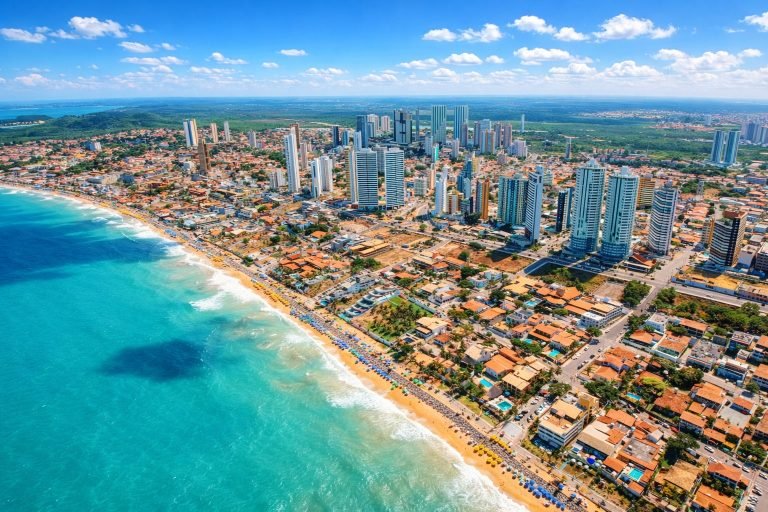
Where to Stay in Brazil (By City & Budget)
Choosing where to stay in Brazil becomes much easier once you understand the rhythm of each city. Below, you will find curated hotel options in Rio de Janeiro, São Paulo, and Salvador, grouped by budget so you can quickly match your travel style to the right base. Whether you are prioritizing beachfront mornings in Rio, walkable neighborhoods in São Paulo, or coastal atmosphere in Salvador, these stays are selected to support the itinerary above without overcomplicating your decision.
HOTELS IN RIO DE JANEIRO
Budget Hotels
Castle of Vibes - Hostel
Avenida Gomes Freire, 814, Centro, Rio de Janeiro, CEP 20231-015, Brazil — +55 21 98730-4858
A lively, social option in Centro that suits travelers who would rather invest in experiences than oversized hotel bills. The atmosphere is relaxed and welcoming, making it easy to connect with other travelers after a full day exploring. If you want a budget base with personality and strong location value, this is an easy choice to consider.
Centro RJ
Rua Evaristo da Veiga, Rio de Janeiro, CEP 20031-040, Brazil — +55 (21) 2441-9100
A practical and efficient stay that works especially well if historic Rio and transport access matter more than beachfront glamour. The location keeps you close to Centro landmarks while still connected to the rest of the city. If your priority is logistics and value, Centro RJ delivers exactly that without overcomplicating your stay.
Mid-Range Comfort Hotels
Samba Rio 1900
Rua Artur Bernardes, 29, Catete, Rio de Janeiro, CEP 22220-070, Brazil — +55 21 3174-1900
Comfortable, well-located, and balanced between beach access and cultural districts, this is a smart middle-ground option. The Catete location gives you a calmer base while still keeping commute times manageable. If you want reliable comfort without paying luxury prices, Samba Rio 1900 fits the brief beautifully.
Pompeu Rio Hotel
Rua Camerino, 15, Centro, Rio de Janeiro, CEP 20080-011, Brazil — +55 21 2263-2435
A straightforward mid-range option that emphasizes practicality and accessibility. Rooms are comfortable without being flashy, making it ideal for travelers who spend most of their time out exploring. If value and convenience matter more than ocean views, Pompeu Rio Hotel is a dependable base.
Luxury Stays
Copacabana Palace, A Belmond Hotel
Avenida Atlantica 1702, Copacabana, Rio de Janeiro, CEP 22021-001, Brazil — +55 21 2141-8990
An iconic Rio address that feels cinematic from the moment you arrive. Historic glamour, impeccable service, and direct access to Copacabana Beach make this more than just a hotel stay. If you want one unforgettable upgrade in Rio, Copacabana Palace delivers a true once-in-a-lifetime experience.
Hotel Fasano Rio de Janeiro
Avenida Vieira Souto, 80, Ipanema, Rio de Janeiro, CEP 22420-000, Brazil — +55 21 2149-1800
Modern, design-forward luxury directly facing Ipanema Beach. The rooftop pool and sleek interiors create a polished atmosphere that feels distinctly contemporary Rio. If you want your stay to feel refined from sunrise to sunset, Hotel Fasano is a standout choice.
Browse more options here: Rio de Janeiro hotels.
HOTELS IN SÃO PAULO
Budget Hotels
Center Hostel SP
133 Rua Amaral Gama, Santana, São Paulo, CEP 02018-000, Brazil — +55 11 91203-8757
An affordable, social base that suits travelers who want to prioritize food and experiences over accommodation.
If you want value without losing the chance to meet other travelers, Center Hostel SP is an easy, friendly pick.
Hostel Dumah
Rua Patrocínio do Sapucaí, 259, Santana, São Paulo, CEP 02042-030, Brazil — +55 11 91350-2239
A straightforward budget option that works well if you want a practical place to sleep and recharge.
If you are spending your days out exploring and only need a reliable base, Hostel Dumah keeps things simple.
Mid-Range Comfort
Loft Duplex Impression Morumbi
120 Rua Charles Spencer Chaplin, Vila Andrade, São Paulo, CEP 05642-010, Brazil
A spacious, modern stay that works especially well for couples who want more room and comfort.
If you like having a real “home base” feel in São Paulo, Loft Duplex Impression Morumbi is a strong choice.
Studio Moema 34
Av. Miruna, 47 Ap 34, São Paulo, CEP 04084-000, Brazil
A comfortable studio in a neighborhood that many visitors find easy, safe, and enjoyable to stay in.
If you want convenience and a calmer atmosphere after busy city days, Studio Moema 34 is an excellent fit.
Luxury Stays
Hotel Fasano São Paulo
Rua Vittorio Fasano, 88, Jardim Paulista, São Paulo, CEP 01414-020, Brazil — +55 11 3513-7472
A refined luxury stay in one of São Paulo’s most elegant areas, perfect for an upgraded city experience.
If you want your stay to feel polished from start to finish, Hotel Fasano São Paulo is the benchmark choice.
2202 Hotel - E-suites Atlântica Congonhas
Rua Henrique Fausto Lancelotti, 6333, Campo Belo, São Paulo, CEP 04625-005, Brazil — +55 (11) 2137-4000
A modern, well-appointed option that is especially convenient if airport access and efficiency matter to you.
If you want comfort and smooth logistics without unnecessary stress, 2202 Hotel is a smart luxury-leaning pick.
Browse more options here: São Paulo hotels.
HOTELS IN SALVADOR
Budget Hotels
Hostal Mar De Itapua
Rua do Tamarineiro, 22 B, Itapuã, Salvador, CEP 41610-430, Brazil — +55 71 98126-9854
A relaxed, affordable stay close to Salvador’s coastal atmosphere, ideal if you enjoy a lighter, beach-oriented base. It works especially well if you prefer quieter evenings after full cultural days in Pelourinho. If you want budget-friendly comfort with ocean proximity, this is an easy, stress-free choice.
Ibis Budget Salvador
Rua das Alfazemas, 752, Caminho das Árvores, Salvador, CEP 41820-710, Brazil — +55 71 3444-1100
A reliable, straightforward option that keeps things simple and efficient. It is ideal for travelers who want predictable comfort, good transport access, and clean rooms without paying for extras they will not use. If your focus is exploring rather than lingering at the hotel, this is a practical and dependable base.
Mid-Range Comfort Hotels
Sol Victoria Marina
Avenida Sete de Setembro, 2068, Vitória, Salvador, CEP 40080-001, Brazil — +55 71 3418-2155
A comfortable waterfront stay with sunset views built directly into the experience. The location makes evening walks easy and gives the trip a softer, more relaxed rhythm after busy sightseeing days. If you want scenery without stepping into luxury pricing, this is a strong mid-range balance.
Estrela Mar Barra
Rua Recife, 60 Ed. Único Barra - Apto 1301, Barra, Salvador, CEP 40140-330, Brazil — +55 71 3511-3881
A beachfront option in Barra that suits travelers who want the Atlantic within immediate reach. Waking up close to the sea shifts the tone of your Salvador stay toward lightness and ease. If beach access matters as much as culture, this is a very appealing middle-ground option.
Luxury Stays
Expresso 2222 Circuito Carnaval
Rua Francisco Otaviano, 54, Salvador, CEP 40140-150, Brazil — +55 71 993333072
A distinctive stay that reflects Salvador’s celebratory personality and creative spirit. It feels less like a generic hotel and more like a place with character and story. If you want accommodation that mirrors the city’s energy rather than softening it, this is the bold choice.
Browse More Salvador Hotels
Explore additional options based on your travel dates, neighborhood preference, and budget. Salvador’s best stays vary depending on whether you prioritize beach access, historic atmosphere, or convenience. Checking availability early is wise, especially around major festivals and high season.
HOTELS IN IGUAZU FALLS
Budget Hotels
Hotel Nacional Palace
Avenida José Maria de Brito, Foz do Iguaçu, CEP 85864-320, Brazil — +55 45 3528-8060
A practical and affordable base in Foz do Iguaçu that keeps your focus on the waterfalls rather than your room rate. Its central location makes transport to Iguazu Falls straightforward while still offering easy access to restaurants and everyday essentials. If you want a clean, reliable stay that keeps your budget intact for tours and park tickets, Hotel Nacional Palace is a smart and simple choice.
Mid-Range Comfort Hotels
Vivaz Cataratas Hotel Resort
Av. das Cataratas 6798, Foz do Iguaçu, CEP 85853-000, Brazil — +55 45 3529-8200
A resort-style property located along the main road to the falls, offering space, greenery, and a relaxed atmosphere after a full day exploring the park. The pools and on-site facilities make it particularly appealing for couples and families who want comfort without stepping into full luxury pricing. If you want a stay that feels like part of the vacation rather than just a place to sleep, Vivaz Cataratas Hotel Resort delivers that balance beautifully.
Luxury Stays
Hotel das Cataratas, A Belmond Hotel, Iguassu Falls
BR 469 Km 32 Parque Nacional Do Iguaçu, Foz do Iguaçu, CEP 85859-899, Brazil — +55 45 2102-7000
The only hotel located inside Brazil’s Iguazu National Park, offering exclusive early and late access to the waterfalls before and after day visitors leave. The colonial-style architecture, lush gardens, and refined service create a stay that feels immersive and cinematic. If you want Iguazu Falls to feel once-in-a-lifetime rather than simply impressive, Hotel das Cataratas transforms the experience entirely.
Browse More Iguazu Falls Hotels
Availability around Iguazu can tighten quickly during peak travel months and long weekends, so checking options early helps secure the location and style that match your trip.
Choosing where to stay in Brazil does not need to feel complicated. Focus on location first, then comfort level, then atmosphere. In Rio, proximity to the beach shapes your entire rhythm. In São Paulo, walkability and neighborhood vibe matter more than views. In Salvador, decide whether you want colonial charm or coastal air outside your window.
Once your base is right, the rest of the itinerary flows naturally. The cities themselves provide the energy, your hotel simply sets the tone. Browse your preferred category above, compare options, and secure your stay early, especially if you are traveling during high season or major events.

How to Travel Between Cities in This Brazil Itinerary
Brazil is enormous. Distances between Rio de Janeiro, São Paulo, Salvador, and Iguazu are not quick train rides. They are proper cross-country jumps. The good news is that domestic flights are frequent, efficient, and usually the most practical use of your time on a 10–14 day itinerary.
Getting to Brazil (Arrival in Rio)
Most international travelers begin in Rio de Janeiro via RIOgaleão International Airport. It is well connected internationally and makes logical sense as a starting point because Rio sets the emotional tone of the trip.
If you are still booking your international arrival, you can compare options here: Flights to Rio de Janeiro.
From Galeão to Copacabana or Ipanema, expect roughly 30–50 minutes depending on traffic. Rio traffic can be unpredictable, especially during peak hours, so build in a buffer rather than scheduling dinner reservations too tightly on arrival day.
Rio to São Paulo
Distance by air: approximately 1 hour flight time.
Realistic door-to-door time: 4–5 hours including airport transfer and security.
You will most likely depart from Galeão (GIG) and arrive at São Paulo/Guarulhos–Governor André Franco Montoro International Airport (GRU).
Flights between Rio and São Paulo are extremely frequent. This is one of the busiest air routes in Brazil. Because the flight itself is short, a morning departure often allows you to land in São Paulo with most of the afternoon still available.
There is also a well-developed long-distance bus network between Rio and São Paulo. The journey typically takes around 6–7 hours, depending on traffic and service level. For travelers who enjoy overland routes and are comfortable dedicating a full day to transit, the bus can be a reasonable option. However, within a 10–14 day itinerary, that time commitment effectively becomes a travel day rather than a sightseeing day, which is why many visitors prefer to fly on this segment.
São Paulo to Salvador
Distance by air: approximately 2 hours 30 minutes.
Realistic door-to-door time: 5–6 hours.
Depart from GRU and arrive at Salvador International Airport.
Salvador sits far northeast compared to Rio and São Paulo, and the geographical distance becomes noticeable here. By bus, this journey can exceed 30 hours of continuous travel. While technically possible, it requires more than a full day in transit and significantly reduces time available in either city.
For shorter itineraries, flying between São Paulo and Salvador preserves energy and ensures you arrive ready to explore rather than recovering from a very long overland transfer.
Salvador to Iguazu Falls (Brazil Side)
Distance by air: approximately 3–4 hours total travel time, usually with a connection in São Paulo.
Realistic door-to-door time: 6–8 hours depending on layover length.
You will arrive at Foz do Iguaçu International Airport, which serves the Brazilian side of the falls.
Traveling overland from Salvador to Iguazu involves multiple long bus segments and can extend into well over 40 hours of cumulative travel time. For most visitors following a 10–14 day plan, that scale of ground transportation is not practical due to the time constraints involved.
Flying allows you to treat Iguazu as a powerful finale rather than a logistical challenge.
Practical Advice for Domestic Flights in Brazil
Arrive at the airport 1.5–2 hours before departure. Avoid booking flights too late in the evening unless necessary, and allow breathing room between arrival and major activities in your new city. Brazil’s domestic air network is modern and efficient, though weather and traffic can occasionally cause minor delays.
When planned thoughtfully, each flight becomes a smooth transition between chapters of your journey, Rio’s landscapes, São Paulo’s urban intensity, Salvador’s cultural warmth, and Iguazu’s dramatic natural scale.
Is This Brazil Itinerary Right for You?
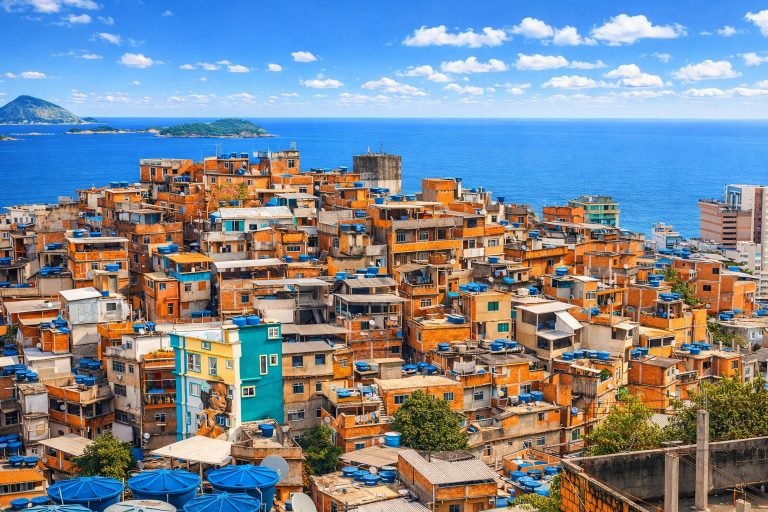
This Brazil itinerary is designed for travelers who want structure without feeling rushed. It works particularly well for first-time visitors who want to experience the country’s most iconic cities, Rio de Janeiro, São Paulo, and Salvador, while still ending with a powerful natural highlight at Iguazu Falls.
If your idea of Brazil includes Christ the Redeemer at sunrise, a real beach day in Rio, a serious food night in São Paulo, live music after dinner, colonial streets in Salvador, and a waterfall finale that genuinely feels cinematic, this route delivers that balance.
It is not an Amazon expedition, a Pantanal wildlife safari, or a slow backpacking loop through small interior towns. Brazil is too large to “see everything” in two weeks, and this itinerary intentionally focuses on depth within three major cultural centers rather than surface-level coverage of five or six regions.
The pace is active but realistic. You will move between cities, but you will not change locations every two days. Each stop has enough time to settle in, understand the rhythm, and build evenings that feel intentional rather than improvised.
This route works best if:
• You are comfortable taking short domestic flights.
• You enjoy food, nightlife, and city energy as much as landscapes.
• You prefer structured days with breathing room over constant transit.
• You want variety, beaches, culture, architecture, music, and nature, in one trip.
Couples and honeymooners often find this structure particularly appealing because it allows for small romantic upgrades without turning the trip into something unrealistic or overly luxurious. A sunset in Rio, a special dinner in São Paulo, or a quiet evening in Salvador can shift the tone of the trip without rewriting the entire itinerary.
If you are looking for a slower, overland-style backpacking route with long bus journeys and multiple interior stops, you would design a very different plan. This itinerary is built around efficiency, experience, and contrast, not endurance.
Used correctly, it gives you a version of Brazil that feels layered and complete rather than rushed.
Best Time to Follow This Brazil Itinerary
Brazil is a year-round destination, but the experience of this itinerary changes depending on when you visit. Rio de Janeiro, São Paulo, Salvador, and Iguazu Falls all sit in different climate zones, so “best time” depends on what you value most: beach weather, comfortable city exploring, lower prices, or dramatic waterfall volume.
December to March (Summer, Peak Energy, Beach Season)
This is Brazil’s summer and high season, especially in Rio and Salvador. Expect heat, humidity, and a lively atmosphere. Beach days in Rio feel electric, sunsets are long, and nightlife is at its most vibrant. Salvador’s coastal rhythm thrives in this season as well.
However, this period also brings higher hotel prices, busier attractions, and occasional heavy rain showers, usually intense but brief. Iguazu Falls often runs at higher water levels during the rainy season, which makes the falls more powerful and dramatic, though viewpoints can be mistier.
If your priority is maximum energy, warm ocean water, and a festive atmosphere, this is an excellent time to follow this Brazil itinerary, just book flights and accommodation well in advance.
February or March (Carnival Period)
Carnival transforms Rio and Salvador completely. The city becomes louder, brighter, and more intense. Samba schools rehearse year-round, but during Carnival week the entire urban rhythm changes.
This can be an unforgettable experience, but it requires planning. Hotel availability tightens significantly, prices rise, and domestic flights fill quickly. If you choose to follow this itinerary during Carnival, secure accommodation and flights early and expect a higher overall budget.
For some travelers, Carnival is the reason to visit. For others, it can feel overwhelming. Knowing your own tolerance for crowds will determine whether this period enhances or complicates the experience.
April to June (Shoulder Season, Balanced Conditions)
This is often considered one of the most comfortable times to travel. Rio’s humidity drops slightly, temperatures remain warm, and sightseeing becomes easier without extreme heat. São Paulo is pleasant for walking neighborhoods and exploring museums, and Salvador maintains a warm tropical feel.
Iguazu Falls still carries strong water flow during parts of this period, but visibility can improve compared to peak rainy months.
For travelers who want fewer crowds while maintaining good weather, this window offers a strong balance.
July to September (Cooler, Drier, Excellent for Exploring)
These months correspond to Brazil’s winter in the southeast. Rio and São Paulo are noticeably cooler but still comfortable. Daytime temperatures often remain pleasant, especially for walking-heavy days like Centro in Rio or cultural exploration in São Paulo.
Salvador remains warm year-round, though you may encounter occasional rain. Iguazu Falls may have slightly lower water volume compared to peak rainy season, but the clearer air can improve panoramic views from the Brazilian side.
If your priority is sightseeing comfort over peak beach heat, this is one of the most practical times to follow the itinerary.
October to November (Transitional Season)
Temperatures begin rising again in Rio and São Paulo, and humidity gradually increases. Crowds remain moderate compared to peak summer months. This can be a good compromise between warm beach weather and manageable pricing.
Rainfall patterns vary by region, so flexibility remains helpful. Iguazu may begin seeing increased water flow again as rainy periods return.
How Seasonality Affects This Itinerary
This Brazil itinerary works year-round, but the emphasis shifts slightly:
• Summer emphasizes beach life and nightlife energy.
• Shoulder seasons emphasize cultural exploration and comfort.
• Winter emphasizes walkability and lower crowd density.
• Rainier months enhance Iguazu’s dramatic power but may reduce visibility at times.
The key is not avoiding certain months — it is aligning expectations. Brazil’s cities remain alive in every season. The difference lies in intensity, pricing, and the balance between heat and comfort.
If flexibility allows, April to June and August to early November often provide the most balanced overall conditions for this specific 7-, 10-, or 14-day route.
❓ Frequently Asked Questions About This Brazil Itinerary
🇧🇷 Is Brazil safe for first-time visitors?
Brazil can be safe for travelers who use smart city habits: stay aware in busy areas, do not flash valuables, use rideshares at night, and choose accommodation in well-reviewed neighborhoods. Rio, São Paulo, and Salvador all have areas that feel very comfortable for visitors, especially when you base yourself well and move around with intention.
🗓️ How many days do I need for this itinerary?
Seven days gives you a strong “best of” taste of Rio, São Paulo, and Salvador. Ten days feels more relaxed and lets you add depth or a beach break. Fourteen days is best if you want to include Iguazu Falls without rushing and still have real downtime.
✈️ Do I need domestic flights, or can I travel by bus?
For this specific route, flights make the itinerary dramatically easier. Distances are huge, and overland travel between these cities can eat up full days. Buses are great for shorter regional hops, but for Rio–São Paulo–Salvador (and especially Salvador–Iguazu), flying is the most practical option for most travelers.
🧳 What is the best time of year to follow this Brazil itinerary?
Brazil is a year-round destination, but weather varies by region. Many travelers prefer the drier, slightly cooler months for city exploring and beach time, while summer brings more heat, humidity, and peak travel demand. If Carnival is on your bucket list, plan far ahead because prices and availability change fast.
🏨 Where should I stay in each city for the easiest experience?
In Rio, staying near the beach zones makes sightseeing and downtime feel effortless. In São Paulo, a walkable neighborhood with great food access is the biggest quality-of-life upgrade. In Salvador, choosing the right base is key because it affects both safety and how easily you can reach the historic center and coastline.
🌊 Is Iguazu Falls worth adding to the 14-day version?
Yes — Iguazu is one of those places that feels genuinely “world class,” and it adds a totally different kind of experience compared to the big cities. The key is giving it enough time so it feels like a highlight, not a transit-heavy detour.
📱 Should I get a SIM or an eSIM for Brazil?
If your phone supports it, an eSIM is often the simplest setup because you can land connected without finding a store. If you prefer a physical SIM, you can still buy one locally, but registration steps can vary. Either way, having data makes rideshares, maps, and translation much easier in Brazil.
💳 Do I need cash, or can I use cards everywhere?
Cards are widely accepted in major cities, but having a small amount of cash is still useful for street food, markets, tips, and small local spots. A travel-friendly card with low fees is ideal, and it is smart to keep your cash split in two places.
Final Thoughts on Planning Your Brazil Itinerary
Brazil is not a country you “tick off.” It is a country you experience in layers. This 7-, 10-, or 14-day Brazil itinerary is designed to give you contrast without chaos: Rio’s landscapes and rhythm, São Paulo’s intensity and food culture, Salvador’s warmth and history, and Iguazu’s raw natural scale.
You do not need to see everything to feel like you have seen Brazil properly. What matters is giving each stop enough time to breathe, to eat well, to walk without rushing, and to let the character of each city reveal itself gradually.
If you want to understand how these regions fit together on a broader level, climate, geography, cultural differences, and practical planning, you can also explore the complete Brazil Travel Guide for deeper context.
Whether you follow the 7-day Rio-focused version or the full 14-day route, the structure above gives you a clear, realistic framework. The rest is simply how you choose to live it.
Travel Resources to Plan, Book & Stay Connected
Use these tools and guides to stay connected abroad, find inspiration for your next trip, and book your flights, stays and gear with confidence.
Disclosure: This article may contain affiliate links. If you make a purchase through a link, I may receive a commission at no extra cost to you. I only share recommendations I believe are genuinely useful, and all opinions are my own.

Comment (0)