
🌊 Iguazu Falls at a Glance
This guide covers:
• Where Iguazu Falls is located in Brazil
• How to get there
• Where to stay in Foz do Iguaçu
• What to see and do at Iguazu Falls
• How much time you need
• Tickets and tours
• Best time to visit
• Practical planning tips
Iguazu Falls Brazil: The First Moment You See It
You hear Iguazu Falls before you see it.
A low, constant roar rolls through the forest. The air feels heavier. Then the trees open, the mist rises, and suddenly the horizon fractures into hundreds of cascading waterfalls.
Iguazu Falls Brazil is not a single waterfall. It is an enormous horseshoe-shaped system of nearly 300 separate drops stretching across the Paraná border. Water crashes, rebounds, and rises again in clouds of spray that shimmer in the sunlight. From the Brazilian side, the scale reveals itself all at once. You are not standing in front of a waterfall. You are standing inside a living landscape of water.
While the falls also extend into Argentina, the Brazilian viewpoint delivers the most complete panoramic perspective. It is here that you understand the true width, depth, and power of Iguazu.
This guide will show you exactly how to plan your visit to Iguazu Falls in Brazil, where to stay, how long you need, and how to experience it properly without rushing the moment.

Where Is Iguazu Falls?
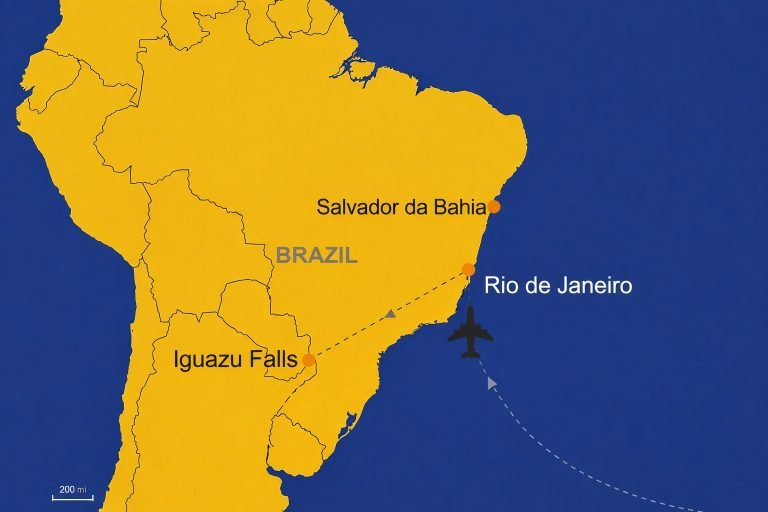
Iguazu Falls is located in southern Brazil, in the state of Paraná, near the city of Foz do Iguaçu. The falls sit directly on the border between Brazil and Argentina, with the Iguazu River forming the natural boundary between the two countries.
When travelers ask where Iguazu Falls is in Brazil, the simple answer is this: you access the Brazilian side through Foz do Iguaçu, a well-connected city about 650 kilometers west of Curitiba and close to the tri-border area where Brazil, Argentina, and Paraguay meet.
The official Iguazu Falls location inside Brazil is within Iguaçu National Park, a protected UNESCO World Heritage Site known for its Atlantic rainforest ecosystem and wildlife. The park entrance is about 15–20 minutes by car from central Foz do Iguaçu.
If you are looking at an Iguazu Falls map, you will see that the majority of the waterfall system stretches across the river into Argentina. However, the Brazilian side offers the widest panoramic viewpoint across the entire horseshoe formation.
The nearest airport is Foz do Iguaçu International Airport (IGU), located just a short drive from both the city center and the national park entrance.

How to Get to Iguazu Falls
Getting to Iguazu Falls in Brazil is straightforward. The gateway city is Foz do Iguaçu, which is well connected by domestic flights from major Brazilian hubs.
Flying to Foz do Iguaçu (IGU)
The easiest way to reach Iguazu Falls is by flying into Foz do Iguaçu International Airport (IGU). The airport is located about 15 minutes from the national park entrance and roughly 20 minutes from the city center.
From the airport, you can take a taxi, Uber, hotel transfer, or public bus directly to your accommodation or the park.
From Rio de Janeiro
Direct flights from Rio de Janeiro take approximately 2 hours and 15 minutes. Multiple departures run daily, making Iguazu an easy addition to a broader Brazil itinerary.
From São Paulo
Flights from São Paulo are even shorter, typically around 1 hour and 45 minutes. Because São Paulo is Brazil’s main aviation hub, this is often the most flexible routing option.
From Salvador
From Salvador, expect a flight time of around 3 to 4 hours, usually with a connection in São Paulo or Rio.
If you are planning a multi-city trip through Brazil, Iguazu Falls fits naturally into routes that include Rio de Janeiro, São Paulo, or Salvador. See how to structure your trip in our Brazil itinerary guide.
Border Note
Foz do Iguaçu sits near the tri-border area of Brazil, Argentina, and Paraguay. While it is possible to visit the Argentine side of the falls or cross into Paraguay, most travelers visiting Iguazu Falls in Brazil can base themselves entirely in Foz without needing to cross a border.

Where to Stay in Foz do Iguaçu
Choosing where to stay for Iguazu Falls is simple once you understand the layout. Most travelers base themselves in Foz do Iguaçu, the Brazilian gateway city that sits just 15–20 minutes from the national park entrance. From here, you can easily access the falls, restaurants, transport connections, and airport without overcomplicating your itinerary.
If you want absolute proximity and exclusivity, there are premium options near the park road. If you prefer better value and dining access, central Foz offers comfortable hotels at more accessible prices. Below are carefully selected Iguazu Falls hotels grouped by budget to help you decide quickly and confidently.
HOTELS IN FOZ DO IGUAÇU
Budget Hotels
Sueli Lourdes Hubner
470 Rua Quito, Foz do Iguaçu, CEP 85858-070, Brazil
A simple and practical stay in a quiet residential area of Foz do Iguaçu. This option suits travelers who plan to spend most of their time exploring the falls rather than relaxing at the hotel. It offers solid value for budget-conscious visitors who want a clean base and easy access to transport.
Pousada Cidade Linda
Avenida das Cataratas, 6075, Foz do Iguaçu, CEP 85853-000, Brazil, +55 45 99915-6645
Located along the main road toward the falls, this pousada makes logistics especially easy. The atmosphere is relaxed and functional, with straightforward comfort after long days in the park. A smart choice if you want affordability without sacrificing location convenience.
Mid-Range Comfort Hotels
Bom e Barato rede de hotéis
Avenida República Argentina, 7180, Foz do Iguaçu, CEP 85.851-200, Brazil, +55 45 9958-6939
A balanced option offering comfort without luxury pricing. Well positioned for accessing both the park and central amenities, it suits travelers who want reliable facilities and a smooth stay. Ideal for couples or small families building Iguazu into a larger Brazil trip.
Complexo Eco Cataratas Resort by SJ
Rodovia das Cataratas, Km 06, Foz do Iguaçu, CEP 85863-000, Brazil, +55 45 2105 9200
Set along the road leading to the falls, this resort-style property offers more space and on-site amenities. Pools, landscaped grounds, and relaxed dining options create a comfortable base after humid park days. A strong mid-range choice if you want a more self-contained experience.
Luxury Stays
LAS Hotel Boutique
Rua Oscar Genehr, 425, Foz do Iguaçu, CEP 85853-860, Brazil, +55 45 3527-7700
A refined boutique property with a more intimate, design-forward feel. It blends privacy and curated aesthetics with convenient access to the falls corridor. Perfect for travelers who want comfort and atmosphere without resort-scale crowds.
MY MABU
492 Rua Carlos Hugo Urnau, Foz do Iguaçu, CEP 85853-734, Brazil, +55 45 4052-3001
A larger upscale option offering extensive facilities and a more dynamic resort environment. With generous rooms and leisure amenities, it works well for families or travelers who want relaxation time alongside waterfall exploration.
Browse More Foz do Iguaçu Hotels
Availability can tighten during peak travel months and Brazilian holidays, so it is wise to secure your stay early if you are visiting in high season.

What to Do at Iguazu Falls
The best way to experience Iguazu Falls is to treat it like a full landscape, not a single viewpoint. You are moving through rainforest, mist, and open panoramic lookouts, with the sound of water building and fading as the trail bends. Some moments feel cinematic and wide, others feel intimate, like you have stepped into the lungs of the forest and the air itself is wet.
Before anything else, know this: your park entrance ticket is for Iguaçu National Park, and the smoothest visits start by buying your timed entry online through the official ticket portal at tickets.cataratasdoiguacu.com.br. Purchasing online helps reduce waiting time at the entrance, especially during high season and Brazilian holidays.
Start with the Panoramic Main Walk
The signature experience on the Brazilian side is the main panoramic walk, commonly called the Trilha das Cataratas. It is not a difficult hike. It is a scenic, steady route designed to reveal the falls in stages, viewpoint after viewpoint, until the final walkway brings you close enough to feel the vibration in your chest.
This is where Iguazu feels different from almost any waterfall on earth. You do not approach one drop. You watch an entire wall of water assemble itself across the horizon, with separate curtains joining into something that looks alive. On clear days, the mist forms rainbows that come and go as the wind changes. On humid days, the spray becomes part of the experience, and your photos will look like they were taken inside a cloud.
Devil’s Throat View and the Mist Moment
The emotional peak for many visitors is the moment you reach the final viewing platforms, where the roar becomes physical and the spray starts to coat your skin. This is also where crowds tend to compress because everyone slows down, films, takes photos, and simply watches.
If you want a calmer experience, arrive early in the day or aim for later afternoon when many day trippers have already left. The Brazilian perspective gives you a wide, powerful view across the system and toward the most dramatic sections of the falls.
Explore Beyond the Main Walk
Most visitors complete the main panoramic trail and leave, but the park includes additional walking routes that take you deeper into the forest environment. These trails offer quieter moments, more wildlife sightings, and a shift from open waterfall views to shaded rainforest paths.
Allowing extra time transforms Iguazu from a scenic stop into a proper national park experience. You begin to notice the ecosystem around the falls rather than only the water itself.
Wildlife and Atmosphere
Iguazu is not only about waterfalls. It is Atlantic rainforest. Butterflies drift through the mist. Birds call from the canopy. Coatis often wander near busy viewing areas. Keep food sealed and avoid feeding wildlife, as animals have become accustomed to visitors.
The combination of water, jungle, humidity, and sound gives Iguazu a distinct atmosphere. It feels alive in a way that many single-drop waterfalls do not.
Macuco Safari Boat Ride
If you want adrenaline and you are comfortable getting completely soaked, the Macuco Safari boat experience delivers the closest approach to the falling water. The experience includes a forest segment followed by a speedboat ride toward the spray zone beneath the falls.
The full experience typically lasts around two hours, including preparation and transport segments. During peak months, waiting times can extend significantly, so it is wise to schedule it strategically within your day.
🚤 Iguazu Falls & Macuco Safari Boat Experience
Combine panoramic views of Iguazu Falls with the thrilling Macuco Safari boat ride. A seamless way to experience both the walkways and the waterfall up close.
If you plan to include the boat ride, allocate at least half a day of flexibility. It pairs well with a slower afternoon exploring the viewpoints once you have dried off.
Helicopter Flights Over Iguazu
For a completely different perspective, helicopter flights offer a short but powerful aerial view of the entire waterfall system. Flights typically last around 10 to 12 minutes and provide a full overview of the river, the forest, and the immense scale of the cascades.
For travelers craving something unforgettable, a helicopter flight over Iguazu delivers pure adrenaline, sweeping views, and a perspective few people ever get to experience.
🚁 Helicopter Ride Over Iguazu Falls
Soar above the thunder of Iguazu and watch the waterfalls unfold beneath you in cinematic scale. A thrilling, once-in-a-lifetime aerial experience.
How Long to Spend Inside the Park
If you focus only on the main panoramic walk and viewing platforms, you can complete the core experience in approximately three to four hours at a relaxed pace. Adding the boat ride or additional trails can easily extend your visit to a full day.
The key to a smoother experience is timing. Arrive early to avoid peak entry congestion and to enjoy clearer viewpoints before mid-day crowds build. The falls are powerful at any hour, but your experience of space and atmosphere improves dramatically outside peak arrival windows.
Start with the panoramic walk to understand the scale. Then choose your depth: more trails for immersion, the boat ride for intensity, or a helicopter for perspective. Iguazu rewards those who give it time.

How Much Time Do You Need at Iguazu Falls?
How much time you need at Iguazu Falls depends on what kind of visit you want. If you only want the classic panoramic experience and the main viewing platforms, one day is enough. If you want the full national park feel, slower trails, and a major add-on like the boat ride, two days is far more comfortable.
One Day at Iguazu Falls (Classic Highlights)
A one day plan is ideal if Iguazu is a single stop inside a larger Brazil trip and you want the essential experience without rushing. You can see the main panoramic walk, spend time at the final platforms where the spray and roar peak, take photos at multiple viewpoints, and still have time to breathe.
A practical rhythm looks like this: arrive early, enter the park, complete the panoramic trail at a relaxed pace, then use the remainder of your time for slower viewpoints or an additional short trail if you want more rainforest atmosphere. In peak periods, arriving early also helps you avoid the most crowded entry window and enjoy a calmer first hour inside the park.
Two Days at Iguazu Falls (Best Overall Experience)
Two days is the better choice if you want Iguazu to feel like a full nature experience rather than a checklist stop. With an extra day, you can return to the viewpoints in different light, explore additional trails without constantly checking the clock, and still add a major activity without sacrificing the atmosphere.
This is also the smarter plan if you want to include the Macuco Safari boat ride. That experience can add significant waiting time during busy months, and you will enjoy it more if it is not competing with your main walk and viewing platforms on the same tight schedule.
Who Should Add Extra Time?
You benefit most from two days if you love photography, prefer slower travel, are visiting during high season, or want to combine the falls with other experiences around Foz do Iguaçu. Families also tend to appreciate the extra breathing room, because Iguazu is humid, active, and more enjoyable when you can take breaks without pressure.
How Iguazu Fits Into Your Brazil Itinerary
Iguazu Falls works beautifully as a 1 to 2 night addition between major cities. Most travelers fly in, stay in Foz do Iguaçu, visit the falls the next day, then fly onward. If you want the easiest structure, use Iguazu as a dedicated stop rather than a day trip from somewhere else, and build it into your route using our Brazil itinerary guide.

Iguazu Falls Tickets and Tours
Planning your Iguazu Falls visit properly starts with understanding the ticket system. Entrance to the waterfalls is controlled through Iguaçu National Park, and every visitor must purchase an official park entry ticket for their selected date.
Park Entrance Tickets
The easiest way to buy your Iguazu Falls Brazil tickets is online through the official park portal before you arrive. Tickets are issued for specific dates, and during peak months, Brazilian holidays, and school vacation periods, availability can tighten. Buying in advance reduces waiting time at the entrance and gives you more control over your arrival schedule.
If you prefer to purchase on-site, tickets are also available at the visitor center. However, during busy periods, you may encounter longer queues, particularly mid-morning when most tour groups arrive. For a smoother start, early entry combined with advance booking is the most efficient approach.
Your entrance ticket includes access to the panoramic main walk and designated park transport within the visitor zone. Additional experiences such as boat rides or helicopter flights are separate and require their own booking.
🎟️ Brazilian Side of Iguazu Falls with Ticket
Secure your admission to the Brazilian side in advance and enter the park with your ticket arranged. A simple, stress-free way to guarantee access during busy periods.
Guided vs Self-Guided Visits
Iguazu Falls can easily be explored independently. The trails are clearly marked, viewpoints are structured, and the park infrastructure is straightforward. Many travelers choose a self-guided visit because it allows them to move at their own pace and linger at viewpoints without feeling rushed.
That said, guided tours can add context. If you are particularly interested in wildlife, rainforest ecology, or the broader geography of the region, a guided experience can deepen your understanding of what you are seeing. Guided tours also simplify logistics if you prefer organized transfers and timed coordination.
Macuco Safari Boat Ride Tickets
The Macuco Safari boat ride is the most popular add-on experience at Iguazu Falls. It is not included in your standard park entrance ticket and must be booked separately. Tickets can be purchased online in advance or at the park, but availability may fluctuate depending on weather and seasonal demand.
During high season, it is wise to secure your time slot earlier in the day to avoid extended waiting periods. The boat ride combines a forest segment with a high-speed approach toward the falls, and you will get wet. If you plan to include it, structure your day so that you are not rushing between major viewpoints and scheduled activities.
Helicopter Flights and Specialty Experiences
Helicopter flights operate independently from the park entrance ticket and are typically booked through specialized operators in Foz do Iguaçu. Because flight duration is short and weather dependent, availability can shift quickly. If an aerial view is important to you, consider checking availability early in your stay rather than leaving it to the final day.
Helicopter experiences offer a dramatic overview of the waterfall system and surrounding rainforest, but they are optional. Many travelers find the ground-level experience more than sufficient, while others appreciate seeing the full scale from above.
Should You Book Tours in Advance?
If you are visiting Iguazu during low season and traveling independently, booking only your park entrance ticket in advance is usually enough. During peak travel months, long weekends, or Brazilian holiday periods, pre-booking both your entrance and any additional experiences is the safest strategy.
The key is balance. Secure the essentials, allow flexibility in your schedule, and leave space to experience Iguazu without constantly checking the clock. The waterfalls reward time and attention far more than rigid planning.
🌎 Explore More Iguazu Falls Experiences
Want to compare guided tours, boat rides, helicopter flights, and other Iguazu Falls experiences before finalizing your plan? Browse the most popular options in one place.

When to Visit Iguazu Falls
The best time to visit Iguazu Falls depends on what you value most: water volume, comfortable temperatures, or fewer crowds. Iguazu sits in a subtropical region of southern Brazil, which means heat and humidity are part of the experience for much of the year.
High Water Season: Bigger Volume, Stronger Mist
Rainfall upstream directly affects the power of the falls. After heavy rain periods, water levels rise dramatically and the waterfalls feel louder, wider, and more intense. This typically happens during the wetter months, which often run from late spring through summer.
During high water periods, the spray is stronger and some viewpoints can feel dramatically immersive. Rainbows are frequent, the roar is constant, and the atmosphere feels almost tropical. The trade-off is heavier humidity, occasional rain showers, and potentially busier visitor numbers.
Drier Months: Clearer Views, More Defined Cascades
During drier months, water flow can be slightly lower, but this does not mean the falls are unimpressive. Instead, individual cascades become more defined and photography can be easier due to reduced mist. Trails may feel less slippery, and the overall experience can be more comfortable.
Temperatures are generally milder in Brazil’s winter months, especially between May and September. This period is often considered the most comfortable time to visit Iguazu Falls if you prefer cooler air and lower humidity.
Heat and Humidity Reality
Iguazu is rarely cold. In summer months, daytime temperatures can feel intense, especially combined with humidity and walking exposure. If you visit during peak summer, plan for hydration, sun protection, and slower pacing.
Winter months are not cold in a dramatic sense, but they are noticeably more pleasant for extended walking. Early mornings and late afternoons are particularly comfortable during this period.
Rain and Weather Expectations
Rain can occur at any time of year. However, brief tropical-style showers are common and do not necessarily ruin the experience. In fact, light rain can intensify the atmosphere, deepen colors, and enhance the sense of immersion.
If you are concerned about weather, avoid planning Iguazu as a strict half-day stop. Allowing flexibility within a one- or two-day stay gives you room to adjust around passing rain.
So, When Is the Best Month?
For the best balance of water volume, manageable humidity, and comfort, many travelers prefer visiting between May and September. This period offers milder temperatures while still delivering impressive flow.
If you want the most dramatic water power and do not mind heat, the wetter months can be spectacular. The waterfalls feel raw and overwhelming, and the intensity becomes part of the memory.
Ultimately, Iguazu Falls is powerful year-round. The difference lies in comfort and atmosphere rather than whether the falls are worth visiting. Choose your timing based on your tolerance for heat and your preference for either maximum water volume or maximum walking comfort.
Getting Around Foz do Iguaçu
Getting around Foz do Iguaçu is straightforward. Distances between the airport, the city center, and Iguaçu National Park are short, and transport options are simple to navigate even for first-time visitors.
Taxi and Uber
Taxis are widely available at the airport, hotels, and major intersections in the city. Uber also operates reliably in Foz do Iguaçu and is often slightly cheaper than traditional taxis. A ride between central Foz and the national park entrance typically takes 15 to 20 minutes, depending on traffic.
If you are traveling with luggage or arriving late at night, Uber or a taxi is the most convenient option.
Public Bus
Public buses connect the city center, airport, and national park. They are inexpensive and reasonably frequent during the day. The journey from central Foz to the park entrance usually takes around 30 to 40 minutes.
For budget travelers, the bus system works well. Just allow extra time during peak hours and have small cash available for fares.
Hotel Transfers
Many hotels in Foz do Iguaçu can arrange airport transfers or transport to the falls. This option is convenient if you prefer not to manage transport logistics on arrival or if you are traveling in a group.
Inside Iguaçu National Park
After entering the park, internal transport operates between the visitor center and designated trail access points. You do not need a private vehicle inside the main visitor area. The park system is designed to guide visitors efficiently toward the main panoramic route.
Because travel distances are short and infrastructure is well organized, Iguazu is one of the easier natural attractions in Brazil to navigate. Most visitors find transport simple and stress free, allowing them to focus entirely on the experience of the falls.

Practical Tips for Visiting Iguazu Falls
Iguazu is easy to visit, but it is not a casual city stroll. You are walking through a humid rainforest beside one of the most powerful waterfall systems in the world. A few simple preparations make the difference between a rushed visit and a smooth one.
What to Wear
Light, breathable clothing works best. The humidity can be high even outside peak summer, and you will be walking for several hours. Quick-dry fabrics are ideal, especially if you plan to include the boat ride.
Footwear Matters
Wear comfortable walking shoes with good grip. Trails are well maintained, but mist and humidity can make surfaces slippery near major viewpoints. Sandals are possible, but secure walking shoes are strongly recommended if you plan to cover the full route.
Rain Protection and Electronics
You will likely get wet near the final viewing platforms, even without rain. Bring a lightweight rain jacket or poncho if you prefer to stay drier. For phones and cameras, a simple waterproof pouch or zip bag can prevent frustration.
Hydration and Sun Protection
Carry water, especially in warmer months. Sun exposure combined with humidity can be draining. A hat and sunscreen are useful even on overcast days because UV levels remain high.
Timing Strategy
Arriving early is the easiest way to improve your experience. Early entry reduces waiting at the entrance and allows you to enjoy the main viewpoints before peak tour group hours. Late afternoon can also be calmer, depending on the season.
Border Crossing Reminder
If you are considering visiting both Brazil and Argentina during your stay, remember that crossing the border requires a valid passport and may involve waiting time depending on traffic. Plan accordingly and avoid scheduling tight return flights on the same day.
Allow Breathing Room
The most common mistake visitors make is trying to compress Iguazu into a strict, fast-moving schedule. The falls reward slow walking, stopping often, and simply standing still for a few minutes. Build your visit around presence rather than speed.
Continue Exploring Brazil
Iguazu Falls is one of Brazil’s most powerful natural experiences, but it is only one chapter of a much larger journey. Whether you are planning a short visit or a multi-city adventure, Brazil rewards travelers who connect landscapes, culture, and coastline into one cohesive route.
To see how Iguazu fits into a broader trip, explore our complete Brazil itinerary guide, or dive deeper into the country with the full Brazil travel guide.
If you are continuing east, discover iconic highlights in our Rio de Janeiro guide, explore urban energy and food culture in São Paulo, or head north for colonial streets and coastal atmosphere in Salvador.
Iguazu may be the roar you remember most, but Brazil’s diversity is what makes the entire journey unforgettable.
❓ Iguazu Falls FAQ
🌊 Is Iguazu Falls worth visiting from Brazil?
Yes. Iguazu Falls in Brazil offers the most complete panoramic view across the waterfall system, and it is one of the most visually overwhelming nature experiences in the country. The park infrastructure is well organized, the viewpoints are dramatic, and the visit fits easily into a broader Brazil itinerary.
🛂 Do you need a passport to visit Iguazu Falls from Brazil?
No. If you are visiting Iguazu Falls only within Brazil, you do not need to cross any border and you do not need a passport for the park itself. You only need a passport if you plan to cross into Argentina or Paraguay during your stay.
⏳ How long should you spend at Iguazu Falls?
Most travelers should plan for at least one full day in Foz do Iguaçu, with three to four hours inside the park for the main viewpoints at a relaxed pace. Two days is ideal if you want to add the boat ride, explore extra trails, or avoid rushing during busy seasons.
🗺️ Can you visit both Brazil and Argentina in one day?
It is possible, but it often feels rushed. Border timing can be unpredictable, and each side deserves time for viewpoints, trails, and transport. If you want to enjoy both without pressure, plan two days and keep your schedule flexible.
🧭 Is Iguazu Falls safe for tourists?
Yes, Iguazu Falls is generally safe for visitors, especially inside the national park and main tourist areas. Basic travel awareness still matters in Foz do Iguaçu, but most travelers experience Iguazu as an easy and well managed destination.
💦 How wet do you get at Iguazu Falls?
Near the final viewing platforms, you can get lightly to moderately wet from mist even on dry days. If you do the Macuco Safari boat ride, expect to get completely soaked. A poncho and waterproof protection for your phone or camera are very useful.
👀 Can you see Devil’s Throat from Brazil?
You can see the most powerful sections of the falls and the dramatic mist zone from Brazil, but the closest direct view of Devil’s Throat itself is accessed from the Argentine side. The Brazilian visit focuses on wide panoramic scale rather than close proximity to the throat.
✈️ What airport do you fly into for Iguazu Falls?
You fly into Foz do Iguaçu International Airport (IGU). It is close to both the city center and Iguaçu National Park, making it the easiest arrival point for visiting Iguazu Falls in Brazil.
📅 What is the best time to visit Iguazu Falls?
For the most comfortable weather, many travelers prefer visiting between May and September when temperatures are milder. For maximum water volume and intensity, wetter months can be spectacular, but they come with more heat, humidity, and occasional rain.
✅ Is one day enough for Iguazu Falls in Brazil?
Yes, one day is enough for the main panoramic experience if you start early and keep your plan simple. If you want to add the boat ride, explore extra trails, or avoid crowds, two days makes the visit significantly more relaxed.
Travel Resources to Plan, Book & Stay Connected
Use these tools and guides to stay connected abroad, find inspiration for your next trip, and book your flights, stays and gear with confidence.
Disclosure: This article may contain affiliate links. If you make a purchase through a link, I may receive a commission at no extra cost to you. I only share recommendations I believe are genuinely useful, and all opinions are my own.

Comment (0)