What this post covers:
- How Taichung and Sun Moon Lake fit together as one easy, well-balanced stop in Taiwan
- The best things to do in Taichung, including culture, food, nightlife, and local hidden gems
- Where to eat and drink in Taichung, from cafés and restaurants to bars, rooftops, and night markets
- What to see and do at Sun Moon Lake, beyond the main viewpoints and short visits
- Where to stay in both locations, including budget, mid-range, and iconic luxury hotels
- How to travel between Taichung and Sun Moon Lake, with realistic transport options and timing
- Suggested 3-day and 4–5 day itineraries that balance city life and lakeside scenery
- Best time to visit, practical travel tips, FAQs, and planning advice
This guide is part of our wider Taiwan travel series, which connects each region into one smooth island loop. For a complete country overview and route-planning framework, start with Things to Do in Taiwan. Many itineraries pair central Taiwan with time in the capital via Taipei, continue east into dramatic landscapes around Taroko Gorge & Hualien, slow the pace in cooler mountain forests at Alishan, explore relaxed southern city life in Kaohsiung, or finish the journey with beaches and sunsets in Kenting.
Taichung and Sun Moon Lake: A Natural Taiwan Combination
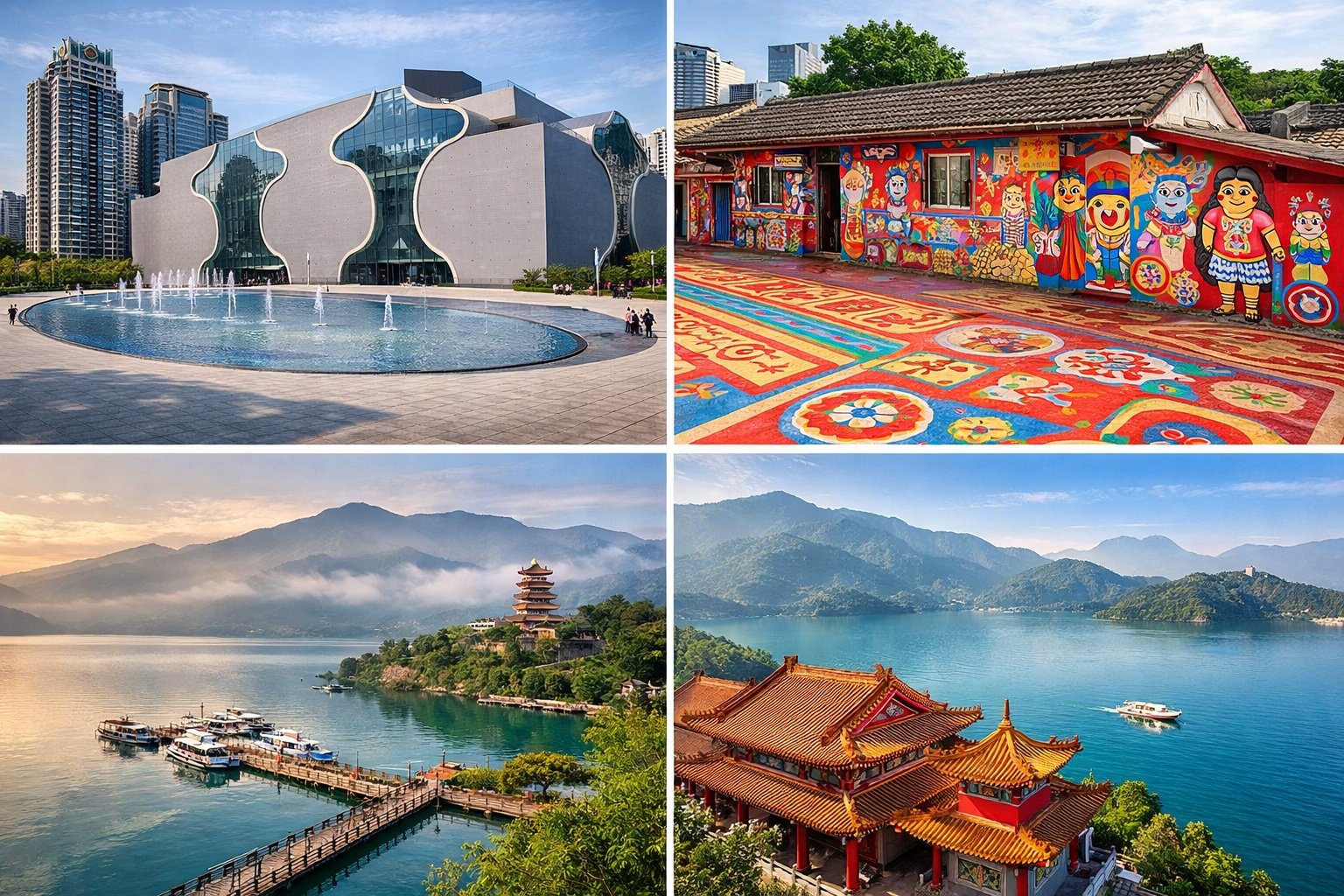
Taichung and Sun Moon Lake form one of the most natural and rewarding pairings in Taiwan. Together, they combine the comforts of a modern city with the calm of mountain and lakeside scenery, offering a balance that works well for travelers who want variety without constant movement.
Taichung is often considered one of Taiwan’s most livable cities. It has a relaxed rhythm, a strong café and food culture, and enough cultural landmarks to remain engaging without feeling overwhelming. In contrast, Sun Moon Lake offers a noticeable shift in atmosphere, with quieter roads, lakeside paths, temples, and open views that encourage a slower pace.
What makes this combination especially appealing is how easy it is to experience. Taichung serves as the main gateway to Sun Moon Lake, with direct bus connections and relatively short travel times. It is entirely possible to move from city streets and night markets to lakeside cycling paths within the same day, without complicated logistics or backtracking.
This guide is designed to help you experience both destinations at a comfortable pace. Whether you have a few days or close to a week, it provides clear guidance on what to see, where to stay, how to get around, and how Taichung and Sun Moon Lake fit together as part of a wider Taiwan itinerary.
Where Are Taichung and Sun Moon Lake?
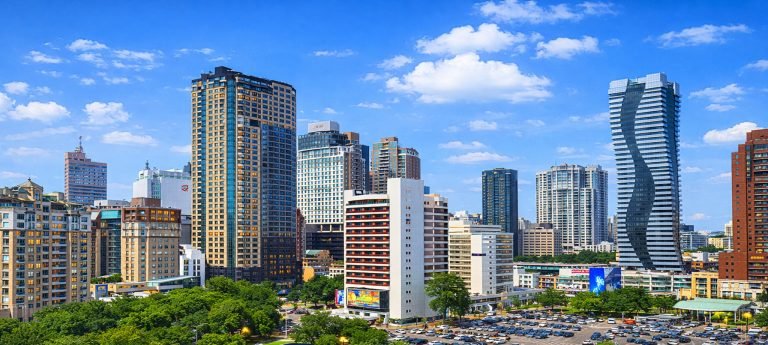
Taichung is located in central Taiwan along the island’s main west coast corridor, roughly midway between Taipei in the north and Tainan and Kaohsiung in the south. It is Taiwan’s second-largest city by population and one of its most important transport hubs, with high-speed rail, conventional train lines, and long-distance buses all passing through the city.
Sun Moon Lake is situated east of Taichung in Nantou County, a mountainous inland region known for cooler temperatures, tea-growing hillsides, and scenic landscapes. Sitting at an elevation of around 750 meters (2,460 feet), the lake offers a noticeably calmer and fresher atmosphere compared to Taiwan’s coastal cities, especially during warmer months.
The distance between Taichung and Sun Moon Lake is relatively short, at roughly 60 kilometers. This close proximity is what makes the two destinations pair so naturally. Direct buses connect central Taichung and the high-speed rail station to Sun Moon Lake in about 1.5 hours, allowing travelers to move from urban sightseeing to lakeside scenery without sacrificing a full day to transit.
From an itinerary perspective, Taichung functions as the natural gateway to Sun Moon Lake. Most travelers pass through the city when moving around Taiwan, so adding time at the lake feels like a smooth continuation of the journey rather than a detour or logistical challenge.
Best Things to Do in Taichung
Taichung offers a well-balanced mix of cultural landmarks, green spaces, and creative districts that are easy to explore without rushing. Rather than concentrating attractions in one dense area, the city spreads them out across pleasant neighborhoods, encouraging slower exploration and casual wandering.
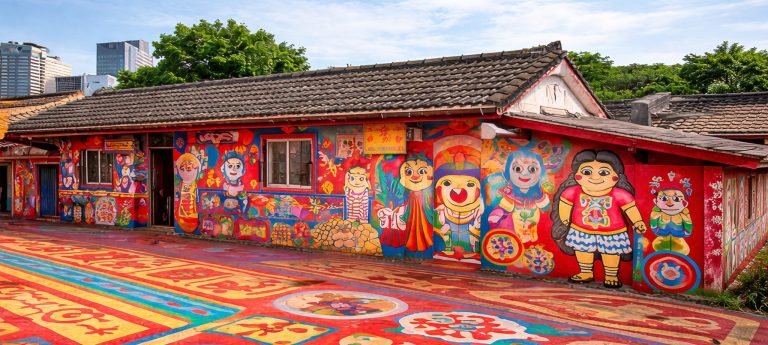
One of Taichung’s most recognizable landmarks is RAINBOW VILLAGE, a former military dependents’ village transformed into a colorful outdoor artwork by a single resident. Though small, it provides insight into Taiwan’s post-war history while showcasing a uniquely personal form of expression that has become symbolic of the city’s creative spirit.
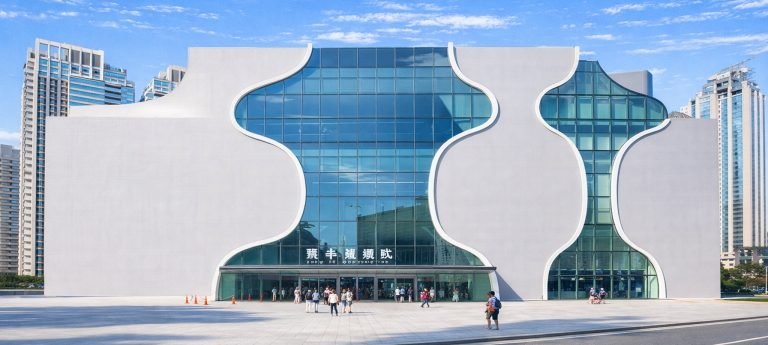
Another standout is the NATIONAL TAICHUNG THEATER. Designed by Japanese architect Toyo Ito, the building is widely regarded as one of Taiwan’s most important contemporary architectural works. Its flowing concrete interior, rooftop walkways, and open public spaces make it worth visiting even if you do not attend a performance.
For a more relaxed experience, the CALLIGRAPHY GREENWAY connects museums, galleries, cafés, and shops through a landscaped pedestrian corridor. Locals use the space daily, giving it an everyday atmosphere that reflects Taichung’s livable character.
TAICHUNG PARK offers a quieter green retreat near the city center, with walking paths, a central lake, and shaded benches. It is a popular spot for locals in the mornings and evenings and provides a glimpse into daily life away from major tourist sites.
Beyond these highlights, Taichung is home to several museums and creative districts that reward unplanned exploration. Art spaces, small galleries, and converted industrial buildings add depth to the city and reinforce its reputation as one of Taiwan’s more creatively driven urban centers.
🚶 Guided Walking Tour of Taichung City Highlights
Want to explore Taichung without worrying about routes or logistics? This guided walking tour offers an easy, flexible way to see the city’s most interesting cultural and creative spots, with optional stops depending on your pace and interests. You’ll visit highlights like the National Taichung Theater, Rainbow Village, Taichung Park, and local food favorites, all while learning about the city’s character through a local guide’s perspective.
Restaurants, Cafés & Local Food in Taichung
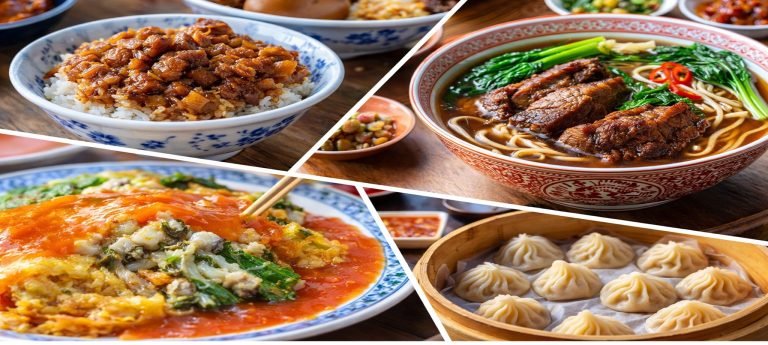
Food is central to Taichung’s identity, and many locals consider it one of the best cities in Taiwan for eating well on a daily basis. Rather than focusing on high-end dining or single signature dishes, Taichung’s food scene is defined by consistency, creativity, and variety, with strong representation from traditional Taiwanese cooking, casual neighborhood restaurants, and a thriving café culture.
For classic comfort food, long-established restaurants such as SHANGHAI DUMPLING HOUSE remain local staples. Known for handmade dumplings, steamed buns, and familiar Shanghainese flavors, places like this attract repeat customers who value reliability and generous portions over trends or presentation.
Another well-known spot for everyday Taiwanese dining is CHUN SUIT TANG, which originated in Taichung and is widely credited with popularizing bubble tea. Beyond drinks, it serves a full menu of light meals and snacks, making it an easy introduction to Taichung’s role in shaping modern Taiwanese food culture.
Taichung also has a strong café identity, particularly around areas such as Calligraphy Greenway. Design-forward spaces like HAUSINC CAFÉ blend architecture, coffee, and atmosphere, drawing people who come as much for the space itself as for the drinks. These cafés often encourage long visits, conversations, and slow afternoons rather than quick takeaways.
For something quieter and more scenic, MITAKA 3E CAFÉ sits slightly outside the city center and overlooks the surrounding landscape. Known for desserts and its elevated location, it attracts couples and small groups looking to slow down, especially in the late afternoon.
Casual local eateries are everywhere in Taichung, particularly in residential neighborhoods where menus focus on a small number of well-executed dishes. Noodle shops, rice bowl specialists, and family-run restaurants often serve the same recipes they have for decades, contributing to the city’s reputation for dependable, everyday food rather than novelty dining.
Street food plays a major role in Taichung’s food culture, and FENGJIA NIGHT MARKET is the city’s most famous example. Spread across multiple streets near Feng Chia University, it is known not only for its size but for constant experimentation. Many snacks that later become popular across Taiwan first appear here, which is why both locals and visitors continue to return.
Taken together, Taichung’s restaurants, cafés, and street food reflect a city that eats often, eats well, and treats food as part of daily life rather than a special occasion. For travelers who enjoy discovering meals organically and returning to places they like, Taichung is one of Taiwan’s most satisfying cities to explore.
Street Food & Night Markets in Taichung
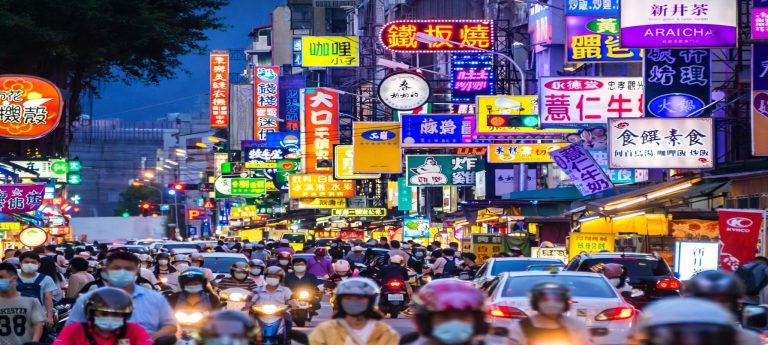
Street food is an essential part of daily life in Taichung and one of the clearest ways to understand the city’s food culture. While restaurants and cafés shape the daytime rhythm, evenings often revolve around night markets and street stalls, where locals eat casually, socialize, and sample new flavors without planning ahead.
The most famous of these is FENGJA NIGHT MARKET, located near Feng Chia University in western Taichung. It is one of the largest night markets in Taiwan and is known for constant experimentation, with vendors frequently testing new snacks and flavor combinations. Many street foods that later become popular across the island first appear here, which is why locals continue to visit long after their student years.
Beyond Fengjia, YIZHONG STREET NIGHT MARKET offers a slightly more local feel, centered around the university district near Taichung Park. The market attracts a younger crowd and focuses on affordable, filling snacks such as fried chicken, rice dishes, and sweet treats. It is less polished than Fengjia but often feels more representative of everyday student life in the city.
For a daytime street food experience, TAICHUNG SECOND MARKET remains one of the city’s most traditional food hubs. Established decades ago, it is best known for simple Taiwanese meals, noodle soups, and long-running stalls that serve the same dishes to loyal customers year after year. Visiting earlier in the day offers a slower, more intimate look at Taichung’s food traditions.
Smaller neighborhood night markets and street corners also play an important role in Taichung’s food landscape. Temporary evening stalls appear across different districts, selling grilled meats, dumplings, desserts, and seasonal snacks. These informal setups highlight how deeply street food is woven into daily routines rather than reserved for special outings.
Taken together, Taichung’s street food and night markets add an easy, social layer to the city’s evenings. Whether you are wandering through a massive market like Fengjia or grabbing a quick bite from a neighborhood stall, these spaces offer some of the most relaxed and memorable food experiences in the city.
Bars, Rooftops & Nightlife in Taichung
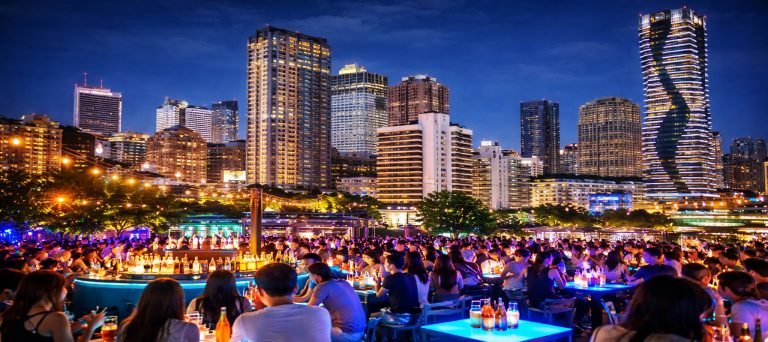
Taichung’s nightlife is understated but surprisingly rewarding. Rather than revolving around large club districts, evenings here are shaped by well-designed cocktail bars, relaxed lounges, and a small number of late-night venues that prioritize atmosphere and socializing over excess. It is a scene that suits travelers who enjoy conversation, good music, and staying out without feeling rushed or overwhelmed.
One of the most respected cocktail bars in the city is LAY LOW, located near the West District. Hidden behind a discreet entrance, it is known for carefully balanced cocktails and a calm, intimate setting. People come here for the craftsmanship and relaxed pace, making it ideal for a slow start to the evening or a quieter night out.
Another favorite among locals is VENDER BAR, a modern cocktail bar known for its clean design and creative drink menu. Situated close to Taichung’s central areas, it attracts a crowd that appreciates quality ingredients and thoughtful presentation. The atmosphere encourages conversation, and it is often busiest later in the evening.
CHAR CHAR STEAK & BAR has incorporated the former Bar Mood concept, combining a high-quality steakhouse with a refined cocktail bar atmosphere. Located in the West District, it attracts a mixed crowd of locals and visitors who come for well-crafted drinks as much as for dinner. The bar side works well as a relaxed evening stop, offering a comfortable, social setting that fits Taichung’s preference for understated nightlife.
For something slightly more energetic without tipping into club territory, ROOFTOP BAR @ TEMPUS HOTEL offers elevated views over the city in a comfortable, hotel-style setting. Located in the city center, it is popular around sunset and early evening, when people come for drinks, city views, and a relaxed social atmosphere rather than late-night partying.
For a livelier but still approachable option, WOO BAR TAICHUNG offers a modern lounge setting with DJs, drinks, and a late-night crowd. It sits closer to the polished end of Taichung nightlife, attracting locals dressed for a night out rather than backpackers chasing clubs. It works best if you want atmosphere and energy without stepping into a full nightclub environment.
Overall, nightlife in Taichung favors bars and lounges over large clubs. Evenings tend to unfold slowly, often starting with dinner, moving into cocktails, and ending earlier than in cities like Taipei or Kaohsiung. This rhythm suits travelers who prefer social, comfortable spaces where drinks and conversation take priority over loud music and packed dance floors.
Overall, nightlife in Taichung is best approached with the expectation of balance rather than intensity. Whether you spend the evening sipping cocktails, enjoying city views from above, or staying out late at a club, the city offers enough variety to shape an enjoyable night without the pressure of a nonstop party scene.
Hidden Gems in Taichung
Taichung rewards travelers who are willing to look beyond its headline attractions. Much of the city’s appeal lies in quieter neighborhoods, everyday public spaces, and creative corners that are easy to miss if you stick only to the main sights. These places offer a more local, lived-in perspective on the city.
AUDIT VILLAGE, located near Calligraphy Greenway, is a small creative district built on the site of former military housing. Today, it is home to independent shops, design studios, pop-up exhibitions, and small cafés. The area changes frequently, which makes repeat visits worthwhile, and it offers a good sense of Taichung’s younger creative scene.
For a slower, more traditional atmosphere, TAICHUNG SECOND MARKET provides a glimpse into daily life that feels far removed from tourist-oriented night markets. Established decades ago, the market is known for simple local meals, traditional snacks, and small vendors who have been serving the same customers for generations. It is best visited during the day, when the pace is unhurried and local routines are on full display.
LIUCHUAN RIVER WALK is an overlooked urban walking route that runs quietly through parts of the city. Restoration projects have transformed the riverbanks into landscaped paths with bridges, seating areas, and subtle lighting. It is especially pleasant in the early evening, when locals come out for walks and the city feels calmer.
Those interested in Taichung’s religious and cultural layers may want to visit LECHENG TEMPLE, one of the city’s older temples dedicated to Mazu. Less crowded than larger temples, it offers a more intimate setting where daily rituals continue largely unchanged. Visiting in the morning provides a quiet moment to observe local worship without feeling intrusive.
For something unexpected, CARTON KING CREATIVE PARK blends playful design with environmental themes. Many of the structures and decorations are made from recycled cardboard, creating a space that feels both whimsical and thoughtful. While it may sound unusual, it reflects Taichung’s tendency to approach creativity in practical, accessible ways rather than grand gestures.
DAKENG SCENIC AREA, located just northeast of the city center, offers forested hiking trails and elevated views that are often overlooked by visitors. The trails range from gentle walks to steeper climbs with wooden staircases, making it easy to choose a route that fits your energy level. It is an excellent option for escaping the city without committing to a full day trip.
Taken together, these hidden gems highlight a side of Taichung that feels calm, creative, and grounded in everyday life. They are the kinds of places that add texture to a visit and often become the moments travelers remember most clearly.
Where to Stay in Taichung
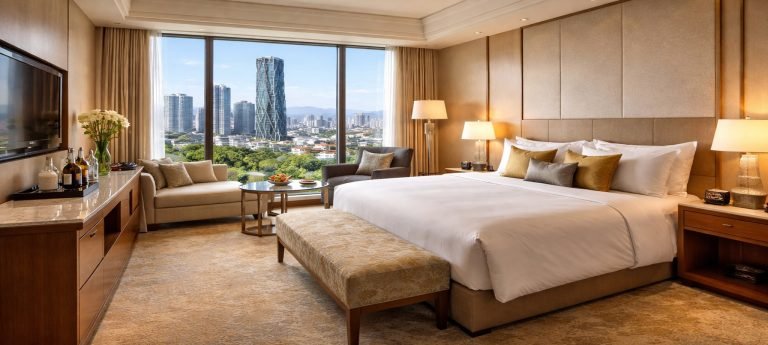
Choosing where to stay in Taichung can shape how you experience the city, as neighborhoods here vary from lively central districts to quieter residential areas. Whether you are looking for a simple, affordable base, a comfortable mid-range hotel close to transport, or a more refined stay with extra space and amenities, Taichung offers options that make it easy to explore without long commutes or complicated planning. The hotels below are well-located choices that suit different travel styles while keeping you connected to the city’s food, culture, and everyday life.
Budget Hotels
THE FORBES HOTEL
No. 181, Xueshi Road, North District, Taichung, 404 · +886 4 2205 8811
The Forbes Hotel is a practical, no-frills option located in Taichung’s North District, close to local eateries, transport links, and everyday city life. Rooms are simple but functional, making it a good choice for travelers who plan to spend most of their time exploring rather than staying in. Its location makes it easy to move between districts without relying heavily on taxis.
Check availability and prices for The Forbes Hotel
KIWI EXPRESS HOTEL
No. 29, Luchuan W. Street, West District, Taichung City 403 · +886 4 3506 7728
Kiwi Express Hotel offers affordable accommodation in Taichung’s West District, within walking distance of riverside paths, markets, and central shopping areas. The hotel is popular with budget-conscious travelers who want clean rooms and a convenient base rather than extra amenities. Its central location makes short stays and overnight stopovers especially easy.
See current deals at Kiwi Express Hotel
Mid-Range Comfort
MERCURY HOTEL TAICHUNG
No. 22, Sec. 3, Liuchuan W. Road, Central District, Taichung 400 · +886 4 2222 9880
Mercury Hotel Taichung sits in the Central District, close to Taichung Train Station and key transport routes. It offers a comfortable step up from budget hotels, with larger rooms and a quieter atmosphere. The location is particularly convenient for travelers arriving by train or planning day trips out of the city.
View rooms and rates at Mercury Hotel Taichung
ELENCE HOTEL (怡東旅店)
No. 700, Jiancheng Road, East District, Taichung City 401 · +886 4 3707 0588
Elence Hotel is a comfortable mid-range option located in Taichung’s East District, an area that feels more residential and less touristy. Rooms are modern and well maintained, making it a good choice for travelers who value comfort without luxury pricing. The neighborhood offers easy access to local dining and everyday services.
Check availability at Elence Hotel
Luxury Hotels
WISMART
No. 1, Sanrong South Road, Taichung 414 · +886 4 2568 9988
WiSmart offers a quieter, more refined stay away from Taichung’s busiest commercial areas. The hotel emphasizes space, privacy, and modern design, appealing to travelers who prefer calm surroundings. It works well for couples or longer stays where comfort and atmosphere matter most.
Explore luxury rooms at WiSmart
THE INTERCONTINENTAL TAICHUNG BY IHG
No. 77, Guanqian Road, West District, Taichung 40353 · +886 4 2328 1268
The InterContinental Taichung is one of the city’s most upscale hotels, located in the desirable West District near shopping, dining, and cultural attractions. Rooms are spacious and polished, with high-end amenities and professional service throughout. It is an excellent choice for travelers seeking comfort, convenience, and a premium city experience.
Check luxury availability at the InterContinental Taichung
If you are still deciding where to stay, Taichung offers a wide range of hotels across different neighborhoods and budgets. Comparing locations and amenities can help you find a base that best matches your travel style. You can browse additional options and current deals here:
Sun Moon Lake: Taiwan’s Most Scenic Escape
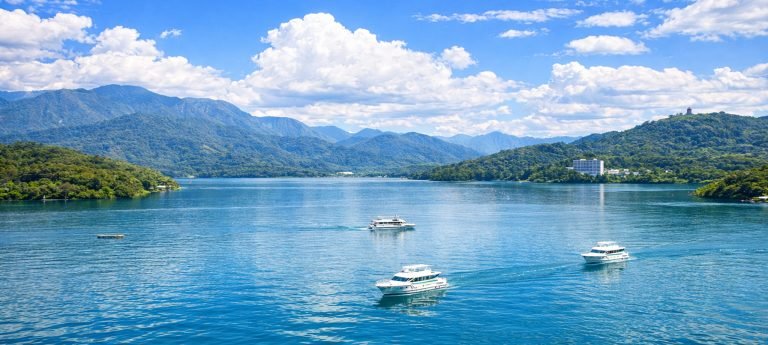
Sun Moon Lake is one of Taiwan’s most iconic natural destinations and a striking contrast to the country’s urban centers. Surrounded by forested hills and mountain air, the lake feels calm and spacious, offering a slower rhythm that many travelers find especially refreshing after time in the cities. Its combination of scenery, cultural sites, and gentle outdoor activities makes it easy to enjoy without rushing.
Located in Nantou County, Sun Moon Lake is not about ticking off a long list of attractions. Instead, it rewards travelers who take their time, whether that means cycling along the lakeshore, drifting across the water by boat, or walking between temples and viewpoints. The scale is manageable, the atmosphere is relaxed, and the setting encourages unstructured moments as much as planned ones.
What makes Sun Moon Lake particularly appealing is its balance. It is well developed enough to be comfortable and accessible, yet still quiet in the early mornings and evenings, when mist hangs over the water and the surrounding hills feel almost untouched. This balance makes it an ideal counterpoint to Taichung and a natural place to slow down as part of a central Taiwan itinerary.
Why Sun Moon Lake Is Worth Visiting
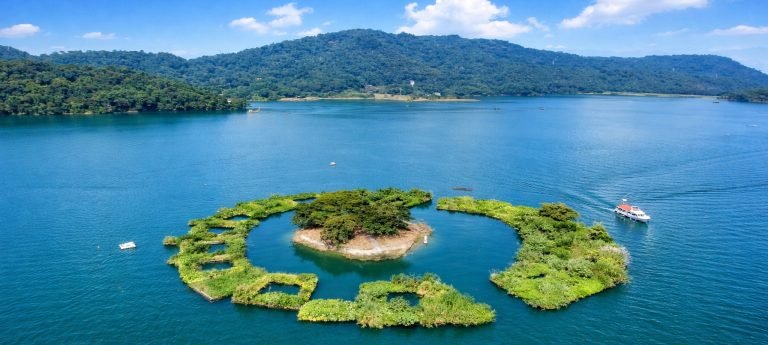
Sun Moon Lake is worth visiting because it offers a side of Taiwan that feels calm, spacious, and deliberately unhurried. Unlike destinations built around a single attraction, the lake is experienced as a whole, through its changing light, quiet roads, and the way daily life unfolds along the water. It is a place where the setting itself becomes the main reason to stay.
One of the lake’s strongest appeals is its atmosphere. Early mornings often bring mist drifting across the water, while evenings are marked by soft reflections and a noticeable drop in pace as day visitors leave. These quieter moments are when Sun Moon Lake feels most special, offering a sense of space that is rare in much of Taiwan.
Sun Moon Lake also blends nature and culture in a way that feels balanced rather than forced. Temples, walking paths, and small lakeside communities are integrated into the landscape instead of dominating it. Visitors can move easily between scenic viewpoints, cultural sites, and simple outdoor activities without feeling rushed or overstimulated.
Another reason Sun Moon Lake stands out is its accessibility. Despite its mountain setting, it is easy to reach from Taichung and simple to navigate once there. This makes it ideal for travelers who want a nature-focused experience without complicated logistics, long transfers, or demanding hikes.
Ultimately, Sun Moon Lake is worth visiting because it encourages a different way of traveling. It rewards slowing down, lingering longer in one place, and appreciating small changes in light, weather, and rhythm. For many travelers, it becomes one of the most memorable and restorative stops in a Taiwan itinerary.
🚗 Day Trip from Taichung to Sun Moon Lake
Prefer to see Sun Moon Lake without planning buses or tight connections? This guided day tour from Taichung makes it easy to experience Taiwan’s most famous lake at a relaxed pace. The route includes scenic lakeside viewpoints, time at Sun Moon Lake itself, optional walks like the Hanbi Trail, and a visit to Chung Tai Chan Monastery — all with transport handled for you.
Best Things to Do at Sun Moon Lake
The best way to experience Sun Moon Lake is to slow down and let the scenery guide your plans. Activities here are gentle rather than adrenaline-driven, and most visitors find that simple experiences, cycling, walking, boating, and enjoying views, become the highlights of their stay.
One of the most popular and rewarding activities is cycling the SUN MOON LAKE CYCLING LOOP. The paved route circles much of the lake and is widely considered one of the most scenic cycling paths in Taiwan. Sections of the path float directly above the water, while others pass through shaded forest and quiet lakeside villages. Bicycles can be rented easily around Shuishe and Ita Thao, making this activity accessible even for casual riders.
Taking a boat cruise across the lake is another classic experience. Boats operated by SUN MOON LAKE FERRY connect the main piers at Shuishe, Ita Thao, and Xuanguang Wharf, allowing visitors to hop on and off throughout the day. Cruising offers a different perspective of the surrounding mountains and is especially pleasant in the late morning or early afternoon when the water is calm.
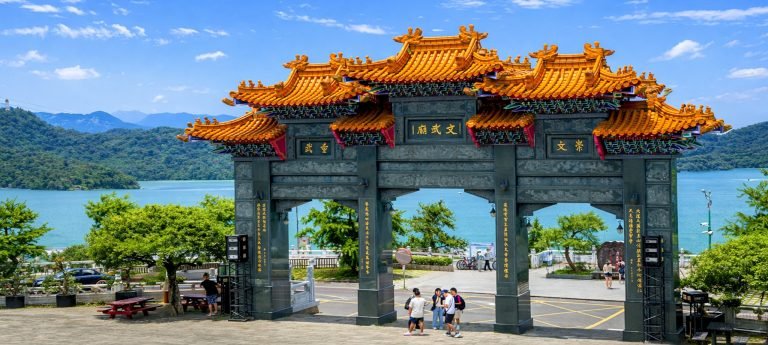
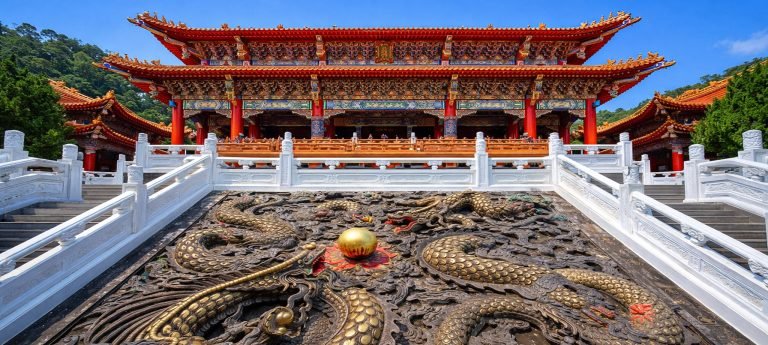
Cultural landmarks are scattered around the lake and are easy to combine with scenic walks. WENWU TEMPLE, perched above the northern shore, is one of the most impressive. Its elevated position provides sweeping views over the water, while the temple complex itself blends traditional architecture with carefully landscaped terraces. Nearby, XUANZANG TEMPLE and XUANGUANG TEMPLE offer quieter, more contemplative stops that are often missed by day trippers.
For panoramic viewpoints, the CIEN TA PAGODA is one of the lake’s most recognizable landmarks. A short uphill walk leads to views that stretch across Sun Moon Lake and the surrounding hills. The climb is manageable for most visitors and is especially rewarding on clear days when visibility is high.
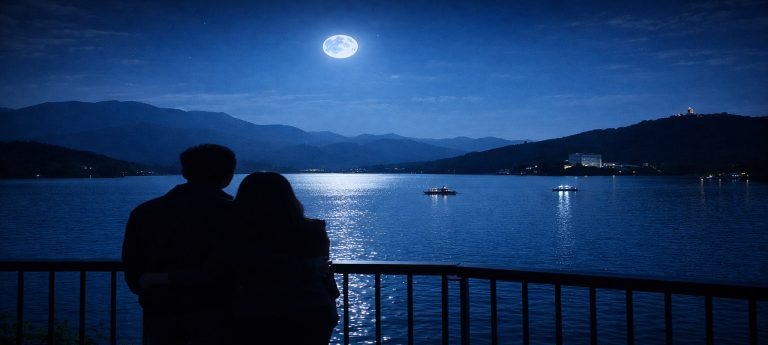
Sunrise and sunset are integral parts of the Sun Moon Lake experience. Early risers often head to lakeside paths or quiet piers near Shuishe to watch the mist lift from the water. In the evening, western-facing viewpoints and hotel terraces offer soft light and reflections that change quickly as the sun drops behind the hills. Planning your day around these moments adds a natural rhythm to your visit.
While nightlife is minimal, evenings at Sun Moon Lake still have their own charm. Around Ita Thao, small streets fill with visitors browsing souvenir shops and casual food stalls, creating a relaxed, village-like atmosphere. Rather than clubs or bars, nights here are best spent strolling the lakeshore, enjoying dinner with a view, or sitting quietly as the area settles down.
Taken together, the best things to do at Sun Moon Lake focus on presence rather than pace. Whether you are cycling, boating, visiting temples, or simply watching the light change over the water, the lake invites you to experience Taiwan at its calmest and most reflective.
Restaurants & Lakeside Dining at Sun Moon Lake
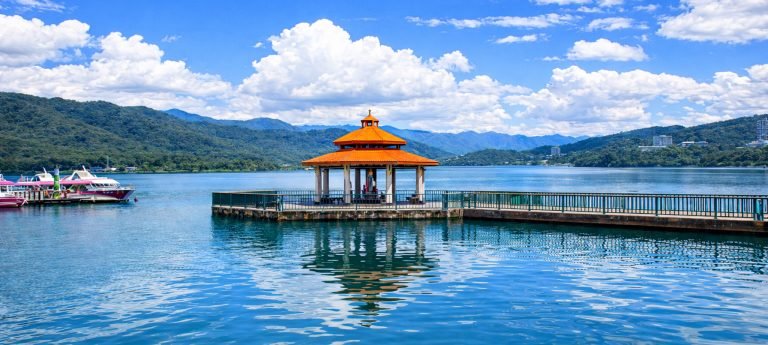
Dining at Sun Moon Lake is less about chasing standout restaurants and more about enjoying meals in a scenic setting. Food here tends to be simple, comforting, and closely tied to the lake environment, with many places focusing on local ingredients, set menus, and views rather than elaborate presentation. Understanding this helps set realistic expectations and makes meals part of the overall experience rather than the main event.
One of the most talked-about dining experiences in the area is at THE LALU RESTAURANT, located within The Lalu hotel. The restaurant offers refined Chinese and Taiwanese cuisine served in an elegant lakeside setting. People dine here as much for the calm atmosphere and views as for the food itself, making it best suited for a slow, unhurried evening.
Another upscale option is FLEUR DE CHINE DINING, where meals are often included as part of a resort stay. The focus is on comfortable, high-quality dining rather than experimentation, with dishes designed to appeal to a wide range of tastes. The experience is polished and relaxed, fitting naturally into a longer stay by the lake.
For something more local, ITA THAO OLD STREET EATERIES offer a casual alternative. This area is known for small restaurants and stalls serving grilled meats, noodles, rice dishes, and snacks influenced by the local Thao indigenous culture. While food here is simple, the atmosphere is lively in the evenings and provides an easy, informal way to eat without planning ahead.
Visitors looking for lakeside views without resort pricing often choose restaurants around Shuishe, such as SHUISHÉ LAKESIDE RESTAURANTS. These places typically serve set meals or straightforward Taiwanese dishes and are popular for lunch stops between cycling or sightseeing. The main draw is the location, with tables positioned to take in the lake rather than focus on culinary ambition.
Overall, dining at Sun Moon Lake works best when approached with flexibility. The most memorable meals are often those enjoyed slowly, paired with views of the water, changing light, and quiet surroundings. Rather than searching for a destination restaurant, allowing food to complement the scenery leads to a more satisfying and relaxed experience.
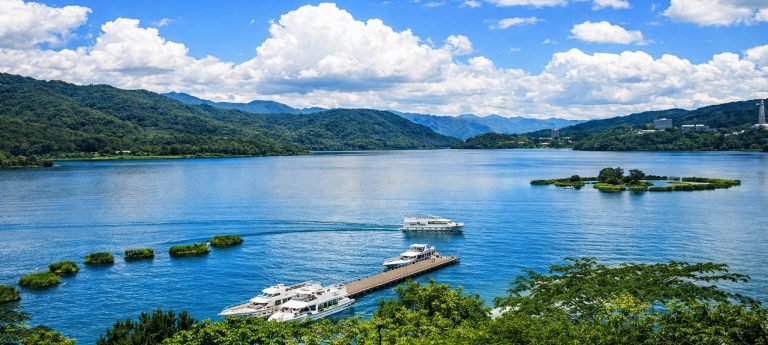
Hidden & Quiet Spots Around Sun Moon Lake
While Sun Moon Lake is one of Taiwan’s most visited natural destinations, it still offers many quieter corners for travelers who step away from the main piers and tour routes. These spots highlight the lake’s slower, more contemplative side and are best enjoyed on foot, by bike, or with unhurried exploration.
XUANGUANG WHARF, located between Shuishe and Ita Thao, is often overlooked by visitors who only pass through by boat. Stepping off here reveals a calm lakeside area with walking paths, benches, and views across the water. It is also the starting point for the trail leading to Xuanzang Temple, making it a peaceful place to pause between activities.
XUANZANG TEMPLE itself is one of the quieter spiritual sites around the lake. Dedicated to the famous Tang Dynasty monk, the temple sits slightly above the shoreline and feels noticeably calmer than larger temple complexes. Visitors often come here for reflection and views rather than sightseeing crowds.
For a deeper sense of history, HEADMONK TEMPLE lies further along the same walking route. Smaller and less visited than other temples, it offers a sense of continuity and stillness, especially during weekday mornings. The surrounding forested paths add to the feeling of being removed from busier areas.
On the eastern side of the lake, ITA THAO LAKESIDE WALKING PATHS provide quieter moments once you move beyond the main shopping street. Early in the morning or later in the evening, these paths are used mostly by locals and hotel guests, offering gentle lake views without noise or crowds.
SHUISHE MORNING SHORELINE is another hidden experience rather than a single destination. At sunrise, the area around Shuishe Pier becomes calm as mist rises from the lake and boats remain docked. Walking along the water at this time reveals a completely different atmosphere from the daytime bustle.
For nature-focused travelers, the HANBI TRAIL is one of the lake’s most underrated paths. This quiet forest trail follows part of the lakeshore and connects to observation points that feel removed from the main tourist flow. It is well suited for slow walks and light hiking without steep climbs.
Taken together, these hidden and quiet spots show why Sun Moon Lake rewards travelers who linger. By moving away from the main viewpoints and adjusting your timing, early mornings, late afternoons, and weekdays, you can experience a calmer, more personal side of the lake that many visitors never see.
🚗 Day Trip from Taichung to Sun Moon Lake & Qingjing Farm
Want to combine lakeside scenery with cool mountain landscapes in one day? This guided tour from Taichung pairs the calm beauty of Sun Moon Lake with the alpine setting of Qingjing Farm. With private transport handling the long mountain drives, you can enjoy lake views, fresh air, and optional stops like the Qingjing Skywalk and Swiss Garden without worrying about complex logistics or timing.
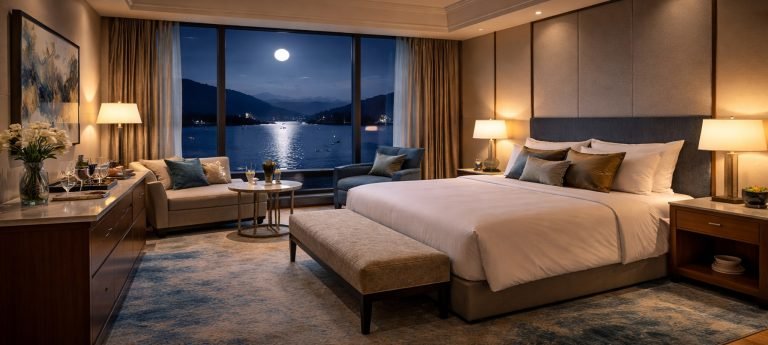
Where to Stay at Sun Moon Lake
Choosing where to stay at Sun Moon Lake plays a big role in how you experience the area, as accommodation is spread across different parts of the shoreline and nearby townships. Some hotels focus on easy access to piers and transport, while others emphasize quiet lakeside settings and scenic views. The hotels below cover a range of budgets and travel styles, making it easier to find a base that matches how much time you want to spend exploring versus simply enjoying the lake itself.
Budget Hotels
OWL HOSTEL 貓頭鷹旅店
No. 45, Wenhua Street, 555 Yuchi, Taiwan · +886 911 225 763
Owl Hostel is a friendly, budget-focused option located in the heart of Yuchi Township, within easy reach of Sun Moon Lake’s main attractions. The atmosphere is casual and welcoming, making it popular with solo travelers and couples looking for simplicity rather than resort amenities. Its central location makes it easy to explore the lake by foot, bike, or public transport.
Check availability and prices at Owl Hostel
SUN MOON LAKE CROWN YU HOTEL
No. 10, Mingsheng Street, 555 Yuchi, Taiwan · +886 49 285 5552
Sun Moon Lake Crown Yu Hotel offers simple, comfortable accommodation close to the lakeshore and transport connections. Rooms are practical and well maintained, making it a good option for travelers who prioritize location and convenience. It works especially well for short stays or as a base for cycling and sightseeing.
See current deals at Sun Moon Lake Crown Yu Hotel
Mid-Range Comfort
YI DA LAKESIDE HOTEL
No. 61, Fengnian Street, 555 Yuchi, Taiwan · +886 49 285 0516
Yi Da Lakeside Hotel is a comfortable mid-range option offering lake views and a calm atmosphere. The hotel balances accessibility with a quieter setting, making it appealing for couples and travelers staying more than one night. Its proximity to walking paths and scenic areas allows for relaxed exploration without relying heavily on transport.
View rooms and rates at Yi Da Lakeside Hotel
SHUIAN LAKESIDE HOTEL
No. 112, Wenhua Street, 55546 Yuchi, Taiwan · +886 49 285 0368
Shuian Lakeside Hotel offers direct access to the lakeside and easy walking routes around Sun Moon Lake. Rooms are comfortable and well suited for travelers who want scenic surroundings without luxury pricing. The location is especially convenient for early-morning walks and quiet evenings by the water.
Check availability at Shuian Lakeside Hotel
Luxury Hotels
GRAND HILAI SUN MOON LAKE
No. 139, Zhongxing Road, 555 Yuchi, Taiwan · +886 4 9221 2188
Grand Hilai Sun Moon Lake is a high-end lakeside resort designed for travelers seeking space, comfort, and refined service. The property emphasizes privacy, scenic views, and a calm atmosphere that encourages slowing down. It is particularly well suited for couples and travelers planning a more indulgent stay.
Explore luxury rooms at Grand Hilai Sun Moon Lake
FLEUR DE CHINE HOTEL
No. 23, Zhongzheng Road, 55546 Yuchi, Taiwan · +886 4 9285 6788
Fleur de Chine Hotel is one of the most iconic luxury properties at Sun Moon Lake, known for its expansive views and polished resort experience. Rooms are spacious and elegant, with amenities designed for comfort rather than spectacle. It is an ideal choice for travelers who want a premium lakeside stay with minimal effort.
Check luxury availability at Fleur de Chine Hotel
If you are still comparing options, Sun Moon Lake offers a wide range of accommodation styles depending on where you want to stay around the lake. Some travelers prefer central access near Shuishe or Ita Thao, while others look for quieter lakeside retreats. You can browse additional hotels and current deals here:
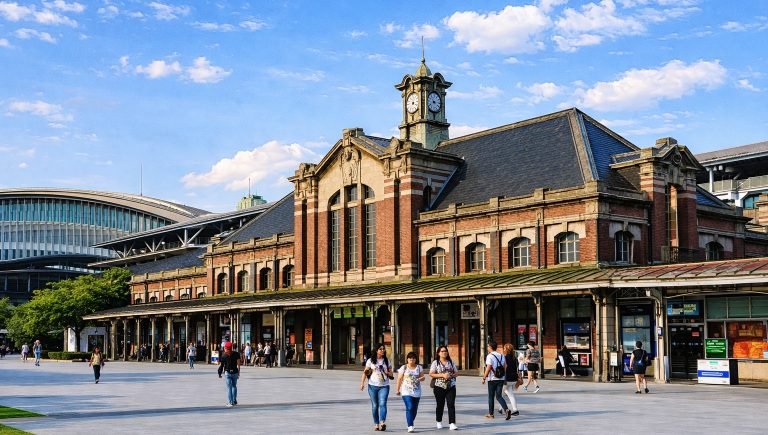
How to Travel Between Taichung & Sun Moon Lake
Traveling between Taichung and Sun Moon Lake is straightforward and flexible, with options that suit different budgets, schedules, and travel styles. The distance is relatively short, and most routes are well established, making this one of the easiest nature escapes to add to a Taiwan itinerary without complicated logistics.
The most common and convenient option is by bus. Direct services operate from TAICHUNG HIGH SPEED RAIL STATION to Sun Moon Lake via Nantou Bus. These buses run regularly throughout the day, take around 90 minutes, and stop at key points such as Shuishe and Ita Thao. This is the preferred choice for most travelers, as it requires no transfers and drops you close to the main lakeside areas.
Travelers coming from central Taichung or Taichung Train Station can also reach Sun Moon Lake by bus with one transfer. Local buses connect the city to Nantou, where you change to a Sun Moon Lake–bound service. While this route takes longer than the direct HSR bus, it remains affordable and reliable for those staying outside the high-speed rail corridor.
Train travel is another option, though it involves a combination of rail and bus. From Taichung Train Station, local trains run to CHECHENG STATION, a small historic stop near the lake. From Checheng, short bus or taxi rides connect to Sun Moon Lake. This route is slower but scenic and appeals to travelers who enjoy rail journeys and quieter countryside transitions.
Taxis and ride-hailing apps offer the most direct and flexible option. Services such as UBER operate in Taichung and can be used for point-to-point transfers, though availability around Sun Moon Lake itself may be limited. Hiring a taxi or private car from Taichung takes roughly one hour and is best suited for small groups, travelers with luggage, or those on a tight schedule.
For travelers who prefer independence, renting a car is a popular choice. Driving from Taichung to Sun Moon Lake is straightforward, with clear signage and well-maintained roads. Having a car allows you to explore quieter parts of the lake, stop at viewpoints along the way, and move freely between Shuishe, Ita Thao, and surrounding areas without relying on schedules.
Cycling enthusiasts sometimes combine trains or buses with biking, bringing or renting bicycles to explore sections of the route near the lake. While cycling the entire distance from Taichung is demanding and not recommended for most travelers, riding around Sun Moon Lake itself is one of the area’s highlights and is easily arranged once you arrive.
Within Sun Moon Lake, local transport options include shuttle buses that loop around the lake, taxis, and ferry services connecting Shuishe, Ita Thao, and Xuanguang Wharf. These make it easy to get around without a car and allow you to mix walking, cycling, and short rides throughout your stay.
Overall, the best way to travel between Taichung and Sun Moon Lake depends on your priorities. Buses offer the simplest and most economical solution, trains add a scenic element, taxis and cars provide flexibility, and local transport around the lake ensures you can move at a relaxed pace once you arrive.
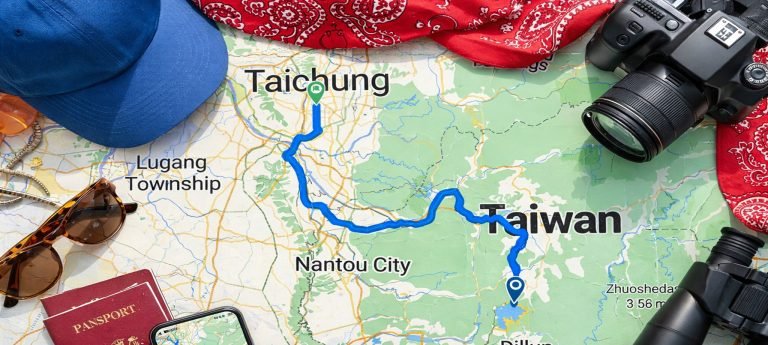
Suggested Itinerary: Taichung + Sun Moon Lake
Taichung and Sun Moon Lake work best when planned together with a relaxed pace that allows time for both urban exploration and slower lakeside moments. The itineraries below are designed to be realistic rather than rushed, giving you enough structure to plan confidently while leaving room for spontaneity.
3-Day Itinerary
Day 1: Taichung
Spend your first day exploring Taichung’s core sights and neighborhoods. Visit highlights such as Rainbow Village, the National Taichung Theater, and the Calligraphy Greenway, then explore local cafés and shops at a relaxed pace. In the evening, enjoy street food at Fengjia Night Market or a casual dinner followed by drinks at one of Taichung’s cocktail bars.
Day 2: Taichung → Sun Moon Lake
Travel to Sun Moon Lake in the morning, ideally by direct bus from Taichung High Speed Rail Station. After checking in, take a gentle walk along the lakeshore or explore Shuishe and Ita Thao village areas. End the day with a lakeside dinner and a quiet evening walk as the crowds thin out.
Day 3: Sun Moon Lake
Start early to experience sunrise or morning mist along the lake. Spend the day cycling part of the lakeside loop, visiting Wenwu Temple, and taking a boat cruise between Shuishe and Ita Thao. Depart in the late afternoon or early evening, or extend your stay if time allows.
4–5 Day Itinerary
Day 1: Taichung
Arrive in Taichung and focus on getting oriented. Explore central neighborhoods, visit Taichung Park or a local museum, and enjoy dinner at a neighborhood restaurant. Keep the evening light to recover from travel.
Day 2: Taichung
Use your second day to dive deeper into the city. Visit Rainbow Village, the National Taichung Theater, and creative districts such as Audit Village. Spend the afternoon in cafés around Calligraphy Greenway, and enjoy street food or a relaxed bar in the evening.
Day 3: Taichung → Sun Moon Lake
Travel to Sun Moon Lake in the morning. After checking in, explore the lakeside paths near Shuishe or Ita Thao and take a short ferry ride to get oriented. The focus this day is on slowing down and settling into the lake’s rhythm.
Day 4: Sun Moon Lake
Dedicate a full day to the lake. Cycle a longer section of the lakeside loop, visit Wenwu Temple, Xuanzang Temple, and Cien Ta Pagoda, and enjoy a relaxed lunch with views over the water. In the late afternoon, seek out quieter paths or hidden viewpoints before dinner.
Day 5 (optional): Sun Moon Lake
If you have an extra day, use it for early-morning walks, a second boat cruise, or simply resting by the lake. This additional time allows you to experience Sun Moon Lake at its calmest, particularly in the mornings and evenings when day visitors are absent.
Both itineraries can be adjusted easily depending on arrival times and onward travel plans. What matters most is allowing enough time in each place to avoid rushing, as the contrast between Taichung’s city life and Sun Moon Lake’s calm scenery is what makes this combination so rewarding.
🗺️ 4-Day Central Taiwan Highlights Tour from Taichung
Short on planning time but want to experience Central Taiwan properly? This multi-day tour connects Taiwan’s most scenic inland highlights into one smooth journey, combining mountain villages, alpine forests, lakeside scenery, historic towns, and modern city landmarks. With transport, routing, and pacing handled for you, it is an easy way to explore Fenqihu, Alishan Forest, Sun Moon Lake, Changhua, Lukang, and Taichung without juggling trains, buses, or hotel logistics.
Best Time to Visit Taichung & Sun Moon Lake
The best time to visit Taichung and Sun Moon Lake depends on how you prefer to travel and what kind of atmosphere you enjoy. Because the two destinations are close to each other but differ slightly in elevation and climate, planning with seasonal conditions in mind can make a noticeable difference to your experience.
Spring (March to May) is one of the most comfortable times to visit both Taichung and Sun Moon Lake. Temperatures are mild, humidity is lower than in summer, and the surrounding hills around the lake are lush and green. This period is ideal for cycling, walking, and outdoor sightseeing without the intensity of peak summer heat.
Summer (June to September) brings warmer temperatures and higher humidity, particularly in Taichung. Sun Moon Lake, sitting at a higher elevation, tends to feel slightly cooler and more comfortable, which is why it becomes a popular escape during these months. Afternoon showers and occasional typhoons are possible, so flexibility in scheduling outdoor activities is important.
Autumn (October to November) is widely considered the best overall season. Weather is stable, temperatures are pleasant, and visibility around Sun Moon Lake is often at its best. Crowds are still present, especially on weekends, but the combination of clear skies and comfortable conditions makes this a favorite time for many travelers.
Winter (December to February) is cooler and drier, particularly around Sun Moon Lake, where temperatures can feel brisk in the mornings and evenings. While swimming and boating are less appealing, winter offers quieter paths, fewer visitors, and atmospheric misty mornings that photographers and slow travelers often appreciate.
If possible, visiting on weekdays rather than weekends makes a noticeable difference, especially at Sun Moon Lake. Early mornings and late afternoons are consistently the calmest times, regardless of season, and are often when the lake feels most serene.
Practical Travel Tips
A little practical planning goes a long way in Taichung and Sun Moon Lake. Both destinations are comfortable and easy to navigate, but they reward travelers who arrive with a few key details sorted in advance, especially around transport, connectivity, cash access, and timing.
Plugs and voltage in Taiwan are generally Type A and Type B (the same flat-pin plugs used in the United States and Japan). Standard voltage is 110V at 60Hz, which is compatible with most devices from North America and many modern chargers worldwide. If you are traveling from Europe, the UK, Australia, or most of Asia, you will usually need a plug adapter, but many phone and laptop chargers are dual voltage and will work without a voltage converter.
Connectivity and eSIMs are one of the easiest upgrades you can make for this trip. Taichung has excellent coverage, and Sun Moon Lake is generally well covered in the main areas around Shuishe and Ita Thao, though signal can weaken on quieter trails or less developed shorelines. If your phone supports it, using an eSIM avoids the hassle of physical SIM swaps and gives you immediate access to maps, bus schedules, translation apps, and bookings as soon as you land.
Connectivity and eSIMs are one of the easiest upgrades you can make for this trip. Taichung has excellent coverage, and Sun Moon Lake is generally well covered in the main areas around Shuishe and Ita Thao, though signal can weaken on quieter trails or less developed shorelines. If your phone supports it, using an eSIM avoids the hassle of physical SIM swaps and gives you immediate access to maps, bus schedules, translation apps, and bookings as soon as you land. For a detailed breakdown of options and coverage, see our Taiwan eSIM guide.
Cash and payments are straightforward but worth planning for. In Taichung, card payments are widely accepted in hotels, department stores, and many cafés, while smaller eateries and street stalls often prefer cash. Around Sun Moon Lake, cash is more useful, particularly for small restaurants, snacks, bike rentals, and local transport. It is a good idea to carry a buffer of cash before arriving at the lake, especially if you plan to explore quieter areas.
ATMs and banking are easy in Taichung and more limited at Sun Moon Lake. Taichung has plenty of ATMs in convenience stores, metro-adjacent areas, and shopping districts. At Sun Moon Lake, you will still find ATMs in busier zones, but you may not want to rely on them for last-minute withdrawals. Withdrawing in Taichung before heading to the lake reduces friction.
Getting around in Taichung is easiest with a mix of walking and short rides. Many areas that travelers enjoy most, such as around Calligraphy Greenway and the West District, are walkable. For longer distances, taxis are convenient, and ride-hailing may be available depending on your location and time. Public transport is useful, but most visitors find that walking plus occasional taxis provides the best balance of comfort and time.
Getting around at Sun Moon Lake is best done by cycling, walking, ferry, and the local shuttle bus system. The lakeside cycling path is one of the area’s highlights, and bike rentals are easy to arrange near Shuishe and Ita Thao. Ferries connect the main piers and make it simple to mix cycling, temple visits, and walks without backtracking. If you prefer not to cycle, shuttle buses and taxis can fill the gaps.
Timing and pacing matters more than most travelers expect. Taichung is enjoyable throughout the day, but markets and nightlife come alive in the evening. Sun Moon Lake feels most magical early in the morning and around sunset, when day visitors are absent and the lake’s atmosphere becomes noticeably calmer. Planning key activities such as cycling and viewpoints for these quieter windows improves the experience dramatically.
Weather and clothing should be approached with flexibility. Taichung can feel warm and humid for much of the year, while Sun Moon Lake is slightly cooler due to elevation, especially in the mornings and evenings. Layers are useful even outside winter, and rain protection is worth packing year-round, particularly in summer when short downpours can arrive quickly.
Language and communication are manageable even without Mandarin. In Taichung, many hotel and tourism-facing staff have some English, while smaller restaurants and street stalls may not. At Sun Moon Lake, English is less common outside resorts, but signage in key areas is often bilingual. Translation apps are extremely helpful for menus, directions, and small interactions, which is another reason connectivity matters.
Navigation and maps are essential for making the most of both destinations. Taichung is spread out, and Sun Moon Lake has multiple piers, trails, and viewpoints that are easy to mix up. Having live maps helps you avoid wasting time, especially when coordinating ferries, bus stops, and the cycling path.
Food expectations are different in each location. Taichung is a food city with excellent variety and depth, and meals often become highlights of the trip. Sun Moon Lake dining is more about setting and convenience, with the most polished experiences typically found in resorts. Approaching lake meals as scenic and relaxing rather than culinary-focused leads to a more satisfying experience.
Weekdays versus weekends can change the feel of Sun Moon Lake significantly. Weekends bring larger crowds, especially in Ita Thao and around the main piers. If you can, schedule the lake portion of your trip on weekdays or plan your most scenic activities early in the day before peak visitor hours.
Reservations and tickets are usually not complicated, but planning ahead helps in peak seasons. Hotels at Sun Moon Lake can book out quickly during weekends and holiday periods. If you have a specific property in mind, especially higher-end lakeside hotels, booking early is the safest approach.
Accessibility and mobility vary by activity. Taichung’s main areas are generally accessible, though sidewalks can be uneven in older neighborhoods. Around Sun Moon Lake, some viewpoints and temple areas involve stairs and uphill paths. If mobility is a concern, focusing on accessible lakeside walks, ferry hops, and scenic hotel viewpoints can still provide an excellent experience.
Overall, Taichung and Sun Moon Lake are easy destinations, but they become even smoother when you plan a few essentials in advance. With the right timing, reliable connectivity, and a bit of flexibility around weather and transport, this pairing becomes one of the most comfortable and rewarding sections of a Taiwan itinerary.
FAQ: Taichung & Sun Moon Lake
-
How many days do I need for Taichung and Sun Moon Lake?
A minimum of three days allows you to see the main highlights of Taichung and spend one full day at Sun Moon Lake. Four to five days is ideal if you want a slower pace, more food exploration in Taichung, and early mornings or sunsets at the lake without rushing. -
Is Sun Moon Lake worth visiting if I am short on time?
Yes, especially if you are already in central Taiwan. Sun Moon Lake is easy to reach from Taichung and offers a very different atmosphere from Taiwan’s cities, making it one of the most rewarding short nature escapes on the island. -
What is the easiest way to travel from Taichung to Sun Moon Lake?
The simplest option is the direct bus from Taichung High Speed Rail Station, which takes around 90 minutes and stops near the main lake areas. This route avoids transfers and works well for most travelers. -
Do I need a car to get around Sun Moon Lake?
No. Sun Moon Lake is easy to explore using a combination of walking, cycling, ferry boats, and the local shuttle bus. Renting a car can be convenient for flexibility, but it is not necessary for most visitors. -
Where is the best area to stay at Sun Moon Lake?
Shuishe and Ita Thao are the most convenient bases, as they offer access to ferry piers, bike rentals, restaurants, and transport connections. Quieter lakeside hotels outside these areas are better suited for travelers prioritizing calm and scenery over convenience. -
Is Taichung a good base for exploring central Taiwan?
Yes. Taichung is one of Taiwan’s best transport hubs, with high-speed rail, trains, and buses connecting easily to Sun Moon Lake, Alishan, and other central destinations. Its relaxed pace and strong food scene also make it a pleasant city to return to. -
Are Taichung and Sun Moon Lake suitable for travelers who do not speak Mandarin?
Yes. While English is more commonly spoken in Taichung than around Sun Moon Lake, both destinations are manageable with basic planning. Signage is often bilingual in tourist areas, and translation apps make everyday interactions straightforward. -
When is the least crowded time to visit Sun Moon Lake?
Weekdays are noticeably quieter than weekends, and early mornings and evenings are the calmest times of day. Visiting outside major Taiwanese holidays also helps avoid peak crowds.
How This Fits Into Your Taiwan Itinerary
Taichung and Sun Moon Lake offer a side of Taiwan that feels balanced, approachable, and deeply livable. Taichung blends creativity, everyday food culture, and a relaxed urban rhythm, while Sun Moon Lake slows everything down with open water, mountain air, and space to breathe. Together, they create a contrast that is gentler than Taiwan’s largest cities and less rugged than its wildest landscapes, making this pairing especially appealing for travelers who value pace as much as variety.
What makes this combination stand out is how naturally it fits into a wider journey. Taichung sits at the heart of the island’s transport network, making it an easy stop between northern and southern Taiwan, while Sun Moon Lake adds a restorative pause without long detours or complex planning. Compared to coastal cities or remote mountain regions, this part of Taiwan feels accessible, comfortable, and flexible, even for first-time visitors.
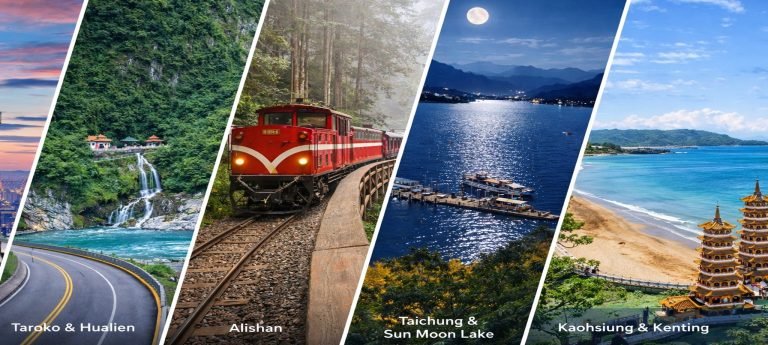
This guide is part of our broader Taiwan travel series, designed to help you connect destinations smoothly rather than treat them as isolated stops. For a full overview of the country and ideas on how to combine regions, start with Things to Do in Taiwan. Many itineraries begin in Taipei, continue east to the dramatic landscapes of Taroko Gorge and Hualien, or move into cooler mountain scenery around Alishan.
From here, travelers often continue south toward the relaxed city life of Kaohsiung or finish their journey along the coast in Kenting, where beaches and sunsets provide a natural end to a Taiwan loop. Whether Taichung and Sun Moon Lake are a short pause or a central chapter, they are often where travel feels easiest and most grounded — a reminder that Taiwan rewards those who leave space to slow down and keep exploring.
Travel Resources to Plan, Book & Stay Connected
Use these tools and guides to stay connected abroad, find inspiration for your next trip, and book your flights, stays and gear with confidence.
Disclosure: This article may contain affiliate links. If you make a purchase through a link, I may receive a commission at no extra cost to you. I only share recommendations I believe are genuinely useful, and all opinions are my own.

Comment (0)