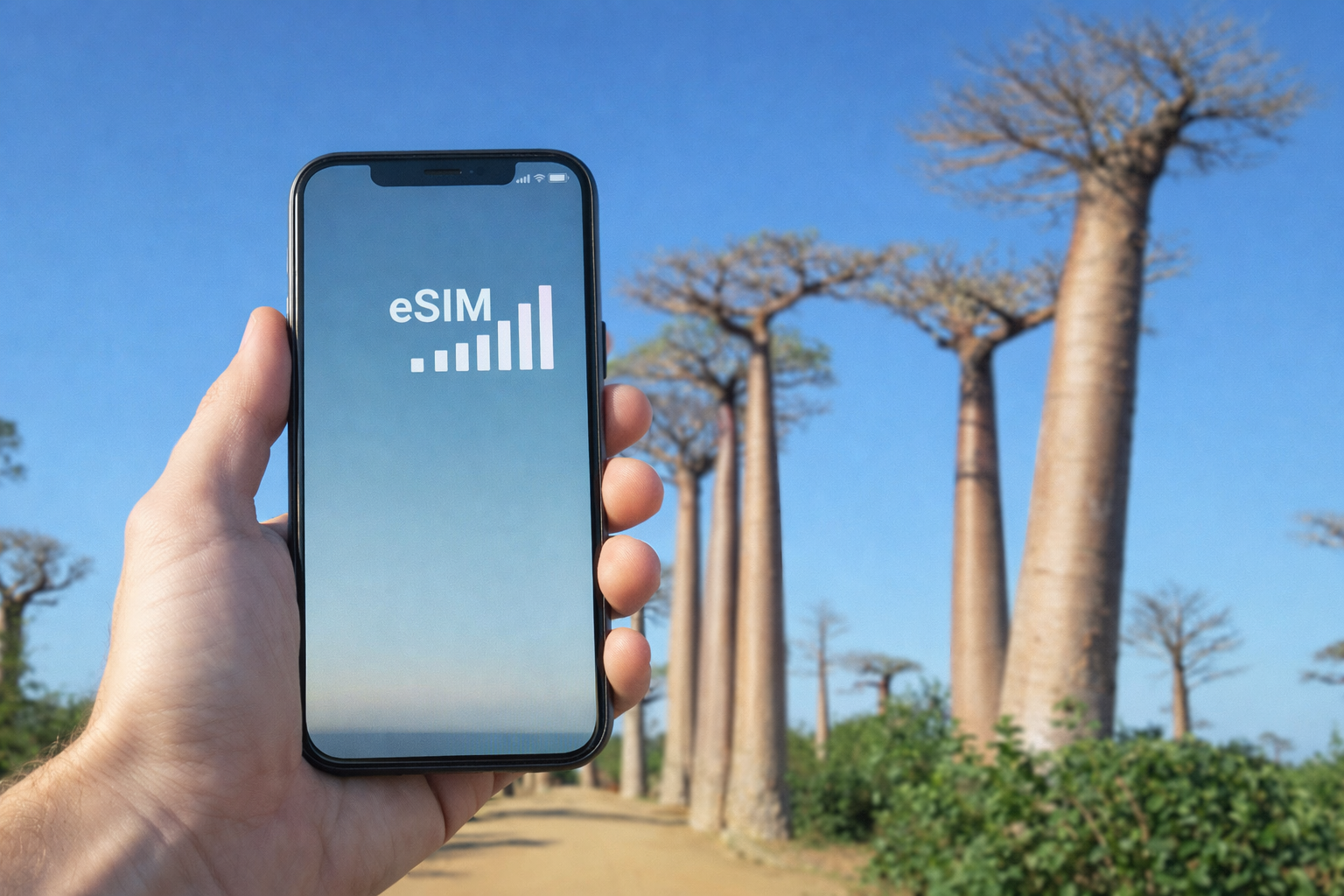
SIM vs eSIM in Madagascar: What to Expect for Mobile Data, Coverage and Connectivity
Choosing between a SIM card and an eSIM in Madagascar is not always as straightforward as it might be in more developed travel destinations. While staying connected is essential for navigation, bookings, and communication, mobile coverage across the island can vary significantly depending on where you go and how you travel.
In major cities like Antananarivo and popular destinations such as Nosy Be, both SIM cards and eSIMs can work well. But once you move into national parks, remote coastal areas, or rural regions, the reality of mobile networks in Madagascar becomes very different. Understanding these differences before you arrive can save you time, money, and frustration during your trip.
This guide breaks down the real differences between SIM cards and eSIMs in Madagascar, helping you choose the right option based on your travel style, route, and expectations.
- SIM vs eSIM: key differences and which one is better for Madagascar
- Mobile network coverage across cities, national parks, and remote regions
- Where to buy a SIM card in Madagascar and what to expect on arrival
- How eSIMs work in Madagascar and when they are the better choice
- Costs, data plans, and what you actually get for your money
- Tips to avoid common connectivity issues while traveling
If you are still planning your route, it helps to understand how connectivity fits into the bigger picture of traveling across the island. Start with this General Madagascar guide covering top destinations and experiences for a complete overview, then use this planner to find out how to plan a realistic Madagascar itinerary across regions to map out your journey.
Because network coverage varies significantly depending on where you go, it is also worth reviewing how transport and distances shape travel across Madagascar and these essential Madagascar travel tips for planning and preparation to better understand what to expect on the ground.
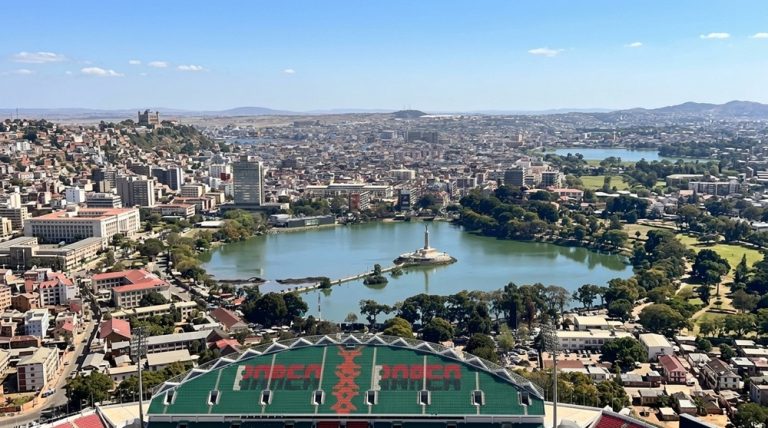
Do You Need a SIM Card or eSIM in Madagascar?
If you are planning a trip to Madagascar, one of the most common questions is whether you should use a local SIM card or an eSIM for mobile data. The answer depends on where you are going, how you plan to travel, and how reliable you need your connection to be.
In cities and well-visited areas, both options can work. But Madagascar is not a country where mobile coverage is consistent across the entire island. Many national parks, remote beaches, and inland regions have limited or no signal, which makes choosing the right setup more important than simply picking the cheapest option.
For most travelers, the decision comes down to convenience versus local performance. eSIMs are quick and easy to set up before arrival, while local SIM cards can offer stronger connections and better value once you are on the ground. Understanding how these options actually perform in Madagascar will help you avoid unreliable connections and unnecessary costs.
Before deciding, it is also worth considering how connected you really need to be. If your trip involves moving between regions, long travel days, or remote destinations, your mobile setup becomes part of your overall travel planning. This Madagascar transport guide with routes and travel realities gives useful context on distances, routes, and logistics, while this practical advice for traveling in Madagascar helps you prepare for real conditions on the ground.
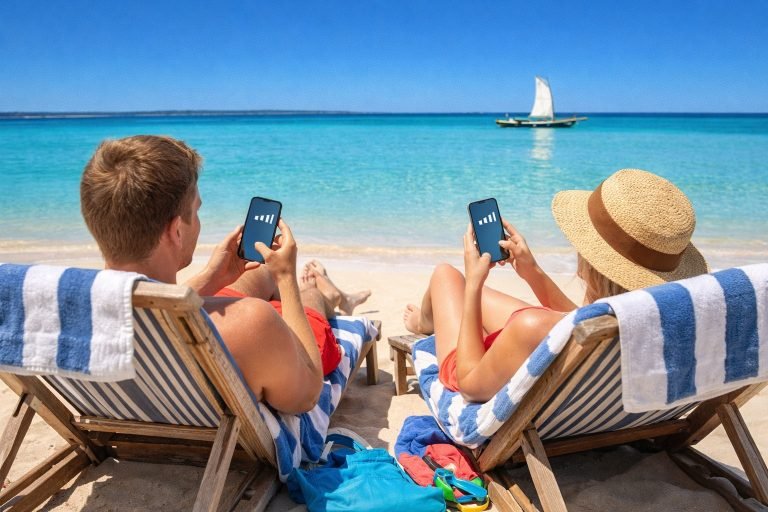
SIM vs eSIM in Madagascar: What’s the Difference?
The difference between a SIM card and an eSIM in Madagascar comes down to how you access mobile networks and how practical each option is for your trip. Both allow you to use mobile data, but they work in very different ways, especially in a country where infrastructure is not always consistent.
A traditional SIM card is a physical card that you insert into your phone after arriving in Madagascar. These are sold at airports, local shops, and mobile provider stores, and they connect directly to local networks such as Telma, Orange, or Airtel. This usually gives you the most stable connection available in the country, particularly outside major cities.
An eSIM, on the other hand, is a digital SIM that you install on your phone before you travel. Instead of buying a physical card, you activate a data plan online, and your phone connects to partner networks when you arrive. This makes eSIMs extremely convenient, especially if you want to avoid searching for a SIM card after landing.
In Madagascar, the choice is not just about convenience. It is about how and where you will be traveling. If your trip includes remote regions, national parks, or long overland routes, local SIM cards often provide more reliable coverage. If you are staying in cities or want instant connectivity from the moment you land, an eSIM can be a very practical solution.
- SIM card: better local network access, often stronger coverage in remote areas, requires in-person purchase
- eSIM: instant setup, no physical card needed, works well in cities but may rely on partner networks
For many travelers, the best approach depends on how flexible and connected you need to be throughout your trip. If you want a simple setup before arrival, these best eSIM options for international travel can give you immediate access to data. If you are still deciding between formats, this comparison of SIM cards and eSIMs for travel helps clarify which option suits your trip best. But if you plan to explore beyond the main routes, understanding what to expect when traveling across Madagascar’s more remote regions will help you make a more reliable choice.
Mobile Coverage in Madagascar: What You Can Actually Expect
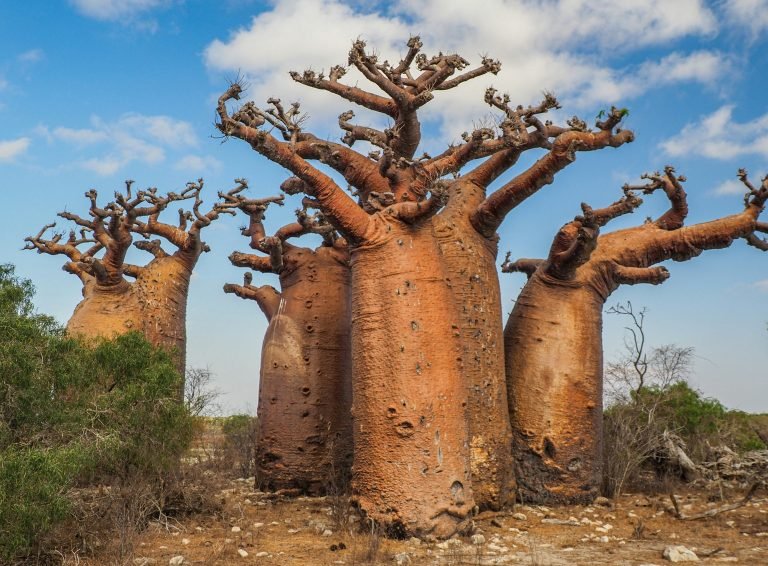
Mobile coverage in Madagascar is highly inconsistent and depends heavily on where you are traveling. While you can expect a usable connection in major cities and some popular tourist areas, large parts of the island have limited or no signal at all. This is one of the most important factors to understand when choosing between a SIM card and an eSIM.
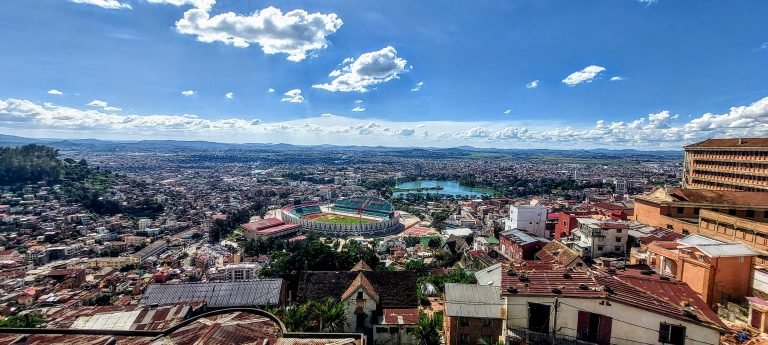
In urban areas such as Antananarivo, Antsirabe, and Nosy Be, mobile networks are generally reliable enough for navigation, messaging, and basic browsing. However, once you begin moving between regions or traveling through rural areas, coverage can drop quickly. Long stretches of road often have no signal, and connections can be unstable even in towns that appear well connected on a map.
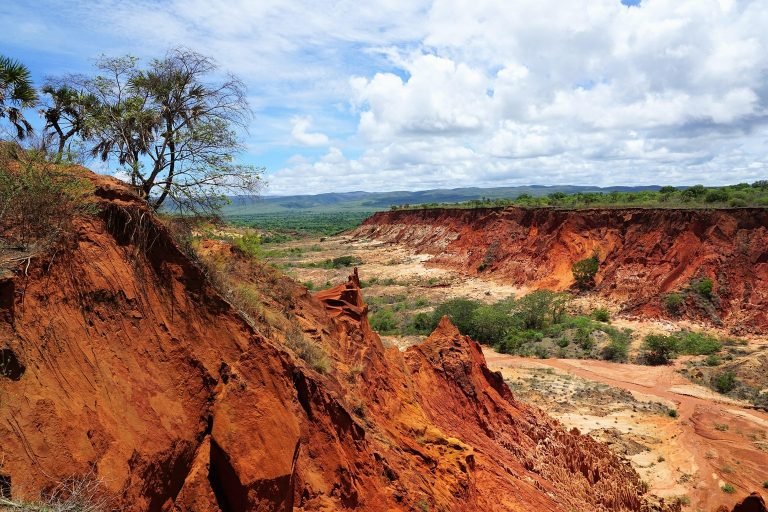
This becomes even more noticeable if your itinerary includes national parks or more remote destinations. Many of the country’s most iconic experiences take place far from major infrastructure, and it is common to lose connectivity completely during these parts of your trip. If you are planning to explore Madagascar’s national parks and wildlife areas, it is best to assume that you will be offline for extended periods of time.
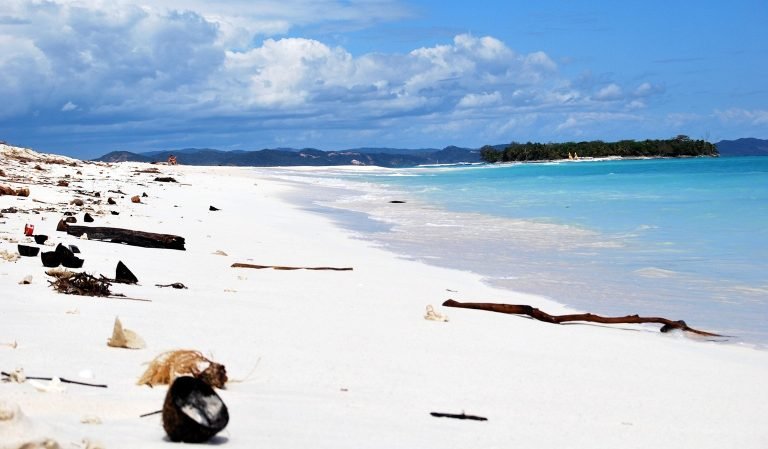
Coastal regions can also vary significantly. Well-developed areas like Nosy Be often have decent coverage, while more isolated parts of the coastline may have weak or intermittent signals. This is especially true if you plan to visit some of the more remote locations featured in this guide to Madagascar’s best beaches, where connectivity is not always guaranteed.
Because of these variations, your mobile experience is closely tied to how you move around the country. Understanding distances, travel times, and infrastructure helps set realistic expectations, especially when traveling across Madagascar involves long journeys through remote regions.
- Strongest coverage in cities and major tourist hubs
- Unstable or limited signal along many roads and rural areas
- Little to no coverage inside most national parks
- Mixed connectivity in coastal and remote beach destinations
In practice, this means that neither a SIM card nor an eSIM will give you full coverage across the entire island. The goal is not to stay connected everywhere, but to choose the option that works best for the parts of Madagascar you plan to visit.
Where to Buy a SIM Card in Madagascar (Airports, Shops and Providers)
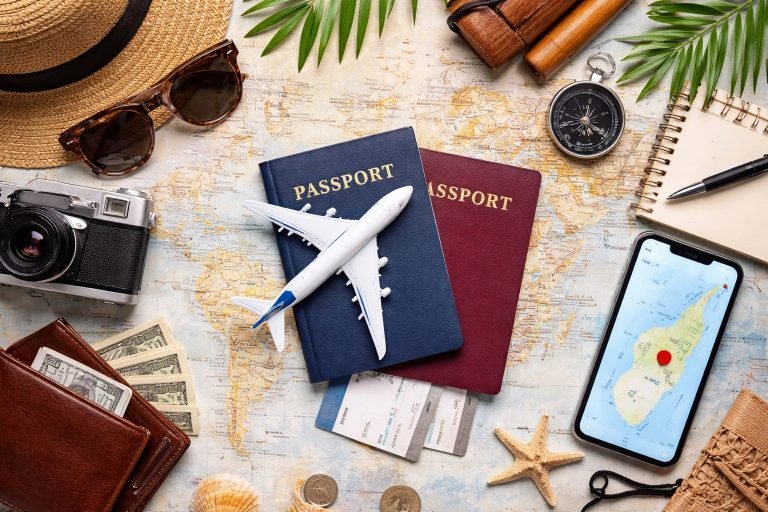
If you decide to use a local SIM card in Madagascar, buying one is relatively straightforward, but it does require a bit more effort compared to using an eSIM. SIM cards are widely available, especially in major cities and at international arrival points, but the process is not always as quick or organized as in more developed destinations.
The most convenient place to get a SIM card is at the airport when you arrive. At Ivato International Airport in Antananarivo, you will typically find kiosks from the main mobile operators in the arrivals area, making it easy to get connected right after landing. :contentReference[oaicite:0]{index=0}
Madagascar has three main mobile providers:
- Orange Madagascar
- Yas (formerly Telma)
- Airtel Madagascar
Among these, Yas (Telma) is generally considered to have the widest coverage across the country, especially outside major cities, while Orange and Airtel can work well in urban areas and popular destinations. :contentReference[oaicite:1]{index=1}
If you prefer to wait, SIM cards are also available in official operator stores, small mobile shops, and authorized retailers throughout towns and cities. In some cases, buying from a proper store can be quicker and more straightforward than dealing with queues at the airport. :contentReference[oaicite:2]{index=2}
- Buy at the airport for immediate connectivity after arrival
- Use official provider stores for a more controlled setup
- Bring your passport, as registration is required for all SIM cards
- Expect basic setup help, but service quality can vary
SIM cards themselves are very cheap, often costing only a few thousand ariary, but you will need to add a data package separately. :contentReference[oaicite:3]{index=3}
Overall, buying a SIM card locally is the most cost-effective option, but it requires time, patience, and a bit of flexibility. If you want to avoid this process entirely, setting up your connectivity before arrival can often be the easier alternative.
How eSIM Works in Madagascar (Setup, Activation and Use)
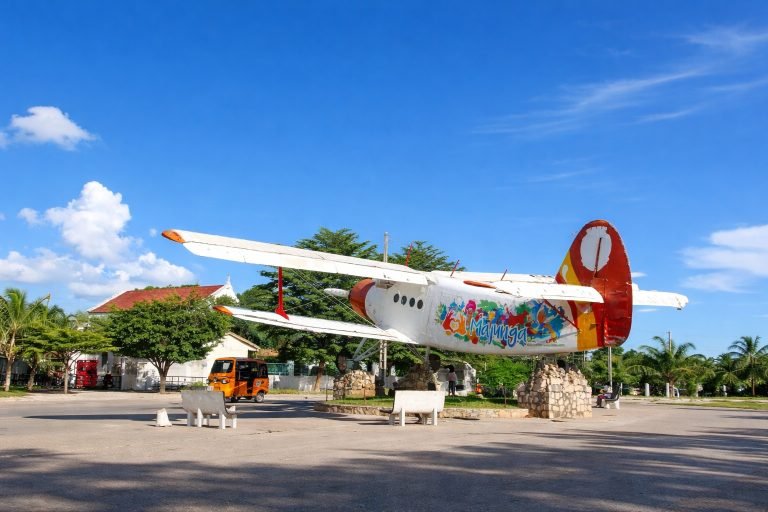
Using an eSIM in Madagascar is one of the simplest ways to stay connected, especially if you want mobile data working as soon as you land. Unlike a traditional SIM card, an eSIM does not require any physical installation. Instead, you download a data plan directly to your phone before or during your trip.
The setup process is straightforward. After purchasing a plan from an eSIM provider, you receive a QR code or activation instructions. Scanning this code installs the eSIM on your device, allowing you to connect to available networks in Madagascar without needing to visit a store or swap SIM cards.
Once activated, your phone automatically connects to a partner network when you arrive in Madagascar. In most cases, this means you will be using one of the local providers such as Yas (Telma), Orange, or Airtel, but through an international eSIM platform rather than a direct local subscription.
- Purchase your eSIM plan online before departure or on arrival
- Scan the QR code to install the eSIM on your phone
- Activate the plan and connect to a local partner network
- Start using mobile data without visiting a shop or changing SIM cards
One of the biggest advantages of using an eSIM is convenience. You avoid queues at the airport, language barriers, and the need to register a local SIM card. This makes eSIMs particularly useful if you are arriving late, traveling on a tight schedule, or simply want a smoother start to your trip.
However, it is important to understand that eSIM performance depends on the same local infrastructure as physical SIM cards. Coverage will still vary depending on where you travel, and speeds can fluctuate outside major cities. This means that while eSIMs are highly convenient, they are not a guaranteed solution for staying connected in remote areas.
If you want a quick and reliable way to get online without dealing with local providers, these reliable eSIM providers for international travel offer flexible plans that can be activated before your trip, giving you immediate access to mobile data as soon as you arrive in Madagascar.
SIM Card vs eSIM in Madagascar: Pros and Cons
Choosing between a SIM card and an eSIM in Madagascar ultimately comes down to balancing convenience, coverage, and cost. Both options have clear advantages, but they perform differently depending on how and where you travel across the island.
While eSIMs are designed for simplicity and immediate use, local SIM cards are built around Madagascar’s actual network infrastructure. Understanding the strengths and limitations of each option will help you avoid connectivity issues and choose the setup that fits your trip best.
SIM Card: Advantages and Disadvantages
- Better local coverage: Direct access to local networks like Yas (Telma), Orange, and Airtel often results in more stable connections, especially outside major cities
- Lower cost: Local data packages are usually cheaper than international eSIM plans
- Flexible top-ups: Easy to recharge data in shops and kiosks across the country
- More reliable for remote travel: Often the better choice for national parks, rural areas, and long overland journeys
- Requires in-person setup: You need to buy and register the SIM card locally, often with your passport
- Time and effort: Airport queues or store visits can take time, especially after a long flight
- Language barrier: Setup instructions and assistance may not always be in English
eSIM: Advantages and Disadvantages
- Instant activation: Set up your connection before arrival and start using data immediately
- No physical SIM required: No need to swap cards or visit a store
- Ideal for short trips: Perfect for travelers who want a quick, hassle-free solution
- Easy to manage: Plans can be activated, monitored, and topped up online
- Higher cost: Typically more expensive than local SIM card data packages
- Dependent on partner networks: May not always connect to the strongest available signal
- Limited performance in remote areas: Coverage can be weaker outside cities and tourist hubs
In many cases, the best solution is not strictly one or the other. Some travelers use an eSIM for immediate connectivity on arrival, then switch to a local SIM card for longer stays or more remote travel. This hybrid approach combines convenience with better long-term reliability.
Your final choice should depend on your itinerary, how much you rely on mobile data, and whether you prioritize convenience or coverage. If your trip includes remote regions, local networks may give you an advantage. If you prefer a smooth and simple setup, an eSIM can save time and effort.
SIM vs eSIM in Madagascar: Which One Is Best for Your Trip?
The best option between a SIM card and an eSIM in Madagascar depends entirely on how you plan to travel. There is no single solution that works for everyone, because connectivity on the island is closely tied to your route, your pace, and the type of experience you are looking for.
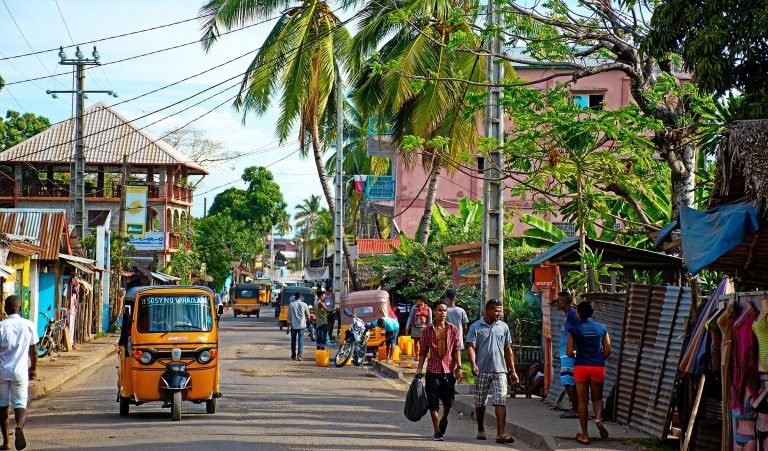
If your trip is focused on major destinations such as Antananarivo, Nosy Be, or other well-visited areas, an eSIM is often the most convenient choice. It allows you to get online immediately after landing, avoid dealing with local providers, and keep your setup simple throughout your journey.
On the other hand, if your itinerary includes national parks, remote beaches, or overland travel between regions, a local SIM card is usually the more reliable option. Because it connects directly to Madagascar’s mobile networks, it is more likely to maintain a signal in areas where coverage is limited or inconsistent.
- Short trips and city-based travel: eSIM is usually the easiest and most practical option
- Longer trips and multi-region itineraries: local SIM card offers better long-term reliability
- Remote travel and national parks: SIM card is generally the safer choice
- Arrival convenience and immediate connectivity: eSIM provides the smoothest experience
If you are still planning your route, your connectivity choice should match the way you move across the island. A fast-paced itinerary that covers multiple regions will have very different connectivity needs compared to a slower trip focused on a single area. This is where having a clear travel plan becomes important, as it helps you anticipate where you will actually need mobile data during your trip.
Many travelers find that a combination of both options works best. Using an eSIM for arrival and the first few days provides immediate access to maps and communication, while switching to a local SIM card later can improve reliability for longer journeys and more remote destinations.
Ultimately, the goal is not to stay connected everywhere, but to stay connected where it matters most. Choosing the right setup based on your travel style will make your experience in Madagascar smoother, more flexible, and less dependent on unpredictable network conditions.
Starlink in Madagascar: Is It a Real Option for Travelers?
In addition to SIM cards and eSIMs, there is now a third option for staying connected in Madagascar: Starlink. This satellite-based internet service has recently become available in the country and offers a completely different level of connectivity, particularly in remote areas where traditional mobile networks are unreliable or nonexistent.
Unlike mobile data, which depends on local cell towers, Starlink connects directly to satellites. This allows it to deliver internet access in places where there is no 4G coverage at all, including remote lodges, national parks, and off-grid coastal regions. For travelers heading far beyond the main routes, this can be a significant advantage.
In terms of performance, Starlink can deliver speeds that are far higher than typical mobile networks in Madagascar. Many users report speeds in the range of 20 to 50 Mbps, which is more than sufficient for video calls, uploading content, and remote work. In areas with weak or unstable mobile signals, this can be the only way to maintain a reliable connection.
However, Starlink is not a simple plug-and-play solution for most travelers. It requires dedicated hardware, including a satellite dish and a power source, which makes it less practical for short trips or lightweight travel. Even the more compact Starlink Mini still requires planning, space, and reliable access to electricity.
- Works in remote and off-grid locations where mobile networks do not reach
- Much higher speeds than typical 4G connections in Madagascar
- Requires dedicated hardware and setup
- Needs a stable power source, which can be a challenge in rural areas
- Higher upfront and monthly costs compared to SIM cards or eSIMs
Costs are also a factor. The initial hardware investment is significantly higher than buying a SIM card or using an eSIM, and monthly subscription fees add to the expense. For most short-term travelers, this makes Starlink unnecessary. But for long stays, remote work setups, or extended travel in isolated regions, it can become a valuable tool.
There are also practical considerations beyond setup and cost. In some areas, security can be a concern, and leaving visible equipment unattended may not be advisable. In addition, access to consistent electricity is not guaranteed in all parts of Madagascar, so backup power solutions may be required.
For the majority of travelers, SIM cards and eSIMs remain the most practical way to stay connected. But if your trip involves extended stays in remote areas or you need reliable high-speed internet regardless of location, Starlink offers a level of connectivity that traditional mobile networks in Madagascar cannot match.
Final Thoughts: Staying Connected in Madagascar
Staying connected in Madagascar is less about choosing the “perfect” option and more about understanding the realities of traveling across the island. Mobile coverage is improving, but it remains uneven, and your experience will depend largely on where you go and how you move between regions.
For most travelers, both SIM cards and eSIMs can work well when used in the right context. eSIMs offer convenience and immediate access to data, while local SIM cards provide stronger integration with local networks and can be more dependable over longer stays. Understanding the strengths of each option helps you avoid unnecessary frustration.
Connectivity should also be viewed as part of your overall travel planning, not just a technical detail. Your route, transport choices, and destinations all influence how often you will have signal and how much you will rely on mobile data. If you are still mapping out your journey, this Madagascar travel guide with top places to visit gives you a full overview of the island, while these itinerary ideas for exploring Madagascar help you plan a realistic route.
To better prepare for real conditions on the ground, it is also worth reviewing practical advice on what to expect when traveling in Madagascar and understanding how transport works across the island. These factors often have a greater impact on your experience than your choice of SIM or eSIM.
If you prefer a simple and flexible setup, activating an eSIM before arrival can make your trip smoother from the start. For longer journeys or more remote travel, combining an eSIM with a local SIM card is often the most practical approach.
With the right expectations and a setup that matches your travel style, staying connected in Madagascar becomes far easier. Rather than chasing perfect coverage, focus on choosing a solution that aligns with your itinerary and lets you enjoy the experience without unnecessary complications.
Frequently Asked Questions About SIM Cards and eSIMs in Madagascar
• Do I need a SIM card or eSIM in Madagascar?
Yes, if you want mobile data for maps, bookings, and communication. WiFi is limited and often unreliable outside hotels and major cities, so having your own connection is strongly recommended.
• Is eSIM available in Madagascar?
Yes. eSIMs work in Madagascar through international providers that connect to local partner networks such as Yas (Telma), Orange, or Airtel. They are easy to set up and can be activated before arrival.
• Is a SIM card better than an eSIM in Madagascar?
A local SIM card often provides better coverage, especially in rural areas and outside major cities. An eSIM is more convenient and works well in urban areas and for short trips.
• Which SIM card is best in Madagascar?
Yas (formerly Telma) is generally considered to have the widest coverage across the country. Orange and Airtel can also work well in cities and popular destinations.
• Can I buy a SIM card at the airport in Madagascar?
Yes. SIM cards are usually available at Ivato International Airport in Antananarivo, making it easy to get connected shortly after arrival.
• How much does a SIM card cost in Madagascar?
SIM cards themselves are very cheap, often only a few thousand ariary. The main cost comes from purchasing a data package, which is still relatively affordable compared to many other countries.
• Does mobile data work everywhere in Madagascar?
No. Coverage is good in cities and some tourist areas, but many rural regions, national parks, and remote coastal areas have little or no signal.
• Can I rely on eSIM in remote areas of Madagascar?
No. eSIMs depend on the same local networks as SIM cards, so they will not work reliably in remote areas where there is no coverage.
• Is WiFi reliable in Madagascar?
WiFi is available in hotels, cafes, and some accommodations, but it is often slow and inconsistent. It should not be relied on as your main source of connectivity.
• Is Starlink a good option in Madagascar?
Starlink can provide high-speed internet in remote areas, but it requires dedicated equipment, a power source, and a higher budget. It is mainly suitable for long-term travelers, digital nomads, or remote work setups.
Travel Resources to Plan, Book & Stay Connected
Use these tools and guides to stay connected abroad, find inspiration for your next trip, and book your flights, stays and gear with confidence.
Disclosure: This article may contain affiliate links. If you make a purchase through a link, I may receive a commission at no extra cost to you. I only share recommendations I believe are genuinely useful, and all opinions are my own. AI was used in this post for research and drafting purposes.

Comment (0)