Best Temples in Bali: What This Guide Covers
Bali is often called the Island of the Gods, and it quickly becomes clear why once you begin exploring its temples. From dramatic sea temples perched on rocky cliffs to sacred water temples, mountain sanctuaries, and centuries-old Hindu shrines, Bali's temples are among the island's most important cultural and spiritual attractions.
Many first-time visitors know famous names such as Tanah Lot and Uluwatu Temple, but Bali is home to thousands of temples, each serving a different purpose within Balinese Hinduism. Understanding which temples are worth visiting, how they differ from one another, and how to behave respectfully can make your experience far more rewarding.
- The most famous temples in Bali and why they are worth visiting
- Sea temples, mountain temples, and sacred water temples
- Tanah Lot, Uluwatu, Besakih, Tirta Empul, Lempuyang, Ulun Danu Beratan, and more
- Temple dress code, sarongs, and visitor etiquette
- Can tourists enter Bali temples?
- Temple ceremonies, offerings, and Balinese Hindu traditions
- The best temple tours and guided experiences
- Practical tips for visiting temples respectfully
Many of Bali's most famous temples are included in popular sightseeing routes and feature prominently in our Things to Do in Bali guide. If you're still planning your route around the island, that guide can help you combine temples with beaches, rice terraces, waterfalls, and other major attractions.
Temple visits also fit naturally into most travel plans. Our Bali itinerary shows how travelers typically combine cultural sites, scenic viewpoints, and outdoor activities across different lengths of stay.
Why Temples Matter in Bali
Before visiting Bali's temples, it helps to understand that these sites are much more than tourist attractions. Temples remain an active part of everyday life across the island and play a central role in Balinese Hinduism, community traditions, family ceremonies, and religious celebrations.
While Indonesia is predominantly Muslim, Bali is unique because the majority of its population follows Balinese Hinduism. This local form of Hinduism blends elements of Hindu philosophy, ancestor worship, animism, and centuries-old Balinese traditions. As a result, religion is deeply woven into daily life in ways that many visitors immediately notice.
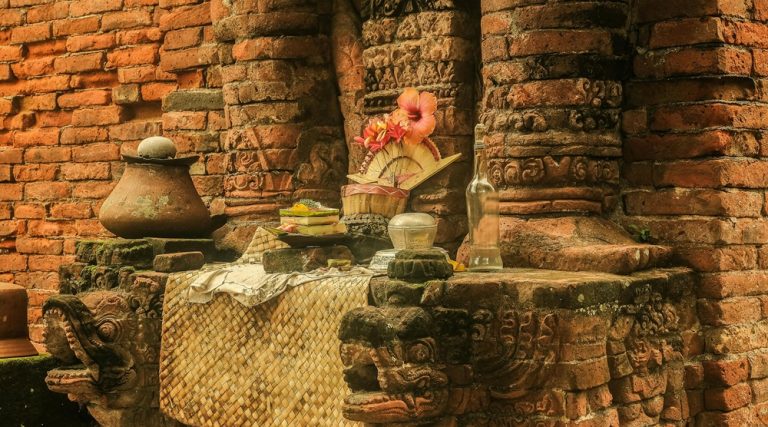
One of the first things travelers encounter in Bali is the presence of small daily offerings known as canang sari. These colorful baskets of flowers, incense, and symbolic items can be found outside homes, businesses, restaurants, temples, and even on sidewalks. They serve as daily expressions of gratitude and spiritual balance and offer a glimpse into how important religion remains throughout the island.
Temples, known locally as pura, are found everywhere in Bali. Some serve entire villages, others belong to individual families, while larger temples attract worshippers from across the island. Many of the temples visited by travelers are not museums or historical ruins. They remain active places of worship where ceremonies, prayers, and religious events take place throughout the year.
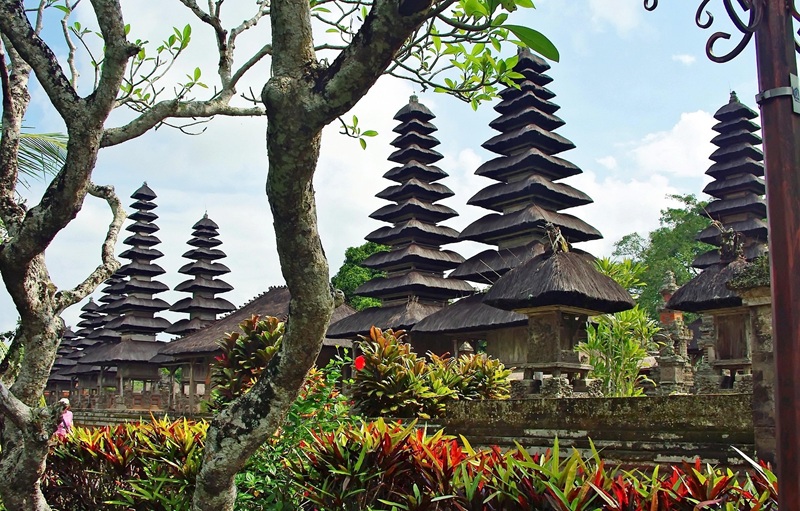
This spiritual importance is one reason Bali's temples are often so visually striking. Temple architecture is designed to reflect harmony between humans, nature, and the spiritual world. Multi-tiered shrines, elaborate stone carvings, guardian statues, split gateways, and dramatic natural settings all contribute to the distinctive appearance that makes Balinese temples famous around the world.
For visitors, temple visits provide far more than photo opportunities. They offer insight into Bali's culture, history, beliefs, and traditions while helping explain why the island feels so different from many other destinations in Southeast Asia. Understanding this context makes temple visits more meaningful and helps travelers approach these sacred sites with the respect they deserve.
Fortunately, Bali offers a remarkable variety of temples. Some stand on ocean cliffs overlooking crashing waves, others sit beside lakes or natural springs, while some occupy mountain slopes and volcanic landscapes. The following temples are among the most famous, photogenic, and culturally significant temples you can visit during a trip to Bali.
Best Temples in Bali
Bali is home to thousands of temples, but only a handful have become major attractions for international visitors. Some are famous for their spectacular locations, others for their religious importance, and several combine both. If you're visiting Bali for the first time, the temples below offer an excellent introduction to the island's culture, architecture, and spiritual traditions.
Tanah Lot Temple
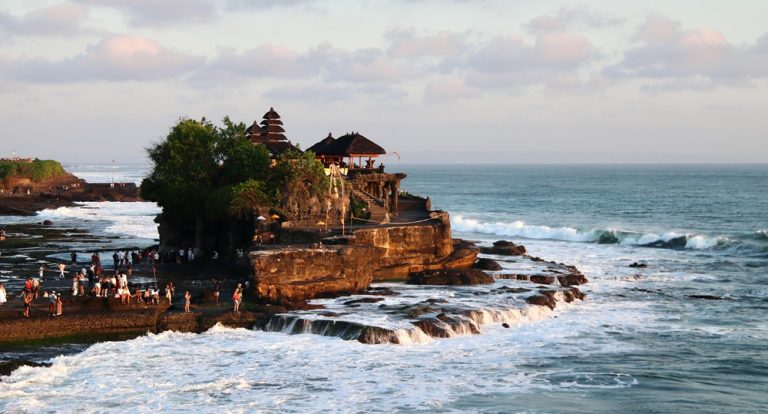
Tanah Lot Temple is arguably the most famous temple in Bali and one of the island's most photographed landmarks. Located on a rocky offshore outcrop along Bali's southwest coast, the temple appears to float above the ocean during high tide, creating one of the most iconic views in Indonesia. Because of its location, Tanah Lot is also one of the most popular excursions for travelers staying in Canggu, and our guide to exploring Canggu and its surroundings covers how to combine the temple with nearby beaches, cafés, and coastal attractions.
The temple dates back centuries and remains an important place of worship for Balinese Hindus. According to local tradition, Tanah Lot was established by the revered priest Dang Hyang Nirartha during his travels across Bali. Today, it continues to host religious ceremonies while attracting visitors from around the world.
Most travelers visit Tanah Lot in the late afternoon when the setting sun creates dramatic lighting across the coastline. The combination of crashing waves, ocean views, temple architecture, and vibrant sunsets makes this one of the most memorable places to visit in Bali.
Although visitors cannot enter the temple's innermost sacred areas, the surrounding walkways, viewpoints, and coastal scenery provide plenty of opportunities to appreciate the site. The nearby market area also offers restaurants, cafés, souvenir shops, and viewing platforms overlooking the temple.
- Location: Southwest Bali, near Tabanan
- Best known for: Sunset views and its offshore island setting
- Best time to visit: Late afternoon through sunset
- Allow: 1–2 hours
Tanah Lot is one of the most famous temples in Bali and one of the island's most photographed landmarks. Whether you want to combine it with other UNESCO-listed cultural sites and rice terraces or simply visit the temple as part of a scenic coastal tour, these guided experiences make it easy to explore one of Bali's most iconic attractions without worrying about transportation or logistics.
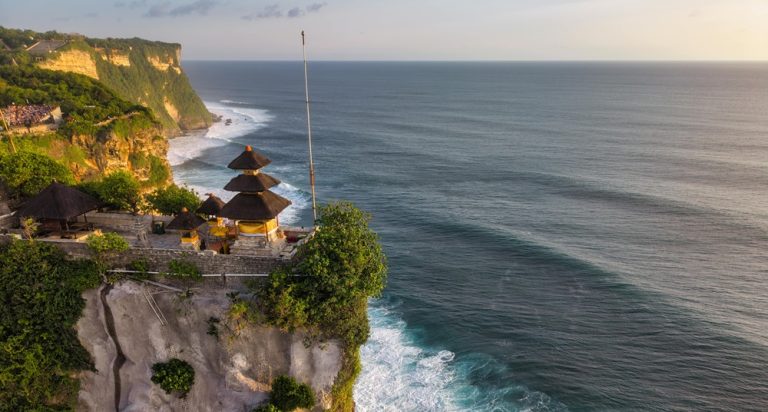
Uluwatu Temple
Perched on top of dramatic limestone cliffs more than 70 meters above the Indian Ocean, Uluwatu Temple is one of the most spectacular temple locations in Bali. Officially known as Pura Luhur Uluwatu, the temple sits at the southwestern tip of the Bukit Peninsula and offers some of the island's most impressive coastal views.
Uluwatu is considered one of Bali's six key spiritual temples believed to protect the island from negative influences. Its elevated position above the ocean contributes to its sacred status while also making it one of the most visually striking destinations in Bali. Travelers interested in visiting the temple, watching the Kecak Fire Dance, or exploring the surrounding beaches and viewpoints can learn more in our complete guide to Uluwatu.
The temple itself is beautiful, but much of the experience comes from the surrounding cliff-top pathways. Visitors can walk along the edge of the cliffs while enjoying panoramic ocean views, crashing waves, and dramatic scenery that extends for kilometers along the coastline.
Uluwatu is also famous for its traditional Kecak Fire Dance performances, which take place at sunset in an open-air amphitheater overlooking the ocean. For many travelers, combining the temple visit with the Kecak performance creates one of the most memorable cultural experiences in Bali.
Visitors should be aware that the temple grounds are home to numerous monkeys. While they are accustomed to tourists, they are also known for stealing sunglasses, phones, hats, jewelry, and other loose items. Keeping valuables secured is strongly recommended.
- Location: Bukit Peninsula, South Bali
- Best known for: Cliff-top ocean views and Kecak Fire Dance performances
- Best time to visit: Late afternoon through sunset
- Allow: 2–3 hours
Uluwatu Temple is one of the most spectacular cliffside temples in Bali, combining dramatic ocean views, rich spiritual significance, and some of the island's most memorable sunsets. Many visitors choose to pair their visit with the famous Kecak Fire Dance performance and a seafood dinner, while others prefer a more flexible sightseeing tour focused on the temple and surrounding coastline.
Besakih Temple
Often referred to as Bali's Mother Temple, Besakih Temple is the island's largest and most important Hindu temple complex. Located on the slopes of Mount Agung, Bali's highest volcano, the site consists of more than 80 individual temples spread across a vast mountainside setting.
Unlike coastal temples such as Tanah Lot and Uluwatu, Besakih is valued primarily for its religious significance. It remains one of the most sacred places in Balinese Hinduism and continues to host major ceremonies attended by worshippers from across the island.
The temple complex offers impressive views of Mount Agung and the surrounding countryside, particularly on clear days. Visitors who make the journey here gain a deeper understanding of Bali's spiritual traditions and the role religion continues to play in everyday life.
Because of its size and importance, Besakih often feels very different from Bali's more tourist-focused temples. The atmosphere is generally quieter, more ceremonial, and more closely connected to active religious practice.
- Location: Eastern Bali, slopes of Mount Agung
- Best known for: Bali's Mother Temple and spiritual importance
- Best time to visit: Morning or early afternoon
- Allow: 2–3 hours
Visit two of the most sacred and iconic temples in Bali on a full-day tour to Besakih Temple and Lempuyang Temple, home to the famous Gates of Heaven and spectacular views of Mount Agung.
View Besakih & Lempuyang Tour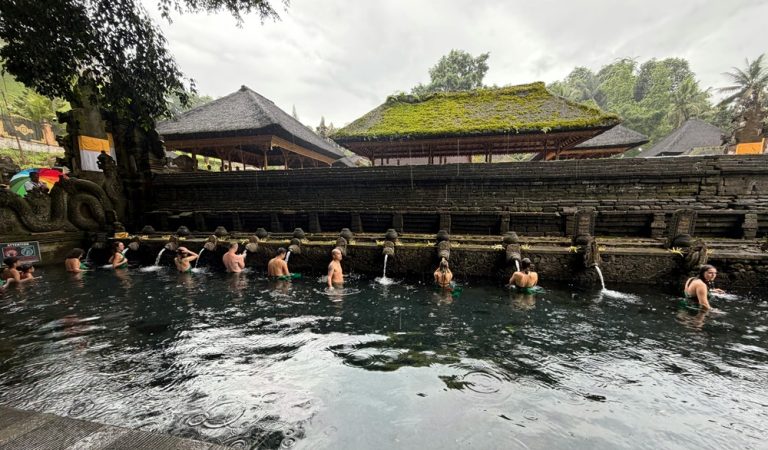
Tirta Empul Temple
Tirta Empul Temple is one of the most famous water temples in Bali and a site of major religious importance for Balinese Hindus. Located near Ubud, the temple is best known for its sacred spring water, which feeds a series of purification pools used in traditional cleansing rituals. Travelers exploring central Bali can also find more nearby attractions, waterfalls, rice terraces, and cultural experiences in our complete Ubud travel guide.
Founded more than a thousand years ago, Tirta Empul remains an active place of worship where locals and visitors participate in purification ceremonies known as melukat. The temple's holy springs are believed to possess cleansing and healing properties, attracting worshippers from across Bali throughout the year.
One of the highlights of visiting Tirta Empul is observing or participating in the purification ritual. Visitors enter a series of pools and move between water fountains while following traditional customs and guidance. For many travelers, this provides one of the most meaningful cultural experiences available in Bali.
Beyond the purification pools, the temple complex contains traditional Balinese courtyards, shrines, gardens, and stone carvings that offer insight into the island's religious architecture and spiritual traditions.
- Location: Near Ubud, Central Bali
- Best known for: Sacred spring water and purification rituals
- Best time to visit: Early morning before larger crowds arrive
- Allow: 1.5–2 hours
Experience one of Bali's most sacred traditions with a guided visit to Tirta Empul Temple and take part in the famous holy spring purification ritual while learning about Balinese Hindu culture.
View Tirta Empul ExperienceUlun Danu Beratan Temple
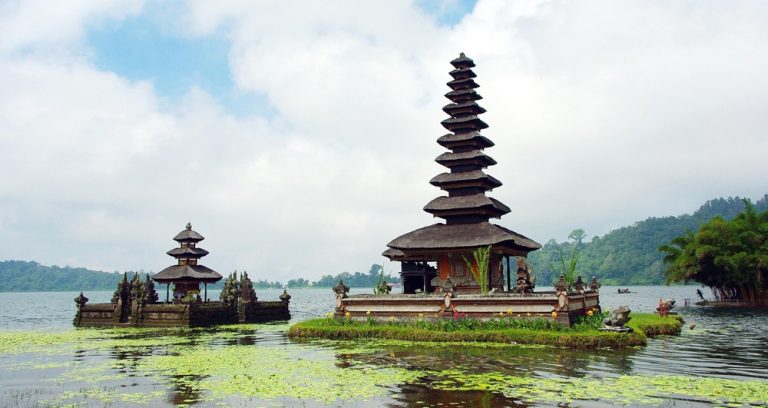
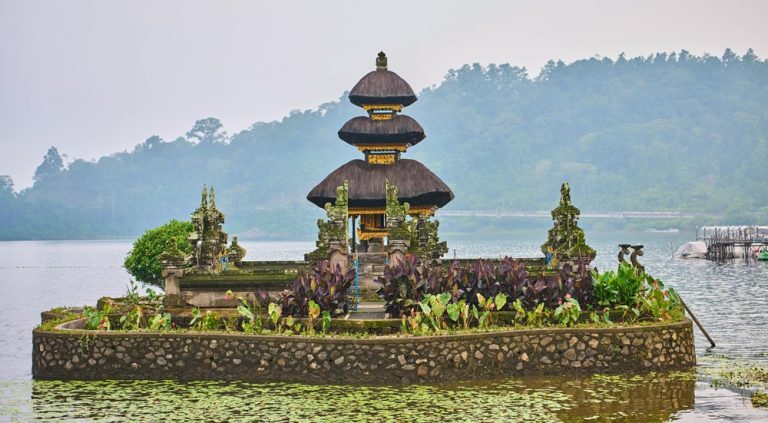
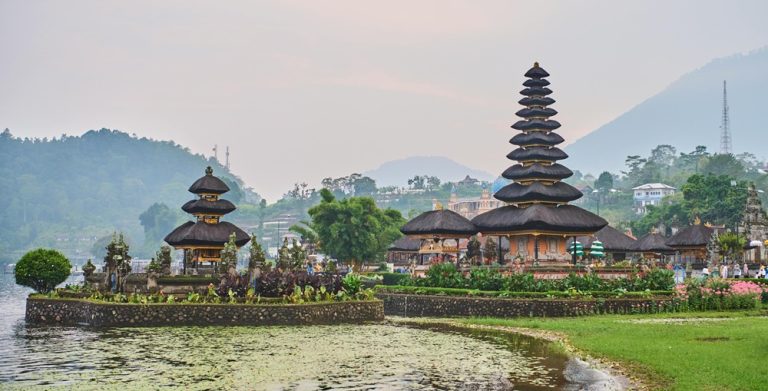
Few temples in Bali are as instantly recognizable as Ulun Danu Beratan Temple. Situated on the shores of Lake Beratan in Bali's cooler highlands, the temple appears to float on the surface of the water when lake levels are high, creating one of the island's most iconic landscapes.
Dedicated to Dewi Danu, the goddess of lakes, rivers, and water, the temple has long played an important role in Bali's traditional irrigation system and agricultural culture. Water is considered sacred in Balinese Hinduism, making this one of the island's most significant water temples.
The combination of misty mountains, cool temperatures, reflective lake views, and elegant multi-tiered shrines creates a very different atmosphere from Bali's coastal temples. Many visitors consider Ulun Danu Beratan one of the most photogenic locations on the island.
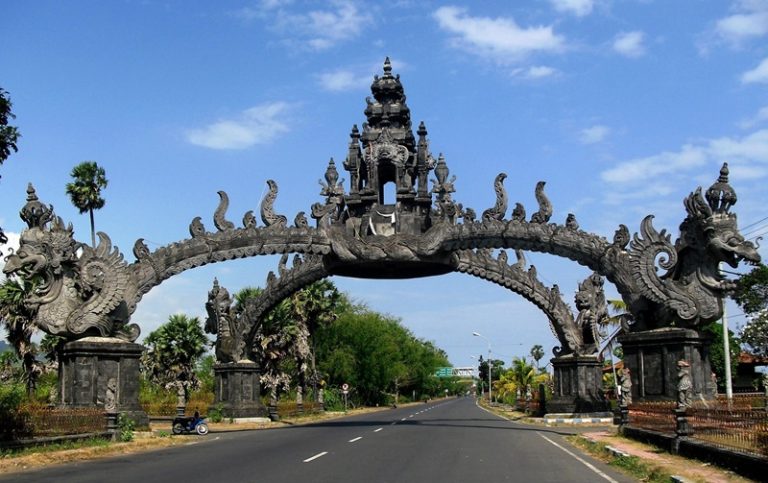
The temple is commonly included on northern Bali sightseeing routes alongside waterfalls, mountain viewpoints, and the nearby Handara Gate. Because the climate here is cooler than in southern Bali, it often provides a refreshing change from the island's beaches and coastal resorts.
- Location: Bedugul, Central Highlands
- Best known for: Lake setting and floating temple appearance
- Best time to visit: Morning for calmer conditions and fewer visitors
- Allow: 1–2 hours
Ulun Danu Beratan Temple is one of Bali's most iconic water temples, famous for its stunning lakeside setting and cultural significance. Whether you want to combine it with UNESCO-listed rice terraces and scenic highland landscapes or simply explore the temple itself, these tours offer an easy way to experience one of Bali's most beautiful sacred sites.
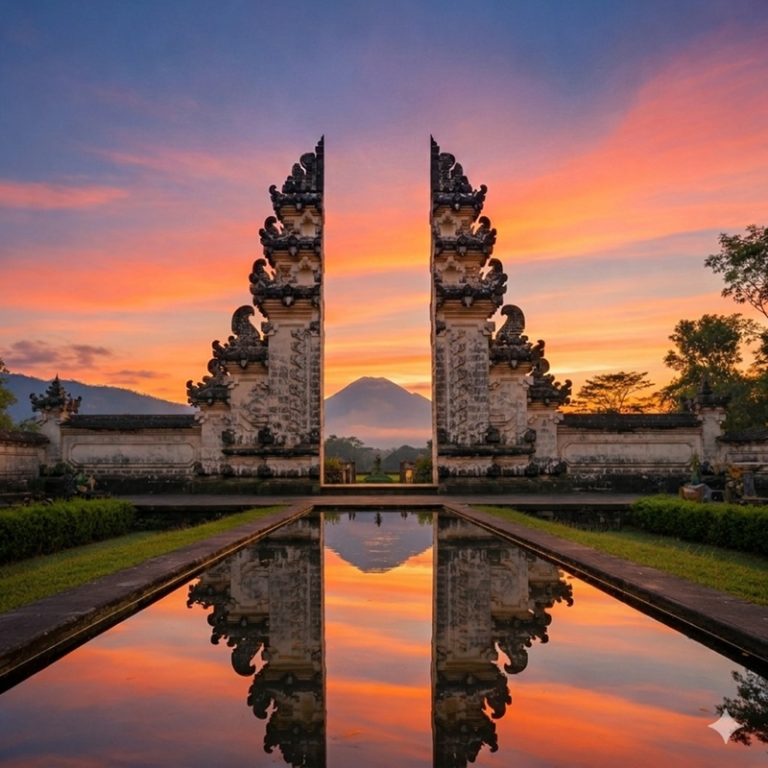
Lempuyang Temple
Lempuyang Temple is one of Bali's oldest and most revered temples, but it is best known internationally for the famous "Gates of Heaven" viewpoint. Located high on the slopes of Mount Lempuyang in eastern Bali, the temple offers spectacular views toward Mount Agung, Bali's highest volcano.
The temple complex actually consists of several temples spread across the mountainside, connected by a series of staircases and walking trails. Most visitors focus on the lower temple area, where the iconic split gateway frames Mount Agung on clear days and creates one of Bali's most recognizable photographs.
Despite its popularity on social media, Lempuyang remains an important religious site for Balinese Hindus. Visitors should remember that the temple's spiritual significance extends far beyond the famous photo opportunities that attract travelers from around the world.
Because the temple sits in eastern Bali, many travelers combine a visit with nearby attractions such as Tirta Gangga Water Palace, Taman Ujung, Amed, or the beaches and viewpoints of East Bali.
- Location: East Bali, near Mount Agung
- Best known for: The Gates of Heaven viewpoint
- Best time to visit: Early morning for clearer mountain views
- Allow: 2–3 hours
Lempuyang Temple is one of Bali's most famous sacred sites and home to the iconic Gates of Heaven. These tours help you maximize your time with quicker access options while combining the temple with highlights such as Tirta Gangga Water Palace, waterfalls, and some of East Bali's most scenic landscapes.
Taman Ayun Temple
Taman Ayun Temple is often overlooked by first-time visitors, yet many travelers consider it one of the most beautiful temple complexes in Bali. Located in Mengwi, the temple is surrounded by landscaped gardens, ponds, and traditional Balinese architecture that create a peaceful atmosphere quite different from Bali's busier tourist attractions.
Built in the 17th century by the royal family of Mengwi, Taman Ayun served as an important state temple and remains a significant cultural landmark today. Its name translates roughly to "Beautiful Garden Temple," a description that feels entirely appropriate when walking through the grounds.
One of the temple's most distinctive features is its collection of elegant multi-tiered meru shrines. These traditional structures are among the finest examples of Balinese temple architecture and provide excellent insight into the island's religious design traditions.
The temple's spacious layout, reflective ponds, and relatively relaxed visitor numbers make it an excellent choice for travelers seeking a quieter temple experience. It is also recognized as part of Bali's UNESCO-listed cultural landscape associated with the island's traditional irrigation system.
- Location: Mengwi, Central Bali
- Best known for: Traditional architecture and landscaped gardens
- Best time to visit: Morning or late afternoon
- Allow: 1–2 hours
Visit the beautiful Taman Ayun Temple alongside Jatiluwih Rice Terraces and Campuhan Waterfall on a scenic journey through some of North Bali's most impressive cultural and natural attractions.
View Taman Ayun Tour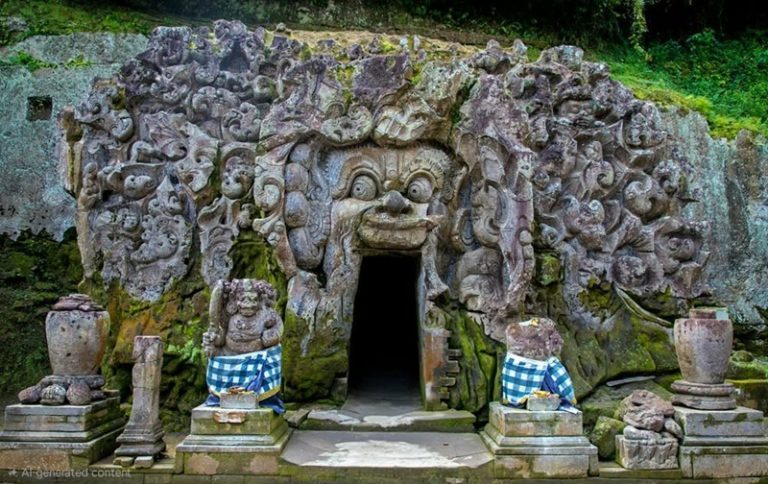
Goa Gajah (Elephant Cave)
Goa Gajah, commonly known as the Elephant Cave, is one of Bali's most intriguing historical and archaeological sites. Located just outside Ubud, the temple complex dates back to the 9th century and offers a fascinating combination of religious significance, ancient architecture, and lush tropical surroundings.
The site's most recognizable feature is the dramatic cave entrance, carved into a stone face adorned with intricate figures and protective symbols. Visitors enter through the mouth-like opening before exploring the small meditation chamber located inside.
Beyond the cave itself, the complex includes ancient bathing pools, stone carvings, fountains, gardens, and temple structures surrounded by dense vegetation. The atmosphere feels very different from Bali's coastal temples and provides an interesting glimpse into the island's early religious history.
Because Goa Gajah is located close to central Ubud, it is often combined with visits to nearby rice terraces, waterfalls, traditional villages, and other cultural attractions in the area.
- Location: Near Ubud, Central Bali
- Best known for: Ancient cave carvings and archaeological significance
- Best time to visit: Early morning before tour groups arrive
- Allow: 1–1.5 hours
Explore some of Central Bali's most important cultural and spiritual sites with a guided tour to Goa Gajah (Elephant Cave), Tirta Empul Temple, and Gunung Kawi. These experiences combine ancient history, sacred traditions, and stunning temple architecture while removing the hassle of arranging transportation yourself.
Saraswati Temple
Located in the heart of Ubud, Saraswati Temple is one of the most accessible and elegant temples in Bali. Officially known as Pura Taman Saraswati, the temple is dedicated to Saraswati, the Hindu goddess of knowledge, wisdom, arts, and learning.
The temple is particularly famous for its beautiful lotus pond, which creates one of the most photographed scenes in Ubud. A stone walkway crosses the pond and leads visitors toward ornate temple gates decorated with traditional Balinese carvings and statues.
Although smaller than temples such as Besakih or Uluwatu, Saraswati Temple offers a peaceful setting and an excellent introduction to Balinese architecture. Its central location also makes it easy to visit while exploring Ubud's cafés, markets, restaurants, and cultural attractions.
In the evenings, traditional Balinese dance performances are sometimes held within the temple grounds, providing visitors with an opportunity to experience both religious architecture and local performing arts in a single location.
- Location: Central Ubud
- Best known for: Lotus pond and traditional architecture
- Best time to visit: Morning or late afternoon
- Allow: 30–60 minutes
These temples represent some of Bali's most famous sacred sites, but they are not the only temples worth visiting. In particular, Bali's water temples deserve special attention because of their unique role in Balinese Hinduism and the island's traditional irrigation system.
Discover the cultural heart of Ubud with a tour that combines Saraswati Temple, the Sacred Monkey Forest, waterfalls, and some of Bali's most famous spiritual and natural attractions. It's an excellent way to experience the island's culture, architecture, and jungle landscapes in a single day.
Best Water Temples in Bali
Water plays a central role in Balinese Hinduism, agriculture, and daily life. As a result, some of Bali's most important temples are dedicated to sacred springs, lakes, rivers, and water sources that have supported local communities for centuries. These temples are often among the most beautiful on the island and provide a deeper understanding of Bali's spiritual traditions.
Many travelers searching for Bali's water temples immediately think of Tirta Empul and Ulun Danu Beratan, but the connection between water and religion extends throughout the island. Water is viewed not only as a practical necessity but also as a symbol of purification, balance, and spiritual renewal.
Tirta Empul Water Temple
Tirta Empul is Bali's most famous water temple and one of the island's most significant religious sites. The sacred spring that feeds the temple's purification pools has flowed continuously for more than a thousand years and remains an active place of worship today.
Visitors can observe or participate in traditional purification rituals while learning about the important role water plays in Balinese Hindu beliefs. For many travelers, Tirta Empul offers one of the most meaningful cultural experiences available in Bali.
Ulun Danu Beratan Water Temple
Ulun Danu Beratan is often considered Bali's most photogenic water temple. Located on the shores of Lake Beratan, the temple appears to float on the water during periods of higher lake levels, creating one of the island's most iconic landscapes.
Dedicated to the goddess of water, lakes, and rivers, the temple highlights the close relationship between religion, agriculture, and irrigation that has shaped Balinese society for centuries.
Explore Bali's most sacred water temples, including Tirta Empul and Ulun Danu Beratan, and discover the spiritual traditions, purification rituals, and stunning landscapes that make these temples so unique.
Browse Water Temple ToursWhy Water Temples Matter in Bali
Water temples are more than beautiful tourist attractions. They form part of Bali's traditional subak irrigation system, a centuries-old network that distributes water across rice terraces and farming communities throughout the island. This system is so significant that parts of it have received UNESCO World Heritage recognition.
For Balinese Hindus, water is closely associated with purification and spiritual balance. Sacred springs, lakes, and rivers are often viewed as gifts from the gods, making water temples some of the most spiritually important sites on the island.
If you only have time to visit one water temple during your trip, Tirta Empul provides the strongest cultural experience, while Ulun Danu Beratan offers some of the most spectacular scenery. Travelers with more time should consider visiting both, as each showcases a different side of Bali's spiritual and cultural heritage.
Bali Temple Etiquette & Dress Code
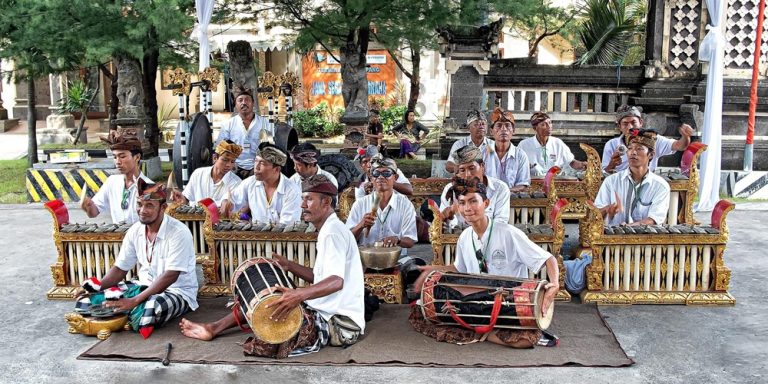
Visiting Bali's temples is one of the highlights of any trip, but it is important to remember that these are active places of worship rather than tourist attractions created solely for visitors. Following local customs demonstrates respect for Balinese culture and helps preserve the spiritual atmosphere that makes these sites so special.
Wear Appropriate Clothing
Most major temples require visitors to dress modestly before entering the temple grounds. In many cases, this means wearing a sarong and sash around the waist, even if you are already wearing shorts, trousers, or a long skirt.
Fortunately, many popular temples such as Uluwatu, Besakih, Tirta Empul, and Lempuyang either provide sarongs or include them as part of the entrance process. Visitors should still avoid clothing that is excessively revealing out of respect for local customs.
- Wear a sarong and sash when required
- Cover shoulders and upper legs when possible
- Avoid beachwear inside temple grounds
- Follow instructions provided by temple staff
Respect Religious Ceremonies
Temple ceremonies take place throughout the year and visitors may occasionally encounter worshippers praying, making offerings, or participating in religious events. If a ceremony is taking place, maintain a respectful distance and avoid walking directly through prayer areas unless invited to do so.
Observing these traditions can be one of the most rewarding parts of visiting a temple, but they should always take priority over photography or sightseeing.
Photography Etiquette
Photography is generally permitted in most temple complexes, but visitors should use common sense and respect. Avoid interrupting ceremonies, standing directly in front of worshippers, or treating sacred areas as photo studios.
Many of Bali's temples are famous for social media photography, particularly locations such as Lempuyang Temple and Ulun Danu Beratan. While photographs are welcome, remembering that these sites are active religious locations helps create a more respectful experience for everyone.
Can Tourists Enter Every Part of a Temple?
No. Certain sections of temples are reserved exclusively for worshippers and religious activities. Visitors should pay attention to signs, barriers, and instructions from temple staff regarding restricted areas.
The official tourism website of Bali also provides visitor information and cultural guidance for travelers interested in learning more about local customs and traditions: Indonesia Travel - Bali.
Important Cultural Considerations
Rules can vary slightly between temples, but visitors should always follow local guidance. Some temples may have additional restrictions during major religious ceremonies or special events. Being polite, dressing appropriately, speaking respectfully, and following instructions from temple staff will go a long way toward ensuring a positive experience.
Temple etiquette is not complicated, but taking a few minutes to understand local expectations can make your visit far more meaningful. Respectful behavior allows travelers to appreciate Bali's spiritual traditions while helping preserve these sacred sites for future generations.
Can Tourists Enter Bali Temples?
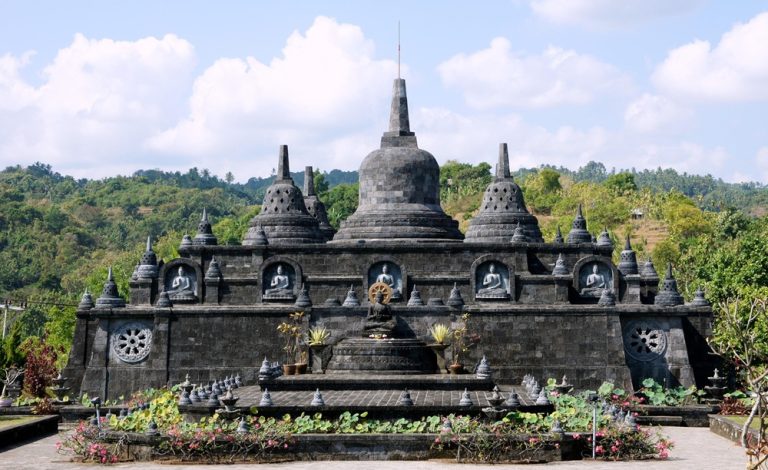
Yes, tourists can visit many of Bali's most famous temples, including Tanah Lot, Uluwatu, Besakih, Tirta Empul, Ulun Danu Beratan, Lempuyang, Taman Ayun, Goa Gajah, and Saraswati Temple. In fact, welcoming visitors has become an important part of the tourism experience at many of these sites.
However, it is important to understand that access is not always unlimited. Bali's temples remain active places of worship, and certain areas are reserved exclusively for religious ceremonies, temple staff, and worshippers. Visitors should respect barriers, signs, and instructions provided by local guides or temple authorities.
Many temples also require visitors to wear a sarong and sash before entering. This is not simply a tourist rule but a reflection of local religious customs and traditions. Temple staff will usually advise visitors if additional clothing requirements apply.
Some temples may have temporary restrictions during important religious festivals, ceremonies, or special events. On these occasions, access to certain areas may be limited in order to allow local communities to carry out religious activities without disruption.
Visitors should also be aware that individual temples sometimes maintain specific cultural rules. For example, some sacred areas may be inaccessible to non-worshippers, while other sections remain open to everyone. Following local guidance is always the best approach.
The good news is that most travelers find Bali's temples welcoming, accessible, and easy to visit. By dressing appropriately, behaving respectfully, and remembering that these sites are first and foremost places of worship, visitors can enjoy some of the island's most fascinating cultural and spiritual attractions while supporting their preservation for future generations.
Best Temple Tours in Bali
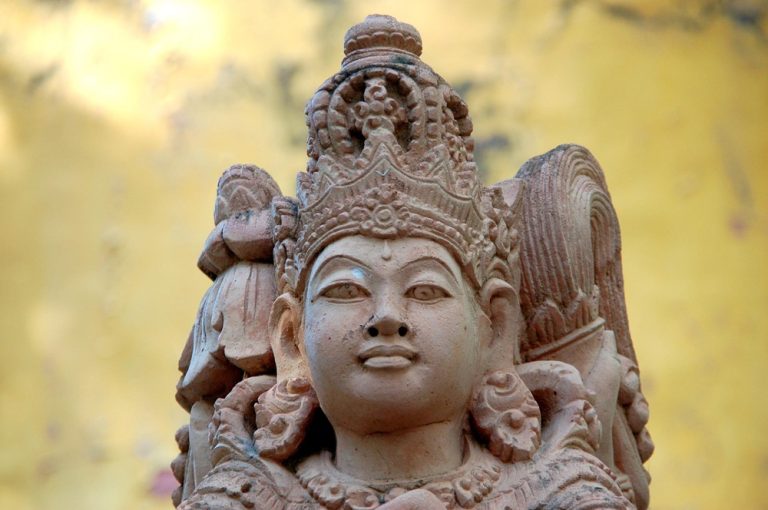
While it is certainly possible to visit Bali's temples independently, many travelers choose guided tours to gain a deeper understanding of the island's history, religion, architecture, and cultural traditions. Temple tours can also simplify transportation logistics, especially when visiting multiple temples spread across different regions of the island.
Popular temple tours often combine several of Bali's most famous sites into a single day. Common itineraries include Tanah Lot, Uluwatu Temple, Tirta Empul, Lempuyang Temple, Ulun Danu Beratan, rice terraces, waterfalls, and traditional villages.
Guided tours can be particularly valuable for first-time visitors because local guides often explain the significance of temple ceremonies, Balinese Hindu beliefs, temple etiquette, and cultural traditions that might otherwise be missed during a self-guided visit.
Discover Bali's most sacred and iconic temples with guided tours covering famous sites such as Tanah Lot, Uluwatu, Besakih, Tirta Empul, Lempuyang, and Ulun Danu Beratan while learning about the island's rich spiritual traditions.
Browse Bali Temple ToursWhether you choose to explore independently or join a guided experience, Bali's temples offer some of the island's most memorable cultural experiences. Taking the time to understand their history and significance often transforms a simple sightseeing stop into one of the most rewarding parts of a trip to Bali.
Final Thoughts on the Best Temples in Bali
Bali's temples are far more than beautiful landmarks. They provide a window into the island's culture, history, spirituality, and daily life. Whether you're watching the sunset at Tanah Lot, standing on the cliffs of Uluwatu, participating in a purification ritual at Tirta Empul, or admiring the lake views at Ulun Danu Beratan, each temple offers a different perspective on what makes Bali unique.
While many visitors arrive expecting beaches, resorts, and tropical scenery, Bali's temples often become some of the most memorable parts of a trip. Taking the time to understand the traditions, etiquette, and beliefs associated with these sacred sites can add a much deeper dimension to your experience on the island.
One of the most fascinating aspects of Bali is that temples are not simply historical monuments preserved for tourists. They remain active places of worship that continue to play an important role in daily life. Throughout the island, visitors will encounter temple ceremonies, colorful offerings, traditional clothing, processions, and religious celebrations that have been passed down through generations. Seeing these traditions in their natural setting often leaves a stronger impression than the temples themselves.
It is also worth remembering that Bali has thousands of temples. While famous sites such as Tanah Lot, Uluwatu Temple, Tirta Empul, and Ulun Danu Beratan deserve their popularity, some of the most rewarding experiences come from visiting smaller village temples or simply stumbling across local ceremonies during your travels. These moments often provide a more personal glimpse into Balinese culture than the island's busiest attractions.
For couples, many of Bali's temples also provide some of the island's most beautiful scenery. Cliff-top sunsets, lakeside shrines, jungle temples, and mountain landscapes create unforgettable settings that naturally become part of a romantic trip. Travelers planning a special getaway may also enjoy our Bali honeymoon guide, which covers romantic destinations, experiences, and accommodation ideas across the island.
If you're planning your trip, our Things to Do in Bali guide covers many of the island's other must-see attractions, while our Bali itinerary can help you decide how to combine temples, beaches, rice terraces, waterfalls, and cultural experiences into a realistic travel plan. Travelers interested in exploring beyond Bali's most famous religious sites should also see our guide to Bali's most rewarding cultural and scenic excursions.
For first-time visitors, a combination of Tanah Lot, Uluwatu Temple, Tirta Empul, Ulun Danu Beratan, and one or two lesser-known temples usually provides an excellent introduction to Bali's rich spiritual and cultural heritage without feeling rushed or repetitive. More importantly, these temples help explain why Bali feels so different from many other destinations in Southeast Asia and why so many travelers leave the island wanting to return.
Frequently Asked Questions About Bali Temples
-
What are the best temples in Bali?
The most famous temples in Bali include Tanah Lot Temple, Uluwatu Temple, Besakih Temple, Tirta Empul Temple, Ulun Danu Beratan Temple, Lempuyang Temple, Taman Ayun Temple, Goa Gajah, and Saraswati Temple. -
Which temple is the most famous in Bali?
Tanah Lot Temple is often considered the most famous temple in Bali due to its spectacular offshore location and world-famous sunset views. -
What is Bali's Mother Temple?
Besakih Temple, located on the slopes of Mount Agung, is known as Bali's Mother Temple and is considered the island's most important Hindu temple complex. -
What is the famous water temple in Bali?
Tirta Empul Temple is Bali's most famous water temple and is known for its sacred purification pools fed by natural springs. Ulun Danu Beratan Temple is another iconic water temple located on Lake Beratan. -
Can tourists enter Bali temples?
Yes. Tourists can visit many of Bali's major temples, although certain sacred areas may be restricted to worshippers or temple staff. -
Do you need to wear a sarong in Bali temples?
Many temples require visitors to wear a sarong and sash before entering. Some temples provide them as part of the entrance process, while others may require visitors to rent or borrow them. -
What should I wear when visiting a temple in Bali?
Modest clothing is recommended. Visitors should avoid beachwear and wear clothing that covers the upper legs and shoulders where possible. Always follow local dress requirements. -
Can you visit Bali temples during religious ceremonies?
In many cases, yes. However, visitors should remain respectful, avoid interfering with ceremonies, and follow any instructions provided by temple staff or local guides. -
What is the Gates of Heaven temple in Bali?
The famous Gates of Heaven are located at Lempuyang Temple in eastern Bali. The split gateway frames Mount Agung and has become one of Bali's most photographed landmarks. -
Which Bali temple has the best sunset views?
Tanah Lot Temple and Uluwatu Temple are widely considered the best temples in Bali for sunset views, each offering dramatic coastal scenery overlooking the Indian Ocean. -
How much time should I spend visiting temples in Bali?
Most temples can be visited in one to two hours, although larger complexes such as Besakih Temple or Lempuyang Temple may require additional time. -
Are Bali temples free to visit?
Most major temples charge an entrance fee to help maintain the site and support local operations. Prices vary depending on the temple. -
What is Balinese Hinduism?
Balinese Hinduism is a unique form of Hinduism practiced throughout Bali. It combines Hindu beliefs with local traditions, ancestor worship, ceremonies, and spiritual practices that are deeply woven into daily life. -
What are canang sari offerings?
Canang sari are small daily offerings made from flowers, leaves, incense, and symbolic items. They are placed outside homes, businesses, and temples as expressions of gratitude and spiritual balance. -
Which temples should first-time visitors prioritize?
For a first trip to Bali, Tanah Lot Temple, Uluwatu Temple, Tirta Empul Temple, Ulun Danu Beratan Temple, and Lempuyang Temple provide an excellent introduction to the island's culture, religion, and architecture.
Travel Resources to Plan, Book & Stay Connected
Use these tools and guides to stay connected abroad, find inspiration for your next trip, and book your flights, stays and gear with confidence.
Disclosure: This article may contain affiliate links. If you make a purchase through a link, I may receive a commission at no extra cost to you. I only share recommendations I believe are genuinely useful, and all opinions are my own. AI was used in this post for research and drafting purposes.

Comment (0)