
Getting Around Brazil: What You Need to Know Before You Travel
Getting around Brazil is one of the most important parts of planning your trip. This is not a country where you can move between destinations casually. Distances are huge, travel times are longer than they look on a map, and choosing the wrong transport can easily cost you an entire day.
But once you understand how transport works, Brazil becomes much easier to navigate. Domestic flights are efficient and often necessary, long-distance buses are far more comfortable than most travelers expect, and getting around cities is straightforward when you know which options to rely on.
If you are still planning your route, start with this Brazil travel guide to understand how destinations connect across the country. From there, you can use this guide to choose the fastest and most practical ways to move between them.
This guide breaks down exactly how to get around Brazil efficiently and safely:
- Flights vs buses: when flying saves time and when buses actually make more sense
- Travel between major destinations: including Rio de Janeiro, São Paulo, Salvador, and Iguazu Falls
- Getting around inside cities: using Uber, metro systems, taxis, and when walking makes sense
- Transport costs and travel times: so you can build a realistic Brazil itinerary
- Safety when moving around: what to avoid and how to travel with awareness
- Practical travel tips: to save time, avoid common mistakes, and move efficiently
This guide is designed to connect everything together so you can travel across Brazil with clarity, avoid unnecessary delays, and make confident decisions at every step of your route.

Introduction: Getting Around Brazil Requires Planning, Not Guesswork
Getting around Brazil is not something you figure out as you go. One of the most common mistakes travelers make is underestimating how large the country is. On a map, destinations can look close together, but in reality, moving between them often takes a full day if you choose the wrong transport.
For example, traveling from Rio de Janeiro to Salvador is not a quick transfer. By bus, it can take well over 24 hours. By flight, it takes around two hours. The difference is not small, it completely changes how your trip feels.
The good news is that Brazil’s transport network is reliable once you understand how to use it. Domestic flights are often the most efficient option, long-distance buses are far more comfortable than most travelers expect, and apps like Uber make getting around cities simple and affordable.
The challenge is not availability. It is choosing the right option at the right time.
This guide breaks down how to get around Brazil step by step, so you can avoid losing time in transit, reduce travel stress, and move between destinations in a way that actually supports your itinerary.

Flying in Brazil: The Fastest Way to Travel Between Cities
For most trips in Brazil, flying is not just the fastest option, it is the most practical one. Distances are too large to rely on ground transport unless you have significant time, and choosing the wrong option can easily disrupt your entire itinerary.
For example, traveling between Rio de Janeiro and São Paulo takes about one hour by plane, compared to six to seven hours by bus. For longer routes such as Salvador or Iguazu Falls, flying is not just faster, it is essential if you want to avoid losing an entire day in transit.
Main Domestic Airlines in Brazil
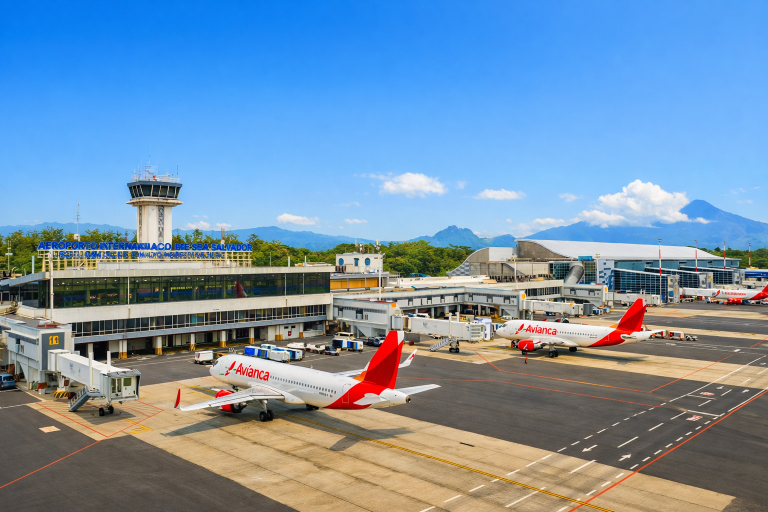
Brazil’s domestic flight network is well developed and reliable. Three major airlines operate the majority of routes, connecting both major cities and regional destinations across the country.
- LATAM Brasil: the largest network, with the widest range of routes and frequencies
- GOL Linhas Aéreas: a low-cost carrier focused on competitive pricing and strong connections between major cities
- Azul Linhas Aéreas: particularly strong for regional routes and smaller destinations not as well served by other airlines
All three are reliable. In most cases, your decision will come down to route availability, departure times, and price rather than major differences in service.
Flight Times Between Major Destinations
- Rio de Janeiro → São Paulo: around 1 hour
- Rio de Janeiro → Salvador: around 2 hours
- São Paulo → Iguazu Falls: around 1.5 hours
- Rio de Janeiro → Florianópolis: around 1.5 hours
Flights are frequent on major routes, especially between Rio and São Paulo, one of the busiest air corridors in Brazil. This flexibility makes it easier to adjust your itinerary without major disruption.
Booking Tips for Domestic Flights
- Book early during peak travel periods and holidays
- Midweek departures are often cheaper than weekends
- Check baggage rules carefully, as lower fares may only include carry-on luggage
- Compare airports in cities like Rio and São Paulo, where multiple airports serve different routes
If your route includes multiple regions, aligning flights with your Brazil itinerary is one of the easiest ways to save time and reduce travel fatigue.
As a general rule, if a journey takes more than six to seven hours by bus, flying is usually the better choice.
Long-Distance Buses in Brazil: Comfortable, Affordable, and When They Make Sense
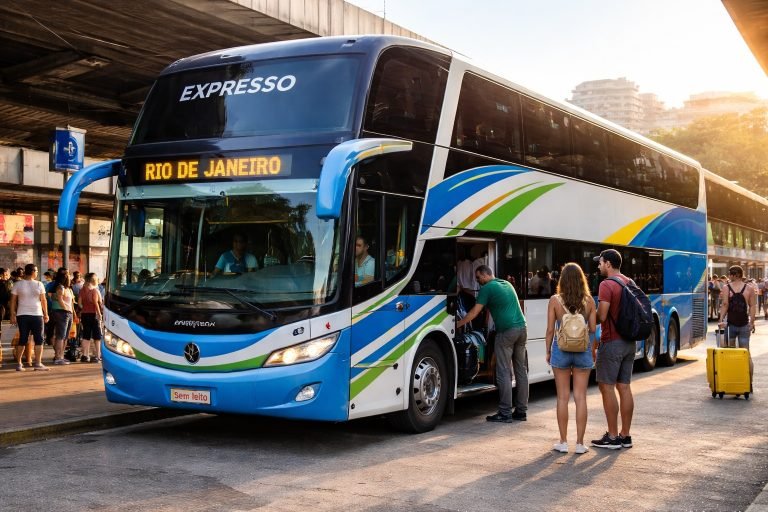
Long-distance buses in Brazil are a reliable and often comfortable way to travel, but they are not always the right choice. They work best for medium distances or overnight journeys, where you can save both time and accommodation costs. For very long routes, they can quickly become inefficient compared to flying.
The network is extensive and reaches almost every part of the country, including destinations that are not easily accessible by plane. On routes like Rio de Janeiro to São Paulo, buses run frequently throughout the day and night, making them a flexible alternative when you do not want to fly.
Bus Types and Comfort Levels
Brazilian long-distance buses are generally modern and well maintained. The level of comfort depends on the ticket you choose.
- Leito (Sleeper): wide seats with deep recline, often close to flat, with leg rests and extra space. Best for overnight journeys
- Semi-Leito: a comfortable middle option with good recline and leg support, suitable for most long trips
- Convencional: standard seating, cheaper but less comfortable for longer distances
For journeys longer than 8 to 10 hours, choosing Semi-Leito or Leito makes a noticeable difference in comfort and overall experience.
What to Expect Onboard
- Air conditioning is standard on most buses
- Wi-Fi is sometimes available but often unreliable
- Onboard restrooms are common
- Scheduled stops at service areas for food and breaks
Stops are typically well-organized, with large service stations offering food, restrooms, and safe waiting areas. These breaks are built into longer routes and help make overnight travel more manageable.
Booking Bus Tickets in Brazil
Booking can be less straightforward than flights, as many local websites require a Brazilian CPF number. For most travelers, using international-friendly platforms is the easiest option.
You can also buy tickets directly at bus terminals (rodoviárias), which is often the simplest option for last-minute travel.
Popular Bus Routes in Brazil
- Rio de Janeiro → São Paulo: around 6 to 7 hours
- São Paulo → Iguazu Falls: 16 hours or more
- Brasília → Rio de Janeiro: 15 to 18 hours
Night buses are common and can be a practical option if you want to save a hotel night and arrive early at your next destination.
Important Tips for Traveling by Bus
- Bring your passport, as it may be required for boarding
- Choose reputable companies for longer routes
- Avoid seats at the back for a smoother ride
- Keep valuables with you during stops
Buses are best used for medium distances or overnight routes. For journeys that exceed 10 to 12 hours, flying is usually the more efficient choice, especially if you are following a structured Brazil itinerary.
Renting a Car in Brazil: When It Makes Sense and When It Doesn’t
Renting a car in Brazil can be useful in specific situations, but for most trips, it is not necessary. Brazil is best navigated by combining flights for long distances and ride apps within cities. A rental car only adds value when you need flexibility in areas where transport options are limited.
In major cities, driving is usually more of a disadvantage than a benefit. Traffic can be heavy, parking is limited, and navigating unfamiliar areas can be stressful. In places like Rio de Janeiro or São Paulo, using Uber or taxis is faster, easier, and often more efficient than driving yourself.
When Renting a Car Makes Sense
- Exploring coastal regions, countryside areas, or smaller towns with limited public transport
- Traveling between nearby destinations within the same region
- Wanting full control over your schedule without relying on buses or transfers
In these situations, a car gives you flexibility that other transport options cannot match, especially if you are planning short regional road trips.
When You Should Avoid Renting a Car
- Staying mainly in large cities like Rio de Janeiro, São Paulo, or Salvador
- Following a multi-city itinerary that involves long distances
- If you are not comfortable driving in busy or unfamiliar environments
For most city-based itineraries, renting a car adds complexity without improving your travel experience.
Rental Companies in Brazil
If you decide to rent a car, choose a well-established company with strong national coverage and reliable service.
- Localiza: the largest rental company in Brazil, with excellent nationwide coverage
- Hertz: a well-known international option with consistent service
- Movida: a strong local alternative with competitive pricing
Driving Tips for Brazil
- Expect heavy traffic in major cities, especially during peak hours
- Road quality varies depending on the region, particularly outside urban areas
- Use GPS navigation at all times, mobile data coverage is generally reliable in populated areas
- Use official parking areas or secure garages whenever possible
The most efficient approach for most trips is simple: fly between regions, use ride apps in cities, and only rent a car when it clearly improves your route. If it does not add flexibility, it is usually not worth it.

Getting Around Brazilian Cities: Uber, Public Transport and Practical Tips
Getting around Brazilian cities is generally straightforward once you know which transport options to prioritize. In most situations, ride-hailing apps are the most efficient and reliable choice, with public transport and walking used more selectively depending on the area.
Uber and Ride Apps
Ride-hailing apps are the default way to move around cities in Brazil. Uber is widely available and reliable across major destinations, offering everything from budget rides to more comfortable options.
Strong alternatives include 99, which is commonly used in many cities, and inDrive, which allows you to negotiate fares. For longer intercity rides, BlaBlaCar is sometimes used, although it is less common for typical city travel.
- Prices are generally affordable compared to many international cities
- International cards are usually accepted, with some apps also supporting cash
- Trips are tracked in real time with driver identification and safety features
- In-app messaging often includes automatic translation
For most travelers, ride apps are the simplest and most reliable option for daily transport.
Transportation becomes significantly more complicated during Carnival periods, especially in cities like Rio de Janeiro, Salvador, Recife, and São Paulo. Major streets may close for blocos and samba parades, traffic can become extremely slow, and wait times for Uber often increase dramatically after large events.
During Carnival, many travelers underestimate how difficult it can become to move across a city once hundreds of thousands of people begin gathering in the same neighborhoods. Staying closer to the areas where you plan to spend most of your time can make a huge difference during this period. If your trip overlaps with Carnival season, our guide to navigating Brazil during Carnival explains what travelers should realistically expect from crowds, transport, blocos, and city logistics.
Metro and Public Transport
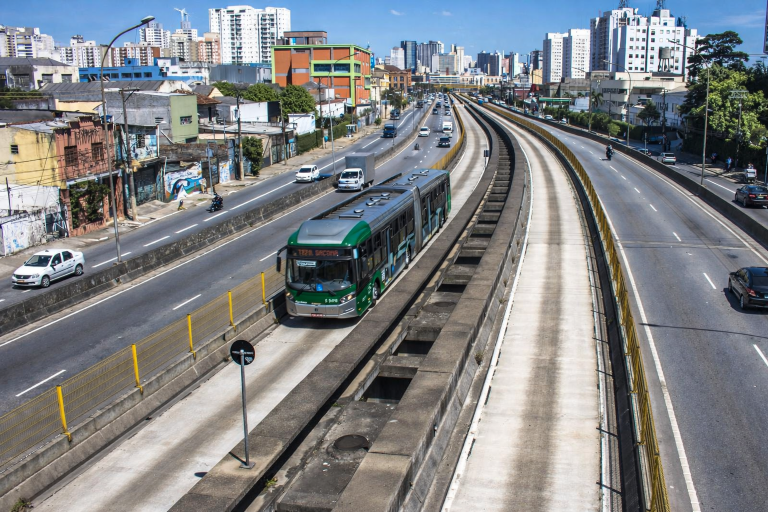
Public transport varies significantly by city. In places like Rio de Janeiro and São Paulo, metro systems are modern, affordable, and useful for certain routes, especially during the day and along major corridors.
- The metro is generally safe and efficient during daytime and peak hours
- It can be a practical way to avoid traffic on busy routes
- Buses are extensive but harder to navigate without Portuguese
While public transport works well in specific situations, it is not as intuitive for visitors. This is why most travelers rely on ride apps for convenience and flexibility.
Walking in Brazilian Cities
Walking depends heavily on the neighborhood. In central, well-known areas, it is often the best way to explore. In quieter or unfamiliar areas, especially after dark, using a ride app is usually the safer and more practical choice.
Your experience will depend strongly on where you stay. This is particularly important in Rio de Janeiro, where some neighborhoods are far more suitable for visitors than others.
As a general rule, stay aware of your surroundings, avoid empty streets at night, and default to ride apps whenever you are unsure.

Flights vs Buses in Brazil: What Should You Choose?
Choosing between flights and buses is one of the most important transport decisions in Brazil. Both are widely available, but they serve very different purposes. The right choice depends on distance, time, and how efficiently you want to structure your trip.
Brazil is a country where transport decisions directly impact your experience. Choosing well can save you hours or even entire days. Choosing poorly can slow down your itinerary and limit what you are able to see.
When Flying Is the Better Option
- For long distances between major regions
- When you want to avoid losing a full day to travel
- For routes that take more than 6 to 7 hours by bus
- If you are following a structured Brazil itinerary with limited time
Domestic flights are frequent and efficient. When booked in advance, they are often reasonably priced. For most long-distance routes, flying is not just faster, it is the only practical option if you want to keep your trip moving.
When Taking the Bus Makes More Sense
- For shorter routes between nearby cities
- When you want to reduce costs and are not time-constrained
- For overnight journeys where travel replaces a hotel night
- When flight schedules are limited or inconvenient
Buses in Brazil are comfortable, reliable, and widely available. For medium distances, especially overnight routes, they can be a practical and efficient alternative to flying.
Quick Comparison
- Speed: flights are significantly faster for most routes
- Cost: buses are usually cheaper, especially when booked last minute
- Comfort: flights are faster, but sleeper buses can be comfortable for overnight travel
- Efficiency: flights maximize time, buses maximize budget
A simple rule works for most trips: use buses for shorter or overnight journeys, and fly for anything longer. This balance allows you to move efficiently across Brazil without losing time or comfort.

How to Travel Between Major Destinations in Brazil
Planning how to move between Brazil’s main destinations is essential if you want a trip that feels smooth rather than exhausting. Distances are large, travel times add up quickly, and the wrong choice can easily cost you a full day. The routes below show what to expect and which option makes the most sense in practice.
Rio de Janeiro to São Paulo
- Flight: approximately 1 hour
- Bus: approximately 6 to 7 hours
This is one of the busiest routes in the country, with frequent departures throughout the day. Flying is the most efficient option, especially if you are short on time. The bus can work if you prefer a slower pace or want an overnight transfer.
Rio de Janeiro to Salvador
- Flight: approximately 2 hours
- Bus: approximately 24 hours
This is a clear case where flying is the only practical choice for most travelers. The bus journey is extremely long and will significantly slow down your itinerary.
Salvador also works well as a gateway into northeastern Brazil, especially for travelers planning to continue toward destinations such as Recife, Jericoacoara, Lençóis Maranhenses, or Fernando de Noronha. Even within the region, distances remain large, so domestic flights are often the most realistic way to move efficiently between destinations. This guide to traveling through Northeast Brazil explains how these destinations connect and what to expect when planning transportation around the region. Travelers spending a few days in Salvador beforehand can also use this Salvador area guide for visitors to choose the best neighborhood before continuing their trip through the northeast.
São Paulo to Iguazu Falls
- Flight: approximately 1.5 hours
- Bus: approximately 16 hours or more
If you are planning to visit Iguazu Falls, flying is strongly recommended. The time saved allows you to focus on the experience rather than spending an entire day in transit.
Rio de Janeiro to Florianópolis
- Flight: approximately 1.5 hours
- Bus: approximately 18 to 20 hours
Flying is the most efficient option on this route. The bus is only worth considering if you specifically want to travel overnight and reduce accommodation costs.
Many travelers combine Rio with Florianópolis to experience a slower and more beach-oriented side of Brazil after the intensity of Rio de Janeiro. This complete Florianópolis island guide covers the island’s beaches, surf areas, hiking trails, neighborhoods, and travel planning tips in more detail.
General Recommendation
For travel between major regions in Brazil, flights should be your default choice. Buses are best used for shorter distances or overnight journeys where they replace a hotel stay.
Aligning these transport choices with your Brazil itinerary will help you avoid unnecessary travel fatigue and make your overall trip more efficient and enjoyable.

Cost of Transport in Brazil: Real Price Examples
Transport costs in Brazil vary depending on distance, timing, and how early you book. Understanding realistic price ranges helps you plan your route properly and avoid overspending on last-minute decisions.
Domestic Flight Prices
- Rio de Janeiro → São Paulo: typically $50 to $120
- Rio de Janeiro → Salvador: typically $80 to $180
- São Paulo → Iguazu Falls: typically $70 to $150
Flights are often affordable when booked in advance, but prices can increase quickly during holidays or when booking close to departure. Planning your route early makes a noticeable difference to your overall budget.
Long-Distance Bus Prices
- Rio de Janeiro → São Paulo: $20 to $50 depending on seat type
- São Paulo → Iguazu Falls: $50 to $120 for long-distance routes
- Rio de Janeiro → Salvador: $90 to $180 for premium sleeper buses
Buses are usually the cheapest option, but they come with a time trade-off. Upgrading to Semi-Leito or Leito significantly improves comfort, especially on overnight journeys.
Ride Apps and Local Transport
- Short Uber ride (10 to 15 minutes): $2 to $5
- Airport transfer (city center): $10 to $25
- Longer city ride (30 to 45 minutes): $8 to $20
Ride apps are one of the most cost-effective ways to move around cities. Compared to many international destinations, daily transport costs are relatively low, which makes it easy to stay flexible without overspending.
What This Means for Your Budget
The biggest cost difference comes from how you combine transport. Flights save time but require planning, while buses save money but take longer. Ride apps remain affordable and practical for everyday use in cities.
For most travelers, the best balance is to use flights for long distances and ride apps locally, only using buses when they clearly fit your route. Aligning these choices with your Brazil itinerary will help you control both time and budget more effectively.

Is It Safe to Travel Around Brazil?
Traveling around Brazil is generally safe when you make informed choices and stay aware of your surroundings. Most travelers move between cities, use ride apps, and explore major destinations without issues. The key is understanding where extra caution is needed and adjusting your behavior accordingly. For a broader overview of how safety varies across the country, this complete Brazil safety guide for travelers explains what to expect in more detail.
Is It Safe to Fly in Brazil?
Flying is one of the safest and most reliable ways to travel within Brazil. Airports follow standard security procedures, routes are heavily used, and domestic flights run frequently between major cities.
For long distances, flying is not only the most efficient option, but also the most predictable and low-risk way to travel.
Are Long-Distance Buses Safe?
Long-distance buses are widely used and generally safe, especially on established routes between major cities. Modern buses are well maintained and organized, with different comfort levels depending on your ticket.
- Choose reputable companies and avoid the cheapest unknown operators
- Keep valuables with you rather than in stored luggage
- Stay alert during rest stops, particularly at night
Overnight buses are common and safe for most routes, but for very long distances, many travelers prefer flying for comfort and simplicity.
Using Uber and Ride Apps Safely
Ride apps such as Uber and 99 are the safest and most practical way to move around cities. Trips are tracked in real time, driver details are visible, and routes are recorded.
- Always confirm the license plate and driver before entering the car
- Do not accept rides outside the app
- Use the in-app sharing feature if traveling late or in unfamiliar areas
In most situations, ride apps are more reliable than hailing taxis on the street.
Bus Stations and Transport Hubs
Main bus terminals, known as rodoviárias, are usually busy and well organized. During the day, they are functional and relatively safe, with shops, food options, and clear boarding areas.
At night, apply more caution. Stay aware of your surroundings, keep valuables secure, and move directly to your platform instead of waiting in empty areas.
General Safety Tips for Getting Around
- Avoid empty or poorly lit areas, especially after dark
- Keep your phone and valuables out of sight in public spaces
- Use ride apps instead of walking at night in unfamiliar neighborhoods
- Plan routes in advance so you are not navigating under pressure
Safety in Brazil depends more on location than transport itself. Choosing the right areas to stay has a direct impact on how comfortable and secure your experience will feel. This is particularly important in cities like Rio de Janeiro, where neighborhoods vary significantly. You can explore this further in Where to Stay in Rio de Janeiro and this Is Rio Safe guide, which break down what to expect in more detail.

Travel Tips for Getting Around Brazil
Getting around Brazil is straightforward once you make a few key decisions early. The difference between a smooth trip and a frustrating one usually comes down to planning transport, staying connected, and choosing the right locations. These practical tips help you avoid common mistakes and move efficiently between destinations.
Stay Connected at All Times
Mobile data is essential in Brazil. You will rely on it for navigation, ride apps, translation, and checking transport schedules in real time. Without it, even simple journeys become harder to manage.
Using an eSIM is the fastest and simplest option, allowing you to stay connected from the moment you arrive. This best eSIM for international travel guide compares the most reliable options.
Book Long-Distance Transport in Advance
Flights and long-distance buses increase in price quickly, especially on weekends, holidays, and popular routes. Booking ahead gives you better prices, better schedules, and more control over your itinerary.
If you are flying between regions, compare routes early using this cheap flights guide to avoid last-minute costs and limited availability.
Choose Accommodation in the Right Location
Your hotel location directly affects how easy it is to move around. Staying in central, well-connected neighborhoods reduces travel time, simplifies logistics, and makes using ride apps safer and more efficient.
Instead of focusing only on price, compare locations and platforms carefully using this hotel booking comparison guide to find the best overall option.
Use Ride Apps Instead of Street Taxis
Ride apps such as Uber and 99 are the most reliable way to get around cities. They offer transparent pricing, route tracking, and a safer, more predictable experience than street taxis.
In most situations, using a ride app is faster, easier, and removes language barriers entirely.
Protect Yourself While Traveling
Delays, missed connections, and unexpected changes can happen, especially when covering long distances. Travel insurance helps you manage these situations without major disruption.
Before your trip, review your options in this travel insurance guide so you are covered when it matters.
Carry a Few Practical Travel Essentials
Long travel days are much easier with a few key items. A power bank keeps your phone active for navigation and tickets, while a secure bag helps protect valuables in busy areas.
If you want a simple setup, these travel gear picks cover the essentials.
Plan Your Travel Days Realistically
Brazil is vast, and travel days often take longer than expected. Combining flights, transfers, and city transport can easily fill most of a day if not planned properly.
A well-paced itinerary with fewer, better-planned moves will make your trip significantly more enjoyable and reduce travel fatigue.
Final Thoughts: Getting Around Brazil
Getting around Brazil becomes straightforward once you understand how the system works. The country is vast, but transport is well developed. Flights cover long distances efficiently, buses provide solid regional connections, and ride apps make city travel simple and reliable.
The biggest difference comes from planning. Distances are larger than they appear on a map, and poor transport choices can easily cost you a full day. A well-structured route, with the right balance between flights and ground travel, makes your trip smoother and far less tiring.
If you are still building your route, this Brazil itinerary guide shows how to connect destinations logically based on travel time, pacing, and overall flow. It also helps you decide how to incorporate some of the country’s most diverse coastal regions, especially if you are planning to include Brazil’s most iconic beach destinations alongside major cities.
Once your route is clear, understanding each destination helps you plan your time more effectively. You can start with things to do in Rio de Janeiro, explore the urban and cultural side of São Paulo, or experience the history and atmosphere of Salvador.
For major attractions, planning transport in advance saves time and avoids unnecessary friction. Visiting Christ the Redeemer, Sugarloaf Mountain, or Iguazu Falls becomes significantly easier when they are integrated into your route from the start.
Some destinations also require more specialized planning than others. Reaching remote rainforest regions around Manaus often involves a combination of domestic flights, river transport, and lodge transfers, which is very different from traveling between Brazil’s major coastal cities. If you are considering adding the rainforest to your route, this Amazon Rainforest Brazil Guide explains how transport works in the Brazilian Amazon. Food also changes dramatically between regions, so understanding local dining culture can add another layer to your trip. This guide to traditional food in Brazil explores regional dishes, street food, and what travelers should realistically expect across the country.
Where you stay also plays a major role. Choosing the right neighborhood reduces travel time, improves safety, and makes daily logistics much easier. This is particularly important in Rio, where location can shape your entire experience. You can compare options in this best areas to stay in Rio guide.
Once these pieces are in place, getting around Brazil stops feeling like a challenge and becomes part of the experience. You move between destinations with purpose, avoid unnecessary delays, and spend more time actually enjoying the country.

Frequently Asked Questions About Getting Around Brazil
-
What is the best way to get around Brazil as a tourist?
The best way to get around Brazil is to combine domestic flights for long distances with ride apps like Uber in cities. Flights save time across Brazil’s large distances, while ride apps make local travel simple, safe, and affordable. -
Is it better to fly or take the bus in Brazil?
Flying is best for long distances or routes over 6 to 7 hours. Buses are a good option for shorter or overnight routes, especially if you book Semi-Leito or Leito seats for comfort. -
How do you travel between cities in Brazil?
Most travelers use domestic flights to move between major cities such as Rio de Janeiro, São Paulo, Salvador, and Iguazu Falls. Buses are used for regional routes or when traveling on a budget. -
Are domestic flights in Brazil reliable?
Yes, domestic flights in Brazil are frequent and reliable, especially on major routes. Airlines like LATAM, GOL, and Azul operate extensive networks across the country. -
Are long-distance buses in Brazil comfortable?
Yes, long-distance buses in Brazil are modern and comfortable. Semi-Leito and Leito seats recline significantly and are suitable for overnight travel, often including air conditioning and onboard facilities. -
Is Uber safe in Brazil for tourists?
Uber is widely used and considered one of the safest ways to get around Brazilian cities. Trips are tracked in real time, drivers are verified, and payments are handled through the app. -
Can tourists use Uber in Brazil without speaking Portuguese?
Yes, Uber works well without Portuguese. The app handles navigation, pricing, and communication, and in-app messaging often includes automatic translation. -
Do you need a car to travel around Brazil?
No, most travelers do not need a car. Flights and ride apps cover most travel needs. Renting a car only makes sense for specific regions such as coastal areas or remote destinations. -
Is renting a car in Brazil safe for tourists?
Renting a car is generally safe, but driving in major cities can be stressful due to traffic and unfamiliar conditions. It is best suited for experienced drivers and regional travel. -
How expensive is transport in Brazil?
Transport costs vary by route. Domestic flights typically range from $50 to $180, long-distance buses from $20 to $120, and Uber rides within cities are usually inexpensive compared to international standards. -
Do you need to book flights in advance in Brazil?
Yes, booking flights in advance is recommended, especially during weekends, holidays, and peak travel seasons. Prices increase quickly closer to departure dates. -
Do buses in Brazil need to be booked in advance?
Advance booking is recommended for popular routes and overnight buses, but tickets are often available at bus stations for last-minute travel. -
Is public transport easy to use in Brazil?
Public transport varies by city. Metro systems in Rio de Janeiro and São Paulo are efficient and easy to use, but buses can be harder to navigate without Portuguese. -
Is it safe to travel around Brazil at night?
Traveling between cities by plane or bus is generally safe at night. Within cities, it is safer to use ride apps rather than walking in unfamiliar or quiet areas after dark. -
How long does it take to travel between major cities in Brazil?
Flight times are relatively short, usually 1 to 2 hours between major cities, while bus journeys can take 6 to 24 hours depending on distance. -
What is the cheapest way to travel in Brazil?
Buses are usually the cheapest option, especially for shorter routes or overnight journeys. Flights can also be affordable if booked early. -
What is the fastest way to travel across Brazil?
Flying is the fastest and most efficient way to travel long distances across Brazil, particularly between regions such as the southeast, northeast, and south.
Travel Resources to Plan, Book & Stay Connected
Use these tools and guides to stay connected abroad, find inspiration for your next trip, and book your flights, stays and gear with confidence.
Disclosure: This article may contain affiliate links. If you make a purchase through a link, I may receive a commission at no extra cost to you. I only share recommendations I believe are genuinely useful, and all opinions are my own. AI was used in this post for research and drafting purposes.

Comment (0)