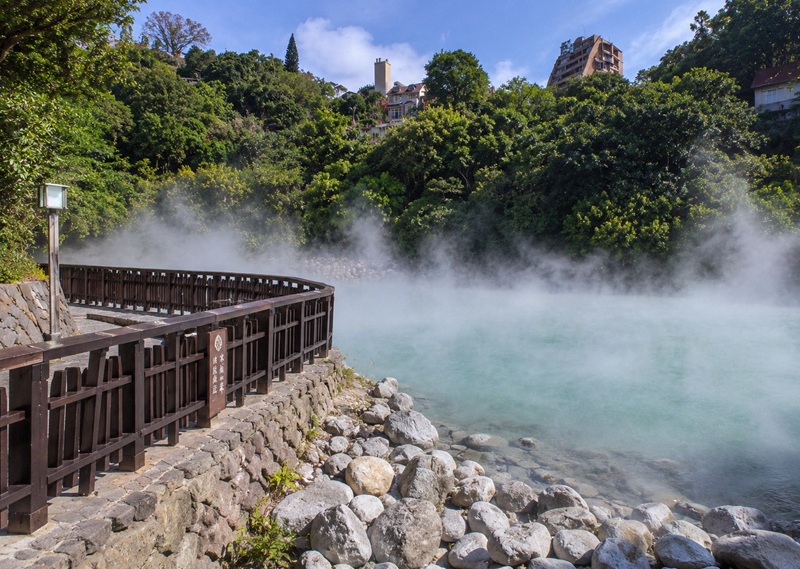
Taiwan Hot Springs: What This Guide Covers
Taiwan is one of Asia’s most underrated hot spring destinations. Across the island, you’ll find volcanic onsens hidden in mountain valleys, sulfur baths near Taipei, luxury hot spring resorts, rustic outdoor pools, and traditional bathhouses shaped by both Taiwanese and Japanese bathing culture.
Some hot springs are easy day trips from Taipei, while others are tucked deep into forested mountain regions where mist, tea plantations, and cooler temperatures completely change the atmosphere compared to Taiwan’s busy cities and night markets.
- The best hot springs in Taiwan and what makes each one different
- Where to find hot springs near Taipei
- Beitou, Wulai, Jiaoxi, Yangmingshan, Guanziling, Guguan, and Zhiben
- Public baths vs private hot spring resorts
- Taiwan hot spring etiquette and bathing rules
- Best seasons to visit Taiwan hot springs
- Luxury hot spring hotels and budget-friendly options
- What Taiwan onsens actually feel like for first-time visitors
- How Japanese onsen culture influenced Taiwan
- Which hot springs are best for relaxation, scenery, or easy access
If you are planning a broader trip around the island, our complete Taiwan travel guide covers the country’s major destinations, while our Taiwan transport and train guide explains how to move efficiently between regions. Travelers combining hot springs with food experiences should also explore our guide to Taiwan’s night market culture.
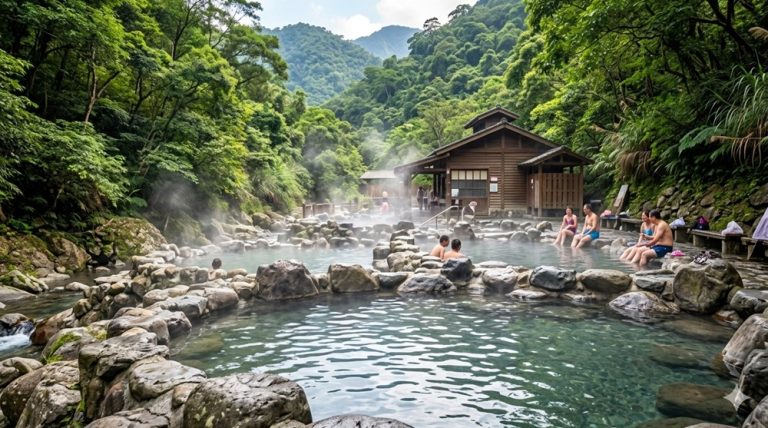
Why Taiwan Hot Springs Feel So Different From Other Destinations
Taiwan hot springs are not just about bathing in warm water. They are deeply connected to the island’s volcanic landscape, mountain culture, slower pace of travel, and strong Japanese influence. In many parts of Taiwan, visiting a hot spring is treated less like a tourist attraction and more like a normal part of daily life.
What makes Taiwan especially interesting is the variety. Some hot springs sit inside modern resort towns with private spa hotels and luxury rooms overlooking forested mountains. Others feel rustic and traditional, with open-air pools surrounded by mist, rivers, and dense subtropical vegetation. In places like Beitou, steam rises directly from sulfur vents near the city itself, while more remote regions such as Zhiben or Guguan feel far removed from Taiwan’s urban energy.
For many travelers, the atmosphere becomes just as memorable as the hot springs themselves. Cool mountain air, rain drifting through the valleys, wooden bathhouses, tea shops, quiet forests, and the contrast between busy Taiwanese cities and peaceful onsen towns all contribute to the experience.
Taiwan’s hot spring culture also feels more approachable than many travelers expect. Some baths follow traditional Japanese-style etiquette with gender-separated nude bathing, while others are completely beginner-friendly with private rooms, swimsuits, family pools, or modern spa facilities designed for international visitors.
This is one of the reasons Taiwan hot springs appeal to such a wide range of travelers. Some people visit for relaxation after long days exploring Taipei or hiking in the mountains. Others travel specifically to experience Taiwan’s onsen culture itself, moving between different hot spring regions across the island.
Once you understand how varied these places are, Taiwan stops feeling like a destination focused only on night markets and cities. The island begins to reveal a much quieter and more atmospheric side that many travelers initially overlook.
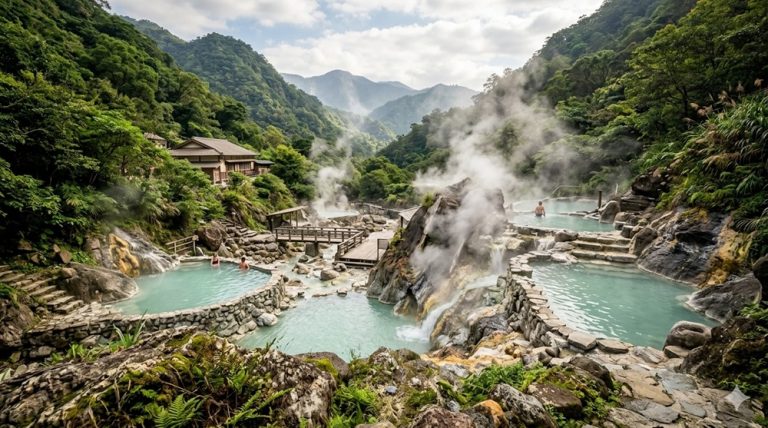
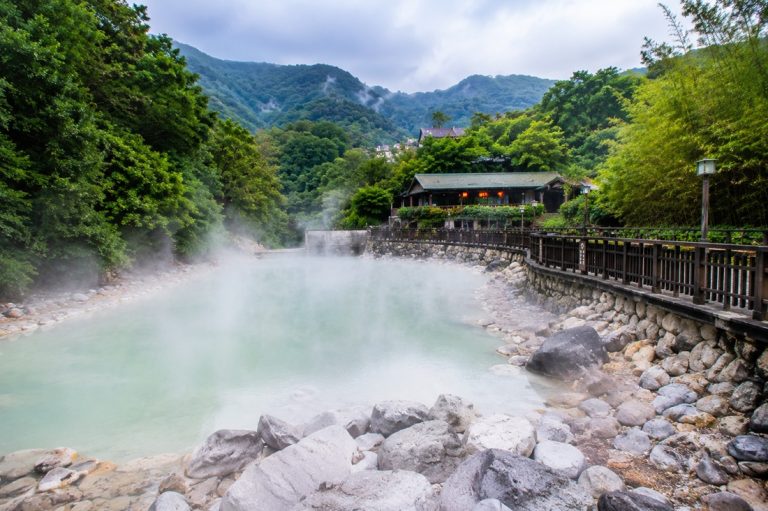
Why Taiwan Is Famous for Hot Springs
Taiwan is one of the most geologically active islands in East Asia, and this volcanic activity is the reason hot springs exist across so much of the country. Beneath Taiwan’s mountains and valleys, underground water is naturally heated by geothermal activity before rising back to the surface as mineral-rich thermal water.
This created hundreds of natural hot spring sources spread across the island, ranging from highly developed onsen towns to remote mountain pools hidden deep inside forested valleys. In some areas, the water is rich in sulfur and carries a strong mineral smell, while other regions are known for clearer alkaline waters or rare mud hot springs.
Taiwan’s hot spring culture expanded significantly during the Japanese colonial period between 1895 and 1945. Japanese authorities invested heavily in bathhouses, resort towns, railway access, and mountain retreats, especially in places such as Beitou and Yangmingshan near Taipei. Much of Taiwan’s modern onsen culture still reflects this influence today.
That influence is visible in many ways:
- Traditional bathhouse architecture
- Public bathing etiquette
- Private onsen rooms
- Ryokan-style hot spring hotels
- The idea of combining mountain scenery with relaxation and bathing
Unlike some countries where hot springs feel highly commercialized or confined to luxury resorts, Taiwan hot springs often feel integrated into everyday life. Locals visit public baths after work, older residents soak regularly for relaxation, and entire towns developed around thermal water culture long before international tourism arrived.
Another reason Taiwan hot springs feel so distinctive is the setting itself. Many onsen regions sit in cooler mountain environments where fog, rain, rivers, tea plantations, and dense forests create an atmosphere that feels completely different from Taiwan’s crowded urban areas.
This contrast surprises many first-time visitors. One day you may be surrounded by scooters, night markets, and busy MRT stations in Taipei, while the next you are soaking in steaming mineral water in a quiet mountain valley surrounded by subtropical forest.
That combination of accessibility, volcanic geology, mountain scenery, and strong bathing culture is what turned Taiwan into one of Asia’s most underrated hot spring destinations.
Types of Taiwan Hot Springs
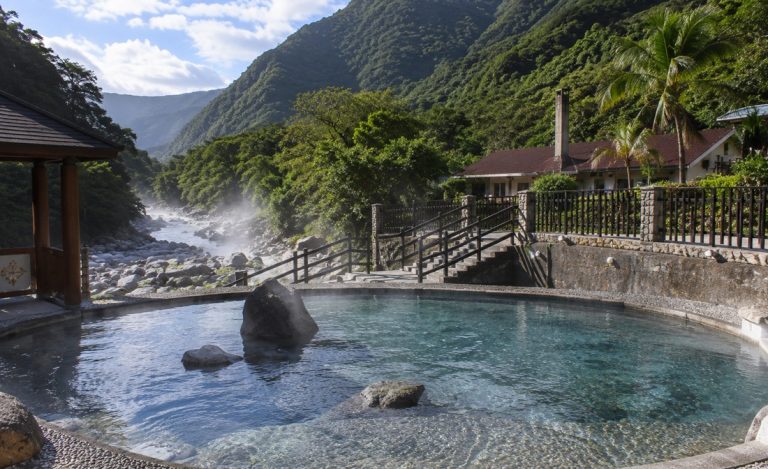
One of the reasons Taiwan hot springs feel more interesting than many travelers initially expect is the sheer variety between regions. The water itself changes from place to place depending on the geology beneath the surface, which means different hot spring towns can feel surprisingly different from one another in terms of smell, appearance, atmosphere, bathing style, and even the way the water feels on your skin.
Some hot springs are highly sulfuric and immediately recognizable from the strong mineral smell rising through the steam. Others are much milder, clearer, or richer in minerals that leave a softer texture on the skin. Taiwan also contains one of the world’s rare mud hot spring regions, something many travelers do not realize before visiting.
Sulfur Hot Springs
Sulfur hot springs are probably the type most travelers associate with Taiwan. These springs often have a noticeable smell similar to boiled eggs because of the sulfur gases released naturally from the geothermal water.
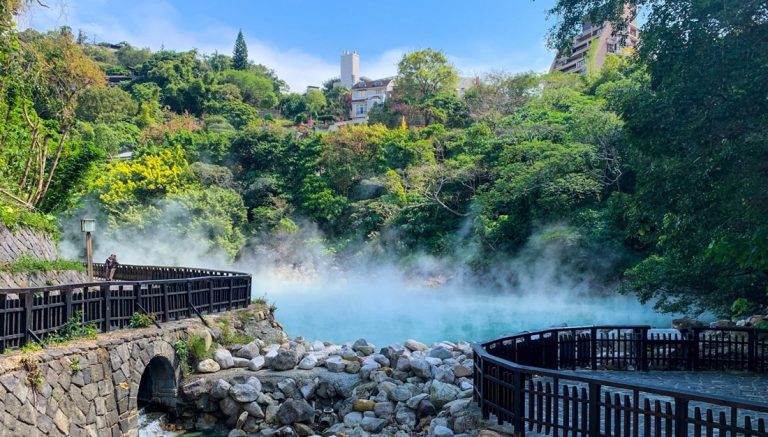
Beitou and Yangmingshan near Taipei are among the most famous sulfur hot spring regions in Taiwan. In these areas, steam vents, mineral deposits, and geothermal activity are visible directly in the landscape itself, creating a much more volcanic atmosphere than many visitors expect.
Sulfur springs usually appear:
- Milky white
- Pale green
- Slightly cloudy
The water often feels hotter and more mineral-heavy than other types of baths. Some people love the strong natural atmosphere, while others initially find the smell surprising if they have never visited volcanic hot springs before.
Despite the smell, sulfur springs are widely associated with relaxation and skin benefits throughout Taiwan and Japan, which is one reason they remain so popular among locals.
Carbonate and Clear Mineral Springs
Not all Taiwan hot springs smell strongly of sulfur. Some regions, particularly in places like Jiaoxi, are known for clearer carbonate-rich waters that feel softer and less intense.
These baths often appeal more to travelers who want a relaxing spa-like experience without the stronger volcanic smell associated with sulfur springs.
Compared to sulfur springs, these waters usually feel:
- Smoother on the skin
- Less aggressive in smell
- More beginner-friendly for first-time visitors
- Closer to modern resort-style hot spring experiences
This is one reason Jiaoxi became so popular for weekend trips from Taipei. The atmosphere feels more relaxed and approachable for travelers who want comfort rather than dramatic volcanic scenery.
Mud Hot Springs
Taiwan is also famous for the rare mud hot springs found in Guanziling, in southern Taiwan. These are much less common globally and give the water a cloudy gray appearance because mineral-rich mud mixes directly into the thermal pools.
Mud hot springs feel very different from traditional sulfur baths. The water is thicker, softer, and more mineral-dense, creating an experience that feels closer to a natural spa treatment than a standard onsen.
Guanziling became particularly well known for this reason, attracting both domestic travelers and international visitors looking for a more unusual hot spring experience.
For many travelers, these mud springs become one of the most distinctive hot spring experiences anywhere in Taiwan because they feel completely different from the mountain onsens near Taipei.
Mountain Hot Springs
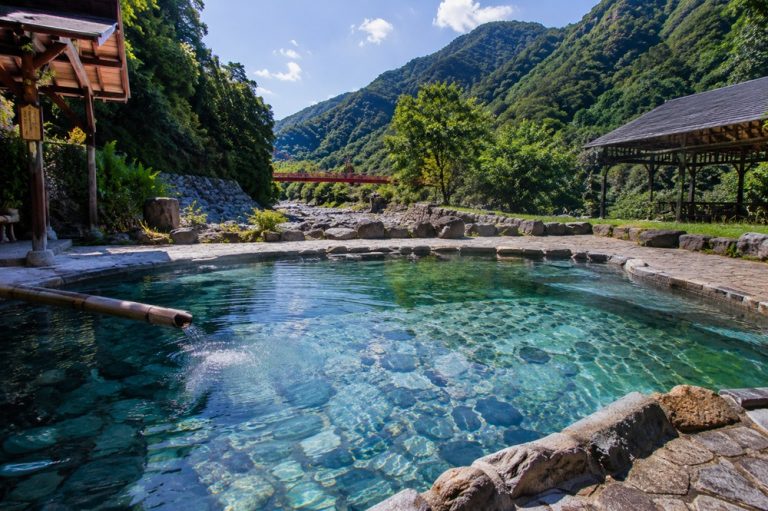
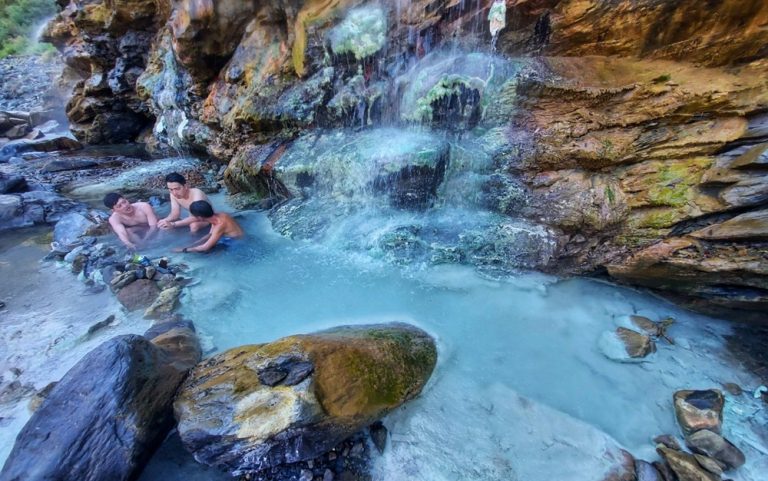
Some of the most atmospheric Taiwan hot springs are located in mountain regions surrounded by forests, rivers, fog, and cooler temperatures.
Places such as Wulai, Guguan, and Zhiben are less about urban convenience and more about the overall setting:
- Mist drifting through valleys
- Forested mountain roads
- Riverside bathhouses
- Wooden resort hotels
- Cool evening temperatures
- Quiet surroundings away from Taiwan’s large cities
These destinations often feel far more immersive than city hot springs because the surrounding environment becomes part of the experience itself.
For many travelers, this slower mountain atmosphere is what makes Taiwan hot springs memorable long after the trip ends.
Public Baths vs Private Hot Springs
Taiwan hot springs range from highly traditional public bathhouses to luxury private suites with personal thermal pools.
Public baths are often:
- Much cheaper
- More traditional
- Used regularly by locals
- Gender-separated
- Sometimes fully nude
Private hot spring rooms are especially popular among couples, families, or travelers uncomfortable with public bathing culture. These private rooms are commonly rented by the hour and usually include:
- A private mineral bath
- Shower facilities
- Rest space
- Hot spring water directly piped into the room
Higher-end Taiwan hot spring hotels may also include balconies with open-air private baths overlooking forests, mountains, rivers, or valleys.
This flexibility is part of what makes Taiwan easier for first-time onsen travelers than many people expect. You can choose a highly traditional experience or something much more modern and private depending on your comfort level.
Swimsuit Baths vs Nude Baths
One thing that surprises many visitors is that bathing rules vary significantly depending on the facility.
Traditional Japanese-style baths are often:
- Gender-separated
- Fully nude
- Quiet and etiquette-focused
Other facilities are much more relaxed and tourist-friendly, especially modern resorts or mixed outdoor pools where swimsuits are required.
This means travelers uncomfortable with traditional nude bathing still have plenty of options throughout Taiwan.
The important thing is understanding the rules before entering the baths. Some places strictly prohibit swimsuits in nude bath areas, while others completely require them.
Fortunately, most facilities clearly explain the rules at reception, and staff are usually accustomed to helping international visitors navigate the process.
Best Hot Springs in Taiwan
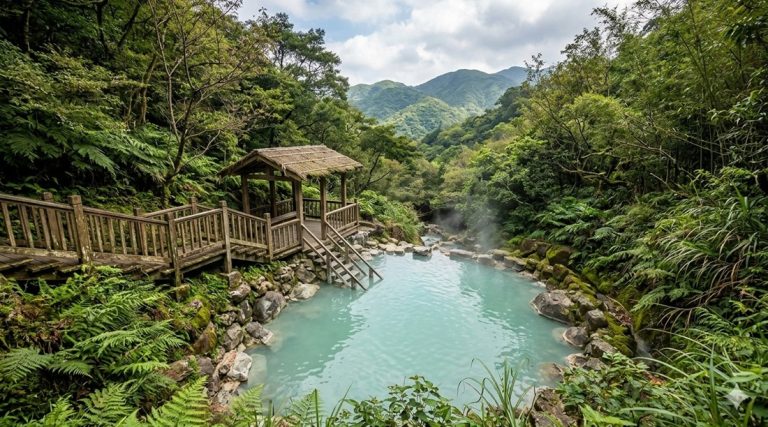
Taiwan’s hot spring regions vary enormously from one another. Some are easy day trips from Taipei with modern resorts and convenient MRT access, while others sit deep in the mountains surrounded by forests, rivers, and winding roads. Choosing the right destination depends less on finding the “best” hot spring and more on understanding what type of atmosphere and experience you actually want.
Some travelers prioritize convenience and comfort. Others want dramatic scenery, quieter mountain environments, traditional bathhouses, or more unusual geothermal landscapes. Fortunately, Taiwan offers all of these experiences across different parts of the island.
Beitou (Taipei)
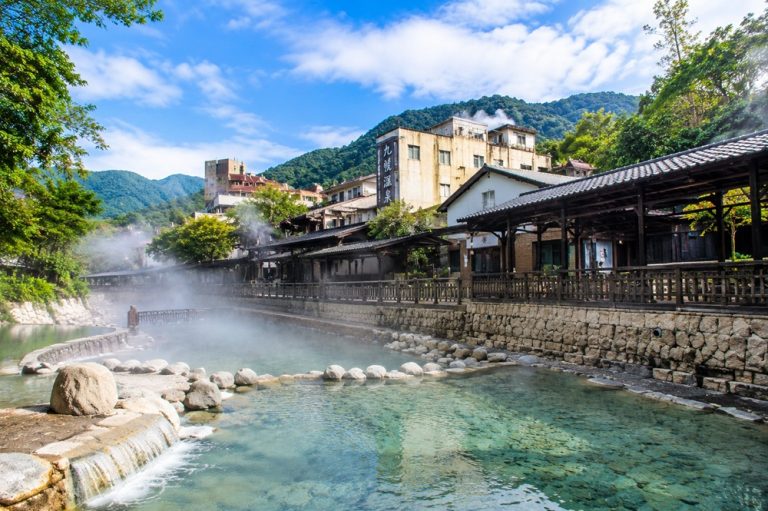
Beitou, located in northern Taipei, is the most famous and accessible hot spring area in Taiwan. It is also the place where many first-time visitors experience Taiwan’s onsen culture for the first time because it combines geothermal scenery, public bathhouses, museums, riverside parks, luxury hotels, and MRT access in one compact district.
Travelers planning to stay in Taipei before visiting Beitou may also want to read our guide to the best neighborhoods and hotels in Taipei, while travelers looking to explore beyond the city can also browse our complete guide to the most worthwhile excursions near Taipei, including Jiufen, Yangmingshan, Yehliu, Wulai, and other easy escapes from the capital.
One of the reasons Beitou became so important historically is its strong Japanese influence. During the Japanese colonial period, the area developed into a major hot spring resort town, and many bathhouses, architectural styles, and cultural habits still reflect that legacy today.
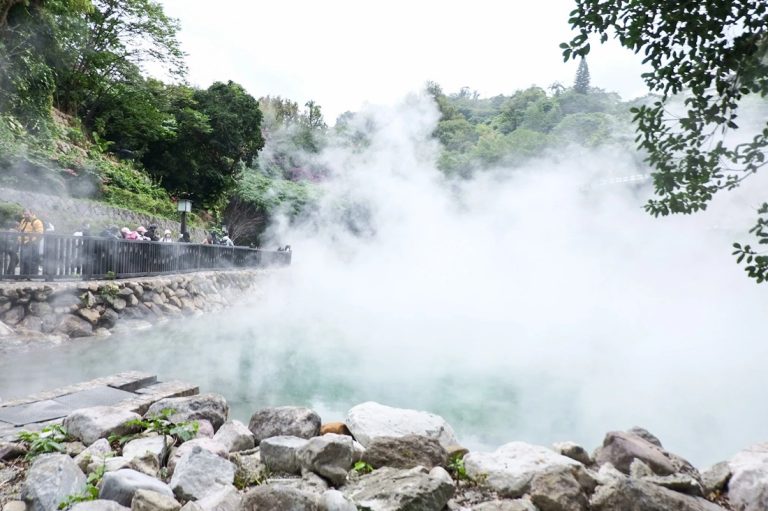
The atmosphere in Beitou feels very different from central Taipei. Steam rises directly from geothermal vents, sulfur hangs lightly in the air, and the surrounding hills create a calmer environment despite the area remaining inside the city itself.
Highlights include:
- Thermal Valley geothermal area
- Public bathhouses
- Private hot spring hotels
- Japanese-style architecture
- Easy MRT access from Taipei
- Day-use private hot spring rooms
Beitou works especially well for:
- First-time onsen visitors
- Travelers staying in Taipei
- Short Taiwan itineraries
- Couples wanting private baths
- Travelers nervous about traditional bath etiquette
The main drawback is that Beitou can feel relatively commercial and busy compared to more remote hot spring regions. Still, for accessibility and overall convenience, it remains one of the easiest and most rewarding hot spring experiences in Taiwan.
Explore some of the most famous Taiwan hot springs on a day trip from Taipei combining the steaming geothermal landscapes of Beitou with the volcanic scenery of Yangmingshan National Park. This excursion is a great way to experience Taiwan’s onsen culture, mountain landscapes, sulfur hot springs, and geothermal valleys without needing to organize transport independently.
Wulai (New Taipei City)
Wulai, located south of Taipei in the mountains of New Taipei City, offers a much more natural and atmospheric environment compared to Beitou. Surrounded by forested hills, rivers, waterfalls, and indigenous Atayal cultural influences, Wulai feels far quieter and more immersive.
Many travelers visit Wulai specifically because the setting feels less urban. The hot spring hotels line the river valley, and mist often drifts through the mountains during cooler or rainy weather, creating a much calmer atmosphere than Taipei itself.
Wulai is especially known for:
- Riverside hot spring resorts
- Outdoor baths with mountain views
- Cooler mountain temperatures
- Traditional hot spring hotels
- Atayal indigenous culture
- Waterfalls and scenic walks
The journey to Wulai also becomes part of the experience. As the city slowly disappears behind winding mountain roads, the atmosphere changes completely from Taiwan’s urban energy to something much slower and quieter.
Wulai works particularly well for travelers looking for:
- A romantic overnight stay
- A quieter hot spring environment
- Mountain scenery
- A more traditional atmosphere
- A relaxing escape from Taipei
Compared to Beitou, Wulai feels less polished and slightly more rustic, but many travelers end up preferring that atmosphere.
Jiaoxi (Yilan County)
Jiaoxi, located in Yilan County on Taiwan’s northeast coast, is one of the most approachable and beginner-friendly hot spring towns in the country. Thanks to modern train access from Taipei, it became a hugely popular weekend destination for locals looking for an easy short escape from the capital.
Unlike the stronger sulfur springs of Beitou, Jiaoxi is better known for clearer carbonate-rich waters that feel softer and less intense. This makes the area especially appealing to travelers who want a more spa-like and comfortable hot spring experience.
Jiaoxi is filled with:
- Modern hot spring hotels
- Private bath suites
- Public foot baths
- Relaxed resort-style facilities
- Restaurants and cafes
- Easy walkability
The town itself feels more modern and relaxed than many traditional onsen regions. Rather than dramatic volcanic scenery, Jiaoxi focuses more on comfort, accessibility, and easy resort-style relaxation.
It is especially well suited for:
- Families
- Couples
- Travelers uncomfortable with nude bathing
- Weekend trips from Taipei
- Private bath experiences
For many travelers, Jiaoxi feels like the easiest entry point into Taiwan hot spring culture because the environment feels highly approachable and tourist-friendly.
Taiwan’s volcanic landscape has created one of the highest concentrations of geothermal springs in the world, with everything from sulfur baths and mud hot springs to luxury mountain resorts. The official Taiwan hot spring tourism guide also highlights how deeply onsen culture has become integrated into travel across the island.
Yangmingshan (Taipei / New Taipei Region)
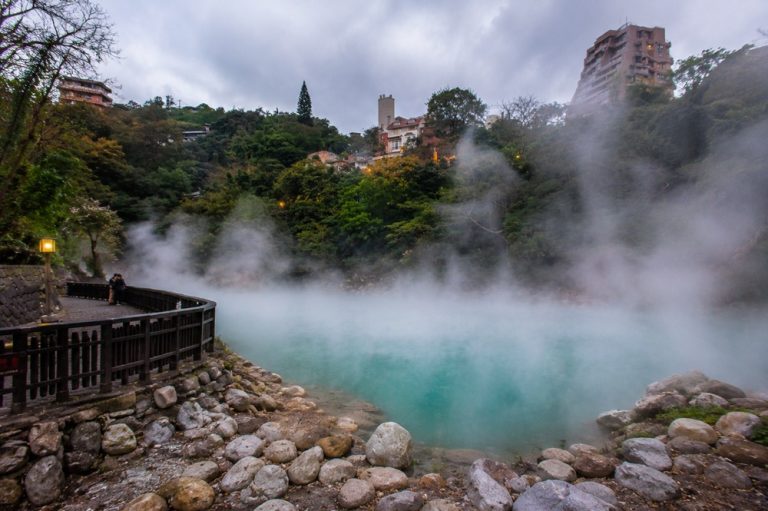
Yangmingshan, located just north of Taipei, combines volcanic landscapes, mountain scenery, hiking, and geothermal activity inside one of Taiwan’s most famous national parks.
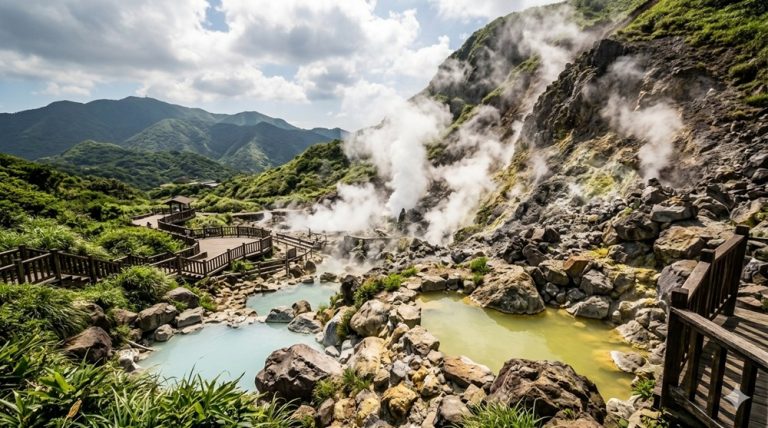
Compared to Beitou, Yangmingshan feels much more natural and rugged. Steam vents, sulfur deposits, volcanic terrain, and misty hills create a landscape that feels visibly geothermal rather than simply resort-oriented.
Many travelers combine Yangmingshan hot springs with:
- Hiking trails
- Cherry blossom season
- Cooler mountain weather
- National park scenery
- Day trips from Taipei
The atmosphere changes significantly depending on weather conditions. Rain, fog, and cooler temperatures often make the area feel especially atmospheric during winter and spring.
Yangmingshan works best for travelers wanting:
- Nature and hiking combined with hot springs
- Volcanic scenery
- Outdoor baths
- Mountain environments near Taipei
- A less urban onsen experience
The main difference between Yangmingshan and Beitou is that Yangmingshan feels much more focused on landscape and nature rather than hot spring town culture itself.
Discover the volcanic side of northern Taiwan on this Yangmingshan and Beitou geothermal day tour from Taipei. The excursion combines steaming geothermal valleys, sulfur hot springs, volcanic landscapes, mountain scenery, and traditional onsen culture, making it one of the best ways to experience the unique geothermal landscapes behind Taiwan hot springs.
Guguan (Taichung Region)
Guguan, located in the mountains east of Taichung, is one of central Taiwan’s best-known hot spring regions. Surrounded by forested valleys and mountain roads, the area feels far quieter and less international than northern Taiwan’s more famous hot spring towns.
The atmosphere in Guguan focuses heavily on:
- Mountain retreats
- Forest scenery
- Resort hotels
- Riverside environments
- Slower-paced relaxation
Unlike Beitou or Jiaoxi, Guguan attracts fewer international tourists, which gives the area a more local and low-key feeling.
The hot spring hotels here often emphasize privacy and nature rather than nightlife or tourism infrastructure. Many travelers visit specifically to disconnect from Taiwan’s larger cities and spend time in a quieter mountain setting.
Guguan works especially well for:
- Couples
- Nature-focused travelers
- Road trips through central Taiwan
- Travelers exploring Taichung and mountain regions
Guanziling (Tainan Region)
Guanziling, located northeast of Tainan in southern Taiwan, is famous for one very specific reason: its rare mud hot springs.
Unlike Taiwan’s clearer sulfur or carbonate springs, Guanziling’s mineral-rich mud gives the baths a cloudy gray appearance and a completely different texture.
The experience feels much more unusual than a traditional onsen:
- Thicker mineral water
- Mud-rich thermal pools
- Spa-like atmosphere
- Strong geothermal identity
Because mud hot springs are relatively rare globally, Guanziling became one of Taiwan’s most distinctive geothermal destinations.
The surrounding area feels quieter and more regional than northern Taiwan’s more internationally known hot spring towns, which gives the experience a more local atmosphere overall. If you are spending more time in southern Taiwan, Guanziling can easily be combined with the temples, historic streets and local food covered in our guide to the best things to do in Tainan.
Guanziling is best for:
- Travelers wanting something unique
- Southern Taiwan itineraries
- People interested in unusual geothermal experiences
- Relaxation-focused trips
Zhiben (Taitung County)
Zhiben, located near Taitung on Taiwan’s less-developed east coast, is one of the island’s most scenic and relaxing hot spring destinations.
Compared to northern Taiwan, the east coast feels slower, greener, and far less densely populated. This gives Zhiben a very different atmosphere from Taipei-adjacent hot spring towns.
The region combines:
- Mountain scenery
- Subtropical forest
- River valleys
- Large resort hotels
- Peaceful surroundings
Many travelers visit Zhiben as part of broader east coast itineraries that include Taitung, coastal drives, hiking, and slower travel through eastern Taiwan.
The hot spring resorts here often feel spacious and quiet, making the region particularly attractive for travelers wanting:
- A true resort atmosphere
- Longer relaxation stays
- East coast travel experiences
- Nature-focused itineraries
- Less crowded hot spring destinations
For many travelers, Zhiben represents the most relaxing side of Taiwan hot spring culture because the surrounding region itself already feels slower and more peaceful than western Taiwan’s larger urban corridors.
Browse Taiwan hot spring excursions, from geothermal day trips near Taipei to scenic mountain onsens, volcanic landscapes, and relaxing thermal resort experiences across the island.
View Taiwan hot spring tours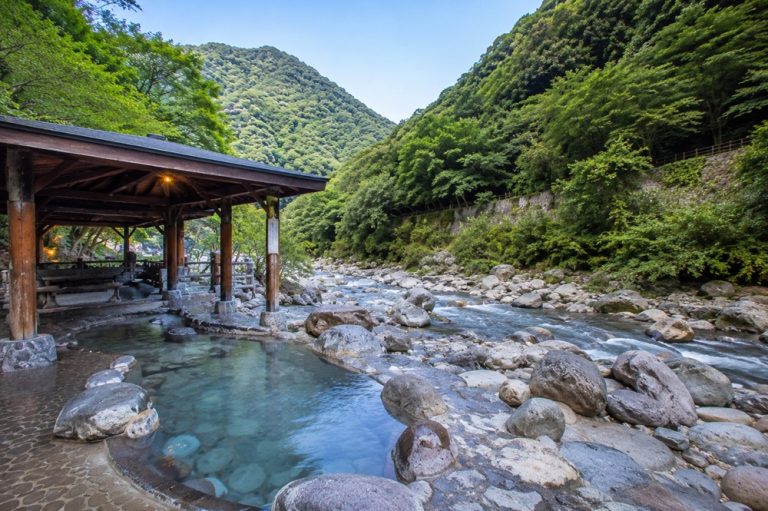
Best Hot Springs Near Taipei
Not every traveler visiting Taiwan plans to move around the entire island. Many people spend most of their time in Taipei, which is why hot springs near the capital are especially popular. Fortunately, several of Taiwan’s best onsen areas are located close enough to Taipei for easy day trips or short overnight escapes.
The biggest difference between these destinations is not necessarily the quality of the hot springs themselves, but the atmosphere surrounding them. Some feel urban and convenient, others feel deeply mountainous and remote despite being located surprisingly close to the city.
Choosing the right hot spring near Taipei depends mainly on:
- How much travel time you want
- Whether you prefer nature or convenience
- If you want a day trip or overnight stay
- Your comfort level with traditional bath culture
- Whether you prioritize scenery, privacy, or accessibility
Beitou: Best for Convenience and First-Time Visitors
If you only have limited time in Taipei, Beitou is usually the easiest and most practical choice.
The area is directly accessible by MRT, which means you can leave central Taipei and reach the hot spring district relatively quickly without needing trains, buses, or complicated transfers. This accessibility is one of the main reasons Beitou became so popular among both locals and international travelers.
Beitou works especially well for:
- First-time Taiwan visitors
- Short Taipei itineraries
- Travelers without rental cars
- People wanting private hot spring rooms
- Easy half-day or evening visits
The overall atmosphere feels more developed and urban than other hot spring regions, but many travelers appreciate the convenience. You can easily combine Beitou with sightseeing in Taipei without restructuring your itinerary completely.
For travelers unsure about traditional onsen etiquette, Beitou also tends to feel more approachable because many facilities are accustomed to international guests.
Wulai: Best for Mountain Atmosphere and Relaxation
Travelers wanting a much calmer and more scenic environment usually prefer Wulai.
Although it is still relatively close to Taipei, the atmosphere changes dramatically once you enter the mountain valley. Forested hills, rivers, waterfalls, and cooler temperatures create a much more immersive environment compared to the city-adjacent feel of Beitou.
Wulai is ideal for:
- Romantic overnight stays
- Outdoor baths with scenery
- Travelers wanting quieter surroundings
- Relaxation-focused trips
- Escaping Taipei’s urban pace
Compared to Beitou, Wulai feels slower, less commercial, and more connected to the surrounding landscape itself.
The main drawback is accessibility. Reaching Wulai takes longer and usually involves a combination of MRT and bus or taxi transport, which makes it slightly less convenient for quick visits.
Still, many travelers ultimately find Wulai more memorable because the overall environment feels much more atmospheric.

Yangmingshan: Best for Nature and Volcanic Landscapes
Travelers interested in hiking, volcanic scenery, and cooler mountain weather should strongly consider Yangmingshan.
Unlike Beitou or Jiaoxi, Yangmingshan feels less like a traditional hot spring town and more like a geothermal national park landscape with hot springs integrated into it.
The area is especially known for:
- Steam vents and sulfur deposits
- Mountain scenery
- Hiking trails
- Foggy and atmospheric weather
- Cherry blossoms during spring
Yangmingshan works best for travelers wanting to combine:
- Nature
- Walking or hiking
- Cooler weather
- Hot spring bathing
- Volcanic landscapes
Because weather conditions change quickly in the mountains, the atmosphere can vary enormously from day to day. On foggy or rainy days, the region often feels especially dramatic and immersive.
Compared to Beitou, Yangmingshan feels less focused on resort culture and more focused on landscape and scenery.
Jiaoxi: Best for Resort Comfort and Easy Weekend Trips
Although Jiaoxi is located farther from Taipei than Beitou or Wulai, it remains one of the most popular hot spring escapes from the capital because modern train connections make the journey relatively simple.
Jiaoxi feels noticeably more resort-oriented than the mountain hot spring regions closer to Taipei.
Travelers typically come here for:
- Modern hot spring hotels
- Private baths
- Relaxed weekend trips
- Comfort-focused stays
- Spa-style experiences
Compared to Beitou’s sulfur-heavy volcanic atmosphere, Jiaoxi feels softer and more polished overall. The mineral water is generally milder, and many hotels cater heavily to couples, families, and domestic tourism.
Jiaoxi works particularly well for travelers who:
- Want an overnight escape from Taipei
- Prefer modern resort facilities
- Dislike strong sulfur smells
- Want private bathing options
- Prefer comfort over rugged scenery
Which Hot Spring Near Taipei Is Best?
There is no single “best” hot spring near Taipei because each destination offers a very different atmosphere and type of experience.
- Beitou is best for convenience and first-time visitors
- Wulai is best for mountain scenery and relaxation
- Yangmingshan is best for hiking and volcanic landscapes
- Jiaoxi is best for modern resort-style comfort
For many travelers, the decision comes down to whether they prioritize:
- Accessibility
- Nature
- Traditional atmosphere
- Private luxury
- Quick day trips
- Longer overnight stays
Fortunately, Taiwan’s transport system makes all of these destinations relatively manageable, even for travelers without cars or prior onsen experience.
Browse Taiwan hot spring excursions, from geothermal day trips near Taipei to scenic mountain onsens, volcanic landscapes, and relaxing thermal resort experiences across the island.
View Taiwan hot spring tours Taiwan Hot Spring Etiquette
For many first-time visitors, the biggest uncertainty about Taiwan hot springs is not choosing where to go, but understanding how the bathing process actually works once you arrive.
This is completely normal. Travelers unfamiliar with onsen culture often worry about making mistakes, misunderstanding the rules, or feeling uncomfortable in public bath environments.
Fortunately, Taiwan hot springs are generally very approachable, especially compared to what many travelers imagine beforehand. Some facilities follow traditional Japanese-style bathing culture quite strictly, while others are much more relaxed and tourist-friendly with private rooms, family pools, or swimsuit-required areas.
The important thing is understanding that etiquette exists mainly for hygiene, comfort, and respect toward other bathers rather than strict formality.
Showering Before Entering the Baths
One of the most important rules at almost every Taiwan hot spring is washing yourself thoroughly before entering the water.
This is considered basic hygiene and an essential part of bathing culture throughout Taiwan and Japan.
Most facilities provide:
- Showers
- Stools or washing stations
- Soap and shampoo
- Handheld shower heads
You are expected to clean yourself completely before entering the bath itself.
The hot spring water is viewed as something shared collectively rather than water used for cleaning your body. This is why entering without showering first is generally considered disrespectful.
Nude Baths vs Swimsuit Baths
One of the biggest questions travelers ask is whether they must bathe naked.
The answer depends entirely on the facility.
Traditional Japanese-style bathhouses are usually:
- Gender-separated
- Fully nude
- Quiet and etiquette-focused
In these baths, swimsuits are normally prohibited because they are considered unhygienic within traditional onsen culture.
However, many Taiwan hot spring resorts now cater heavily to international visitors and domestic tourism, meaning there are also:
- Private baths
- Couple baths
- Family baths
- Mixed pools requiring swimsuits
- Spa-style resort pools
Travelers uncomfortable with nude bathing therefore still have many options throughout Taiwan.
If you prefer privacy, booking a private hot spring room is usually the easiest solution.
Gender-Separated Baths
Traditional public baths are commonly divided into separate male and female sections.
This means:
- Men and women bathe separately
- Nudity is expected inside the bath area
- Photography is strictly prohibited
For travelers unfamiliar with this setup, the experience can initially feel intimidating. In reality, most bathhouses are calm, quiet, and much less awkward than many people imagine beforehand.
Locals generally pay very little attention to other bathers, and the overall atmosphere is usually focused on relaxation rather than social interaction.
Private Hot Spring Rooms
Private baths are extremely popular in Taiwan and make hot spring culture far more accessible for many travelers.
These rooms are usually rented by the hour and commonly include:
- A private mineral bath
- Shower facilities
- Changing space
- Resting area
- Direct hot spring water access
Many couples and international visitors choose private rooms because they remove uncertainty around etiquette and nudity.
Higher-end resorts may also offer:
- Outdoor balcony baths
- Mountain views
- Riverside private pools
- Luxury spa-style experiences
For first-time visitors, private baths are often the easiest introduction to Taiwan hot spring culture.
Can You Wear Towels in the Water?
This depends on the bathhouse, but in traditional nude baths, towels are generally not meant to enter the water itself.
Small towels are usually carried:
- To cover yourself while walking
- To wipe sweat or water
- To place on your head while bathing
Many bathers place the small towel beside the bath or fold it on top of their head while soaking.
Large towels are normally kept entirely outside the bathing area.
Tattoos and Taiwan Hot Springs
Taiwan tends to be more relaxed about tattoos than some traditional Japanese onsens, but policies still vary depending on the facility.
Some traditional bathhouses may discourage visible tattoos, especially in older or more conservative establishments, while modern resorts and private baths are usually far more flexible.
Travelers with tattoos generally have the easiest experience by:
- Booking private baths
- Choosing modern resorts
- Checking policies in advance
In practice, many international travelers with tattoos use Taiwan hot springs without significant problems, particularly in tourist-oriented areas.
Noise, Phones, and Photography
Taiwan hot springs are generally considered calm and quiet environments.
Even in modern resorts, the atmosphere is usually much more subdued than typical swimming pools or spas in many Western countries.
Common etiquette expectations include:
- Speaking quietly
- Avoiding loud conversations
- Not splashing excessively
- Keeping phones away from baths
- Never photographing people in bathing areas
Photography restrictions are taken especially seriously inside public bath zones for privacy reasons.
Many facilities prohibit phones entirely inside bathing areas.
Water Temperature and Bathing Duration
Taiwan hot spring water can be significantly hotter than many travelers expect, especially in sulfur-rich geothermal regions.
Typical temperatures often range between:
- 38°C to 42°C
- Sometimes even hotter in certain pools
It is completely normal to:
- Enter slowly
- Take breaks
- Alternate between pools
- Cool down periodically
Trying to stay in very hot water for too long can quickly become exhausting, especially during humid weather.
Many experienced bathers rotate between soaking, resting, hydrating, and cooling down gradually.
Do You Need to Understand All the Rules Perfectly?
No. Taiwan hot spring facilities are accustomed to international visitors, especially in major onsen destinations such as Beitou, Jiaoxi, and Wulai.
The most important things are:
- Shower before entering
- Respect the atmosphere
- Follow swimsuit rules
- Avoid phones and photography
- Stay aware of signs and staff instructions
Most travelers find that once the initial uncertainty disappears, Taiwan hot springs quickly become one of the most relaxing and memorable experiences anywhere on the island.
Best Time to Visit Taiwan Hot Springs
Taiwan hot springs can technically be visited year-round, but the overall experience changes significantly depending on the season, weather, humidity, and mountain temperatures.
For many travelers, the classic Taiwan onsen atmosphere is closely associated with cooler weather: steam rising into cold mountain air, fog drifting through forested valleys, rain tapping against wooden bathhouses, and the contrast between chilly temperatures outside and extremely hot mineral water inside the baths.
This is one reason hot springs become especially popular during autumn and winter, when both locals and international travelers actively seek out mountain escapes and warmer environments.
Winter: The Most Atmospheric Season for Taiwan Hot Springs
Winter is generally considered the best overall season for experiencing Taiwan hot springs.
Between roughly December and February, cooler temperatures make soaking in hot mineral water feel far more comfortable and immersive than during Taiwan’s hotter months.
This is especially true in:
- Beitou
- Wulai
- Yangmingshan
- Jiaoxi
- Guguan
Mountain regions often become:
- Foggy
- Misty
- Cooler and quieter
- More visually dramatic
Many travelers initially assume rainy or foggy weather would ruin the experience, but the opposite is often true. Light rain and cooler temperatures can make Taiwan hot springs feel significantly more atmospheric and relaxing.
Winter is also when many Taiwan hot spring towns feel most alive. Hotels become busier, local travelers take weekend escapes from Taipei and other cities, and the entire bathing culture feels more active and seasonal.
The downside is that winter also brings:
- Higher hotel demand
- Weekend crowds
- More expensive private baths
- Limited last-minute availability
This is especially noticeable around:
- Christmas and New Year
- Lunar New Year
- Taiwanese public holidays
- Cold weekends near Taipei
Spring: Pleasant Weather and Cherry Blossoms
Spring is another excellent season for Taiwan hot springs, particularly between February and April.
Temperatures remain cool enough for comfortable soaking, while mountain regions begin turning greener and more vibrant after winter.
In places like Yangmingshan, spring also overlaps with cherry blossom season, creating some of the most visually beautiful hot spring scenery anywhere near Taipei.
Spring generally offers:
- Milder temperatures
- Greener mountain landscapes
- Comfortable weather for hiking
- Fewer extreme cold spells
- Good conditions for overnight mountain stays
The tradeoff is that spring weather can still be unpredictable. Rain and fog remain common in northern Taiwan, especially in mountain regions.
However, many travelers actually enjoy this softer and mistier atmosphere because it enhances the feeling of escaping the city into quieter mountain environments.
Summer: Still Possible, but Less Ideal
Taiwan hot springs remain open during summer, but the experience feels noticeably different compared to cooler months.
Between roughly June and September, Taiwan becomes:
- Hotter
- More humid
- More tropical
- Less comfortable for long hot baths
This is especially true in lower-elevation regions near Taipei where humidity can feel intense.
That said, summer hot spring travel still works well in:
- Higher mountain regions
- Cooler forest environments
- Rainy weather periods
- Resorts with cooler pools and spa facilities
Some travelers specifically enjoy combining:
- Rainstorms
- Foggy mountain scenery
- Cool river valleys
- Outdoor baths
with summer mountain travel.
Still, for most first-time visitors, Taiwan hot springs feel far more memorable during cooler seasons.
Browse Taiwan hot spring excursions, from geothermal day trips near Taipei to scenic mountain onsens, volcanic landscapes, and relaxing thermal resort experiences across the island.
View Taiwan hot spring tours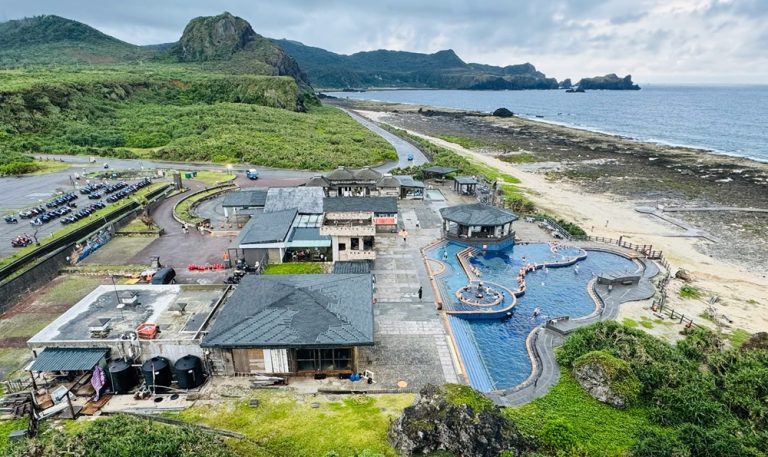
Autumn: One of the Best Overall Seasons
Autumn is often underrated for Taiwan hot spring travel.
Between October and early December, temperatures gradually cool, humidity becomes more manageable, and mountain regions begin developing the cooler atmosphere many travelers associate with Taiwan onsens.
Autumn offers several advantages:
- Comfortable temperatures
- Lower humidity
- Fewer typhoon risks
- Less extreme crowding than winter holidays
- Excellent conditions for mountain travel
For travelers wanting a balance between:
- Comfortable weather
- Atmosphere
- Lower crowds
- Outdoor exploration
autumn is arguably one of the strongest overall seasons to experience Taiwan hot springs.
Typhoon Season and Weather Considerations
Taiwan’s typhoon season generally peaks between July and September.
While hot spring resorts continue operating during most summer weather, typhoons can affect:
- Mountain road access
- Train schedules
- Visibility and scenery
- Outdoor pools
- Regional travel safety
Travelers visiting mountain hot spring regions during summer should monitor weather forecasts carefully, especially when planning overnight stays in more remote areas.
Heavy rain can occasionally trigger landslides or temporary road closures in mountainous parts of Taiwan.
Weekdays vs Weekends
One thing many international travelers underestimate is how dramatically Taiwan hot spring towns can change between weekdays and weekends.
Popular areas near Taipei such as:
- Beitou
- Wulai
- Jiaoxi
often become much busier on weekends as local travelers leave the city for short hot spring escapes.
This affects:
- Hotel prices
- Private bath availability
- Transport crowds
- Public bath atmosphere
- Restaurant wait times
Travelers seeking quieter experiences usually benefit from visiting:
- Midweek
- Outside public holidays
- Outside Lunar New Year periods
The difference in atmosphere can be surprisingly significant.
So When Is the Best Time Overall?
For most travelers, the best overall period for Taiwan hot springs is:
- Late autumn
- Winter
- Early spring
These seasons combine:
- Cooler weather
- Mountain fog and atmosphere
- Comfortable soaking conditions
- More immersive onsen environments
While Taiwan hot springs remain enjoyable year-round, cooler months are when the experience truly feels at its most atmospheric and memorable.
Taiwan Hot Spring Hotels & Resorts
One of the reasons Taiwan hot springs appeal to such a wide range of travelers is the variety of accommodation styles available across the island. Some properties feel like traditional Japanese ryokans with quiet wooden interiors and private soaking baths, while others resemble modern mountain resorts with spa facilities, restaurants, and panoramic outdoor pools overlooking forests or valleys.
Choosing the right type of hot spring stay often matters more than choosing the “best” hot spring destination itself. Some travelers want luxury and privacy, others prioritize scenery or atmosphere, while many simply want an easy overnight escape from Taipei.
Taiwan hot spring hotels generally fall into several categories:
- Luxury mountain resorts with spa facilities
- Traditional Japanese-style onsen hotels
- Private bath hotels for couples and families
- Budget-friendly bathhouses with overnight rooms
- Modern spa resorts with mixed pools and restaurants
- Day-use private hot spring suites rented by the hour
One important thing to understand is that many Taiwan hot spring hotels are designed around the bathing experience itself rather than simply accommodation. In higher-end properties, the private bath often becomes the main feature of the room.
This is especially true in mountain regions where:
- Outdoor baths overlook forests or valleys
- Steam rises through cooler mountain air
- Rain and fog become part of the atmosphere
- Guests spend much of the stay relaxing inside the resort itself
Travelers visiting during winter weekends or holidays should also book early. Popular hot spring towns near Taipei can fill quickly during colder months, especially around Lunar New Year and public holiday periods.
Beitou Hot Spring Hotels (Taipei)
Beitou offers the widest range of hot spring accommodation near Taipei, from traditional bathhouses to modern private bath resorts.
Because the district is directly connected to Taipei by MRT, many travelers stay here for short overnight escapes or even single evenings focused entirely on the onsen experience.
One of the best-known options is Beitou Hot Spring Resort, which combines modern comfort with easy access to the area’s geothermal attractions and public bath culture.
Travelers looking for something quieter and slightly more traditional may prefer Phoenix Pavilion Hot Spring Hotel, known for its calmer atmosphere and more classic hot spring feel.
To compare additional accommodation options, browse hot spring hotels in Beitou.
Jiaoxi Hot Spring Resorts (Yilan County)
Jiaoxi is one of Taiwan’s most resort-oriented hot spring towns, which makes it especially attractive for couples, weekend escapes, and travelers prioritizing comfort.
Compared to Beitou, the atmosphere here feels more modern and spa-focused, with many hotels centered around private baths, wellness facilities, and overnight relaxation rather than traditional public bath culture.
For luxury travelers, Hotel Royal Chiaohsi is one of the best-known high-end hot spring resorts in the region, offering mountain scenery, extensive spa facilities, and a more upscale retreat atmosphere.
Travelers looking for mid-range comfort may prefer Chuang-tang Spring Spa Hotel, which provides a more approachable balance between comfort, private bathing, and location.
To explore more options in the area, browse hot spring resorts in Jiaoxi.
Wulai Hot Spring Hotels (New Taipei City)
Wulai focuses far more on scenery and atmosphere than urban convenience. Many hotels are positioned along the river valley with mountain views, outdoor baths, and quieter surroundings that feel much more immersive than Taipei itself.
This is one of the best areas in Taiwan for travelers wanting:
- Mountain scenery
- Riverside hot springs
- Romantic overnight stays
- Cooler temperatures
- A slower and quieter atmosphere
Hotspring World Wulai is one of the area’s better-known resort-style properties, while Wulai Shui An Hot Springs offers a more intimate riverside atmosphere with scenic mountain surroundings.
To compare more accommodation in the region, browse Wulai hot spring hotels.
Other Taiwan Hot Spring Regions Worth Staying In
Outside northern Taiwan, several other hot spring destinations offer very different atmospheres and geothermal experiences.
Yangmingshan, near Taipei, combines volcanic scenery, hiking, and mountain weather with a smaller collection of hot spring resorts focused heavily on nature and landscape. Travelers can browse Yangmingshan hot spring stays.
Guguan, in central Taiwan near Taichung, focuses more on forested mountain retreats and slower-paced resort stays surrounded by rivers and valleys. Travelers exploring the region can view Guguan hot spring accommodation.
Guanziling, in southern Taiwan, is famous for its rare mud hot springs, which create a completely different bathing experience from Taiwan’s more traditional sulfur springs. Travelers can browse Guanziling hot spring hotels.
On Taiwan’s east coast, Zhiben offers one of the island’s most peaceful hot spring resort environments, surrounded by subtropical scenery and slower-paced travel conditions near Taitung. Travelers interested in east coast onsen stays can browse Zhiben hot spring resorts.
Ultimately, Taiwan hot spring accommodation is less about simply finding a hotel and more about choosing the type of atmosphere you want your trip to revolve around. Some stays focus on luxury and privacy, others emphasize mountain scenery or traditional bathing culture, while many combine all three surprisingly well.
Browse Taiwan hot spring excursions, from geothermal day trips near Taipei to scenic mountain onsens, volcanic landscapes, and relaxing thermal resort experiences across the island.
View Taiwan hot spring tours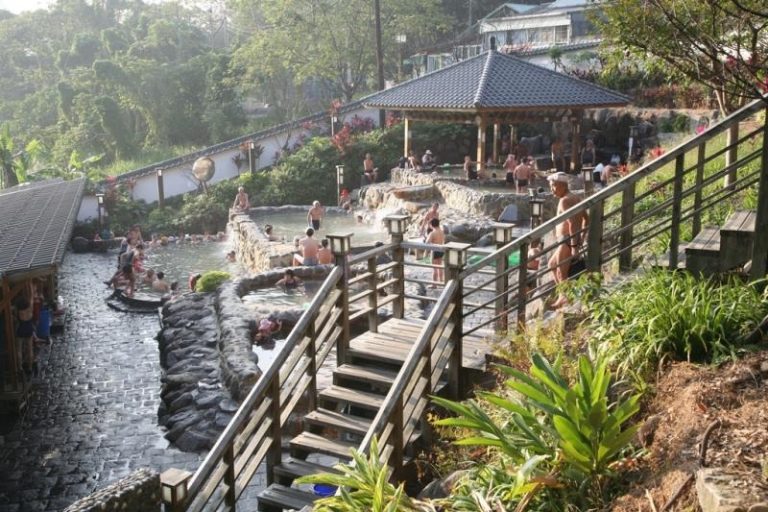
Are Taiwan Hot Springs Worth It?
For many travelers, Taiwan hot springs end up becoming one of the most memorable parts of the entire trip, even if they were not originally the main reason for visiting the island.
Part of this comes from contrast. Taiwan is often associated with crowded night markets, busy cities, scooters, train stations, and dense urban energy. Hot spring towns reveal a completely different side of the country: slower, quieter, more atmospheric, and far more connected to the surrounding mountains and landscape.
The experience also changes the rhythm of travel itself.
Instead of constantly moving between attractions, checking transport schedules, or rushing through sightseeing lists, hot spring travel encourages people to slow down:
- Spending entire evenings inside mountain resorts
- Listening to rain and rivers outside the bath
- Waking up to fog drifting through valleys
- Alternating between baths, tea, food, and rest
- Experiencing Taiwan in a quieter and more reflective way
This slower atmosphere is one reason hot springs feel especially rewarding after several busy days in cities like Taipei or Taichung. The contrast becomes part of the appeal itself.
Taiwan’s geography also makes these experiences unusually accessible. In many countries, reaching scenic mountain onsens requires long journeys into remote regions. In Taiwan, some of the island’s best hot spring environments are surprisingly close to major cities and connected by efficient transport networks.
Another reason Taiwan hot springs stand out is the variety between destinations. A sulfur-heavy volcanic bath in Beitou feels completely different from a quiet riverside hotel in Wulai or a mud hot spring experience in Guanziling.
That diversity prevents hot spring travel from feeling repetitive. Different regions offer:
- Different mineral compositions
- Different scenery
- Different bathing styles
- Different atmospheres
- Different levels of luxury and tradition
Taiwan also feels more approachable for first-time onsen travelers than many people expect. Private baths, modern resorts, tourist-friendly facilities, and flexible accommodation options make it much easier to experience hot spring culture without feeling intimidated by traditional etiquette.
For travelers willing to move beyond Taiwan’s most obvious attractions, hot springs often become one of the experiences that gives the island more depth and emotional texture. They reveal a side of Taiwan that feels calmer, more local, and more connected to the mountains and natural landscape shaping the country itself.
In the end, Taiwan hot springs are not simply about soaking in hot water. They are about atmosphere, contrast, slowing down, and experiencing a quieter side of the island that many travelers initially overlook.
Final Thoughts on Taiwan Hot Springs
Taiwan hot springs add a completely different dimension to traveling around the island. They offer a slower, quieter, and more atmospheric contrast to Taiwan’s crowded cities, busy train stations, and fast-moving urban energy.
Whether you choose a quick evening soak in Beitou, a mountain retreat in Wulai, or a longer resort stay in Jiaoxi or Zhiben, hot springs are one of the experiences that often leave travelers with some of their strongest memories of Taiwan.
They are also surprisingly accessible. Even travelers visiting Taiwan for only a short period can easily include hot springs in their itinerary thanks to the country’s efficient transport network and the number of onsen towns located close to major cities.
If you are still planning your route around the island, our Taiwan itinerary guide explains how to structure trips of different lengths, while our Taiwan seasonal travel guide helps determine the best period to visit depending on weather and travel style.
Travelers deciding where to base themselves across the island should also explore our guide to the best areas to stay in Taiwan, while food-focused travelers can combine hot spring trips with our Taiwan food and street food guide to experience another side of the island’s culture.
For many travelers, Taiwan hot springs start as a simple relaxation activity and end up becoming one of the most distinctive and memorable parts of the entire trip.
Frequently Asked Questions About Taiwan Hot Springs
-
What are the best hot springs in Taiwan?
Some of the best Taiwan hot springs include Beitou near Taipei, Wulai in New Taipei City, Jiaoxi in Yilan County, Yangmingshan near Taipei, Guguan near Taichung, Guanziling in southern Taiwan, and Zhiben on Taiwan’s east coast. Each destination offers a different atmosphere, ranging from volcanic sulfur springs and mountain resorts to mud hot springs and luxury spa hotels. -
Are Taiwan hot springs worth visiting?
Yes. Taiwan hot springs are one of the island’s most distinctive travel experiences and offer a completely different atmosphere from Taiwan’s busy cities and night markets. Many travelers consider them one of the highlights of visiting Taiwan because of the mountain scenery, relaxing atmosphere, and strong bathing culture. -
Which hot springs in Taiwan are closest to Taipei?
Beitou, Wulai, and Yangmingshan are the most popular hot spring destinations near Taipei. Beitou is the easiest to access by MRT, while Wulai and Yangmingshan offer more mountainous scenery and quieter surroundings. -
What is the best hot spring near Taipei for first-time visitors?
Beitou is usually the best choice for first-time visitors because it combines easy MRT access, private bath hotels, public baths, geothermal scenery, and tourist-friendly facilities in one compact area. -
Do Taiwan hot springs require nudity?
Not always. Some traditional public baths are gender-separated and require nude bathing, but many Taiwan hot spring resorts also offer private baths, family baths, and swimsuit-required pools. Travelers uncomfortable with public nude bathing still have many options throughout Taiwan. -
Can couples use Taiwan hot springs together?
Yes. Many hot spring hotels in Taiwan offer private bath rooms designed specifically for couples or families. These private baths are especially common in Beitou, Wulai, and Jiaoxi. -
Are Taiwan hot springs mixed gender?
Traditional public baths are usually separated by gender. However, mixed-gender facilities exist in some modern resorts, especially where swimsuits are required. -
Do Taiwan hot springs allow tattoos?
Policies vary depending on the facility. Modern resorts and private baths are generally more relaxed about tattoos, while some traditional public bathhouses may still discourage visible tattoos. -
What is the best time to visit Taiwan hot springs?
The best time for Taiwan hot springs is usually between late autumn and early spring, especially during winter when cooler temperatures make the hot water feel much more atmospheric and comfortable. -
Are Taiwan hot springs good in winter?
Yes. Winter is considered the classic season for Taiwan hot springs because cooler weather, fog, rain, and mountain temperatures create a much more immersive onsen atmosphere. -
Can you visit Taiwan hot springs in summer?
Yes, but the experience feels different because Taiwan becomes hot and humid during summer. Mountain hot spring regions still work well, especially during cooler or rainy weather, but most travelers prefer visiting during cooler seasons. -
What are sulfur hot springs in Taiwan?
Sulfur hot springs contain sulfur-rich geothermal water and are common in places like Beitou and Yangmingshan. They often have a strong mineral smell and cloudy water caused by volcanic activity beneath the surface. -
What are the mud hot springs in Taiwan?
Guanziling in southern Taiwan is famous for its rare mud hot springs, where mineral-rich mud mixes directly into the thermal water. This creates a completely different bathing experience compared to traditional sulfur springs. -
Which Taiwan hot springs are best for couples?
Wulai and Jiaoxi are especially popular with couples because of their private bath hotels, mountain scenery, quieter atmosphere, and resort-style accommodations. -
Which Taiwan hot springs are best for families?
Jiaoxi is often one of the easiest options for families because many resorts offer private rooms, swimsuit pools, modern facilities, and easy train access from Taipei. -
What should you bring to a Taiwan hot spring?
Most Taiwan hot spring hotels provide towels, soap, shampoo, and bathing essentials. Travelers usually only need comfortable clothing, sandals, and swimwear if visiting a swimsuit-required facility. -
How hot are Taiwan hot springs?
Most Taiwan hot spring pools range between roughly 38°C and 42°C, although temperatures vary depending on the location and specific bath. -
Do Taiwan hot spring hotels have private baths?
Yes. Many Taiwan hot spring hotels include private baths either inside the room itself or as rentable private suites for couples and families. -
Are Taiwan hot springs expensive?
Taiwan hot springs range from inexpensive public bathhouses to luxury mountain resorts. Budget travelers can still experience hot springs relatively affordably, especially through public baths or short private room rentals. -
How long should you stay at a Taiwan hot spring?
Some travelers visit for only a few hours, while others stay overnight in resort hotels. Mountain hot spring towns such as Wulai, Jiaoxi, and Zhiben are especially well suited for overnight stays because the atmosphere becomes more relaxing after day visitors leave. -
Which Taiwan hot spring town is the most scenic?
Wulai, Zhiben, and Yangmingshan are often considered among the most scenic because of their mountain environments, forests, rivers, foggy weather, and surrounding natural landscapes. -
Can you do a Taiwan hot spring day trip from Taipei?
Yes. Beitou, Wulai, Yangmingshan, and even Jiaoxi can all be visited as day trips from Taipei depending on how much travel time you are comfortable with. -
What is the difference between Beitou and Wulai hot springs?
Beitou feels more urban, convenient, and geothermal, while Wulai feels more mountainous, scenic, and peaceful. Beitou is easier to access, while Wulai offers a more immersive mountain atmosphere. -
Do Taiwan hot springs smell like sulfur?
Some do, especially sulfur-rich springs in places like Beitou and Yangmingshan. Other regions, such as Jiaoxi, have milder mineral water with far less sulfur smell. -
Are Taiwan hot springs beginner-friendly?
Yes. Taiwan is one of the easiest places in Asia for first-time onsen travelers because there are many private bath options, tourist-friendly resorts, and flexible bathing styles available.
Travel Resources to Plan, Book & Stay Connected
Use these tools and guides to stay connected abroad, find inspiration for your next trip, and book your flights, stays and gear with confidence.
Disclosure: This article may contain affiliate links. If you make a purchase through a link, I may receive a commission at no extra cost to you. I only share recommendations I believe are genuinely useful, and all opinions are my own. AI was used in this post for research and drafting purposes.

Comment (0)