🛂 Madagascar Visa Guide: What This Post Covers
If you are planning a trip to Madagascar, this guide walks you through the visa process step by step, including how the eVisa works, what the current entry requirements look like, what you can expect to pay, and which common mistakes are easiest to avoid before departure.
- Whether you need a visa for Madagascar
- How the Madagascar eVisa works
- Visa on arrival versus eVisa
- Madagascar visa fees by length of stay
- The main visa requirements for travelers
- What US citizens and other international visitors should know
- How to apply for a Madagascar eVisa step by step
- How long you can stay and what to know before entering the country
For a broader overview of the island, routes, and destination ideas, start with our Madagascar travel guide. If you are still shaping your route, our Madagascar itinerary will help you map out your trip, while our Madagascar travel tips, guide to getting around Madagascar, and Madagascar safety guide cover the practical side of planning in more detail.
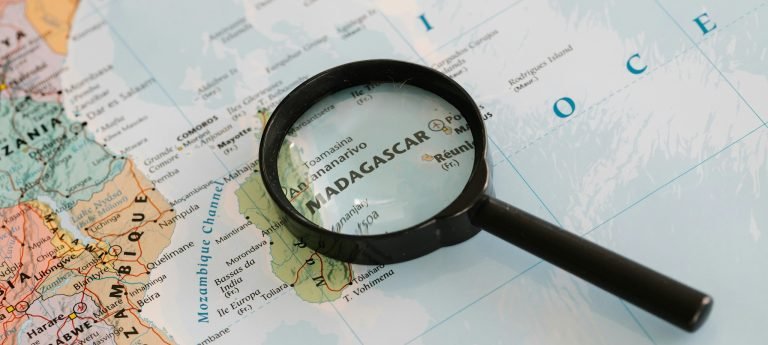
Madagascar Visa Guide: What You Need to Know Before You Travel
Understanding the Madagascar visa process is one of the first and most important steps when planning your trip. While the country keeps things relatively straightforward for most travelers, there are still a few key details to get right, especially when it comes to choosing between the eVisa and visa on arrival, understanding the correct fees, and making sure your documents meet entry requirements. It also helps to understand how to get to Madagascar and what to expect on arrival so you can coordinate your visa with your travel plans.
For most visitors, including those coming from the United States and Europe, a tourist visa is required before entering Madagascar. The good news is that the process is simple, flexible, and designed for short-term travel, whether you are visiting for a couple of weeks or planning a longer route across the island.
In this guide, we break everything down clearly so you know exactly what to expect before you fly, from how to apply for an eVisa to how long you can stay and what documents you need at the border. Once your entry is sorted, you can focus on planning the rest of your trip using our Madagascar itinerary and practical advice from our Madagascar travel tips.
📑 Table of Contents
Do You Need a Visa for Madagascar?
Madagascar’s entry rules can sound confusing at first, because short stays and longer stays are handled slightly differently. In practice, almost all foreign travelers need some form of entry authorization, but not everyone needs a traditional visa in advance.
If you are visiting Madagascar for 15 days or less, you can currently enter without a traditional visa, but you must pay an administrative fee on arrival and be ready to show your onward or return ticket. For stays longer than 15 days, travelers generally use either an eVisa or a visa on arrival, depending on their plans and nationality.
For most tourists, the main choice is not whether Madagascar is “visa-free,” but whether it makes more sense to arrange entry online before departure or sort it out on arrival. In the next sections, we will break down exactly how the Madagascar eVisa works, how visa on arrival compares, and what fees and requirements you should expect before traveling.

Madagascar Visa on Arrival: How It Works
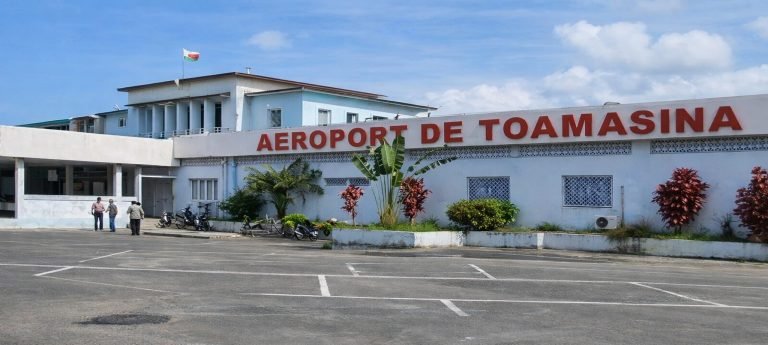
If you prefer to sort out your visa after landing, Madagascar offers a visa on arrival for citizens of almost all countries. This is one of the most common ways travelers enter the country and is available at major international airports, including Ivato International Airport in Antananarivo.
The process is relatively straightforward. After arrival, you complete the required form, present your passport and supporting documents, pay the visa fee, and receive the visa sticker in your passport before passing through immigration. For many travelers, this is a simple and practical option, especially if they did not arrange an eVisa before departure.
- Where to get it: At the airport on arrival in Madagascar
- Who can apply: Citizens of almost all countries, with Burundi and Palestine as the only exceptions
- Documents required: Passport valid for at least six months, proof of onward or return travel, and any supporting travel details requested on arrival
- Payment: Visa on arrival can be paid in euros (€), U.S. dollars ($), or Malagasy ariary (MGA)
- Card payments: Credit cards such as Visa and Mastercard are accepted at the airport, but it is still recommended to carry cash in case electronic systems are unavailable
While the process is generally smooth, waiting times can vary depending on how many flights arrive at the same time, so travelers who prefer to handle everything in advance may find the eVisa more convenient.
Madagascar eVisa: How It Works, Who Can Apply, and When It Makes Sense
For most travelers, the Madagascar eVisa is the easiest and most predictable way to arrange entry before departure. The official online platform, evisamada-mg.com, is the only official website for online visa applications. Be cautious with third-party websites that appear in search results, as some charge significantly higher fees or are not connected to the official system. It states that all nationalities are eligible for the eVisa system and explains that applicants can apply between one week and six months before departure. The site also says the electronic travel authorization is normally issued within 72 hours after validation of the online registration.
In practical terms, the eVisa is designed to make arrival smoother. Instead of waiting to sort out everything after landing, you complete the process online in advance, pay by credit card, and receive an electronic travel authorization that allows you to fly and enter Madagascar. The official platform advises travelers to print the document or keep it on their smartphone for checks on arrival. It also notes that you should have your valid passport, your credit card, access to your email, and a trusted phone ready before starting the application.
The application flow itself is fairly simple. According to the official portal, it happens in three steps: first you create an account and fill in your identity and travel information, then you proceed to payment, and finally you download your electronic travel authorization once it has been processed. This is one of the reasons the eVisa is often the better option for travelers who prefer having their paperwork settled before they board their flight, especially if they are arriving after a long international journey or simply want fewer moving parts at the airport.
There are, however, two important details to understand. First, the current eVisa system supports only tourist visas. Second, the official site says the tourist eVisa is a single-entry visa with a maximum duration of 60 days. That means the eVisa is a strong fit for most standard holidays and first-time trips to Madagascar, but it is not necessarily the right tool for every travel scenario. If you are planning a longer stay, you need to read the duration rules carefully rather than assuming the online system covers every possible case.
The official fee table on the portal lists four stay brackets: 1 to 15 days, 16 to 30 days, 31 to 60 days, and 61 to 90 days. It shows prices of 25 EUR, 35 EUR, 40 EUR, and 50 EUR respectively, with equivalent pricing also displayed in U.S. dollars. At the same time, the same official page states that the tourist eVisa has a maximum duration of 60 days, while also saying visa applications can still be made on arrival at the eVisa counters. So the safest interpretation for travelers is this: the online system is clearly appropriate for short and medium-length tourist stays, but if you are trying to stay beyond 60 days, you should verify the exact current procedure on the official platform close to your departure date instead of relying on assumptions.
Another useful point is that the official site says the price of the online visa is the same as the price paid on arrival. So choosing the eVisa is less about saving money and more about reducing uncertainty. You are paying for the same entry permission either way, but handling it online ahead of time can make the airport process feel more controlled and less stressful. For travelers who like to arrive with their documents already sorted, that alone is often worth it.
The main thing to avoid is using the wrong website. The official portal explicitly warns travelers to beware of hacker websites and says it is the only official platform for online applications. Because visa rules and processes can change, this is one of those areas where it is worth double-checking details shortly before travel and sticking to the official government-linked system rather than third-party visa websites.
Visa on Arrival vs eVisa: Which Option Should You Choose?
When traveling to Madagascar, most visitors have two main options: applying for an eVisa before departure or getting a visa on arrival at the airport. Both options are widely used, and in most cases, they offer similar pricing and validity. The difference comes down to convenience, timing, and how much uncertainty you are comfortable with when you arrive.
The eVisa is generally the more predictable option. By applying online before your trip, you complete the process in advance, receive your approval by email, and arrive with your entry already sorted. This can be especially helpful after a long international flight, as it allows you to move through arrival procedures with fewer steps and less waiting.
Visa on arrival, on the other hand, is still a valid and commonly used option. You complete the process after landing by filling out the necessary forms and paying the fee at the airport. While this works well for many travelers, it can involve waiting in line, dealing with cash payments, and relying on the process running smoothly at the time of your arrival.
In terms of cost, both options are typically the same, so the decision is not about saving money. Instead, it comes down to how you prefer to travel. If you like having everything arranged before departure and want a smoother airport experience, the eVisa is usually the better choice. If you are comfortable handling the process on arrival and prefer flexibility, visa on arrival remains a practical alternative.
Keep in mind that, as entry rules can evolve, it is always a good idea to confirm the latest requirements shortly before your departure.
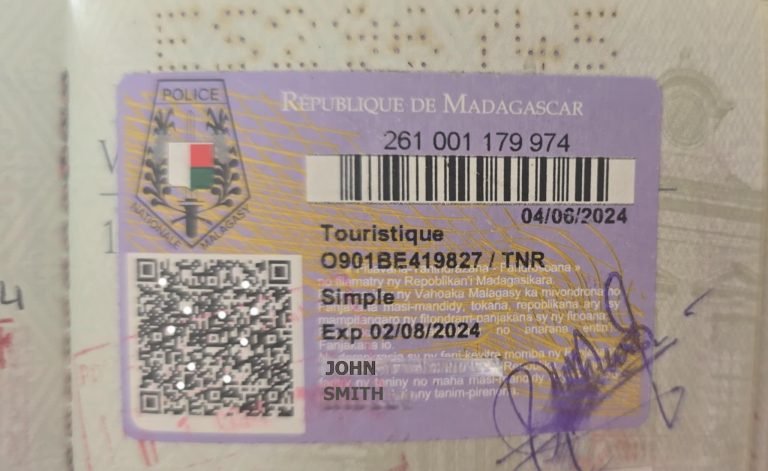
Madagascar Visa Fees: How Much Does It Cost?
Madagascar visa fees depend on the length of your stay, with a simple pricing structure based on duration. These fees apply whether you apply online through the eVisa system or obtain your visa on arrival, as the official pricing is generally aligned between both options.
The standard tourist visa fees are:
- 16 to 30 days: €35 (approx. US$41)
- 31 to 60 days: €40 (approx. US$47)
- 61 to 90 days: €50 (approx. US$59)
For visa on arrival, payments are accepted in euros (€), U.S. dollars ($), or Malagasy ariary (MGA). Recently, credit cards such as Visa and Mastercard are accepted at the airport, but it is still recommended to carry cash, as electronic systems may occasionally be unavailable on arrival. It is also advisable to have the exact amount, as any change may be given in Malagasy ariary at an unfavorable exchange rate.
Because payment systems may not always be reliable, it is strongly recommended to carry cash in euros or U.S. dollars as a backup, even if you plan to pay by card. This helps avoid delays or complications during the arrival process.
If you apply for an eVisa, payment is completed online during the application process using a credit or debit card, removing the need to handle payment at the airport.
Visa fees and entry procedures can occasionally change, so it is always a good idea to confirm the latest information shortly before your departure.
Madagascar Visa Requirements: What You Need Before You Travel
Before traveling to Madagascar, it is important to make sure you have all required documents ready. While the process is generally straightforward, missing paperwork can lead to delays or complications on arrival.
You should be prepared with the following:
- Passport: Your passport must be valid for at least six months from your date of entry and should have at least 2 to 3 blank pages available.
- Visa application: If applying online, you will complete the eVisa application before departure. If using visa on arrival, you will need to fill out the required form at the airport.
- Return or onward ticket: You are required to have proof of onward or return travel, and this is commonly checked on arrival.
- Visa fee: Payment must be made either online (for eVisa) or on arrival, depending on your chosen option.
- Passport photo: A recent passport-style photograph may be required, particularly for visa on arrival.
- Health requirements: A yellow fever vaccination certificate is required if you are arriving from a country where yellow fever is present.
If you are traveling with an eVisa, make sure to have your approval document available, either printed or on your phone, as it may be checked upon arrival.
Even though the process is generally efficient, immigration checks can vary depending on the situation. Having all documents ready and easily accessible will help ensure a smooth and stress-free entry into Madagascar.

Madagascar Visa for US, UK & EU Citizens
For travelers from the United States, the United Kingdom, and most European countries, the Madagascar visa process is straightforward and consistent. Citizens from these countries are eligible to obtain either an eVisa before departure or a visa on arrival at the airport.
The requirements, fees, and duration options are generally the same regardless of whether you apply online or complete the process on arrival. This makes Madagascar one of the more accessible destinations in terms of entry requirements, especially for short-term travel.
Citizens of almost all countries can apply for a visa to Madagascar through the eVisa system or on arrival. However, there are a small number of exceptions. Travelers from Burundi and Palestine are not eligible for visa on arrival or eVisa and must obtain a visa in advance through a Malagasy embassy or consulate before traveling.
Because entry rules can change and may vary depending on your nationality or travel history, it is always recommended to verify the latest requirements before departure, especially if you are traveling on a passport that falls outside the standard visa-on-arrival system.
How to Apply for a Madagascar eVisa (Step-by-Step)
Applying for a Madagascar eVisa is a straightforward process that can be completed entirely online before your trip. The application is done through the official website, evisamada-mg.com, which is the only official platform for online visa applications.
Before starting your application, make sure you have your passport, a valid email address, and a credit or debit card ready for payment.
The process typically follows these steps:
- Create your application: Fill in your personal details, passport information, and travel dates through the online form.
- Review and confirm: Double-check all information carefully, as errors can delay processing or cause issues on arrival.
- Make payment: Pay the visa fee online using a credit or debit card.
- Receive your approval: Once processed, you will receive your electronic travel authorization by email.
- Prepare for arrival: Print your eVisa or have it ready on your phone to present when entering Madagascar.
Processing times are typically around 72 hours, although it is recommended to apply at least a few days in advance to avoid any last-minute issues. The system allows applications from one week up to several months before your travel date.
Citizens of almost all countries are eligible for either an eVisa or a visa on arrival in Madagascar. The only exceptions are Burundi and Palestine. Travelers holding passports from these countries must obtain a visa in advance through a Malagasy embassy or consulate before traveling. In these cases, it is best to contact the nearest diplomatic mission for the most accurate and up-to-date requirements.
Common Mistakes to Avoid When Applying for a Madagascar Visa
The Madagascar visa process is generally simple, but small mistakes can lead to delays, extra costs, or unnecessary stress on arrival. Being aware of these common pitfalls can help ensure a smooth and straightforward entry into the country.
- Using unofficial visa websites: One of the most common mistakes is applying through third-party websites that charge inflated fees or are not connected to the official system. Always use the official eVisa platform when applying online.
- Applying too late: While eVisas are often processed within a few days, delays can happen. Leaving your application until the last minute increases the risk of traveling without proper approval.
- Incorrect passport details: Even small errors in your passport number or personal information can cause issues at the border. Always double-check your application before submitting.
- Not carrying enough cash: Even though credit cards may be accepted, relying on them can be risky. Payment systems may not always be operational, so it is important to have cash in euros or U.S. dollars available.
- Not having enough blank passport pages: Immigration requirements include having sufficient blank pages in your passport. Arriving without them can lead to complications.
- Assuming requirements never change: Visa rules, fees, and entry requirements can change without much notice. Checking the latest information before your trip helps avoid surprises.
Taking a few extra minutes to prepare properly before your trip can save you time and stress at the airport, allowing you to start your journey in Madagascar without unnecessary complications.
Final Thoughts: Planning Your Trip to Madagascar
Once you understand how the Madagascar visa system works, the rest of your trip becomes much easier to organize. Entry requirements are relatively straightforward, and whether you apply online or arrange your visa on arrival, the process is designed to support short-term travel across the island. Before finalizing your plans, it is also helpful to understand how to get to Madagascar and what arrival options look like, so everything lines up smoothly from the moment you depart.
From here, the next step is turning your arrival into a well-structured journey. If you are still exploring the country, begin with this Madagascar travel overview, then shape your route using these itinerary ideas for different trip lengths.
To understand what traveling across the island actually involves, this guide to transportation in Madagascar explains how to move between regions, while these practical travel tips for Madagascar help you prepare for everyday conditions on the ground.
It is also worth planning around timing and budget. Reviewing when to visit Madagascar based on weather and seasons can make a significant difference to your experience, while this Madagascar budget guide helps you estimate daily expenses, transport, and accommodation.
Before you travel, a bit of preparation goes a long way. This Madagascar packing list ensures you are ready for the island’s varied climates, and this Madagascar safety guide helps you approach your trip with the right expectations.
Finally, where you stay will shape your overall experience. This guide to accommodation across Madagascar will help you choose the right locations based on your route and travel style.
With your visa arranged and a clear plan in place, you can focus on what really matters: experiencing Madagascar’s landscapes, wildlife, and culture with confidence, knowing you are fully prepared before you arrive.
Frequently Asked Questions About Madagascar Visas
• Do I need a visa to travel to Madagascar?
Yes, most travelers need a visa or entry authorization to enter Madagascar. This can be arranged in advance through the eVisa system or completed on arrival, depending on your travel plans and length of stay.
• Can I get a Madagascar visa on arrival?
Yes, visa on arrival is available for citizens of almost all countries. The process is completed at the airport after landing, with payment made in euros, U.S. dollars, or Malagasy ariary.
• What is the Madagascar eVisa and how does it work?
The eVisa is an online application system that allows travelers to arrange their visa before departure. Once approved, you receive an electronic authorization that you present on arrival.
• Can I pay for a Madagascar visa with a credit card?
Credit cards such as Visa and Mastercard are accepted at the airport, but it is recommended to carry cash as a backup in case electronic systems are unavailable.
• How long does it take to get a Madagascar eVisa?
Processing typically takes around 72 hours, although it is recommended to apply several days in advance to avoid any delays.
• What documents do I need to enter Madagascar?
You will need a passport valid for at least six months, proof of onward or return travel, and the required visa or entry authorization. Additional documents such as accommodation details or a passport photo may also be required.
• Can I extend my stay in Madagascar?
In many cases, it is possible to extend your stay through local immigration offices. It is recommended to begin the process before your current visa expires.
Travel Resources to Plan, Book & Stay Connected
Use these tools and guides to stay connected abroad, find inspiration for your next trip, and book your flights, stays and gear with confidence.
Disclosure: This article may contain affiliate links. If you make a purchase through a link, I may receive a commission at no extra cost to you. I only share recommendations I believe are genuinely useful, and all opinions are my own. AI was used in this post for research and drafting purposes.

Comment (0)