
What This Hong Kong Guide Covers
This guide covers everything you need to plan your time in <:contentReference[oaicite:0]{index=0}>, including:
- How to get to Hong Kong and move around once you arrive
- The best neighborhoods and areas to stay
- Top things to do, from iconic sights to local experiences
- Food, cafés, bars, and nightlife highlights
- The best time of year to visit
- Practical travel tips and local know-how
- Answers to common traveler questions
Things to Do in Hong Kong: Skyscrapers, Street Life & Island Escapes
Few cities balance intensity and beauty quite like <:contentReference[oaicite:0]{index=0}>. Towering skyscrapers rise straight from the harbor, dense neighborhoods hum with energy at all hours, and quiet hiking trails and outlying islands sit just minutes away by ferry or metro. Exploring the many things to do in Hong Kong means moving seamlessly between modern city life, deep-rooted traditions, and surprising pockets of calm.
From neon-lit streets in Kowloon to panoramic viewpoints on Hong Kong Island, the city constantly reveals new layers. Temples sit beside luxury malls, wet markets thrive next to Michelin-starred restaurants, and local cafés coexist with some of Asia’s most influential financial districts. The best things to do in Hong Kong reflect this contrast, offering experiences that feel both unmistakably Chinese and uniquely global.
Whether you’re visiting for a few days or building a longer itinerary, Hong Kong rewards curiosity. It’s a place where efficient transport makes exploration easy, neighborhoods feel distinctly different from one another, and every day can include skyline views, cultural discoveries, and unforgettable meals.
How to Get to Hong Kong
Hong Kong is one of Asia’s best-connected cities, with excellent air, rail, sea, and road links. Whether you’re arriving internationally or crossing in from mainland China or nearby regions, transport into the city is fast, well-organized, and traveler-friendly.
By Air
Most travelers arrive via Hong Kong International Airport (HKG), consistently ranked among the world’s best airports. Located on Lantau Island, it serves hundreds of destinations worldwide and offers seamless connections into the city via express train, bus, taxi, and ferry.
The Airport Express is the fastest option, reaching Central Hong Kong in about 24 minutes. Public buses provide cheaper alternatives, while licensed taxis operate 24/7.
By Train
High-speed rail connections link Hong Kong directly with major mainland Chinese cities via West Kowloon High Speed Rail Station. Trains run frequently to destinations such as Shenzhen, Guangzhou, and beyond, making rail a popular option for regional travel.
Traditional cross-border rail services also operate through checkpoints in Lo Wu and Lok Ma Chau, both integrated with Hong Kong’s MTR network.
By Bus
Cross-border buses connect Hong Kong with cities across southern China, including Shenzhen, Guangzhou, and Zhuhai. Services typically arrive at major hubs such as the Hong Kong bus terminals or border control points, with onward connections by MTR or taxi.
By Ferry
Ferries link Hong Kong with Macau, mainland China, and nearby islands. The main international terminals are Hong Kong–Macau Ferry Terminal in Sheung Wan and the China Ferry Terminal in Tsim Sha Tsui.
Passengers arriving by sea can clear immigration at the terminal and continue directly into the city using the MTR, buses, or taxis.
Where to Stay in Hong Kong
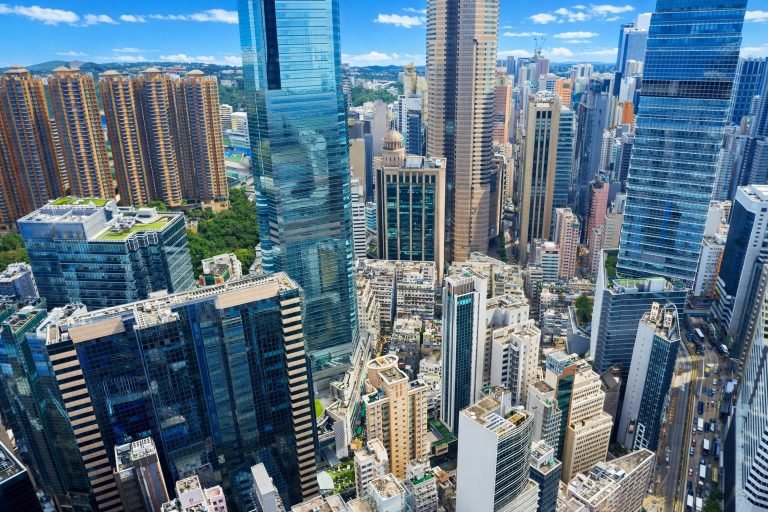
Hong Kong is compact on a map but it doesn’t feel that way at street level. Where you stay will shape your whole trip, because the city runs on neighborhood energy: ferry piers and skyline views in the west, nightlife and shopping corridors in Wan Chai, and classic harbor-facing promenades across in Tsim Sha Tsui. If you want maximum walkability to landmarks and food, Central/Sheung Wan (Hong Kong Island) and Tsim Sha Tsui (Kowloon) are the easiest bases. If you prefer a more “local” feel with great transit access and a busy evening scene, Wan Chai is a smart middle ground.
Below are reliable picks across three budgets, chosen for location, convenience, and the kind of stay that fits different travel styles. Each hotel entry includes the essentials, plus what the surrounding area feels like so you can choose a base that matches your pace.
Budget Hotels
IBIS HONG KONG CENTRAL AND SHEUNG WAN28 Des Voeux Road West, Sheung Wan, Hong Kong · +852 2252 2929
This is a great budget base for travelers who want to be plugged into Hong Kong Island’s everyday rhythm without paying Central prices. You’re in Sheung Wan, close to MTR access and the waterfront, with quick connections to ferries and easy onward hops toward Central, SoHo, and the Peak. Rooms are compact and practical, and the real value is location: you can spend your days bouncing between markets, neighborhoods, and harbor views without long commute time.
Reserve your stay at IBIS HONG KONG CENTRAL AND SHEUNG WAN today.
CHECK INN HK - HOSTEL2/F, Kwong Wah Mansion, 269–273 Hennessy Road, Wan Chai, Hong Kong · Contact via Expedia
If you want a social, low-cost base in a neighborhood that stays lively after dark, this Wan Chai hostel fits the bill. The area is packed with quick eats, local bars, and late-night energy, and it’s easy to hop on public transport for Kowloon, Central, or the waterfront. It’s best for budget travelers who care more about being out in the city than spending time in the room, with a location that makes spontaneous exploring feel effortless.
Reserve your stay at CHECK INN HK - HOSTEL today.
Mid-Range Comfort Hotels
BURLINGTON HOTEL55 Hennessy Road, Wan Chai, Hong Kong · +852 2802 8888
This is a strong choice for travelers who want a clean, modern “reset” at the end of a busy Hong Kong day. Staying in Wan Chai keeps you close to transit and surrounded by places to eat, drink, and wander at night, without feeling as intense as the most crowded tourist corridors. It suits couples and solo travelers who want comfort and convenience, with a base that makes it easy to split your time between Hong Kong Island sights and quick crossings to Kowloon.
Reserve your stay at BURLINGTON HOTEL today.
THE HARBOURVIEW4 Harbour Road, Wan Chai, Hong Kong · +852 2802 0111
If you want a comfortable hotel that leans into the “Hong Kong harbor” feeling, this is a reliable mid-range option. You’re near the waterfront in Wan Chai, which makes it easy to enjoy evening walks, skyline views, and simple transport connections into Central or over to Kowloon. It’s best for travelers who like a calmer place to come home to, while still staying close to the city’s action, dining, and iconic ferry-and-skyline scenery.
Reserve your stay at THE HARBOURVIEW today.
Luxury Hotels
ISLAND SHANGRI-LA, HONG KONGPacific Place, Supreme Court Road, Admiralty, Hong Kong · +852 2877 3838
For a classic “treat-yourself” stay in a prime location, this is one of Hong Kong’s most iconic luxury addresses. Admiralty puts you in the middle of Hong Kong Island, with excellent access to Central, the Peak area, and major transport connections, while the hotel itself feels like a private sanctuary above the city. It suits travelers who want polished service and a refined experience, with the kind of atmosphere that makes coming back to the room feel like part of the trip.
Reserve your stay at ISLAND SHANGRI-LA, HONG KONG today.
GRAND HYATT HONG KONG1 Harbour Road, Wan Chai, Hong Kong · +852 2588 1234
This is a standout pick if you want a luxury stay with strong harbor energy and an easy base for sightseeing. Wan Chai keeps you close to the waterfront and well-connected to Central, shopping districts, and ferries, while the hotel’s scale and amenities make it ideal for travelers who want comfort without compromise. It’s especially good for couples and longer stays, where having excellent facilities and a smooth “home base” really elevates the whole Hong Kong experience.
Reserve your stay at GRAND HYATT HONG KONG today.
If you want to explore more areas of Hong Kong or compare different styles of stays, it’s worth browsing a wider selection beyond the shortlist above. You can also use one page to quickly check options across neighborhoods, budgets, and travel styles before you commit. To compare prices and booking options across platforms, use the Worldly Roaming hotel comparison guide .
Things to Do in Hong Kong
The best things to do in <:contentReference[oaicite:0]{index=0}> reveal a city of contrasts: ultra-modern skylines beside centuries-old temples, dense urban streets opening suddenly onto beaches or hiking trails, and a harbor that has shaped the city’s identity for generations. Many experiences are easy to combine in a single day thanks to efficient transport, which makes Hong Kong feel endlessly layered rather than overwhelming.
Victoria Peak (The Peak)
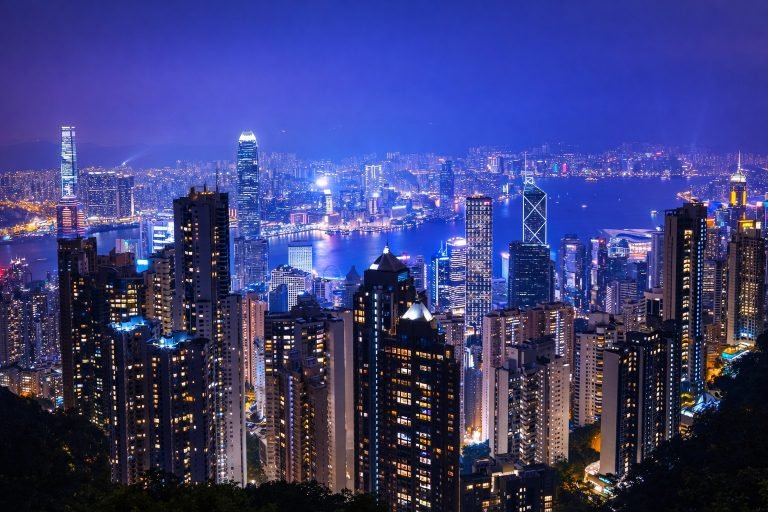
Rising above the city, <:contentReference[oaicite:1]{index=1}> offers the most iconic views of Hong Kong’s skyline and harbor. From the lookout, you see skyscrapers packed tightly along the island’s edge, ferries crossing Victoria Harbour, and Kowloon stretching into the distance. The experience is about more than the photo opportunity; standing here gives a sense of the city’s dramatic geography, wedged between steep hills and the sea. Visiting both during the day and after dark reveals two completely different moods, from hazy daytime sprawl to glittering nighttime spectacle.
Victoria Harbour & Star Ferry
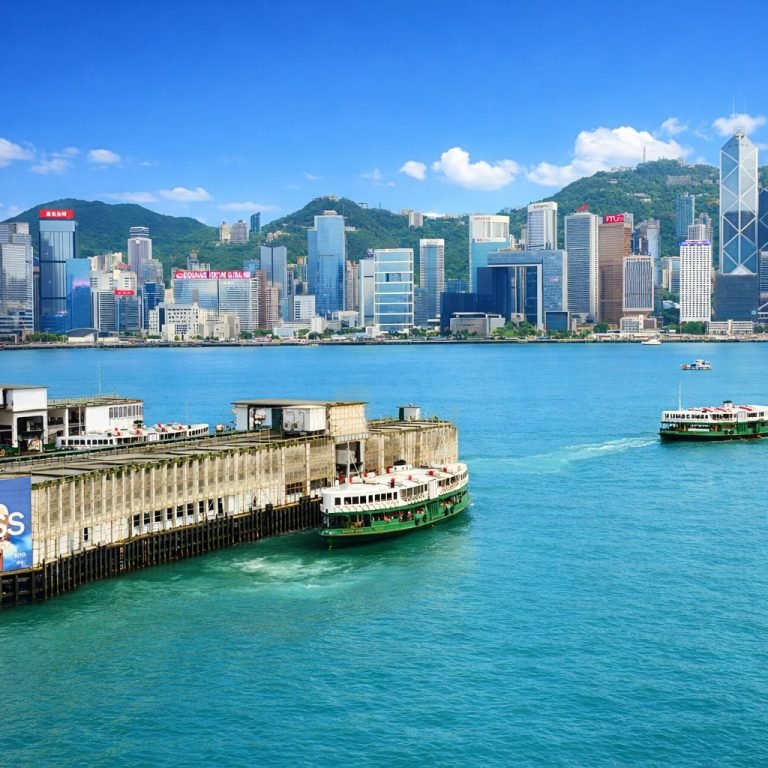
<:contentReference[oaicite:2]{index=2}> is the emotional heart of the city, separating Hong Kong Island from Kowloon and framing the skyline on both sides. Crossing the water on the historic
Tsim Sha Tsui Promenade & Avenue of Stars
The waterfront in <:contentReference[oaicite:4]{index=4}> provides some of the best skyline views without climbing a hill. The promenade is wide and easy to stroll, with clear sightlines across the harbor toward Hong Kong Island’s towers. The nearby <:contentReference[oaicite:5]{index=5}> celebrates the city’s film industry, adding a cultural layer to what could otherwise be just a scenic walk. It’s especially rewarding at sunset, when the skyline gradually lights up and the harbor becomes a focal point for both locals and visitors.
Central & Sheung Wan
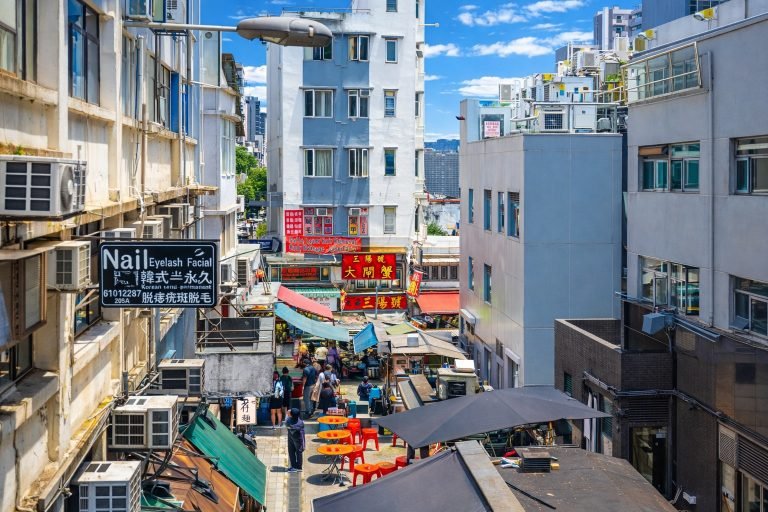
<:contentReference[oaicite:6]{index=6}> and neighboring <:contentReference[oaicite:7]{index=7}> showcase Hong Kong’s fast-paced urban core alongside pockets of tradition. Central is defined by finance, glass towers, and polished shopping arcades, while Sheung Wan feels more rooted, with traditional medicine shops, markets, and cafés tucked along side streets. Walking between the two reveals how quickly the city’s character can change within a few blocks. This area rewards wandering rather than ticking off sights, letting you observe daily life unfolding between modern and old-school Hong Kong.
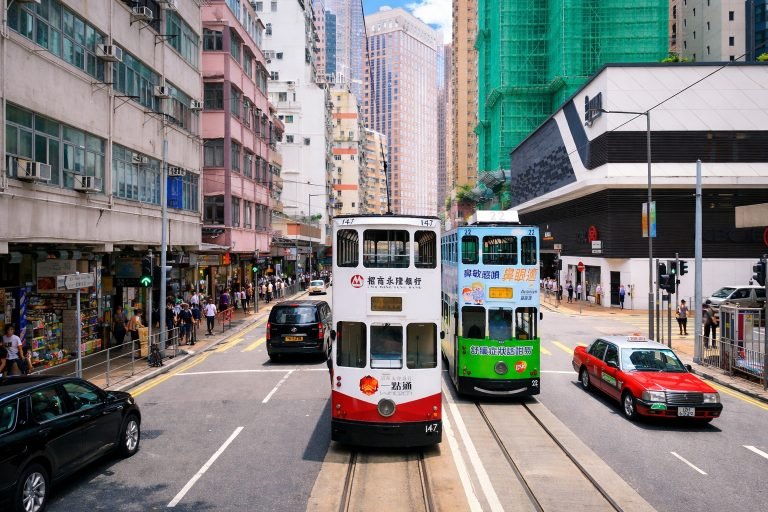
Hong Kong Tramways (Ding Ding)
Riding the
Man Mo Temple
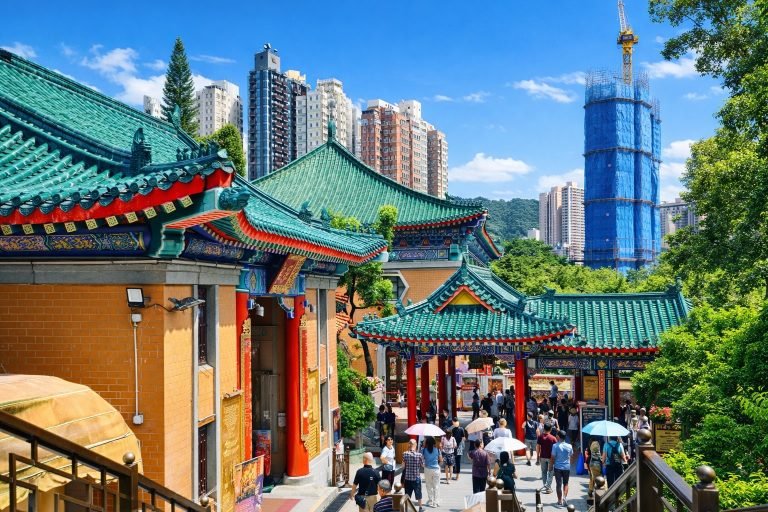
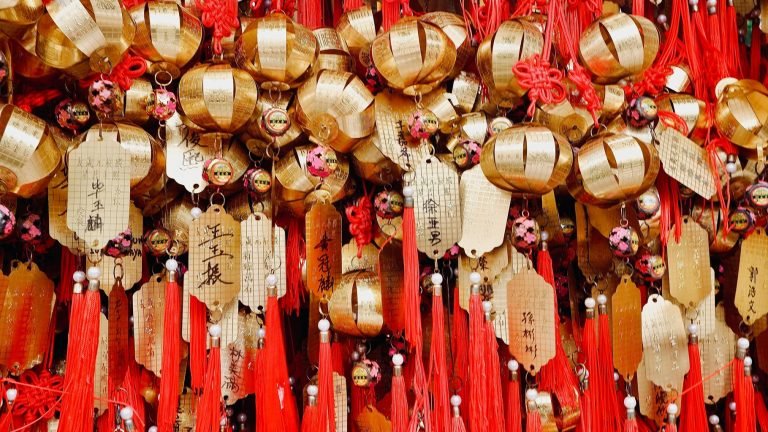
Tucked into Sheung Wan, <:contentReference[oaicite:9]{index=9}> offers a striking contrast to the surrounding high-rises. Dedicated to the gods of literature and war, the temple is filled with coils of incense hanging from the ceiling, casting a smoky, atmospheric glow. Stepping inside feels like entering another era, even though traffic hums just outside. It’s a reminder that spiritual and cultural traditions continue quietly alongside Hong Kong’s modern pace.
Lantau Island & Big Buddha
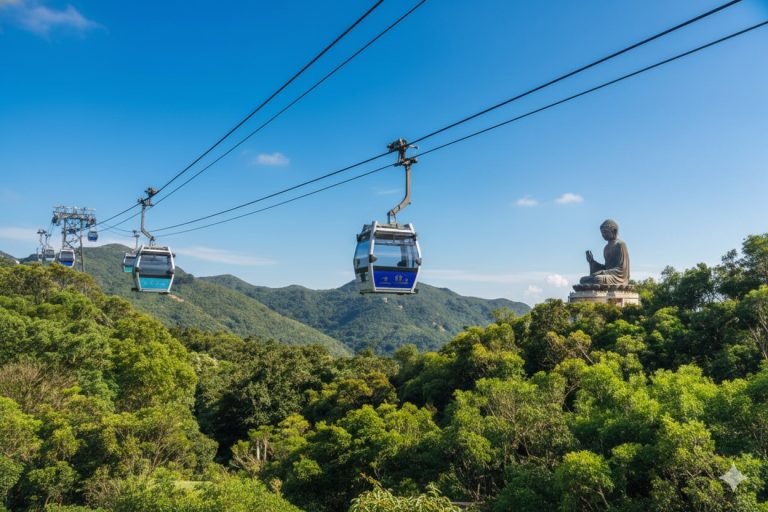
For a slower, more contemplative side of Hong Kong, a trip to <:contentReference[oaicite:10]{index=10}> is essential. The massive <:contentReference[oaicite:11]{index=11}> dominates the landscape near Ngong Ping, reached by cable car or bus. Beyond the statue itself, the surrounding monasteries and mountain scenery create a sense of calm that feels worlds away from the city center. Lantau shows how much green space and spiritual heritage exists just beyond Hong Kong’s urban image.
Ngong Ping 360 Cable Car
The <:contentReference[oaicite:12]{index=12}> cable car ride is an experience in its own right, gliding above water, forested hills, and rural villages. The journey builds anticipation as city views fade and Lantau’s mountains come into focus. For many travelers, this ride is their first glimpse of Hong Kong’s natural side. Weather makes a big difference here; clear days offer sweeping views, while mist adds a more mysterious feel.
Hong Kong Disneyland
Located on Lantau Island, <:contentReference[oaicite:13]{index=13}> blends familiar Disney storytelling with subtle local touches. The park is smaller and easier to navigate than some of its global counterparts, making it appealing for families or travelers short on time. Beyond the rides, it’s an insight into how global entertainment adapts to Asian audiences. It’s best approached as a full-day experience, especially if you want a change of pace from sightseeing.
🎟️ Hong Kong Disneyland Park Tickets
Step into Hong Kong Disneyland for the all-new “Friendtastic!” Parade, anniversary-only castle stage shows, and a Magical Party Like No Other celebrating the park’s 20th Anniversary. With seasonal events like Christmas and Halloween plus a unique cultural fusion you’ll only find here, it’s an unforgettable day (and night) of Disney magic in Hong Kong.
Outlying Islands (Lamma, Cheung Chau)
Hong Kong’s outlying islands, such as <:contentReference[oaicite:14]{index=14}> and <:contentReference[oaicite:15]{index=15}>, offer a relaxed counterpoint to the city. Ferries bring you to car-free streets, seafood restaurants by the water, and coastal walking paths. These islands are popular weekend escapes for locals, which gives them an authentic, lived-in feel. Visiting one highlights how diverse Hong Kong’s lifestyle options really are, even within a compact territory.
Hiking Trails & Nature Escapes
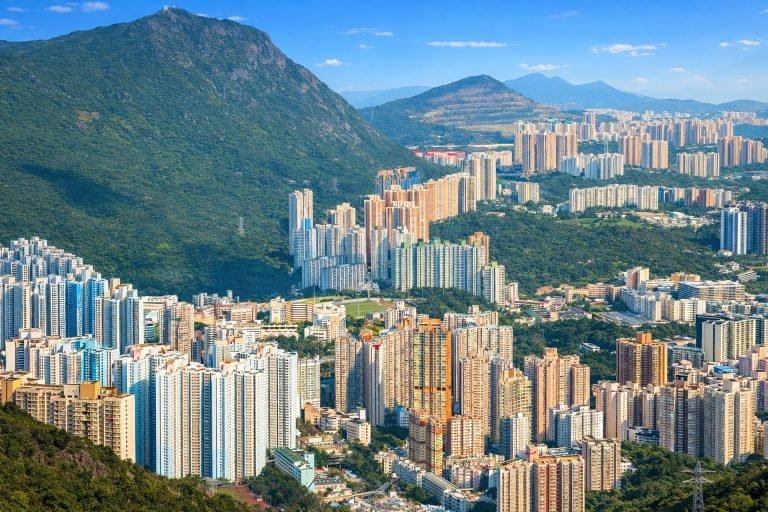
Despite its dense skyline, Hong Kong is packed with accessible hiking trails that start surprisingly close to urban areas. Routes across Hong Kong Island and the New Territories reveal beaches, ridgelines, and panoramic sea views that feel far removed from city life. Hiking here is less about technical challenge and more about scenery and contrast. It’s one of the most rewarding ways to understand how nature and city coexist so tightly in Hong Kong.
🗺️ Hong Kong: Private Tour with a Local Guide
Explore Hong Kong with a local guide on a fully customizable private tour that blends big-name sights like Mong Kok and Victoria Peak with lesser-known gems such as Tai Kwun and Shek O Beach. It’s ideal if you want to uncover hidden corners, move at your own pace, and experience the city in a way that feels genuinely local.
If you are interested in any other locations or attractions in Hong Kong, you can try the Worldly Roaming Get your Guide link.
Food, Bars, Cafés & Nightlife in Hong Kong
Hong Kong is one of the world’s great food cities, not just because of its Michelin stars, but because eating here is woven into daily life from morning until late night. Street stalls, hole-in-the-wall cafés, elegant dining rooms, rooftop bars, harbor cruises, and neon-lit karaoke lounges all coexist within a few metro stops. Evenings in Hong Kong tend to flow rather than follow a strict plan, often starting with food, drifting into drinks, and ending somewhere unexpected.
Iconic Cafés & Tea Culture
Traditional cha chaan teng cafés are an essential Hong Kong experience. Places like Lan Fong Yuen and Australia Dairy Company are famous for strong milk tea, scrambled eggs, toast, and fast-paced service that feels almost theatrical. Sitting down in one of these cafés gives you a glimpse into everyday Hong Kong life, where efficiency and comfort food go hand in hand.
Modern cafés have also taken hold, especially in Central, Sheung Wan, and Sai Ying Pun. Spots such as Elephant Grounds and Blue Bottle Coffee attract a crowd that lingers longer, mixing specialty coffee with minimalist design and relaxed conversation. These cafés are ideal for slowing down between sightseeing stops or easing into an evening before dinner.
Markets & Street Food
Street food remains one of the most satisfying ways to eat in Hong Kong, especially in busy evening areas. Neighborhoods like Mong Kok come alive after dark, with stalls serving fish balls, egg waffles, skewered meats, and sweet desserts that are best enjoyed standing on the sidewalk. The atmosphere is noisy, crowded, and deeply local, making it one of the most immersive food experiences in the city.
Temple Street Night Market combines food with shopping and people-watching. You’ll find simple seafood dishes, clay pot rice, and stir-fries cooked in open kitchens, all surrounded by neon lights and constant motion. It’s less about finding one perfect dish and more about grazing, wandering, and soaking up the energy of Hong Kong after sunset.
Restaurants
Hong Kong’s restaurant scene spans everything from humble dim sum halls to some of the most refined dining rooms in Asia. Tim Ho Wan is legendary for making high-quality dim sum accessible, while traditional banquet-style restaurants continue to serve classic Cantonese dishes meant to be shared. Eating here often feels communal, with large tables, shared plates, and a steady rhythm of dishes arriving.
At the higher end, restaurants like Lung King Heen and Amber showcase Hong Kong’s role as a global culinary crossroads. These spaces focus on precision, service, and atmosphere, often pairing refined menus with harbor or skyline views. Dining at this level is as much about the setting as the food, making it ideal for special evenings or milestone trips.
🥢 Hong Kong: Gems Food Tour with Dim Sum, Goose & 7+ Tastings
Taste your way through Hong Kong on this “gems” food tour featuring dim sum, roast goose, and 7+ tastings that showcase the city’s most iconic flavors. It’s a fun, filling way to discover local favorites, hidden spots, and the food culture that makes Hong Kong one of the world’s great dining cities.
Bars & Rooftops
Rooftop bars are one of Hong Kong’s signature nightlife experiences. Ozone , perched high above the city, delivers dramatic skyline views and a polished crowd, while Sevva offers a more relaxed atmosphere with cocktails framed by harbor lights. These venues are perfect for sunset drinks or a stylish start to the night.
For a more casual scene, areas like SoHo and Lan Kwai Fong are packed with smaller bars that fill up quickly after work hours. The vibe is social and international, with people moving easily between venues rather than committing to just one spot. It’s an easy way to meet other travelers and locals alike.
Nightclubs & Late Nights
Hong Kong’s club scene tends to start late and go well into the early morning. Venues like Dragon-i and Volar are known for high-energy dance floors, international DJs, and a mix of locals, expats, and visitors. Dress codes are usually enforced, and the atmosphere leans toward polished rather than underground.
For something a little different, karaoke lounges are hugely popular and offer private rooms where groups can sing, eat, and drink for hours. These spots range from flashy, high-end setups to simpler local favorites, and they’re one of the most fun ways to experience Hong Kong nightlife with friends.
Evening Harbor Experiences
Spending an evening on the water is another classic Hong Kong experience. Harbor cruises offer a slower, scenic alternative to bars, letting you take in the skyline from the center of Victoria Harbour. Whether paired with dinner or enjoyed simply for the views, these cruises highlight how closely the city is tied to the sea.
Even without a formal cruise, walking along the harborfront after dark delivers a memorable atmosphere. The lights, reflections, and constant movement of ferries create a sense of scale and energy that defines Hong Kong nights better than almost anywhere else in the city.
Getting Around Hong Kong
Getting around <:contentReference[oaicite:0]{index=0}> is fast, affordable, and surprisingly intuitive. Public transport is clean, punctual, and deeply integrated, which means most visitors never need a car. Whether you’re crossing the harbor, heading into the hills, or hopping between neighborhoods, the system is designed to move large numbers of people efficiently.
Walking
Walking works well in compact areas like Central, Sheung Wan, Wan Chai, and Tsim Sha Tsui. Elevated walkways, pedestrian bridges, and waterfront promenades make it easier to navigate dense districts, though hills can be steep on Hong Kong Island. Walking is best combined with public transport rather than used exclusively for longer distances.
Metro / Subway (MTR)
The backbone of city transport is the MTR, Hong Kong’s metro system. Trains are frequent, clearly signed in English and Chinese, and connect nearly all major districts, attractions, border crossings, and the airport. For most travelers, the MTR will handle the majority of daily movement.
Buses & Trams
Hong Kong’s bus network fills the gaps where the metro doesn’t go, especially in residential areas and on routes crossing hills. Major operators include KMB, Citybus, and New Lantao Bus. Buses are comfortable and reliable, though routes can take longer during peak traffic hours.
On Hong Kong Island, the historic Hong Kong Tramways (“ding ding”) run east–west along the northern coast. Trams are slow but scenic, making them ideal for short hops and sightseeing rather than speed.
Trains
Beyond the urban metro lines, the MTR also operates suburban and cross-border rail services. The High Speed Rail network links Hong Kong with mainland Chinese cities via West Kowloon, while regional lines serve the New Territories. For visitors staying entirely within the city, these are used less frequently than metro lines.
Ferries
Ferries are both practical transport and a classic Hong Kong experience. The historic Star Ferry connects Hong Kong Island and Kowloon across Victoria Harbour, while Water Taxi and other operators serve outlying islands like Lamma and Cheung Chau. Ferries are inexpensive, scenic, and often faster than traveling around the harbor by road.
Taxis & Ride-Share
Taxis are plentiful and color-coded by operating area, with meters and regulated fares. They’re useful late at night or when carrying luggage, though traffic can slow trips significantly during rush hours. Ride-hailing services exist but are less commonly used than taxis and public transport.
Bike & Scooter
Cycling is limited in dense urban areas but more practical in parts of the New Territories and on some outlying islands. Dedicated bike paths exist in certain zones, though biking is not a primary transport option for most visitors.
Car (When to Avoid)
Driving is generally unnecessary and often inconvenient for visitors. Parking is expensive, traffic is heavy, and public transport is faster and easier in most cases. A car only makes sense for very specific itineraries outside the urban core.
Transport Passes & Payments
Hong Kong’s equivalent to Sydney’s Opal card is the Octopus Card. It’s a contactless smart card used across nearly all transport modes, including MTR, buses, trams, ferries, and even small purchases in shops and cafés. Most travelers find it the easiest and most flexible way to get around.
There is no universal unlimited day pass covering all transport in Hong Kong in the same way some cities offer. The MTR does provide limited-day tourist passes, but for most visitors, paying per trip with an Octopus Card works out just as well and avoids restrictions. The Octopus Card can be purchased and topped up at MTR stations and major transit points.
Best Time to Visit Hong Kong
Hong Kong can be visited year-round, but the experience changes noticeably with the seasons. Weather, humidity, and crowd levels all play a role in how comfortable sightseeing feels, especially if you plan to walk a lot, hike, or explore outdoor areas and islands.
Autumn (October to December)
Autumn is widely considered the best time to visit Hong Kong. Temperatures are warm but not oppressive, humidity drops significantly, and skies are often clear. This is the ideal season for sightseeing, harbor walks, rooftop bars, and hiking trails, with a good balance between pleasant weather and manageable crowds.
Winter (January to February)
Winter brings mild, dry conditions, with cooler evenings that can feel refreshing after the city’s intense summers. It’s a comfortable time for urban exploration and food-focused trips, though it can feel quiet during Lunar New Year when some businesses close and locals travel. Light layers are usually enough, as cold weather is rare.
Spring (March to May)
Spring is a transitional season, with rising humidity and occasional rain. Temperatures remain pleasant, but fog and haze can affect skyline views at times. It’s still a good period for cultural sightseeing and dining, though outdoor plans may need some flexibility.
Summer (June to September)
Summer in Hong Kong is hot, humid, and marked by frequent rain and occasional typhoons. While prices can be lower and indoor attractions remain comfortable thanks to air conditioning, long days outside can feel draining. If you visit during this season, plan for slower pacing, indoor breaks, and weather-related schedule changes.
Best overall balance: Late October through early December offers the most comfortable weather, clear views, and the widest range of activities, making it the top choice for most travelers.
Continue Exploring...
If Hong Kong has sparked your appetite for dense city life, layered history, and places where culture is lived rather than displayed, these guides take you to destinations that deliver a different rhythm while offering the same depth of experience and sense of discovery.
Dive deeper into the pulse of Asia with Things to Do in Tokyo , where tradition and hyper-modern life collide in neighborhoods shaped by ritual, design, and everyday intensity.
For a slower, nature-rich contrast, Things to Do in Bali explores temples, landscapes, and cultural rhythms that feel worlds away from skyscrapers, yet just as immersive.
If walkable history and storytelling through neighborhoods appeal to you, Things to Do in Dublin offers a city shaped by music, literature, and centuries of lived history.
For a blend of iconic sights, outdoor living, and cultural contrasts, Things to Do in Sydney delivers a city experience defined as much by its landscapes as by its urban energy.
Travel Facts
Currency: The Hong Kong Dollar (HKD) is used everywhere, and cashless payments are widely accepted across the city.
Plugs & Electricity: Hong Kong uses UK-style Type G plugs with a 220V supply, so travelers from Europe and North America will need an adapter.
Tipping: Tipping is not expected in most situations, as service charges are often included, though rounding up or leaving small change is appreciated in taxis.
Safety: Hong Kong is generally very safe, even at night, with low violent crime and a strong police presence in busy areas.
Tap Water: Tap water is treated and safe by international standards, but many locals still prefer filtered or bottled water for drinking.
Getting from the Airport: Hong Kong International Airport is well connected by Airport Express train, public buses, ferries, and licensed taxis.
Transport Basics: The Octopus Card is used across nearly all public transport and even in shops, making it the easiest way to pay as you go.
Weather Reality: Summers are hot, humid, and rainy, while winters are mild and dry, with occasional cooler evenings.
Local Etiquette: Queuing is taken seriously, voices are kept relatively low on public transport, and offering or receiving items with both hands is seen as polite.
Connectivity: Wi-Fi is widely available, and travelers often use an international eSIM for convenience — see the Worldly Roaming eSIM guide .
Common Phrases & Local Lingo
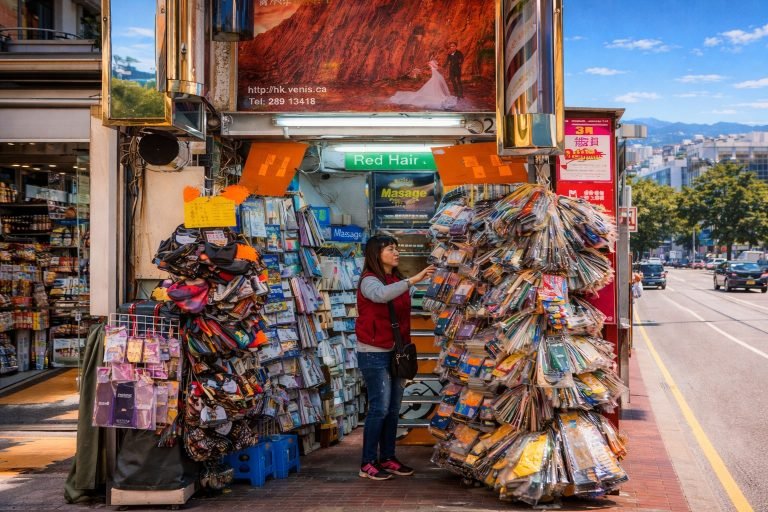
Cha chaan teng: A traditional Hong Kong-style café serving comfort food like milk tea, toast, noodles, and rice dishes. You’ll hear this term often when locals talk about casual meals.
Ding ding: The local nickname for Hong Kong’s double-decker trams on Hong Kong Island, named after the bell sound they make.
Add oil (加油): A common Cantonese expression meaning encouragement or support, similar to “you’ve got this” or “keep going.”
MK: Short for Mong Kok, often used casually in conversation and signage.
TST: A widely used abbreviation for Tsim Sha Tsui, especially in transport directions and local speech.
Harbour City: Often used as shorthand to describe the large shopping complex and surrounding area in Tsim Sha Tsui.
LKF: Short for Lan Kwai Fong, Hong Kong’s best-known nightlife district.
Gweilo: A colloquial term for foreigners. It’s commonly heard and usually neutral, though tone and context matter.
Wet market: Refers to traditional fresh food markets selling meat, seafood, and produce, distinct from supermarkets.
Last ferry: A phrase you’ll hear frequently in island areas, as ferry schedules determine how late you can stay before heading back.
FAQ: Hong Kong
-
Is Hong Kong expensive for travelers?
Hong Kong can be expensive, especially for hotels and dining in central areas, but transport, street food, and local restaurants are very affordable. -
How many days do you need in Hong Kong?
Three to four days is enough to see the highlights, while five to seven days allows time for islands, hiking, and slower exploration. -
Do I need a visa to visit Hong Kong?
Many nationalities receive visa-free entry for short stays, but entry rules depend on your passport and length of stay. -
Is English widely spoken in Hong Kong?
Yes, English is one of the official languages and is widely used in transport, hotels, restaurants, and tourist areas. -
Is Hong Kong safe to visit?
Hong Kong is generally very safe for travelers, with low crime levels and well-policed public spaces. -
What is the best area to stay in Hong Kong?
Central and Sheung Wan offer convenience and walkability, Wan Chai balances nightlife and transport, and Tsim Sha Tsui is ideal for harbor views. -
Can I use credit cards everywhere?
Credit cards are widely accepted, but small eateries, markets, and taxis may prefer cash or Octopus Card payments. -
What is the best way to get around Hong Kong?
The MTR combined with walking and ferries covers almost all visitor needs, with buses filling in remaining gaps. -
Is Hong Kong suitable for families?
Yes, Hong Kong is family-friendly, with attractions like Disneyland, easy transport, and plenty of outdoor spaces.
Travel Resources to Plan, Book & Stay Connected
Use these tools and guides to stay connected abroad, find inspiration for your next trip, and book your flights, stays and gear with confidence.
Disclosure: This article may contain affiliate links. If you make a purchase through a link, I may receive a commission at no extra cost to you. I only share recommendations I believe are genuinely useful, and all opinions are my own. AI was used in this post for research and drafting purposes.

Comment (0)