Avenue of the Baobabs, Madagascar: What You Need to Know
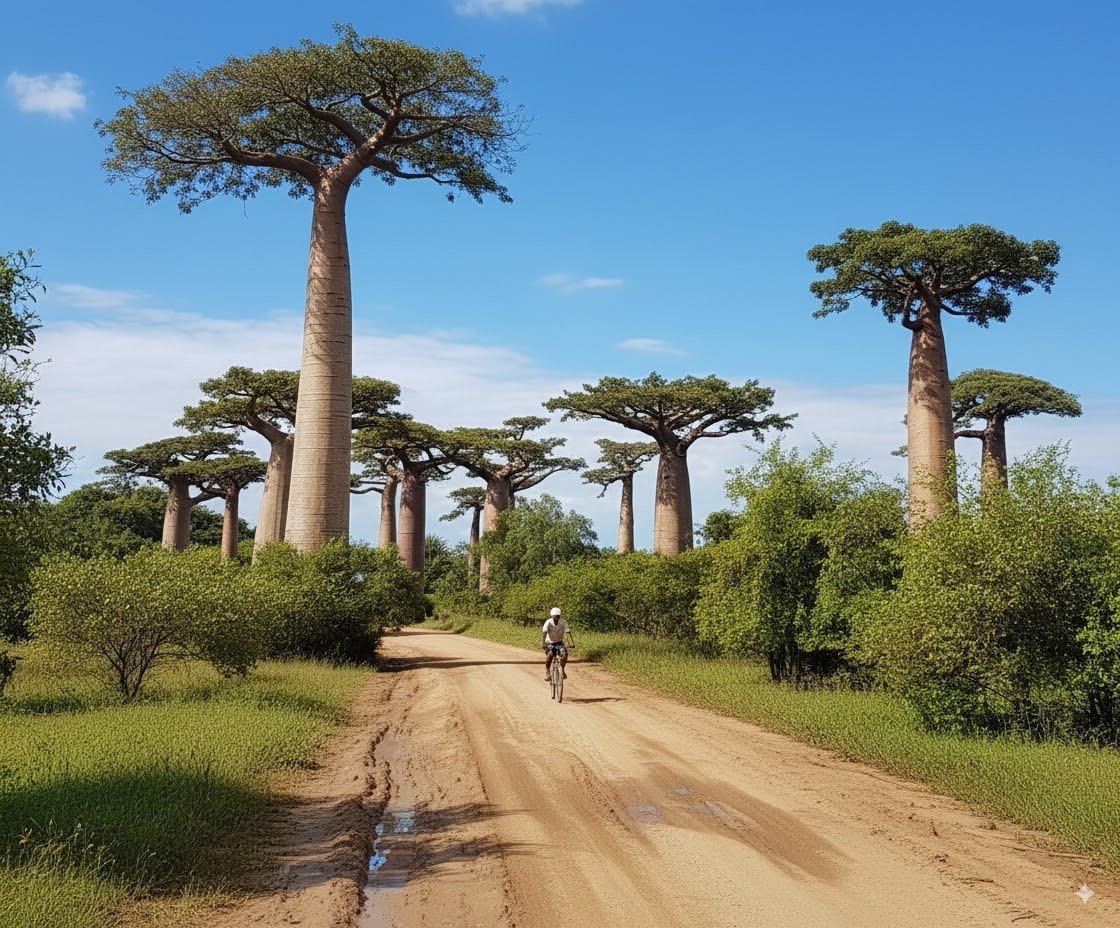
The Avenue of the Baobabs is one of Madagascar’s most iconic landscapes, where towering ancient trees line a dusty road near Morondava on the island’s west coast. It is one of those places that looks almost unreal, especially at sunrise or sunset when the light turns the entire scene golden.
- Located near Morondava on Madagascar’s west coast
- Home to centuries-old Grandidier’s baobab trees
- Best visited at sunrise or sunset for photography
- Accessible by road, often as part of a west coast itinerary
- One of the most photographed natural landmarks in Africa
Most travelers include the Avenue of the Baobabs as part of a wider journey across the island, often combining it with routes outlined in this Madagascar travel guide, while practical details like transport logistics and timing are covered in the getting around Madagascar guide and the best time to visit Madagascar.
Avenue of the Baobabs, Madagascar: One of Africa’s Most Iconic Landscapes
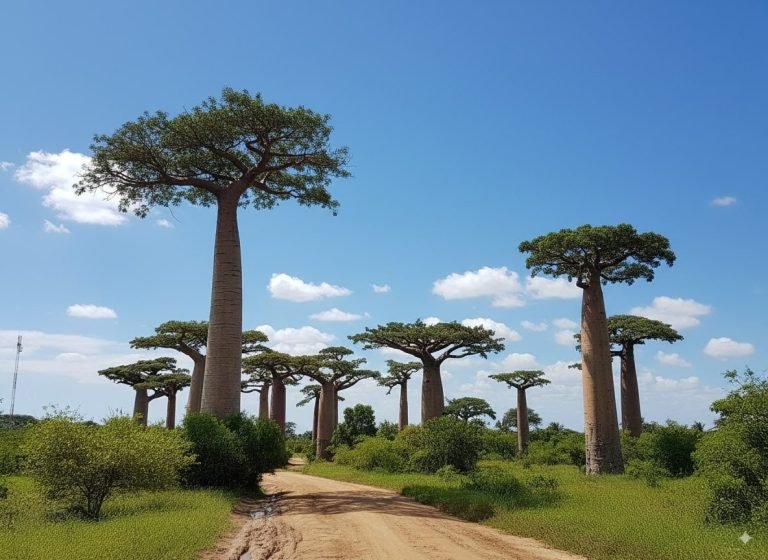
Standing beneath the towering silhouettes of the Avenue of the Baobabs feels like stepping into a landscape that doesn’t quite belong to this world. These massive trees, some estimated to be hundreds of years old, rise dramatically from the flat plains near Morondava, their thick trunks and root-like branches creating one of the most recognizable scenes in Madagascar.
It is easy to assume this place is just a quick photo stop, but the reality is a little more layered. The experience depends heavily on timing, light, and expectations. At sunrise and sunset, the avenue transforms into something unforgettable. In the middle of the day, it can feel dusty, quiet, and far less dramatic than the photos suggest.
Whether you are planning a full itinerary across the island or simply deciding if this stop is worth the detour, understanding how and when to visit makes all the difference. This guide breaks down exactly what to expect, how to get there, and how the Avenue of the Baobabs fits into a broader journey through Madagascar.
What Is the Avenue of the Baobabs?
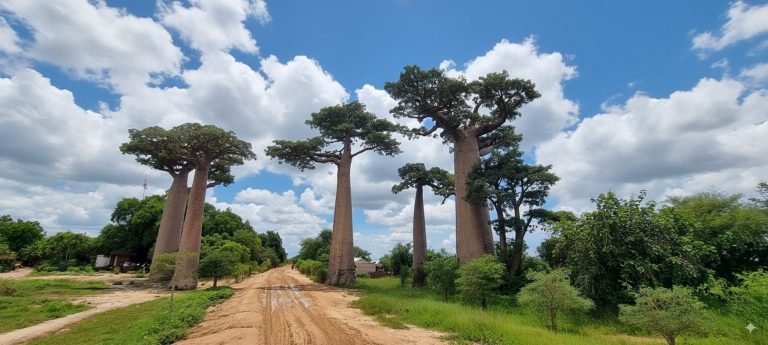
The Avenue of the Baobabs is a natural corridor of towering baobab trees located near Morondava on Madagascar’s west coast. While it is often described as a single “avenue,” the landscape is better understood as a surviving fragment of a much larger ecosystem that once covered this region. What remains today is not a planted landmark, but the result of centuries of environmental change.
The trees that dominate this stretch belong primarily to Adansonia grandidieri, the largest and most iconic of Madagascar’s endemic baobab species. These trees can grow to over 30 meters in height and develop massive cylindrical trunks that store water, allowing them to survive in the island’s dry western climate. Their scale is difficult to grasp until you are standing directly beneath them, where the proportions feel almost architectural rather than natural.
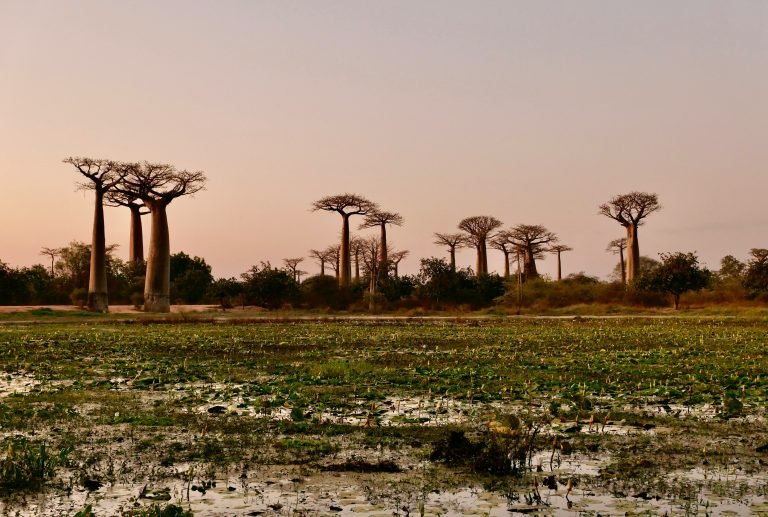
What makes the Avenue of the Baobabs particularly striking is not just the trees themselves, but the absence of forest around them. This area was once part of a dense tropical dry forest, but widespread deforestation over generations cleared most of the surrounding vegetation. The baobabs, valued for their resilience and cultural significance, were left standing while other species disappeared. The result is the open, almost surreal landscape seen today, where isolated giants rise from flat, exposed terrain.
The landscapes of western Madagascar, including the famous baobab avenues, are part of a broader natural heritage that highlights the island’s exceptional biodiversity. Madagascar is widely recognized for its unique ecosystems and high levels of endemism, which you can explore further through UNESCO’s overview of Madagascar’s natural heritage sites.
This combination of ecological history, biological uniqueness, and visual impact is what has turned the avenue into one of Madagascar’s most recognized natural landmarks. It is not just a scenic stop, but a living reminder of how the island’s landscapes have evolved over time, often in ways that are only fully understood when placed within a broader journey across regions, routes, and ecosystems described in this Madagascar travel guide.
Where Is the Avenue of the Baobabs Located?
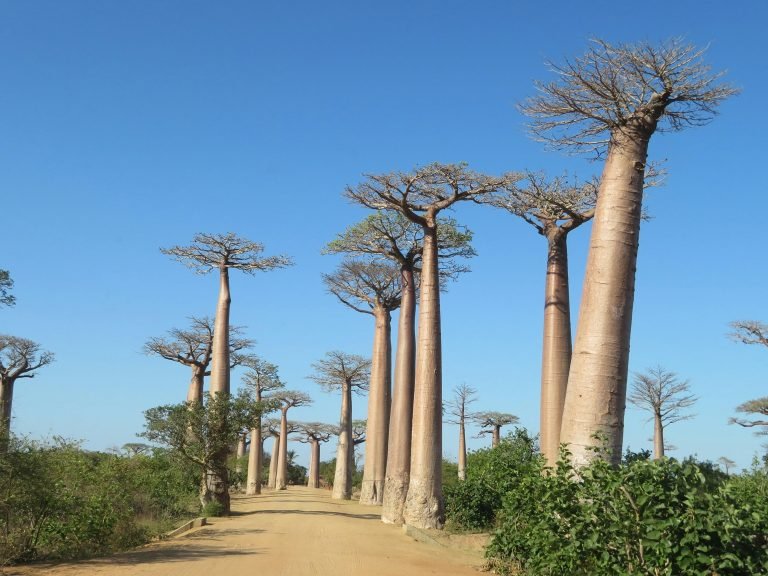
The Avenue of the Baobabs is located in western Madagascar, roughly 20 kilometers northeast of the coastal town of Morondava. This region sits along the island’s dry western plains, where the landscape gradually transitions from coastal flats into sparsely vegetated interior terrain shaped by long dry seasons and seasonal rivers.
Despite its global recognition, the avenue is not part of a national park or a controlled site. It lies along a simple dirt road that connects Morondava to inland villages and the Kirindy Forest. The setting is entirely open, with no barriers or formal entrances, which is part of what gives the experience its raw and unfiltered character.
Morondava itself functions as the main access point, but it remains relatively isolated compared to Madagascar’s more frequently visited eastern regions. Reaching this part of the island typically requires either a domestic flight or a long overland journey, and distances that appear short on a map can take significantly longer in practice due to road conditions.
This geographical isolation is part of what has preserved the avenue’s atmosphere. Unlike more developed landmarks, it still feels connected to the rhythms of the surrounding region, where daily life continues to unfold alongside one of the most recognizable landscapes in Madagascar.
How to Get to the Avenue of the Baobabs
Getting to the Avenue of the Baobabs is relatively straightforward once you are in Morondava, but reaching Morondava itself is where most of the planning comes in. Western Madagascar is far less connected than the eastern part of the island, and travel here requires either time, flexibility, or both.
The fastest option is to fly from Antananarivo to Morondava, which takes around one hour. Flights do not operate daily and schedules can change, so it is worth building some flexibility into your plans. Overland travel is possible but significantly slower, often involving long days on uneven roads, river crossings, and multiple stops depending on the route you take.
From Morondava, the avenue is about 20 kilometers away and typically takes 30 to 45 minutes by car. Most travelers visit with a local driver or as part of a guided excursion, especially if timing the visit for sunrise or sunset. Independent transport can be arranged in town, but having a driver who understands local conditions makes the experience much smoother.
While the distance is short, the road is unpaved and can become dusty in the dry season or muddy after rain. This is not a destination you simply pass through. It works best as a planned stop within a wider route across the region, where travel times, road conditions, and timing all play a role in shaping the overall experience.
Best Time to Visit the Avenue of the Baobabs
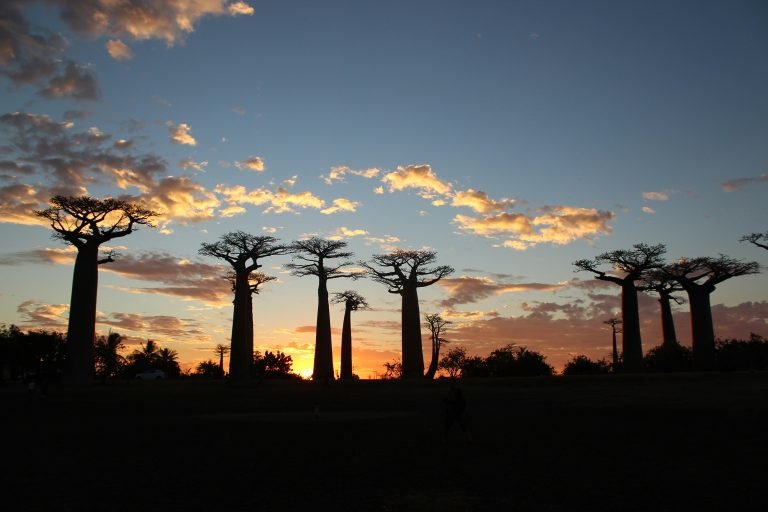
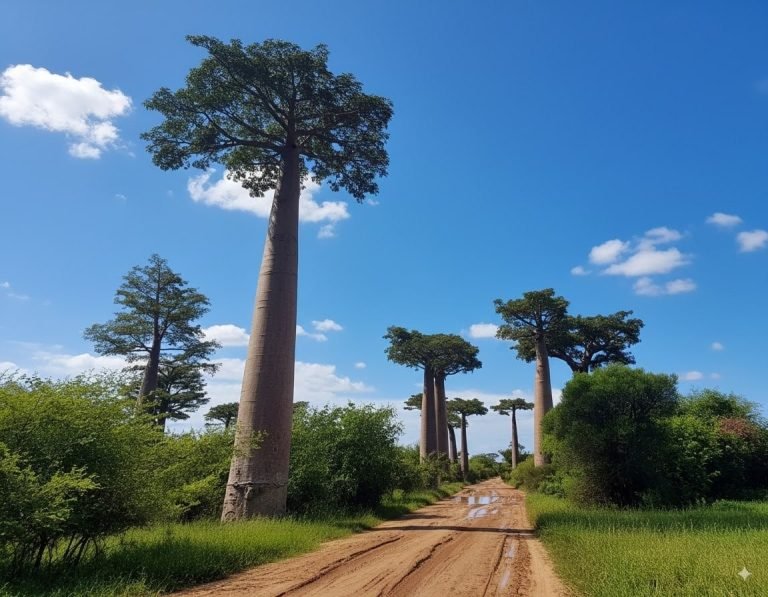
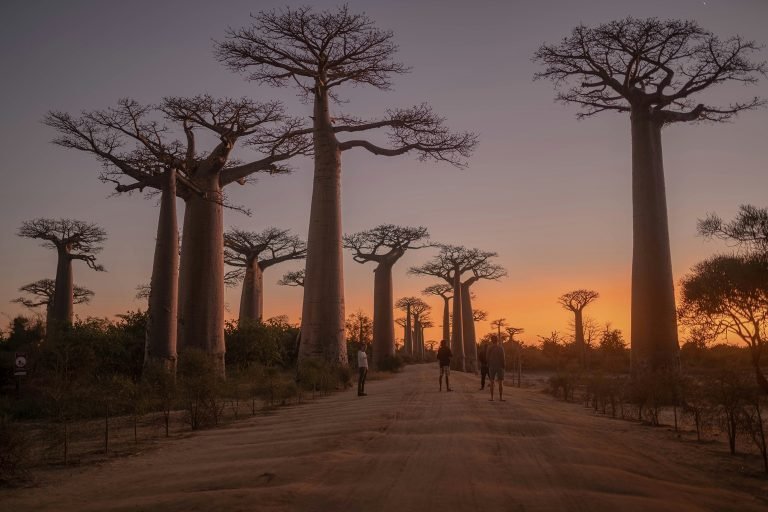
The timing of your visit has a bigger impact on the experience than almost anything else. The Avenue of the Baobabs is not a place that changes dramatically throughout the day in terms of activity, but the light completely transforms how it feels. Sunrise and sunset are when the landscape comes alive, with long shadows, warm tones, and the silhouettes that have made this one of the most photographed places in Madagascar.
Sunset is the most popular time to visit, and for good reason. The sky often shifts through shades of orange, pink, and deep red as the sun drops behind the trees, creating a dramatic backdrop. Sunrise, on the other hand, tends to be quieter and more atmospheric, with softer light and fewer visitors. If you prefer a more peaceful experience, early morning is often the better choice.
Seasonality also plays a role. During the dry season, typically from May to October, the skies are clearer and road conditions are more reliable, making travel easier. In the rainy season, the surrounding landscape becomes greener, but access can be more difficult due to muddy roads and occasional flooding in the region.
Choosing when to visit the avenue is closely tied to when you travel across the island as a whole. Weather patterns, accessibility, and regional conditions vary significantly throughout the year, which is why it helps to plan this stop alongside your broader route using this best time to visit Madagascar guide.
What to Expect When Visiting the Avenue of the Baobabs
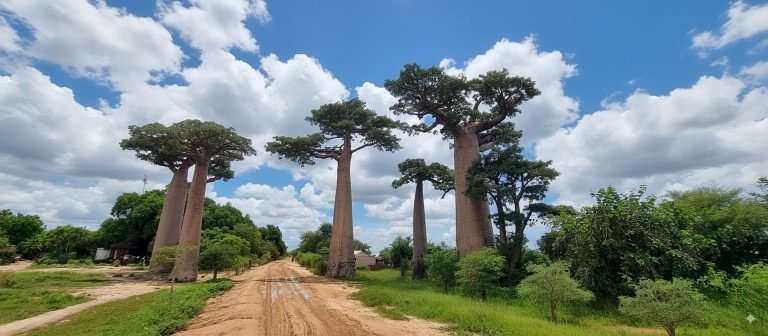
The images you have likely seen of the Avenue of the Baobabs often show an empty road, perfectly framed trees, and dramatic light stretching across a quiet landscape. That version of the avenue does exist, but only under very specific conditions. What you experience on arrival will depend heavily on timing, weather, and how many other people had the same idea as you that day.
Around sunset, the area can become unexpectedly busy. Tour vehicles line the road, photographers move between angles, and groups gather to capture the changing light. It does not feel overcrowded in the way major tourist sites do, but it is far from empty. If you arrive earlier or stay a little longer after sunset, the atmosphere shifts again and becomes noticeably calmer.
The setting itself is raw and undeveloped. There are no walkways, barriers, or structured viewpoints. You are standing on a wide dirt road surrounded by open land, which means dust is part of the experience, especially in the dry season when passing vehicles can kick up fine layers into the air. The heat during the day can also be intense, with very little shade outside of the trees themselves.
You will also notice the presence of local vendors and residents from nearby villages. Some sell handmade crafts, while others offer opportunities to take photos with zebu carts positioned along the road. These interactions are generally relaxed and low-pressure, but they are part of the experience and add a human element to what might otherwise feel like a purely natural landmark.
When everything aligns, the light, the spacing between visitors, and the stillness of the landscape combine to create a moment that feels almost unreal. That contrast between expectation and reality is part of what makes the Avenue of the Baobabs memorable. It is not a polished attraction, but a place where timing and perspective shape the experience far more than infrastructure ever could.
"Morondava wasn’t even part of my original plan. I decided to go during my second-to-last week in Madagascar, almost on a whim. It felt like one of those things you just can’t skip. And I’m so glad I didn’t. Standing there, watching the light change over the trees, it became one of the most spectacular places I’ve ever seen."
- Arno, first Madagascar trip, March 2024
Baobab Trees in Madagascar: Why They Are So Unique
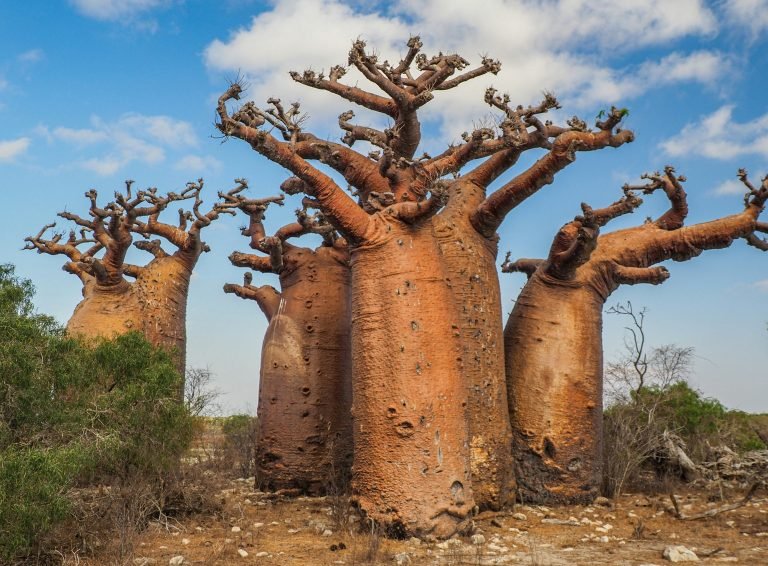
Baobab trees are among the most distinctive and recognizable trees on Earth, but Madagascar is what makes them truly exceptional. Of the eight known baobab species worldwide, six are found only on this island. This makes Madagascar the global center of baobab diversity, where these trees are not just scattered landmarks, but a defining part of entire ecosystems.
These trees belong to the genus Adansonia, named after the French naturalist Michel Adanson, who first documented them in detail. While baobabs also exist in mainland Africa and parts of Australia, scientific research suggests that the genus itself originated in Madagascar before spreading to other regions over time. This evolutionary history helps explain why the island hosts such a high concentration of unique species.
What makes baobabs so visually striking is also what allows them to survive in harsh environments. Their massive trunks act as natural water reservoirs, storing moisture during the rainy season and slowly releasing it during long dry periods. This adaptation gives them their characteristic swollen shape and allows them to endure conditions that would challenge most other tree species.
Baobabs are also remarkably long-lived. While exact ages are difficult to determine, many trees are believed to be several centuries old. Their life cycle is equally unusual, with large white flowers that bloom at dusk and remain open for only a short window of time, often pollinated by nocturnal animals such as bats.
The species found along the Avenue of the Baobabs is Adansonia grandidieri, the tallest and most iconic of Madagascar’s baobabs. Its straight, cylindrical trunk and relatively sparse crown create the dramatic vertical lines that define the avenue’s landscape. Unlike broader, more irregular baobabs found elsewhere, these trees appear almost symmetrical, which adds to their visual impact.
The baobabs of Madagascar are not only visually striking but also ecologically important. These iconic trees play a key role in local ecosystems and have attracted growing international attention for conservation. For a deeper look at their significance and ongoing protection efforts, you can read more from the World Wide Fund for Nature (WWF).
Why Baobabs Are Called the “Upside-Down Trees”
One of the most widely shared explanations for the baobab’s unusual appearance comes not from science, but from folklore. Across parts of Africa, including traditions linked to southern regions and oral storytelling cultures, the baobab is often described as the “upside-down tree.”
According to legend, the baobab was once the most beautiful tree in the world. It grew tall and elegant, with lush leaves and impressive flowers. Over time, however, it became vain and began to complain to the gods, wishing to be taller like the palm, brighter like the flame tree, and more fruitful like the fig tree.
Eventually, the gods grew tired of its arrogance. In frustration, they uprooted the tree and replanted it upside down, leaving its roots exposed to the sky. From that moment on, the baobab remained silent, its branches forever resembling a tangled root system reaching upward.
While this story is symbolic rather than literal, it captures something essential about how people perceive these trees. Their form is so unusual that it naturally invites explanation, whether through science or storytelling, and both perspectives add depth to the experience of seeing them in person.
The Cultural Importance of Baobabs in Madagascar
In Madagascar, baobabs are not just unusual trees or scenic landmarks. They are deeply woven into daily life, local identity, and cultural traditions. Many communities refer to them as reniala, meaning “mother of the forest,” a name that reflects both their physical presence and their symbolic role in the landscape.
These trees are often considered sacred. In some areas, baobabs serve as gathering places or spiritual sites where offerings are left to honor ancestors or local beliefs. Their size and longevity give them a sense of permanence, making them natural reference points in both the physical and cultural geography of the region.
Beyond symbolism, baobabs are also known as “trees of life” because of how many practical uses they provide. Their fruit is rich in nutrients, the bark can be used to make rope and textiles, and the trunk can store significant amounts of water. In rural areas, these trees have supported communities for generations, both as a resource and as a source of income.
At the same time, baobabs face growing pressure from deforestation and land use changes. Traditional practices like tavy (slash-and-burn agriculture) continue to impact surrounding ecosystems, and some species are now considered rare or under threat. Increasingly, conservation efforts involve local communities, recognizing that protecting these trees is not just about preserving nature, but also about sustaining cultural heritage.
Other Places to See Baobab Trees in Madagascar
While the Avenue of the Baobabs is the most famous location, it is far from the only place where you can see these remarkable trees. In fact, part of what makes Madagascar so unique is that baobabs appear across different regions, often in very different landscapes and settings.
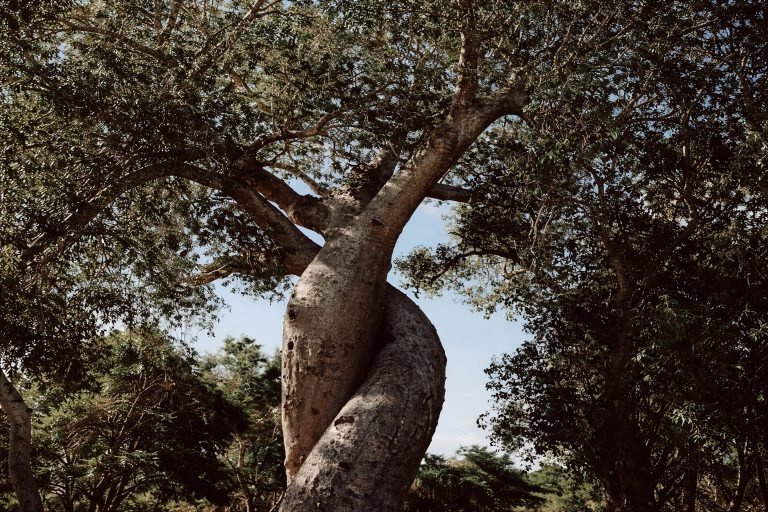
Just beyond the main avenue, one of the most well-known nearby sights is the “Baobab Amoureux,” or the “Lovers Baobabs.” These two intertwined trees have grown around each other over time, forming a natural arch-like structure that has become a symbol of connection and longevity. They are usually visited as part of the same route from Morondava, often combined with a trip toward Kirindy Forest.
Further inland, Kirindy Forest offers another perspective on baobabs, where they appear as part of a broader dry forest ecosystem rather than as isolated giants. This area is also known for wildlife, including lemurs and nocturnal species, which makes it a natural extension of a visit to the avenue if you are exploring the region in more depth.
In the southwest of Madagascar, near Morombe, you can find some of the largest baobab trees on the island. Among them is a massive Adansonia grandidieri often referred to locally as a “reniala,” meaning “mother of the forest.” These trees are significantly more remote and require longer, more demanding travel to reach, but they highlight just how varied baobab landscapes can be across the island.
Seeing baobabs in different regions adds a broader perspective to what might otherwise feel like a single iconic stop. It reinforces that the Avenue of the Baobabs is just one expression of a much larger natural story that unfolds across Madagascar’s diverse environments.
Practical Tips for Visiting the Avenue of the Baobabs
Visiting the Avenue of the Baobabs is relatively simple, but a few practical details can make a noticeable difference in how smooth and enjoyable the experience feels. Because this is not a managed or developed site, small preparations go a long way.
Bring water, especially if you are visiting around sunset when you may end up staying longer than expected. There are no shops or facilities at the avenue itself, and the heat during the day can be intense. Sun protection is equally important, as the area offers very little shade outside of the trees.
Footwear is often overlooked, but the ground is uneven and dusty. Closed shoes or sturdy sandals are usually more comfortable than flip-flops, particularly if you plan to walk along the road or move between different viewpoints.
If you are interested in photography, arrive earlier than you think you need to. This gives you time to explore different angles before the main rush of visitors arrives and allows you to adjust as the light changes. Staying a little after sunset can also be worthwhile, as many visitors leave quickly once the sun drops below the horizon.
Interactions with local vendors are generally relaxed, but it is still helpful to carry small cash if you plan to buy crafts or tip for photos. As with many places in Madagascar, cash is the most practical form of payment.
Finally, build flexibility into your schedule. Weather, road conditions, and timing all influence the experience here. Treating the Avenue of the Baobabs as a fixed, rushed stop often leads to a less rewarding visit, while allowing time to adapt usually results in something far more memorable.
Final Thoughts: Is the Avenue of the Baobabs Worth It?
The Avenue of the Baobabs is often described as a must-see, but whether it feels worth it depends on how you approach it. If you expect a perfectly quiet, untouched landscape that looks exactly like the most iconic photographs, you may be surprised by the presence of other visitors and the simplicity of the setting. If you arrive with a bit more flexibility and awareness of what the experience actually involves, it becomes something far more meaningful.
What makes this place stand out is not just the trees themselves, but the broader context in which they exist. These baobabs are part of a much larger story that unfolds across the island, from remote dry forests and wildlife habitats to coastal regions and cultural landscapes. Seeing the avenue in isolation is memorable, but understanding how it fits into Madagascar as a whole is what gives it depth.
If you are planning a trip, it helps to think of this stop as one piece of a wider route. Structuring your journey using this Madagascar itinerary can help you connect the west coast with other key regions, while understanding logistics through the getting around Madagascar guide makes travel across the island far more manageable.
Depending on your route, you may also want to explore the island’s wildlife and ecosystems in more detail, including national parks and endemic species covered in this Madagascar national parks guide and this lemurs in Madagascar guide. If your journey continues along the coast, destinations featured in this Madagascar beaches guide offer a completely different perspective on the island.
Practical preparation also plays a role in how smooth your experience feels. Understanding seasonal conditions through this best time to visit Madagascar guide, managing expectations with this Madagascar travel tips guide, and planning your stay using this where to stay in Madagascar guide all contribute to a more complete trip.
When you see the Avenue of the Baobabs in the right conditions, with the light shifting and the landscape settling into stillness, it becomes clear why it holds such a strong place in people’s memories. It is not just a photo stop, but a moment that connects to everything else you experience across the island, a single scene that reflects the wider character of Madagascar itself.
Frequently Asked Questions About the Avenue of the Baobabs
• Where is the Avenue of the Baobabs located?
The Avenue of the Baobabs is located in western Madagascar, about 20 kilometers northeast of Morondava. It lies along a dirt road in a dry, open landscape and is one of the most accessible landmarks on the island’s west coast.
• How do you get to the Avenue of the Baobabs?
Most travelers reach the avenue via Morondava, which can be accessed by domestic flight or long overland travel from Antananarivo. From Morondava, it takes around 30 to 45 minutes by car to reach the site.
• When is the best time to visit the Avenue of the Baobabs?
Sunrise and sunset are the best times to visit, as the light creates dramatic colors and silhouettes. The dry season from May to October generally offers better travel conditions and clearer skies.
• Is the Avenue of the Baobabs worth visiting?
Yes, especially if it is part of a broader itinerary across Madagascar. While it is not a developed tourist attraction, the scale and atmosphere of the trees make it one of the most memorable landscapes on the island.
• Can you visit the Avenue of the Baobabs without a tour?
Yes, it is possible to visit independently by arranging a driver in Morondava. However, many travelers choose guided visits for convenience, especially when timing sunrise or sunset.
• What type of trees are found at the Avenue of the Baobabs?
The trees are primarily Adansonia grandidieri, the largest of Madagascar’s endemic baobab species. These trees are known for their tall, cylindrical trunks and can live for several centuries.
• Why do baobab trees look like they are upside down?
Their unusual appearance comes from their thick trunks and sparse, root-like branches. This has inspired local legends that describe the trees as being planted upside down by the gods.
Travel Resources to Plan, Book & Stay Connected
Use these tools and guides to stay connected abroad, find inspiration for your next trip, and book your flights, stays and gear with confidence.
Disclosure: This article may contain affiliate links. If you make a purchase through a link, I may receive a commission at no extra cost to you. I only share recommendations I believe are genuinely useful, and all opinions are my own. AI was used in this post for research and drafting purposes.

Comment (0)