Cambodia Killing Fields & Tuol Sleng Guide: What to Know Before Visiting
Visiting the Cambodia Killing Fields and Tuol Sleng is one of the most powerful and confronting experiences in the country. These sites are not typical tourist attractions. They are places of remembrance that tell the story of the Khmer Rouge era and the devastating impact it had on Cambodia and its people. Understanding what happened here, and how to visit respectfully, adds important context to any trip to Phnom Penh.
This guide is designed to help you approach the experience with clarity and preparation. It explains what the Cambodia Killing Fields and Tuol Sleng are, what you will see at each site, how to visit them, and what to expect both practically and emotionally. Whether you are planning your first visit to Cambodia or refining your Phnom Penh itinerary, this guide will help you navigate one of the most significant parts of the country’s recent history.
- A clear explanation of the Cambodia Killing Fields and Tuol Sleng (S-21)
- What to expect when visiting each site
- How to get there and whether to visit independently or with a tour
- Important etiquette and rules to follow
- How to prepare for the emotional impact of the visit
- Practical tips to plan your day in Phnom Penh
If you are still planning your trip, it helps to see how this experience fits into the bigger picture of traveling in Cambodia. Start with this Cambodia travel guide for a complete overview, then use this Cambodia itinerary planner to structure your route across the country. If Phnom Penh is part of your trip, this Phnom Penh travel guide and this Phnom Penh itinerary will help you plan your time in the capital.
Visiting the Cambodia Killing Fields and Tuol Sleng
Visiting the Cambodia Killing Fields and Tuol Sleng is not something most travelers approach lightly, and it should not be treated as a routine stop on a Phnom Penh itinerary. These sites represent one of the darkest chapters in Cambodia’s recent history, and understanding their significance adds depth and perspective to your time in the country. Rather than focusing only on what happened, the experience is about recognizing the resilience of the Cambodian people and the importance of remembrance.
The Cambodia Killing Fields and Tuol Sleng, also known as S-21, are closely connected. Together, they provide insight into how the Khmer Rouge regime operated between 1975 and 1979. Tuol Sleng was a prison and interrogation center, while Choeung Ek, the most visited of the Killing Fields, was one of many execution sites across the country. Visiting both locations gives a more complete understanding than seeing either one in isolation.
For many travelers, this visit becomes one of the most impactful parts of their trip to Cambodia. It stands in contrast to places like Angkor Wat or the coastal islands, offering a different kind of experience that is quieter, more reflective, and more personal. It is not about ticking off a landmark, but about taking the time to understand the context of a country that continues to move forward while acknowledging its past.
Approaching these sites with the right expectations helps make the visit meaningful rather than overwhelming. Knowing what you will see, how to navigate both locations, and how to behave respectfully ensures that your time at the Cambodia Killing Fields and Tuol Sleng is both informative and appropriate. This guide will walk you through that process step by step, so you can visit with clarity, respect, and awareness.
What Are the Cambodia Killing Fields and Tuol Sleng (S-21)?
The Historical Context of the Cambodia Killing Fields
To understand the Cambodia Killing Fields and Tuol Sleng, it is necessary to look beyond the sites themselves and into the broader historical context of Cambodia in the 1970s. In April 1975, the Khmer Rouge took control of Phnom Penh after years of civil war. Their vision was to completely reshape Cambodian society into a self-sufficient agrarian state, free from perceived foreign influence, class divisions, and urban structures.
Within days of taking power, cities were emptied. Millions of people were forced out of Phnom Penh and other urban centers and sent into the countryside to work in agricultural labor camps. Families were separated, education systems were dismantled, religion was suppressed, and normal social structures were replaced with strict ideological control. The regime operated on suspicion, and even minor perceived disloyalty could lead to arrest.
Between 1975 and 1979, an estimated 1.7 to 2 million people died. While many lost their lives due to starvation, exhaustion, and disease, a significant number were executed. The Cambodia Killing Fields refer to the many locations across the country where these executions took place. These sites are not isolated incidents but part of a wider system of control and repression that affected nearly every part of Cambodian society.
Tuol Sleng (S-21): The Role of the Genocide Museum
Tuol Sleng, also known as Security Prison 21 or S-21, was a central component of this system. Originally a high school in Phnom Penh, it was converted into a prison and interrogation center by the Khmer Rouge. Unlike many other detention sites, S-21 was highly organized and documented, which is one of the reasons it plays such an important role in understanding this period today.
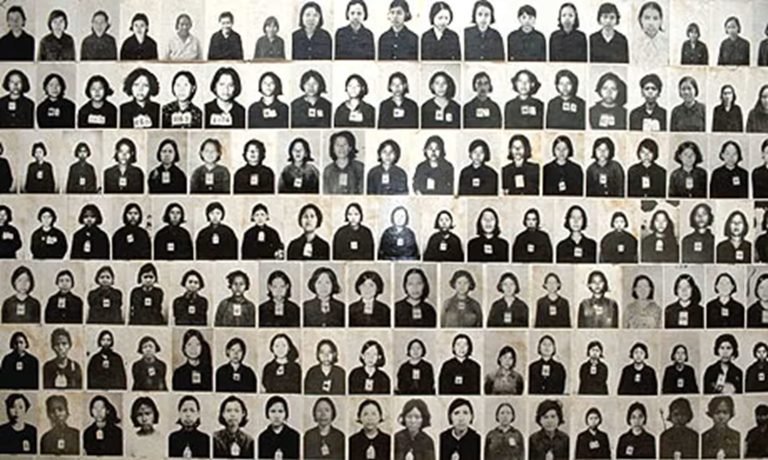
Thousands of individuals were brought to Tuol Sleng, including former government officials, intellectuals, suspected dissenters, and even members of the Khmer Rouge itself who were accused of betrayal. Prisoners were photographed upon arrival, assigned identification numbers, and held in classrooms that had been divided into small cells or left as large communal detention spaces.
Interrogations were systematic and often prolonged. Prisoners were forced to confess to crimes, frequently fabricated, and to implicate others. These confessions were recorded in detail, creating an extensive archive that still exists today. Very few people who entered Tuol Sleng survived, making it one of the most documented and significant sites connected to the Cambodian genocide.
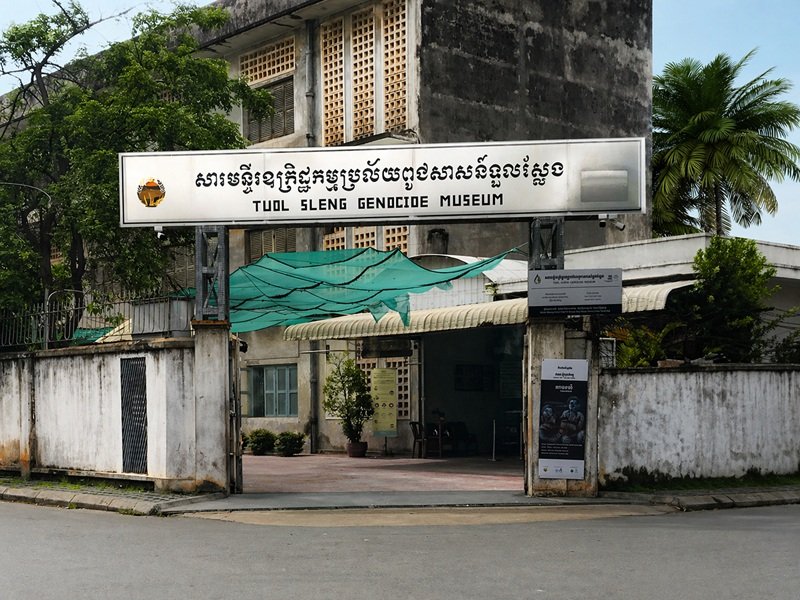
Today, Tuol Sleng has been preserved as the Tuol Sleng Genocide Museum. Visitors can walk through the buildings, see the original rooms, and view photographs and documents that provide direct evidence of what took place. The experience is quiet and structured, allowing visitors to move through the site at their own pace while engaging with its history.
The Cambodia Killing Fields: Choeung Ek and Beyond
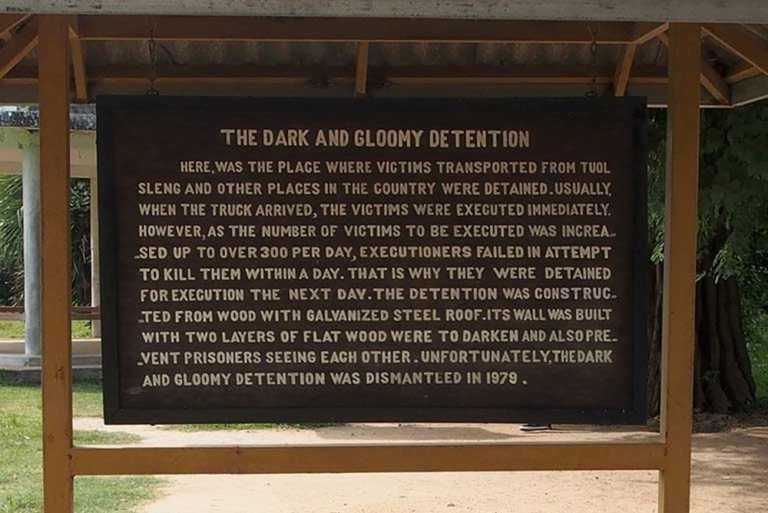
The Cambodia Killing Fields are not a single location but a network of execution sites spread throughout the country. Choeung Ek, located approximately 15 kilometers south of Phnom Penh, is the most well-known and most frequently visited. Its significance comes from its direct connection to Tuol Sleng, as many prisoners held at S-21 were transported here after interrogation.
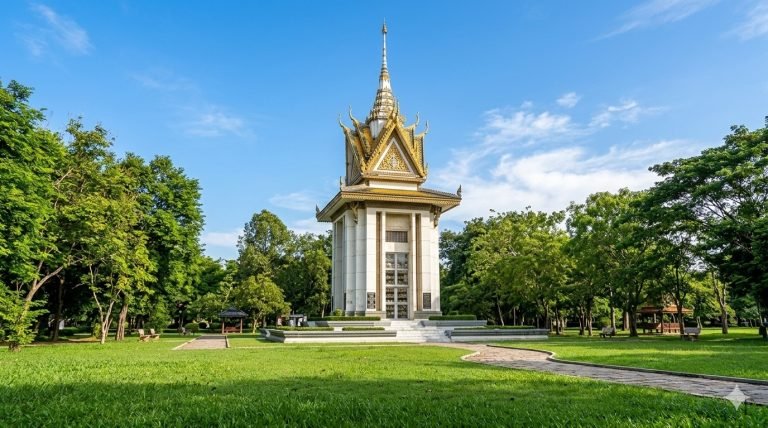
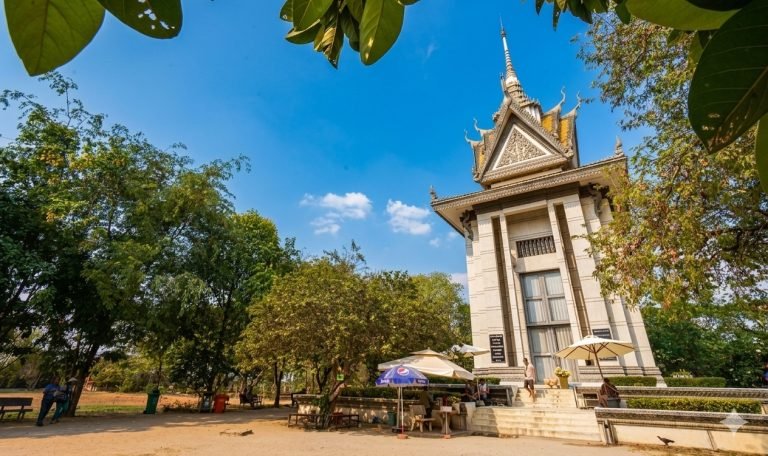
At Choeung Ek, prisoners were executed and buried in mass graves. The site has since been transformed into a memorial that preserves parts of the original landscape while providing context for visitors. Burial pits are still visible, some marked and protected, and a central memorial stupa contains thousands of human skulls and remains that were recovered from the site.
The purpose of the site today is not to display violence but to acknowledge what occurred and to honor those who lost their lives. The layout encourages a slow, reflective walk through the grounds, often accompanied by an audio guide that explains the history and significance of different areas. The experience at the Cambodia Killing Fields is markedly different from a traditional historical site, focusing more on remembrance than on presentation.
How Tuol Sleng and the Killing Fields Are Connected
Tuol Sleng and the Cambodia Killing Fields functioned as parts of the same system. Prisoners were detained, documented, and interrogated at S-21 before being transported to execution sites such as Choeung Ek. This process was not random but organized, with records kept at each stage, linking individuals from imprisonment through to execution.
Understanding this connection is essential when visiting both sites. Seeing only one provides a partial picture, while visiting both offers a more complete understanding of how the system operated. The experience is not about observing two separate locations, but about recognizing how they worked together within the broader context of the Khmer Rouge regime.
Today, these sites serve as places of education and reflection. They provide insight into a period that continues to shape Cambodia, while also highlighting the resilience of the people who have rebuilt their country since. Approaching the Cambodia Killing Fields and Tuol Sleng with awareness allows visitors to engage with this history in a way that is respectful, informed, and meaningful.
Tuol Sleng (S-21): What to Expect When Visiting
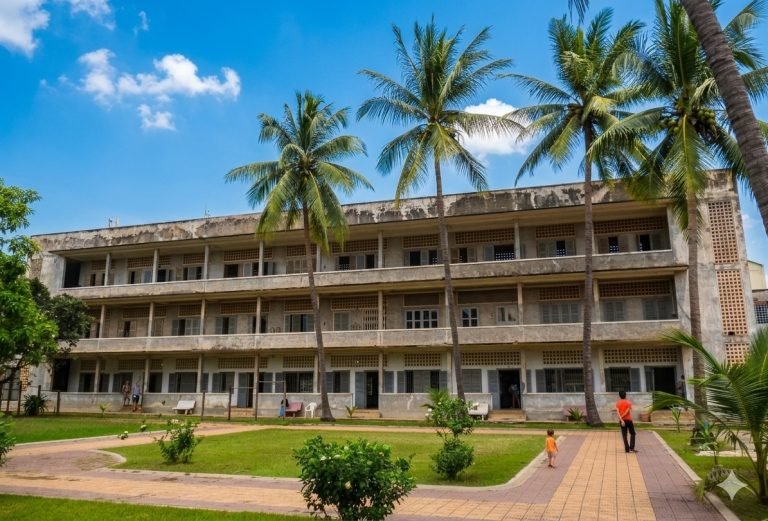
Visiting Tuol Sleng, also known as S-21, is a structured and deliberate experience. The site is located in a quiet residential area of Phnom Penh, and from the outside, it still resembles the school it once was. This contrast between its original purpose and what it became is one of the first things visitors notice. There are no dramatic entrances or large crowds gathering at a single point. Instead, the experience begins quietly, allowing you to enter at your own pace.
After purchasing a ticket, most visitors are offered an audio guide, which plays an important role in shaping the visit. While it is possible to walk through Tuol Sleng without it, the audio guide provides context that is not immediately visible from the exhibits alone. It explains how different parts of the site were used, shares testimonies, and connects the spaces you move through to the broader history of the period. The visit is designed to be self-paced, and many people choose to follow the numbered stops in order.
The Layout and Movement Through the Site
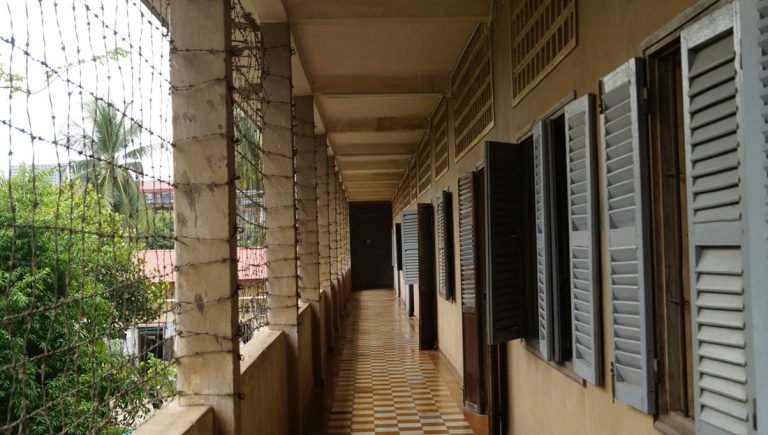
Tuol Sleng is made up of several rectangular buildings arranged around open courtyards. These courtyards were once part of the school grounds, but during the Khmer Rouge era, they became enclosed spaces surrounded by barbed wire and strict security. Today, they provide a quiet area between the buildings, offering brief moments to pause before moving into the next section.
The buildings themselves are simple, multi-story structures with long corridors and classrooms that have been preserved in their altered state. As you move from one building to another, the experience unfolds gradually. There is no single central exhibit that explains everything at once. Instead, the understanding comes from moving through the space, room by room, and building a picture over time.
The Rooms, Cells, and Physical Spaces
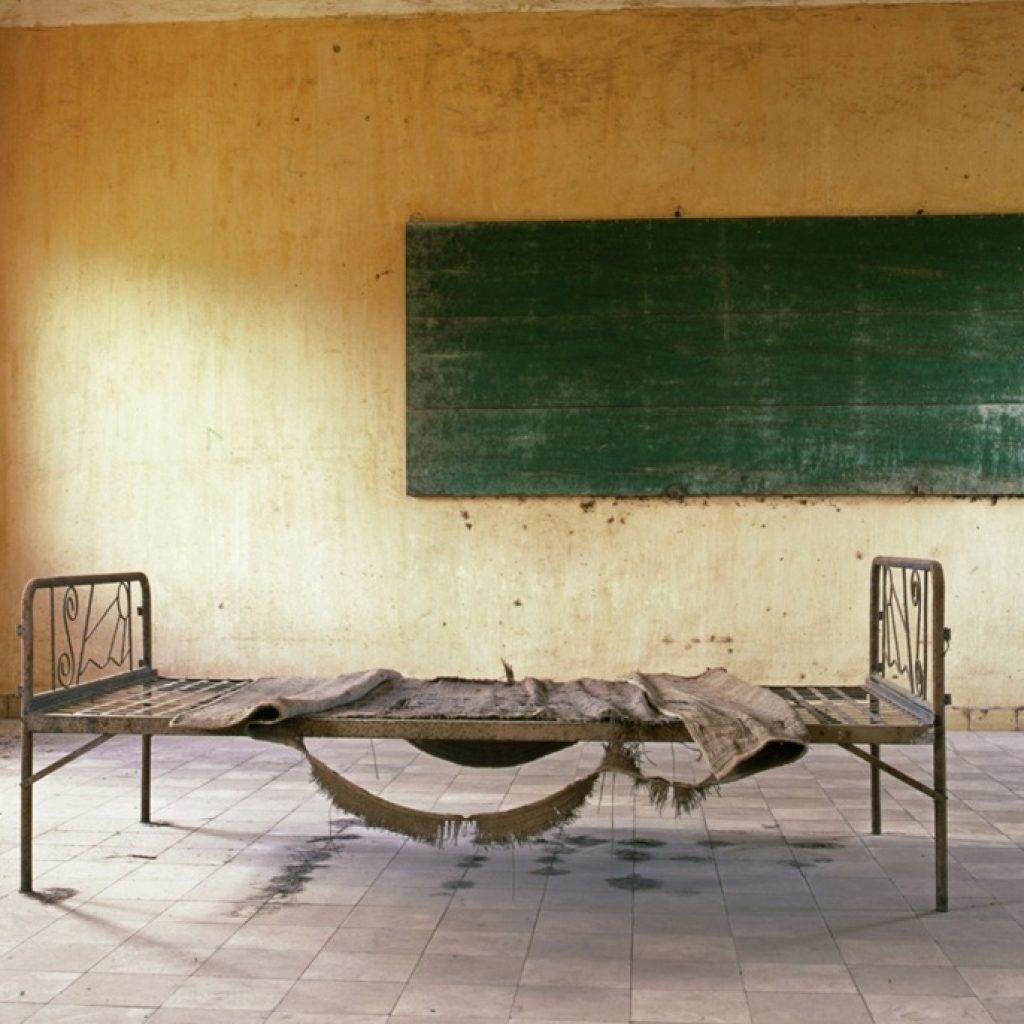
Inside the buildings, the former classrooms have been converted into detention and interrogation spaces. Some rooms contain individual cells, created by dividing the larger spaces with brick or wooden partitions. These cells are small and confined, giving a sense of how prisoners were held in isolation. In other buildings, the rooms remain more open, with simple fixtures that indicate how multiple people were detained together.
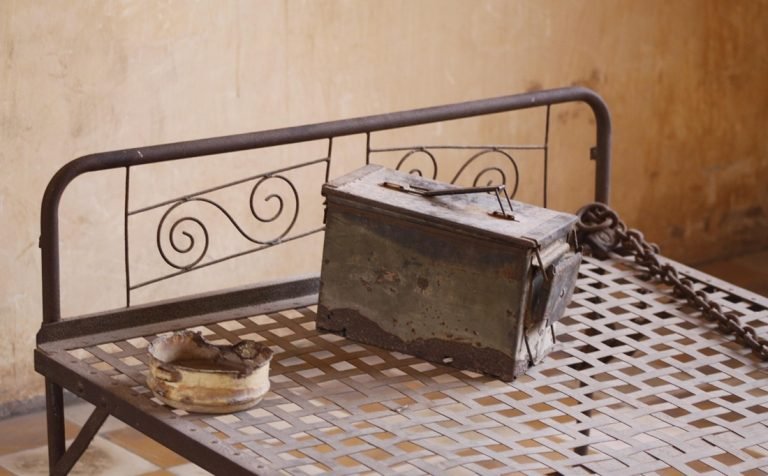
Many rooms are largely unchanged, with only minimal additions to preserve what was found after the fall of the Khmer Rouge. In certain spaces, basic items such as metal bed frames and restraints remain in place. These are not presented in a dramatic way, but rather left as they were, allowing visitors to observe and interpret the environment with context provided by the audio guide.
The corridors connecting the rooms are narrow and repetitive, reinforcing the structured and controlled nature of the facility. As you move through them, the experience becomes less about individual exhibits and more about the cumulative effect of the space itself. The design of the buildings, originally meant for education, contrasts sharply with their later use, and this contrast is present throughout the visit.
Photographs, Documents, and Personal Records
One of the most distinctive aspects of Tuol Sleng is the extensive collection of photographs and records. Upon arrival, prisoners were photographed, and many of these images are now displayed in the museum. These photographs are presented in rows, often without detailed explanation for each individual, allowing visitors to engage with them in their own way.
In addition to photographs, there are documents and written records that were produced during the operation of S-21. These include confessions, lists, and administrative materials that illustrate how systematically the prison was run. The presence of these records provides a level of detail that is not always available at other sites, making Tuol Sleng one of the most documented locations from this period.
The way these materials are displayed is generally straightforward. They are not heavily stylized or modernized, and much of the interpretation comes from the audio guide or from reading the information panels placed throughout the buildings. This allows the site to retain a sense of authenticity while still providing enough context for visitors to understand what they are seeing.
The Role of the Audio Guide
The audio guide is a central part of the visit for many people. It guides you through specific points in the complex and explains the purpose of different areas, often incorporating testimonies from survivors or historical accounts. The pacing is deliberate, encouraging visitors to slow down and take in each space rather than moving quickly from one building to the next.
Because the site itself is relatively minimal in terms of signage, the audio guide helps bridge the gap between what you see and what it represents. It also allows you to control the depth of your experience, as you can pause, repeat, or skip sections depending on how you prefer to engage with the content.
The Overall Experience
A visit to Tuol Sleng is not defined by a single moment, but by the accumulation of details as you move through the site. The combination of preserved spaces, photographs, and recorded information creates a gradual understanding of how the prison operated. There is no pressure to move quickly, and most visitors spend one to two hours exploring the complex.
The atmosphere is generally quiet and respectful. While it can be a challenging experience, it is also structured in a way that allows visitors to process what they are seeing step by step. By the time you leave, you will have a clearer understanding of the role Tuol Sleng played within the broader context of the Cambodia Killing Fields and the Khmer Rouge period.
Choeung Ek Killing Fields: What to Expect When Visiting
The Cambodia Killing Fields at Choeung Ek offer a very different experience from Tuol Sleng. While S-21 is enclosed, structured, and confined, Choeung Ek is an open space located just outside Phnom Penh. The setting is quiet, with trees, pathways, and open ground that at first glance can appear calm. It is only as you move through the site that its significance becomes clearer.
The entrance area is simple and organized, with ticket counters and the option to take an audio guide. Much like at Tuol Sleng, the audio guide plays an important role in helping visitors understand what they are seeing. Without it, many parts of the site would appear understated, as there are few large signs or explanations directly on the ground. The experience is designed to be walked at a slow pace, following a path that leads through different areas of the site.
The Layout and Flow of the Visit
Choeung Ek is laid out as a circular walking route that guides visitors through the grounds in a logical sequence. The path is clearly marked, and most visitors follow it in order, stopping at designated points indicated in the audio guide. The route moves gradually from general context into more specific locations, allowing the understanding of the site to build step by step.
Unlike Tuol Sleng, where the experience is contained within buildings, the Cambodia Killing Fields are experienced outdoors. The landscape itself is part of the site, and much of what you see is intentionally left as it was found, with minimal alteration. This creates a quieter, more reflective atmosphere, where the absence of large structures allows the focus to remain on the ground and the history connected to it.
Mass Graves and Preserved Areas
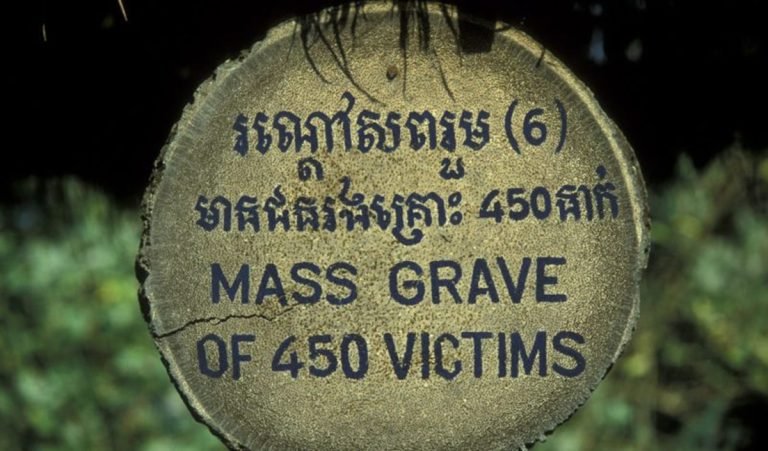
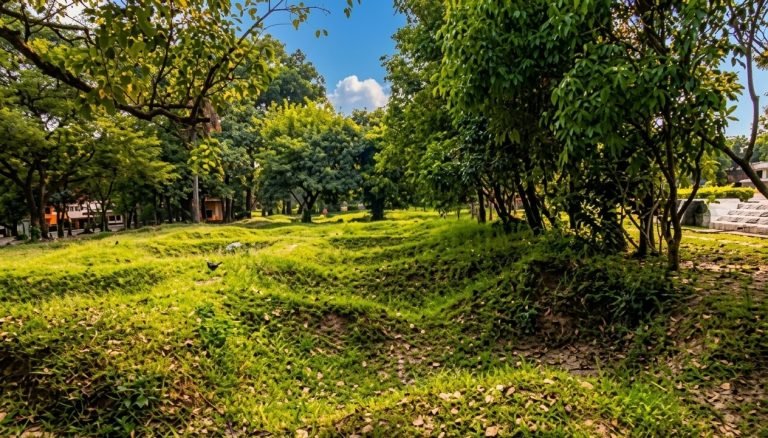
Throughout the site, you will encounter marked areas that indicate former mass graves. These are often simple depressions in the ground, some protected by barriers, others left open but clearly identified. They are not presented in a way that draws attention through design or display, but rather left as physical reminders of what took place.
In certain conditions, particularly after rain, small fragments such as cloth or bone may become visible at the surface. These are not staged exhibits, but part of the reality of the site, and visitors are expected to treat them with respect. The presence of these details reinforces that Choeung Ek is not a reconstructed memorial, but an original location where events occurred.
The Memorial Stupa
At the center of the site stands a large memorial stupa, which contains thousands of human skulls and remains that were recovered from the grounds. The structure is simple and vertical, designed to serve as a place of remembrance rather than a focal point of display. Visitors can approach it closely and observe it quietly, often at the beginning or end of their visit.
The stupa provides a visual representation of the scale of what occurred, but it is presented in a restrained way. There are no dramatic elements or elaborate explanations surrounding it. Instead, it serves as a central point that brings together the experience of walking through the Cambodia Killing Fields.
The Role of the Audio Guide
The audio guide at Choeung Ek is widely considered an essential part of the visit. It provides context for each location along the path, explaining what happened in specific areas and how the site functioned during the Khmer Rouge period. It also includes personal accounts and historical explanations that help connect the physical space to real events.
The pacing of the audio guide encourages visitors to move slowly and spend time at each stop. You can pause or replay sections as needed, allowing you to control the flow of your visit. Because the site itself is relatively minimal in terms of written information, the audio guide becomes the primary way to understand what you are seeing.
The Atmosphere and Experience
The overall atmosphere at the Cambodia Killing Fields is quiet and reflective. The open landscape, combined with the structured path and audio guidance, creates a sense of space that is very different from the enclosed environment of Tuol Sleng. There are often fewer visual cues, which means the experience relies more on interpretation and understanding.
Most visitors spend one to two hours at Choeung Ek, depending on how closely they follow the audio guide and how much time they take at each stop. It is common to visit both Tuol Sleng and the Killing Fields on the same day, as the two sites complement each other and provide a more complete understanding when experienced together.
By the end of the visit, the Cambodia Killing Fields become more than just a location. They provide a context that helps make sense of what you saw at Tuol Sleng, connecting the process of imprisonment with what happened afterward. Taken together, the two sites offer a deeper understanding of this period in Cambodia’s history.
How to Visit the Cambodia Killing Fields and Tuol Sleng
Planning a visit to the Cambodia Killing Fields and Tuol Sleng is relatively straightforward, but taking the time to organize it properly will make a noticeable difference in how the experience unfolds. These are not sites you want to rush through or fit in between other activities without thought. A well-paced visit allows you to move between locations with enough time to understand what you are seeing and to process the experience without feeling overwhelming or rushed.
Both sites are located in and around Phnom Penh and are commonly visited together on the same day. Tuol Sleng is within the city itself, while Choeung Ek, the most visited of the Cambodia Killing Fields, is located approximately 15 kilometers south of the center. The distance is not large, but factoring in traffic and the pace of the visit is important when planning your day.
Distance, Travel Time, and Route Planning
Tuol Sleng is situated in a residential part of Phnom Penh and is easy to reach from most central areas. From there, Choeung Ek typically takes between 30 and 45 minutes by road, depending on traffic conditions. The route gradually moves away from the busy city streets into a quieter, more open landscape, creating a natural transition between the two experiences.
Most visitors begin at Tuol Sleng and then continue on to the Cambodia Killing Fields. This sequence reflects the historical process, starting with detention and interrogation at S-21 before moving to Choeung Ek, where many prisoners were ultimately taken. Ending the visit at the Killing Fields also provides a more open and reflective environment before returning to Phnom Penh.
Transport Options: Tuk-Tuk, Ride-Hailing, or Tour
There are three main ways to visit the Cambodia Killing Fields and Tuol Sleng: hiring a tuk-tuk, using ride-hailing apps such as Grab or PassApp, or joining a guided tour. Each option offers a different level of flexibility and structure.
Hiring a tuk-tuk for a half day is one of the most common choices. Drivers are familiar with both sites and will usually wait while you explore before taking you to the next location. This approach gives you the freedom to move at your own pace without needing to coordinate multiple rides.
Ride-hailing apps provide a straightforward alternative, especially for getting to Tuol Sleng. However, arranging a return trip from Choeung Ek can require a bit more planning, as availability is less consistent outside the city center. For travelers who prefer simplicity and continuity, a tuk-tuk or tour is often more convenient.
Joining a guided tour adds structure to the visit and removes the need to organize transport separately. It can also provide additional context through a guide, although many visitors find that the audio guides at both sites already offer detailed and well-paced explanations.
Explore guided visits to the Cambodia Killing Fields and Tuol Sleng, combining both sites with transport and historical context for a structured and well-paced experience.
View Phnom Penh toursCosts and Practical Expectations
Entry tickets for Tuol Sleng and Choeung Ek are purchased separately at each site. Both include access to an audio guide, which is strongly recommended and available in multiple languages. Prices are modest, but it is useful to carry small denominations of US dollars, as this is the most commonly accepted currency.
Transport costs vary depending on the option you choose. Tuk-tuk drivers typically offer a fixed rate for visiting both sites, including waiting time. Ride-hailing apps provide transparent pricing, while guided tours include transport and sometimes additional services, making them a more structured but slightly higher-cost option.
How Much Time You Need
A visit to Tuol Sleng generally takes between one and two hours, depending on how closely you follow the audio guide and how much time you spend in each building. Choeung Ek requires a similar amount of time, particularly if you complete the full audio-guided route.
Most travelers allocate between three and five hours in total, including travel time between the two sites. This makes it a half-day experience rather than something to combine with a full itinerary of other activities. Planning your visit earlier in the day often allows for a more comfortable pace.
Visiting Independently vs. With a Guide
Exploring the Cambodia Killing Fields and Tuol Sleng independently with the audio guide provides a balanced and flexible experience for most visitors. The audio guides are detailed and allow you to move through the sites at your own pace, pausing when needed and spending more time in areas that feel important to you.
A guided tour can add additional context and provide the opportunity to ask questions, which some travelers prefer. The choice ultimately depends on how you prefer to engage with historical information. Both approaches can be meaningful when approached with the right expectations.
Suggested Order and Overall Flow
Starting at Tuol Sleng and continuing to the Cambodia Killing Fields at Choeung Ek is the most commonly recommended approach. This sequence reflects the historical process and helps create a clearer understanding of how the two sites are connected.
After visiting both locations, returning to Phnom Penh provides a transition back into the city environment. Many travelers choose to leave some time afterward to rest or reflect rather than moving directly into another activity, allowing the experience to settle more naturally.
Etiquette and Rules When Visiting the Cambodia Killing Fields and Tuol Sleng
Visiting the Cambodia Killing Fields and Tuol Sleng is not just a matter of buying a ticket and walking through a historical site. These are places of remembrance connected to real people, real families, and a period that remains deeply significant in Cambodia today. For that reason, how you behave, how you dress, and how you move through the sites matters. Respect here is not an abstract idea. It shapes the atmosphere of the visit and affects how these places are experienced by everyone around you, including Cambodian visitors, staff, and survivors’ relatives.
Many travelers already understand instinctively that the Cambodia Killing Fields and Tuol Sleng require a different mindset from temples, markets, rooftop bars, or scenic viewpoints. Still, it helps to be specific. The etiquette at these sites is not complicated, but it is important. A respectful visit does not require perfection or silence at every second. It simply requires awareness, restraint, and an understanding that you are entering spaces where immense suffering took place and where memory is still very much alive.
Dress with Care and Modesty
One of the simplest and most visible ways to show respect is through the way you dress. There is no need to be overly formal, but visitors should aim for clothing that is modest, clean, and appropriate for a memorial setting. Lightweight trousers, longer shorts, skirts below the knee, and tops that cover the shoulders are sensible choices, especially in Phnom Penh’s heat. Closed shoes or comfortable sandals are also practical, since you will be walking through multiple buildings at Tuol Sleng and outdoor paths at Choeung Ek.
Clothing that is overly revealing, excessively casual, or designed to attract attention can feel out of place here. Very short shorts, bikini tops, shirts with offensive slogans, or outfits that would be more suited to the beach or nightlife scene should be avoided. This is not because the sites operate like temples with a strict dress code at the entrance, but because the tone of the visit is fundamentally different. Dressing with care helps set your own mindset before you even step inside.
In practical terms, modest clothing also tends to feel more appropriate once the visit begins. At sites like the Cambodia Killing Fields and Tuol Sleng, many travelers find that they become much more conscious of their surroundings once they understand what happened there. Wearing something respectful from the start avoids the discomfort of realizing halfway through that your outfit does not match the setting.
Move Slowly and Be Mindful of the Atmosphere
The pace at which you move through these sites matters more than many people expect. Tuol Sleng and Choeung Ek are not places to rush through in order to check them off a list, but neither are they places where you need to perform visible emotion. The most appropriate approach is usually a steady, measured pace that gives you time to look, listen, and absorb the information properly.
At Tuol Sleng, this often means not crowding into rooms, not weaving quickly around other visitors, and not treating the site as if it were a museum where the goal is simply to see every display as fast as possible. At Choeung Ek, it means taking the walking route carefully, pausing at marked areas, and allowing the site to speak through its quieter details rather than looking for dramatic moments.
The atmosphere at both sites is generally calm and subdued, and it helps to contribute to that rather than disrupt it. There is no need for exaggerated solemnity, but loud voices, repeated jokes, or casual banter can feel jarring in these spaces. The aim is not to become stiff or unnatural. It is simply to recognize that a lower, calmer tone is more appropriate here than in most other parts of a trip through Phnom Penh.
Keep Conversations Quiet and Purposeful
Conversation is not forbidden, and many visitors naturally want to talk about what they are seeing. In fact, quiet reflection or a thoughtful exchange with a travel companion can be part of a meaningful visit. What matters is the volume, tone, and content of that conversation. Speaking softly and keeping comments relevant to the experience helps preserve the sense of respect that the site calls for.
What tends to feel inappropriate is the kind of conversation that would be normal elsewhere but disconnected from the setting here. Laughing loudly, discussing unrelated plans, shouting across rooms, or commenting carelessly on the more difficult aspects of the site can disturb others and undermine the tone of the visit. Even if the intention is not disrespectful, the effect can still be insensitive.
At Tuol Sleng in particular, where many people move through the rooms with an audio guide, the environment is often especially quiet. Loud talking cuts through that atmosphere immediately. At Choeung Ek, the open air can make people less aware of their volume, but the same principle applies. A quieter voice allows everyone to remain focused on why they came.
Photography Requires Judgment, Not Just Permission
Photography is one of the areas where visitors most need to use good judgment. In broad terms, photos are allowed in parts of both the Cambodia Killing Fields and Tuol Sleng, but the fact that something is permitted does not automatically make it appropriate in every way. These are not sites for performative travel photos, dramatic poses, or content designed mainly for social media impact.
A respectful approach to photography means documenting the site carefully rather than centering yourself within it. Wide views, architectural details, memorial structures, and contextual images can all be taken in a thoughtful way. What should be avoided are smiling selfies, posed portraits, stylized fashion shots, or images that treat the setting as a backdrop rather than a place of remembrance.
This matters especially in spaces where victims are directly represented through photographs, preserved rooms, or memorial remains. At Tuol Sleng, visitors should be especially careful around the displayed prisoner photographs and documented detention spaces. At Choeung Ek, the memorial stupa and burial areas call for similar restraint. Even when taking a simple photo for personal memory or educational value, it helps to pause and ask whether the image reflects the nature of the place respectfully.
It is also important to remain aware of other visitors. Some people come to these sites for personal, educational, or emotional reasons and may not want to be photographed or interrupted by someone trying to get the perfect shot. If you take photos, do so quietly, quickly, and without blocking paths or displays.
Avoid Turning the Visit into Content First and Reflection Second
For many modern travelers, the instinct to document every meaningful experience is strong. That is understandable, especially for people who write, create content, or simply want to remember their trip carefully. But at the Cambodia Killing Fields and Tuol Sleng, it is worth resisting the urge to experience the site mainly through a camera lens or phone screen.
The most respectful approach is usually to engage with the site first and document it second. Listen to the audio guide, read the material, stand in the spaces, and let the experience form in your mind before reaching for your phone. Visitors who do this often come away with a deeper understanding than those who move through the site primarily searching for images to capture.
This does not mean you should not take any photos at all. It simply means that remembrance should remain at the center of the experience, with documentation in a supporting role. At sites like these, the line between thoughtful documentation and insensitive content can become very obvious very quickly.
Do Not Touch, Cross Into, or Treat Memorial Areas Casually
At Choeung Ek, some areas are clearly marked as burial pits or memorial spaces. Visitors should stay on designated paths, respect barriers, and avoid stepping into areas that are preserved for remembrance. After rain, fragments of bone or cloth can sometimes become visible at the surface. These should never be touched, moved, or treated as curiosities. They are part of the reality of the site and should be left undisturbed.
At Tuol Sleng, the same principle applies to preserved rooms, cells, and objects. The site is powerful partly because so much of it has been left in place or preserved with minimal alteration. Touching exhibits unnecessarily, leaning on structures, or treating the rooms casually weakens the integrity of that experience and can be disrespectful to the memory of those who were held there.
Following barriers, signs, and staff instructions may seem obvious, but at places of this kind the reason goes beyond ordinary museum rules. These boundaries help protect not only the site itself but also the dignity of the history it represents.
Be Sensitive to Cambodian Visitors and Local Staff
For international travelers, the Cambodia Killing Fields and Tuol Sleng may be important historical sites encountered during a trip. For many Cambodians, however, this history is much closer than that. The Khmer Rouge period is not ancient history in Cambodia. It remains within living memory, and many families were directly affected. That does not mean every Cambodian visitor is personally connected to the sites in the same way, but it does mean that foreign visitors should approach the experience with humility.
This is one reason why tone matters so much. Overly casual behavior, insensitive remarks, or attempts to make the visit entertaining can feel especially inappropriate in a country where the legacy of this period still shapes family histories and national memory. Staff at these sites are not simply working at tourist attractions. They are caretakers of places that hold enormous historical and emotional weight.
A respectful visitor does not need to say much to demonstrate awareness. Quiet conduct, careful movement, and an absence of self-centered behavior often communicate far more than visible gestures of seriousness.
Allow the Experience to Be Difficult Without Performing Emotion
People respond to these sites in different ways. Some visitors feel deeply affected right away. Others process the experience more gradually or intellectually. There is no correct emotional response that you are expected to display. What matters is allowing the sites to be what they are without trying to turn your own reaction into the main event.
This is an important distinction. Respectful behavior does not require public displays of grief, dramatic language, or visible intensity. In fact, a quieter, more contained response is often more appropriate. These places do not ask visitors to perform emotion. They ask for attention, seriousness, and care.
If you find the visit heavy, it is perfectly reasonable to slow down, sit quietly for a moment, or move through the site more gradually. If you find yourself responding more analytically than emotionally, that is also fine, as long as your behavior remains respectful. The goal is not to feel a specific way. It is to engage with the site honestly and appropriately.
Why This Etiquette Matters
The rules and expectations around the Cambodia Killing Fields and Tuol Sleng are not about formality for its own sake. They exist because these are places where memory, education, and mourning intersect. Visitors come here to understand something difficult, and the tone of the site depends in part on the people moving through it.
When travelers approach the experience with care, the sites retain the quiet clarity that makes them so meaningful. When they are treated casually, loudly, or as content backdrops, something important is lost. Respectful etiquette helps preserve not just the physical space, but the purpose of the visit itself.
In practical terms, this all comes down to a few simple principles: dress modestly, move calmly, speak quietly, photograph thoughtfully, and remember that you are walking through places of remembrance, not ordinary attractions. Keeping those principles in mind will help ensure that your visit to the Cambodia Killing Fields and Tuol Sleng is informed, appropriate, and deeply worthwhile.
Opening Hours, Tickets, and Best Time of Day to Visit
Understanding the practical details of visiting the Cambodia Killing Fields and Tuol Sleng helps you plan the experience with the right pace and expectations. While both sites are easy to access, timing, ticketing, and weather conditions all influence how comfortable and meaningful the visit feels.
Opening Hours for Tuol Sleng and Choeung Ek
Both Tuol Sleng and Choeung Ek are open daily, including weekends and public holidays. Opening hours are generally consistent throughout the year, with both sites welcoming visitors from early morning until late afternoon. Most travelers arrive between 8:00 AM and 10:00 AM, although the sites rarely feel crowded in the same way as major tourist landmarks.
Arriving earlier in the day is usually the best approach. The temperatures in Phnom Penh rise quickly, and visiting Tuol Sleng before the heat builds makes moving through the buildings more comfortable. Choeung Ek, being outdoors, is more exposed, so visiting before midday or later in the afternoon can make a noticeable difference.
Entry Tickets and What They Include
Tickets for the Cambodia Killing Fields and Tuol Sleng are purchased separately at each site. The process is straightforward, with clearly marked ticket counters at the entrance. Payment is typically made in US dollars, so having small bills available is helpful.
At Tuol Sleng, the entry fee is approximately $10 per person, and this includes access to the audio guide. At Choeung Ek, the entry fee is approximately $6 per person, also including an audio guide. These audio guides are not an optional add-on but an integral part of the visit, providing essential context and guiding you through each location.
While it is technically possible to visit both sites without using the audio guides, doing so significantly reduces the depth of understanding. The physical spaces themselves are relatively minimal in explanation, and much of the meaning comes from the structured narration provided through the audio experience.
How Long to Spend at Each Site
Most visitors spend between one and two hours at Tuol Sleng. The time required depends on how closely you follow the audio guide and how long you choose to stay in each building. The experience is not linear in a strict sense, but the audio guide creates a natural progression through the site.
Choeung Ek typically takes a similar amount of time. The walking route is clearly defined, and the audio guide leads you through a series of stops around the grounds. Moving slowly through the site allows you to absorb both the information and the environment without feeling rushed.
In total, including travel time between the two locations, most visitors should plan for three to five hours. This makes it a half-day activity rather than something to combine with a full list of other attractions.
Best Time of Day to Visit
The best time to visit the Cambodia Killing Fields and Tuol Sleng is usually in the morning. Starting early allows you to experience Tuol Sleng while it is cooler and quieter, then continue to Choeung Ek before the midday heat becomes more intense. This also helps maintain a steady pace without feeling fatigued halfway through the visit.
An alternative option is to visit later in the afternoon, particularly if you prefer slightly softer light and fewer visitors at Choeung Ek. However, this requires careful timing to ensure you have enough time to complete both sites before closing.
Midday visits are still possible, but they can be physically more demanding, especially at Choeung Ek where shade is limited. If visiting during this time, bringing water and planning for a slower pace becomes more important.
Weather Considerations in Phnom Penh
Phnom Penh is hot and humid for most of the year, and this directly affects the experience at both sites. Tuol Sleng offers some shade within the buildings, but the air inside can feel warm and still. Choeung Ek is more exposed, with open pathways and limited shelter.
During the dry season, the heat can feel intense by late morning, while in the rainy season, short but heavy downpours can occur. Visiting earlier in the day helps avoid both extremes and makes the experience more comfortable overall.
Regardless of the season, it is a good idea to bring water, wear light but modest clothing, and allow yourself enough time to move through the sites without rushing. Planning around the weather is not just about comfort, but about ensuring you can focus fully on the experience without distraction.
Is It Worth Visiting the Cambodia Killing Fields and Tuol Sleng?
For many travelers planning a trip to Phnom Penh, one of the most common questions is whether visiting the Cambodia Killing Fields and Tuol Sleng is worth it. These are not typical sightseeing locations, and it is natural to hesitate before including them in your itinerary. The experience is very different from visiting temples, markets, or coastal destinations, and understanding what you gain from it helps answer that question more clearly.
In practical terms, the answer for most visitors is yes. The Cambodia Killing Fields and Tuol Sleng provide essential context for understanding the country as it is today. Without that context, it is easy to experience Cambodia only through its most visible highlights, such as Angkor Wat or the islands, without fully appreciating the historical depth that has shaped modern Cambodian society.
Why Many Travelers Choose to Visit
A visit to the Cambodia Killing Fields and Tuol Sleng is often described as one of the most meaningful parts of a trip to Phnom Penh. The sites offer a direct connection to the Khmer Rouge period, allowing visitors to move beyond general knowledge and understand how events unfolded in specific locations. Seeing Tuol Sleng, the former S-21 prison, alongside Choeung Ek, the most visited of the killing fields in Cambodia, creates a clearer picture of how the system operated.
For travelers interested in history, the experience answers many of the questions that come up when researching the Cambodian genocide. What happened during the Khmer Rouge era, how Tuol Sleng functioned as a prison, and what the killing fields represent are all addressed in a structured and accessible way through the visit. This makes it more than a passive experience, turning it into something that actively informs the rest of your time in the country.
What You Gain From the Experience
Visiting the Cambodia Killing Fields and Tuol Sleng is not about adding another attraction to your list. It is about gaining perspective. The experience helps explain why certain aspects of Cambodian life, culture, and development look the way they do today. For many travelers, this deeper understanding changes how they view the country as a whole.
The visit also provides a structured way to learn about the Cambodian genocide without needing to rely solely on books or documentaries. Walking through Tuol Sleng, seeing the preserved spaces, and then continuing to the killing fields in Cambodia allows the information to be understood in a more grounded and tangible way. This is often why visitors describe the experience as impactful, even if it is not something they would normally seek out while traveling.
Who Should Consider Visiting
The Cambodia Killing Fields and Tuol Sleng are suitable for travelers who are interested in history, culture, and understanding the places they visit beyond the surface level. They are particularly relevant for anyone spending time in Phnom Penh, as the sites are easily accessible and can be visited within half a day.
Travelers who want a more complete picture of Cambodia often find that this visit adds balance to their itinerary. After exploring temples, trying local food, and experiencing daily life, visiting these sites provides a different perspective that connects everything together.
Who May Choose Not to Visit
At the same time, it is reasonable to decide not to visit the Cambodia Killing Fields and Tuol Sleng. The subject matter is serious, and not every traveler feels comfortable engaging with it during a trip. Families with younger children, or travelers looking for a lighter itinerary focused on relaxation, may prefer to skip it.
There is no expectation that every visitor to Cambodia must include these sites in their plans. Choosing not to go does not mean missing out on the country as a whole. However, it does mean that one important part of Cambodia’s recent history will remain less explored.
Is It Worth Visiting Both Sites or Just One?
Another common question is whether it is necessary to visit both Tuol Sleng and the killing fields in Cambodia, or if one is enough. While each site can be visited independently, they are most meaningful when experienced together. Tuol Sleng explains how prisoners were held and processed, while Choeung Ek shows what happened afterward.
Visiting only one provides part of the story. Visiting both creates a more complete understanding of how the system functioned. This is why most Phnom Penh itineraries recommend combining Tuol Sleng with the Cambodia Killing Fields in a single visit.
How It Fits Into a Cambodia Itinerary
Including the Cambodia Killing Fields and Tuol Sleng in your itinerary is usually straightforward. The visit fits naturally into a stay in Phnom Penh and can be completed in half a day. Many travelers schedule it either at the beginning of their time in the capital or as a focused activity on a dedicated day.
When combined with other experiences in Cambodia, such as exploring Angkor Wat, visiting Kampot, or spending time on Koh Rong, the visit provides contrast and depth. It is not meant to replace other experiences, but to complement them by adding context.
A Balanced Perspective
Ultimately, deciding whether it is worth visiting the Cambodia Killing Fields and Tuol Sleng depends on what you want from your trip. If your goal is to understand Cambodia beyond its most visible attractions, then the visit is likely to be one of the most valuable parts of your time in the country. If your focus is on relaxation or lighter travel experiences, it may not align with what you are looking for.
For most travelers, the experience is not defined by how much they enjoy it, but by what they take away from it. It is not designed to entertain or impress. It is designed to inform and provide context. Approached with that mindset, visiting the Cambodia Killing Fields and Tuol Sleng is widely considered worthwhile.
Practical Tips for Visiting the Cambodia Killing Fields and Tuol Sleng
By the time you arrive at the Cambodia Killing Fields and Tuol Sleng, most of the logistics will already feel straightforward. Tickets are easy to buy, transport is simple to arrange, and both sites are well organized for visitors. What makes the difference is not how you get there, but how you prepare for the experience itself. A few practical considerations can help you move through the visit more comfortably and with the right mindset.
Bring Water and Plan for the Heat
Phnom Penh’s climate can be demanding, especially if you are visiting both Tuol Sleng and the killing fields in Cambodia on the same day. Even in the morning, temperatures rise quickly, and humidity can make walking through the sites more tiring than expected. Bringing water is essential, particularly for the visit to Choeung Ek, where shade is limited and the walking route is exposed.
Lightweight clothing helps, but it should still follow the respectful guidelines mentioned earlier. Breathable fabrics, comfortable footwear, and sun protection such as a hat or sunscreen can make the visit noticeably more manageable without drawing attention or feeling out of place.
Take Your Time and Avoid Rushing
It can be tempting to move quickly through the Cambodia Killing Fields and Tuol Sleng, especially if you have a full itinerary. In practice, rushing reduces the value of the visit. The audio guides at both sites are designed to guide you at a steady pace, and allowing yourself to follow that structure makes the experience clearer and more coherent.
If you find yourself becoming tired or overloaded with information, it is completely reasonable to pause. At Tuol Sleng, the courtyards between buildings offer space to sit quietly for a moment. At Choeung Ek, the open layout allows you to step aside from the path briefly before continuing. These small pauses often make it easier to stay engaged with the visit rather than pushing through too quickly.
Use the Audio Guide Fully
The audio guides at both Tuol Sleng and the Cambodia Killing Fields are not just supplementary tools. They are central to understanding what you are seeing. Without them, many parts of the sites appear minimal or unclear, as there is limited written explanation in the physical space itself.
Taking the time to follow the audio guide properly, rather than skipping sections or moving ahead too quickly, allows the experience to unfold in a structured way. The pacing is intentional, and it helps connect the different parts of the visit into a coherent narrative.
Plan a Break After the Visit
After visiting the Cambodia Killing Fields and Tuol Sleng, it is worth allowing some time before moving on to another activity. Many travelers underestimate how mentally absorbing the experience can be. Scheduling a quiet meal, returning to your hotel, or simply taking time to rest can help you process what you have seen without immediately shifting into a completely different environment.
This is particularly relevant if you are following a tight Phnom Penh itinerary. While it is technically possible to combine these sites with other attractions on the same day, spacing them out usually leads to a more balanced experience.
Carry Small Cash and Keep Logistics Simple
Although Phnom Penh is increasingly digital, carrying small amounts of US dollars remains practical when visiting the Cambodia Killing Fields and Tuol Sleng. Entry tickets, small purchases, and transport payments are often easiest to handle in cash, especially when moving between locations.
Keeping your logistics simple also helps. Booking a tuk-tuk for the full trip or planning your route in advance avoids unnecessary decisions during the visit itself. The less you need to think about transport or timing on the day, the more attention you can give to the experience.
Combine Thoughtfully With the Rest of Your Trip
The Cambodia Killing Fields and Tuol Sleng fit naturally into a Phnom Penh visit, but they also influence how the rest of your trip feels. Many travelers prefer to schedule this experience early in their time in Cambodia, as it provides context that carries through to other destinations.
If you are continuing on to places like Siem Reap, Kampot, or the islands, the visit adds depth to what you see afterward. It does not define the entire trip, but it becomes part of the broader understanding of the country.
Be Present Rather Than Perfect
There is no perfect way to visit the Cambodia Killing Fields and Tuol Sleng. You do not need to follow a strict set of behaviors beyond basic respect, and you do not need to have a specific emotional response. What matters most is being present, paying attention, and allowing the experience to unfold without distraction.
Focusing on understanding rather than performing the “right” reaction helps keep the visit grounded. For most travelers, that approach leads to a more meaningful experience than trying to manage every detail perfectly.
Final Thoughts on Visiting the Cambodia Killing Fields and Tuol Sleng
Visiting the Cambodia Killing Fields and Tuol Sleng is not about adding another stop to your itinerary. It is about understanding a part of Cambodia that continues to shape the country today. The experience is quiet, structured, and at times difficult, but it provides context that cannot be gained from reading alone or from passing references in other travel guides.
What makes these sites important is not only what they represent historically, but how they are presented today. Both Tuol Sleng and the killing fields in Cambodia are preserved in a way that allows visitors to engage with the past directly, without unnecessary interpretation or distraction. The experience is shaped by what you see, what you hear through the audio guides, and how you choose to move through the space.
For most travelers, this visit becomes one of the more memorable parts of their time in Phnom Penh. Not because it is enjoyable in a traditional sense, but because it offers clarity and perspective. It helps connect the different parts of a Cambodia itinerary, from the capital to the countryside, by providing a deeper understanding of the country’s recent history.
If you are planning your route through Cambodia, it helps to place this experience within the broader context of your trip. Start with this Cambodia travel guide for a full overview of what the country offers, then use this Cambodia itinerary planner to structure your journey. If you are focusing on Phnom Penh, this Phnom Penh travel guide and this Phnom Penh itinerary will help you place the Cambodia Killing Fields and Tuol Sleng into a well-paced visit.
Approached with awareness and enough time, visiting the Cambodia Killing Fields and Tuol Sleng is widely considered worthwhile. It is not a highlight in the usual sense, but it is an experience that adds depth, context, and a more complete understanding of the country you are exploring.
FAQ: Visiting the Cambodia Killing Fields and Tuol Sleng
- How do you visit the Cambodia Killing Fields and Tuol Sleng?
Most visitors start at Tuol Sleng (S-21) in Phnom Penh and then continue to the killing fields in Cambodia at Choeung Ek. You can visit by hiring a tuk-tuk for the half day, using ride-hailing apps, or joining a guided tour. Both sites are easy to reach and commonly visited together in a single trip. - Can you visit the Cambodia Killing Fields and Tuol Sleng in one day?
Yes, both sites are typically visited in half a day. Most travelers spend one to two hours at Tuol Sleng genocide museum and another one to two hours at the Cambodia killing fields, with travel time in between. Visiting both in the same day is the most common and recommended approach. - How long does it take to visit Tuol Sleng genocide museum?
A visit to Tuol Sleng museum Phnom Penh usually takes between one and two hours. The exact time depends on how closely you follow the audio guide and how much time you spend in each building. The experience is self-paced and structured around the audio stops. - How long does it take to visit the killing fields in Cambodia?
Visiting Choeung Ek killing fields typically takes one to two hours. The walking route is clearly marked, and the audio guide leads you through different areas of the site. Taking your time allows you to fully understand what each location represents. - What is the difference between Tuol Sleng and the Cambodia Killing Fields?
Tuol Sleng (S-21) was a prison and interrogation center, while the Cambodia killing fields were execution sites. Prisoners were held and processed at Tuol Sleng before being transported to locations such as Choeung Ek. Visiting both provides a more complete understanding of how the system operated. - Is it worth visiting the Cambodia Killing Fields and Tuol Sleng?
For most travelers, the visit is considered worthwhile because it provides important historical context. While not a typical sightseeing experience, it helps explain the Khmer Rouge period and adds depth to a Cambodia itinerary, especially when visiting Phnom Penh. - Do you need a guide to visit Tuol Sleng and the killing fields?
A personal guide is not required, as both sites provide detailed audio guides included with the ticket. These audio guides explain the history, layout, and significance of each location. Some travelers still choose a guided tour for additional context, but it is not essential. - How much does it cost to visit the Cambodia Killing Fields and Tuol Sleng?
Entry to Tuol Sleng genocide museum is around $10, and entry to the Cambodia killing fields at Choeung Ek is around $6. Both tickets include an audio guide, which is an important part of the visit. - Where are the Cambodia Killing Fields located?
The most visited killing fields in Cambodia are located at Choeung Ek, about 15 kilometers south of Phnom Penh. This site is directly connected to Tuol Sleng and is the one most travelers refer to when planning their visit. - Is visiting the Cambodia Killing Fields suitable for children?
This depends on age and sensitivity. The subject matter is serious, and while the sites are presented respectfully, the experience may be difficult for younger children. Many families choose to visit without children or prepare them carefully in advance. - What should you wear when visiting the Cambodia Killing Fields and Tuol Sleng?
Visitors should wear modest and respectful clothing, such as longer shorts or trousers and tops that cover the shoulders. Lightweight fabrics are recommended due to the heat, especially when visiting the outdoor areas of the killing fields in Cambodia. - What is the best time of day to visit the Cambodia Killing Fields and Tuol Sleng?
The morning is generally the best time to visit. Starting early allows you to explore Tuol Sleng in cooler conditions and reach the Cambodia killing fields before the midday heat. Visiting later in the afternoon is also possible but requires careful timing.
Travel Resources to Plan, Book & Stay Connected
Use these tools and guides to stay connected abroad, find inspiration for your next trip, and book your flights, stays and gear with confidence.
Disclosure: This article may contain affiliate links. If you make a purchase through a link, I may receive a commission at no extra cost to you. I only share recommendations I believe are genuinely useful, and all opinions are my own. AI was used in this post for research and drafting purposes.

Comment (0)