Where to Stay in Cambodia: What This Guide Covers
Choosing where to stay in Cambodia is not just about finding a nice hotel. It affects how much you move around, what kind of trip you have, and whether your days feel smooth or scattered. Cambodia may not look huge on a map, but the experience changes a lot depending on whether you base yourself in Siem Reap, Phnom Penh, Kampot, the islands, or the northeast.
This guide is here to help you decide which parts of the country fit your travel style best, which areas make the most sense for first-time visitors, and how to think about Cambodia as a trip with different bases rather than one single destination. If you are still planning the bigger picture, start with this Cambodia travel guide for a full country overview and this Cambodia itinerary planner to map out how different stops fit together.
- Which destinations in Cambodia are best for first-time visitors
- Where to stay based on temples, city life, beaches, river towns, or nature
- The best areas to base yourself within major destinations
- Which parts of Cambodia suit budget travelers, couples, luxury trips, and slower travel
- How to choose the right base if you only have a limited amount of time
- Contextual hotel search links by area, so you can browse options without turning this into a crowded hotel list
Where to Stay in Cambodia
Choosing where to stay in Cambodia is not just about picking a hotel. It is about understanding how the country is laid out and how each destination fits into your trip. Cambodia is made up of several very different regions, and each one offers a completely different experience. Where you base yourself will determine what you see, how you move around, and how your trip feels from day to day.
Most travelers begin in Siem Reap, which is the gateway to Angkor Wat and one of the easiest places to settle into the country. From there, many continue to Phnom Penh for a more urban experience and a deeper look into Cambodia’s history. If you are looking to slow things down, Kampot and Kep offer a more relaxed riverside and coastal atmosphere, while the islands of Koh Rong and Koh Rong Samloem are where you go for beaches, clear water, and a completely different pace of travel. For something more off the beaten path, the northeast provinces of Mondulkiri and Ratanakiri open up a side of Cambodia focused on nature, waterfalls, and jungle landscapes.
Because these destinations are spread across the country, most trips involve moving between two or three key bases rather than staying in one place. If you are still working out how to connect them, this Cambodia itinerary planner helps you structure your route, while this Cambodia transport guide explains how to move between regions efficiently.
In this guide, we break down the best places to stay across Cambodia by region, travel style, and specific areas within each destination. The goal is to help you decide where to base yourself first, so that when you start looking at accommodation, you are already focused on the right location.
Where to Stay in Cambodia: Overview by Region
Siem Reap: Temples, Culture, and First-Time Visits
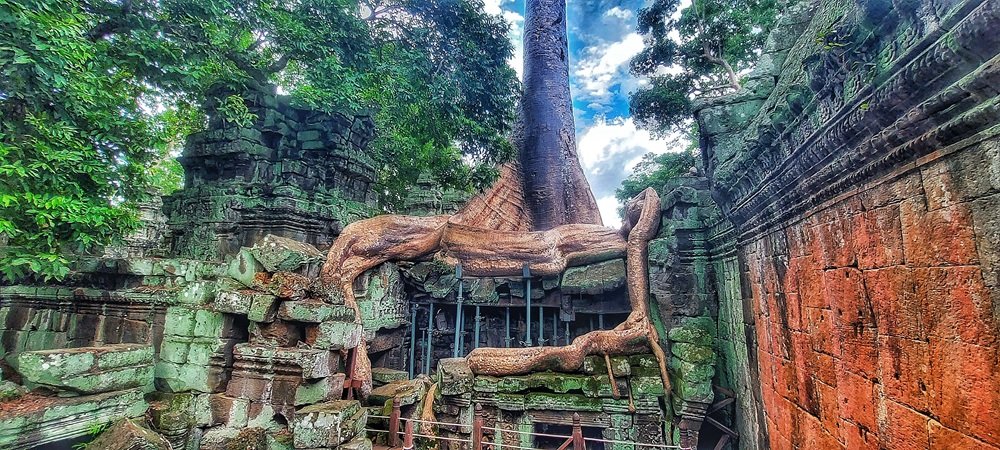
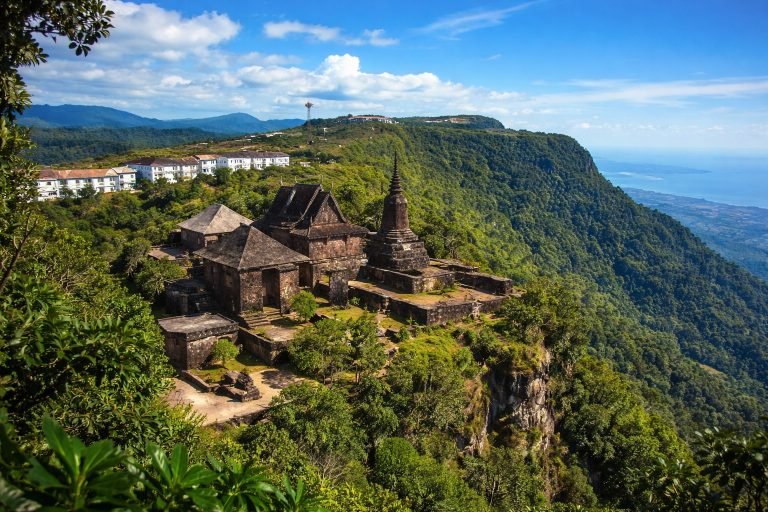
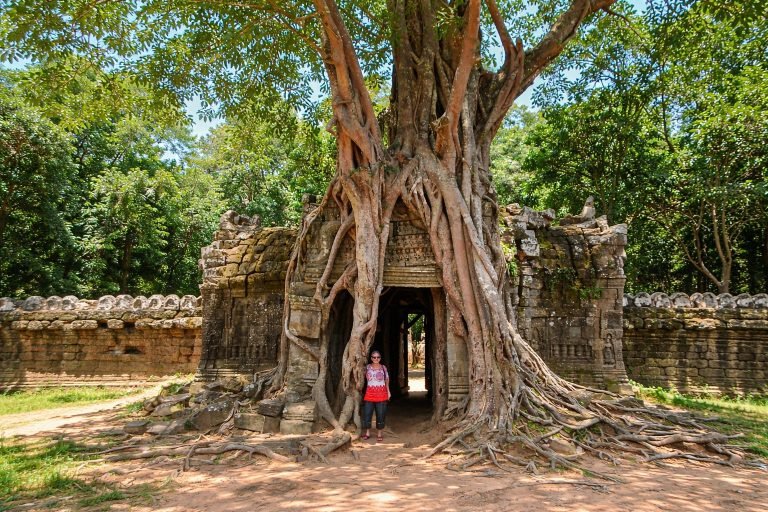
Siem Reap is the most common starting point for a trip to Cambodia, and for good reason. It is the gateway to Angkor Wat and the surrounding temple complex, which is the main highlight for most visitors. Beyond the temples, the city itself is easy to navigate, well set up for tourism, and offers a wide range of restaurants, markets, and nightlife. It is the most straightforward place to arrive, settle in, and get comfortable with how Cambodia works.
This is the best place to stay if it is your first time in the country, if Angkor Wat is a priority, or if you want a balanced mix of culture, convenience, and social atmosphere. Most travelers spend at least two to four days here exploring the temples and nearby attractions. For a deeper look at how to structure your time, this Siem Reap travel guide and this Angkor Wat guide break down what to see and how to plan your visit.
If you want to stay right in the center of everything, the Pub Street and Old Market area is the most convenient base, with restaurants, bars, and shops all within walking distance. 👉 Find hotels near Pub Street in Siem Reap
For a slightly quieter but still central option, the riverside area offers a more relaxed atmosphere while keeping you close to the action. 👉 Browse riverside hotels in Siem Reap
If you prefer more space, boutique stays, or a calmer environment, the outskirts of Siem Reap offer a different experience while still being a short ride into town. 👉 Explore hotels in the outskirts of Siem Reap
Phnom Penh: History, City Life, and Urban Cambodia
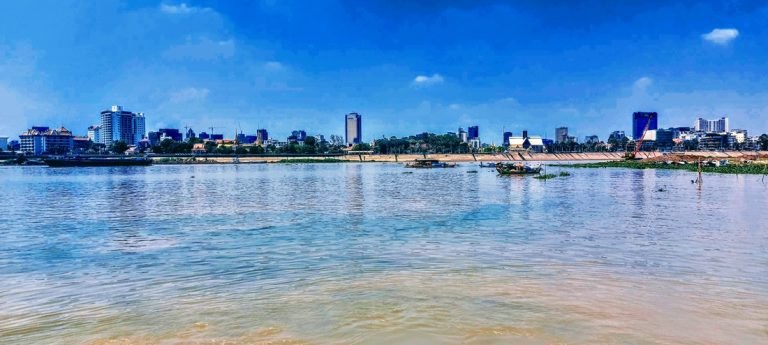
Phnom Penh, the capital of Cambodia, offers a completely different experience from Siem Reap. This is where you come to understand the country’s modern identity, its history, and its faster-paced urban life. The city is home to important sites such as the Killing Fields and Tuol Sleng Genocide Museum, as well as markets, cafés, and a growing food and nightlife scene.
This is the best place to stay if you want to add depth to your trip beyond temples, experience local city life, or explore Cambodia’s recent history. Most travelers spend one to three days here, often as part of a route between Siem Reap and the coast. To plan your time properly, this Phnom Penh travel guide and this Phnom Penh itinerary show how to structure your stay.
The Riverside area (Sisowath Quay) is the most popular place to stay, with easy access to major sights, restaurants, and river views. 👉 Find hotels along Phnom Penh Riverside
For a more local feel with markets, street food, and a slightly less touristy atmosphere, the Russian Market area is a strong option. 👉 Browse hotels near the Russian Market
If you prefer a more modern and polished neighborhood with cafés, restaurants, and a quieter environment, BKK1 is one of the best areas to base yourself. 👉 Explore hotels in BKK1 Phnom Penh
Kampot & Kep: Riverside Living and Coastal Escapes
Kampot and Kep offer a slower, more relaxed side of Cambodia that contrasts sharply with both Siem Reap and Phnom Penh. Kampot is known for its riverside setting, colonial architecture, and access to pepper farms and countryside landscapes, while Kep is a small coastal town famous for its seafood and quiet beaches.
This region is ideal if you want to unwind, spend time in nature, or break up a fast-paced itinerary with something more laid back. It works especially well after visiting Phnom Penh, as it is relatively easy to reach from the capital. For a complete breakdown of what to do here, this Kampot travel guide explains how to structure your time in the area.
In Kampot, most accommodation is spread between the town center and the riverside, with many stays offering a relaxed setting close to the water. 👉 Browse hotels in Kampot
Kep offers a quieter coastal alternative, with simple stays near the sea and easy access to the famous crab market. 👉 Find hotels in Kep Cambodia
Koh Rong & Koh Rong Samloem: Beaches, Islands, and Slow Travel
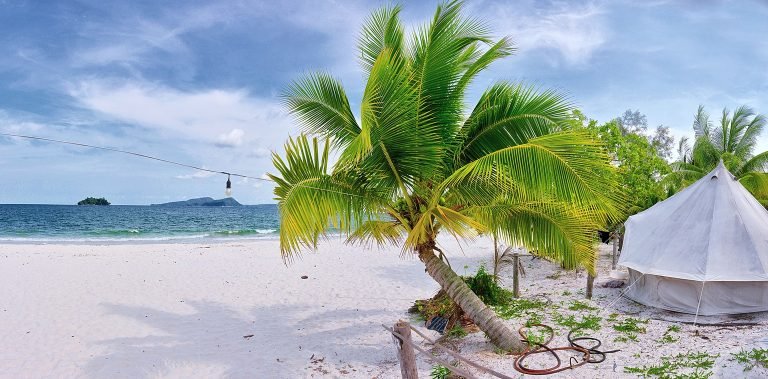
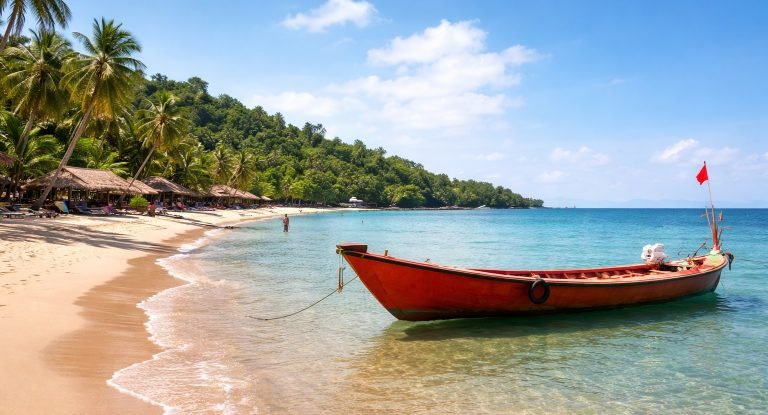
The islands of Koh Rong and Koh Rong Samloem are where you go if your priority is beaches, clear water, and a slower pace of travel. Koh Rong is more developed and has a mix of lively beach areas and quieter stretches, while Koh Rong Samloem is generally more relaxed and better suited for travelers looking to disconnect.
These islands are best added at the end of a trip, once you have explored the main cultural and historical highlights of the country. They are ideal for couples, beach-focused travelers, or anyone looking to slow down after moving between cities. This Koh Rong travel guide breaks down how to choose between the islands and where to stay.
On Koh Rong, staying near the main beach areas gives you access to restaurants, nightlife, and transport connections. 👉 Find hotels on Koh Rong
For a quieter and more laid-back experience, Koh Rong Samloem is the better option, especially around Saracen Bay. 👉 Browse hotels on Koh Rong Samloem
Northeast Cambodia: Nature, Jungle, and Off-the-Beaten-Path Travel
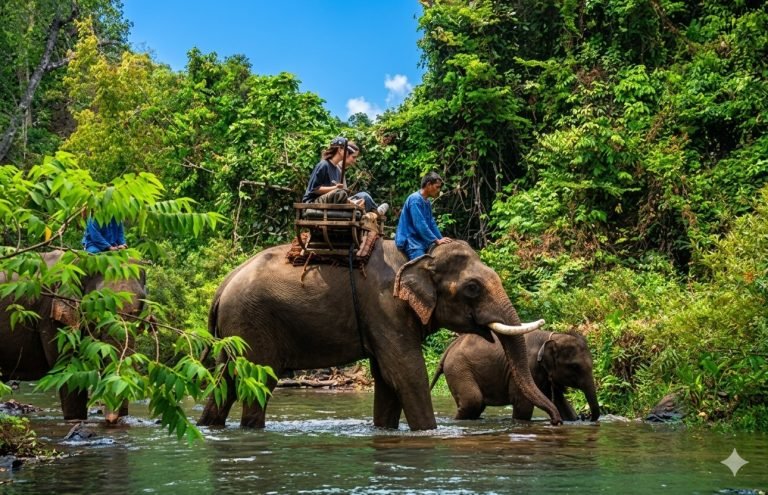
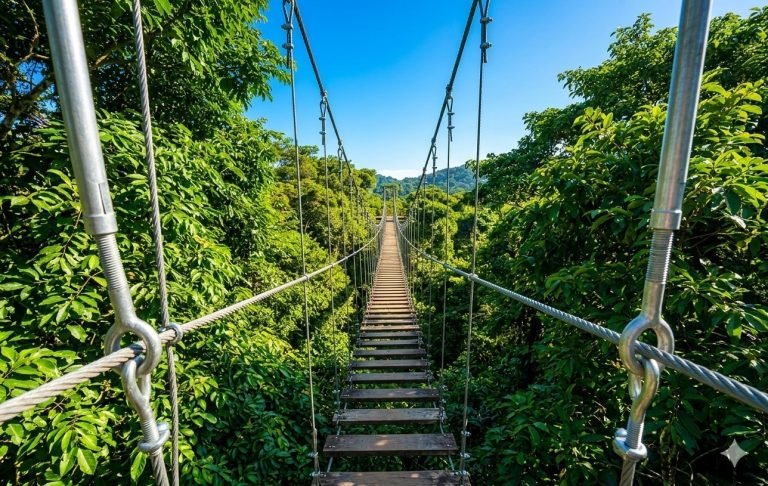
The northeastern provinces of Mondulkiri and Ratanakiri offer a very different experience from the rest of Cambodia. This is where you go for waterfalls, jungle landscapes, and a quieter, less developed side of the country. It is not part of most first-time itineraries, but it adds depth for travelers looking to explore beyond the main highlights.
This region is best suited for travelers with more time, an interest in nature, or a desire to get off the typical tourist route. Infrastructure is more limited, so planning ahead is important. For a deeper look at what to expect, this northeast Cambodia guide explains how to approach this part of the country.
In Mondulkiri, most travelers stay in Sen Monorom, which serves as the main base for exploring the region. 👉 Find hotels in Sen Monorom
In Ratanakiri, Banlung is the main hub, offering access to lakes, waterfalls, and surrounding countryside. 👉 Browse hotels in Banlung
Best Places to Stay in Cambodia by Travel Style
First-Time Visitors
If it is your first time in Cambodia, the easiest and most rewarding combination is usually Siem Reap and Phnom Penh. Siem Reap gives you Cambodia’s most iconic experience through Angkor Wat, while Phnom Penh adds historical depth, city life, and a different perspective on the country. Together, they give first-time visitors a strong introduction without making the trip feel too scattered.
If your time is limited, Siem Reap is usually the better base to prioritize first. It is easier to navigate, more compact, and tends to feel more immediately enjoyable for most travelers. If you have enough time to add a second stop, Phnom Penh makes the trip more complete by adding museums, markets, and a clearer understanding of Cambodia beyond the temple circuit.
To build a route that connects these stops properly, this Cambodia itinerary guide helps map out your trip, while this Cambodia travel guide gives a broader overview of how these destinations fit together.
Budget Travelers
Cambodia works very well for budget travelers, but some places stretch your money further than others. Siem Reap remains one of the best-value bases because it has a huge range of accommodation, food, and transport options across different price points. Phnom Penh can also work well on a budget, especially if you stay outside the most polished expat-heavy areas and focus on neighborhoods with more local restaurants and guesthouses.
Kampot is another strong choice for budget-conscious travelers who want a slower pace without losing access to cafés, hostels, and affordable private rooms. The islands can still work on a budget, but prices tend to rise faster there, especially once you factor in ferries, beachfront stays, and the limited competition in some areas. Northeast Cambodia can also be affordable, but transport costs and longer travel times can reduce some of that value.
If budget is one of your main planning factors, this Cambodia budget guide gives a clearer idea of what to expect in different parts of the country.
Luxury Travelers
Luxury travelers will usually find the best range of high-end stays in Siem Reap and Phnom Penh. Siem Reap has a strong selection of boutique hotels, heritage-style properties, and upscale resorts that work especially well for travelers visiting Angkor Wat in comfort. Phnom Penh, meanwhile, offers more modern luxury through larger hotels, serviced apartments, rooftop pools, and polished dining scenes.
If the goal is a more relaxed and scenic kind of comfort, the islands can also work well, especially for beachfront stays and quieter resort-style experiences. Kampot and Kep can deliver charm and atmosphere, but they are generally more about boutique character than full-scale luxury. Northeast Cambodia is usually not the part of the country people choose for a luxury-focused trip, unless the appeal is remoteness rather than comfort in the traditional sense.
For travelers combining comfort with highlights, the strongest pairing is often Siem Reap for culture and Phnom Penh or the islands for contrast.
Couples and Honeymooners
For couples, the best places to stay in Cambodia usually depend on whether the trip is more about culture, relaxation, or a mix of both. Siem Reap works well for couples who want beautiful hotels, memorable temple visits, and easy evenings with good restaurants and bars. It has enough atmosphere to feel special without requiring difficult logistics.
Kampot and Kep are both strong choices for couples looking for something slower and more intimate. Kampot offers riverside stays, countryside views, and a softer pace, while Kep adds a low-key coastal feel. If beach time is a priority, Koh Rong Samloem is usually the more romantic island option, especially for travelers who want a quieter setting rather than nightlife.
A well-balanced couples trip often combines Siem Reap with either Kampot and Kep or one of the islands, depending on whether you want more scenery, more beach time, or simply more rest.
Slow Travelers and Longer Stays
If you prefer to settle into a place rather than move constantly, Phnom Penh, Kampot, and Siem Reap are usually the strongest bases. Phnom Penh works well for longer stays because it has the most urban convenience, the widest food scene, and a more everyday rhythm that makes it easier to live in rather than just visit. Siem Reap is also comfortable for a longer stay, especially if you want a smaller, more manageable city with access to culture and a strong tourism infrastructure.
Kampot is one of the best places in Cambodia for slow travel. It is relaxed, scenic, and easy to settle into for a while, especially if you enjoy cafés, riverside settings, and day-to-day travel that feels less rushed. The islands can work for shorter periods of slowing down, but for a genuinely practical longer stay, they are usually less convenient than the mainland.
If you are planning to move through several destinations at a slower pace, this Cambodia transport guide helps you understand how to connect them efficiently without turning the trip into a constant series of long travel days.
Best Areas to Stay Within Each Destination
Siem Reap
Where you stay in Siem Reap has a direct impact on how your evenings feel and how easily you move between the temples and the city. If you want energy, convenience, and everything within walking distance, the Pub Street and Old Market area is the most central base. This is where the city comes alive at night, with restaurants, bars, and markets all clustered together. It is ideal if you enjoy having options at your doorstep and do not mind a bit of noise and activity in the evenings. 👉 Find central hotels near Pub Street
If you want to stay close to the center but prefer a more relaxed atmosphere, the riverside area offers a better balance. You are still within easy reach of the main sights, but the pace is slower, especially in the evenings. This is a good middle ground if you want convenience without being in the busiest part of town. 👉 Browse riverside stays in Siem Reap
The outskirts of Siem Reap are a different experience altogether. This is where you find boutique hotels, quieter resorts, and more space, often surrounded by greenery or tucked away from the main roads. It works best if you value calm over nightlife and are happy to rely on short tuk-tuk rides to get into town. 👉 Explore hotels on the outskirts of Siem Reap
If you are unsure how these areas fit into your overall plan, this detailed Siem Reap guide and this Angkor Wat planning guide help you align your stay with your temple visits.
Phnom Penh
Phnom Penh is more spread out, so choosing the right area matters more than in Siem Reap. The Riverside (Sisowath Quay) is the most practical base, especially if it is your first time in the city. You are close to major landmarks, the riverfront, and a wide range of restaurants and cafés. It is busy and sometimes chaotic, but it makes getting around simple. 👉 Find hotels along the Phnom Penh riverfront
The Russian Market area offers a more local and lived-in feel. It is less polished but more authentic, with street food, markets, and a different rhythm compared to the riverside. This is a better choice if you want to see a more everyday side of Phnom Penh rather than staying in the most tourist-oriented area. 👉 Browse stays near the Russian Market
BKK1 is the most modern and comfortable neighborhood in the city. It is cleaner, quieter, and filled with cafés, restaurants, and co-working spaces. This is where many expats stay, and it is a strong choice if you prefer a more polished environment, even if it feels slightly removed from the raw energy of the city. 👉 Explore hotels in BKK1 Phnom Penh
To understand how these areas connect to the main sights, this Phnom Penh travel guide and this Phnom Penh itinerary breakdown help you structure your stay.
Kampot & Kep
Kampot is not about choosing the “right neighborhood” as much as choosing the kind of atmosphere you want. Staying in the town center gives you easy access to cafés, restaurants, and a small but lively social scene. It is convenient and walkable, making it a good base if you want to keep things simple.
The riverside areas just outside town are where Kampot becomes something different. Many stays are set along the river, offering views, quieter surroundings, and a slower pace that feels far removed from city life. This is the better choice if you are coming here to unwind rather than to stay busy. 👉 Browse accommodation options in Kampot
Kep takes that slower pace even further. It is quieter, less developed, and focused around the coast. You come here for seafood, sea views, and a break from movement rather than a packed itinerary. 👉 Find places to stay in Kep
For a clearer idea of how these two destinations work together, this Kampot region guide explains how to approach your stay.
Koh Rong & Koh Rong Samloem
On Koh Rong, the main choice is between energy and quiet. Staying near the main beach areas means easy access to restaurants, nightlife, and boat connections. It is the more social option and works well if you want a mix of beach time and activity. 👉 Browse hotels on Koh Rong
Koh Rong Samloem offers a very different experience. It is quieter, slower, and more focused on relaxation. Saracen Bay is the main area, with calm water and a more laid-back atmosphere. This is where you go if you want to disconnect rather than go out. 👉 Explore stays on Koh Rong Samloem
If you are deciding between the two, this island comparison guide helps you choose based on your travel style.
Northeast Cambodia
In northeast Cambodia, the choice is less about neighborhoods and more about which town you base yourself in. Sen Monorom in Mondulkiri is the main hub, and it works well because it gives you access to waterfalls, jungle landscapes, and nearby villages. The pace here is slower, and the experience is more about nature than structured sightseeing. 👉 Find hotels in Sen Monorom
Banlung in Ratanakiri plays a similar role, but with a slightly different landscape, including crater lakes and surrounding countryside. It is less visited, which makes it feel more remote, but also requires more planning. 👉 Browse accommodation in Banlung
This part of Cambodia is best approached with a plan, so this northeast Cambodia travel guide helps you understand how to structure your stay.
How to Choose Where to Stay in Cambodia
Choosing where to stay in Cambodia becomes much easier once you stop thinking in terms of one base and start thinking in terms of a route. Most trips work best when you combine two or three destinations that offer different experiences. The key is to match those destinations to your timeframe, your priorities, and how fast or slow you want to travel.
Start With Your Timeframe
Your total number of days in Cambodia is the biggest factor in deciding where to stay. If you only have three to five days, trying to cover too many places will turn your trip into constant travel. In that case, it is better to stay in one main destination, usually Siem Reap, and focus on the temples and nearby experiences.
With seven to ten days, you can comfortably combine two bases, most commonly Siem Reap and Phnom Penh, or Siem Reap and Kampot. This gives you a mix of culture, city life, and a slower destination without rushing between locations. If you have more than ten days, you can expand your route further by adding the islands or the northeast, depending on what interests you most.
If you are still figuring out how to connect these stops, this step-by-step Cambodia itinerary breakdown shows how to structure your trip without overloading your schedule.
Decide What You Want Most From the Trip
Cambodia offers very different experiences depending on where you go, so it helps to be clear about what matters most to you. If your priority is history and culture, Siem Reap and Phnom Penh should be at the core of your trip. Siem Reap gives you Angkor Wat and the temple complex, while Phnom Penh adds historical context and a deeper understanding of the country.
If you are looking for a slower, more relaxed experience, Kampot and Kep are better choices. These destinations are less about ticking off sights and more about enjoying the setting, whether that is riverside views, countryside landscapes, or coastal simplicity. For beach-focused travel, the islands of Koh Rong and Koh Rong Samloem are the natural addition, offering clear water and a completely different pace.
For travelers who want a broader overview of how these experiences fit together, this complete guide to traveling across Cambodia helps you decide what to prioritize.
Balance Travel Time and Energy
Distances in Cambodia are not huge, but travel can still take time, especially when moving between regions. Buses, private transfers, and ferries are all part of the experience, and each move between destinations can take half a day or more. That is why it is important to avoid adding too many stops just because they look close on a map.
A good rule is to spend at least two to three nights in each place. This gives you enough time to settle in, explore, and actually enjoy the destination rather than constantly packing and moving. Adding too many one-night stops usually leads to a rushed experience where you see less, not more.
To get a realistic idea of travel times and connections, this Cambodia transport and travel guide explains how to move between destinations efficiently.
Choose the Right Type of Base
Each destination in Cambodia serves a different role, and understanding that makes it easier to build a balanced trip. Siem Reap works as a cultural base, Phnom Penh as a city base, Kampot as a slow travel base, the islands as a relaxation base, and the northeast as a nature base. Instead of trying to do everything in one place, it is better to combine two or three of these depending on your interests.
For example, a first-time trip often combines Siem Reap and Phnom Penh, while a more relaxed route might combine Siem Reap with Kampot and Kep. If you want to end your trip on a slower note, adding the islands after exploring the mainland is usually the most natural flow.
Avoid Overplanning and Leave Room to Adjust
One of the advantages of traveling in Cambodia is that it is relatively easy to adjust your plans as you go. While it helps to know your main stops, you do not need to lock in every detail in advance. Leaving some flexibility allows you to stay longer in places you enjoy and move on more quickly from those that do not suit your travel style.
Choosing where to stay is ultimately about creating a route that feels balanced. Once you have that structure in place, everything else, from booking accommodation to planning daily activities, becomes much easier.
Final Thoughts on Where to Stay in Cambodia
Where you stay in Cambodia is what defines the structure of your trip. This is not a destination where you pick one hotel and explore everything from there. The country works best when you treat it as a series of connected bases, each one offering a different experience. Getting that structure right from the beginning makes everything else easier, from transport to daily planning to how your trip actually feels on the ground.
For official travel information, regional highlights, and updates, you can also refer to Cambodia’s official tourism website, which provides a useful overview of destinations across the country.
For most travelers, the strongest starting point is Siem Reap. It is easy to navigate, well set up for visitors, and gives you access to Angkor Wat, which is the main reason many people come to Cambodia in the first place. Spending a few days here allows you to explore the temples at a comfortable pace while still enjoying the city itself. If you want to see how to organize your time around the temples and the city, this complete breakdown of things to do in Siem Reap and this practical guide to visiting Angkor Wat help you plan those days properly.
Adding Phnom Penh gives your trip a different kind of depth. It shifts the focus from ancient history to modern Cambodia, with a mix of important historical sites, markets, and a more urban rhythm. The capital is not about ticking off sights in the same way as Siem Reap, but about understanding the country in a broader context. If you are including Phnom Penh, this guide to exploring Phnom Penh and this how to spend your time in Phnom Penh show how to approach it without feeling rushed.
From there, the direction you take depends on what you want your trip to feel like. If you want to slow down, Kampot and Kep offer a quieter, more relaxed atmosphere built around riverside views, countryside landscapes, and coastal simplicity. These destinations work best as a contrast to the cities, giving you space to unwind rather than move constantly. To understand how this region fits into a broader trip, this Kampot and Kep travel guide breaks down what to expect.
If your priority is beaches and a complete change of pace, the islands are the natural next step. Koh Rong offers a mix of social beaches and quieter areas, while Koh Rong Samloem is more focused on relaxation and slower travel. These are usually best placed at the end of your trip, once you have explored the mainland. If you are deciding whether to include them, this guide to Koh Rong and Koh Rong Samloem explains how to choose between the two.
For travelers with more time or a specific interest in nature, northeast Cambodia adds another layer entirely. Mondulkiri and Ratanakiri are less visited, more remote, and focused on waterfalls, jungle landscapes, and a slower pace. They are not essential for a first trip, but they can be a strong addition if you want to go beyond the main route. This northeast Cambodia travel overview helps you decide whether it fits your itinerary.
The most important thing is to avoid trying to do everything at once. Cambodia rewards a simple structure: two or three well-chosen bases, enough time in each place, and a clear idea of what each destination adds to your trip. If you are still refining that structure, this Cambodia itinerary guide shows how to connect these destinations into a route that makes sense, while this guide to getting around Cambodia explains how to move between them without turning your trip into constant travel.
Once you have chosen your bases, everything else falls into place. You can narrow down the right areas within each destination, find accommodation that fits your travel style, and build your days around what is nearby. Cambodia is not difficult to plan, but it becomes much more enjoyable when your route is clear from the start.
FAQ: Where to Stay in Cambodia
-
Where is the best place to stay in Cambodia for first-time visitors?
For first-time visitors, Siem Reap is usually the best place to stay because it is easy to navigate, well set up for travelers, and gives you access to Angkor Wat. Many trips are then extended with a few days in Phnom Penh to add historical context and a different perspective on the country. -
Is it better to stay in Siem Reap or Phnom Penh?
Siem Reap is generally better for first-time travelers and those focused on temples and a more relaxed atmosphere. Phnom Penh offers a more urban experience with important historical sites and a faster pace. If possible, staying in both gives you a more complete understanding of Cambodia. -
How many places should you stay in Cambodia?
Most trips work best with two to three bases. With limited time, one or two locations are enough. With more time, adding a third destination such as Kampot, the islands, or northeast Cambodia creates a more balanced trip without feeling rushed. -
Where should I stay in Cambodia for temples and culture?
Siem Reap is the main base for temples, including Angkor Wat and the surrounding complex. Phnom Penh adds cultural and historical depth through museums, markets, and important sites linked to Cambodia’s recent history. -
Where should I stay in Cambodia for beaches?
Koh Rong and Koh Rong Samloem are the main beach destinations in Cambodia. Koh Rong offers a mix of social beaches and quieter areas, while Koh Rong Samloem is better suited for a slower, more relaxed experience. -
What is the best area to stay in Siem Reap?
The Pub Street and Old Market area is the most central and convenient, especially for first-time visitors. The riverside offers a quieter alternative, while the outskirts are better for those looking for more space and a more relaxed environment. -
What is the best area to stay in Phnom Penh?
The Riverside is the most convenient for sightseeing and first-time visits. BKK1 is more modern and comfortable with cafés and restaurants, while the Russian Market area offers a more local and less tourist-focused atmosphere. -
Is Kampot a good place to stay in Cambodia?
Kampot is a great place to stay if you want to slow down and experience a quieter side of Cambodia. It is known for its riverside setting, countryside views, and relaxed pace, making it a good contrast to busier destinations like Phnom Penh. -
Where should I stay in Cambodia for a relaxing trip?
Kampot, Kep, and Koh Rong Samloem are the best choices for a relaxing trip. These destinations focus more on scenery, slower travel, and time to unwind rather than packed sightseeing. -
Is it worth staying on Koh Rong or Koh Rong Samloem?
Yes, especially if you want beach time at the end of your trip. Koh Rong is better for a mix of activity and nightlife, while Koh Rong Samloem is quieter and more focused on relaxation. -
Where should I stay in Cambodia on a budget?
Siem Reap and Phnom Penh both offer strong budget options, including hostels and affordable guesthouses. Kampot is also a good choice for budget travelers looking for a slower pace without high costs. -
Where should I stay in Cambodia for luxury hotels?
Siem Reap and Phnom Penh have the widest range of luxury hotels, from boutique resorts to modern high-end stays. The islands can also offer upscale beachfront accommodation, depending on the location. -
Is it easy to move between places in Cambodia?
Yes, but travel times can still be longer than expected. Buses, private transfers, and ferries connect most destinations, but it is best to plan for at least half a day when moving between major locations. -
Should I book all my hotels in advance in Cambodia?
It is not always necessary to book everything in advance, especially outside peak season. Many travelers book their first destination and then adjust as they go, depending on how their trip evolves. -
Where should I stay in Cambodia for nature and jungle experiences?
Mondulkiri and Ratanakiri in northeast Cambodia are the best regions for nature, waterfalls, and jungle landscapes. These areas are less visited and require more planning, but they offer a very different experience from the rest of the country.
Travel Resources to Plan, Book & Stay Connected
Use these tools and guides to stay connected abroad, find inspiration for your next trip, and book your flights, stays and gear with confidence.
Disclosure: This article may contain affiliate links. If you make a purchase through a link, I may receive a commission at no extra cost to you. I only share recommendations I believe are genuinely useful, and all opinions are my own. AI was used in this post for research and drafting purposes.

Comment (0)