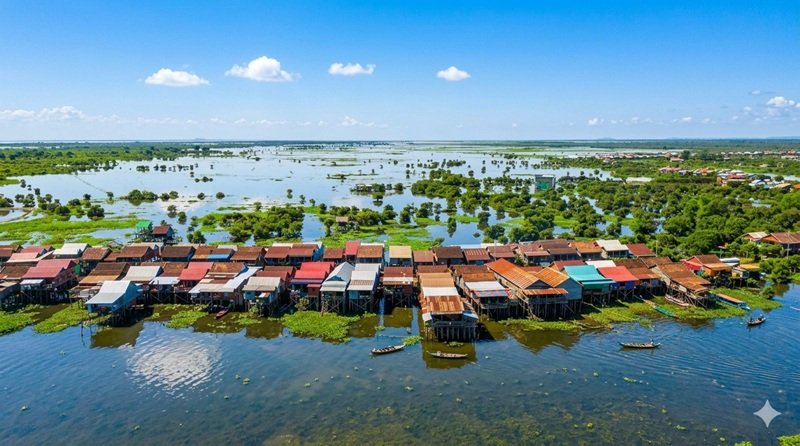
Tonlé Sap Floating Villages: What This Guide Covers
The Tonlé Sap floating villages near Siem Reap are one of Cambodia’s most talked-about experiences, but they are also one of the most misunderstood. These communities are built around a lake that changes dramatically throughout the year, where houses, schools, shops, and daily life adapt to rising and falling water levels. Visiting can be memorable, but the experience depends heavily on which village you choose and how you approach it.
This guide gives you a clear, honest breakdown of what to expect so you can decide if it is worth your time and how to visit in a way that actually reflects life on the lake. If you are planning your time in the region more broadly, this Siem Reap travel guide shows how Tonlé Sap fits into your itinerary, while this Cambodia destination overview helps you understand how it connects to the rest of the country.
- The difference between Kampong Phluk, Kampong Khleang, and Chong Kneas
- What the floating villages actually look like in dry and wet seasons
- Whether Tonlé Sap is worth visiting based on your expectations
- How to visit, including tours, transport options, and typical costs
- What to expect during the boat experience and village visit
- Common scams and how to avoid them without ruining the experience
- Practical tips to help you choose the right village and approach your visit properly
Tonlé Sap Floating Villages: What They Are and Why Visit
Tonlé Sap is often described simply as a lake, but it is actually part of a much larger and more complex system that includes both the lake itself and the Tonlé Sap River. This river connects the lake to Phnom Penh, where it meets the Mekong River, and it plays a crucial role in one of the region’s most unusual natural phenomena. Depending on the season, the river changes direction, flowing into the lake during the wet season and draining back toward the Mekong in the dry season. This constant movement of water is what shapes life across the entire Tonlé Sap region.
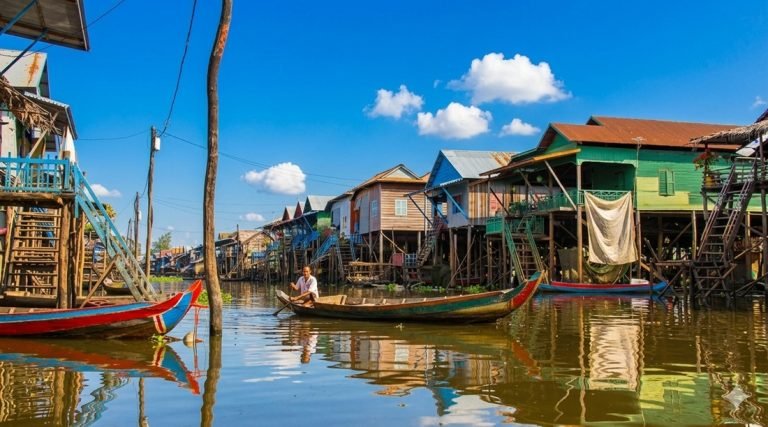
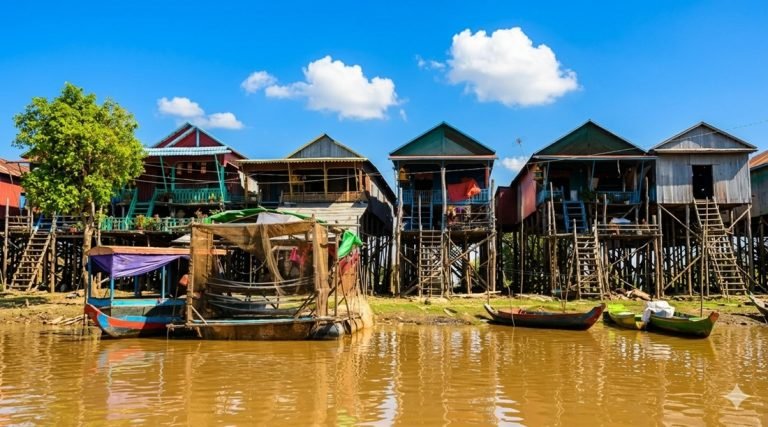
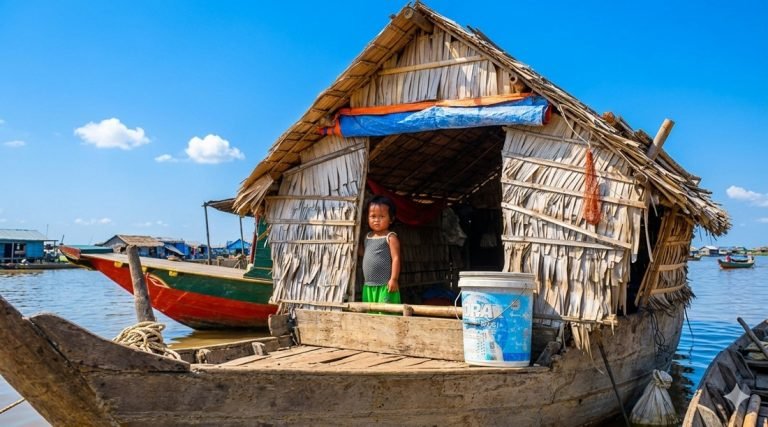
The floating villages around Tonlé Sap exist because of these dramatic seasonal changes. In some areas, houses are built on tall stilts rising six to eight meters above the ground, designed to withstand the yearly floods. In others, entire communities float, shifting position as water levels rise and fall. These are not constructed attractions but real, functioning villages where people have adapted to a landscape that is never static. Schools, markets, temples, and homes all operate within this environment, creating a way of life that is closely tied to the rhythm of the water.
For travelers visiting Siem Reap, Tonlé Sap offers something completely different from the temples of Angkor. While Angkor Wat and the surrounding temples are focused on history, architecture, and ancient civilization, the floating villages show a living, modern-day reality shaped by nature and necessity. It is a contrast not only to the temples, but also to the beaches and islands in southern Cambodia, where the focus shifts toward relaxation and coastal scenery. Visiting Tonlé Sap adds another layer to your trip, giving you a broader perspective on how people live across the country today.
Part of the appeal of Tonlé Sap is this sense of contrast. One day you are walking through centuries-old temple ruins, and the next you are moving slowly through waterways lined with homes, boats, and daily life unfolding on the water. In the right conditions, especially during the wet season when the lake expands and floods the surrounding forests, the experience can feel immersive and visually striking.
At the same time, expectations need to be realistic. Not every floating village visit feels authentic, and some areas closer to Siem Reap have become heavily commercialized. The quality of your experience depends largely on which village you visit and how your trip is organized. Understanding this upfront makes it much easier to approach Tonlé Sap in the right way and get something meaningful out of the visit.
What Is Tonlé Sap and Why It Matters
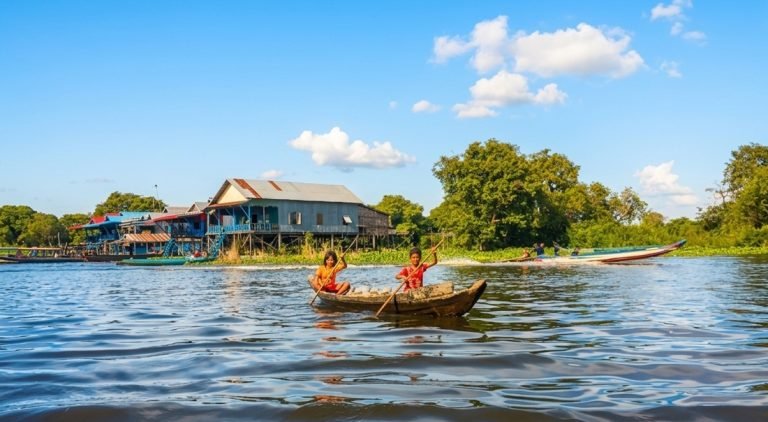
Tonlé Sap is the largest freshwater lake in Southeast Asia, but its importance goes far beyond size. It is one of the most productive inland fisheries in the world and plays a central role in Cambodia’s economy, food supply, and daily life. Millions of people depend on the lake directly or indirectly, whether through fishing, farming, transport, or trade connected to the water system.
What makes Tonlé Sap unique is how it interacts with the Mekong River. Through the Tonlé Sap River, which connects the lake to Phnom Penh, water flows in a cycle that changes direction depending on the season. During the wet season, rising Mekong levels push water back into the lake, causing it to expand dramatically and flood surrounding forests and plains. In the dry season, the flow reverses, and water drains out of the lake toward the Mekong. This natural cycle transforms the entire region several times a year.
These seasonal changes are not just environmental, they define how people live. Entire communities have adapted to this rhythm, building homes on stilts or creating floating structures that move with the water. Fishing patterns, travel routes, school access, and even local economies shift depending on water levels. Visiting Tonlé Sap is not just about seeing a lake, but about understanding a system that continuously reshapes the landscape and the lives of the people who depend on it.
The lake is also recognized as a UNESCO Biosphere Reserve, highlighting its ecological importance. It supports a wide range of wildlife, including fish species that are critical to the region’s food chain, as well as birdlife that depends on the flooded forests during the wet season. These ecosystems are closely tied to the same water cycles that sustain the floating villages, making Tonlé Sap one of the most important natural environments in Cambodia.
Understanding this context adds depth to a visit. Instead of seeing the floating villages as isolated attractions, it becomes clear that they are part of a much larger system where water, nature, and human life are tightly connected. This is what makes Tonlé Sap different from other destinations in Cambodia and why it holds such significance beyond tourism.
Which Floating Villages to Visit Near Siem Reap
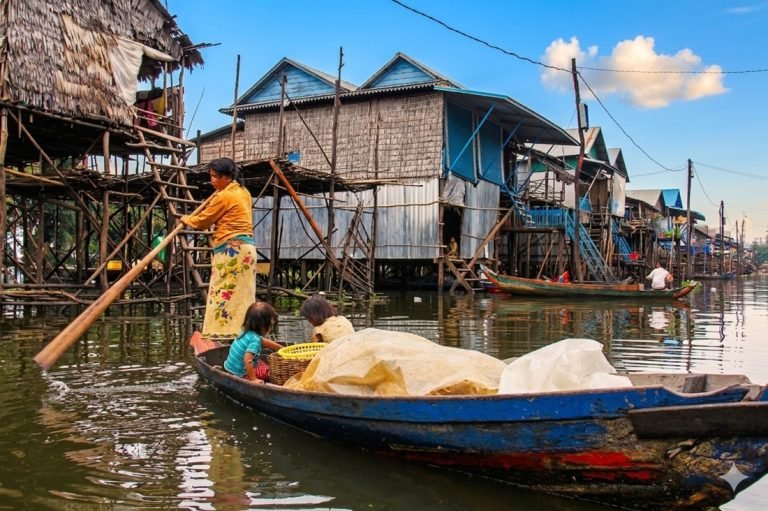
Not all Tonlé Sap floating villages offer the same experience. While they are often grouped together, Kampong Phluk, Kampong Khleang, and Chong Kneas differ significantly in atmosphere, accessibility, and how tourism is handled. Choosing the right one is one of the most important decisions you will make when planning a visit, as it directly affects how authentic, relaxed, or commercial your experience feels.
Kampong Phluk
Kampong Phluk is the most popular choice for good reason. Instead of floating houses, this village is defined by its tall stilted homes, some rising six to eight meters above the ground during the dry season. When the water levels rise in the wet season, the entire area floods, and boats move through what becomes a submerged landscape of homes, trees, and waterways.
One of the highlights of Kampong Phluk is the flooded mangrove forest, which can be explored by small boat during high water levels. This creates a more immersive and visually striking experience compared to other villages. It feels less like a single stop and more like moving through a living environment that changes with the seasons.
Kampong Phluk is a good choice if you want a balanced experience that combines accessibility, scenery, and a relatively authentic feel. It still receives a steady number of visitors, but it is generally less aggressive in terms of tourism compared to Chong Kneas. If you are visiting during the wet season, this is often the most rewarding option.
Kampong Khleang
Kampong Khleang is larger, more spread out, and noticeably less visited than the other villages. It is located farther from Siem Reap, which naturally limits the number of tourists who make the journey. Because of this, the atmosphere tends to feel more local and less shaped by tourism.
Like Kampong Phluk, the village changes dramatically with the seasons. In the dry season, the towering stilts of the houses become especially visible, giving a clear sense of how high the water rises during the wet months. In the wet season, the area transforms into a network of waterways similar to Kampong Phluk, but on a larger scale and with fewer boats around.
Kampong Khleang is the best option if you are looking for a quieter and more authentic experience and do not mind the longer travel time to get there. It feels less curated and more reflective of everyday life on the lake, but it also requires a bit more effort to visit.
Chong Kneas
Chong Kneas is the closest floating village to Siem Reap and the easiest to access, which is why it is often included in quick tours. However, this convenience comes with trade-offs. Over time, the area has become heavily commercialized, and many travelers find the experience less authentic compared to the other villages.
The village is largely built around tourism, with structured boat routes, floating shops, and stops that can feel staged rather than natural. It is also the place most commonly associated with inflated pricing, aggressive selling, and organized stops that are designed more for profit than for understanding local life.
Chong Kneas can still be visited, especially if time is very limited, but it requires a more cautious approach. If you do choose to go, it is important to book through a reputable operator and understand what is included beforehand. For most travelers, Kampong Phluk or Kampong Khleang offer a more rewarding experience overall.
In practical terms, Kampong Phluk is usually the best all-around choice, Kampong Khleang is the most authentic but requires more effort, and Chong Kneas is the most convenient but also the most commercial. Understanding these differences helps you choose a village that matches your expectations and avoid a disappointing visit.
Is Tonlé Sap Worth Visiting?
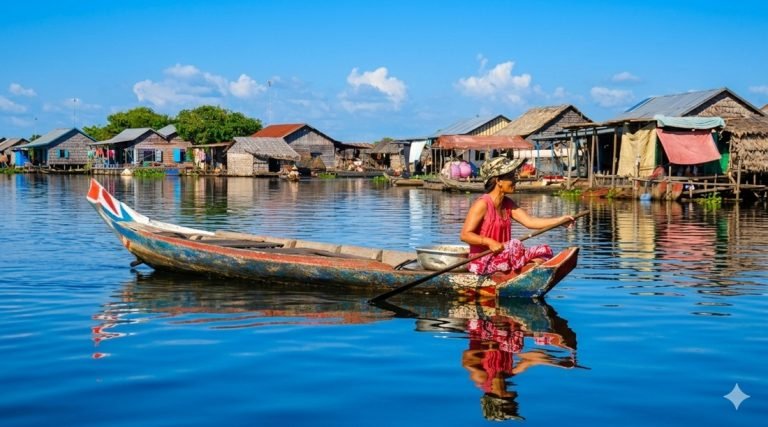
Whether Tonlé Sap is worth visiting depends almost entirely on your expectations and how you choose to experience it. For some travelers, it becomes one of the most memorable parts of their time in Cambodia. For others, it can feel underwhelming or overly commercial if approached the wrong way. The difference usually comes down to timing, village choice, and how well you understand what you are actually going to see.
Tonlé Sap is worth visiting if you are interested in seeing a different side of Cambodia beyond temples and cities. The floating and stilted villages offer a glimpse into a way of life shaped by water, where daily routines depend on seasonal changes and local resources. When visited in the right conditions, especially during the wet season, the experience can feel immersive, with boat journeys through flooded forests and villages that appear to rise directly out of the water.
It is also a strong addition to your itinerary if you are spending several days in Siem Reap and want to break up temple visits with something completely different. The contrast between Angkor’s historical sites and the living communities on Tonlé Sap adds depth to your trip and helps you understand Cambodia beyond its most famous landmarks.
However, Tonlé Sap is not for everyone. If your expectation is a purely scenic or untouched environment, you may find parts of the experience disappointing, especially in more commercialized areas. Some villages, particularly those closer to Siem Reap, can feel structured around tourism, with organized stops and interactions that are less natural. Visiting during the dry season can also change the experience significantly, as low water levels expose the landscape and limit access to certain areas.
The visit is also shaped by how your trip is organized. Poorly planned tours or visits to the wrong village can lead to experiences that feel rushed or overly focused on selling rather than showing daily life. This is why choosing the right village and approaching the visit with realistic expectations is essential.
In simple terms, Tonlé Sap is worth visiting if you are curious about how people live on and around the lake and are willing to approach it as a cultural and environmental experience rather than a traditional sightseeing attraction. If you are looking for something polished, purely scenic, or similar to the temples of Angkor, it may not meet those expectations.
When done properly, with the right village and the right mindset, Tonlé Sap can add a meaningful and very different perspective to your time in Cambodia. When done poorly, it can feel like just another tourist stop. The difference lies in the choices you make before you go.
How to Visit Tonlé Sap Floating Villages
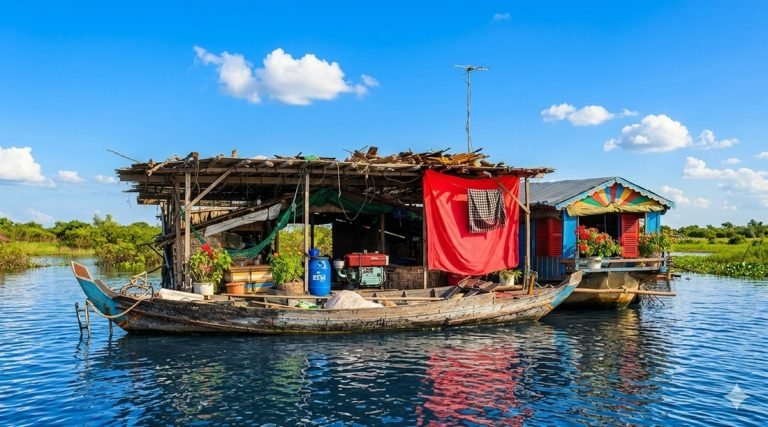
Most travelers visit Tonlé Sap from Siem Reap, and the journey is relatively straightforward once you understand your options. The villages are located between 30 minutes and 1.5 hours from the city depending on which one you choose, so visiting is typically done as a half-day or full-day trip. The main decision is whether to go with an organized tour or arrange the visit independently.
Visiting with a Tour
For most people, joining a tour is the easiest and most practical way to visit Tonlé Sap. Tours usually include transport from Siem Reap, a boat ride through the village, and sometimes additional stops such as flooded forests or sunset viewpoints. This removes the need to organize transport and negotiate boat prices yourself, which can simplify the experience, especially if you are unfamiliar with the area.
Browse Tonlé Sap day trips and floating village tours, including boat experiences, mangrove visits, and guided trips from Siem Reap.
View Tonlé Sap toursTour prices vary depending on the village, group size, and inclusions, but most standard trips fall within a mid-range price bracket. More expensive options may include smaller groups, better transport, or extended routes through less crowded areas. Choosing a well-reviewed operator can make a noticeable difference in how structured or rushed the experience feels.
Visiting Independently
It is also possible to visit Tonlé Sap independently by hiring a tuk-tuk or private driver from Siem Reap and arranging a boat at the village. This gives you more control over timing and allows you to choose where you go, but it requires a bit more effort. Prices are not always fixed, and without prior research, it is easy to overpay or end up at a less ideal entry point.
Independent visits tend to work better for Kampong Phluk and Kampong Khleang, where the experience feels more open and less structured. However, this option is best suited to travelers who are comfortable organizing logistics on the ground and confirming details before setting out.
Travel Time and Logistics
Travel time depends on the village you choose. Chong Kneas is the closest at around 30 minutes from Siem Reap, Kampong Phluk typically takes 45 to 60 minutes, and Kampong Khleang can take up to 1.5 hours. Road conditions are generally good, but the final approach to the villages can be slower depending on the season and water levels.
Once you arrive, the experience shifts to the water. Boat rides usually last between one and three hours depending on the route and whether additional stops are included. In the wet season, boats move directly through flooded areas and forests, while in the dry season, routes are more limited and focused on the main waterways.
Whichever option you choose, the key is to understand what is included before you go. Transport, boat fees, and optional stops can vary significantly, so confirming details in advance helps avoid confusion and ensures you get the experience you are expecting.
What to Expect of the Experience
A visit to the Tonlé Sap floating villages is less like ticking off a single landmark and more like moving through a living environment that changes from season to season. The experience usually begins with the drive out from Siem Reap, which already starts to shift the mood away from the city and the temple circuit. As you leave the main tourist areas behind, the landscape opens up into flatter countryside, smaller roads, rice fields, and local villages, which helps set the tone for a very different kind of outing.
Once you reach the departure point, the experience changes again. Depending on the village and the season, you may board a larger motorboat directly, transfer from a dock area, or walk through a stilted settlement before getting onto the water. This first impression can vary a lot. In the wet season, everything feels more immersive because the water is high and the villages seem to emerge directly from the lake and flooded forest. In the dry season, the same places can look harsher and more exposed, with dusty ground, visible stilts, and boats moving through narrower channels rather than wide flooded areas.
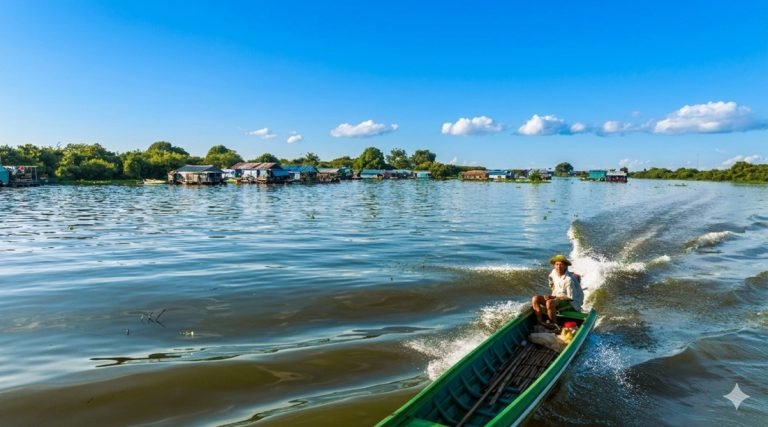
The boat ride itself is the core of the visit. Rather than arriving at one fixed attraction, you move slowly through a landscape where homes, boats, shops, and daily routines are all shaped by the water. In villages like Kampong Phluk and Kampong Khleang, one of the striking things is the sheer scale of the stilt houses. During the dry season, they can tower above the ground, making it clear just how high the water rises later in the year. In the wet season, these same houses appear to stand directly above the water, and the entire village feels transformed.
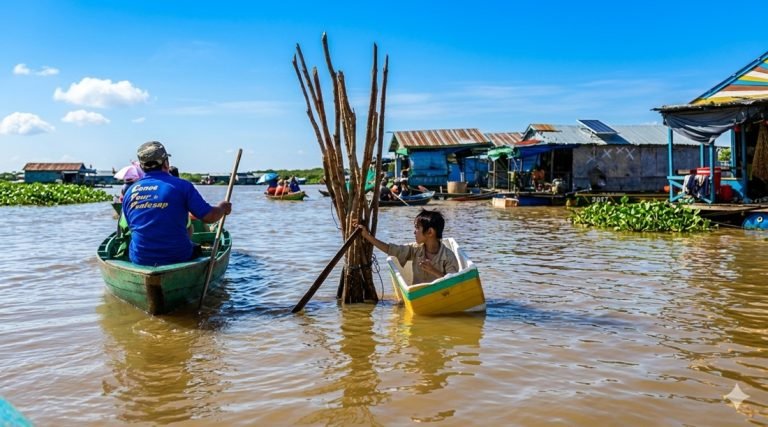
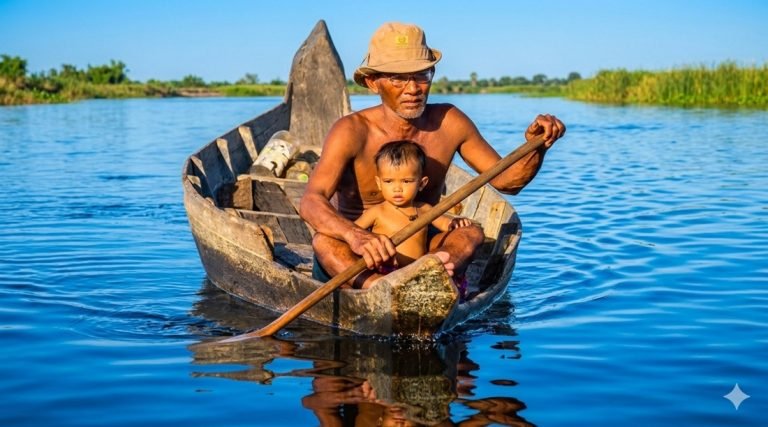
As you move through the village, what stands out most is that these are not decorative backdrops but functioning communities. You may pass homes with laundry hanging outside, children moving through the area by boat or on foot depending on the season, small shops serving local residents, and fishermen going about their day. In some places, you will see schools, temples, and everyday transport operating within the same watery environment. The value of the experience comes from observing how life adapts to the lake, not from expecting a polished sightseeing attraction in the traditional sense.
If your route includes the flooded forest, particularly around Kampong Phluk during high water, this often becomes one of the most memorable parts of the visit. Smaller boats move through partially submerged trees, and the atmosphere becomes quieter and more atmospheric than in the main village channels. This section tends to be the most scenic part of the outing and is often what people imagine when they think of Tonlé Sap at its best.
At the same time, not every part of the experience feels equally natural. Depending on the village and operator, there may be stops that feel more tourism-oriented, including floating platforms, shops, snack stops, or photo opportunities that are clearly part of a visitor route. This does not automatically ruin the visit, but it does change the feel of it. Some travelers are surprised by how commercial certain parts can feel, especially if they expected a completely untouched environment.
This is why your expectations matter so much. Tonlé Sap is not a silent wilderness experience, nor is it a museum-like cultural attraction. It sits somewhere in between, part environmental system, part living community, and part tourism product. When you approach it with that in mind, the visit makes much more sense. You are there to see how people live within a very specific and demanding landscape, while recognizing that tourism now forms part of that reality as well.
In practical terms, expect a mix of movement and observation rather than a heavily structured sightseeing schedule. Most of the time is spent getting there, boarding the boat, moving through the village, and taking in what you see around you. There may not be a long list of “sights” in the usual sense, but that is not really the point. The experience is about contrast, between dry season and wet season, between temples and daily life, and between what travelers imagine the floating villages to be and what they actually are on the ground.
If you choose the right village and go in with realistic expectations, the experience can be one of the more unusual and memorable things to do near Siem Reap. It adds context to a Cambodia itinerary that might otherwise be dominated by historical sites, and it gives you a glimpse of a side of the country that feels grounded in everyday life rather than monument-based tourism.
Best Time to Visit Tonlé Sap Floating Villages
The best time to visit Tonlé Sap depends heavily on what you want to see, because the experience changes dramatically between the wet and dry seasons. This is not a destination that looks the same year-round. Water levels directly affect how the villages appear, how boats move, and how immersive the visit feels.
Wet Season (July to December)
The wet season is widely considered the best time to visit Tonlé Sap, especially from around August to November when water levels are at their highest. During this period, the Mekong River pushes water back into the lake, causing it to expand and flood the surrounding plains and forests. As a result, villages that sit on dry ground earlier in the year become surrounded by water, and areas like Kampong Phluk transform into fully navigable waterways.
This is when the floating village experience feels most immersive. Boats move directly through flooded forests, houses appear to rise from the water, and the entire environment feels more connected and alive. The flooded mangrove forest, in particular, becomes a highlight during this time, offering a quieter and more scenic part of the journey that is not accessible in the same way during the dry season.
If you are visiting Tonlé Sap specifically to see the classic “floating village” landscape, this is the best time to go. The visuals are stronger, the boat routes are more extensive, and the overall experience tends to match what most travelers expect when they first hear about the lake.
Dry Season (January to June)
During the dry season, water levels drop significantly as the lake drains back toward the Mekong River. This exposes large areas of land and changes the appearance of the villages completely. Instead of floating structures surrounded by water, you will see tall stilt houses standing over dry or partially dry ground, with boats operating in narrower channels rather than open water.
This version of Tonlé Sap can feel less visually impressive, especially for travelers expecting a fully water-based experience. However, it does offer a different perspective. The height of the stilt houses becomes more apparent, and you can better understand how dramatically water levels rise during the wet season. In some ways, it gives more insight into the adaptability of the communities, even if it is less scenic.
Access can also be more limited during the dry season. Certain routes may not be available, and the experience may feel shorter or more constrained depending on conditions. This is one of the main reasons why many travelers prefer to visit during the wetter months.
When Should You Visit?
If your goal is to see Tonlé Sap at its most visually striking and immersive, the wet season is the better choice. This is when the villages feel fully connected to the lake and when boat travel becomes a central part of the experience. It is also when the flooded forests are accessible, adding another layer to the visit.
If you are visiting Cambodia during the dry season, Tonlé Sap can still be worth seeing, but expectations need to be adjusted. The experience is less about dramatic scenery and more about understanding how these communities function across changing conditions. It can still be interesting, but it will feel very different from the images often associated with the lake.
In simple terms, Tonlé Sap is at its best when there is water. Planning your visit around higher water levels will give you the most complete and rewarding experience, while visiting during the dry season offers a more stripped-back and less immersive view of life on the lake.
Travel Tips for Visiting Tonlé Sap Floating Villages
Visiting the Tonlé Sap floating villages can be a rewarding experience, but it is also one where preparation makes a noticeable difference. Because tourism has developed unevenly across different villages, the quality of your visit depends largely on the choices you make before you go. Approaching the experience with a clear understanding of how things work on the ground helps you avoid common pitfalls and focus on what actually makes the visit worthwhile.
Common Situations to Be Aware Of
In some of the more heavily visited areas, particularly around Chong Kneas, parts of the experience have become structured around tourism in ways that may not feel entirely natural. One of the most common situations involves stops at floating “schools” or “community centers,” where visitors are encouraged to purchase rice, milk, or supplies for children. While this can appear genuine at first, these purchases are often part of a cycle where goods are resold, rather than directly supporting the community in a meaningful way.
Another situation travelers sometimes encounter is being taken to floating shops or crocodile enclosures where there is subtle pressure to spend money, whether through buying snacks, paying for photos, or purchasing products that are priced significantly higher than expected. These stops are not always clearly explained in advance and can feel like part of a predetermined route rather than a spontaneous part of village life.
Transport can also play a role in shaping the experience. Some visitors are brought to unofficial docks or operators where pricing is higher than standard, especially if arrangements are made last-minute without confirming details beforehand. This does not happen everywhere, but it is more common in areas that receive a high volume of short, packaged visits.
These situations are not universal across Tonlé Sap, but they are common enough in certain areas that it is worth being aware of them. Understanding this context helps you approach the visit more confidently and avoid being caught off guard.
How to Approach the Visit the Right Way
The single most important decision is choosing the right village. Kampong Phluk and Kampong Khleang tend to offer a more balanced and less commercialized experience compared to Chong Kneas. While they are slightly further from Siem Reap, the difference in atmosphere is often noticeable, with fewer structured stops and a stronger sense of everyday life.
If you are booking a tour, it is worth selecting a provider that clearly outlines what is included, where you will go, and how long the experience will last. Reviews can be useful here, particularly when they mention pacing, group size, and whether the visit felt rushed or overly focused on selling. A slightly higher price often reflects a more straightforward experience without unnecessary stops.
For independent visits, confirming prices in advance is essential. This includes transport to the village, boat fees, and any additional activities such as smaller boat rides through flooded forests. Having a clear understanding of costs before you leave Siem Reap helps avoid confusion later in the day.
As a general rule, it is best to avoid purchasing goods at stops that are presented as charitable contributions during the tour itself. If you are interested in supporting local communities, it is more effective to do so through established organizations or by supporting local businesses in a way that is not tied to on-the-spot pressure.
Practical Tips for a Better Experience
Timing can make a difference. Visiting in the late afternoon often provides softer light and a more relaxed atmosphere, particularly if your route includes open water or flooded forest areas. Some tours are timed around sunset, which can add to the overall experience without changing the structure of the visit.
Bringing a few practical items also helps. Sun protection is important, as much of the time is spent on open boats with limited shade. Water, light clothing, and footwear that is easy to manage when getting on and off boats are all useful. During the wet season, you may also want to protect valuables from splashes or rain.
Finally, it is important to approach the visit with respect. These are not staged environments but real communities where people live and work. Being mindful when taking photos, especially of individuals, and avoiding intrusive behavior helps maintain a more positive interaction between visitors and residents.
With the right preparation, Tonlé Sap can offer a meaningful perspective on life in Cambodia that goes beyond its main tourist sites. Taking a few simple steps before you go ensures that the experience feels genuine, well-paced, and worth the time you set aside for it.
Final Thoughts on Visiting Tonlé Sap Floating Villages
Visiting the Tonlé Sap floating villages is not about ticking off a single highlight, but about adding a different layer to your time in Cambodia. It offers a perspective that contrasts sharply with the temples of Angkor, shifting the focus from ancient history to the realities of everyday life shaped by nature, water, and seasonal change. When approached with the right expectations, it becomes less about “seeing a village” and more about understanding how people live within one of the country’s most important natural systems.
For many travelers, Tonlé Sap works best as part of a broader stay in Siem Reap rather than a standalone experience. It provides a break from temple visits and adds variety to your itinerary without requiring a full day of travel. If you are still planning your time in the area, this Siem Reap travel guide shows how to balance temple visits with experiences like Tonlé Sap, while this Angkor Wat planning guide helps you structure your time around Cambodia’s most iconic sites.
At the same time, it is important to recognize that the experience is not uniform. The village you choose, the season you visit, and how your trip is organized all influence how meaningful the visit feels. Kampong Phluk and Kampong Khleang tend to offer a more balanced and less commercialized experience, while other areas can feel more structured around tourism. Understanding these differences in advance allows you to approach the visit with clarity rather than uncertainty.
Tonlé Sap also makes more sense when seen within the context of a wider Cambodia journey. It is one piece of a trip that may include temples in the north, cities like Phnom Penh, and coastal destinations further south. If you are still connecting these stops into a single route, this Cambodia itinerary guide helps you plan a well-paced journey, while this complete Cambodia travel overview gives a broader picture of how each destination fits together.
Ultimately, Tonlé Sap is worth visiting for travelers who are curious about life beyond Cambodia’s main attractions and who are willing to approach the experience with realistic expectations. It is not designed to impress in the same way as Angkor Wat or the islands, but it offers something different, a closer look at how people live in an environment that is constantly changing.
If you choose the right village and take the time to understand what you are seeing, Tonlé Sap becomes more than just a stop on your itinerary. It becomes a moment of contrast that adds depth, context, and a more complete picture of Cambodia as a whole.
FAQ: Tonlé Sap Floating Villages
-
Which Tonlé Sap floating village is best to visit from Siem Reap?
Kampong Phluk is usually the best choice for most travelers because it offers a good balance of accessibility, scenery, and a less commercialized feel. Kampong Khleang is a strong alternative if you want a more authentic and quieter experience, while Chong Kneas is the closest but often considered the most tourist-focused. -
Is Tonlé Sap worth visiting when traveling to Siem Reap?
Tonlé Sap is worth visiting if you want to see a different side of Cambodia beyond the temples. It offers insight into daily life on the water and adds contrast to Angkor Wat. However, the experience depends on the village you choose and your expectations. -
How far is Tonlé Sap from Siem Reap?
Tonlé Sap villages are located between 30 minutes and 1.5 hours from Siem Reap depending on the location. Chong Kneas is the closest, Kampong Phluk is slightly further, and Kampong Khleang requires the longest travel time. -
How do you visit Tonlé Sap floating villages?
Most visitors go on a half-day or full-day tour from Siem Reap that includes transport and a boat ride. It is also possible to visit independently by hiring a tuk-tuk or private driver and arranging a boat at the village. -
How much does it cost to visit Tonlé Sap floating villages?
Prices vary depending on the village and tour type, but most visits fall within a mid-range budget. Costs typically include transport, boat fees, and optional stops. Independent visits can sometimes be cheaper, but require more planning. -
What is the difference between Kampong Phluk, Kampong Khleang, and Chong Kneas?
Kampong Phluk is known for its stilt houses and flooded forest, Kampong Khleang is larger and less touristy, and Chong Kneas is closer to Siem Reap but more commercialized. The overall experience varies significantly between them. -
What is the best time to visit Tonlé Sap floating villages?
The best time to visit is during the wet season from July to December when water levels are high and the villages are fully accessible by boat. The dry season offers a different perspective but is less immersive. -
Can you visit Tonlé Sap without a tour?
Yes, it is possible to visit independently by arranging your own transport and boat, but it requires more effort and price awareness. Tours are generally easier and more straightforward for most travelers. -
Are Tonlé Sap floating villages ethical to visit?
Visiting can be ethical if done responsibly. Choosing less commercialized villages, avoiding pressured purchases, and respecting local communities helps ensure a more positive impact. -
What scams should you be aware of at Tonlé Sap?
Common situations include being asked to buy overpriced supplies for schools, stops at tourist-oriented shops, and inflated pricing at certain entry points. Choosing the right village and confirming costs in advance helps avoid these issues. -
What should you expect during a Tonlé Sap boat tour?
Expect a combination of travel, observation, and cultural insight. Most of the time is spent on the boat moving through villages, seeing daily life, and possibly visiting flooded forests or scenic areas. -
Is Tonlé Sap suitable for families and children?
Yes, but it depends on the child’s age and expectations. The experience is slower and less activity-based than temples or beaches, so it works best for families interested in culture and observation rather than entertainment. -
How long should you spend at Tonlé Sap?
Most visits last between half a day and a full day, depending on the village and tour. A half-day trip is usually enough to experience the main highlights without feeling rushed. -
What should you wear when visiting Tonlé Sap floating villages?
Light, breathable clothing is best due to the heat. Sun protection is important, and comfortable footwear is recommended for getting on and off boats. -
Can you see wildlife at Tonlé Sap?
Yes, especially birdlife and fish species, particularly during the wet season when the flooded forest becomes an active ecosystem. However, wildlife sightings are not guaranteed and depend on timing and location.
Travel Resources to Plan, Book & Stay Connected
Use these tools and guides to stay connected abroad, find inspiration for your next trip, and book your flights, stays and gear with confidence.
Disclosure: This article may contain affiliate links. If you make a purchase through a link, I may receive a commission at no extra cost to you. I only share recommendations I believe are genuinely useful, and all opinions are my own. AI was used in this post for research and drafting purposes.

Comment (0)