What is covered in this article...
This post explains how people actually travel around Madagascar, what to expect from the different transport options, and how to choose the right one depending on your time, comfort level, and budget.
This guide covers:
- Why distances in Madagascar take longer than they look on a map
- The difference between organized intercity transport and local rural travel
- When flying makes sense, and when it does not
- How taxi-brousse travel really works, from modern bus lines to village routes
- Whether private drivers, boats, or self-driving are right for your trip
If you are wondering whether getting around Madagascar is difficult, slow, or unsafe, this guide gives you a clear and realistic answer, without exaggeration or fear-mongering.
What to Expect When Traveling Around Madagascar
Getting around Madagascar is very different from traveling in more developed or densely connected countries, but it is far from impossible. Roads, distances, and transport options follow their own logic, and understanding how they work makes a huge difference to how smooth and enjoyable your trip will be.
Whether you are traveling independently or planning a longer route across the island, knowing what to expect helps you choose the right balance between time, comfort, budget, and experience.
Main Ways to Get Around Madagascar
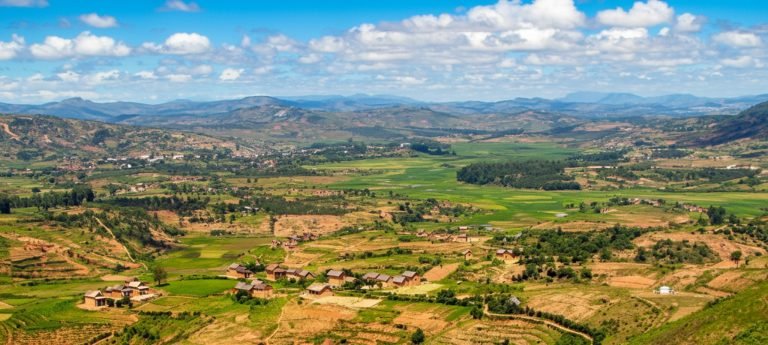
For longer distances, travel in Madagascar mainly relies on domestic flights, taxi-brousse services, private cars with a driver, and, in some regions, boats and ferries. These options are used to move between cities, regions, national parks, and coastal areas, and they define how itineraries are planned across the island. Travel times can be long, but these modes form the backbone of intercity and inter-regional travel.
Within towns and cities, getting around is much simpler and more informal. Most local movement happens using taxis, bajaj (tuk-tuks), and cyclo-pousse, depending on the region and the size of the town. These inner-city transport options are used for short distances, daily errands, and sightseeing, and they operate very differently from long-distance transport.
The sections below explain how each option works, when it makes sense to use it, and what kind of experience to expect.
Domestic Flights in Madagascar
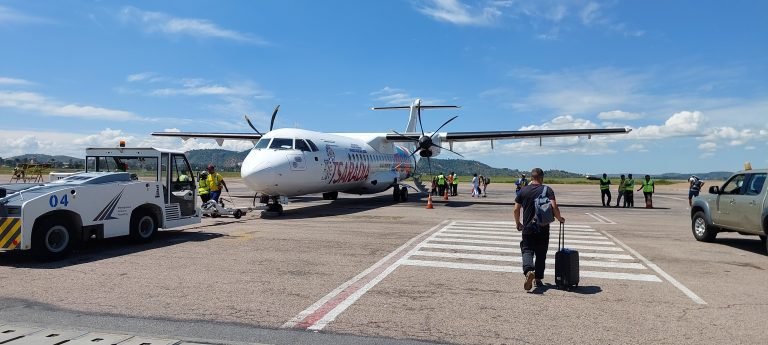
Domestic flights can be a big help in Madagascar because overland travel can take far longer than the map suggests. Most domestic routes connect through Antananarivo, and flying is mainly useful when you want to cover a very long distance quickly or reach a remote region without spending multiple days on the road.
In practice, travelers most often use flights to reach regions such as Nosy Be, Diego Suarez (Antsiranana), Tulear (Toliara), and Fort Dauphin (Taolagnaro), plus a handful of other regional airports that can be relevant depending on your route. Commonly used airports for travelers include Antananarivo (TNR), Nosy Be (NOS), Antsiranana/Diego Suarez (DIE), Toliara/Tulear (TLE), Fort Dauphin (FTU), Mahajanga (MJN), Toamasina (TMM), Morondava (MOQ), and Sainte Marie (SMS).
One important thing to understand is that direct regional connections are limited. For example, if you want to travel from Tulear to Diego Suarez, you will almost always need to route via Antananarivo, and depending on schedules you may need an overnight buffer. This is why flights are excellent for saving time on one or two major legs, but they are not always ideal for a tightly sequenced, multi-stop itinerary.
The main domestic airline serving many of these routes is Air Madagascar, which operates scheduled flights within the island. Regardless of carrier, it is smart to plan with flexibility: schedule changes, delays, and cancellations can happen, and some routes do not operate daily. Weather can also affect reliability, especially in certain seasons and coastal regions.
To make domestic flights work in your favor, build in breathing room. Avoid booking critical same-day connections, keep at least one buffer day if your itinerary depends on a specific flight, and consider using flights to “jump” to a far region and then travel overland within that region more slowly. Used strategically, flying can reduce travel days dramatically while still letting you experience Madagascar beyond the airports.
Taxi-Brousse: Intercity and Local Travel
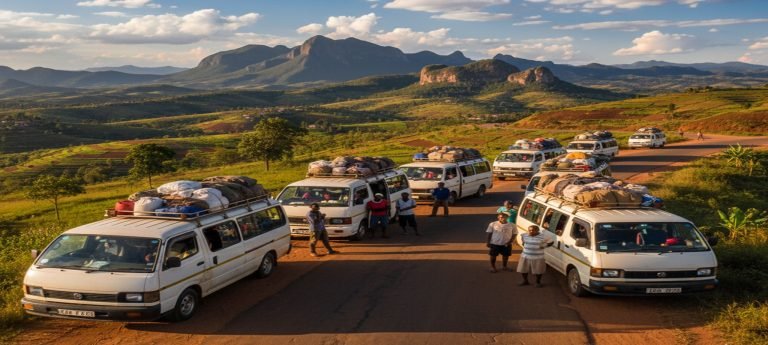
The taxi-brousse (bush taxi) is Madagascar’s primary and most affordable form of long-distance transport. These shared minibuses, vans, or trucks connect nearly every town and village and are used daily by Malagasy people for both passengers and cargo.
Taxi-brousse travel in Madagascar is not a single, uniform experience. There is a clear distinction between organized intercity operators running major routes and more informal cooperatives serving rural and remote areas. Understanding this difference is essential for planning realistically and choosing the right level of comfort.
How Taxi-Brousse Travel Works
Every town has at least one taxi-brousse station, known as a gare routière. In Antananarivo, departures are split by direction. Northern and eastern routes commonly leave from Ambodivona (Gare Routière du Nord), while southern and western routes typically depart from hubs such as Fasan’ny Karana or Andohatapenaka.
Tickets are usually purchased in person at small kiosks called guichets inside the station. Most local cooperatives operate on a “leave when full” basis, meaning departure times depend on passenger numbers. By contrast, premium operators run on fixed schedules and allow advance booking online or by phone.
Taxi-brousse travel is extremely economical. Prices vary by distance and service level, but long-distance journeys commonly fall in the range of roughly USD 13–15, making this the cheapest way to cross large parts of the island.
Service Levels and Vehicle Types
Not all taxi-brousse services offer the same level of comfort. Vehicles, schedules, and conditions vary widely depending on the operator and route.
- Standard taxi-brousse: Often older minibuses or vans (frequently modified with extra bench seating). These can be crowded, with limited legroom, and luggage is usually tied to the roof.
- Premium or VIP services: Operated by selected cooperatives using newer vehicles with fewer passengers, assigned seating, and more reliable departure times. Some services offer Wi-Fi or onboard entertainment.
- Camion-brousse: Large trucks used on very remote or rugged routes where standard minibuses cannot pass. These are slow and basic but reach areas otherwise inaccessible by road.
Major Taxi-Brousse Companies
Several well-known cooperatives operate scheduled or semi-scheduled services on main intercity routes, particularly from Antananarivo.
- Cotisse Transport is widely regarded as one of the most organized operators, especially on the Antananarivo–Toamasina route. It offers Lite, Premium, and VIP classes with fixed schedules and assigned seating.
- Soatrans Plus operates modern vehicles on major southern and western routes, including Antananarivo to Antsirabe, Morondava, Fianarantsoa, and Mahajanga. Some long-haul services use two drivers for added safety.
- Besady Plus serves northern and eastern destinations such as Toamasina, Ambanja, Nosy Be, and Sainte Marie, primarily operating from Ambodivona.
- Malagasy Car positions itself as a higher-end transport provider, focusing on comfort, safety, and first-class-style intercity transfers.
Booking Platforms and Assisted Services
In addition to booking directly at stations or through cooperatives, several platforms help travelers navigate the taxi-brousse system:
- MadaAssist provides assisted booking for intercity taxi-brousse transfers, helping travelers arrange reliable routes with added oversight.
Practical Tips for Travelers
- Arrive early in the morning for unscheduled lines, as vehicles often depart once full.
- For long journeys, paying for an extra seat or a front seat can significantly improve comfort.
- Avoid night travel when possible and check the general condition of the vehicle if using local cooperatives.
- Bring water, snacks, sun protection, and patience — cabins can become very hot during daytime travel.
One of the most important realities of overland travel in Madagascar is speed. Outside a limited number of main roads, average travel speeds are often below 25 km per hour. As a result, a journey of around 500 kilometres can easily take 15 to 20 hours, even without major breakdowns or weather-related delays.
To put this into perspective, a taxi-brousse journey from Antananarivo to Majunga covering roughly 470 kilometres can take around 17 hours. Departing the capital in the early evening and arriving late the following morning is not unusual and reflects normal road conditions rather than exceptional circumstances.
Taxi-brousse travel is slow and sometimes demanding, but it remains one of the most authentic ways to move through Madagascar. Do not let this put you off. It is by far the most economical way to travel across the island and, for travelers with time and flexibility, often the most rewarding. With realistic expectations, a taxi-brousse journey offers not just transport, but a direct connection to the country’s scale, landscapes, and everyday life.
Private Car with Driver
Hiring a private car with a driver is one of the most practical and commonly used ways for visitors to get around Madagascar, especially outside major cities. For many travelers, it offers the best balance between flexibility, comfort, and efficiency, particularly when time is limited or when visiting national parks and remote regions.
Unlike self-driving, a private driver handles navigation, road conditions, police checkpoints, fuel logistics, and local coordination. This removes much of the stress associated with long overland travel and allows you to focus on the journey itself rather than the mechanics of getting from one place to another.
When a Private Car Makes Sense
A private car with driver is especially well suited for multi-stop itineraries, travel to national parks, or routes that are poorly served by scheduled transport. It is also a strong option for families, small groups, or travelers carrying significant luggage or photography equipment.
In some cases, private overland travel can even be more efficient than flying. For example, certain regional routes would require flying via Antananarivo with overnight stays, while a direct overland journey with a driver can be completed in a single long day.
What to Expect on the Road
Vehicles range from standard sedans on good roads to robust 4x4s on rough or remote routes. Driving speeds remain low across much of the country, but experienced drivers know how to manage road conditions, weather, and informal detours that are not always obvious on maps.
Most private drivers are accustomed to working with travelers and are familiar with accommodation stops, fuel points, and safe places to eat along the way. Communication is usually in French, with varying levels of English depending on the driver and region.
Costs and Practical Considerations
Hiring a private car with driver is significantly more expensive than taxi-brousse, but costs are typically shared across the vehicle rather than per person. For couples or small groups, this can make private transport more reasonable than it initially appears.
Prices depend on distance, duration, vehicle type, fuel costs, and whether overnight stays for the driver are required. It is common for quotes to include the vehicle, driver, fuel, and basic maintenance, while accommodation and meals for the driver may or may not be included and should be clarified in advance.
Flexibility and Travel Experience
One of the main advantages of private transport is flexibility. You can stop for photos, meals, or rest breaks as needed, adjust departure times, and adapt plans if weather or road conditions change.
For travelers who want to explore Madagascar at a slower pace without committing to the unpredictability of taxi-brousse, a private car with driver offers a comfortable middle ground. It allows access to remote areas while maintaining control over timing and daily rhythm.
While it is not the most economical option, private transport can significantly reduce fatigue on long journeys and is often the most efficient way to link multiple destinations within a single region.
Daytime Driving and Overnight Stops
For longer distances, driving at night is generally not advised in Madagascar. Visibility is limited, road conditions can change suddenly, and livestock, pedestrians, or unlit vehicles are common after dark, especially outside urban areas.
A safer and more comfortable approach is to travel during daylight hours and plan an overnight stop along the route. Breaking long journeys with a hotel stay reduces fatigue, improves safety, and often makes the overall experience far more enjoyable.
Experienced drivers and guides strongly prefer daytime driving and will usually recommend realistic daily distances rather than pushing through long overnight stretches. When planning overland routes, it is best to factor in one or more overnight stops rather than aiming to cover excessive distances in a single day.
Boats and Ferries: Island and River Travel
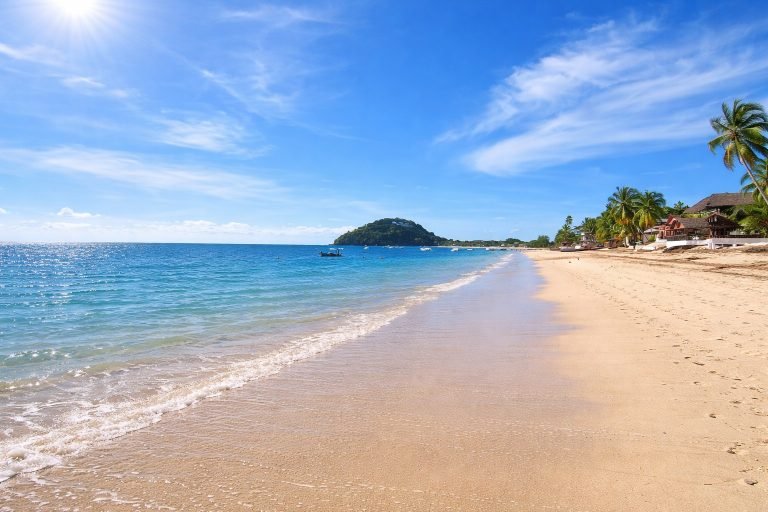
Boats and ferries are essential for reaching Madagascar’s offshore islands and for navigating parts of the country where rivers, lagoons, or broken road networks make overland travel impractical. Services range from large vehicle ferries and passenger speedboats to traditional wooden pirogues used for short coastal and river crossings.
Essential Coastal and Island Crossings
Several ferry and boat routes are used regularly by both locals and travelers and form key links in Madagascar’s transport network.
- Nosy Be (Hell-Ville) ⇄ Ankify is the busiest maritime route in the north. Shared speedboats known as coque rapide carry around 20 passengers and are the fastest option, taking roughly 15 to 30 minutes. Larger ferries, often referred to as bac or vedette, transport both passengers and vehicles and take around 1.5 to 2 hours.
- Île Sainte-Marie ⇄ Mainland can be reached from two main points. The shortest crossing departs from Soanierana Ivongo and takes around 1.5 hours. Longer overnight or day ferries also operate from Toamasina, taking approximately 8 to 10 hours depending on conditions.
- Mahajanga ⇄ Katsepy is a crucial crossing for travelers continuing south from Mahajanga by road. Vehicle ferries operate daily at set times, while smaller speedboats can sometimes be arranged locally.
Schedules and prices can change, and departures are often influenced by sea conditions. It is always best to confirm timings locally and avoid tight connections on the same day.
River and Canal Journeys
River travel plays a unique role in Madagascar and, in some cases, is a destination in itself rather than a simple means of transport.
- Tsiribihina River journeys typically last two to three days and travel through remote landscapes in western Madagascar. These trips are usually organized by tour operators using barges or large pirogues and combine transport with accommodation and meals.
- Canal des Pangalanes is a long chain of natural and man-made lagoons running parallel to the east coast. Motorboat transfers are commonly used between Toamasina and lakeside lodges, often taking several hours depending on the destination.
These routes are slow but offer access to areas that are difficult or impossible to reach by road, especially during certain seasons.
Specialty and Long-Distance Boat Services
In addition to standard ferries, a small number of long-haul or mixed cargo-passenger boats operate along the coast. These services are functional rather than comfortable and are best suited to experienced travelers with flexible schedules.
- Cargo-passenger boats sometimes operate routes such as Sainte-Marie to Maroantsetra, with travel times ranging from 12 to 20 hours. Travelers are expected to bring their own food and water.
- Traditional pirogues are widely used for short coastal trips and excursions, including access to nearby islands such as Nosy Komba or protected areas like Lokobe National Park.
- Private charters, including catamarans or traditional sailing vessels, operate in archipelagos such as the Mitsio or Radama islands. These are specialist services rather than standard transport.
Safety and Seasonal Considerations
Boat travel in Madagascar requires particular attention to safety and weather conditions. Not all public ferries carry adequate safety equipment, and vessels may appear overloaded. It is always wise to check for life jackets and follow local advice.
Night travel is best avoided, and river journeys should be undertaken only with reputable operators. Services may be suspended or delayed during the cyclone season, generally from November to April, or during periods of strong winds and heavy rain.
Boats and ferries should be planned as flexible links rather than fixed timetable connections. With realistic expectations, they provide access to some of Madagascar’s most remote regions and waterways, where roads simply do not exist.
Getting Around Towns and Cities
Getting around towns and cities in Madagascar is generally straightforward and very different from long-distance travel. Most urban movement relies on short, informal trips using local transport rather than fixed routes or schedules.
Taxis
Taxis are widely available in larger towns and cities, especially in Antananarivo and regional capitals. They are used for short trips within town rather than point-to-point navigation across the city.
Taxis do not use meters. Fares should be agreed upon before departure, and prices can vary depending on distance, time of day, traffic, and whether the driver expects to return empty. While prices are generally affordable, visitors may be quoted higher rates, so a brief negotiation is normal.
In most cases, taxis are best used during the day. At night, availability can be limited, and it is safer to arrange transport through a hotel or trusted contact rather than flagging a vehicle on the street.
In Antananarivo, a newer option is also available. Piqla is a ride-hailing app similar to Uber or Grab that allows you to book a car directly through the app. The fare is shown in advance, removing the need for negotiation, and you can follow your journey in real time on a map.
Piqla operates exclusively in Antananarivo for now and uses a growing fleet that includes newer vehicles, some of them electric. The platform also offers additional safety features, including the option of rides with women drivers, which can be reassuring for solo female travelers.
While availability is still more limited than traditional street taxis, Piqla provides a more predictable and transparent alternative for getting around the capital, especially for visitors unfamiliar with local pricing.
Bajaj (Tuk-Tuks)
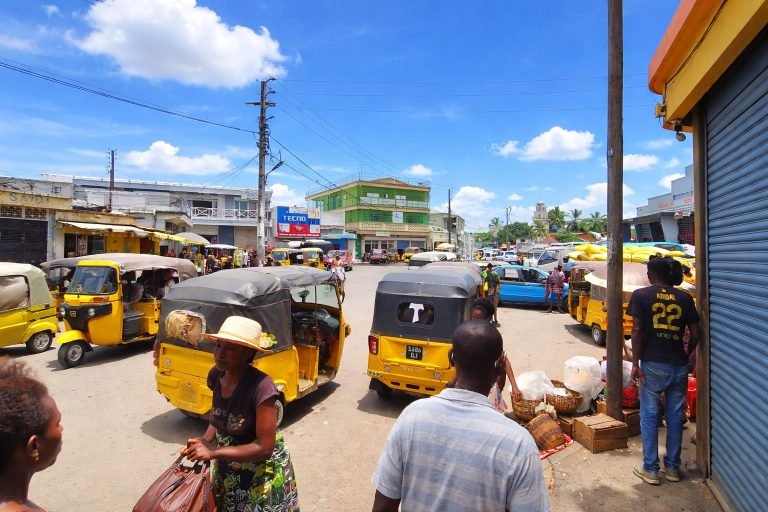
In many coastal and provincial towns, bajaj (tuk-tuks) are the most common form of urban transport. They are inexpensive, easy to find, and ideal for short distances. Just stand by the side of the road and wave one down. Remember you may be sharing the ride with other people.
Bajaj operate without fixed routes or meters, and fares should always be agreed in advance. They are well suited to navigating narrow streets and congested areas but offer limited protection from heat, rain, or dust.
Cyclo-Pousse
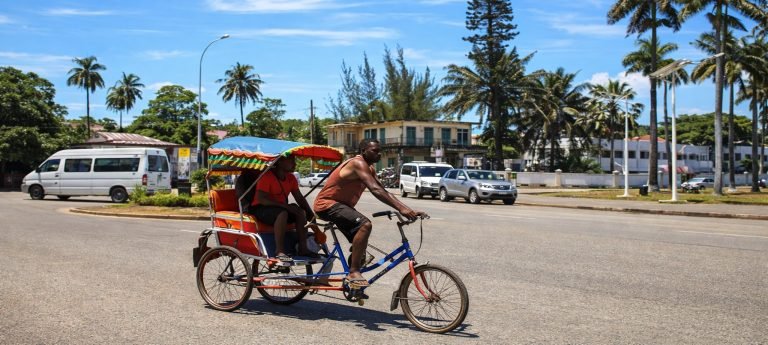
Cyclo-pousse are human-powered rickshaws commonly used in smaller towns and quieter neighborhoods. They are slower than motorized options but work well for short distances and are often the cheapest way to move around locally.
As with other local transport, prices are negotiated before the ride. Cyclo-pousse are best suited for daytime travel and short hops rather than longer urban journeys.
Practical Tips for Urban Travel
- Always agree on the price before starting a journey.
- Carry small bills, as drivers often do not have change.
- Use hotel-arranged transport at night when possible.
- Expect slower travel during market hours and peak traffic times.
Urban transport in Madagascar is simple and functional rather than fast or precise. With a relaxed approach and basic planning, getting around towns and cities is rarely difficult and forms an easy complement to longer overland journeys.

Which Method of Getting Around Madagascar Is Right for You?
There is no single best way to get around Madagascar. The right choice depends on how much time you have, how flexible your itinerary is, and what kind of travel experience you are looking for. Most travelers combine several transport options rather than relying on just one.
If You Have Limited Time
If your trip is short and you want to cover long distances efficiently, a combination of domestic flights and private car with driver works best. Flying helps reduce multi-day overland journeys, while private transport allows you to move efficiently within a region without depending on fixed schedules.
If You Have Time and Flexibility
If you are traveling slowly and want a deeper, more local experience, taxi-brousse is the most economical and authentic option. Organized intercity services are suitable for major routes, while local taxi-brousse reach smaller towns and rural areas that other transport cannot.
If Comfort and Control Matter Most
For families, photographers, or travelers who prefer predictable pacing, a private car with driver offers the most control. It allows you to stop when needed, avoid night driving, and adapt plans based on road or weather conditions.
If You Are Visiting Islands or Remote Areas
Boats and ferries are essential for reaching islands such as Nosy Be or Sainte Marie, and for navigating river systems like the Tsiribihina. These routes require flexibility and should always be planned with extra time for delays.
For Moving Around Towns and Cities
In urban areas, short trips are handled using taxis, bajaj, or cyclo-pousse. In Antananarivo, ride-hailing apps such as Piqla offer a more predictable alternative to street taxis, with upfront pricing and in-app navigation.
Understanding these differences makes planning far easier and helps avoid unrealistic travel days. Madagascar rewards travelers who build flexibility into their routes and accept that transport is part of the journey, not just a way to get from place to place.

Continue Exploring Madagascar
Getting around Madagascar is closely tied to where you choose to go and how you structure your itinerary. To explore specific regions, travel routes, and planning advice in more detail, see the related guides below.
- Things to Do in Madagascar – The main guide covering regions, highlights, and travel planning.
- Northern Madagascar – Nosy Be, Diego Suarez, island connections, and northern routes.
- Antananarivo & the Central Highlands – Transport hubs, city logistics, and central-region travel.
- Majunga & the East Coast – Coastal travel, river access, and regional transport.
- Southern Madagascar – Long-distance road travel and remote regions.
- Madagascar Itinerary – Suggested routes and time-based planning.
- Voyage Madagascar (French Pillar Guide) – The comprehensive guide in French covering planning, essentials, and regions.
Together, these guides form a complete picture of how to travel across Madagascar realistically, safely, and with confidence — whether you’re planning your first visit or refining your route.
Frequently Asked Questions About Getting Around Madagascar
Is it difficult to get around Madagascar?
Getting around Madagascar is slower and less predictable than in many countries, but it is not difficult if you plan realistically. Distances take time, roads can be rough, and schedules are flexible, but multiple transport options exist for almost every route.
What is the best way to get around Madagascar?
There is no single best option. Travelers with limited time often combine domestic flights and private cars with a driver. Those with more time and flexibility often use taxi-brousse, which is the most economical and authentic way to travel overland.
Is taxi-brousse safe for tourists?
Taxi-brousse is widely used by locals and travelers alike. Organized intercity services are generally safe and reliable, while rural routes require more patience and flexibility. Avoid night travel when possible and choose reputable operators for longer journeys.
How long does it take to travel long distances in Madagascar?
Overland travel is slow. Average speeds outside major roads are often below 25 km per hour, meaning a journey of 400 to 500 kilometres can take 15 to 20 hours. Breaking long routes into multiple days is often the safest and most comfortable approach.
Can I drive myself in Madagascar?
Self-driving is possible but not recommended for most visitors. Road conditions, navigation challenges, and local driving practices make travel easier and safer with an experienced local driver.
Is it safe to drive at night?
Night driving is generally not advised. Visibility is limited, road hazards are common, and emergency assistance can be difficult to access. For long distances, it is safer to drive during the day and plan overnight stops along the route.
Are domestic flights reliable in Madagascar?
Domestic flights can save time on long routes, but schedules may change and delays or cancellations can occur. Flights work best when used strategically, with buffer days built into your itinerary.
How do I get to islands like Nosy Be or Sainte Marie?
Islands can be reached by a combination of flights and boats. Ferries and speedboats are commonly used for short crossings, while flights are useful for longer distances. Weather conditions can affect schedules, so flexibility is important.
What is the easiest way to get around Antananarivo?
In Antananarivo, taxis are widely available, and ride-hailing apps such as Piqla offer upfront pricing and app-based booking. For safety and convenience, hotel-arranged transport is recommended at night.
Should I book transport in advance?
For premium taxi-brousse services, private cars, and flights, booking in advance is recommended, especially during holidays and peak travel periods. Local transport can usually be arranged on arrival, but flexibility helps.
Travel Resources to Plan, Book & Stay Connected
Use these tools and guides to stay connected abroad, find inspiration for your next trip, and book your flights, stays and gear with confidence.

Comment (0)