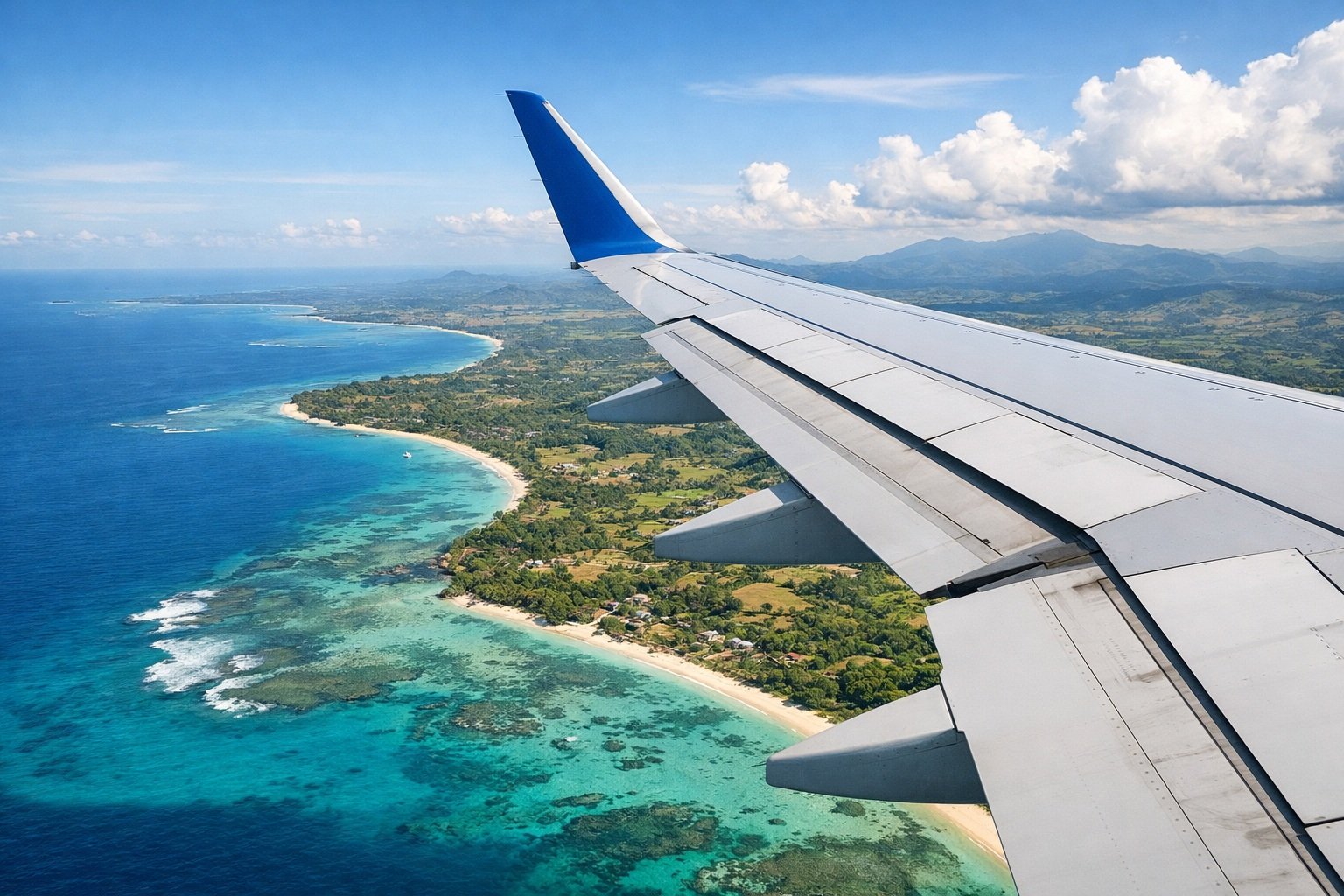
How to Get to Madagascar: Flights, Routes, Airports and Arrival Tips Explained
Getting to Madagascar is not as straightforward as flying to most popular travel destinations, and that is exactly why planning your arrival properly makes such a big difference. As a large island in the Indian Ocean with limited international connections, there are no direct routes from most parts of the world, and almost every journey involves at least one stop. That said, reaching Madagascar is far from complicated once you understand how the main flight routes, airports, and entry logistics work together.
This guide breaks down everything you need to know before booking your flights, from where to fly into and which routes make the most sense, to what actually happens when you land and how your arrival fits into the rest of your trip.
- Where Madagascar is located and why it is not the easiest destination to reach
- The main international airports and which one you should choose
- Flight routes, airlines, and the most common connection hubs
- Typical flight durations and realistic price expectations
- Visa, passport, and entry requirements on arrival
- What to expect at the airport and how to get to your accommodation
- How your arrival point connects to your itinerary and travel plans
If you are still shaping your trip, start with the Madagascar travel guide for a complete overview of the country, then use this guide to plan your arrival. From there, you can map out your route using this Madagascar itinerary, understand logistics in this getting around Madagascar guide, and prepare for entry requirements with the Madagascar visa guide.
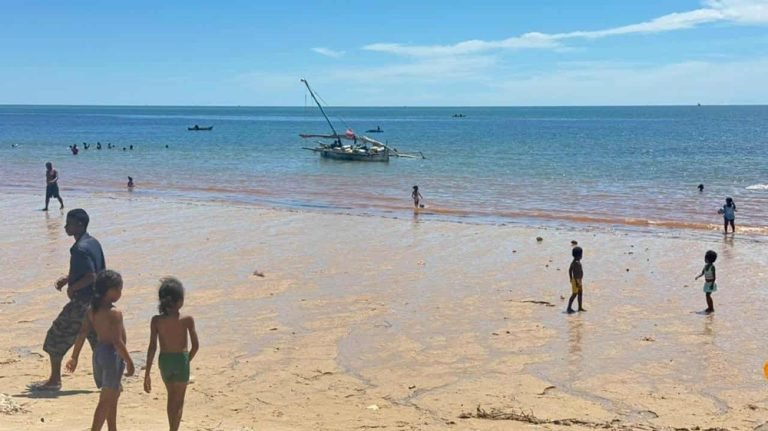
How to Get to Madagascar: Quick Answers to the Most Common Travel Questions
Getting to Madagascar is almost always done by air, as there are no reliable passenger ferries or overland routes to the island. Most travelers fly into Ivato International Airport in Antananarivo, the capital, while a smaller number of international flights arrive in Nosy Be for beach-focused trips. Direct flights are limited and mainly operate from a few hubs such as Paris, Nairobi, Addis Ababa, Istanbul, and Johannesburg, which means that most journeys involve at least one connection.
If you are traveling from Europe, you can sometimes find direct flights from Paris, but most routes still involve a stop. From North America, Asia, or Australia, there are no direct options, and you will typically connect through major international hubs in Europe, Africa, or the Middle East. Flight times vary significantly depending on your starting point, but long-haul travelers should expect total journey times of 15 to 30 hours or more.
For most first-time visitors, flying into Antananarivo is the most practical choice, as it provides access to the central highlands, Andasibe’s rainforests, and overland routes such as the RN7. Flying into Nosy Be can make more sense if your trip is focused on beaches, diving, and the northern region, but it is less suitable as a starting point for a broader itinerary.
Visas are straightforward for most travelers and can usually be obtained on arrival or through an eVisa system, provided your passport is valid for at least six months. Once you land, expect a relatively slow and sometimes chaotic arrival process, followed by a transfer into the city or onward travel to your first destination.
To understand how your arrival fits into your overall trip, it helps to first think about where you want to go and how much time you realistically have. Madagascar is not a destination where you can easily move between regions without planning ahead, so your entry point, route, and travel style all need to work together from the start. Getting this right early on will make the rest of your trip far smoother and far more enjoyable.
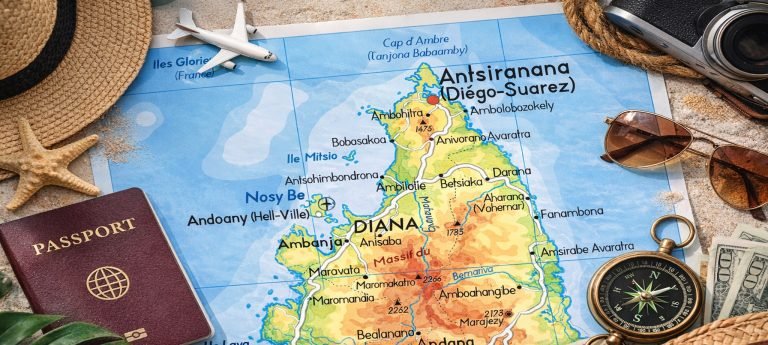
Table of Contents
Where Madagascar Is and Why Getting There Takes More Planning Than You Might Expect
Madagascar sits off the southeastern coast of Africa in the Indian Ocean, separated from the mainland by the Mozambique Channel. On a map, it can look close enough to feel simple, but in practice it is a far more logistically demanding destination than many first-time visitors expect. This is not a place with dense air connectivity, frequent direct flights from every major city, or seamless onward transport the moment you land. Reaching the island is very doable, but it requires a more deliberate approach than booking a quick flight to a better-connected destination, especially if you take the time to understand how travel typically unfolds once you arrive.
Part of that comes down to geography, and part of it comes down to infrastructure. Madagascar is a very large island, stretching a long distance from north to south, which means that your entry point has a direct impact on the rest of your trip. Landing in Antananarivo makes sense for travelers who want a broader first-time route through the highlands, eastern rainforests, or the south. Landing in Nosy Be can work well for travelers who are mainly focused on beaches, diving, island-hopping, or the far north. Choosing the wrong arrival point does not make a trip impossible, but it can add unnecessary cost, extra domestic travel, and a lot of time lost in transit.
This is also why Madagascar rewards people who plan around regions rather than trying to see everything at once. Distances on the island can be deceptive, roads are often slow, and onward connections do not always line up neatly with international arrivals. In other words, getting to Madagascar is not just about finding the cheapest flight. It is about understanding where you want to go afterward, how realistic your route actually is, and whether your first landing point sets you up for a smoother trip or a more complicated one.
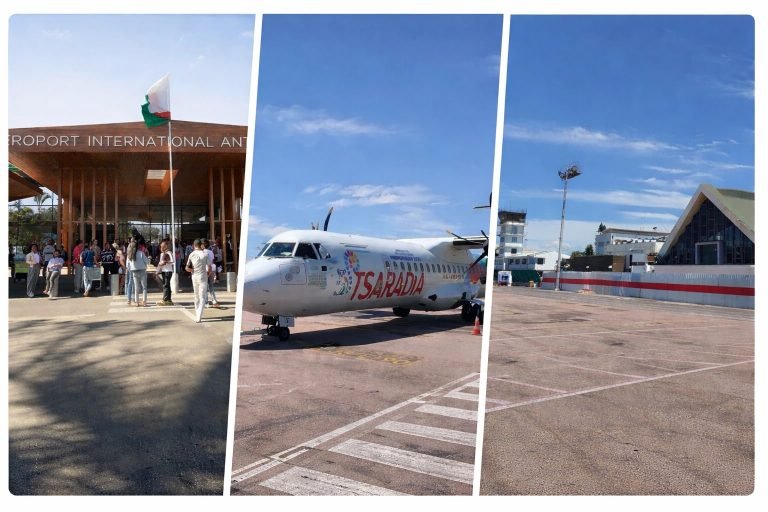
Main International Airports in Madagascar and Which One You Should Choose
Most travelers arrive in Madagascar by air, and in practice there are only a few realistic entry points to consider. The two main international gateways are Ivato International Airport in Antananarivo and Fascene Airport in Nosy Be, with a handful of limited or occasional international connections to other airports such as Antsiranana in the far north. Choosing the right airport is not just a matter of convenience, it directly shapes how your trip will unfold once you land.
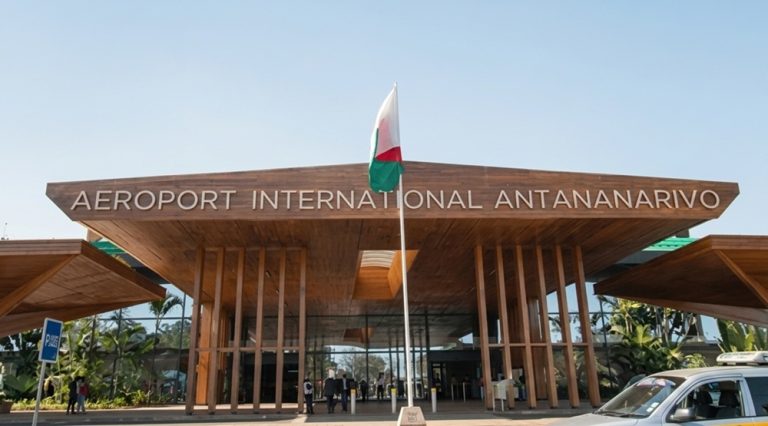
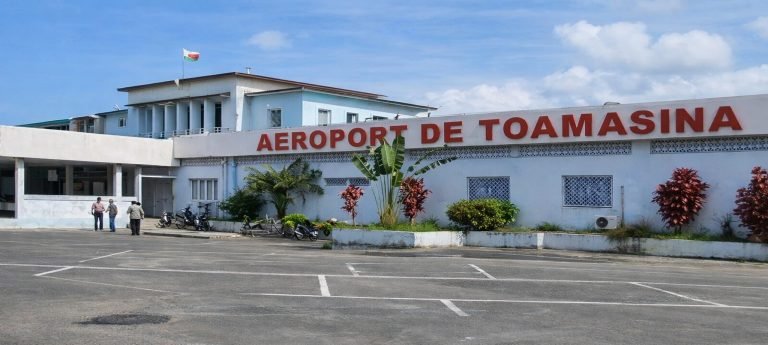
Ivato International Airport (TNR) in Antananarivo is the primary gateway to Madagascar and the entry point for the majority of international flights. Located just outside the capital, it serves as the country’s main hub for both international arrivals and domestic connections. If this is your first time visiting Madagascar or you are planning a multi-region itinerary, this is almost always the most practical place to start. From here, you can easily reach the central highlands, the rainforests of Andasibe, and overland routes heading south or west.
The airport itself has seen improvements in recent years, but arrival can still feel slow and slightly disorganized, especially during peak times. Immigration queues, baggage collection, and onward transfers all take time, so it is best to avoid tight onward connections on the same day. Most travelers either stay in Antananarivo for a night or begin their journey the following morning once they have had time to adjust. If your schedule allows, it is worth considering spending a little longer exploring Madagascar's capital before continuing your journey across the island.
Fascene Airport (NOS) in Nosy Be is a smaller international airport that serves the island’s northern beach region. It receives a mix of regional and seasonal international flights, particularly from parts of Europe and nearby Indian Ocean hubs. If your trip is focused on beaches, diving, or a more relaxed island experience, flying directly into Nosy Be can save significant time and eliminate the need for domestic flights or long overland journeys from the capital.
However, Nosy Be is less suitable as a starting point for travelers who want to explore multiple regions of Madagascar. Reaching the central highlands, the east coast rainforests, or the southern parts of the island from Nosy Be requires additional flights or complex overland travel, which can quickly add both time and cost to your trip.
Arrachart Airport (DIE) in Antsiranana, often referred to as Diego Suarez, has limited international relevance for most travelers. While it occasionally handles regional connections, it is primarily used for domestic flights within Madagascar. It can be useful if you are specifically focusing on the far north, but it is not a common entry point for international arrivals and should not be relied upon when planning your route.
For most first-time visitors, flying into Antananarivo remains the most flexible and reliable option, especially if you plan to follow a route that includes multiple regions. Nosy Be works well for more focused, beach-oriented trips, but it requires a different style of itinerary. The key is to align your arrival airport with the type of trip you actually want to have, rather than simply choosing the most convenient or cheapest flight.
For more details on airport facilities, flight schedules, and updates, you can check the official airport websites for Ivato International Airport and Nosy Be Airport.

Airlines and Routes to Madagascar: Who Flies Where and How to Plan Your Journey
Madagascar’s international connectivity is built around a relatively small number of airlines and routes, most of which feed into Antananarivo, with a smaller but important set of connections serving Nosy Be. Understanding which airlines operate which routes makes it much easier to plan a realistic journey, especially if you are traveling from outside Europe or Africa.
Flights to Antananarivo (Ivato International Airport - TNR)
| Airline | Route | Region |
|---|---|---|
| Air France | Paris (CDG) → Antananarivo (TNR) | Europe |
| Corsair | Paris (ORY) → Antananarivo (TNR) | Europe |
| Turkish Airlines | Istanbul (IST) → Antananarivo (TNR) | Europe / Eurasia |
| Ethiopian Airlines | Addis Ababa (ADD) → Antananarivo (TNR) | East Africa |
| Kenya Airways | Nairobi (NBO) → Antananarivo (TNR) | East Africa |
| Airlink | Johannesburg (JNB) → Antananarivo (TNR) | Southern Africa |
| Air Mauritius | Mauritius (MRU) → Antananarivo (TNR) | Indian Ocean |
| Air Austral | Saint-Denis (RUN) → Antananarivo (TNR) | Indian Ocean |
| Air Seychelles | Mahé (SEZ) → Antananarivo (TNR) | Indian Ocean |
| Emirates | Dubai (DXB) → Antananarivo (TNR) | Middle East |
| Ewa Air | Dzaoudzi (DZA) → Antananarivo (TNR) | Indian Ocean |
| Madagascar Airlines | Paris (CDG) → TNR, Saint-Denis (RUN) → TNR, Mauritius (MRU) → TNR | International / Regional |
Flights to Nosy Be (Fascene Airport - NOS)
| Airline | Route | Region |
|---|---|---|
| Neos | Milan (MXP) → Nosy Be (NOS), Rome (FCO) → NOS, Verona (VRN) → NOS | Europe (Italy) |
| Ethiopian Airlines | Addis Ababa (ADD) → Nosy Be (NOS) | East Africa |
| Airlink | Johannesburg (JNB) → Nosy Be (NOS) | Southern Africa |
| Air Austral | Saint-Denis (RUN) → Nosy Be (NOS) | Indian Ocean |
| Ewa Air | Dzaoudzi (DZA) → Nosy Be (NOS) | Indian Ocean |
| Madagascar Airlines | Antananarivo (TNR) → Nosy Be (NOS), Antsiranana (DIE) → NOS | Domestic / Regional |
Looking at these routes, a few clear patterns emerge. Paris is by far the strongest long-haul connection into Madagascar, with multiple airlines operating direct or near-direct services into Antananarivo (TNR). This makes it the most common entry point for travelers coming from Europe, as well as for those connecting from North America or other long-haul markets.
Ethiopian Airlines via Addis Ababa (ADD) plays a particularly important role for global connectivity, as Addis Ababa functions as a major hub linking Africa with Europe, Asia, and North America. For many travelers outside Europe, this is often the most efficient one-stop route into Antananarivo (TNR). Nairobi (NBO) and Johannesburg (JNB) serve similar roles on a regional level, offering additional flexibility depending on your starting point.
The Indian Ocean routes, including Mauritius (MRU), Réunion (RUN), and Seychelles (SEZ), act more as regional connectors than primary entry points. They are especially useful if you are combining Madagascar with nearby destinations or if you are building a more complex multi-stop itinerary across the region.
Nosy Be (NOS), on the other hand, operates on a more tourism-driven model. The presence of airlines such as Neos (Italy → Nosy Be) reflects strong demand from European holidaymakers, particularly from Italy, with flights that are often seasonal or less frequent than those serving Antananarivo (TNR). While these routes can be very convenient for beach-focused trips, they are not as consistent year-round and offer fewer options for flexible travel planning.
In practical terms, most travelers will end up choosing between a Paris → Antananarivo (TNR) route, an Addis Ababa (ADD) → Antananarivo (TNR) or Nosy Be (NOS) connection, or a Johannesburg (JNB) → Madagascar route. Once you identify the most convenient hub from your departure city, the rest of the journey becomes much easier to piece together.
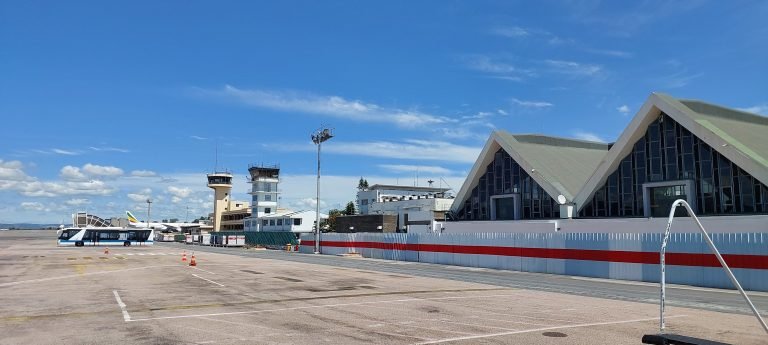
Which Route Should You Choose to Get to Madagascar and What Should You Expect When Booking?
The best route to Madagascar depends largely on where you are flying from, how much flexibility you have, and whether your priority is speed, price, or simplicity. This is not one of those destinations where travelers from every continent have the same booking options. In most cases, you will be choosing between the most straightforward route, the most efficient one-stop connection, or the one that happens to work best with your budget and departure city.
If you are traveling from Europe, the easiest option is usually a direct or near-direct route from Paris to Antananarivo. This is often the most logical choice for travelers who want the simplest journey with the fewest moving parts. If you are departing from elsewhere in Europe, it can still make sense to position yourself to Paris first rather than trying to build a more fragmented itinerary through multiple smaller connections. For many European travelers, especially first-time visitors to Madagascar, this is the cleanest and most predictable way to arrive.
If you are flying from North America, you should expect at least one major long-haul connection, and often two flight segments before reaching Madagascar. In practical terms, this usually means connecting through a strong hub such as Paris or Addis Ababa. A Paris-based route can feel more familiar and straightforward, while an Addis Ababa connection with Ethiopian Airlines is often one of the most efficient one-stop solutions depending on your departure city. Travelers from the United States or Canada should assume that getting to Madagascar is a long journey and avoid building tight same-day connections after arrival.
If you are coming from Asia or the Middle East, the most useful hubs are often Addis Ababa, Istanbul, or Dubai, depending on where you start. These routes can work well because they connect large international networks to Madagascar without requiring a separate European booking. For some travelers, this can be more efficient than routing through Paris, especially if flight times, fares, or baggage rules line up better through a single carrier or alliance.
If you are traveling from Africa, your options are generally more practical. Nairobi, Addis Ababa, and Johannesburg are the main regional gateways, and these can make Madagascar feel much more accessible than it does from Europe or North America. For travelers already based in southern or eastern Africa, these routes are often the best combination of speed and convenience, particularly if you are heading into Antananarivo rather than trying to build a more complicated route into a smaller airport.
For travelers whose trip is focused mainly on the beach, diving, or a more resort-style stay, Nosy Be can be a smart arrival point, but only if your itinerary is centered on the north. Direct or tourism-oriented routes into Nosy Be can save a great deal of time if that is where you actually plan to stay. If, however, you are dreaming of a broader first trip that includes rainforests, highlands, baobabs, or southern landscapes, flying into Antananarivo is usually the better choice.
This is also where the difference between direct flights and connecting flights matters. A direct flight is obviously simpler, but in Madagascar’s case, a good one-stop connection can sometimes be just as practical, especially if it gives you better timing, lower fares, or more reliable onward baggage handling. Most travelers should not obsess over finding a direct flight if the better overall itinerary involves one strong hub and a smooth transfer. What matters more is avoiding awkward layovers, overnight airport chaos, and unrealistic arrival plans once you land.
When booking, the safest mindset is to prioritize the route that gives you the fewest opportunities for disruption while still matching your budget. The fastest route is not always the cheapest, and the cheapest is not always the smartest if it adds multiple layovers, a risky self-transfer, or a late-night arrival with no real buffer. Madagascar is already a destination that requires patience once you are on the ground, so it is worth reducing unnecessary friction before the trip even begins.
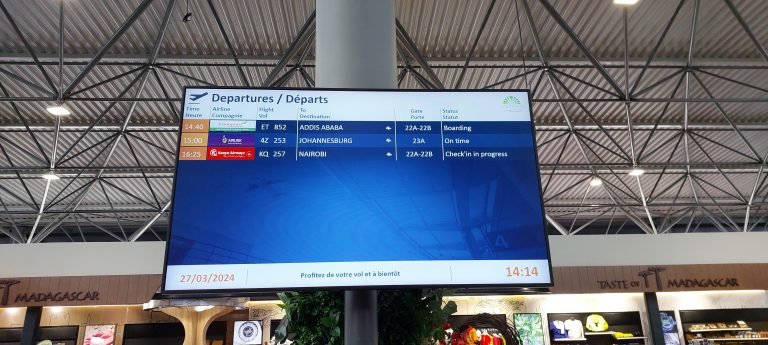
Flight Times and Typical Costs to Madagascar: What You Should Expect
Flights to Madagascar are long, often expensive, and rarely straightforward. This is not a destination where ultra-cheap, ultra-fast travel is the norm. Understanding realistic flight durations and price ranges in advance helps set expectations and prevents you from chasing deals or itineraries that look good on paper but are impractical in reality.
If you are flying from Europe, travel times are relatively manageable compared to other regions. A direct flight from Paris to Antananarivo typically takes around 10 to 11 hours. If you are connecting from another European city, total travel time usually falls between 12 and 16 hours, depending on layover duration. In terms of pricing, return flights generally range between €700 and €1,200 when booked in advance, although prices can climb significantly during peak travel periods or last-minute bookings.
From North America, the journey becomes much longer and more complex. Most routes involve at least one major hub such as Paris or Addis Ababa, and total travel time typically ranges from 18 to 30+ hours. Prices are also higher, with return flights often falling between $900 and $1,800+ depending on season, routing, and how early you book. It is not uncommon for cheaper itineraries to involve longer layovers, so travelers need to balance cost against total travel fatigue.
If you are departing from Asia or the Middle East, flight times vary significantly depending on your starting point. Routes via Dubai, Istanbul, or Addis Ababa typically result in total travel times of around 12 to 20 hours. Prices are often competitive, especially when flying through major hubs, with return fares commonly ranging from $600 to $1,200. These routes can offer a good balance between price and efficiency if connections are well timed.
From Africa, Madagascar is far more accessible. Flights from hubs such as Nairobi, Addis Ababa, or Johannesburg usually take between 3 and 6 hours, making them relatively short by international standards. Prices can vary widely depending on demand and availability, but return fares often fall between $300 and $800. For travelers already on the continent, Madagascar is much easier to integrate into a broader itinerary.
Flights into Nosy Be follow slightly different patterns. European charter routes, particularly from Italy, can offer relatively direct access with flight times similar to those into Antananarivo, typically around 9 to 11 hours. However, these flights are often seasonal or limited in frequency, which can affect both availability and pricing. Outside of these routes, reaching Nosy Be often involves an additional connection through Antananarivo or a regional hub.
Prices to Madagascar fluctuate heavily based on seasonality, demand, and how far in advance you book. The most expensive periods generally align with peak travel seasons, including July and August and the December holiday period. Booking several months in advance and remaining flexible with dates can make a noticeable difference, especially for long-haul routes.
Ultimately, the goal is not to find the absolute cheapest flight, but to find the most balanced option between cost, duration, and reliability. A slightly more expensive ticket with a cleaner route and fewer connections can significantly improve the overall travel experience, particularly for a destination like Madagascar where the journey itself is already a major part of the trip.

Best Airports to Fly Into Madagascar Based on Your Itinerary
Choosing the right airport in Madagascar is not just a logistical detail, it directly shapes how your entire trip unfolds. The country is large, infrastructure is limited, and moving between regions takes time. Arriving at the wrong airport for your itinerary can easily add extra flights, long overland journeys, or unnecessary backtracking.
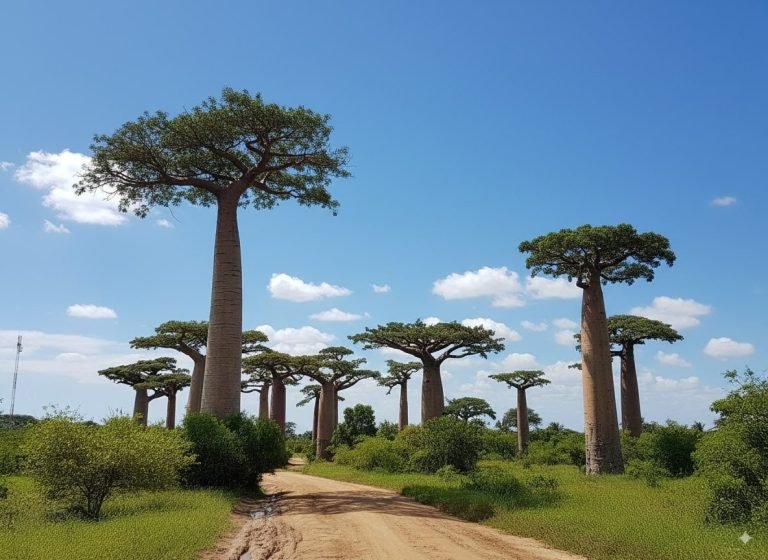
For most travelers, Antananarivo (Ivato International Airport – TNR) is the best and most practical entry point. As the capital, it serves as the main international gateway and the central hub for domestic travel across the island. If your trip includes multiple regions such as the highlands, national parks, the Avenue of the Baobabs, or the southern coastline, flying into Antananarivo gives you the most flexibility. It allows you to build a logical route through the country without being locked into a single region, especially if you plan to explore areas like the Central Highlands of Madagascar or continue further south toward the southern regions of the island.
Arriving in Antananarivo also makes onward planning easier. Most domestic flights depart from here, and many overland routes naturally begin or pass through the capital. While the city itself is often treated as a transit point, its role in Madagascar travel logistics is essential. Starting here gives you the widest range of options for how to structure your trip, including access to both the east and west coasts as well as the interior.
If your trip is focused on beaches, marine life, or a more relaxed coastal experience, Nosy Be (Fascene Airport – NOS) can be a strong alternative. This airport serves the island’s most developed beach destination and is particularly popular for travelers planning to stay in the north. If your itinerary revolves around snorkeling, diving, island hopping, or exploring the Vanilla Coast, arriving directly into Nosy Be can save significant travel time, especially if your plans align with destinations covered in this Northern Madagascar travel guide.
However, Nosy Be is far less suitable if you want to explore Madagascar more broadly. Traveling from the north to other major regions often requires either a domestic flight back to Antananarivo or long, complex overland routes. For first-time visitors who want to experience multiple sides of the island, starting in Antananarivo is usually the more strategic choice.
A third option, though less common for international arrivals, is Antsiranana (Diego Suarez – DIE) in the far north. This airport mainly serves regional and domestic routes and is typically accessed via connections rather than direct long-haul flights. It can be useful if your trip is specifically focused on northern Madagascar, but it is not a primary entry point for most international travelers.
In practical terms, the decision comes down to your itinerary. If you want a varied trip that includes landscapes, wildlife, and different regions, Antananarivo (TNR) is the best starting point. If your goal is a focused beach or island experience in the north, Nosy Be (NOS) can be more efficient. Choosing the right airport from the beginning helps avoid unnecessary travel later and makes the entire journey feel far more coherent.
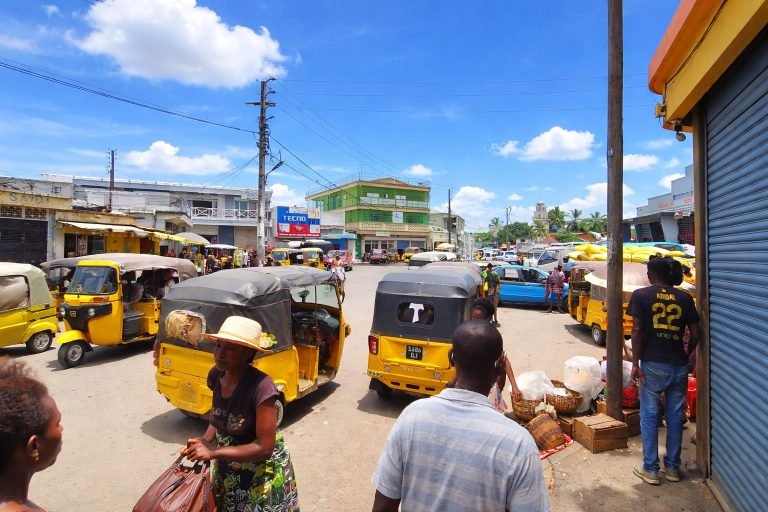
How to Get from the Airport in Madagascar and What to Expect on Arrival
Arriving in Madagascar is not complicated, but it does require a bit more preparation than in more developed destinations. Once you land at Antananarivo (Ivato International Airport – TNR) or Nosy Be (Fascene Airport – NOS), there is no large-scale public transport system waiting outside the terminal. Your onward journey will almost always involve a taxi, a pre-arranged transfer, or a local ride service.
At Antananarivo (TNR), taxis are readily available outside the airport, but there is no fixed pricing system. This means that negotiation is necessary before getting into the vehicle. Prices can vary depending on the time of day, your destination, and your negotiation confidence. It is common for initial quotes to be high, especially for international arrivals, so taking a moment to agree on a fair price is part of the process.
A useful alternative in the capital is Piqla, a local ride-hailing service that operates in Antananarivo. You can check availability or arrange a ride through their page here: Piqla ride service in Antananarivo. While not identical to global platforms, it offers a more structured way to arrange transport compared to negotiating directly with airport taxis.
If you are arriving late at night, preparation becomes especially important. Flights into Madagascar often land in the evening, and while taxis are still available, the experience can feel more uncertain if you have not arranged anything in advance. The safest approach is to organize a pickup through your hotel or confirm a driver ahead of time. This removes the need to negotiate after a long flight and ensures you have a clear plan as soon as you exit the terminal.
Traffic in Antananarivo can be heavy, particularly during peak hours, and even relatively short distances can take longer than expected. Factoring this into your arrival plans is important, especially if you are connecting to a domestic flight or planning onward travel the same day. Many travelers choose to stay one night in the capital to recover and continue their journey the following day.
In Nosy Be (NOS), arrival logistics are simpler. The airport is smaller, distances are shorter, and many hotels and resorts offer pre-arranged transfers. Taxis are still available, but the environment is generally more relaxed and easier to navigate compared to the capital. If you are staying at a resort or beachfront property, it is often easiest to have your transfer organized before arrival.
Across Madagascar, the key principle is simple: do not rely on improvisation immediately after landing. Whether you choose a taxi, a ride service like Piqla, or a hotel transfer, having a clear plan for your first journey from the airport makes the arrival experience far smoother and allows you to start your trip with confidence.
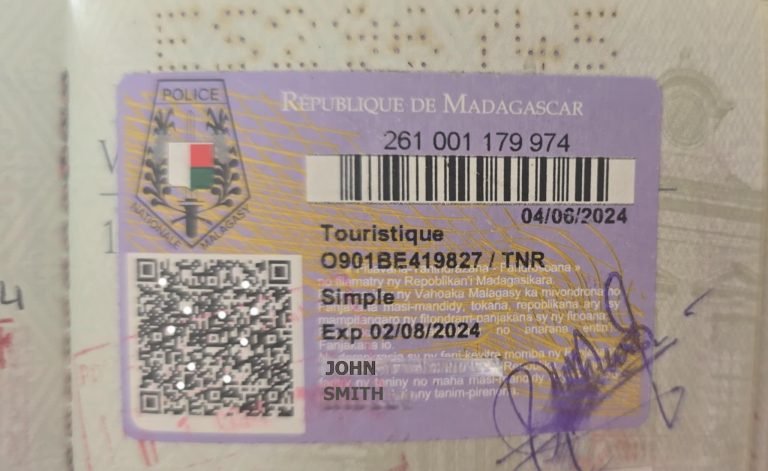
Do You Need a Visa for Madagascar and What Are the Entry Requirements?
Most travelers visiting Madagascar will need a visa, but the process is generally straightforward and designed to be accessible on arrival. Whether you choose to arrange your visa in advance or obtain it at the airport, understanding how the system works will help you avoid unnecessary delays and start your trip smoothly.
Madagascar offers two main options: a visa on arrival and an electronic visa (eVisa). The visa on arrival is the most commonly used option and can be obtained directly at Antananarivo (TNR) or Nosy Be (NOS) after landing. The process involves filling out a form, presenting your passport, and paying the visa fee before proceeding through immigration.
The eVisa allows you to complete this process in advance online, which can save time at the airport, especially during busy arrival periods. While both options lead to the same outcome, some travelers prefer the eVisa for convenience, while others choose the flexibility of arranging everything on arrival.
Visa duration and cost depend on the length of your stay. Short-term tourist visas are typically issued for stays of up to 15, 30, or 60 days, with fees increasing based on duration. It is important to have your passport valid for at least six months beyond your intended stay, as well as proof of onward or return travel, which may be requested by immigration authorities.
If you want a detailed breakdown of every step, including documents, fees, and how the online system works in practice, this comprehensive Madagascar entry requirements guide explains the full process so you know exactly what to expect before you travel.
Although the process is relatively simple, small details can make a difference. Having the correct payment method, ensuring your documents are in order, and understanding the steps ahead of time can help you move through the airport more efficiently after a long flight.
When to Book Flights to Madagascar and How Far in Advance You Should Plan
Booking flights to Madagascar is not something you want to leave to the last minute. Limited routes, fewer airlines, and strong seasonal demand mean that prices can rise quickly and availability can become restricted, especially on the most popular connections. Planning ahead gives you more flexibility, better pricing, and a much smoother booking experience overall.
If you want to compare routes, find better fares, and understand how to structure your booking, this guide to finding cheap international flights breaks down the exact strategies that work for long-haul destinations like Madagascar.
For most travelers, the ideal booking window is around 3 to 6 months in advance. This is where you are most likely to find a balance between reasonable prices and a good selection of flight times and routes. If you are traveling during peak periods such as July and August or the December holiday season, it is often worth booking even earlier to avoid limited availability and higher fares.
If your travel dates are flexible, you can sometimes find good deals closer to departure, but this is less reliable for Madagascar than for more connected destinations. Because there are fewer daily flights and limited competition on certain routes, waiting too long can result in fewer options rather than better prices. This is particularly true for long-haul routes into Antananarivo (TNR).
It is also worth considering how your routing affects pricing. Flights via major hubs such as Paris, Addis Ababa, or Johannesburg can vary significantly depending on demand and airline scheduling. Sometimes a slightly longer route with a well-timed connection can be noticeably cheaper than a more direct option. Being open to different hubs can help you find better value without dramatically increasing travel time.
Another factor to keep in mind is seasonality. Madagascar’s peak travel months align with dry weather and wildlife viewing conditions, which increases demand for flights. Traveling during shoulder seasons can offer a better balance between price and experience, with fewer crowds and more availability across routes.
Ultimately, the best approach is to start monitoring flights early, compare different routing options, and book once you find a combination of price, timing, and convenience that works for your itinerary. Waiting for the perfect deal is rarely worth the risk for a destination like Madagascar, where availability plays just as important a role as cost.

Common Mistakes to Avoid When Booking Flights to Madagascar
Booking flights to Madagascar is not just about finding a cheap ticket. Because of limited routes, fewer airlines, and complex connections, small mistakes during the booking process can lead to unnecessary stress, missed connections, or a much more difficult arrival than expected. Avoiding a few common pitfalls can make a significant difference in how smooth your journey feels.
One of the most common mistakes is choosing the cheapest itinerary without considering total travel time and connection quality. Flights with multiple layovers, long overnight waits, or self-transfers between airports may look attractive on paper, but they can quickly become exhausting and risky. A slightly more expensive ticket with a cleaner route is often the better choice, especially for a long-haul destination like Madagascar.
Another frequent issue is underestimating connection times. Airports such as Paris (CDG), Addis Ababa (ADD), or Istanbul (IST) can be large and busy, and tight connections leave little margin for delays. When possible, it is safer to allow extra time between flights, particularly if you are traveling on separate tickets or switching airlines.
Many travelers also make the mistake of arriving in Madagascar too late in the evening without a clear plan. Flights often land at night, and while transport is available, navigating arrival logistics after a long journey can be challenging if you have not arranged anything in advance. Planning your airport transfer or first night stay ahead of time avoids unnecessary stress on arrival.
Another overlooked factor is choosing the wrong arrival airport for your itinerary. Flying into Nosy Be (NOS) may seem appealing for beach destinations, but it can complicate travel if you plan to explore multiple regions of the country. In many cases, starting in Antananarivo (TNR) provides more flexibility and a more logical route through the island.
Travelers also sometimes forget to check baggage policies and ticket conditions, especially when combining different airlines or booking through third-party platforms. Differences in baggage allowances, change fees, or missed connection protection can lead to unexpected costs or complications if something goes wrong during the journey.
Finally, one of the biggest mistakes is booking too late and limiting your options. Because Madagascar has fewer flights than more popular destinations, waiting too long can result in higher prices and less convenient routes. Starting your search early and securing a solid itinerary once you find it is usually the safest approach.
Avoiding these mistakes does not require expert-level planning, just a bit of awareness. Choosing a balanced itinerary, allowing enough time between flights, and aligning your arrival with your overall travel plan will make your journey to Madagascar significantly smoother from the very beginning.
Final Practical Tips Before Flying to Madagascar
A trip to Madagascar requires a bit more preparation than many other destinations, but getting a few key details right before departure can make a noticeable difference once you are on the ground. The goal is not to overplan, but to remove the most common sources of friction so you can arrive with clarity and confidence.
One of the most important steps is making sure your documents are in order. Your passport should be valid for at least six months beyond your stay, and you should have a clear understanding of your visa situation before departure. Keeping digital and physical copies of your passport, visa confirmation, and flight details can be useful if anything unexpected comes up during the journey.
It is also worth reviewing your flight and arrival plan one last time. Long-haul travel to Madagascar can be tiring, and small details such as connection times, arrival hours, and airport transfers matter more than they might on shorter trips. If you are still refining your itinerary or comparing options, this flight booking guide can help you double-check that your route makes sense in terms of timing and logistics.
Before departure, confirm your first night’s accommodation and how you will get there from the airport. Having this arranged removes uncertainty on arrival, especially if you are landing in the evening. If you are still deciding where to stay or want to compare reliable booking platforms, this hotel booking comparison guide can help you choose an option that fits your plans.
Another practical step is ensuring you have connectivity from the moment you arrive. Mobile data makes it much easier to coordinate transport, confirm bookings, and navigate your first hours in the country. Setting up data in advance is often the simplest approach, and this international eSIM guide explains how to get connected without relying on local SIM cards at the airport. If you are unsure whether to use a physical SIM or eSIM once you arrive, this SIM vs eSIM in Madagascar guide breaks down coverage, costs, and real-world usage across the island.
It is also worth considering travel insurance before your trip. Delays, missed connections, and unexpected changes can happen, particularly on longer routes with multiple segments. Having coverage in place adds a layer of security and flexibility, and this travel insurance guide outlines what to look for when choosing a policy.
Finally, take a moment to align your expectations with the reality of traveling in Madagascar. Infrastructure is more limited, travel can be slower, and plans sometimes need to adapt. Approaching the journey with a flexible mindset makes a big difference once you arrive. If you want a broader understanding of how travel works on the island, including logistics and day-to-day realities, this Madagascar travel tips guide provides useful context before you go.
With these final checks in place, you are not just ready to fly to Madagascar, you are ready to handle the journey and the destination itself with confidence. That preparation is what turns a complex trip into a smooth and rewarding experience from the very start.
Final Thoughts: Planning Your Journey to Madagascar
Getting to Madagascar is not as simple as booking the first available flight and showing up, but that is exactly what makes it feel like a real journey rather than just another destination. With the right preparation, clear expectations, and a well-chosen route, the process becomes part of the experience instead of an obstacle.
The key is to approach your trip with a bit of structure. Choosing the right arrival airport, understanding how flight routes work, booking with realistic connection times, and preparing your arrival logistics all contribute to a smoother start. Once those pieces are in place, everything else becomes easier to manage, from your first night in the country to the way you move between regions.
If you are still shaping your itinerary, it helps to step back and look at the bigger picture of what Madagascar offers. This Madagascar travel guide gives you a complete overview of where to go and how to structure your trip across the island.
For a more detailed route, these suggestions for your itinerary in Madagascar walks you through how to connect the different regions in a way that feels logical and realistic, especially given the distances and travel times involved.
If you are already thinking about how to move between destinations once you arrive, this guide to transportation in Madagascar explains the options available and what you should expect when traveling across the island.
Madagascar rewards travelers who plan just enough to avoid unnecessary friction, while staying flexible enough to adapt along the way. If you take the time to get your arrival and logistics right from the start, you set yourself up for a trip that feels far more immersive, manageable, and ultimately unforgettable.

Frequently Asked Questions About Getting to Madagascar
• How do you get to Madagascar?
Most travelers reach Madagascar by flying into Antananarivo (TNR), the main international airport. There are direct flights from Paris, as well as one-stop connections through hubs like Addis Ababa, Nairobi, Istanbul, and Johannesburg. Some travelers heading to beach destinations fly directly into Nosy Be (NOS).
• Are there direct flights to Madagascar?
Yes, but they are limited. The most common direct route is Paris to Antananarivo. Most other routes involve at least one connection, typically through major international hubs in Africa, the Middle East, or Europe.
• What is the best airport to fly into Madagascar?
For most trips, Antananarivo (TNR) is the best choice because it provides access to the entire country and connects easily to domestic routes. Nosy Be (NOS) is a better option if your trip is focused on beaches and northern Madagascar.
• How long does it take to fly to Madagascar?
Flight times depend on your departure point. From Europe, it typically takes 10 to 15 hours. From North America, expect 18 to 30+ hours with connections. From Africa, flights are much shorter, usually between 3 and 6 hours.
• How much do flights to Madagascar cost?
Prices vary depending on season and route. From Europe, return flights usually range between €700 and €1,200. From North America, prices are often between $900 and $1,800+. Booking in advance and being flexible with dates can help reduce costs.
• Do you need a visa for Madagascar?
Yes, most travelers need a visa. You can either get a visa on arrival or apply for an eVisa in advance. Both options are relatively straightforward, but preparing ahead of time can make the arrival process smoother.
• Is it easy to travel to Madagascar?
Getting to Madagascar requires more planning than many destinations due to limited routes and longer travel times. However, once your flights and arrival logistics are organized, the process is manageable and well worth the effort.
• Should I fly into Antananarivo or Nosy Be?
Choose Antananarivo if you plan to explore multiple regions of Madagascar. Choose Nosy Be if your trip is focused on beaches, diving, and the northern part of the island.
Travel Resources to Plan, Book & Stay Connected
Use these tools and guides to stay connected abroad, find inspiration for your next trip, and book your flights, stays and gear with confidence.
Disclosure: This article may contain affiliate links. If you make a purchase through a link, I may receive a commission at no extra cost to you. I only share recommendations I believe are genuinely useful, and all opinions are my own. AI was used in this post for research and drafting purposes.

Comment (0)