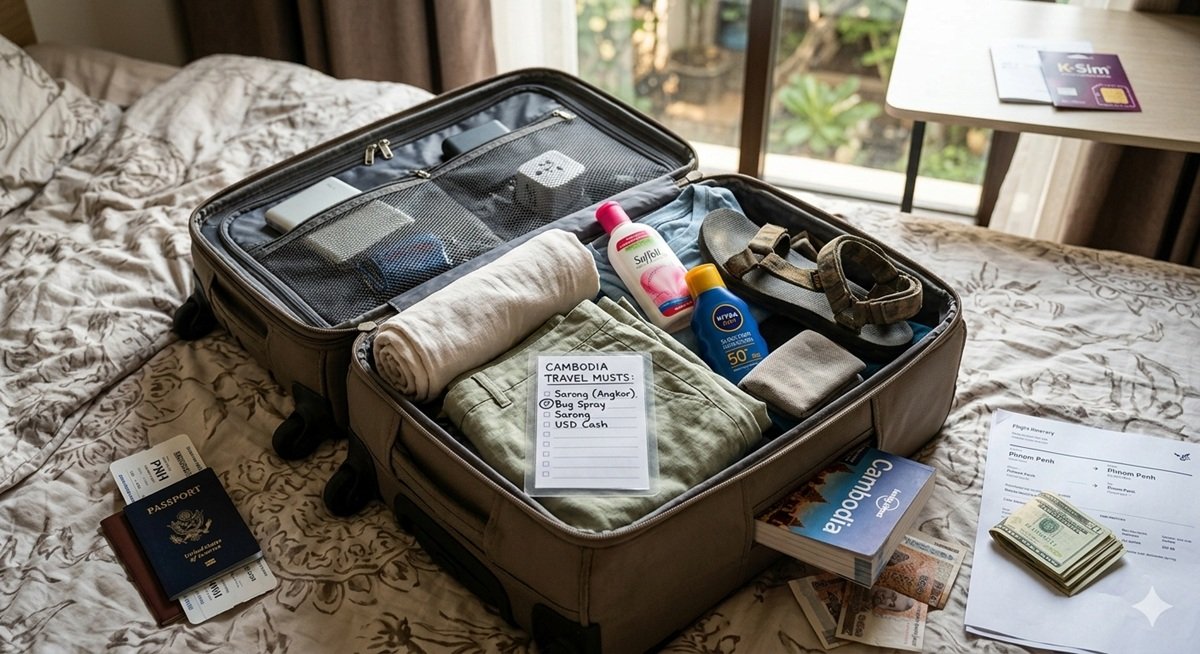
Cambodia Packing List: What to Pack for Every Type of Trip
Packing for Cambodia is not complicated, but getting it right will make your trip far more comfortable and stress-free. The country’s tropical climate, cultural norms, and travel style mean that what you bring can directly impact how easily you move between destinations, how you handle the heat, and how prepared you are for everything from temple visits to island days. This Cambodia packing list is designed to help you pack efficiently without overpacking, while making sure you have everything you actually need on the ground.
Whether you are planning a short temple-focused visit or a longer journey across the country, it helps to understand how packing fits into your overall travel plan. If you are still shaping your route, start with this Cambodia travel guide for a full overview, then use this Cambodia itinerary to structure your trip across different regions. Since climate plays a major role in what you should bring, it is also worth reviewing the best time to visit Cambodia before finalizing your packing strategy.
- What clothing works best in Cambodia’s hot and humid climate
- Essential travel items you should not forget
- Health, safety, and comfort items for tropical travel
- Tech, connectivity, and useful travel accessories
- What to pack for temples, cities, countryside, and islands
- How to adjust your packing list based on your travel style
- What NOT to pack to avoid unnecessary weight
To make your trip smoother from start to finish, it is also worth preparing beyond just packing. Before you go, check the Cambodia visa requirements and entry process, understand how to move between destinations using this Cambodia transport guide, and plan your arrival using this guide to flights and entry routes into Cambodia. With the right preparation, you can focus on enjoying the experience rather than worrying about what you forgot to bring.
Cambodia Packing List: What You Need to Know Before You Pack
This Cambodia packing list is not about bringing more, it is about bringing the right things for the kind of travel you will actually experience on the ground. Cambodia is a tropical country with high humidity, strong sun, seasonal rain, and a mix of urban, rural, and coastal environments. You can go from walking through temple complexes in the heat, to sitting in air-conditioned buses, to spending days near rivers or on islands, all within a single trip. Packing without understanding these conditions often leads to either overpacking or bringing items that are simply not useful.
Climate is one of the biggest factors. The heat is consistent throughout the year, but how it feels changes depending on the season. The dry season can be intense and exhausting during the middle of the day, while the rainy season brings short but heavy downpours that can affect how you move between destinations. Clothing that works in Europe or North America often does not translate well here, especially if it is heavy, not breathable, or not suited for quick drying. At the same time, Cambodia is culturally conservative in certain settings, particularly at temples, so packing only lightweight summer clothes without considering coverage can create unnecessary friction.
The way you travel also matters. A short 3 to 5 day trip focused on Angkor Wat and a city base like Phnom Penh requires a different packing approach than a 10 to 14 day itinerary that includes Kampot, Sihanoukville, or the islands. Moving frequently means carrying your bag more often, dealing with transfers, and adapting to different accommodation standards. Packing light becomes more important, but so does making sure you have the right essentials so you are not constantly buying replacements along the way.
There are also practical details that many travelers underestimate. Access to certain products can be limited or inconsistent outside major cities, especially in more rural areas or on islands. Power sockets, internet reliability, insect protection, and even things like sunscreen or medication can vary depending on where you are. Knowing what to bring in advance reduces the need to search for items locally or pay higher prices in tourist areas.
The goal of this Cambodia packing list is to help you pack efficiently without overloading your bag, while making sure you are prepared for the climate, the culture, and the realities of traveling across different regions of the country. With the right approach, you will move more comfortably, adapt more easily, and spend less time worrying about what you forgot and more time actually enjoying your trip.
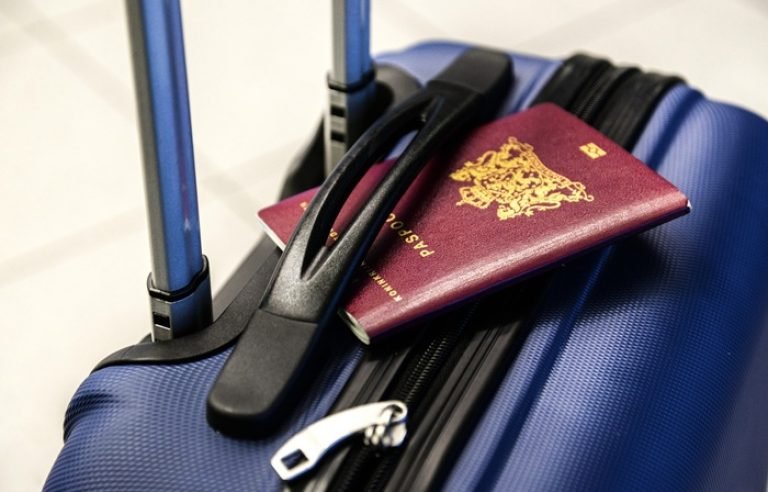
What to Pack for Cambodia: A Practical Packing Strategy
Before getting into specific items, it is important to understand how to approach packing for Cambodia as a whole. The biggest mistake most travelers make is packing based on habit instead of adapting to the realities of the destination. Cambodia is not a place where you need a wide variety of outfits or gear, but it is a place where the right choices matter. A small number of well-selected items will always outperform a large suitcase filled with unnecessary clothing and extras.
Start with the climate. Cambodia is consistently hot and humid, and even during the cooler months, temperatures rarely drop enough to justify heavier clothing. Breathability, quick-drying fabrics, and comfort in high humidity should guide almost every decision you make. If you are unsure what conditions to expect during your trip, it helps to check the Cambodia weather conditions throughout the year before you pack. During the rainy season, short but intense downpours are common, so having lightweight layers that dry quickly becomes more important than having multiple changes of clothes. Packing for Cambodia is less about variety and more about functionality.
Next, consider the types of activities you will be doing. Visiting temples like Angkor Wat requires clothing that covers shoulders and knees, while cities like Phnom Penh call for light, comfortable outfits that can handle heat and traffic. If your itinerary includes places like Kampot, Sihanoukville, or the islands, you will also need beachwear and more relaxed clothing. The key is to build a small, flexible wardrobe that works across multiple settings rather than packing separate outfits for every location.
Your travel style also plays a role. If you are moving frequently between destinations, carrying your bag on buses, ferries, or short walks to hotels, keeping your luggage light will make a noticeable difference. On the other hand, if you are staying in one or two locations, you have a bit more flexibility. Most travelers benefit from packing lighter than they initially expect, especially since laundry services are widely available and inexpensive across Cambodia.
Finally, think in terms of reliability rather than quantity. Items like comfortable shoes, a good daypack, and basic travel essentials will be used every day, while extra clothing or “just in case” items often go untouched. Cambodia is generally easy to travel in, but having the right core items with you from the start will save time, reduce stress, and make your trip far more enjoyable.
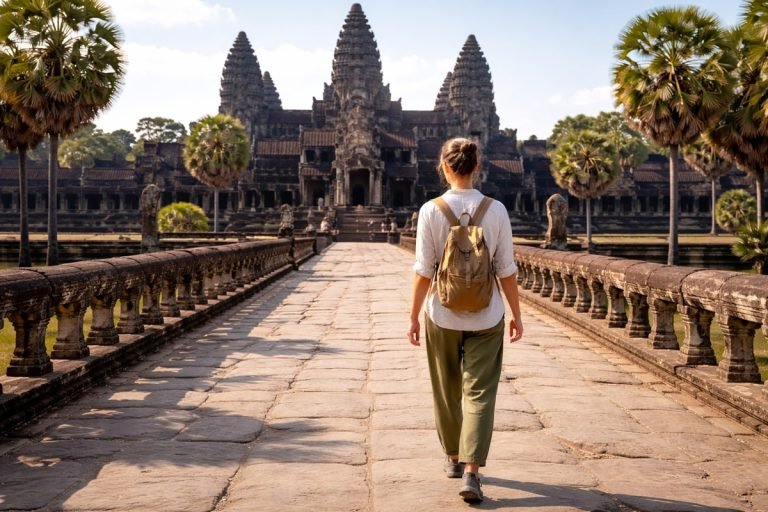
Clothing: What to Wear in Cambodia
Clothing is the most important part of any Cambodia packing list. The climate is hot, humid, and often intense, especially during the middle of the day, so what you wear will directly affect how comfortable you feel while traveling. The goal is not to pack more clothes, but to choose lightweight, breathable items that can handle heat, humidity, and frequent use without becoming uncomfortable.
Start with tops. Lightweight t-shirts, tank tops, and breathable shirts made from cotton or moisture-wicking fabrics work best. You will likely change tops more often than anything else due to sweat and humidity, so having a few reliable options is more useful than bringing bulky layers. Avoid heavy materials or anything that does not dry quickly, especially if you plan to wash clothes along the way.
For bottoms, shorts are ideal for everyday wear in cities and coastal areas, but you will also need at least one or two pairs of lightweight long pants. These are essential when visiting temples, including Angkor Wat, where covering your knees is required. Loose-fitting pants are also more comfortable during long travel days and can help protect against the sun and mosquitoes, especially in the evenings.
Footwear should be practical and comfortable. A reliable pair of walking shoes or breathable sneakers is essential for exploring temples, cities, and uneven terrain. Sandals or flip-flops are useful for short distances, beaches, and casual outings, but they are not ideal for full days of walking. Having both options gives you flexibility depending on your plans.
Temple visits require a bit more attention. You will need clothing that covers your shoulders and knees, so packing a lightweight long-sleeve shirt or a scarf is a simple and practical solution. This allows you to adapt quickly when entering religious sites without needing a full outfit change.
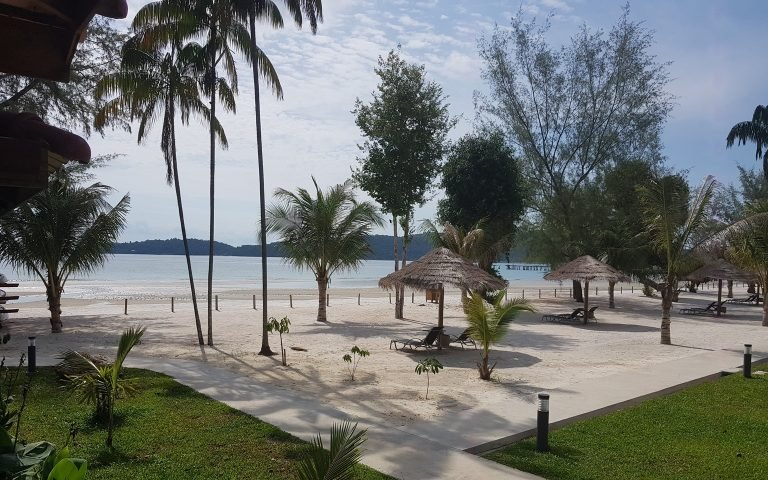
If your itinerary includes the coast or islands, swimwear becomes essential. Destinations like Koh Rong and Koh Rong Samloem are built around beach life, so bringing at least one or two swimsuits is a must. At the same time, it is important to have a light cover-up or casual clothing to wear when you are away from the beach.
Rain protection is also worth considering depending on the season. A lightweight rain jacket or compact poncho can be very useful during the rainy season, when showers can appear quickly and intensely. Since temperatures remain high, heavy waterproof gear is unnecessary, and lighter options that dry quickly are far more practical.
Overall, your clothing should be simple, versatile, and easy to wear in different settings. A small number of well-chosen items that work across temples, cities, and coastal areas will make your trip far more comfortable than a suitcase filled with clothes you rarely use.
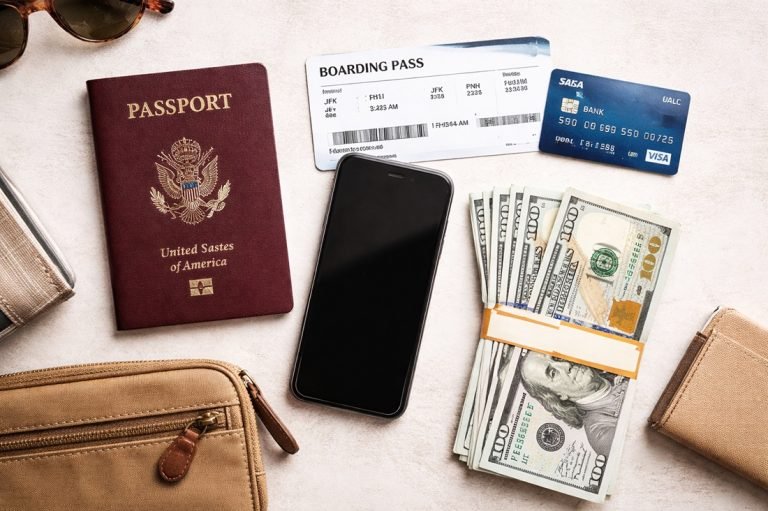
Essentials: Documents, Money and Must-Have Items
Beyond clothing, there are a few essential items that will make a significant difference in how smoothly your trip to Cambodia goes. These are the things you will rely on daily, from entering the country to paying for meals and moving between destinations. Getting these right is far more important than packing extra clothes.
Start with your passport, which should be valid for at least six months beyond your travel dates. You will also need either a Cambodia e-visa approval or the ability to obtain a visa on arrival, depending on your travel plans. It is a good idea to carry printed copies of your visa and travel documents, even if everything is stored digitally, as this can save time at immigration and in case of connectivity issues.
Money in Cambodia works a little differently than in many other countries. The US dollar is widely used alongside the local currency, so bringing clean USD cash is highly recommended. Bills should be in good condition, as torn or heavily worn notes are often refused. Small denominations are particularly useful for everyday spending, especially in markets, local restaurants, and transport.
In addition to cash, carrying at least one credit or debit card is important for ATM withdrawals and larger payments. ATMs are widely available in cities like Phnom Penh and Siem Reap, but can be less reliable in smaller towns or on the islands. Having a backup card stored separately from your main wallet adds an extra layer of security in case of loss or theft.
For day-to-day use, a compact wallet or secure day bag makes it easier to carry your essentials without constantly accessing your main luggage. Keeping your passport, cash, and cards organized and accessible will save time and reduce stress, especially when checking into hotels, booking transport, or making payments on the go. A well-organized setup like those found in this travel gear collection can make a noticeable difference when you are moving between destinations frequently.
Travel insurance is another essential that is often overlooked. While Cambodia is generally easy to travel in, unexpected situations can still happen, from minor accidents to delayed transport. Having travel insurance coverage in place ensures that you are protected without having to deal with high out-of-pocket costs. If you have not arranged this yet, it is worth reviewing your options through this travel insurance guide before your trip.
These essentials form the foundation of your trip. With your documents, money, and core items organized properly, everything else becomes easier to manage once you are on the ground in Cambodia.
Health, Safety and Comfort Items
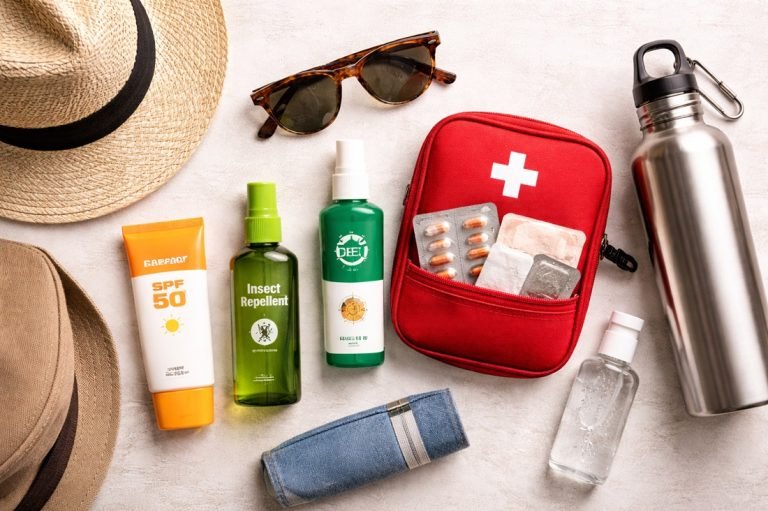
Health and comfort items are often underestimated when packing for Cambodia, but they can make a significant difference once you are on the ground. The combination of heat, humidity, insects, and changing environments means that a few well-chosen items will help you stay comfortable and avoid common travel issues.
One of the most important things to bring is mosquito repellent, especially if you are visiting rural areas, riverside towns, or the islands. Mosquitoes are present throughout the country, particularly around sunrise and sunset, and having your own reliable repellent is far more convenient than trying to find one locally. Wearing lightweight long sleeves or pants in the evenings can also help reduce exposure.
The sun in Cambodia is strong year-round, so high-SPF sunscreen is essential. While sunscreen is available in major cities, it is often more expensive and sometimes limited in quality or selection. Packing your own ensures you have something that works well for your skin, especially if you plan to spend time outdoors exploring temples or relaxing on the coast. A hat and sunglasses will also help protect you from prolonged sun exposure.
A small basic medical kit is highly recommended. This should include items like pain relievers, antihistamines, motion sickness tablets, and any personal medication you may need. While pharmacies are widely available in cities, it is easier to carry a few essentials with you rather than searching for them when you need them. Including rehydration salts can also be helpful, especially in hot conditions where dehydration can happen quickly. For up-to-date recommendations on vaccinations, health risks, and preventive measures, it is worth reviewing this health advice for traveling to Cambodia before your trip.
Hygiene items are another area where a bit of preparation goes a long way. Carrying hand sanitizer, wet wipes, and a small pack of tissues can be very useful when traveling between destinations or visiting areas where facilities are basic. These items take up very little space but can make a noticeable difference in day-to-day comfort.
Staying hydrated is essential in Cambodia’s climate. Having a reusable water bottle makes it easier to drink regularly throughout the day, especially when exploring or traveling long distances. While bottled water is widely available, having your own bottle is more convenient and helps reduce plastic use.
Overall, these items are about prevention and comfort rather than reacting to problems once they arise. With a small selection of the right health and safety essentials, you can avoid many common travel issues and focus on enjoying your time in Cambodia.
Tech and Connectivity: Staying Connected in Cambodia
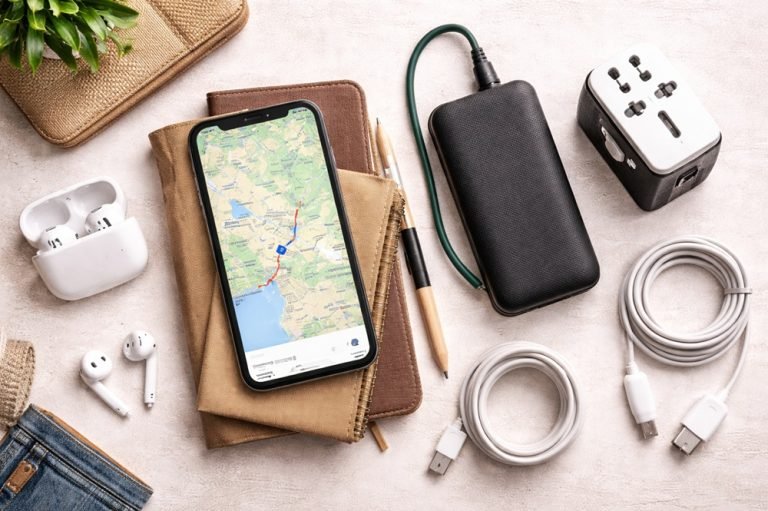
Staying connected in Cambodia is relatively easy, but having the right setup before you arrive will save time and make your trip far more convenient. From navigating cities to booking transport and staying in touch, your phone quickly becomes one of the most important tools you carry.
Start with your smartphone, which will be used constantly for maps, bookings, and communication. Alongside that, bring a charging cable and a power adapter compatible with Cambodia’s outlets. While many hotels provide USB ports, this is not guaranteed, especially in smaller accommodations. A power bank is also highly recommended, particularly for long travel days, temple visits, or excursions where access to power is limited.
Internet access is generally reliable in cities like Phnom Penh and Siem Reap, where most hotels, cafés, and restaurants offer WiFi. However, speeds can vary, and connections are not always consistent outside urban areas. If you plan to move between destinations or rely on maps and apps, having your own mobile data connection makes a noticeable difference.
The easiest way to stay connected is by using an eSIM or local SIM card. This allows you to access mobile data immediately without needing to search for a provider after arrival. If you want a detailed comparison of providers, coverage, and pricing, this guide to SIM cards and mobile data in Cambodia helps you choose the right option for your trip. If you prefer to set everything up in advance, this international eSIM guide compares the best options and helps you choose a plan that works for Cambodia. Having data from the moment you land is especially useful for arranging transport, checking directions, or communicating with your accommodation.
Several apps are worth downloading before your trip. Ride-hailing services like Grab and PassApp are widely used for getting around in cities, offering transparent pricing and convenience. Offline maps can also be helpful if your connection drops while traveling between destinations.
Overall, a simple but reliable tech setup will make your trip smoother and more flexible. With a charged phone, stable internet access, and the right apps, you will be able to navigate Cambodia confidently without relying on guesswork or constant WiFi access.
Packing for Different Travel Styles in Cambodia
Not every trip to Cambodia looks the same, and your packing list should reflect how you plan to travel. The difference between a short city break, a multi-stop itinerary, or a slower, more relaxed trip can significantly change what you actually need to bring. Adjusting your packing based on your travel style will help you avoid carrying unnecessary weight while still being fully prepared.
If you are traveling with a backpack or moving frequently, packing light becomes essential. You will likely be carrying your bag through bus stations, onto ferries, and along short walks to hotels, so minimizing weight makes a noticeable difference. Focus on versatile clothing, a compact daypack, and items that can be used across multiple situations. Laundry services are widely available and inexpensive, so there is no need to pack for every day of your trip.
For mid-range travelers staying in hotels and moving less frequently, you have more flexibility. You can bring a few extra clothing options and slightly more comfort-focused items, but it is still best to avoid overpacking. Even with comfortable transport and accommodation, Cambodia’s climate means you will naturally rotate through the same lightweight clothing rather than using everything you bring.
If your trip is short (3 to 5 days), simplicity is key. Focus on a small selection of clothing that works across all activities, from temples to city exploration. There is little benefit in packing for multiple scenarios when your time is limited, and keeping your luggage compact will make your trip easier to manage.
For longer trips (7 to 14 days or more), your packing strategy should prioritize flexibility rather than quantity. You will move between different environments, such as cities, countryside, and coastal areas, but you still do not need significantly more clothing. Instead, focus on mix-and-match outfits, quick-drying materials, and items that can adapt to different settings without needing constant changes.
Travelers planning a beach or island-focused trip should include a bit more emphasis on swimwear, light cover-ups, and relaxed clothing suitable for coastal environments. At the same time, it is still important to keep a few temple-appropriate outfits for when you are visiting cultural sites or passing through cities like Phnom Penh or Siem Reap.
Ultimately, the best approach is to pack for how you will travel, not just where you are going. A well-balanced packing strategy that matches your itinerary and travel style will make your experience in Cambodia far more comfortable, flexible, and enjoyable.
What NOT to Pack for Cambodia
Knowing what not to pack is just as important as knowing what to bring. Cambodia’s climate and travel conditions make certain items unnecessary, and carrying them will only add weight and inconvenience without adding value to your trip. Most travelers realize too late that they packed for comfort at home rather than for the realities of traveling in Southeast Asia.
One of the most common mistakes is bringing heavy clothing. Thick fabrics, jeans, or anything designed for cooler climates quickly become uncomfortable in Cambodia’s heat and humidity. Even during the “cooler” months, temperatures remain high, so these items are rarely used. Lightweight, breathable alternatives are always the better choice.
Another item to avoid is too many clothes. Many travelers pack outfits for every day of their trip, only to realize they end up wearing the same few comfortable items repeatedly. Laundry services are widely available, inexpensive, and quick, so packing fewer, more versatile pieces is far more practical than overloading your bag.
You can also leave behind bulky travel gear that you are unlikely to use regularly. Large towels, heavy accessories, or “just in case” items often take up valuable space without providing real benefit. Most accommodations provide basic essentials, and anything you truly need can usually be purchased locally in major cities.
Formal or overly dressy outfits are rarely necessary. Cambodia is generally relaxed when it comes to clothing, and even in cities like Phnom Penh, casual and comfortable attire is the norm. Aside from temple dress requirements, there are very few situations where formal wear is needed.
Another mistake is bringing expensive or unnecessary valuables. While Cambodia is generally safe for travelers, carrying high-value items increases the risk of loss or theft and often adds unnecessary stress. It is better to travel with only what you need and keep your setup simple.
Finally, avoid packing items you can easily replace locally. Basic toiletries, simple clothing, and everyday items are widely available in Cambodia, particularly in Phnom Penh and Siem Reap. Packing with this in mind allows you to travel lighter and adjust as needed once you are on the ground.
Final Thoughts on Your Cambodia Packing List
Packing for Cambodia does not need to be complicated. The key is to focus on functionality, comfort, and flexibility rather than trying to prepare for every possible scenario. With the right essentials, lightweight clothing, and a simple setup, you will be able to move easily between destinations and adapt to the country’s climate and travel conditions without unnecessary stress.
If you are still planning your trip, it helps to connect your packing decisions with your overall route. Start with this Cambodia travel guide for a full overview, then use this Cambodia itinerary to structure your journey across different regions. Since climate plays a major role in what you bring, reviewing the best time to visit Cambodia will help you adjust your packing list to match seasonal conditions.
Before you finalize your plans, it is also worth preparing the practical side of your trip. Understanding how to choose the best flights to Cambodia will help you pick the right entry point, while this hotel booking comparison guide can help you find the best places to stay across different destinations. Staying connected is just as important, so setting up your data in advance using this international eSIM guide ensures you have internet access from the moment you arrive.
To travel with peace of mind, it is also worth considering travel insurance coverage before your trip. This travel insurance guide explains your options and helps you choose a plan that fits your travel style. If you want to simplify your packing even further, exploring a curated setup like this travel gear collection can help you choose items that are practical, compact, and suited for trips like this.
With the right preparation, packing becomes a simple step rather than a stressful one. A well-thought-out Cambodia packing list will allow you to focus on the experience itself, moving comfortably between temples, cities, countryside, and islands without being weighed down by unnecessary items.
Cambodia Packing List FAQ
What should I pack for Cambodia?
You should pack lightweight clothing, breathable tops, shorts, long pants for temples, comfortable walking shoes, sunscreen, mosquito repellent, and a few essential travel items like a passport, USD cash, and a power bank. Packing light and focusing on practical items will make your trip much easier.
What clothes should I wear in Cambodia?
Wear lightweight, breathable clothing suitable for hot and humid weather. T-shirts, tank tops, shorts, and loose pants work best. When visiting temples, you will need to cover your shoulders and knees, so bring appropriate clothing or a light layer.
Do I need long pants for Cambodia?
Yes, at least one or two pairs of lightweight long pants are essential. They are required for temple visits and are also useful for protecting against the sun and mosquitoes, especially in the evenings.
What shoes should I bring to Cambodia?
Bring comfortable walking shoes or breathable sneakers for exploring, along with sandals or flip-flops for casual use and beach destinations. You will likely use both depending on your daily activities.
Is Cambodia hot all year round?
Yes, Cambodia is hot and humid throughout the year. Even during the cooler months, temperatures remain high. The rainy season brings short, heavy showers but does not significantly reduce overall heat.
Do I need mosquito repellent in Cambodia?
Yes, mosquito repellent is highly recommended, especially in rural areas, near water, and during early morning or evening hours. It is one of the most important items to include in your packing list.
Can I buy things I forgot in Cambodia?
Yes, most basic items such as toiletries, clothing, and travel essentials are available in cities like Phnom Penh and Siem Reap. However, specific brands or higher-quality products may be limited or more expensive, so it is best to bring important items with you.
Should I bring cash to Cambodia?
Yes, bringing USD cash is highly recommended. Cambodia widely uses US dollars for everyday transactions, and having small, clean bills makes payments easier, especially in markets and smaller establishments.
Do I need a power adapter for Cambodia?
It depends on your country of origin, but in most cases, a universal power adapter is useful to ensure compatibility with local outlets. Many hotels have standard plugs, but it is safer to bring your own adapter.
Is it better to pack light for Cambodia?
Yes, packing light is one of the best decisions you can make. You will likely move between destinations, deal with heat, and rely on local transport, so having a lighter bag makes your trip far more comfortable and flexible.
Travel Resources to Plan, Book & Stay Connected
Use these tools and guides to stay connected abroad, find inspiration for your next trip, and book your flights, stays and gear with confidence.
Disclosure: This article may contain affiliate links. If you make a purchase through a link, I may receive a commission at no extra cost to you. I only share recommendations I believe are genuinely useful, and all opinions are my own. AI was used in this post for research and drafting purposes.

Comment (0)