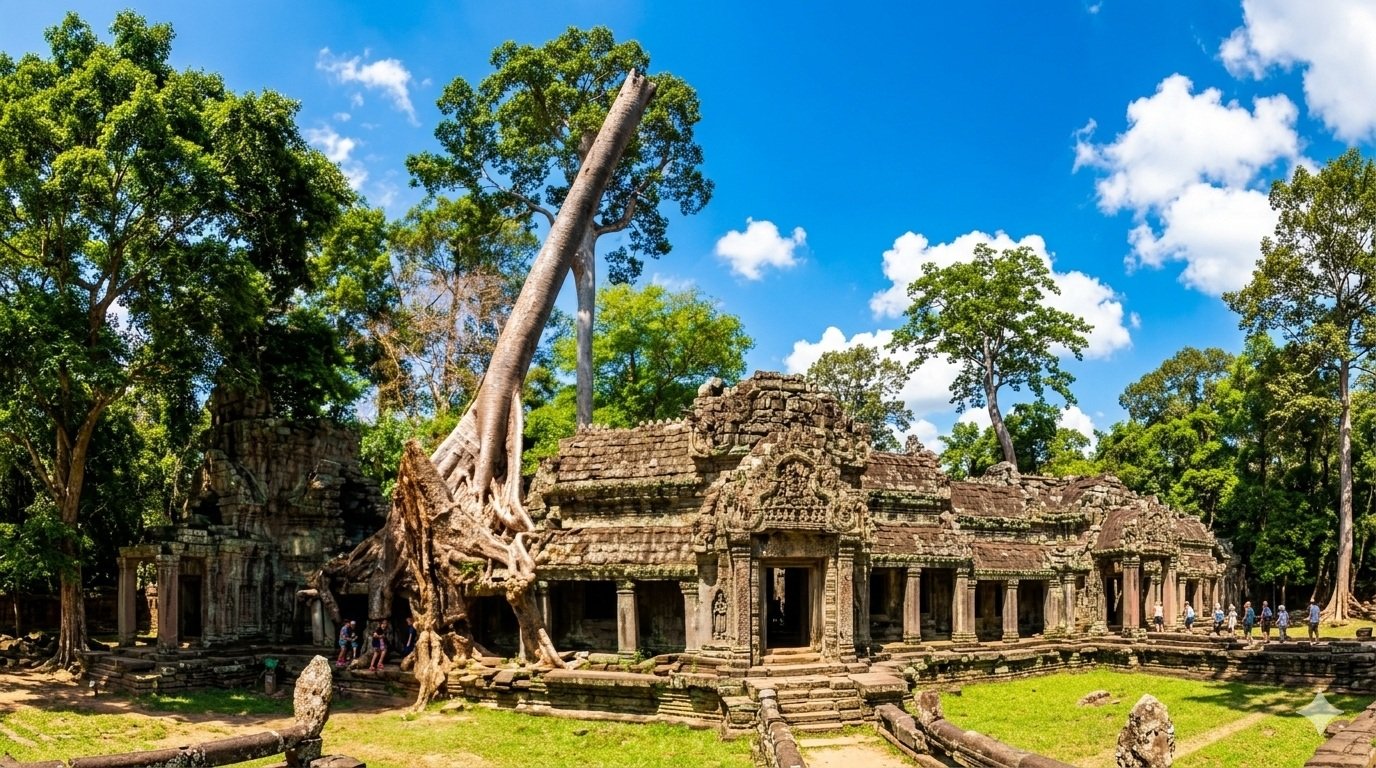
Cambodia Visa Guide: Everything You Need to Know Before You Travel
Planning a trip to Cambodia? One of the first things you need to figure out is your visa. The good news is that Cambodia has one of the easiest visa systems in Southeast Asia, with options like visa on arrival and online e-visas available for most travelers.
This guide breaks down exactly how the Cambodia visa process works, so you can avoid confusion, delays, or unnecessary stress when you arrive.
- Do you need a visa for Cambodia?
- The difference between e-visa and visa on arrival
- Step-by-step application process
- Visa requirements and documents
- Costs and extension options
- Special rules for US, EU, and other travelers
If you are planning your full trip, this Cambodia travel guide helps you connect destinations, while understanding the cost of traveling in Cambodia will help you plan your budget more accurately.
Cambodia Visa Requirements Explained: What You Need to Know Before You Go
Figuring out the Cambodia visa process is usually one of the first real steps in planning your trip. It is also one of the areas where outdated information, conflicting advice, and vague official wording can quickly turn something simple into unnecessary stress.
The reality is that Cambodia makes it relatively easy for most travelers to enter the country. Whether you choose a visa on arrival or apply for an e-visa online, the process is straightforward once you understand how it works. The problem is not complexity, it is clarity. Small details like which entry points accept e-visas, how much cash you need on arrival, or what documents are actually checked can make a big difference in how smooth your experience is.
This guide breaks everything down in a practical, traveler-first way. Not just the official rules, but how the process actually works on the ground. What to expect when you land, how to avoid common mistakes, and how to choose the right visa option based on your itinerary and travel style.
If your trip includes major entry points like Siem Reap or the capital, understanding arrival logistics becomes even more important. For example, arriving in Phnom Penh versus flying directly into Siem Reap can slightly change your arrival experience, especially when it comes to airport procedures and queues.
Beyond the visa itself, entry into Cambodia is also tied to a few other important steps that travelers often overlook. Things like the mandatory e-arrival card, having the right currency on hand, and making sure you are properly connected as soon as you land can all affect how your first hours in the country unfold. If you are preparing your trip in parallel, it is worth aligning your visa timing with your route, especially if you are following a structured plan like this Phnom Penh itinerary or moving quickly between destinations.
By the end of this guide, you will know exactly which visa you need, how to get it, what it costs, and what to expect at the border or airport. No guesswork, no surprises, just a clear path to entering Cambodia with confidence.
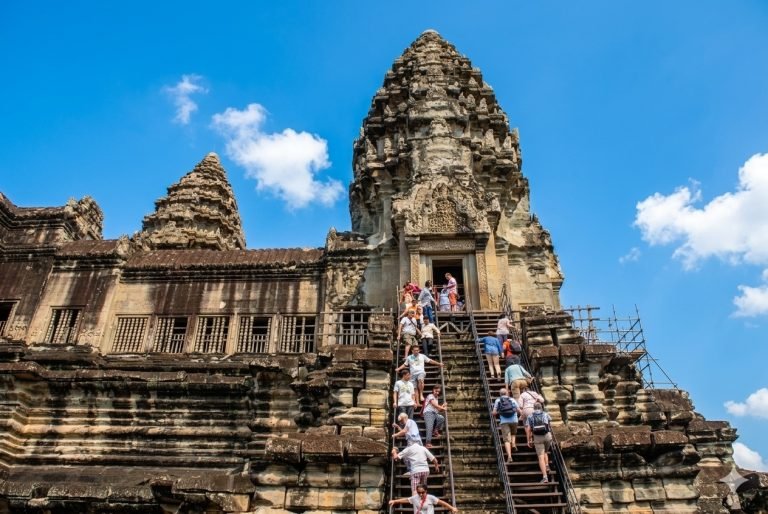
Do You Need a Visa for Cambodia?
Yes, in most cases, you do need a visa for Cambodia. This applies to the majority of travelers worldwide, including visitors from the United States, Canada, the United Kingdom, Australia, and most European countries. If you are asking yourself “do I need a visa for Cambodia?” the answer is almost always yes.
Cambodia operates a very accessible visa system, but it is not a visa-free destination for most nationalities. Instead of visa exemptions, the country offers simple and widely available options such as the tourist visa, visa on arrival, and electronic visa. This means that while a visa is required, getting one is rarely complicated.
For US citizens in particular, the rules are straightforward. If you are wondering “do US citizens need a visa for Cambodia?” the answer is yes, but the process is quick and typically takes only a few minutes on arrival or a short online application if you choose the e-visa route. The same applies to most Western travelers.
There are a few exceptions. Citizens of ASEAN countries such as Thailand, Vietnam, Laos, Malaysia, Singapore, Indonesia, and the Philippines can enter Cambodia without a visa for short stays. Outside of these regional agreements, however, a Cambodia tourist visa is required for entry.
In practical terms, this means you should plan for a visa as part of your trip preparation. Whether you apply online in advance or get a visa on arrival, the process is designed to be traveler-friendly. The main decision is not whether you need a visa, but which type of visa makes the most sense for your route and entry point.
If your trip involves multiple destinations across the country, including inland travel or border crossings, it is worth aligning your visa choice with your route. For example, travelers following a broader plan like this getting around Cambodia guide often benefit from understanding how entry points and transport options connect across the country.
The key takeaway is simple. Cambodia does require a visa for most travelers, but the system is intentionally easy to navigate. Once you understand your options, securing the right visa becomes a quick and predictable step in your travel planning process.
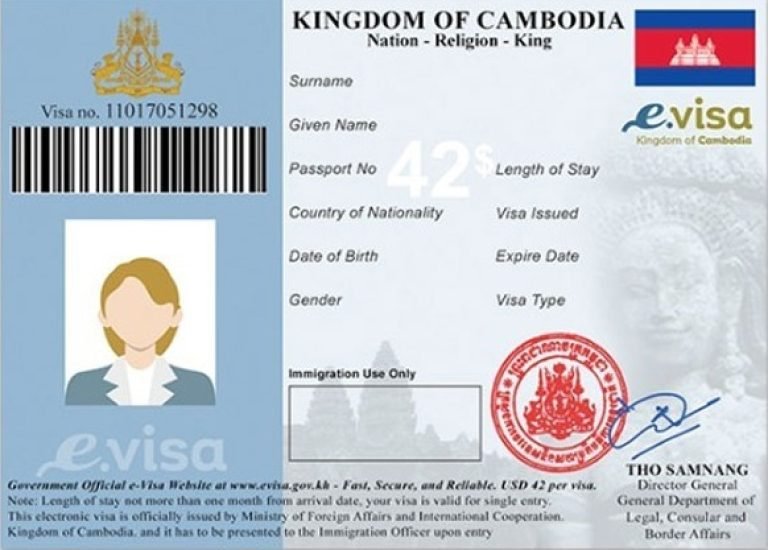
Cambodia Visa Types Explained
Cambodia offers several visa types, but for most travelers, the choice is much simpler than it might seem. In practice, almost everyone visiting Cambodia for tourism will end up choosing between a standard tourist visa, an e-visa, or a visa on arrival. The rest of the visa system exists mainly for long-term stays, work, or special cases.
Understanding the difference between these options will help you avoid confusion and choose the visa that best fits your travel plans.
Tourist Visa (Type T)
The Cambodia tourist visa is the standard option for short-term visitors. It is valid for 30 days and can be extended once for an additional 30 days if you decide to stay longer.
This is the visa most travelers use when visiting Cambodia for sightseeing, whether you are exploring temples in Siem Reap, spending time in the capital, or moving between destinations across the country. It is available both as an online e-visa and as a visa on arrival at major entry points.
For the majority of travelers, this is the only visa you need to think about.
e-Visa (Online Application)
The Cambodia e-visa allows you to apply for your tourist visa online before you travel. This is the most convenient option if you prefer to have everything arranged in advance and avoid queues at the airport.
You can apply through the official government website at evisa.gov.kh. Once approved, you will receive your visa electronically and present it on arrival.
The main limitation is that e-visas are only accepted at certain entry points, mainly international airports and selected land borders. If your route involves smaller or less common crossings, you may need to rely on a visa on arrival instead.
Visa on Arrival
Visa on arrival is the most flexible option and is widely available at Cambodia’s main international airports and many land border crossings. You simply arrive, complete a short form, provide a passport photo, and pay the visa fee in US dollars.
This option works well for travelers who prefer flexibility or are making last-minute plans. It is also commonly used by those entering the country overland or arriving without having applied online in advance.
In most cases, the process is straightforward, but wait times can vary depending on how busy the airport or border crossing is.
Ordinary (Business) Visa (Type E)
The Ordinary visa, often referred to as the “E-class” visa, is designed for travelers planning to stay in Cambodia for longer periods. While it is also issued initially for 30 days, it can be extended for 1, 3, 6, or 12 months depending on your situation.
This visa is commonly used by digital nomads, expats, retirees, and anyone working or studying in Cambodia. Extensions are categorized into different types, including business (EB), retirement (ER), student (ES), and job-seeker (EG), each with its own requirements.
It is important to note that holding an Ordinary visa does not automatically grant the right to work. A separate work permit is required if you are employed in Cambodia.
Other Visa Types
Cambodia also offers a number of specialized visas, including the Khmer visa (Type K) for Cambodian nationals with foreign passports, courtesy visas (Type C) for NGO workers, and diplomatic or official visas (Types A and B). These are not relevant for typical travelers and are only issued under specific circumstances.
Long-Term Options and Special Programs
For those considering a longer stay in Cambodia, there are additional pathways beyond standard visa extensions. Long-term stays are typically managed through the Ordinary visa system, particularly for retirees and professionals.
More recently, Cambodia has introduced initiatives aimed at attracting foreign residents and investors, including a long-term residency program often referred to as a “golden visa.” One example is the Cambodia My 2nd Home (CM2H) program, which offers a renewable 10-year visa. While this is not relevant for short-term travelers, it reflects the country’s broader approach to long-term residency options.
For most visitors, however, these long-term programs are not something you need to consider. A standard tourist visa, whether obtained online or on arrival, will cover the vast majority of travel scenarios.
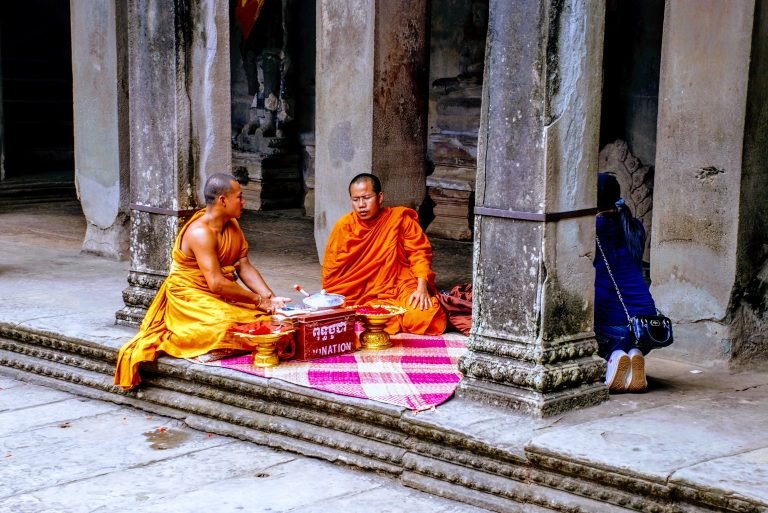
How to Apply for a Cambodia Visa
Applying for a Cambodia visa is a straightforward process, whether you choose to arrange it online in advance or get it on arrival. Most travelers will either apply for an e-visa before their trip or complete the process at the airport or land border when entering the country.
The right approach depends on your travel style. If you prefer everything organized ahead of time, the e-visa is the most convenient option. If you value flexibility or are traveling overland, visa on arrival is just as accessible.
Apply for a Cambodia e-Visa (Online)
The Cambodia e-visa is the easiest way to secure your visa before you travel. The process is done بالكامل online and typically takes around three business days for approval.
You can apply through the official government website at https://www.evisa.gov.kh/. The application requires your personal details, passport information, and travel dates, along with a passport scan and a recent photo.
Once you submit your application and pay the fee, which is usually around $30 to $36 USD including processing, your visa will be sent to you by email. You will need to print a copy and present it on arrival.
The e-visa is valid for 90 days from the date of issue and allows a single stay of up to 30 days in Cambodia. It is accepted at major international airports and selected land border crossings, making it suitable for most standard travel routes.
In addition to the visa itself, Cambodia now requires travelers to complete an electronic arrival card before entering the country. This can be done through https://arrival.gov.kh/ and is best completed before your flight to avoid delays at the airport.
For most travelers, the e-visa is the recommended option. It removes uncertainty on arrival and allows you to move through immigration more smoothly, especially at busy airports.
Get a Visa on Arrival
Visa on arrival is available at Cambodia’s main international airports and many land border crossings. The process is simple and does not require any preparation in advance, which makes it ideal for flexible or last-minute travel plans.
On arrival, you will complete a short form, provide a passport photo, and pay the visa fee in US dollars. Immigration staff will process your visa on the spot, usually within a few minutes, although wait times can increase during peak travel periods.
While this option is reliable, it does require a bit more effort on arrival. Having small USD bills ready, carrying an extra passport photo, and completing your arrival details in advance can help speed up the process.
Visa on arrival offers maximum flexibility, especially if your itinerary includes less common border crossings or if your travel plans change at the last minute.
Whichever option you choose, the process is designed to be accessible. As long as your passport is valid for at least six months and you meet the basic requirements, entering Cambodia is typically smooth and uncomplicated.
Visa on Arrival vs e-Visa: Which Should You Choose?
For most travelers, choosing between a Cambodia e-visa and a visa on arrival comes down to one simple question: do you want convenience before your trip or flexibility when you arrive?
Both options lead to the same result, a standard 30-day tourist visa, but the experience of getting there can feel quite different depending on how you prefer to travel.
Why the e-Visa Is the Best Choice for Most Travelers
If you prefer to have everything sorted before you land, the e-visa is the better option. You apply online, receive your visa by email, and arrive in Cambodia knowing that your entry is already approved.
This removes the need to queue for a visa at the airport, deal with forms after a long flight, or worry about having the exact cash amount ready. It is especially useful if you are arriving at busy entry points where lines can build up quickly.
For travelers following a structured trip, booking flights, planning routes, and organizing accommodation in advance, the e-visa fits naturally into that process. It is the most predictable and low-stress way to enter the country.
When Visa on Arrival Makes More Sense
Visa on arrival is ideal if you value flexibility or are traveling without a fixed plan. You do not need to apply in advance, and you can simply complete the process when you reach the border or airport.
This is particularly useful for overland travel or if your itinerary includes less common border crossings where e-visas may not be accepted. It also works well for last-minute trips where there is no time to wait for online approval.
The process is generally straightforward, but it can involve waiting in line, filling out forms, and paying in US dollars on arrival. Having a passport photo and small bills ready will make things easier.
The Real Difference in Practice
In reality, both options are reliable. The difference comes down to how you want to start your trip. With an e-visa, you trade a few minutes online before your trip for a smoother arrival experience. With visa on arrival, you keep full flexibility but handle everything after you land.
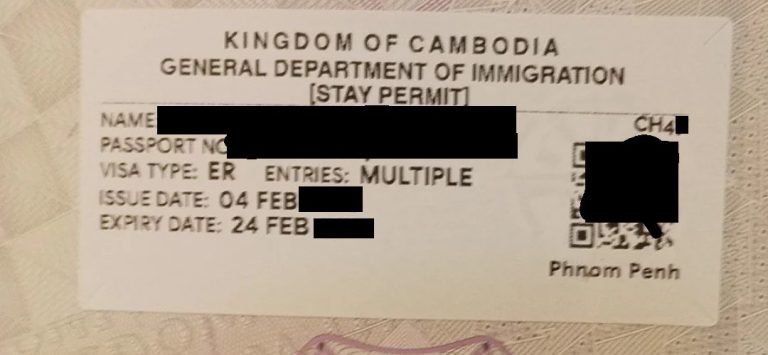
One small detail that has changed in recent years is how the visa is issued in your passport. Cambodia used to place a full-page visa sticker, but this has now been replaced by a much smaller sticker that takes up far less space. It is a minor change, but a welcome one if you travel frequently and want to preserve passport pages.
For most travelers, the e-visa is the safer and more convenient choice. If your plans are fixed and your entry point supports it, applying online in advance will make your arrival in Cambodia quicker and more relaxed. If your trip is more flexible or involves overland travel, visa on arrival remains a perfectly valid and easy alternative.
Cambodia Visa Requirements
The Cambodia visa process is straightforward, but there are a few key requirements you need to meet before entering the country. Most travelers will have no issues as long as they prepare the basic documents in advance and understand what is expected on arrival.
Basic Requirements
- Passport validity: Your passport must be valid for at least 6 months from your date of entry.
- Empty pages: You should have at least one to two blank pages for entry and exit stamps.
- Visa validity: Tourist visas allow a stay of up to 30 days.
- Passport photo: Required for visa on arrival. It is recommended to carry a spare, even if you applied for an e-visa.
Documents You May Be Asked For
- Return or onward ticket: Not always checked, but you may be asked to show proof of onward travel.
- Proof of accommodation: Occasionally requested, especially at airports.
- Cash in USD: Required if you are getting a visa on arrival. Small bills are recommended.
e-Arrival Card (Mandatory)
Cambodia now requires travelers to complete an electronic arrival card before entering the country. This can be done online through https://arrival.gov.kh/ within 7 days before your arrival.
The process is quick and replaces the traditional paper arrival form. Completing it in advance will help you move through immigration more efficiently when you land.
Special Cases and Exceptions
- Visa exemption: Citizens of ASEAN countries generally do not need a visa for short stays.
- Restricted nationalities: Some countries are not eligible for visa on arrival and must apply through a Cambodian embassy in advance.
- Embassy applications: Available for travelers who prefer to arrange their visa before departure or who are not eligible for standard entry options.
Important Tips Before You Travel
- Overstaying your visa: Fines are strictly enforced and charged per day, so make sure you extend or exit on time.
- Border acceptance: Not all land crossings accept e-visas, so check your route in advance if you are traveling overland.
- Keep documents accessible: Having printed copies of your visa and key details can make the arrival process smoother.
As long as you meet these basic requirements, entering Cambodia is usually quick and uncomplicated. A little preparation before your trip will help you avoid delays and start your journey smoothly.

Cambodia Visa Cost
The cost of a Cambodia visa is relatively low and consistent across entry methods. Most travelers will pay roughly the same amount whether they apply online in advance or get their visa on arrival.
Standard Visa Costs
- Tourist e-visa (Type T): Approximately $30 USD, or around $36 USD including processing fees for a single 30-day stay.
- Visa on arrival: Typically $30 USD, paid at the airport or land border.
- Ordinary visa (Type E): Around $35 USD for the initial 30-day visa, mainly used for longer stays.
Visa Extension Costs
- Tourist visa extension: Usually starts from around $45 USD for an additional 30 days.
- Ordinary visa extensions: Vary depending on duration (1, 3, 6, or 12 months) and purpose.
Payment Tips
- Cash (USD): Widely accepted and still the most reliable option, especially at land borders.
- Credit or debit cards: Now accepted at some airports for visa on arrival, although availability can vary.
- Exact amount: If paying in cash, it is best to bring the exact fee in US dollars to avoid delays or unfavorable exchange rates.
To avoid unnecessary fees or scams, always use the official application process when applying online and avoid third-party agents unless absolutely necessary.

Cambodia Visa for US, EU, and Other Travelers
For most travelers, Cambodia visa rules are consistent regardless of nationality. Whether you are visiting from the United States, Canada, the United Kingdom, Europe, Australia, or New Zealand, you will generally need a visa to enter the country, either obtained online in advance or on arrival.
In practical terms, this means that the same options apply to almost everyone. A standard tourist visa, valid for 30 days, is the default choice and is easily accessible through both the e-visa system and visa on arrival at major entry points.
Travelers from the US, Canada, UK, EU, and Australia
If you are traveling from any of these countries, the process is straightforward. You are eligible for both the e-visa and visa on arrival, and there are no additional requirements beyond the standard entry conditions already covered in this guide.
This makes Cambodia one of the easier destinations in Southeast Asia when it comes to entry procedures, especially compared to countries with stricter visa policies or more complex application systems.
Visa-Free Entry for ASEAN Countries
Citizens of ASEAN member countries benefit from visa-free entry for short stays, typically ranging from 14 to 30 days depending on the country. This mainly applies to regional travelers from countries such as Thailand, Vietnam, Malaysia, Singapore, and the Philippines.
For all other nationalities, a visa is required.
Important Considerations Based on Nationality
- Overstaying your visa: Cambodia enforces overstay fines of approximately $10 USD per day, which can add up quickly if you do not extend or exit on time.
- Cash requirements: Visa fees are typically charged in US dollars, and it is best to carry clean, undamaged bills to avoid issues.
- Land border entry: While most major crossings accept standard visa options, smaller or less common borders may have limitations, particularly for e-visas.
- Yellow fever requirement: Travelers arriving from countries with a risk of yellow fever transmission may be required to show proof of vaccination.
For the vast majority of travelers, the key takeaway is simple. The Cambodia visa process does not vary significantly based on nationality, and once you understand the basic options, entering the country is usually smooth and predictable.
Cambodia Visa Extensions and Long-Term Stay Options
For many travelers, a 30-day visa is enough to explore Cambodia. But if you find yourself wanting to stay longer, slow down your trip, or even spend several months in the country, there are clear extension options available depending on your situation.
The key difference is simple. Tourist visas are designed for short-term stays with limited extension options, while the Ordinary visa system is built for longer-term living, working, or retiring in Cambodia.
Extending a Tourist Visa
If you entered Cambodia on a standard tourist visa, you can usually extend it once for an additional 30 days. This is the easiest option if you decide to stay a little longer without changing your visa type.
Most travelers handle this through local visa agents or travel agencies, which simplifies the process and avoids dealing directly with immigration offices. The extension process is generally straightforward, but it is not intended for long-term stays or repeated renewals.
If you plan to stay beyond this extension, you will need to leave the country or switch to a different visa type, typically the Ordinary visa.
The Ordinary Visa (E-Class) for Longer Stays
The Ordinary visa, often referred to as the E-class visa, is the main option for anyone planning to stay in Cambodia beyond a short visit. While it is initially issued for 30 days, it can be extended for longer periods depending on your purpose.
This visa is commonly used by expats, remote workers, retirees, and students. It provides much more flexibility than the tourist visa and is the standard pathway for long-term stays in Cambodia.
Types of Ordinary Visa Extensions
- EB extension: For those working in Cambodia, freelancers, or business owners.
- ER extension: Designed for retirees, typically for travelers over a certain age.
- ES extension: For students enrolled in educational programs.
- EG extension: For job seekers looking for employment opportunities in Cambodia.
Extensions can be issued for 1, 3, 6, or 12 months, with longer extensions often allowing multiple entries. In most cases, travelers use visa agents to arrange these extensions, as the process can involve additional documentation depending on the extension type.
Long-Term Options and Special Programs
For those considering a more permanent move, Cambodia has introduced longer-term residency initiatives aimed at foreign investors and retirees. One example is the Cambodia My 2nd Home (CM2H) program, which offers a renewable 10-year visa as part of a broader residency and investment package.
While this type of program is not relevant for short-term travelers, it highlights the flexibility Cambodia offers for those looking to stay longer or establish a base in the country.
For most visitors, however, the decision is much simpler. If you are traveling short-term, a tourist visa and possible extension will cover your needs. If you are planning to stay longer, the Ordinary visa system provides the structure and flexibility required to do so.
Final Thoughts on Cambodia Visas
The Cambodia visa process is one of the more straightforward aspects of planning your trip, but understanding how it works ahead of time can make a big difference once you arrive. Whether you choose an e-visa or visa on arrival, the system is designed to be accessible, and most travelers will find the process smooth as long as they prepare the basics.
The key is to match your visa choice with your travel style. If you prefer certainty and a faster arrival experience, applying online in advance is usually the better option. If you value flexibility or are traveling overland, handling everything on arrival remains a reliable alternative. Either way, once you are through immigration, you can focus on what really matters, exploring the country.
If you are still planning your route, it helps to understand how different destinations connect across Cambodia. This complete Cambodia travel guide gives a full overview of the country, while spending time in Siem Reap’s top attractions is often the starting point for most trips. At this stage, it is also useful to look into the most practical flight routes into Cambodia, as your arrival airport will influence how your itinerary flows.
Many travelers come specifically to experience Angkor, and understanding how to visit Angkor Wat properly will help you make the most of your time there. From Siem Reap, your journey might naturally continue to the capital, where exploring Phnom Penh’s main highlights adds a completely different perspective on the country.
If you want to structure your time more efficiently, following a Phnom Penh travel plan or a broader Cambodia itinerary for 3 to 14 days can help you connect destinations without rushing.
Beyond the main cities, Cambodia opens up quickly. Coastal destinations like things to do in Kampot offer a slower pace, while island escapes such as Koh Rong and Koh Rong Samloem are known for their beaches. If your route takes you through the coast, it is also worth knowing what to expect in Sihanoukville before you pass through.
For a more local and less visited experience, places like Battambang’s cultural attractions or the remote provinces covered in this northeast Cambodia guide can add depth to your trip.
Planning logistics alongside your visa will make everything smoother. Understanding transport options across Cambodia, knowing the best time of year to visit, and estimating your budget with this Cambodia travel cost guide will help you avoid surprises once you are on the ground.
At the end of the day, the visa is just the entry point. Once you are in, Cambodia is a country that is easy to navigate, diverse in its experiences, and rewarding to explore at your own pace. To better understand what to expect beyond arrival and how things work day to day, these on-the-ground Cambodia travel insights help you move through the country with more confidence.
Frequently Asked Questions About Cambodia Visas
- Do you need a visa for Cambodia?
Yes, most travelers need a visa to enter Cambodia. This includes visitors from the United States, Canada, the United Kingdom, Europe, Australia, and many other countries. The most common options are the tourist e-visa or a visa on arrival. - Do US citizens need a visa for Cambodia?
Yes, US citizens need a visa to enter Cambodia. They can apply online for an e-visa before traveling or obtain a visa on arrival at major airports and land border crossings. - How do I get a visa for Cambodia?
You can get a Cambodia visa either by applying online through the official e-visa website or by obtaining a visa on arrival when you enter the country. Both options are straightforward and widely available. - What is the Cambodia e-visa and how does it work?
The Cambodia e-visa is an electronic visa that you apply for online before your trip. Once approved, it is sent to your email and presented on arrival. It allows a single stay of up to 30 days and is valid for entry within 90 days of issue. - Can I get a Cambodia visa on arrival?
Yes, visa on arrival is available at major international airports such as Phnom Penh, Siem Reap, and Sihanoukville, as well as many land border crossings. You will need a passport photo and payment in US dollars or card where available. - How much does a Cambodia visa cost?
A standard tourist visa costs around $30 USD. If you apply online, the total cost is usually around $36 USD including processing fees. Prices can vary slightly depending on the method used. - What are the Cambodia visa requirements?
You need a passport valid for at least 6 months, a passport photo for visa on arrival, and in some cases proof of onward travel. You are also required to complete an electronic arrival card before entering the country. - How long can I stay in Cambodia on a tourist visa?
A Cambodia tourist visa allows you to stay for up to 30 days. It can be extended once for an additional 30 days if you wish to stay longer. - Can I extend my Cambodia visa?
Yes, tourist visas can be extended once for 30 days. For longer stays, you can switch to an Ordinary visa, which allows extensions for several months or up to a year depending on your situation. - What is the difference between e-visa and visa on arrival in Cambodia?
The e-visa is applied for online before your trip and helps you avoid queues on arrival. Visa on arrival is obtained at the airport or border and offers more flexibility if your travel plans are not fixed. - Is the Cambodia e-arrival card mandatory?
Yes, travelers arriving by air must complete the electronic arrival card within 7 days before arrival. It replaces the old paper form and helps speed up the immigration process. - Can I pay for a Cambodia visa with a credit card?
Credit and debit cards are now accepted at some airports for visa on arrival, but this is not guaranteed everywhere. It is still recommended to carry US dollars in cash, preferably the exact amount. - Which countries are visa-free for Cambodia?
Citizens of ASEAN countries such as Thailand, Vietnam, Malaysia, Singapore, and the Philippines can enter Cambodia without a visa for short stays. Most other nationalities require a visa. - What happens if I overstay my visa in Cambodia?
Overstaying your visa results in a fine of approximately $10 USD per day. In more serious cases, it can lead to additional penalties, so it is important to extend or leave the country on time. - Do I need to apply for a Cambodia visa in advance?
It is not required, but applying for an e-visa in advance is recommended for a smoother arrival experience. Visa on arrival is still available if you prefer to handle it when you enter the country.
Travel Resources to Plan, Book & Stay Connected
Use these tools and guides to stay connected abroad, find inspiration for your next trip, and book your flights, stays and gear with confidence.
Disclosure: This article may contain affiliate links. If you make a purchase through a link, I may receive a commission at no extra cost to you. I only share recommendations I believe are genuinely useful, and all opinions are my own. AI was used in this post for research and drafting purposes.

Comment (0)