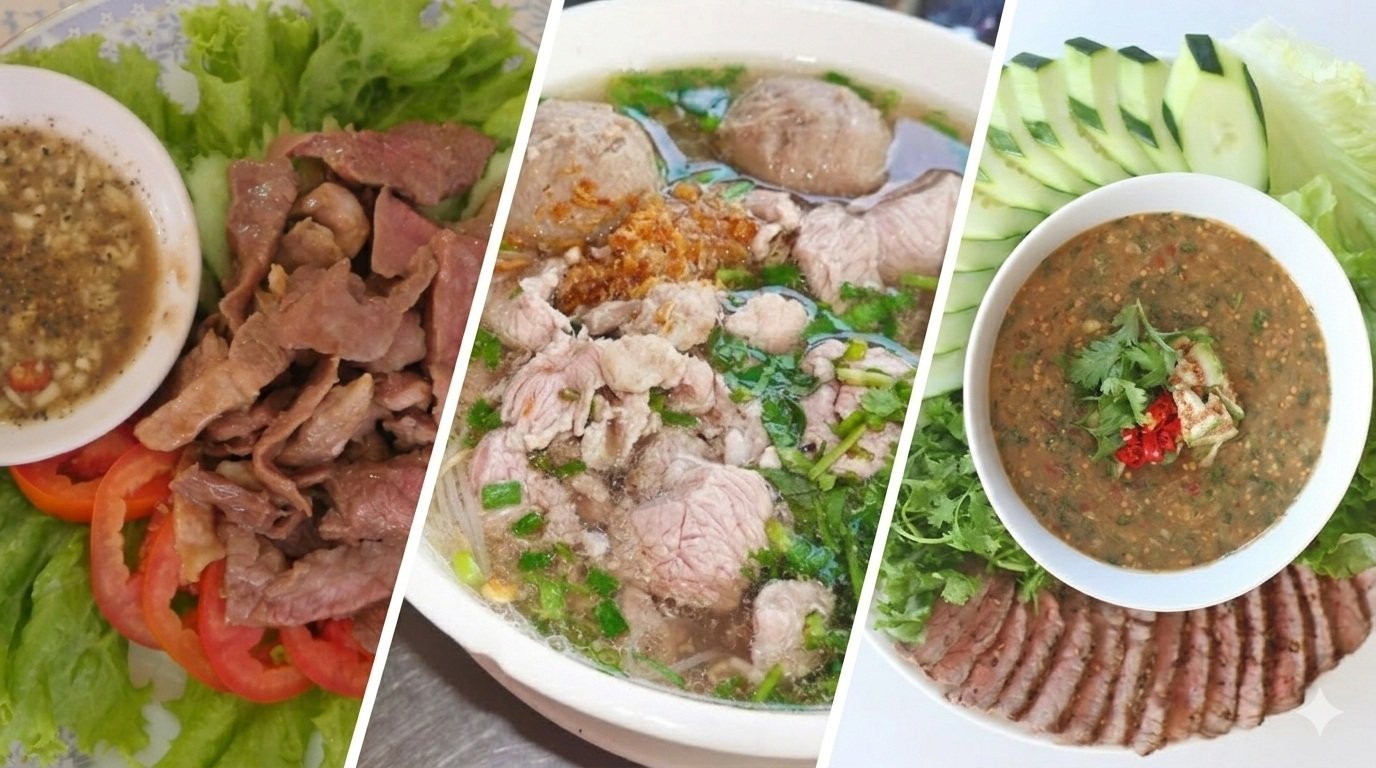
What This Cambodian Food Guide Covers
Cambodian food does not always get the same attention as Thai or Vietnamese cuisine, but that makes it even more rewarding to explore once you are on the ground. Eating in Cambodia is not just about tracking down one or two famous dishes. It is about understanding what locals actually eat, what travelers are most likely to come across, and which foods feel unfamiliar, surprising, or uniquely Cambodian.
This guide is designed to help you do exactly that. Rather than giving you a generic list of the “best” dishes, it focuses on what you are realistically likely to encounter while traveling through the country, from authentic Khmer dishes worth trying to staple foods you will see everywhere, along with a few more cultural or unexpected foods that reveal a different side of Cambodia’s culinary identity.
- What Cambodian food is actually like
- 5 authentic Cambodian dishes you should probably try
- 5 staple Cambodian dishes you will see everywhere
- 5 more cultural or unexpected foods, including Cambodia’s famous fried tarantulas
- Where to eat in Cambodia, from street stalls to sit-down restaurants
- What food costs to expect while traveling around the country
If you are still shaping your route, this Cambodia travel guide gives a broader overview of the country, while this Cambodia itinerary guide helps you connect destinations in a way that makes sense before deciding where and what you want to eat along the way.
What to Expect from Cambodian Food When You Travel
Cambodian food is one of the most underrated parts of traveling in Southeast Asia. While neighboring countries like Thailand and Vietnam are widely known for their cuisine, Cambodian food often flies under the radar, which means many travelers arrive without really knowing what to expect. That uncertainty quickly turns into curiosity once you start eating your way through local markets, street stalls, and small restaurants.
What makes Cambodian food interesting is not just the dishes themselves, but how they fit into everyday life. Meals are simple, balanced, and built around fresh ingredients, with flavors that are generally milder and more subtle than what you might find elsewhere in the region. Instead of chasing bold spice or heavy seasoning, Cambodian food leans toward harmony, using herbs, fermented elements, and slow-cooked techniques to create depth without overwhelming the palate.
As a traveler, you will not experience Cambodian food as a curated list of “must-try” dishes. You will experience it in motion, through breakfasts at roadside stalls, quick lunches in local restaurants, evening markets, and the occasional unfamiliar dish that catches your attention. Some foods you will actively seek out, others you will come across naturally, and a few will simply be part of the environment around you.
This guide is built around that reality. It is not about telling you what is “best,” but about helping you understand what Cambodian food is actually like on the ground, what you should try, and what you may encounter along the way, so that when you arrive in Cambodia, the food feels like part of the experience rather than something you have to figure out from scratch.
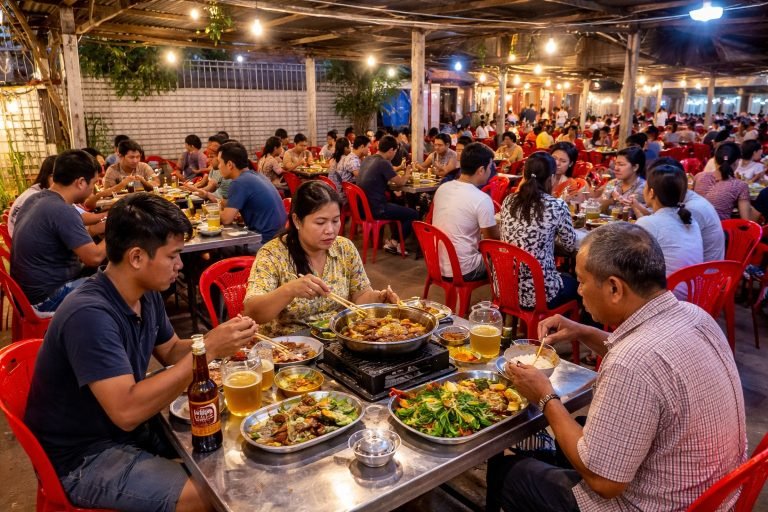
What Is Cambodian Food Like?
Cambodian food is built around balance, freshness, and simplicity rather than bold spice or heavy seasoning. Compared to neighboring cuisines, Cambodian food is generally milder than Thai food and less herb-driven than Vietnamese food, with a focus on subtle flavors that develop over time rather than hitting you immediately. The result is a cuisine that feels approachable, especially for travelers who prefer less heat but still want depth and variety.
At the center of Cambodian food is rice, which forms the base of almost every meal. It is typically served with a combination of grilled meats, soups, stir-fried dishes, or curries, creating a structure that remains consistent throughout the country. Freshwater fish also plays a major role due to the influence of the Mekong River and Tonlé Sap Lake, shaping many traditional Khmer dishes and giving Cambodian cuisine a strong connection to its natural environment.
The flavor of Cambodian food comes from a combination of fresh herbs and slow preparation rather than intense spice. Ingredients such as lemongrass, kaffir lime, galangal, turmeric, garlic, and shallots are used to build layers of flavor, while fermented elements add depth and complexity. Instead of overpowering heat, the cuisine leans toward a more balanced profile where sweet, salty, and slightly sour elements work together in a way that feels steady and consistent across different meals.
Street food is an essential part of everyday eating in Cambodia. In cities like Phnom Penh and Siem Reap, as well as in smaller towns, you will find food stalls operating from early morning until late at night. Meals are often quick, affordable, and eaten on the go or in simple settings, making food less of a formal event and more of a constant part of daily life.
Another important aspect of Cambodian food is the rhythm of how people eat throughout the day. Breakfast is usually savory and straightforward, often based on rice or noodle dishes. Lunch tends to be quick and practical, especially in urban areas, while dinner allows for a wider mix of dishes that are sometimes shared. As a traveler, you will naturally fall into this rhythm, eating different types of meals depending on the time of day and where you are.
What you eat in Cambodia can also vary depending on the region. Coastal areas such as Kampot and nearby Kep are known for seafood, while inland regions and smaller towns often offer more traditional and less tourist-influenced meals. Larger cities combine local cuisine with international options, giving you a broader range of choices but sometimes a slightly different version of Cambodian food.
For travelers, Cambodian food is less about following a strict list of dishes and more about understanding what you are likely to encounter as you move through the country. Some meals will feel familiar, others will be new, and a few may be unexpected. This mix is what makes eating in Cambodia part of the travel experience, and it sets the stage for the different types of food you will come across in the next sections of this guide.
Cambodian Food: What to Eat, What to Try, and What to Expect
Understanding Cambodian food at a high level is helpful, but the real experience begins once you start encountering specific dishes on the ground. As you travel through Cambodia, you will not be following a fixed list of meals. Instead, you will come across a mix of foods that reflect daily life, local traditions, and the country’s culinary identity in different ways.
Some dishes are considered more authentic or traditional and are worth seeking out during your trip, such as fish amok or beef lok lak, which are often seen as representative of Khmer cuisine. Others are everyday staples that you will see repeatedly, whether you are eating at a street stall, a local restaurant, or a market, including dishes like kuy teav or simple plates of fried rice and noodles that form the backbone of daily eating. There are also foods that feel more unusual or cultural, such as prahok or Cambodia’s well-known fried tarantulas, which you may not actively look for but will likely encounter as part of the broader food environment.
This section is structured around that reality. Rather than grouping everything into a generic list, it breaks Cambodian food into three categories to help you navigate what you are most likely to try, what you will see everywhere, and what might surprise you along the way. Each dish is explained in a practical way, focusing on what it is, what it contains, how it is typically prepared, and what you can expect when you order it.
As you go through these dishes, you will start to recognize patterns in Cambodian food, making it easier to decide what to try and helping you feel more confident when ordering meals throughout your trip.
5 Authentic Cambodian Dishes You Should Probably Try
These are the dishes that best represent Cambodian food and are worth actively seeking out during your trip. They are widely available, rooted in Khmer culinary traditions, and give you a clear sense of what Cambodian food tastes like beyond quick street meals. While you may come across them naturally, making an effort to try them in a good local restaurant will give you a much better experience.
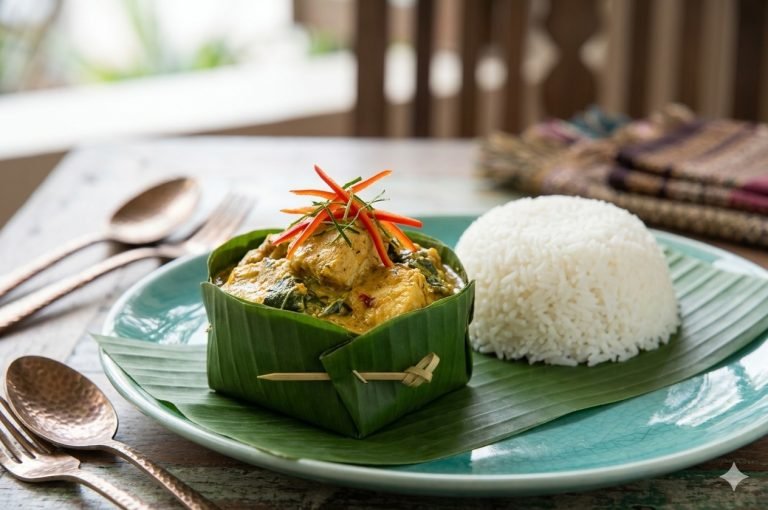
Fish Amok
Fish amok is one of the most iconic Cambodian dishes and is often considered the country’s national dish. It is made with freshwater fish, coconut milk, lemongrass, turmeric, and other spices, then traditionally steamed in banana leaves. The result is a soft, almost mousse-like curry with a mild, slightly sweet, and aromatic flavor rather than strong heat.
You will find fish amok in restaurants across Cambodia, especially in tourist-friendly areas, but the quality can vary. A well-prepared version should feel light and balanced, with the coconut and herbs complementing the fish rather than overpowering it.
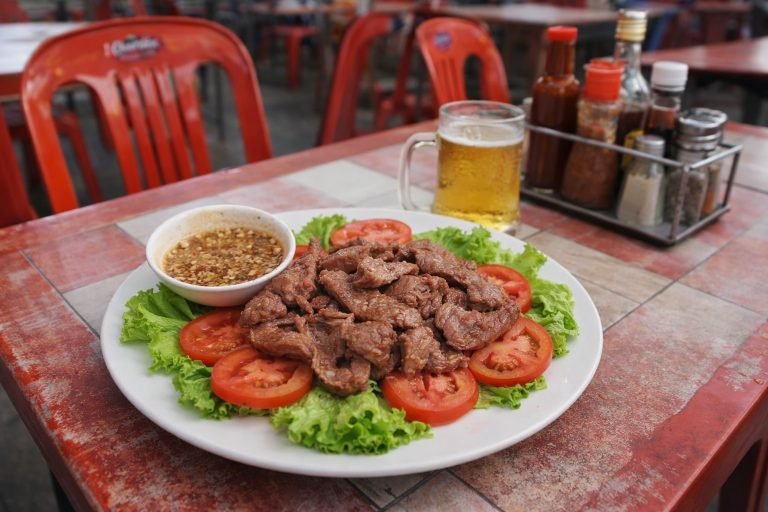
Beef Lok Lak
Beef lok lak is a simple but very popular Cambodian dish made with stir-fried beef, typically marinated in a mixture of soy sauce, garlic, and pepper. It is usually served with rice, fresh vegetables, and a dipping sauce made from lime juice, salt, and Kampot pepper, which adds a sharp, slightly tangy contrast.
This is one of the easiest Cambodian dishes to enjoy if you are unsure where to start. It is widely available, consistent, and familiar in structure, while still offering a distinct local flavor thanks to the seasoning and presentation.
Khmer Red Curry
Khmer red curry is a milder, coconut-based curry that differs significantly from Thai red curry. It typically includes chicken or beef, along with potatoes, carrots, and sometimes eggplant, all simmered in a fragrant sauce made with lemongrass, turmeric, and coconut milk.
Unlike its Thai counterpart, this dish is not particularly spicy. Instead, it focuses on a creamy texture and gentle, aromatic flavors, making it accessible for most travelers.
Nom Banh Chok
Nom banh chok, often referred to as Khmer noodles, is a traditional breakfast dish made with fresh rice noodles topped with a light fish-based gravy, herbs, and vegetables. The dish is refreshing and slightly tangy, with a combination of textures that makes it feel both light and satisfying.
You will often see this dish sold by street vendors early in the morning, making it a great way to experience Cambodian food as locals do at the start of the day.
Bai Sach Chrouk
Bai sach chrouk is a simple but essential Cambodian breakfast dish consisting of grilled pork served over rice, often accompanied by pickled vegetables and a light broth. The pork is typically marinated in garlic and coconut milk before being grilled, giving it a slightly sweet and smoky flavor.
This is one of the most common morning meals in Cambodia and a great introduction to how Cambodian food is eaten on a daily basis, combining simplicity with well-balanced flavors.
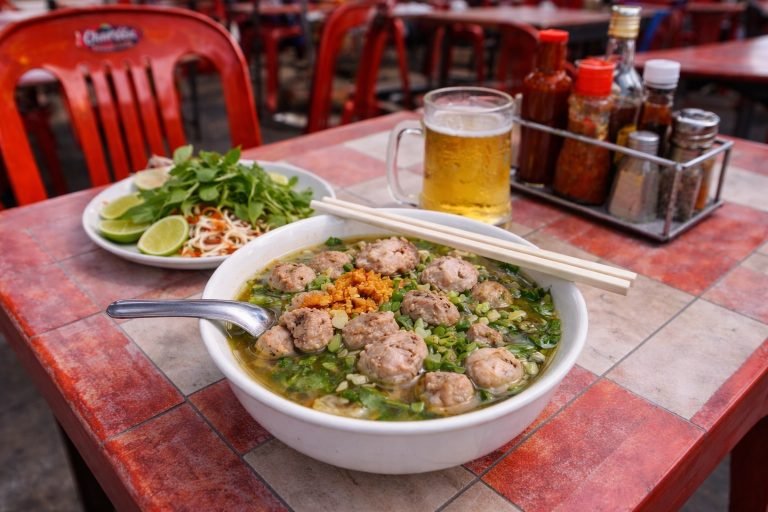
5 Staple Cambodian Dishes You Will See Everywhere
These are the everyday dishes that form the backbone of Cambodian food. You will see them in markets, street stalls, and small local restaurants across the country, often served quickly and at very affordable prices. While they may not always be highlighted as “must-try” dishes, they are what most people in Cambodia actually eat on a daily basis, making them an essential part of the overall food experience.
Kuy Teav
Kuy teav is a traditional noodle soup that is commonly eaten for breakfast but can be found throughout the day. It is typically made with a clear pork or beef broth, rice noodles, and a mix of toppings such as sliced meat, herbs, bean sprouts, and fried garlic.
The flavor is light and comforting rather than intense, and it is often customized with condiments at the table. You will see kuy teav served everywhere from roadside stalls to small restaurants, making it one of the most accessible dishes in Cambodia.
Fried Rice (Bai Cha)
Fried rice, known locally as bai cha, is one of the most common meals you will come across while traveling in Cambodia. It is typically prepared with rice, eggs, vegetables, and your choice of meat such as chicken, pork, or seafood, all stir-fried together in a hot pan.
While it may feel familiar, the Cambodian version tends to be slightly lighter and less oily than in some other countries. It is a reliable option that you will find in almost every type of food setting.
Fried Noodles (Mee Cha)
Fried noodles, often referred to as mee cha, are another staple dish that appears throughout Cambodia. Made with wheat or egg noodles, vegetables, and meat or seafood, the dish is quickly stir-fried and served hot.
It is a simple, filling meal that is widely available and easy to order, especially if you are looking for something quick and familiar while traveling.
Grilled Skewers
Grilled skewers are a common sight at street food stalls, especially in the evening. These can include pork, chicken, or beef, marinated and cooked over charcoal, often served with a sweet or savory glaze.
They are usually sold as individual pieces, making them perfect for quick snacks or light meals as you move around cities and markets.
Fresh Spring Rolls
Fresh spring rolls are a light and refreshing option that you will see frequently in Cambodia. They are made by wrapping rice paper around fresh vegetables, herbs, and sometimes shrimp or pork, and are typically served with a dipping sauce.
These rolls are especially popular in warmer weather, offering a contrast to heavier cooked dishes and giving you a different perspective on Cambodian food.
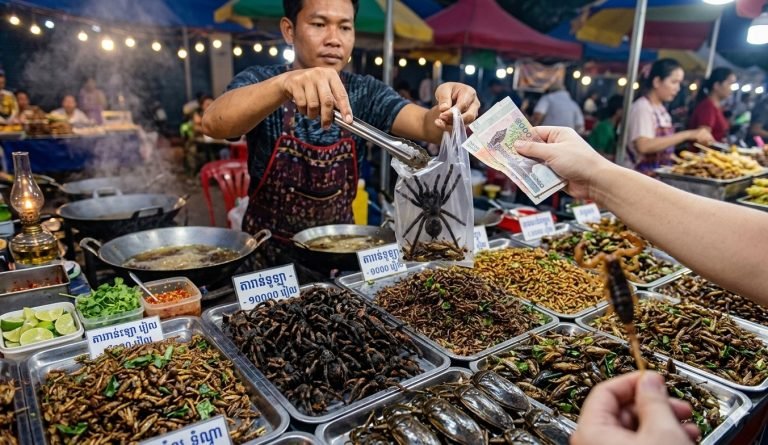
5 Cultural and Unexpected Cambodian Foods
Not everything you see in Cambodia is something you will immediately want to try, and that is part of what makes the food experience here so interesting. Alongside familiar meals and widely accessible dishes, there are also foods that reflect deeper traditions, local habits, and cultural preferences that may feel unusual if you are not used to them.
These foods are part of everyday life in Cambodia, even if they are not always targeted at travelers. You will come across them in markets, street stalls, and rural areas, and they offer a different perspective on Cambodian food that goes beyond the more familiar dishes.
Prahok
Prahok is a fermented fish paste that plays a central role in Cambodian cooking. It is made by curing fish with salt and allowing it to ferment over time, resulting in a strong, pungent aroma and a deep, savory flavor.
While it is rarely eaten on its own, prahok is used as a base ingredient in many traditional dishes, adding complexity and depth. It can be an acquired taste, but it is one of the most important elements of authentic Cambodian food.
Fried Tarantulas
Fried tarantulas are one of the most well-known and surprising foods associated with Cambodia. Typically found in markets or roadside stalls, especially in areas like Skuon, they are deep-fried until crispy and often seasoned with salt, garlic, or sugar.
This is not something most travelers actively seek out, but it is something you will likely see. For some, it becomes a memorable experience, while for others, it is simply an interesting part of the local food culture.
Edible Insects
Edible insects, including crickets, grasshoppers, and beetles, are commonly sold as snacks in Cambodia. They are usually fried and seasoned, giving them a crunchy texture and a savory flavor.
Insects are a practical and traditional source of protein and are widely consumed by locals. While they may feel unusual at first, they are a normal part of Cambodian food culture.
Balut
Balut is a fertilized duck egg that is boiled and eaten from the shell. It is more commonly associated with the Philippines and Vietnam, but it can also be found in Cambodia, particularly in street food settings.
The texture and appearance can be challenging for first-time visitors, but it is considered a nutritious and traditional snack in the region.
Khmer Desserts
Khmer desserts are often made with ingredients like sticky rice, coconut milk, palm sugar, and beans. They are usually lightly sweet and can come in a variety of forms, from wrapped rice cakes to colorful layered sweets.
Unlike Western desserts, they tend to be less sugary and more focused on texture and natural flavors, offering a different kind of sweet experience.
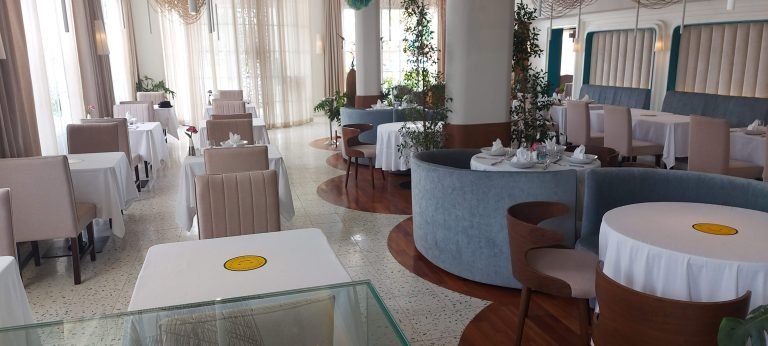
Where to Eat Cambodian Food
One of the best things about Cambodian food is how accessible it is. You do not need to plan your meals far in advance or search for specific restaurants to eat well. Food is everywhere, and the way you eat will naturally depend on where you are, how much time you have, and the kind of experience you are looking for.
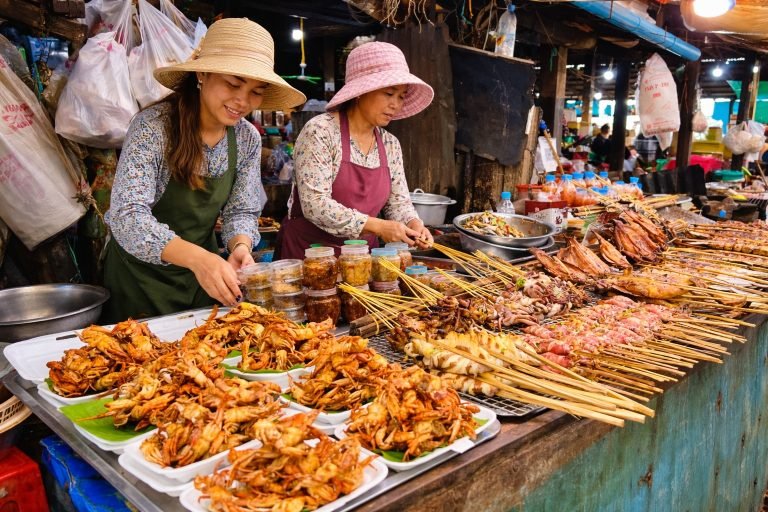
Street food is the most visible and often the most authentic way to experience Cambodian food. In cities like Phnom Penh and Siem Reap, as well as in smaller towns, street stalls serve a wide range of dishes throughout the day. From noodle soups in the morning to grilled skewers and fried dishes in the evening, this is where you will see how locals actually eat on a daily basis. Meals are quick, affordable, and often prepared right in front of you.
Local markets are another key part of the food scene. They are not just places to shop but also places to eat, offering a mix of ready-made meals, fresh ingredients, and snacks. Walking through a market gives you a broader view of Cambodian food, from staple dishes to more unusual items that you might not see in restaurants.
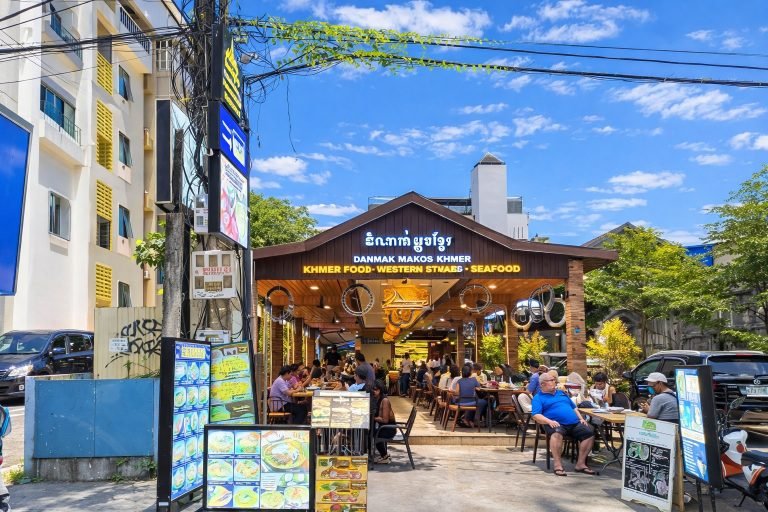
If you prefer a more comfortable setting, restaurants are widely available in most tourist areas and larger cities. These range from simple local eateries to more polished restaurants that focus on traditional Khmer cuisine. Restaurants are often the best place to try well-prepared versions of dishes like fish amok or beef lok lak, where more attention is given to presentation and consistency.
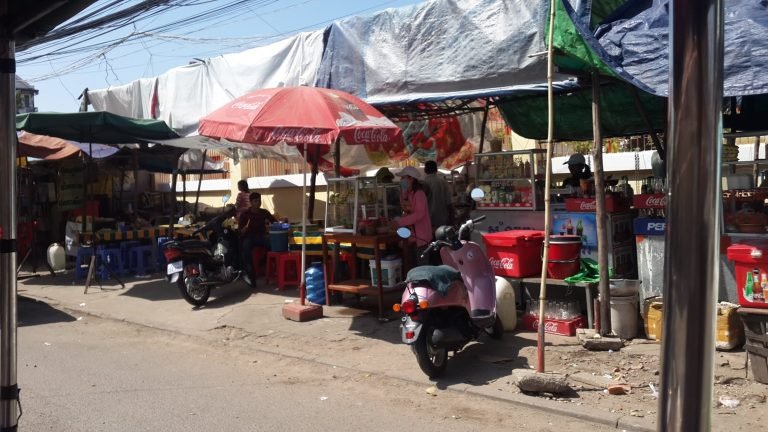
In smaller towns and rural areas, food tends to be more traditional and less influenced by tourism. Menus may be more limited, but the dishes are often closer to what locals eat every day. This can be one of the most rewarding ways to experience Cambodian food, especially if you are open to trying what is available rather than searching for specific meals.
Overall, where you eat in Cambodia is less about finding the “best” restaurant and more about understanding the different settings in which food is served. Street stalls, markets, and local restaurants each offer a slightly different perspective, and experiencing all three will give you a much more complete picture of Cambodian food.
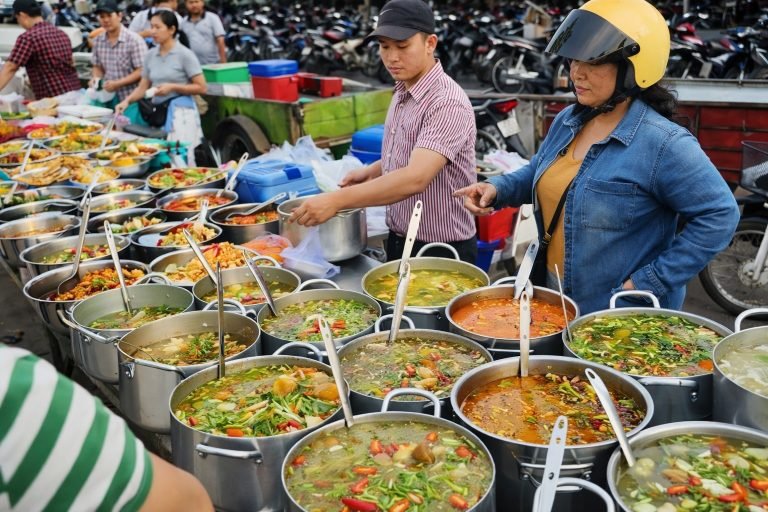
Cambodian Street Food Experience
Street food is not just a convenient option in Cambodia, it is one of the most authentic ways to experience Cambodian food. From early morning until late at night, street stalls operate across cities, towns, and roadside stops, serving everything from noodle soups and rice dishes to grilled meats and quick snacks. Eating this way puts you directly into the rhythm of daily life, where food is fast, affordable, and always close by.
What makes the Cambodian street food experience unique is how casual and continuous it feels. You are not sitting down for a long meal in most cases. Instead, you are grabbing a bowl of kuy teav in the morning, picking up a plate of fried rice during the day, or stopping for grilled skewers in the evening. The experience is flexible, and you can eat as you move rather than structuring your day around fixed mealtimes.
Prices are one of the biggest advantages of street food in Cambodia. Most dishes are inexpensive, making it easy to try a variety of foods without worrying about cost. This also allows you to experiment more, whether that means trying something familiar or stepping slightly outside your comfort zone with something new.
Hygiene is something many travelers think about when it comes to street food, and the general rule is simple. Look for busy stalls with a high turnover of customers, where food is cooked fresh and served quickly. These places tend to be more reliable than quieter stalls where food may sit for longer periods. Observing how food is handled and prepared can also give you a good sense of what to expect.
Street food also gives you access to dishes you may not see in restaurants. This includes more traditional meals, regional variations, and snacks that are part of everyday Cambodian life. It is also where you are more likely to encounter cultural foods like fried tarantulas or other edible insects, even if you choose not to try them.
For most travelers, street food becomes a regular part of the experience rather than something occasional. It is practical, accessible, and closely tied to how Cambodian food is actually consumed across the country, making it an essential part of any trip.
Food Costs in Cambodia
One of the biggest advantages of Cambodian food is how affordable it is, especially when compared to many other travel destinations. Whether you are eating at a street stall, a local restaurant, or a more tourist-focused venue, food prices in Cambodia remain accessible, allowing you to try a wide variety of dishes without worrying about your budget.
At the lower end, street food is where you will find the best value. Simple and popular meals such as bai sach chrouk or noodle soups like kuy teav typically cost between $1 and $3, depending on the location and portion size. Snacks like grilled skewers can be even cheaper, often ranging from $0.25 to $1 per piece. This makes it easy to eat multiple small dishes throughout the day and experience different aspects of Cambodian food without spending much.
Local restaurants offer a step up in comfort and consistency while still remaining very affordable. Dishes such as fish amok, beef lok lak, or Khmer red curry are commonly priced between $3 and $7. These settings are often the best place to try more traditional Cambodian food in a slightly more relaxed environment, with better presentation and a more predictable level of quality.
In larger cities like Phnom Penh and Siem Reap, you will also find more upscale or tourist-oriented restaurants. Prices here can range from $6 to $12 or more per dish, depending on the venue. While these places often offer a more refined dining experience, they are not necessary to enjoy Cambodian food, and many travelers find that local restaurants and street food provide a more authentic experience.
Drinks are also inexpensive across the country. Bottled water is usually under $1, local beer is widely available and often costs between $0.50 and $1.50, and fresh fruit juices or smoothies are typically priced between $1 and $3. These low costs make it easy to stay refreshed while exploring Cambodia’s food scene.
Overall, food costs in Cambodia make it one of the easiest countries to travel through without overspending. Budget travelers can comfortably eat well on $5 to $10 per day, while those looking for more variety or comfort can expect to spend between $10 and $20. For a more detailed breakdown of how food fits into your overall spending, this Cambodia travel cost guide helps you plan your budget more accurately.
How Food Fits Into Your Cambodia Trip
Food is not something you plan separately in Cambodia. It naturally becomes part of how your trip unfolds as you move from one destination to another. Instead of organizing your itinerary around specific restaurants, you will find yourself eating based on where you are, what time of day it is, and what is available nearby. This is what makes Cambodian food feel so integrated into the travel experience.
In larger cities like Phnom Penh, food is part of the city’s rhythm. You will move between street stalls, small local restaurants, and more modern dining spots, often eating multiple smaller meals rather than sitting down for long, structured ones. The variety here gives you the chance to try both traditional dishes and more contemporary interpretations of Cambodian food.
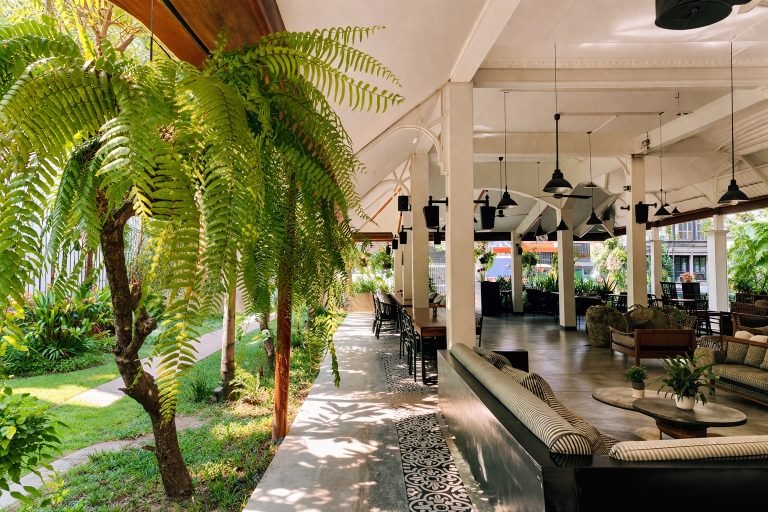
In Siem Reap, the food experience is closely tied to visiting Angkor Wat. Early mornings often start with simple breakfasts before temple visits, followed by relaxed lunches and dinners where you can try dishes like fish amok or beef lok lak in a more comfortable setting. The pace here allows you to balance sightseeing with enjoying Cambodian food without feeling rushed.
Heading toward smaller towns and countryside destinations such as Battambang, the experience becomes more local and less influenced by tourism. Meals tend to be simpler, menus more limited, and dishes closer to what Cambodians eat every day. This is where you get a more authentic sense of how Cambodian food fits into daily life.
In coastal areas like Kampot, food shifts again, with a stronger focus on seafood and local ingredients such as Kampot pepper. Meals here are often slower and more relaxed, reflecting the laid-back atmosphere of the region and offering a different perspective compared to the busier cities.
As you move between destinations, food becomes a constant rather than something you need to organize. You will eat differently depending on where you are, but that is exactly what makes Cambodian food such an important part of the overall journey. It connects places, moments, and experiences in a way that feels natural and unforced.
Final Thoughts on Cambodian Food
Cambodian food may not have the same global reputation as some of its neighbors, but that is exactly what makes it so rewarding to explore. Without strong expectations, you are free to experience it as it is, shaped by local habits, regional differences, and the everyday rhythm of life across the country.
What stands out most is not a single dish, but the variety of experiences that come with it. From trying authentic meals like fish amok or beef lok lak, to eating simple street food such as kuy teav or grilled skewers, and even encountering more unusual foods like prahok or fried tarantulas, Cambodian food offers a mix that goes beyond a typical “top dishes” list.
If you are planning your trip in more detail, it helps to connect the food experience with where you are going. Start with this Cambodia travel guide to understand how different regions fit together, then use this Cambodia itinerary guide to structure your journey. Food will naturally follow your route, whether you are exploring cities, countryside areas, or coastal destinations.
To make the most of your time on the ground, it is also worth reviewing practical details before you arrive, including the Cambodia visa requirements and entry process, so that your trip starts smoothly and you can focus on enjoying the experience rather than dealing with logistics.
In the end, Cambodian food is not about chasing specific dishes, but about being open to what you encounter along the way. The more flexible you are, the more you will get out of it, and that is what makes it such a memorable part of traveling in Cambodia.
Frequently Asked Questions About Cambodian Food
-
What is Cambodian food known for?
Cambodian food is known for its balanced flavors, use of fresh herbs, and reliance on rice and freshwater fish. Dishes like fish amok and beef lok lak are often highlighted, but everyday meals such as kuy teav and grilled street food are just as important to the overall experience. -
What is traditional Cambodian food?
Traditional Cambodian food, often referred to as Khmer food, focuses on simple, balanced dishes made with rice, fish, herbs, and fermented ingredients. Meals are typically built around a main dish served with rice and accompanied by soups or vegetables. -
What is the national food of Cambodia?
Fish amok is widely considered the national food of Cambodia. It is a steamed fish curry made with coconut milk and aromatic spices, traditionally cooked in banana leaves. -
What are the most popular foods in Cambodia?
Some of the most popular Cambodian foods include fish amok, beef lok lak, nom banh chok, and bai sach chrouk. These dishes are widely available and commonly eaten across the country. -
Is Cambodian food spicy?
Cambodian food is generally less spicy than Thai food. Most dishes focus on mild, balanced flavors, although chili is often available on the side for those who want to add heat. -
What is Cambodian street food like?
Cambodian street food is affordable, accessible, and a major part of daily life. You will find dishes like kuy teav, fried rice, grilled skewers, and snacks sold throughout the day in markets and roadside stalls. -
What do people eat for breakfast in Cambodia?
Breakfast in Cambodia is usually savory rather than sweet. Common options include bai sach chrouk (grilled pork with rice) and noodle soups like kuy teav, often eaten early in the morning at street stalls. -
Is street food safe to eat in Cambodia?
Street food in Cambodia is generally safe if you choose busy stalls where food is freshly prepared. Look for places with high turnover and observe how the food is handled to reduce risk. -
Do Cambodians eat insects and unusual foods?
Yes, insects such as crickets and grasshoppers are commonly eaten in Cambodia, and you may also come across foods like fried tarantulas. These are part of local culture, although most travelers choose whether or not to try them. -
How much does food cost in Cambodia?
Food in Cambodia is very affordable. Street food meals typically cost between $1 and $3, while dishes in local restaurants range from $3 to $7. More upscale restaurants in cities can cost $6 to $12 or more per dish. -
Where can I try authentic Cambodian food?
You can try authentic Cambodian food in street markets, local restaurants, and smaller towns across the country. Cities like Phnom Penh and Siem Reap offer a wide variety of options, while places like Battambang provide a more local and traditional experience.
Travel Resources to Plan, Book & Stay Connected
Use these tools and guides to stay connected abroad, find inspiration for your next trip, and book your flights, stays and gear with confidence.

Comment (0)