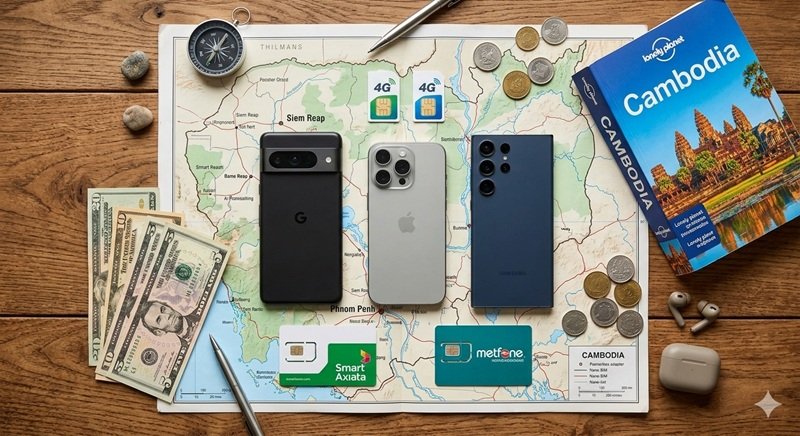
SIM Card Cambodia: What You Need to Stay Connected
Staying connected in Cambodia is easier than most travelers expect, but choosing the right option can still make a big difference to your trip. Whether you are navigating cities like Phnom Penh and Siem Reap, booking transport, or working remotely, having reliable mobile data is essential. This guide breaks down everything you need to know about SIM cards in Cambodia, including local providers, eSIM options, pricing, and how to choose the best setup based on your travel style.
Cambodia has a competitive mobile market with strong coverage across major destinations and increasingly reliable connections in more remote areas. You can choose between traditional SIM cards, which are widely available and affordable, or eSIMs, which offer convenience and instant activation before you arrive. The right choice depends on how you plan to travel, how long you are staying, and how important convenience is to you.
- Which SIM card is best in Cambodia and how the main providers compare
- Whether to choose a local SIM card or an eSIM before arrival
- Where to buy a SIM card in Phnom Penh, Siem Reap, and at the airport
- How much mobile data costs in Cambodia and what plans to expect
- Coverage, internet speed, and what to expect in rural areas
- Practical tips for setup, registration, and topping up your data
If you are still planning your trip, it also helps to understand how to choose the best arrival airport in Cambodia so you can decide where to pick up your SIM card, and to prepare in advance with a Cambodia packing checklist that includes all your travel essentials.
SIM Card Cambodia: What to Expect When You Arrive
Arriving in Cambodia without mobile data is one of those small mistakes that can quickly turn into an unnecessary inconvenience. The moment you land, you may need to book a ride, contact your accommodation, check directions, or confirm travel plans. While WiFi is available in airports and hotels, it is not always reliable or immediate, which is why having a working connection as soon as you arrive makes a noticeable difference.
Most travelers solve this by either buying a local SIM card at the airport or setting up an eSIM before departure. Both options work well in Cambodia, but they offer very different experiences. Local SIM cards are extremely affordable and easy to find, especially at Phnom Penh and Siem Reap airports, where kiosks are set up specifically for arriving travelers. However, they require a bit of time to register, install, and configure, which can mean waiting in line after a long flight.
eSIMs, on the other hand, allow you to activate your data plan before you even leave home. This means you can step off the plane already connected, avoiding queues and setup delays entirely. For shorter trips or travelers who value convenience, this is often the easiest option. For longer stays or budget-focused travel, local SIM cards still offer excellent value and flexibility once you are in the country.
Understanding how these options work, how much they cost, and which providers offer the best coverage will help you choose the right setup for your trip. With a bit of preparation, staying connected in Cambodia becomes simple, reliable, and one less thing to worry about once your journey begins.

SIM Card vs eSIM in Cambodia: Which Option Is Better?
Choosing between a traditional SIM card and an eSIM is one of the first practical decisions you will make when planning your connectivity in Cambodia. Both options work well across the country, but they offer very different experiences in terms of convenience, cost, and flexibility. Understanding these differences will help you avoid unnecessary delays on arrival and choose the option that best fits your travel style.
Physical SIM Cards in Cambodia
Physical SIM cards are the most common and traditionally the cheapest way to access mobile data in Cambodia. They are widely available at international airports, official carrier stores, and small shops throughout cities like Phnom Penh and Siem Reap. For many travelers, especially those staying longer or traveling on a budget, this remains a reliable and cost-effective choice.
The biggest advantage of a physical SIM card is price. Tourist packages are often very affordable, with generous data allowances that easily cover navigation, messaging, and even video streaming. Once installed, the connection is stable and performs well across most urban and tourist areas.
However, there are a few trade-offs. Buying a SIM card on arrival means you may need to queue at the airport, provide your passport for registration, and wait for activation. You will also need to remove your existing SIM card, which can be inconvenient if you rely on your home number for messages or authentication. While the process is usually straightforward, it does add an extra step at the start of your trip.
eSIM Options for Cambodia
eSIMs offer a more modern and convenient alternative, especially for travelers who prefer to have everything set up before they arrive. Instead of inserting a physical card, you download a digital SIM profile directly to your phone. This allows you to activate your data plan in advance and connect to a local network as soon as your plane lands.
The main advantage of eSIMs is convenience. There is no need to visit a store, wait in line, or handle any physical setup. You also keep your primary SIM card active, which is useful for receiving messages or maintaining access to your home number. For short trips, stopovers, or travelers who value simplicity, this can make the start of your journey much smoother.
The trade-off is cost. eSIM plans are typically more expensive than local SIM cards, especially for larger data packages. While the difference is not extreme, budget-conscious travelers staying for longer periods may find better value with a local SIM. In addition, your phone must support eSIM functionality, which is standard on newer devices but not universal.
Key Differences at a Glance
| Feature | Physical SIM | eSIM |
|---|---|---|
| Setup | Buy and install after arrival | Activate before arrival |
| Convenience | Requires time and setup | Instant and seamless |
| Cost | Very affordable | Slightly higher |
| Availability | Widely available locally | Available online |
| Keep home number | No (SIM swap required) | Yes |
Which Option Should You Choose?
For most travelers, the decision comes down to convenience versus cost. If you want to be connected immediately and avoid any setup on arrival, an eSIM is the easiest and most efficient option. It works particularly well for short trips, first-time visitors, and anyone arriving late at night or on a tight schedule.
If you are staying longer, traveling on a tighter budget, or simply do not mind spending a few extra minutes at the airport, a physical SIM card offers excellent value and strong performance across Cambodia. It is especially useful if you plan to use large amounts of data or stay in the country for several weeks.
In practice, both options are reliable and widely used. The best choice is the one that aligns with how you prefer to travel. Whether you prioritize convenience or cost, Cambodia makes it easy to stay connected throughout your trip.

Mobile Networks in Cambodia: Which Provider Is Best?
Cambodia has a competitive mobile market with three main providers offering strong coverage, affordable data plans, and reliable performance across most of the country. While all three networks work well in major destinations, there are important differences depending on where you travel, how much data you use, and how stable you need your connection to be.
The Three Main Mobile Providers
| Provider | Best For | Coverage Highlights |
|---|---|---|
| Smart Axiata | Most travelers | Excellent 4G coverage (around 95%), strong and consistent performance in Phnom Penh and Siem Reap |
| Metfone | Rural and remote travel | Largest network in Cambodia, strong signal in countryside, remote provinces, and less-visited areas |
| Cellcard | Speed and urban use | Fast data speeds in cities, reliable performance in Phnom Penh and other major hubs |
Coverage and Performance
In cities like Phnom Penh and Siem Reap, all three providers perform well, with stable 4G coverage and fast enough speeds for navigation, streaming, and remote work. In these areas, the difference between networks is minimal, and most travelers will not notice a significant gap in performance.
The differences become more noticeable as you move away from major urban centers. In smaller towns, rural areas, and parts of the countryside, Metfone generally has the strongest and most consistent signal due to its larger network infrastructure. This makes it a safer choice if your itinerary includes remote destinations or less developed regions.
For travelers staying primarily in cities or popular tourist areas, Smart Axiata is often the preferred option due to its balance of coverage, performance, and user-friendly tourist packages. Cellcard is also a strong option in urban environments, particularly for those who prioritize speed and data performance.
5G Availability
5G is gradually expanding in Cambodia, with early rollout focused on Phnom Penh and a few major provincial centers. Smart and Cellcard are currently leading this rollout, making them better options for travelers who want access to faster speeds where available. However, 4G remains the standard across most of the country and is more than sufficient for typical travel needs.
Which Network Should You Choose?
For most travelers visiting Phnom Penh, Siem Reap, and other popular destinations, Smart Axiata is the most balanced choice. It offers strong coverage, reliable performance, and affordable data packages that are easy to set up and use.
If your itinerary takes you off the main tourist route, especially into rural provinces or remote areas, Metfone is the more reliable option due to its wider network reach. It provides better signal consistency where other providers may struggle.
For travelers who prioritize speed and spend most of their time in urban areas, Cellcard is a solid alternative, particularly where 5G coverage is available. In practice, all three networks are usable, but choosing the right one based on your travel style will help ensure a smoother and more consistent connection throughout your trip.

Where to Buy a SIM Card in Cambodia
Buying a SIM card in Cambodia is straightforward and convenient, with multiple options available depending on where you arrive and how quickly you want to get connected. Most travelers purchase a SIM card either at the airport immediately after landing or later in the city, where prices can sometimes be slightly lower and options more flexible.
Buying a SIM Card at the Airport
The easiest place to get a SIM card is at one of Cambodia’s international airports, including Phnom Penh (PNH), Siem Reap Angkor International Airport (SAI), and Sihanoukville (KOS). SIM card kiosks are located in the arrivals area, and staff will usually handle the entire setup process for you, including installation and activation.
This is the most convenient option, especially if you want to be connected immediately. However, prices at the airport can be slightly higher than in the city, and you may need to wait in line during busy arrival periods. For most travelers, the convenience outweighs the small price difference.
Buying a SIM Card in the City
If you prefer to wait, SIM cards are widely available in cities like Phnom Penh and Siem Reap. You can buy them at official carrier stores, shopping malls, and smaller mobile shops. In tourist areas, even convenience stores and street vendors often sell SIM cards with ready-to-use data packages.
Buying in the city can give you more time to compare plans and choose the provider that best fits your needs. Prices are often slightly lower than at the airport, and you may find more flexibility in terms of data packages and validity periods.
Registration and Setup
All SIM cards in Cambodia must be registered using your passport. This is a legal requirement, and you will not be able to activate a SIM card without providing identification. The process is usually quick and handled by the vendor, especially at airport kiosks and official stores.
Once registered, the SIM card is typically activated within minutes. In most cases, the staff will insert the SIM, configure your mobile data settings, and confirm that everything is working before you leave. This makes the setup process simple even if you are not familiar with local networks.
What to Expect in Terms of Price
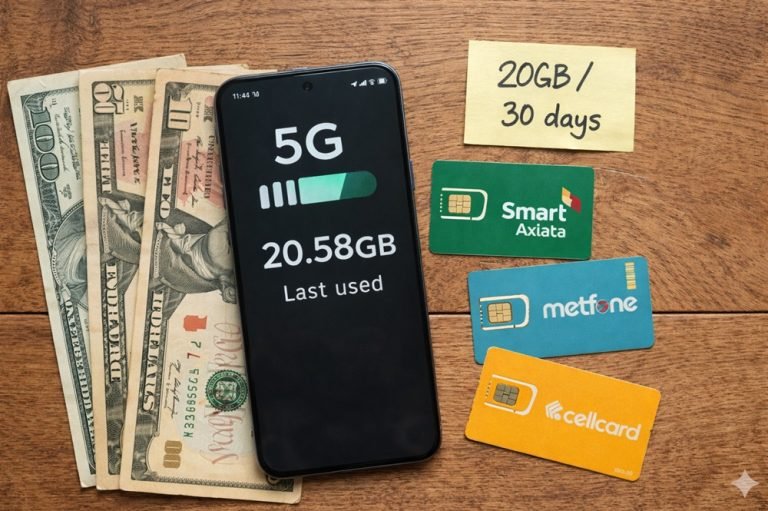
SIM cards in Cambodia are very affordable. Tourist packages often cost around $5 to $10 and include large data allowances, sometimes up to 20GB or more for 30 days. This is more than enough for navigation, messaging, social media, and even occasional streaming.
Overall, buying a SIM card in Cambodia is quick, inexpensive, and widely accessible. Whether you choose to set it up at the airport or in the city, you will have no trouble getting connected within a short time after arrival.
Best eSIM Options for Cambodia
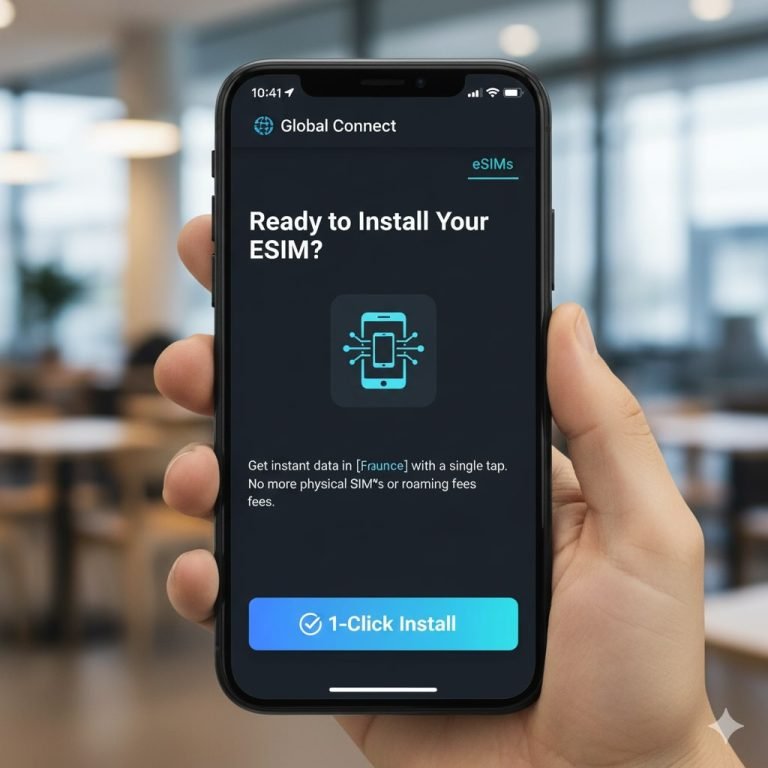
If you prefer to avoid the hassle of buying and setting up a physical SIM card after arrival, eSIMs offer a simple and efficient alternative. Instead of swapping SIM cards or visiting a store, you can activate your mobile data plan before your trip and connect instantly when you land in Cambodia. For many travelers, especially those on shorter trips or tight schedules, this convenience makes eSIMs the preferred option.
eSIM providers offer a range of plans for Cambodia, typically based on data usage and duration. These plans are easy to purchase online, and activation usually takes just a few minutes by scanning a QR code. Once installed, your phone connects automatically to a local network, giving you immediate access to mobile data without needing to queue at the airport or visit a store.
One of the main advantages of using an eSIM is flexibility. You can keep your primary SIM card active while using mobile data locally, which is useful for receiving messages or maintaining access to your home number. This is particularly helpful for banking apps, two-factor authentication, and staying reachable during your trip.
For travelers who want to set everything up in advance, this international eSIM guide compares different providers and plans, helping you choose an option that works well in Cambodia. It also explains how to install and activate your eSIM step by step, which can save time and avoid confusion when you arrive.
In terms of performance, most eSIM providers use the same local networks as physical SIM cards, so coverage and speed are generally comparable. The main difference comes down to convenience versus cost. eSIMs tend to be slightly more expensive than local SIM cards, but for many travelers, the ability to land with a working connection already in place is well worth the extra cost.
If your priority is simplicity and immediate connectivity, an eSIM is the easiest way to stay connected in Cambodia. If you are traveling for longer or want to minimize costs, you can still switch to a local SIM card later. Both options work well, but choosing the right one for your travel style will make your experience smoother from the moment you arrive.
Costs and Data Plans in Cambodia
One of the biggest advantages of staying connected in Cambodia is how affordable mobile data is compared to many other destinations. Whether you choose a local SIM card or an eSIM, you will generally get far more data for your money than in Europe or North America. Understanding typical pricing and what you actually need will help you avoid overpaying or buying more data than necessary.
Local SIM Card Prices
Local SIM cards offer the best value by a wide margin. Tourist packages from providers like Smart, Metfone, and Cellcard are designed specifically for short-term visitors and usually include generous data allowances at very low prices. It is common to find plans in the range of $5 to $10 that include between 20GB and 30GB of data valid for around 30 days.
For most travelers, this is more than enough for navigation, messaging, social media, and occasional video streaming. Even heavier users rarely need to upgrade beyond these entry-level plans, which makes local SIM cards one of the most cost-effective aspects of traveling in Cambodia.
eSIM Pricing
eSIM plans are typically priced higher than local SIM cards, but they offer a different kind of value. Instead of paying the lowest possible price, you are paying for convenience, flexibility, and immediate connectivity. Prices vary depending on the provider, but most short-term plans offer smaller data packages at a slightly higher cost per gigabyte.
For example, an eSIM plan might cost more than a local SIM for a similar amount of data, but it allows you to skip airport queues, avoid registration steps, and connect instantly on arrival. For shorter trips or travelers who prioritize ease of use, this trade-off often makes sense.
What Data Plan Do You Actually Need?
Most travelers overestimate how much data they will use. If your usage is limited to maps, messaging apps, and general browsing, even a moderate data package will last your entire trip. Cambodia also has widespread WiFi in hotels, cafes, and restaurants, which further reduces the need for large data plans.
If you plan to use your phone for video streaming, remote work, or frequent uploads, it may be worth choosing a larger package or a provider known for faster speeds in urban areas. Otherwise, a standard tourist plan will be more than sufficient for most travel needs.
Top-Ups and Flexibility
Topping up your data in Cambodia is easy and widely accessible. You can buy prepaid top-up cards at small shops and convenience stores, or recharge digitally using local apps such as ABA Mobile or the provider’s own app. This means you do not need to commit to a large plan upfront, as adding more data later is simple if needed.
Overall, Cambodia offers excellent value when it comes to mobile data. Local SIM cards provide the cheapest option with large data allowances, while eSIMs offer convenience and flexibility. Choosing between them depends less on availability and more on how you prefer to travel and stay connected.
Internet Speed and Coverage in Cambodia
Internet speed and coverage in Cambodia are generally reliable, especially in major cities and popular travel destinations. For most travelers, mobile data performs well enough for everyday tasks such as navigation, messaging, booking transport, and even streaming. However, like many countries in Southeast Asia, performance can vary depending on where you are and which network you are using.
Mobile Data Speeds
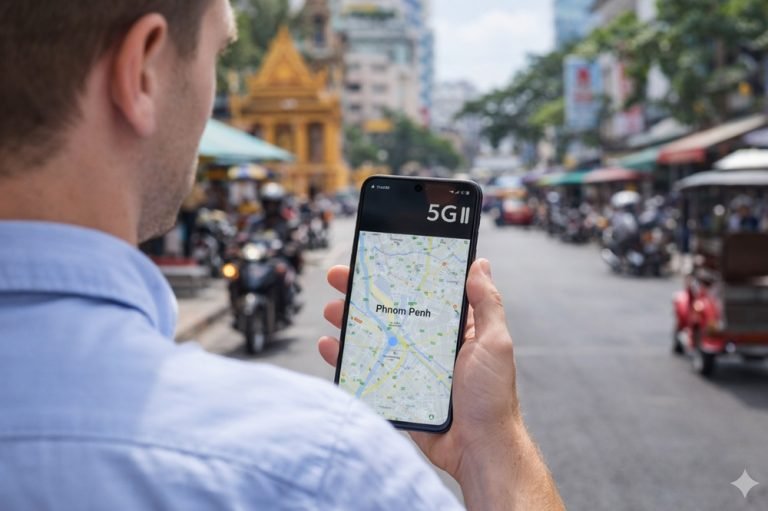
4G is the standard across Cambodia and provides solid speeds in most urban areas. In cities like Phnom Penh and Siem Reap, you can expect fast and stable connections that easily support video calls, streaming, and general browsing. Even in many smaller towns, 4G coverage is strong enough for typical travel needs.
5G is gradually being introduced, primarily in Phnom Penh and a few larger provincial centers. While coverage is still limited, providers like Smart and Cellcard are expanding their networks. For now, most travelers will rely on 4G, which remains more than sufficient for day-to-day use.
City vs Rural Coverage
In major cities and well-visited destinations, all three main providers offer strong and consistent coverage. You are unlikely to experience major connectivity issues in Phnom Penh, Siem Reap, Kampot, or Sihanoukville. Mobile data is widely available, and switching between networks generally makes little difference in these areas.
Coverage becomes less consistent as you move into rural areas or more remote provinces. In these regions, signal strength can vary depending on terrain and distance from infrastructure. Metfone tends to perform better in these situations due to its wider network reach, making it a more reliable option for off-the-beaten-path travel.
Is Internet Reliable for Travel?
For most travelers, internet reliability in Cambodia is more than adequate. Apps like Google Maps, Grab, and PassApp work smoothly, and booking accommodation or transport online is rarely an issue. In hotels, cafes, and restaurants, WiFi is widely available and often used as a backup to mobile data.
Digital nomads and remote workers can generally rely on mobile data in cities, although having access to a stable WiFi connection is still recommended for important work tasks. In more remote areas, it is best to plan ahead and not rely entirely on a constant high-speed connection.
Overall, Cambodia offers a solid connectivity experience for travelers. While speeds and coverage may vary slightly depending on location, staying connected is rarely a problem, and both SIM cards and eSIMs provide reliable access to mobile data throughout most of the country.
Practical Tips for Using SIM Cards and Staying Connected in Cambodia
Staying connected in Cambodia is generally straightforward, but a few practical details can make your experience much smoother once you are on the ground. From SIM registration requirements to mobile payments and topping up your data, understanding how things work locally will help you avoid small but common frustrations.
Passport Required for SIM Registration
All SIM cards in Cambodia must be registered using your passport. This is a legal requirement, and it applies whether you buy your SIM card at the airport or in the city. The process is usually quick and handled entirely by the vendor, but it is something to be aware of if you were expecting a simple plug-and-play setup.
Using the Bakong App for Payments
Once you have a working SIM card or mobile data connection, you can take advantage of Cambodia’s digital payment system through the Bakong app. This national QR-based payment platform allows you to pay at shops, restaurants, markets, and even small local vendors across the country without needing cash.
The Bakong Tourist app is designed specifically for international visitors and is easy to set up. You can top up your wallet using a Visa or Mastercard, and payments are made by scanning KHQR codes, which are widely accepted throughout Cambodia. Transactions can be made in both US dollars and Cambodian riel, making it a flexible option for everyday spending.
Using Bakong can significantly reduce the need to carry cash, even in smaller towns and less touristy areas. It is especially useful for travelers who want a more seamless and modern way to pay while moving around the country.
Topping Up Your Data
Topping up your SIM card in Cambodia is simple and widely accessible. You can purchase prepaid top-up cards at small shops, convenience stores, and street vendors, or recharge digitally through mobile banking apps like ABA Mobile or the provider’s own app. This flexibility means you do not need to commit to a large data package upfront.
General Connectivity Tips
Mobile data is reliable in most cities and tourist areas, but it is always a good idea to download offline maps and key travel information in advance, especially if you plan to visit more remote regions. Keeping your phone charged with a power bank and monitoring your data usage will also help ensure you stay connected throughout your trip without interruptions.

Final Thoughts on SIM Cards, eSIMs and Connectivity in Cambodia
Staying connected in Cambodia is simple, affordable, and far more reliable than many travelers expect. Whether you choose a local SIM card or an eSIM, you will have access to strong mobile data across most destinations, making it easy to navigate, book transport, and stay in touch throughout your trip. The key is not which option is available, but which one best fits your travel style and priorities.
For convenience and immediate connectivity, eSIMs offer the smoothest experience, allowing you to land with data already active. For longer stays or budget-focused travel, local SIM cards provide excellent value and generous data packages. Both options perform well in Cambodia, and choosing the right one will make your trip easier from the moment you arrive.
If you are still planning your trip, it helps to connect your connectivity setup with your overall route and timing. Start with this Cambodia travel guide for a full overview, then use this Cambodia itinerary to structure your journey across the country. Before you arrive, it is also useful to understand how to choose the best flights and entry points for Cambodia, as this can influence where and how you set up your mobile connection.
To make sure you are fully prepared from the start, it is worth reviewing a Cambodia packing checklist that includes your connectivity setup alongside other essential items. Understanding practical details such as Cambodia visa requirements, daily costs through this Cambodia travel cost guide, and how to move between destinations using this Cambodia transport guide will help you build a smoother and more efficient trip overall.
With the right setup in place, staying connected becomes one less thing to worry about, allowing you to focus on the experience itself. From busy cities to quieter regions, Cambodia is easy to navigate with a reliable connection, and a bit of preparation will ensure everything runs smoothly from start to finish.

Frequently Asked Questions About SIM Cards and eSIMs in Cambodia
-
Do I need a SIM card in Cambodia or can I rely on WiFi?
While WiFi is widely available in hotels, cafes, and restaurants, it is not always reliable or fast. Having a SIM card or eSIM in Cambodia is highly recommended for navigation, booking transport, and staying connected throughout your trip.
-
What is the best SIM card in Cambodia for tourists?
Smart Axiata is generally the best SIM card for most travelers due to its strong coverage and affordable tourist packages. Metfone is better for rural travel, while Cellcard is a good option for faster speeds in cities.
-
Can I buy a SIM card at Phnom Penh or Siem Reap airport?
Yes, SIM cards are available at both Phnom Penh International Airport and Siem Reap Angkor International Airport. Kiosks in the arrivals area can set up and activate your SIM card within minutes.
-
How much does a SIM card cost in Cambodia?
SIM cards in Cambodia are very affordable. Most tourist SIM cards cost between $5 and $10 and include large data packages, often around 20GB to 30GB valid for 30 days.
-
Is eSIM available in Cambodia and is it worth it?
Yes, eSIMs work in Cambodia and are a great option for convenience. They allow you to activate mobile data before arrival and avoid queues at the airport. While slightly more expensive, they are ideal for short trips and hassle-free setup.
-
Do I need my passport to buy a SIM card in Cambodia?
Yes, passport registration is required by law for all SIM cards in Cambodia. The vendor will handle the registration process when you purchase your SIM card.
-
Which mobile network has the best coverage in Cambodia?
All major providers offer good coverage in cities, but Metfone has the strongest network in rural and remote areas. Smart Axiata provides the best balance for most travelers, while Cellcard performs well in urban environments.
-
Can I use mobile data in rural areas of Cambodia?
Yes, mobile data works in many rural areas, but coverage may be less consistent. Metfone is usually the most reliable option if you are traveling outside major tourist destinations.
-
How do I top up my SIM card in Cambodia?
You can top up your SIM card using prepaid cards sold in shops or digitally through apps like ABA Mobile or the provider’s official app. The process is quick and widely accessible.
-
Can I use my phone normally with an eSIM in Cambodia?
Yes, if your phone supports eSIM, you can use mobile data while keeping your primary SIM active. This allows you to receive messages and use your home number while connected to local data.
-
Is internet speed in Cambodia good enough for remote work?
In cities like Phnom Penh and Siem Reap, mobile data and WiFi are generally fast enough for remote work. In rural areas, speeds may be slower, so it is best to plan accordingly.
-
What is the Bakong app and should I use it in Cambodia?
The Bakong app is Cambodia’s national QR-based payment system that allows you to pay digitally at shops, restaurants, and local vendors. It is very useful for reducing the need to carry cash and is widely accepted across the country.
Travel Resources to Plan, Book & Stay Connected
Use these tools and guides to stay connected abroad, find inspiration for your next trip, and book your flights, stays and gear with confidence.
Disclosure: This article may contain affiliate links. If you make a purchase through a link, I may receive a commission at no extra cost to you. I only share recommendations I believe are genuinely useful, and all opinions are my own. AI was used in this post for research and drafting purposes.

Comment (0)