Things to Do in Ho Chi Minh City at a Glance
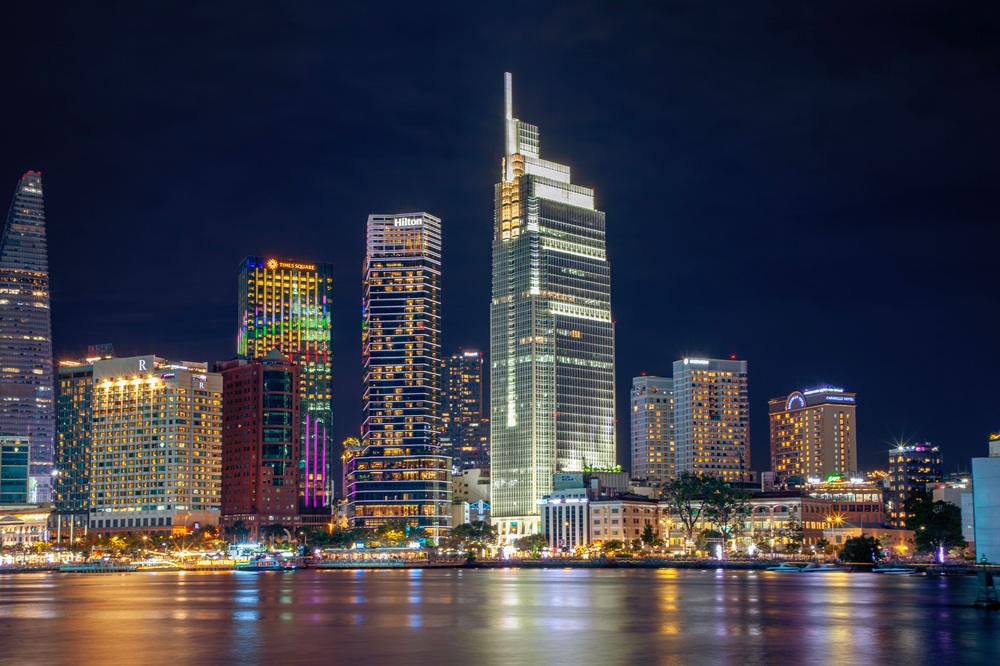
Ho Chi Minh City is Vietnam's largest and most energetic city, combining powerful historical sites, colonial-era landmarks, buzzing markets, incredible street food and a nightlife scene that keeps going long after the major attractions close. If you're wondering what to do in Ho Chi Minh City, these are the essentials to help you start planning your visit.
- Best things to do in Ho Chi Minh City: Visit the War Remnants Museum and Independence Palace, explore the historic centre around Notre-Dame Cathedral and the Central Post Office, wander through Ben Thanh Market and discover the temples and markets of Cholon.
- Best for first-time visitors: District 1 puts many of the city's major attractions, restaurants, markets, riverfront areas and nightlife within easy reach.
- How long to spend in Ho Chi Minh City: Three days is ideal for most first-time visitors, while four or five days gives you enough time to add excursions such as the Cu Chi Tunnels or Mekong Delta.
- Best time to visit: December to April generally brings the driest weather and more comfortable conditions for exploring the city.
- Best for food: Explore the city's street-food scene, traditional markets, local coffee culture and neighbourhood restaurants beyond the main tourist streets.
- Best evening experience: Walk along Nguyen Hue, explore the illuminated riverfront, discover the city's bars and cafés or take in the skyline from one of Ho Chi Minh City's rooftop venues.
- Best trips from Ho Chi Minh City: The Cu Chi Tunnels and Mekong Delta are the classic excursions, while Can Gio offers a very different escape from the city.
Ho Chi Minh City is also an essential stop on a wider journey through the country. Explore our Things to Do in Vietnam guide for more destinations and experiences, use our Vietnam itinerary to work Ho Chi Minh City into your route, and compare the country's main destinations in our Where to Stay in Vietnam guide.
Things to Do in Ho Chi Minh: Discover Vietnam's Most Energetic City
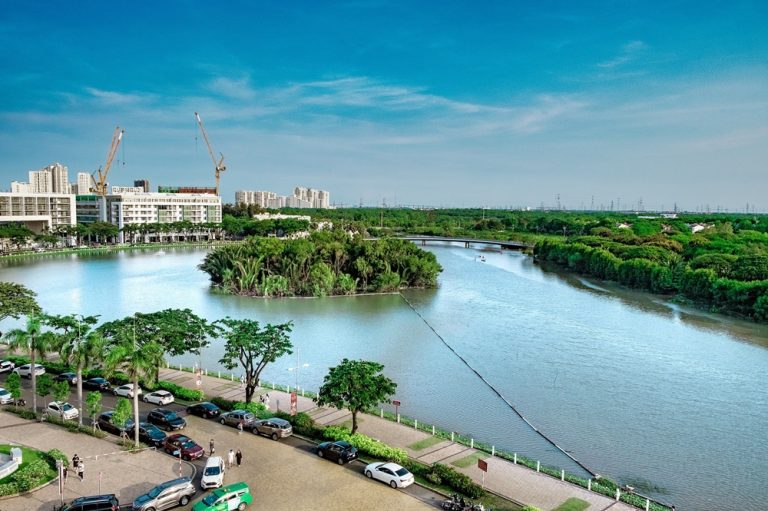
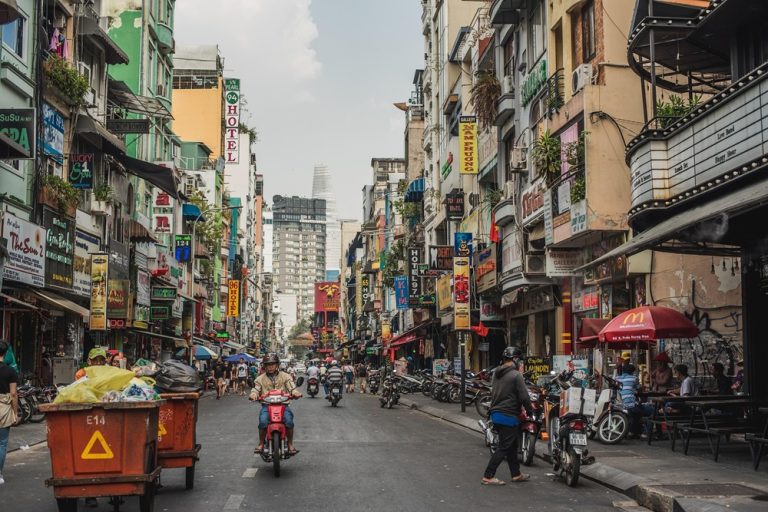
Ho Chi Minh City hits you with its energy almost immediately. Motorbikes stream through seemingly impossible gaps in the traffic, street-food stalls spill onto the pavements and old colonial buildings stand between glass towers and rooftop bars. Still widely called Saigon, Vietnam's largest city feels fast, chaotic and intensely alive.
But some of the most memorable things to do in Ho Chi Minh reveal a city with far more depth than its modern skyline suggests. Museums and historic landmarks tell the story of a turbulent past, centuries-old temples survive among busy neighbourhoods, and markets, coffee shops and family-run restaurants offer a glimpse into everyday life beyond the major tourist attractions.
Whether you're here for the history, the food, the nightlife or simply to experience the rhythm of southern Vietnam, this guide brings together the best things to do in Ho Chi Minh City alongside the practical information you need to plan your stay.
War Remnants Museum
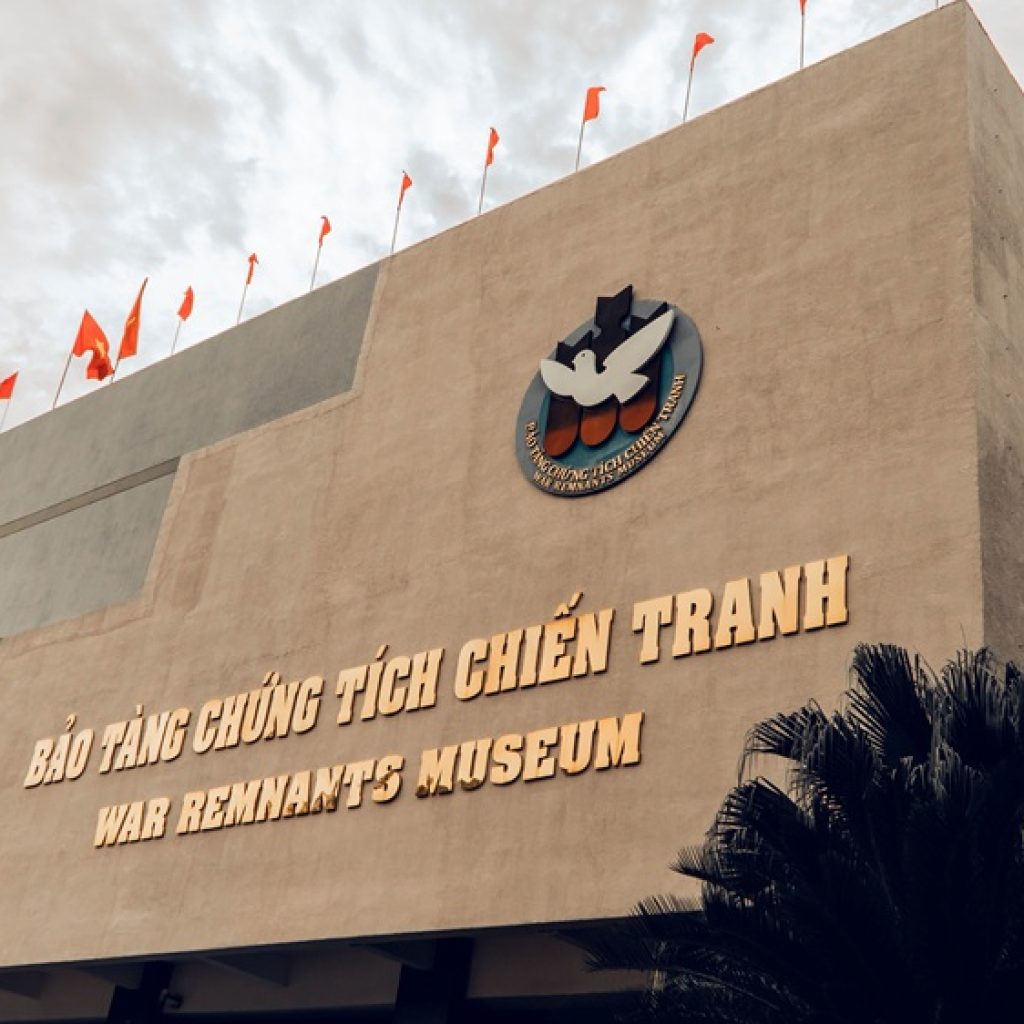
If you visit only one museum in Ho Chi Minh City, make it the War Remnants Museum. It's one of the city's most important attractions, but it's also one of the most confronting. Rather than presenting the Vietnam War as a distant historical event, the museum focuses heavily on its human consequences, making this a very different experience from simply visiting a collection of military artefacts.
The exhibitions document the war through photographs, historical documents, military equipment and personal stories. Some of the most powerful displays examine the effects of bombing and Agent Orange on Vietnamese civilians, while others document the work of international war photographers and the experiences of people caught up in the conflict. Outside, you'll find a collection of American military aircraft, tanks and other equipment.
Some exhibitions contain graphic photographs and disturbing material, so this isn't necessarily an easy museum to visit. It's also worth understanding that the story is presented primarily from the Vietnamese perspective. Whatever your own knowledge or interpretation of the war, the museum provides an important insight into how the conflict and its consequences are remembered in Vietnam.
Don't try to squeeze the War Remnants Museum into a rushed sightseeing schedule. Give yourself enough time to actually read the exhibits rather than simply walking through the galleries. For many visitors, it's one of the most thought-provoking things to do in Ho Chi Minh and provides valuable historical context for several of the places you'll encounter elsewhere in the city.
The museum is located in District 3, within walking distance of Independence Palace and the historic centre, so the two sights are easy to combine on the same day. Check the official War Remnants Museum website before your visit for current opening hours, admission information and exhibition details.
Go beyond the exhibits and discover the stories behind the War Remnants Museum with a guided experience that brings Ho Chi Minh City's wartime history into sharper focus.
Explore War Remnants Museum tours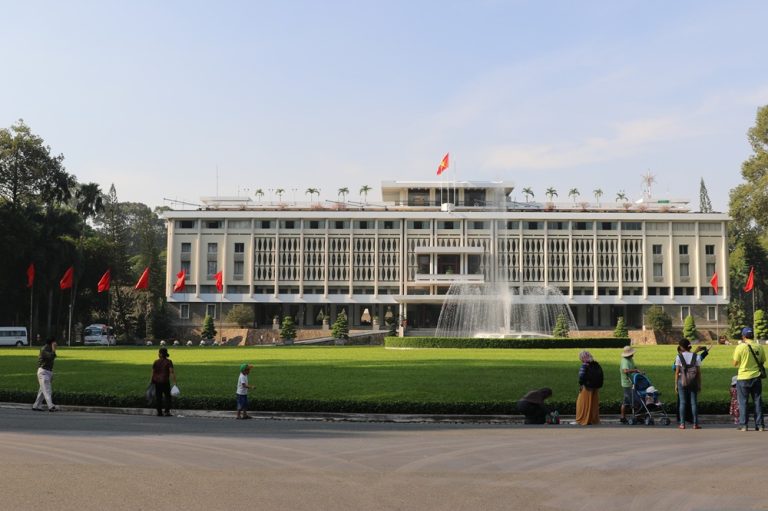
Independence Palace (Reunification Palace)
Few places in Ho Chi Minh City bring Vietnam's modern history to life quite like Independence Palace. Also widely known as Reunification Palace, this striking 1960s building served as the presidential residence and workplace of South Vietnam and became the setting for one of the defining moments of the Vietnam War.
On 30 April 1975, North Vietnamese tanks entered the palace grounds as Saigon fell, effectively marking the end of the war. Replicas of the tanks associated with that moment can be seen outside today, but the real fascination lies inside the building, where much of the palace has been preserved remarkably close to how it appeared during the final years of South Vietnam.
Walking through the palace feels surprisingly different from visiting a conventional museum. You'll pass formal reception rooms, presidential offices, meeting halls and diplomatic spaces filled with period furniture, while the architecture itself offers a glimpse into the political world of 1960s and 1970s Saigon. The contrast between the grand ceremonial rooms upstairs and the much more functional spaces below is particularly striking.
Head into the basement and you'll find one of the palace's most interesting areas: a network of rooms containing old communications equipment, maps and command facilities used during the war. These spaces make it much easier to imagine the palace as a functioning centre of government rather than simply another historic building.
Independence Palace is worth exploring properly rather than treating it as a quick photo stop. Even if you're not particularly interested in military history, the combination of architecture, preserved interiors and the events that unfolded here makes it one of the most significant places to see in Ho Chi Minh City.
The palace sits in the heart of the city and combines easily with the War Remnants Museum, Notre-Dame Cathedral and Central Post Office. For current opening hours, ticket information and visitor details, check the official Independence Palace website before visiting.
Step inside one of Ho Chi Minh City's most important historic landmarks and uncover the dramatic events surrounding the fall of Saigon with a guided visit to the Independence Palace.
Explore Independence Palace tours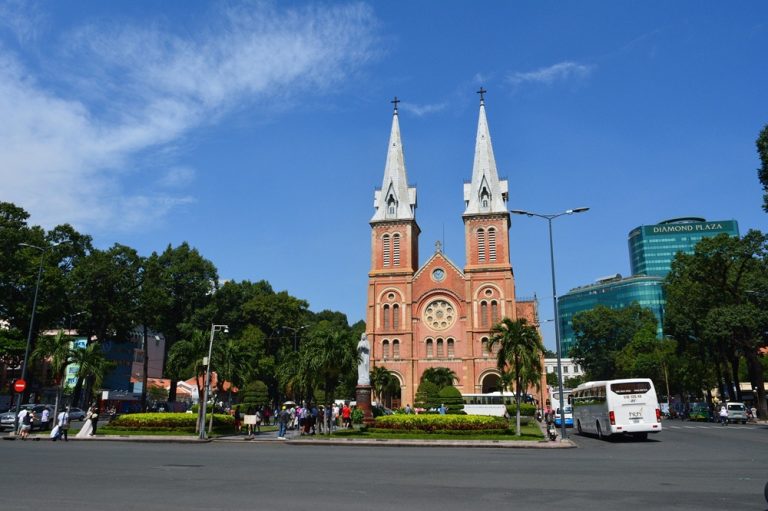
Notre-Dame Cathedral & Saigon Central Post Office
Two of Ho Chi Minh City's most recognisable landmarks stand almost directly opposite each other in the historic centre, making Notre-Dame Cathedral and Saigon Central Post Office an obvious pair to visit together. Both date from the French colonial period, yet they offer very different glimpses into the city's architectural heritage.
The Notre-Dame Cathedral Basilica of Saigon was constructed in the late 19th century and remains one of the city's most distinctive buildings. Its red-brick façade, Romanesque-inspired design and twin bell towers create a striking contrast with the modern buildings surrounding it, while the square outside has long been a familiar gathering place in central Ho Chi Minh City.
The cathedral has been undergoing an extensive restoration project, which can affect what visitors are able to see and access. Even when parts of the building are obscured by restoration work, it's still worth including while exploring the historic centre. If seeing the interior is particularly important to you, check the latest visitor information on the Vietnam Catholic Tours Notre-Dame Cathedral page before your visit.
Across the street, Saigon Central Post Office is much easier to experience from the inside. Completed in the late 19th century, the building is one of the finest surviving examples of French colonial architecture in the city. Step through the entrance and you'll find a soaring vaulted ceiling, patterned floor tiles, old maps and rows of traditional counters stretching along the sides of the enormous central hall.
What makes the Central Post Office particularly enjoyable is that it hasn't been turned entirely into a museum. It remains a working post office, so the building still serves its original purpose alongside the steady stream of visitors admiring its architecture. You can even buy a postcard and send it from here if you want something more memorable than another photograph on your phone.
You don't need to devote half a day to these two landmarks. They work particularly well as part of a walking route through central Ho Chi Minh City, combining easily with Independence Palace, Nguyen Hue Walking Street and several other major sights. Together, they're among the easiest things to see in Ho Chi Minh City while exploring the historic heart of Saigon on foot.
Discover the stories behind two of Saigon's most iconic colonial landmarks with a guided experience combining Notre-Dame Cathedral and the historic Central Post Office.
Explore Notre-Dame & Post Office tours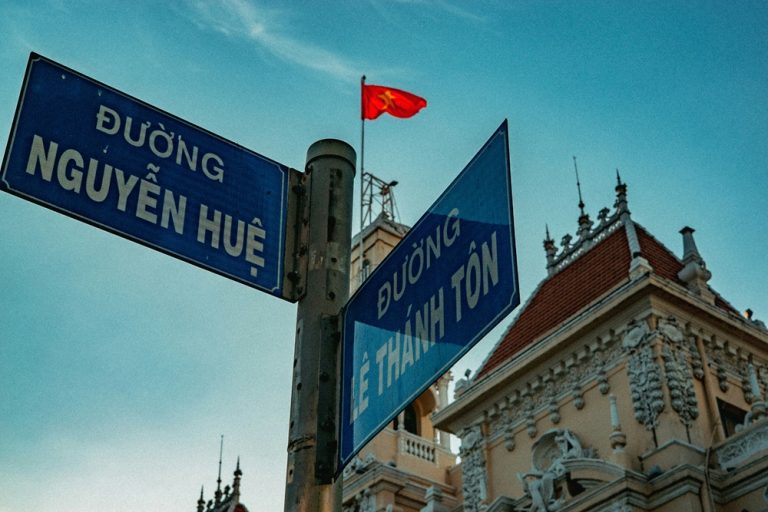
Nguyen Hue Walking Street & the Café Apartment
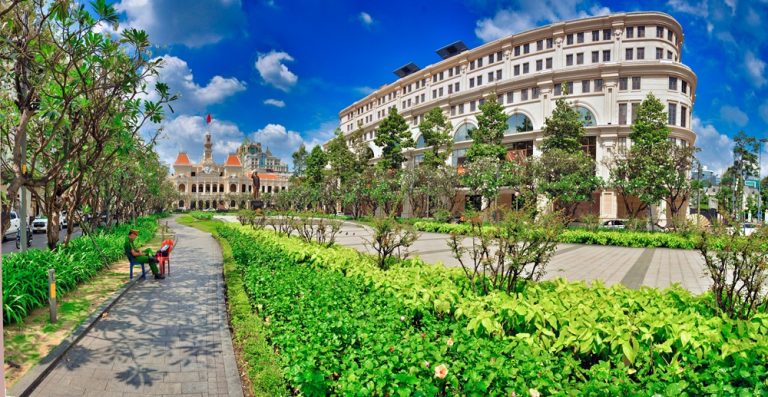
For a glimpse of modern Saigon at its most energetic, head to Nguyen Hue Walking Street in the heart of District 1. This broad pedestrian boulevard stretches from the grand colonial-era City Hall towards the Saigon River, surrounded by an eclectic mix of historic buildings, hotels, restaurants and gleaming modern towers.
During the day, Nguyen Hue is an easy place to include while exploring the major attractions of central Ho Chi Minh City, but the boulevard really comes alive after sunset. As the heat eases, local families, couples and groups of friends gather along the pedestrianised avenue, performers and street activity add to the atmosphere, and the illuminated skyline gives the area a completely different character.
One of Nguyen Hue's most distinctive sights is the Café Apartment at 42 Nguyen Hue. What looks from the street like an ageing apartment block has been transformed floor by floor into a vertical collection of independent cafés, small restaurants, boutiques and creative spaces. Its mismatched balconies, signs and glowing windows have become one of the most recognisable scenes in central Saigon.
Rather than simply photographing the building from the boulevard, head inside and explore. Different floors reveal very different spaces, from tiny coffee shops tucked into former apartments to balconies overlooking the activity below. Choose one with an outdoor seat and you can take a break over Vietnamese coffee while watching Nguyen Hue from above.
Nguyen Hue is particularly enjoyable as the starting point for an evening in the city. From here, you can wander towards the riverfront, explore the surrounding streets of District 1 or continue into Ho Chi Minh City's restaurants and nightlife. There may be more famous historical attractions elsewhere in the city, but spending an evening among the crowds on Nguyen Hue is one of the easiest ways to experience the everyday energy that makes Saigon so addictive.
Experience the energy of central Saigon and discover the landmarks, hidden corners and local stories surrounding Nguyen Hue Walking Street with a guided city experience.
Explore Nguyen Hue tours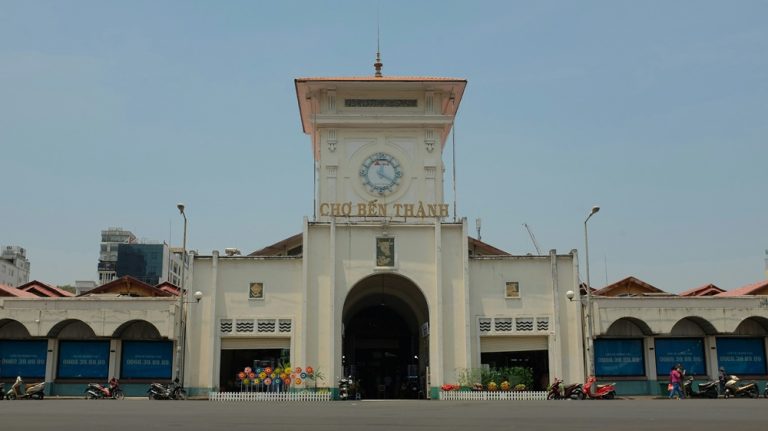
Ben Thanh Market
Ben Thanh Market is one of Ho Chi Minh City's most recognisable landmarks and, for many first-time visitors, an introduction to the organised chaos of a Vietnamese market. Sitting in the heart of District 1 beneath its distinctive clock tower, the market has been part of the city's commercial life for generations and remains one of the easiest places to experience while sightseeing in central Saigon.
Inside, narrow aisles lead between hundreds of stalls selling everything from clothing, textiles and handicrafts to Vietnamese coffee, spices, dried fruit and souvenirs. There are also food stalls where you can stop for local dishes, snacks or a fresh juice, making the market as much about eating and observing as it is about shopping.
Ben Thanh is firmly on the tourist trail, however, and it's worth arriving with realistic expectations. This isn't necessarily the place to experience Ho Chi Minh City's most local market life, and prices quoted to foreign visitors can be considerably higher than the amount vendors are willing to accept. If you're shopping, bargaining is part of the experience. Keep it friendly, decide what you're genuinely willing to pay and don't be afraid to walk away if you can't agree on a price.
Even if you have no intention of buying anything, wander through at least once. The combination of packed stalls, food aromas, constant negotiation and streams of shoppers gives Ben Thanh an atmosphere that is difficult to appreciate from outside. Later in this guide, we'll venture into Cholon and other parts of the city where markets feel very different from this famous District 1 landmark.
The area surrounding Ben Thanh also remains lively after the main daytime market begins winding down, with food, shops and evening activity spilling into the nearby streets. Its central location makes it easy to combine with other Ho Chi Minh City attractions, and the market is within walking distance of Nguyen Hue and much of the historic centre.
Ben Thanh may be touristy, busy and occasionally overwhelming, but that's precisely why it's worth seeing rather than treating it as the definitive market experience. Visit for the spectacle, bargain if something catches your eye, try some food and then use it as a starting point for discovering the much broader market culture found across Ho Chi Minh City.
Dive deeper into the sights, flavours and bustling atmosphere of Ben Thanh Market with a guided experience that reveals more than you'll discover simply wandering the stalls alone.
Explore Ben Thanh Market tours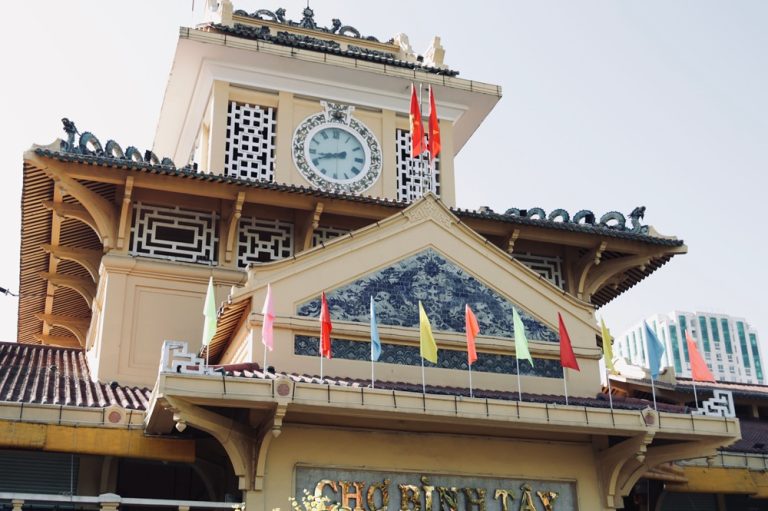
Explore Cholon - Ho Chi Minh City's Chinatown
Leave the polished streets and major landmarks of District 1 behind and Ho Chi Minh City begins to reveal a very different personality. Cholon, the city's sprawling Chinatown, stretches primarily across Districts 5 and 6 and has been a centre of Chinese-Vietnamese commerce, religion and community life for centuries.
The name Cholon literally means "big market", which gives you some idea of the neighbourhood's historic importance. Chinese migrants began establishing communities here centuries ago, and their influence remains visible in everything from temples and traditional medicine shops to family businesses, food and the architecture lining the area's crowded streets.
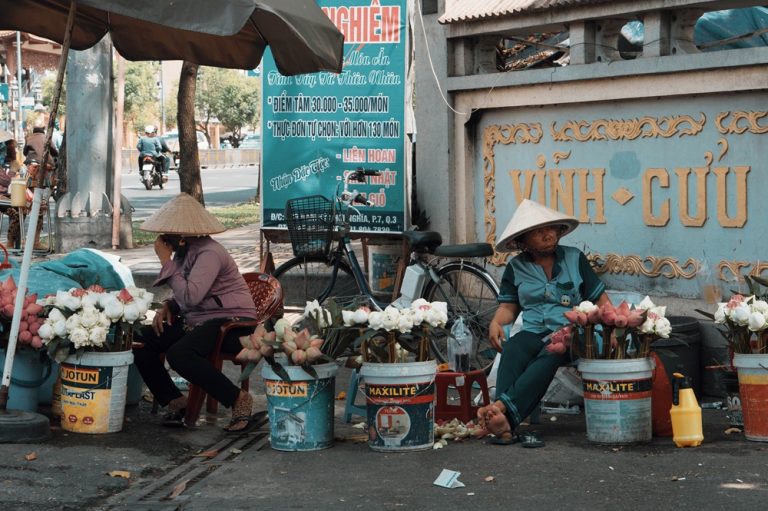
A natural starting point is Binh Tay Market, the commercial heart of Cholon. Unlike Ben Thanh Market, which caters heavily to visitors, Binh Tay remains primarily a wholesale market serving local traders. Its aisles overflow with dried foods, spices, household products, textiles and countless other goods, while porters and vendors move constantly through the building. You may find fewer obvious souvenirs here, but you'll see considerably more of how a working Vietnamese market actually functions.
Cholon's temples are another reason to explore beyond the market. Ornate Chinese pagodas and assembly halls are scattered throughout the neighbourhood, often hidden behind relatively modest entrances. Step inside and the noise of the surrounding streets gives way to incense-filled courtyards, elaborate woodcarvings, statues and coiled incense hanging overhead. Rather than trying to visit every temple, choose a few and give yourself time to appreciate the details and observe them respectfully as active places of worship.
Food is equally important to the Cholon experience. Generations of Chinese-Vietnamese families have shaped the neighbourhood's cooking, and you'll encounter noodle shops, dim sum restaurants, roast duck, Chinese-style pastries and street-food stalls alongside familiar Vietnamese dishes. This is a particularly rewarding part of the city to explore around mealtimes rather than treating it purely as a sightseeing destination.
Most importantly, don't approach Cholon as a checklist of individual attractions. Its appeal lies in the transition between them: old shophouses, medicine stores, busy intersections, temple courtyards, food stalls and commercial streets that feel distinctly different from central Saigon. Allow several hours to wander rather than arriving at Binh Tay Market, taking a photograph and immediately returning to District 1.
Cholon becomes far more interesting once you understand the stories behind its temples, markets and Chinese-Vietnamese traditions. Explore the neighbourhood with a local guide and discover the details that are easy to walk straight past on your own.
Explore Cholon & Chinatown toursWorldlyRoaming Tip: Look up when walking through Cholon. Many of the ground floors have been modernised into shops, but the upper storeys still reveal old façades, balconies, shutters and Chinese architectural details that are remarkably easy to miss when your attention is fixed on the chaos at street level.
Jade Emperor Pagoda
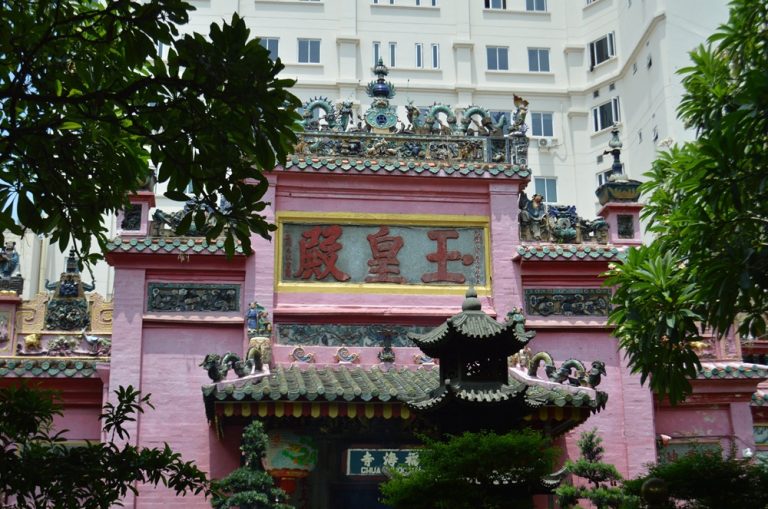
Step through the gates of the Jade Emperor Pagoda and the atmosphere changes almost immediately. Incense smoke drifts through dimly lit rooms, elaborate statues crowd the altars and worshippers move between shrines making offerings and lighting incense. It's one of the most atmospheric religious sites in Ho Chi Minh City and a fascinating contrast to the grand colonial landmarks of District 1.
Built in the early 20th century by the city's Chinese community, the pagoda is dedicated to the Jade Emperor, one of the most important figures in Taoist belief. Its interior is filled with an extraordinary collection of carved wooden figures and statues representing deities, guardians and characters from Taoist and Buddhist traditions. The result can initially feel overwhelming, particularly if you're unfamiliar with the symbolism behind what you're seeing.
That's also part of what makes the pagoda so interesting. Rather than functioning primarily as a historical attraction, this remains an active place of worship. Local visitors come to pray for health, prosperity, fertility and good fortune, and you'll often see offerings placed before the different shrines. Take your time, keep your voice down and remember that the people around you may be there for religious reasons rather than sightseeing.
The building itself rewards close attention. Look beyond the main altars and you'll find intricate woodcarvings, colourful roof decorations, small courtyards and shadowy chambers filled with incense. The relative darkness inside, combined with the smoke and densely packed statues, gives the Jade Emperor Pagoda a character unlike almost any of the other major Ho Chi Minh City attractions.
The pagoda is located north of the main cluster of District 1 sights, so it requires a little more effort to reach than Notre-Dame Cathedral or Ben Thanh Market. That slight separation is worthwhile, however. After the museums, colonial architecture and busy commercial streets of central Saigon, the Jade Emperor Pagoda reveals another layer of the city's Chinese-Vietnamese religious heritage.
Discover the stories, symbolism and spiritual traditions behind one of Ho Chi Minh City's most atmospheric temples with a guided experience that reveals details you might otherwise miss.
Explore Jade Emperor Pagoda tours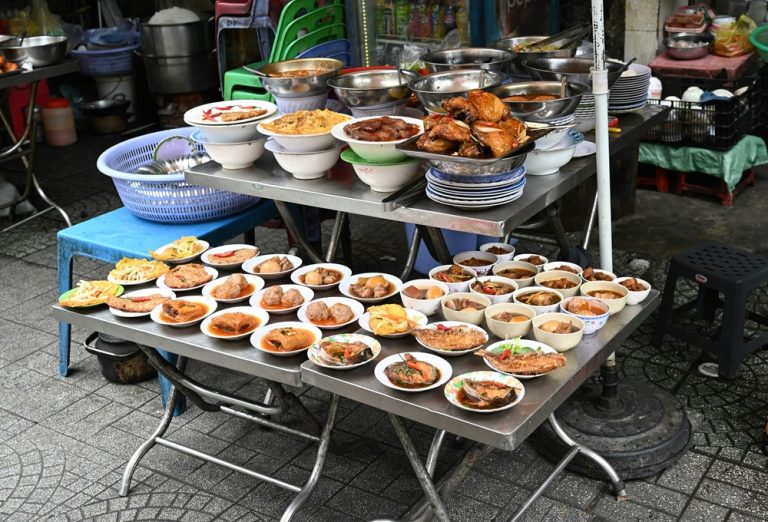
Explore Ho Chi Minh City's Street-Food Scene
Some of the best things to do in Ho Chi Minh City involve nothing more complicated than pulling up a tiny plastic stool and ordering whatever is sizzling on the grill beside you. Street food is woven into everyday life in Saigon, and exploring it gives you a taste of the city that you'll never get by sticking exclusively to restaurants around the main tourist attractions.
Southern Vietnamese cuisine has its own distinctive flavours, and Ho Chi Minh City is an excellent place to start exploring them. Look out for cơm tấm, broken rice typically served with grilled pork and a fried egg; hủ tiếu, a southern noodle dish served dry or as a soup; and bò lá lốt, seasoned beef wrapped in betel leaves and grilled over charcoal. You'll also find excellent bánh mì, crispy bánh xèo pancakes and countless regional dishes brought to the city by people from across Vietnam.
The experience isn't limited to the food itself. Saigon's street-food culture spills onto pavements and into narrow alleys, where small kitchens specialise in dishes they've often been preparing for years. In the evening, tables appear outside, grills fire up and neighbourhood streets become informal dining rooms filled with people eating, talking and watching the city go by.
Don't assume that the busiest tourist streets are where you'll eat best. Some of the most interesting places are simple stalls and family-run eateries away from the main sightseeing areas. A queue or collection of occupied tables filled with local customers is usually a promising sign, particularly at a stall specialising in just one or two dishes. High turnover also means ingredients are constantly being cooked and replenished rather than sitting around for hours.
If you're unfamiliar with Vietnamese food, however, knowing where to begin can be difficult. Menus may be limited or entirely in Vietnamese, and many excellent places are hidden in neighbourhoods you would have little reason to explore independently. This is one experience where joining a Saigon street-food tour can add considerably more than simply showing you where to eat. A good local guide can explain unfamiliar ingredients, introduce regional dishes and take you into small eateries and street stalls you might otherwise walk straight past.
Taste your way through Saigon with a local guide and discover street-food stalls, neighbourhood eateries and Vietnamese dishes you might never find when exploring on your own.
Explore Saigon Street-Food ToursWorldlyRoaming Tip: Don't try to sample six different dishes in one sitting. Many of Saigon's best street-food places specialise in a single dish, so treat an evening as a moving dinner: eat a small portion somewhere busy, walk to another neighbourhood stall for the next dish and finish with something sweet or a Vietnamese coffee. You'll experience far more of the city's food culture without being full after your first stop.
Experience Ho Chi Minh City's Coffee Culture
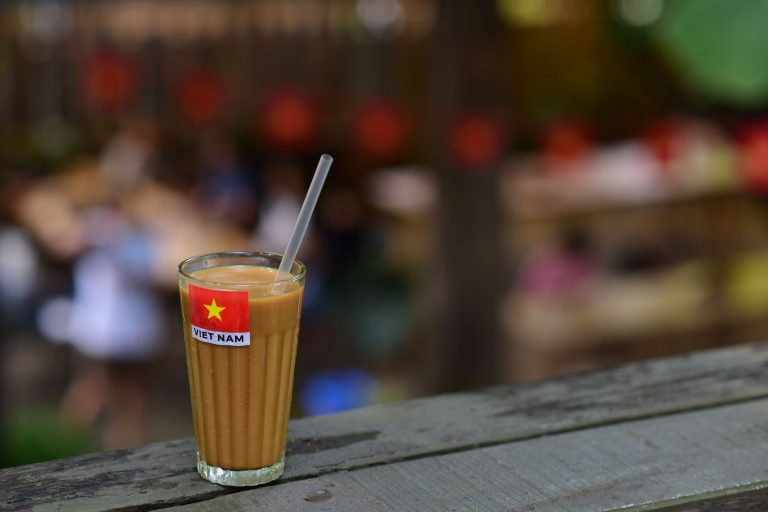
Coffee in Ho Chi Minh City isn't simply a morning caffeine fix. It's part of the rhythm of everyday life. From tiny pavement cafés where customers sit on low stools beside streams of motorbikes to stylish independent coffee shops hidden inside old apartment buildings, Saigon's coffee culture is one of the easiest pleasures to experience while exploring the city.
The classic place to start is cà phê sữa đá: strong Vietnamese coffee mixed with sweet condensed milk and poured over ice. If you prefer your coffee without the sweetness, order cà phê đen đá, the black iced version. Both are intensely flavoured and particularly welcome during a hot afternoon of sightseeing.
But limiting yourself to one Vietnamese iced coffee would miss how varied the city's café scene has become. Traditional neighbourhood coffee shops still sit alongside street-side vendors, while a growing generation of independent cafés is experimenting with Vietnamese-grown beans, different brewing methods and contemporary interpretations of familiar drinks. You'll also encounter everything from coconut coffee to yoghurt coffee and other creations that blur the line between a drink and dessert.
Part of the experience is choosing completely different places to drink it. Have one coffee sitting on a plastic stool watching the traffic and another somewhere you would never discover from street level: up a narrow staircase, inside an old apartment or behind an unassuming shopfront. The contrast between these spaces is part of what makes exploring Ho Chi Minh City's coffee culture so enjoyable.
It's also worth slowing down once you find somewhere you like. Coffee in Saigon is often a social occasion rather than something consumed while rushing somewhere else. Sitting for a while and watching the city unfold around you can be just as revealing as visiting another attraction.
If you want to go beyond ordering from a menu, coffee-focused experiences can introduce you to Vietnamese beans, traditional brewing techniques and the different ways coffee has become part of daily life in the city.
Discover another side of Saigon through its coffee, from traditional Vietnamese brews to local cafés and hands-on experiences that reveal what makes the city's coffee culture so distinctive.
Explore Saigon Coffee Experiences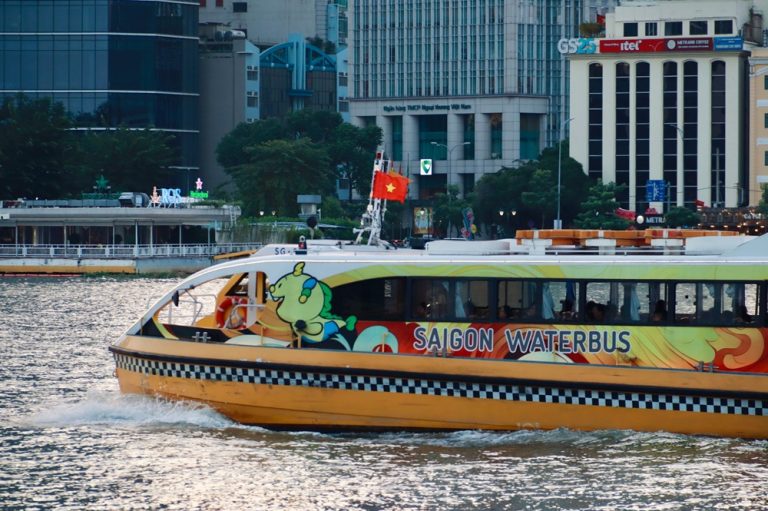
Ride the Saigon River & Waterbus
Ho Chi Minh City can feel relentlessly busy at street level, but step onto the Saigon River and the perspective changes completely. The traffic disappears behind you, the skyline opens up and you begin to appreciate just how closely the city's history and development have been connected to the water.
One of the simplest ways to experience the river is aboard the Saigon Waterbus. Although primarily a form of public transport, it doubles as an inexpensive sightseeing trip, carrying passengers along the river with views back towards the towers of District 1 and across to rapidly developing neighbourhoods on the opposite bank.
The journey is particularly enjoyable later in the afternoon, when the harshest heat begins to fade and the changing light reflects off the city skyline. Rather than thinking of the Waterbus purely as transportation from one stop to another, you can use the journey itself as part of your sightseeing and enjoy a welcome break from navigating Ho Chi Minh City's streets.
If you want something more leisurely, the Saigon River also offers sightseeing, sunset and evening cruises. These provide a very different experience from the public Waterbus, with more time on the water and the opportunity to watch the city illuminate after dark. A river cruise can be particularly appealing towards the end of a day of sightseeing, when you want to keep experiencing the city without walking through another neighbourhood or museum.
The riverfront has changed dramatically as Ho Chi Minh City has developed, and seeing it from the water reveals an interesting mixture of old port infrastructure, working river traffic and modern skyscrapers. Whether you spend a few dollars on the Waterbus or turn the experience into an evening cruise, getting onto the Saigon River is one of the easiest ways to see the city from a completely different angle.
See Saigon from the water with a sightseeing, sunset or evening boat experience and watch the city's skyline transform as you cruise along the river.
Explore Saigon River CruisesWorldlyRoaming Tip: If you're taking the Waterbus primarily for the views rather than transportation, don't automatically get off at the first opportunity. Part of the appeal is watching central Saigon recede behind you and seeing how quickly the dense District 1 skyline gives way to a very different riverside cityscape.
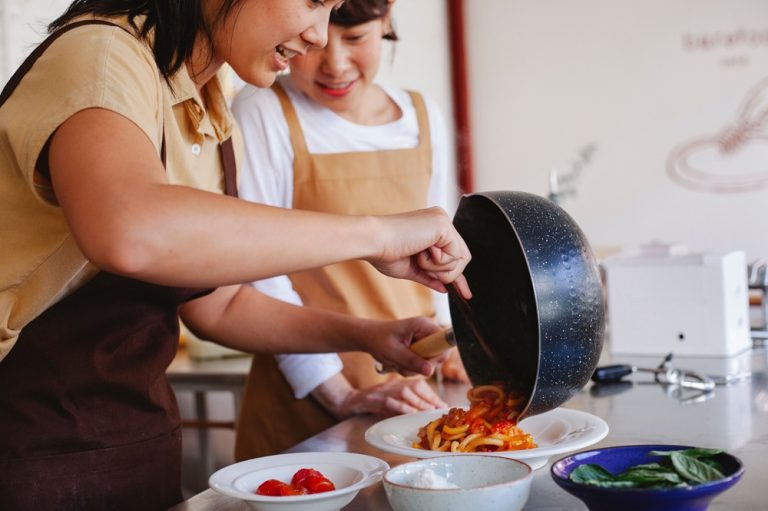
Take a Vietnamese Cooking Class
Eating your way through Ho Chi Minh City is one thing; learning how some of those flavours actually come together is another. A Vietnamese cooking class in Ho Chi Minh City gives you the chance to move beyond simply ordering dishes and start understanding the ingredients, techniques and combinations that make Vietnamese food so distinctive.
Most hands-on classes guide you through preparing several dishes rather than simply watching a chef demonstrate them. Along the way, you'll learn how fresh herbs, fish sauce, chilli, lime, vegetables and other ingredients are balanced to create the layers of salty, sweet, sour and spicy flavours found throughout Vietnamese cooking.
Some of the most interesting classes begin with a visit to a local market. Walking through a Vietnamese market independently is fascinating, but unless you already know the cuisine well, it's easy to pass dozens of unfamiliar herbs, vegetables, noodles and sauces without knowing what they are or how they're used. Exploring with a cook turns the market into an introduction to the meal you're about to prepare.
A cooking class also complements Ho Chi Minh City's street-food scene particularly well. After spending a few days eating dishes such as bánh xèo or other Vietnamese favourites, learning how ingredients are prepared and combined gives you a much better appreciation of what has been arriving at your table.
When choosing a class, look for an experience where you'll actually prepare the food yourself rather than primarily watching a demonstration. Smaller groups generally provide more opportunity to get involved, ask questions and understand the techniques, while a market visit is particularly worthwhile if you're curious about Vietnamese ingredients as well as the finished dishes.
Best of all, this is one Ho Chi Minh City experience you can take home with you. Long after the museums, pagodas and skyline have become photographs, knowing how to recreate a Vietnamese dish provides a very different kind of souvenir from your time in Saigon.
Learn the secrets behind Vietnamese cuisine with a hands-on cooking experience, from exploring local ingredients to preparing traditional dishes you can recreate long after your trip.
Explore Vietnamese Cooking ClassesWorldlyRoaming Tip: If you have the choice, book a cooking class that includes a guided market visit rather than adding another market visit to your sightseeing itinerary. The value isn't simply seeing the market again; it's having someone explain what the unfamiliar herbs, vegetables, sauces and other ingredients are while you're standing in front of them, then showing you how they're used once you reach the kitchen.
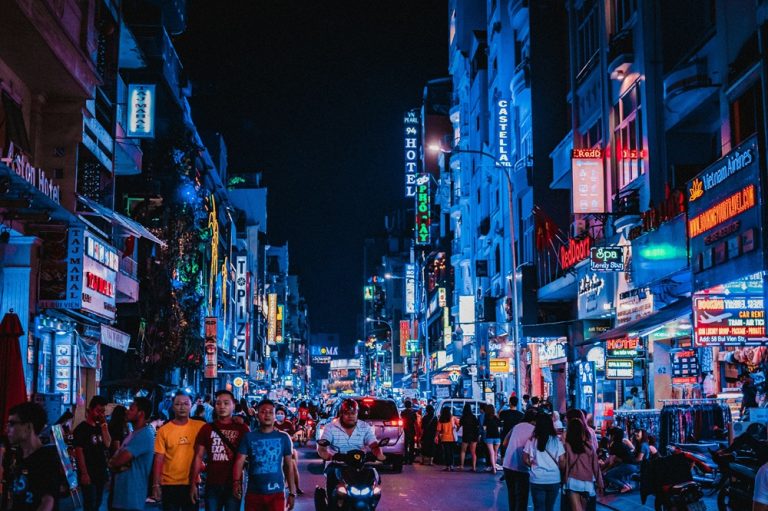
Experience Ho Chi Minh City After Dark
Ho Chi Minh City doesn't slow down when the sun sets. If anything, this is when Saigon becomes even more energetic. The temperature drops, pavements fill with diners, bars begin to buzz and the illuminated skyline transforms streets you've already explored during the day. Experiencing Ho Chi Minh City at night is an essential part of discovering the city rather than simply something to do after the sightseeing is finished.
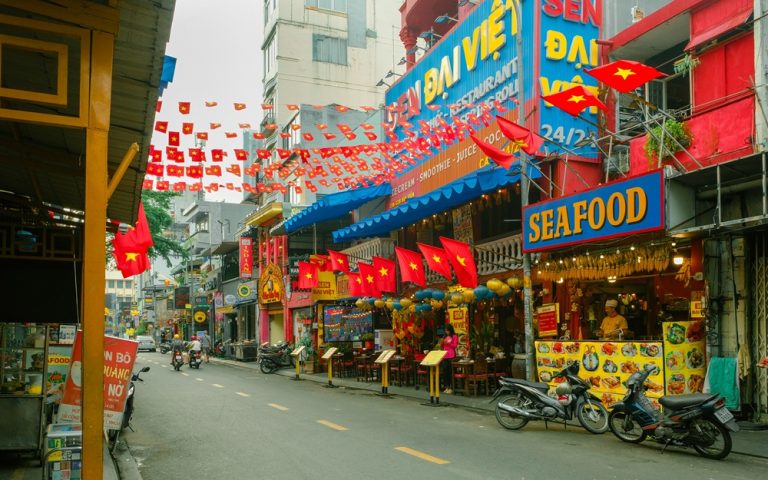
At the loudest end of the spectrum is Bui Vien Walking Street, the heart of the backpacker nightlife scene. Neon signs, bars, clubs, music and crowds compete for your attention along a street that can feel almost overwhelmingly energetic. It's unapologetically touristy and certainly isn't for everyone, but walking through once is an experience in itself, even if you quickly decide you'd rather spend your evening somewhere quieter.
Fortunately, Saigon nightlife extends far beyond Bui Vien. Across the city you'll find cocktail bars, craft-beer venues, live music, small neighbourhood drinking spots and restaurants that remain busy well into the evening. You don't need to make nightlife the purpose of your night either. Simply wandering through central districts after dark, stopping for food or a drink whenever somewhere catches your attention, can be one of the most enjoyable ways to experience the city.
For a completely different perspective, head upwards. Ho Chi Minh City's rooftop bars range from sophisticated hotel terraces to more relaxed venues overlooking the surrounding towers. After spending the day navigating the city at street level, seeing the endless lights, streams of traffic and illuminated skyscrapers from above finally gives you a sense of just how enormous Saigon really is.
You can also explore the city after dark with a local guide. Night tours range from food-focused experiences and neighbourhood explorations to journeys through the city by motorbike, allowing you to experience areas you might never encounter during a conventional sightseeing day.
See another side of Saigon after sunset with night tours, food experiences and evening adventures that take you beyond the city's daytime attractions.
Explore Saigon After-Dark ExperiencesWorldlyRoaming Tip: Don't judge Saigon nightlife entirely by Bui Vien. Walk through it once if you're curious, but if the noise and crowds aren't your scene, move on rather than assuming you've discovered what nightlife in Ho Chi Minh City is like. The city's evening culture stretches from tiny pavement drinking spots and live-music venues to sophisticated rooftop bars, and those completely different experiences can exist only a few streets apart.
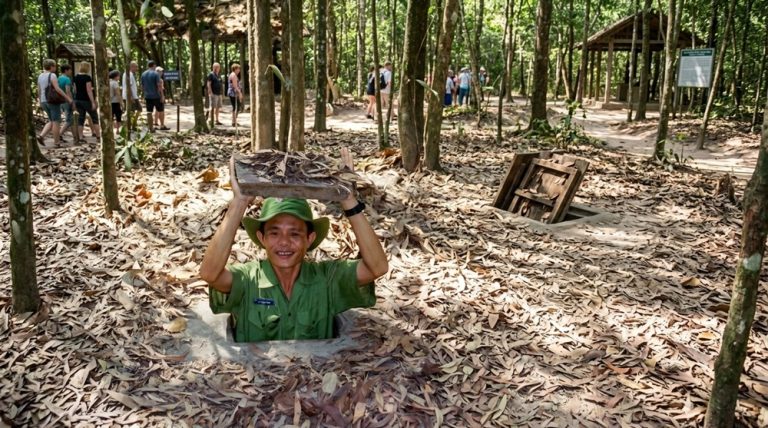
Best Day Trips from Ho Chi Minh City
Some of southern Vietnam's most memorable experiences lie beyond the city itself. Ho Chi Minh City makes an excellent base for exploring important historical sites, rural landscapes and the waterways of the Mekong Delta, with several destinations close enough to visit without changing accommodation.
For most travellers, two excursions stand above the rest. The Cu Chi Tunnels offer a fascinating insight into the underground networks used during the Vietnam War, while the Mekong Delta provides a completely different experience of southern Vietnam, shaped by rivers, canals, agriculture and communities whose daily lives remain closely connected to the water.
Both can be visited independently, but organised excursions are particularly convenient if you have limited time in Ho Chi Minh City. Transport and logistics are handled for you, and a knowledgeable guide can provide valuable context that would be difficult to gain simply arriving at the destination alone.
Cu Chi Tunnels
Around 60 kilometres northwest of central Ho Chi Minh City, the Cu Chi Tunnels provide one of the most remarkable insights into the realities of the Vietnam War. What visitors see today forms part of a much larger underground network that was used by Viet Cong forces for movement, communication, shelter and military operations.
The tunnel system was far more sophisticated than a collection of narrow passages. Underground spaces included living areas, kitchens, meeting rooms, medical facilities and storage areas, while concealed entrances and ventilation systems allowed people to remain below ground for extended periods. Exhibits above ground also demonstrate some of the techniques used to disguise entrances and survive in an area subjected to intense military activity.
Sections of tunnel have been adapted so visitors can experience what moving underground was like. Even these visitor-accessible passages can feel remarkably confined, dark and uncomfortable, which makes the conditions endured by people who lived and operated within the network considerably easier to comprehend. If you're uncomfortable in confined spaces, however, you don't need to enter the tunnels to make the visit worthwhile.
There are two principal visitor areas associated with the Cu Chi tunnel network: Ben Dinh and Ben Duoc. Ben Dinh is generally the more convenient option from Ho Chi Minh City and consequently receives many organised tours, while Ben Duoc is farther away and covers part of the original tunnel system on a larger site. If you're booking an excursion, it's worth checking which location the tour actually visits rather than assuming every Cu Chi experience follows the same itinerary.
Allowing a guide to explain what you're seeing adds considerable value here. Without historical context, bunkers, tunnel entrances and reconstructed features can become a succession of exhibits; understanding how the network functioned and why Cu Chi became strategically important makes the experience far more meaningful.
A visit to the Cu Chi Tunnels also pairs naturally with the War Remnants Museum in Ho Chi Minh City. The two experiences approach the conflict very differently, and seeing both provides considerably more context than treating either as an isolated attraction.
Explore the Cu Chi Tunnels with a guided experience that brings the underground network, wartime strategies and history of the site into much clearer focus.
Explore Cu Chi Tunnel Tours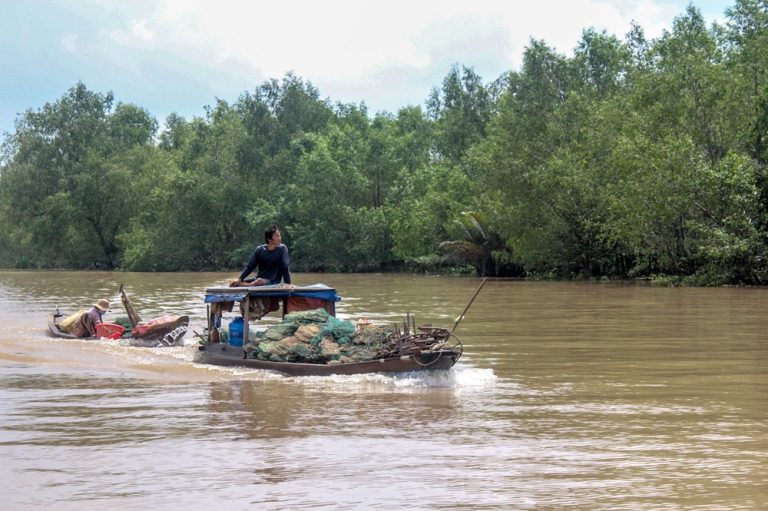
Explore the Mekong Delta
Few day trips from Ho Chi Minh City provide a greater contrast with the intensity of Saigon than the Mekong Delta. Leave the city behind and the landscape gradually opens into a vast network of rivers, canals, rice fields, orchards and communities where daily life remains closely connected to the water.
The Mekong Delta covers an enormous area of southern Vietnam, so a day trip can only provide an introduction. Most excursions from Ho Chi Minh City concentrate on My Tho and Ben Tre, which are close enough to the city to make a return journey realistic without spending most of the day on the road.
Boat travel is naturally at the heart of the experience. Larger boats cross the main branches of the Mekong, while smaller sampans can take you through narrow, palm-lined canals where the scale and atmosphere change completely. Depending on the itinerary, you'll also visit villages, tropical fruit orchards or small local businesses producing regional foods and other products.
It's worth keeping your expectations realistic. The areas of the Mekong Delta that are easiest to reach from Ho Chi Minh City are also among the most frequently visited, and popular stops can feel organised around tourism. That doesn't make the journey unrewarding, but a standard Mekong Delta day trip shouldn't be confused with travelling deep into rural southern Vietnam.
If you have more time, consider spending at least one night in the Delta. Travelling farther south allows you to experience places such as Can Tho and explore the region at a slower pace rather than returning to Ho Chi Minh City the same evening. If you're deciding how to fit the Mekong Delta into a longer journey through the country, our Vietnam itinerary can help you decide how much time to allocate to southern Vietnam.
For travellers with limited time, however, an organised day trip remains the easiest way to get a taste of the region. Transport from Ho Chi Minh City, boat journeys and the various stops are handled as part of the excursion, allowing you to experience several different sides of the Delta within a single day.
Escape the streets of Saigon and experience the waterways, villages and tropical landscapes of southern Vietnam on a Mekong Delta day trip from Ho Chi Minh City.
Explore Mekong Delta Day TripsWorldlyRoaming Tip: Check exactly how much time a Mekong Delta tour spends on the water before booking. Two tours described as a "Mekong Delta day trip" can offer very different experiences, and an itinerary packed with workshops, demonstrations and shopping stops may leave surprisingly little time actually exploring the rivers and canals you came to see.
Where to Stay in Ho Chi Minh City
Choosing where to stay in Ho Chi Minh City can make a significant difference to your experience, particularly because the city is far more spread out than many first-time visitors expect. For most travellers, the best choice comes down to how close you want to be to the main attractions and how much you value being able to explore on foot.
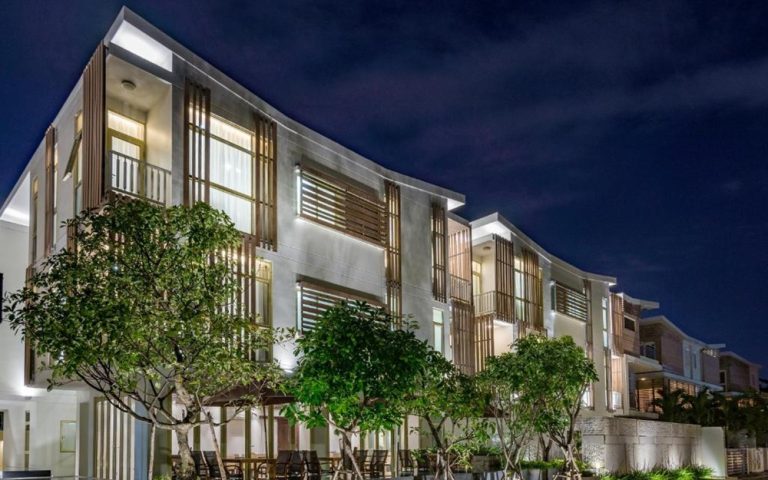
District 1 is the easiest choice for first-time visitors, placing many of the sights, restaurants, markets and nightlife we've covered above within easy reach. District 3 keeps you close to the centre while offering a somewhat more local atmosphere, while Thao Dien suits travellers who prefer a more relaxed neighbourhood filled with cafés, restaurants and international influences away from the busiest sightseeing streets.
Below are three Ho Chi Minh City accommodation options in different parts of the city, along with links to browse more hotels in each area if you'd prefer to compare prices, locations and facilities yourself. For a broader look at accommodation across the country, our Where to Stay in Vietnam guide compares the best destinations and bases for different types of trips.
DISTRICT 1 – BEST FOR FIRST-TIME VISITORS
District 1 is the most convenient area to stay in Ho Chi Minh City if this is your first visit. Many of the city's major attractions are concentrated here or nearby, including Ben Thanh Market, Nguyen Hue Walking Street, the Central Post Office and Notre-Dame Cathedral. You'll also have an enormous choice of restaurants, cafés, bars and shops within easy reach. The trade-off is that District 1 is busy, tourist-oriented and rarely quiet, but for a short sightseeing stay, the convenience is difficult to beat.
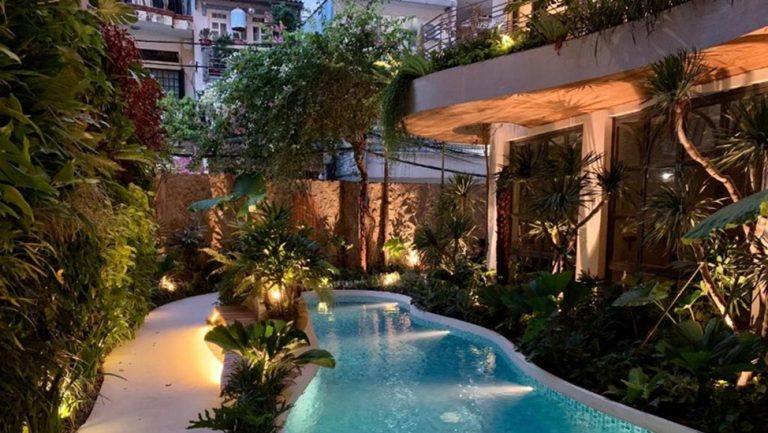
CityHouse VIBE City Oasis
42/4 Hồ Hảo Hớn, District 1, Ho Chi Minh City, Vietnam — +84 878 253 545
CityHouse VIBE City Oasis provides a comfortable base in District 1 for travellers who want to remain close to central Ho Chi Minh City while staying slightly removed from the busiest tourist streets. Its location gives you convenient access to restaurants, cafés and the city's main sightseeing areas without placing you directly in the middle of the most hectic parts of the district. Check current rates and availability at CityHouse VIBE City Oasis.
Browse More Hotels in District 1
District 1 has accommodation at almost every price point, so compare locations carefully depending on whether you want to prioritise sightseeing, nightlife or a quieter street away from the busiest areas.
DISTRICT 3 – BEST FOR STAYING CENTRAL WITH A MORE LOCAL FEEL
District 3 is an excellent alternative if you want to remain close to central Ho Chi Minh City without staying directly in its busiest tourist district. Tree-lined streets, cafés, restaurants and neighbourhood businesses give parts of District 3 a more residential atmosphere, while attractions such as the War Remnants Museum and Independence Palace remain within easy reach. You'll probably use Grab slightly more often than you would from the heart of District 1, but the trade-off is a less tourist-dominated base.
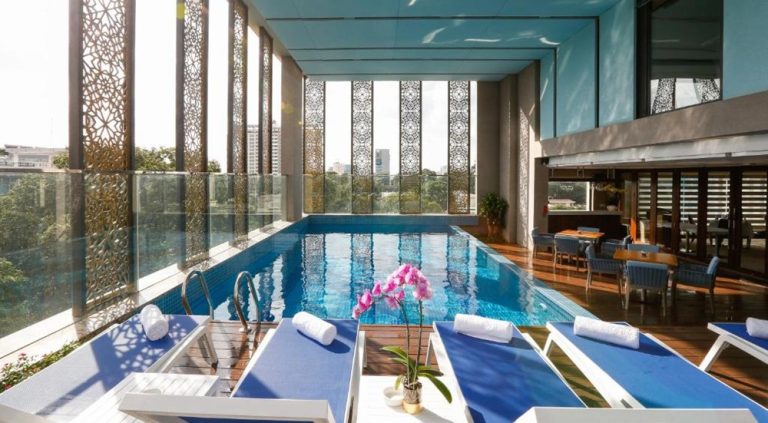
Orchids Saigon Hotel
192 Pasteur Street, Ward 6, District 3, Ho Chi Minh City, Vietnam — +84 28 3636 5222
Orchids Saigon Hotel offers a central District 3 base within convenient reach of both the historic centre and the neighbourhood's restaurants and cafés. Its location works particularly well for travellers who want easy access to major sights while staying just outside the busiest parts of District 1. Check current rates and availability at Orchids Saigon Hotel.
Browse More Hotels in District 3
Compare hotels throughout District 3 if you want to stay close to central Ho Chi Minh City while enjoying a somewhat more residential atmosphere than you'll find in the heart of District 1.
THAO DIEN – BEST FOR A MORE RELAXED SIDE OF HO CHI MINH CITY
Thao Dien offers a completely different base from Districts 1 and 3. This riverside neighbourhood is known for its cafés, restaurants, boutiques and international community, with a more relaxed atmosphere than central Ho Chi Minh City. It's particularly appealing for longer stays or travellers who value space and neighbourhood life more than being able to walk to the major attractions. The compromise is distance: if sightseeing is your priority, you'll spend considerably more time travelling back and forth to the centre.
Glenwood City Resort
241-243 Nguyen Van Huong, District 2, Ho Chi Minh City, Vietnam — +84 28 3744 2068
Glenwood City Resort provides a relaxed base in Thao Dien for travellers who prefer staying away from the intensity of central Ho Chi Minh City. The location puts the neighbourhood's cafés, restaurants and riverside atmosphere within easy reach while still allowing you to travel into District 1 when you want to sightsee. Check current rates and availability at Glenwood City Resort.
Browse More Hotels in Thao Dien
Thao Dien has a wide range of apartments, boutique stays and upscale hotels, making it particularly worth comparing options if you're planning a longer stay or prefer a quieter base away from the main tourist districts.
How Many Days Do You Need in Ho Chi Minh City?
For most first-time visitors, three days in Ho Chi Minh City is ideal. That gives you enough time to explore the major historical attractions, experience the city's markets, food and coffee culture and discover some of Saigon beyond the main sightseeing streets without rushing from one attraction to the next.
One day in Ho Chi Minh City is enough for a quick introduction, but you'll need to be selective. Concentrate on the central sights around District 1 and District 3, combining places such as the War Remnants Museum, Independence Palace, Notre-Dame Cathedral and Central Post Office before finishing around Nguyen Hue Walking Street or exploring the city after dark.
With two days in Ho Chi Minh City, you can slow the pace considerably. Use your second day to explore Ben Thanh Market, Cholon or the Jade Emperor Pagoda, spend time discovering Saigon's street-food and coffee culture and perhaps take the Waterbus or enjoy the skyline from the river towards sunset.
Three days gives you enough flexibility to combine the essential attractions with neighbourhood exploration and experiences such as a cooking class, food tour or more leisurely evening in the city. It's a particularly good amount of time if Ho Chi Minh City is one stop on a longer journey through Vietnam and you don't intend to use the city as a base for several excursions.
If you want to visit the Cu Chi Tunnels or Mekong Delta, consider staying for four or five days. Both deserve a substantial part of a day, and trying to squeeze them into a shorter visit means sacrificing much of Ho Chi Minh City itself. With five days, you can comfortably spend three days exploring Saigon and dedicate a day each to Cu Chi and the Mekong Delta.
How long you spend here will ultimately depend on the rest of your journey through the country. If you're deciding how Ho Chi Minh City fits alongside Hanoi, Central Vietnam and other destinations, our Vietnam itinerary compares routes for different trip lengths and can help you decide how much time to allocate to each region.
Best Time to Visit Ho Chi Minh City
The best time to visit Ho Chi Minh City is generally during the dry season from December to April, when rainfall is lower and the weather is more predictable for sightseeing. Ho Chi Minh City has a tropical climate and remains warm throughout the year, so the main seasonal difference isn't temperature but the amount and frequency of rain.
December through February is particularly pleasant for exploring the city. Temperatures are still warm, but humidity can feel somewhat more manageable than during the hottest months, making long days walking between markets, museums, temples and neighbourhoods more comfortable. This is also a popular period for travelling in southern Vietnam, so accommodation and tours can be busier.
March and April remain relatively dry but become noticeably hotter as the city approaches the wet season. Sightseeing is still perfectly manageable, although planning outdoor activities for the morning and leaving museums, cafés or other indoor attractions for the hottest part of the afternoon can make exploring more comfortable.
The rainy season runs roughly from May to November, but that doesn't mean Ho Chi Minh City disappears beneath continuous rain for six months. Heavy tropical downpours are common, particularly later in the day, but they are often intense and relatively short-lived. You can still enjoy the city during this period, especially if you're willing to adjust your plans when a storm arrives.
Tet, the Vietnamese Lunar New Year, is another important consideration when choosing your dates. It's a fascinating time to experience Vietnam, but transport and accommodation demand can increase considerably and some businesses close as people return home to celebrate with their families. If your trip coincides with Tet, book important transport and accommodation well ahead and expect normal routines around the city to change.
Remember that the best weather in Ho Chi Minh City doesn't necessarily mean the best weather throughout Vietnam. Conditions can be completely different in Hanoi, Central Vietnam and the southern regions at the same time of year. If Ho Chi Minh City is part of a longer trip, our Best Time to Visit Vietnam guide explains the country's regional weather patterns and helps you choose the best period for your overall route.
Getting to Ho Chi Minh City
As Vietnam's largest city and the main transport hub in the south, Ho Chi Minh City is straightforward to reach whether you're arriving internationally or travelling from elsewhere in the country. Most overseas visitors arrive by air, while trains and long-distance buses connect the city with destinations throughout Vietnam.
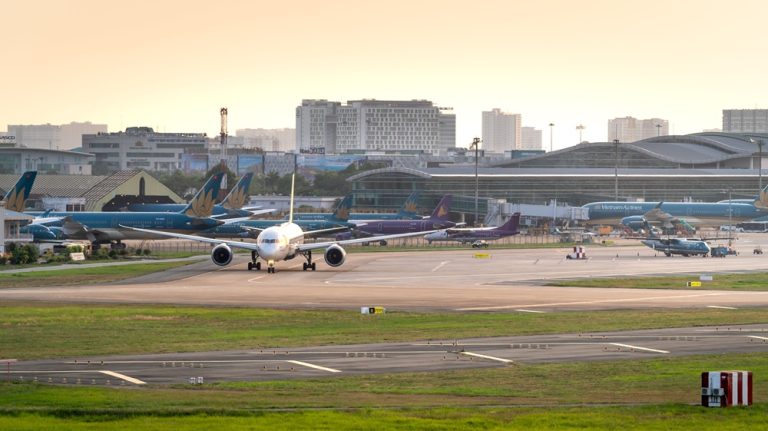
By air: Ho Chi Minh City is served by Tan Son Nhat International Airport (SGN), located only a few kilometres from the city centre. The airport handles international flights from across Asia and beyond as well as an extensive domestic network, making flying particularly convenient if you're arriving from Hanoi, Da Nang or another part of Vietnam. For a broader look at international flights, overland border crossings and your options for entering the country, see our How to Travel to Vietnam guide.
From Tan Son Nhat Airport to the city: The simplest option is usually a taxi or a ride booked through Grab, which allows you to see the estimated fare before confirming your journey. Public buses provide a cheaper alternative, although you may need an additional transfer or walk depending on where you're staying. The airport is geographically close to central Ho Chi Minh City, but traffic can make the journey considerably longer than the distance suggests, particularly during rush hour.
By train: Ho Chi Minh City sits at the southern end of Vietnam's North–South railway, with trains connecting Saigon Railway Station to destinations including Nha Trang, Da Nang, Hue and Hanoi. Rail travel is considerably slower than flying over long distances, but overnight trains can be a practical option and allow you to travel between cities without sacrificing an entire sightseeing day.
By bus: Long-distance buses and sleeper buses connect Ho Chi Minh City with destinations throughout southern and central Vietnam, including the Mekong Delta, Da Lat, Mui Ne and coastal cities farther north. International buses also operate between Ho Chi Minh City and Cambodia, particularly Phnom Penh. Journey times can be lengthy and arrival points vary between operators, so check exactly where your bus terminates before booking accommodation or planning onward transport.
If Ho Chi Minh City is one stop on a longer journey, our Getting Around Vietnam guide compares domestic flights, trains, buses, private transfers and other transport options to help you decide the best way to travel between destinations.
Getting Around Ho Chi Minh City
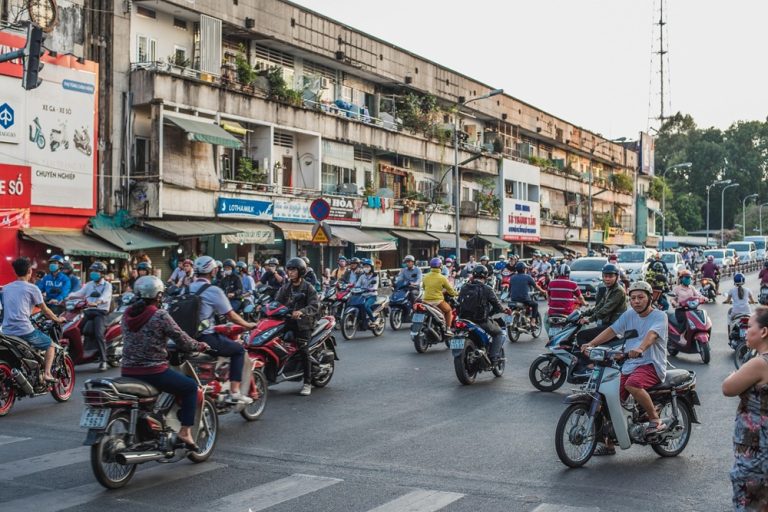
Getting around Ho Chi Minh City is relatively straightforward, but the sheer size of the city and its traffic mean you'll probably use several different forms of transport during your stay. Central District 1 is reasonably walkable, while ride-hailing services, the metro, buses and taxis make it easy to reach attractions and neighbourhoods farther away.
Walking: Many of the major sights in central Ho Chi Minh City can be explored on foot, particularly around District 1 and neighbouring parts of District 3. Nguyen Hue Walking Street, the Central Post Office, Notre-Dame Cathedral and several other attractions are relatively close together. As elsewhere in Vietnam, pavements aren't always reserved for pedestrians, and crossing busy roads can initially feel intimidating. Move steadily and predictably rather than suddenly stopping or changing direction in front of approaching motorbikes.
Grab: For most visitors, Grab is one of the easiest ways to travel around Ho Chi Minh City. The app lets you enter your destination and see the estimated fare before booking, avoiding much of the uncertainty involved in negotiating transport. GrabCar is useful when you want air-conditioning or are travelling with luggage, while GrabBike can be a quicker and cheaper way to cover shorter distances when traffic is heavy.
Taxis: Metered taxis remain widely available and can be convenient when you don't want to use an app. Stick to established taxi companies and make sure the meter is being used. For many international visitors, Grab is nevertheless simpler because the destination and approximate fare are established before the journey begins.
Metro: Ho Chi Minh City's first metro line has added a useful alternative to road transport. Metro Line 1 connects the central city with areas to the east, including stops around the rapidly developing former District 2 area and onward towards Thu Duc. It won't replace Grab or walking for every sightseeing journey, but it can be particularly useful when your destination lies close to the route and you want to avoid spending time sitting in road traffic.
Public buses: Ho Chi Minh City has an extensive and inexpensive bus network, making buses useful for budget travellers and longer stays. They're less immediately intuitive than Grab or the metro if you're visiting for only a few days, particularly when routes require transfers, but they can be an economical way to travel once you've worked out the journey you need.
Saigon Waterbus: The Saigon Waterbus combines practical transport with one of the city's more enjoyable sightseeing journeys. Its usefulness depends on where you're going, so it isn't a substitute for the wider transport network, but travelling along the Saigon River provides a welcome escape from road traffic and excellent views of the skyline.
Motorbikes: Motorbikes are unquestionably one of the fastest ways to move through Saigon, but renting one yourself isn't something you need to do simply because you're in Vietnam. The city's traffic can be overwhelming if you aren't accustomed to riding in dense Southeast Asian traffic. If you want the convenience of travelling by motorbike without riding yourself, GrabBike provides a much easier alternative.
Whatever transport you choose, don't judge journey times purely by distance. A destination that looks close on a map can take considerably longer to reach during busy periods, particularly when crossing between districts. Leave some flexibility in your schedule rather than planning attractions around unrealistically precise travel times.
If Ho Chi Minh City is part of a longer journey through the country, our Getting Around Vietnam guide explains the best ways to travel between cities and regions by plane, train, bus and other forms of transport.
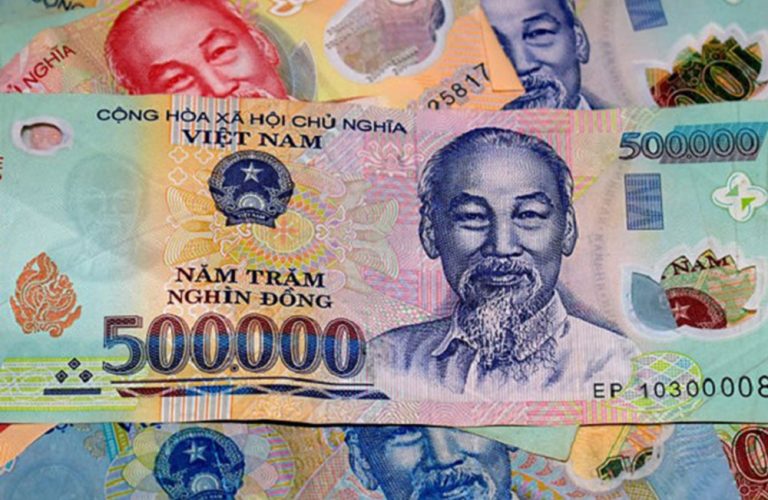
Ho Chi Minh City Travel Costs
Ho Chi Minh City remains an affordable destination by international standards, although how much you spend depends heavily on your accommodation, dining choices and the number of organised experiences you book. Street food, local restaurants and public transport can keep daily costs remarkably low, while the city also has enough luxury hotels, rooftop bars and high-end restaurants to accommodate a considerably larger budget.
Budget travellers can keep costs down by staying in hostels or inexpensive guesthouses, eating at street-food stalls and local restaurants and using buses, the metro or GrabBike to get around. Many of the pleasures of exploring Saigon cost very little, from wandering through Cholon and local markets to experiencing the city's coffee culture and evening street life.
Mid-range travellers will find particularly good value in Ho Chi Minh City. Comfortable hotels, excellent restaurants and GrabCars are relatively affordable, leaving room in the budget for entrance fees, cooking classes, food tours or excursions to the Cu Chi Tunnels and Mekong Delta without turning the trip into an expensive city break.
Higher-end travellers have an enormous range of options, including luxury hotels, fine dining, rooftop bars, private tours and premium river experiences. Ho Chi Minh City can certainly become expensive if you choose these regularly, but comparable experiences often cost considerably less than they would in many major international cities.
The biggest variable is likely to be how many tours and day trips you add. Exploring central Ho Chi Minh City independently is inexpensive, while several guided experiences, a Cu Chi excursion and a Mekong Delta trip can quickly become a significant part of your overall spending. Accommodation prices can also rise around major holidays and periods of particularly high demand.
For detailed daily budgets, accommodation ranges, food and transport prices and estimates for different travel styles, see our complete Vietnam Travel Budget guide.
Ho Chi Minh City Travel Tips & Practical Information
A little preparation makes exploring Ho Chi Minh City considerably easier, particularly during your first day or two while you're adjusting to the traffic, heat and relentless pace of the streets. These Ho Chi Minh City travel tips cover the practical details worth knowing before you arrive.
- Carry some Vietnamese dong: Cards are widely accepted at hotels, restaurants and larger businesses, but cash remains extremely useful for street food, markets, small cafés and local shops. Keep smaller notes accessible for inexpensive purchases, particularly when exploring markets or eating at street stalls.
- Cross the road steadily and predictably: Ho Chi Minh City's streams of motorbikes can initially make crossing even an ordinary street look impossible. Wait for a reasonable opportunity, move at a steady pace and avoid suddenly running, stopping or stepping backwards. Drivers and riders are accustomed to navigating around pedestrians whose movements they can anticipate.
- Keep mobile data available: Internet access is enormously useful in Ho Chi Minh City. You'll rely on it for maps, Grab, translation, restaurant searches and checking opening hours, particularly when moving between districts. If you don't want to buy a physical SIM after arriving, compare the options in our international eSIM guide before your trip.
- Use Grab or established taxi companies: Grab makes getting around particularly straightforward because your destination and estimated fare are established before the journey begins. If you use a conventional taxi, choose an established operator and make sure the meter is being used rather than accepting an unclear verbal fare.
- Protect yourself from the heat and rain: Ho Chi Minh City is hot and humid throughout much of the year, and tropical downpours can arrive quickly during the rainy season. Carry water, use sun protection and keep lightweight rain protection with you rather than assuming a clear morning guarantees a dry afternoon. Our Vietnam packing list covers what to bring for the country's different climates and regions.
- Be sensible with your phone and valuables: Busy streets, markets and nightlife areas deserve the same precautions you'd take in any major city. Avoid standing directly beside the road absent-mindedly holding your phone towards passing traffic, keep bags secure in crowded places and don't carry more cash than you reasonably need for the day.
- Dress respectfully at religious sites: If you're visiting the Jade Emperor Pagoda or other temples and pagodas, wear clothing appropriate for an active place of worship. Carrying something lightweight that covers your shoulders and knees makes it easy to adjust your clothing when necessary without dressing for temples throughout an entire hot day of sightseeing.
- Don't treat travel insurance as a substitute for sensible decisions: Medical treatment, lost belongings, cancellations and unexpected disruptions can become expensive when you're travelling overseas. Appropriate cover is particularly important if your trip involves activities such as riding a motorbike, but always check the policy conditions and exclusions rather than assuming every activity is automatically covered. Our travel insurance guide explains what to consider when comparing policies.
- Check your visa requirements before travelling: Vietnam's entry requirements depend on your nationality, length of stay and circumstances of your trip. Requirements can change, so don't rely on outdated information or assume that what applied to a previous visit still applies. Use our Vietnam Visa Guide when preparing for your journey and verify the current requirements before departure.
Most importantly, don't try to understand Ho Chi Minh City within your first few hours. The traffic, heat, noise and sheer amount of activity can initially feel overwhelming, but navigating Saigon becomes considerably easier once you understand its rhythm. For more advice on money, connectivity, transport, etiquette and preparing for your journey, see our complete Vietnam Travel Tips.
Final Thoughts on the Best Things to Do in Ho Chi Minh City
Ho Chi Minh City can be overwhelming at first. The traffic seems endless, the heat can be relentless and there is always something happening around you. Give it a little time, however, and that intensity becomes one of the reasons Saigon is such an exciting place to explore.
The city's history is impossible to ignore, from the War Remnants Museum and Independence Palace to Cholon and buildings that reflect very different periods of its past. But some of the most memorable things to do in Ho Chi Minh City are much less formal: eating on the street, discovering an unexpected café, watching the city from the Saigon River or simply wandering through a neighbourhood with no particular attraction in mind.
Three days gives you enough time to experience the city properly, while a longer stay opens the door to the Cu Chi Tunnels and Mekong Delta. However long you have, resist the temptation to treat Ho Chi Minh City purely as a collection of sights to tick off. Leave some room for the city itself.
If you're travelling north as well, don't miss our guide to discovering Hanoi and Vietnam's historic capital. And if Saigon is only one stop on a longer journey, there is considerably more waiting beyond both cities. From the mountains and limestone landscapes of the north to the historic towns and beaches of Central Vietnam, our guide to exploring more of Vietnam will help you decide where to go next.
Explore More of Vietnam
Ho Chi Minh City is only one part of a much bigger Vietnam journey. If you're planning to explore more of the country, continue with these WorldlyRoaming destination guides:
- Things to Do in Hanoi – temples, street food and the energy of Vietnam's capital.
- Things to Do in Ninh Binh – limestone landscapes, river journeys and countryside scenery.
- Things to Do in Da Nang – beaches, city life and a convenient base for exploring central Vietnam.
- Things to Do in Hoi An – Ancient Town, local food and the surrounding countryside.
- Things to Do in Nha Trang – beaches, island hopping, cultural sights and coastal experiences.
For the bigger picture, start with our Things to Do in Vietnam guide.
Frequently Asked Questions About Things to Do in Ho Chi Minh City
- What are the best things to do in Ho Chi Minh City?
The best things to do in Ho Chi Minh City include visiting the War Remnants Museum and Independence Palace, seeing Notre-Dame Cathedral and the Central Post Office, exploring Ben Thanh Market and Cholon, discovering the city's street-food and coffee culture and experiencing Saigon after dark. If you have extra time, the Cu Chi Tunnels and Mekong Delta are the two most popular day trips from the city.
- What are the must-see attractions in Ho Chi Minh City?
For a first visit, the War Remnants Museum, Independence Palace, Saigon Central Post Office, Notre-Dame Cathedral, Ben Thanh Market and Cholon are among the must-see attractions in Ho Chi Minh City. Nguyen Hue Walking Street and the Saigon River are also worth experiencing, particularly towards the end of the day.
- What can you do in Ho Chi Minh City in one day?
With one day in Ho Chi Minh City, concentrate on the historic centre. Visit the War Remnants Museum and Independence Palace, continue to Notre-Dame Cathedral and the Central Post Office and explore Ben Thanh Market or Nguyen Hue Walking Street. Finish with Vietnamese street food, a rooftop view or an evening exploring Saigon after dark.
- How many days do you need in Ho Chi Minh City?
Three days is ideal for most first-time visitors to Ho Chi Minh City. This gives you enough time for the major historical attractions, markets, Cholon, food and coffee culture and an evening exploring the city. Stay four or five days if you also want to visit the Cu Chi Tunnels and Mekong Delta without rushing your time in Saigon.
- Is Ho Chi Minh City worth visiting?
Yes. Ho Chi Minh City is worth visiting for its combination of Vietnamese history, street food, markets, coffee culture, nightlife and constantly changing urban landscape. It also provides an excellent base for visiting the Cu Chi Tunnels and experiencing the Mekong Delta.
- What are the best things to do in Ho Chi Minh City at night?
Some of the best things to do in Ho Chi Minh City at night include exploring the evening street-food scene, walking along Nguyen Hue Walking Street, visiting bars and live-music venues and seeing the illuminated skyline from a rooftop bar. Bui Vien Walking Street offers the city's loudest tourist nightlife, although there are plenty of more relaxed alternatives elsewhere.
- What are the best free things to do in Ho Chi Minh City?
Free things to do in Ho Chi Minh City include walking along Nguyen Hue Walking Street, exploring Cholon, browsing local markets, seeing the exterior of Notre-Dame Cathedral and wandering through different neighbourhoods. Exploring the city's street life after dark is also one of the best ways to experience Saigon without spending anything.
- What are the best places to visit in Ho Chi Minh City for history?
The War Remnants Museum and Independence Palace are two of the most important historical places to visit in Ho Chi Minh City. Cholon provides another perspective on the city's past and Chinese-Vietnamese heritage, while the Central Post Office and Notre-Dame Cathedral reflect the architectural legacy of the French colonial period.
- What are the best day trips from Ho Chi Minh City?
The Cu Chi Tunnels and Mekong Delta are the two classic day trips from Ho Chi Minh City. Cu Chi provides insight into the underground tunnel network used during the Vietnam War, while a Mekong Delta day trip introduces you to the rivers, canals, villages and agricultural landscapes of southern Vietnam.
- Can you visit the Cu Chi Tunnels from Ho Chi Minh City in one day?
Yes. The Cu Chi Tunnels are around 60 kilometres northwest of central Ho Chi Minh City and can easily be visited as a half-day or longer excursion. Guided tours are popular because the historical explanations provide valuable context for understanding the tunnel network and the role it played during the Vietnam War.
- Can you visit the Mekong Delta from Ho Chi Minh City in one day?
Yes. My Tho and Ben Tre are among the most accessible parts of the Mekong Delta for a day trip from Ho Chi Minh City. A one-day excursion provides an introduction to the region's waterways, canals and rural landscapes, although staying overnight allows you to travel farther into the Delta and experience it at a slower pace.
- What is the best area to stay in Ho Chi Minh City?
District 1 is the best area to stay in Ho Chi Minh City for most first-time visitors because many major attractions, restaurants and nightlife venues are nearby. District 3 is a good alternative if you want to remain central with a somewhat more local atmosphere, while Thao Dien suits travellers looking for a more relaxed neighbourhood and a longer stay.
- Is District 1 the best place to stay in Ho Chi Minh City?
District 1 is usually the most convenient place to stay for a first trip to Ho Chi Minh City. It puts you close to many of the city's best-known sights and provides an enormous choice of restaurants, cafés, hotels and nightlife. However, travellers wanting a less tourist-oriented base may prefer District 3.
- What is the best time to visit Ho Chi Minh City?
The best time to visit Ho Chi Minh City is generally from December to April, during the dry season. December through February usually provides particularly comfortable conditions for sightseeing, while March and April remain relatively dry but become hotter. The rainy season from May to November can still be a good time to visit because downpours are often intense but relatively short.
- How do you get around Ho Chi Minh City?
Walking works well for parts of District 1 and District 3, while Grab is one of the easiest ways to travel longer distances. Ho Chi Minh City also has taxis, public buses, Metro Line 1 and the Saigon Waterbus. GrabBike can be particularly efficient in heavy traffic if you're comfortable travelling as a motorbike passenger.
- Is Ho Chi Minh City walkable?
Central Ho Chi Minh City is reasonably walkable, particularly around the major attractions in District 1, but the city as a whole is far too large to explore entirely on foot. Combining walking with Grab, the metro or other public transport is generally the most practical approach.
- Is Ho Chi Minh City expensive to visit?
No. Ho Chi Minh City remains relatively affordable by international standards, particularly if you eat local food, use inexpensive transport and choose budget or mid-range accommodation. Costs increase significantly if you stay in luxury hotels, visit rooftop bars regularly or add multiple guided tours and day trips.
- Is Ho Chi Minh City or Hanoi better for first-time visitors?
Both cities are worth visiting and offer very different experiences. Hanoi has a more traditional atmosphere, a compact historic centre and easy access to northern Vietnam, while Ho Chi Minh City feels larger, faster and more modern. If your itinerary allows, visiting both provides a much better understanding of how diverse Vietnam really is.
- Is Ho Chi Minh City the same as Saigon?
Saigon and Ho Chi Minh City generally refer to the same city. Saigon was officially renamed Ho Chi Minh City after the end of the Vietnam War in 1975, although the name Saigon remains widely used today, particularly when referring to the central city and in everyday conversation.
- What should you not miss in Ho Chi Minh City?
Don't leave Ho Chi Minh City without experiencing both its historical attractions and everyday street life. The War Remnants Museum and Independence Palace provide essential historical context, but make time for street food, Vietnamese coffee, a local market and an evening exploring Saigon after dark as well.
Travel Resources to Plan, Book & Stay Connected
Use these tools and guides to stay connected abroad, find inspiration for your next trip, and book your flights, stays and gear with confidence.
Disclosure: This article may contain affiliate links. If you make a purchase through a link, I may receive a commission at no extra cost to you. I only share recommendations I believe are genuinely useful, and all opinions are my own. AI was used in this post for research and drafting purposes.

Comment (0)