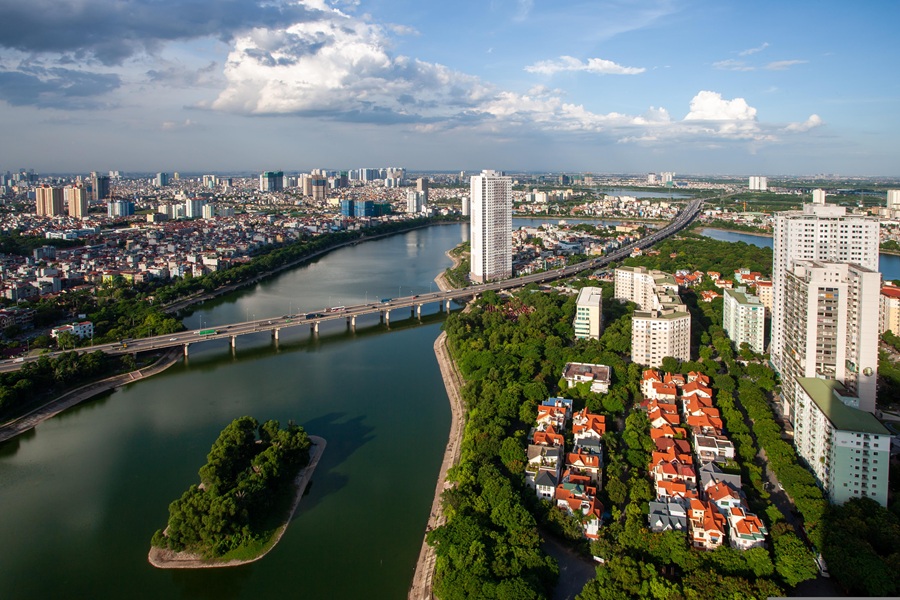
Things to Do in Hanoi at a Glance
Hanoi is a city best experienced slowly, mixing famous landmarks with atmospheric neighbourhoods, incredible food and the everyday street life that makes Vietnam's capital so memorable. If you're wondering what to do in Hanoi, these are the essentials to help you start planning your visit.
- Best things to do in Hanoi: Explore the Old Quarter, walk around Hoan Kiem Lake, visit the Temple of Literature, discover the Ho Chi Minh Mausoleum Complex and experience Hanoi's famous Train Street.
- Best for first-time visitors: The Old Quarter puts you within walking distance of many major Hanoi attractions, restaurants, cafés, markets and nightlife.
- How long to spend in Hanoi: Three days is ideal for most first-time visitors, giving you enough time to see the main sights while still experiencing the city's food, coffee and street culture.
- Best time to visit: October to April generally brings cooler and more comfortable conditions for exploring Hanoi on foot, although each season has its advantages.
- Getting around: Much of central Hanoi is walkable, while Grab, taxis and local buses make it easy to cover longer distances.
- Don't miss: Go beyond sightseeing by trying Hanoi's street food, drinking traditional egg coffee and watching a water puppet performance.
- Best trips from Hanoi: Ninh Binh and Ha Long Bay are among the easiest additions, while Sapa and Ha Giang are better explored with several days available.
Hanoi is also an excellent starting point for a wider journey through the country. Explore my Things to Do in Vietnam guide for more destinations and experiences, or use my Vietnam itinerary to work Hanoi into a longer route.
If you're still deciding which destinations to use as bases during your trip, my Where to Stay in Vietnam guide compares the country's main destinations and who each one suits best.
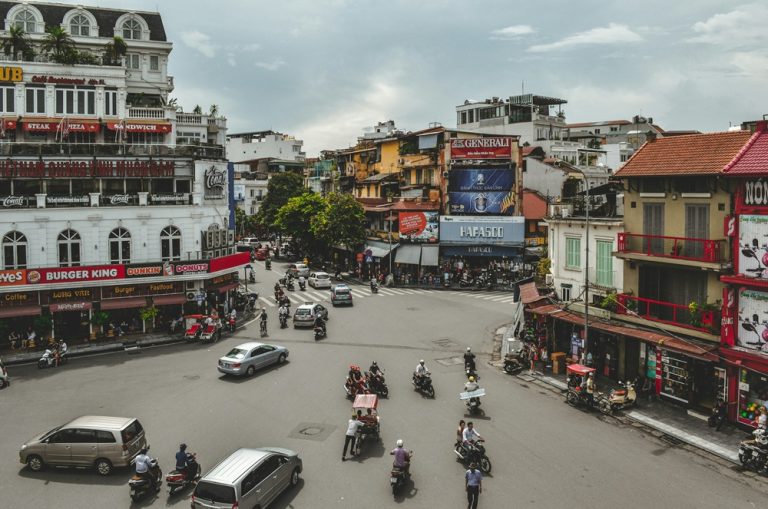
Things to Do in Hanoi: Why Vietnam's Capital Is Worth Visiting
Hanoi is one of those cities that doesn't reveal itself all at once. Vietnam's capital can feel wonderfully chaotic at first, with streams of scooters flowing through narrow streets, vendors preparing food on the pavement and tiny cafés tucked between centuries-old shophouses. Spend a little time exploring, however, and you'll discover a city where tranquil lakes, ancient temples, colonial architecture and deeply rooted traditions exist alongside the constant energy of modern Vietnamese life.
Many of the best things to do in Hanoi are concentrated around its historic centre. You can lose yourself among the narrow streets of the Old Quarter, walk around peaceful Hoan Kiem Lake, visit the Temple of Literature, explore important historical sites and discover pagodas hidden away from the busiest streets. Yet some of Hanoi's greatest pleasures aren't conventional attractions at all. Sitting down for a bowl of pho, trying the city's famous egg coffee or simply watching everyday life unfold from a pavement café can be every bit as memorable as visiting its major landmarks.
Hanoi is also an exceptional city for travellers who enjoy food and culture. Northern Vietnamese cuisine has a distinctive character, bustling markets offer a glimpse into local life, and traditional experiences such as water puppetry provide another window into the city's heritage. Even wandering without a particular destination can be rewarding, especially in neighbourhoods where temples, street kitchens, cafés and old architecture appear around almost every corner.
With so many things to see in Hanoi, it's worth allowing enough time to experience the city rather than treating it simply as the gateway to Ha Long Bay, Ninh Binh, Sapa or Ha Giang. Two days will introduce you to the highlights, but three days gives you a much better opportunity to combine sightseeing with the food, coffee and street life that give Hanoi its distinctive personality.
This Hanoi travel guide brings all of those experiences together. We'll begin with the essential sights and attractions, continue with some of the most memorable things to do in Hanoi beyond traditional sightseeing, and then cover the practical information you need to plan your visit Hanoi with confidence.
The Best Things to Do in Hanoi
If you're wondering what to do in Hanoi, the city's greatest strength is the variety packed into a relatively compact area. Centuries-old temples and historic neighbourhoods sit alongside fascinating museums, peaceful lakes and remnants of Vietnam's imperial and colonial past, while the constant activity of the streets ensures that simply moving between Hanoi attractions often becomes part of the experience itself.
Many of the best things to do in Hanoi are concentrated in and around the historic centre, making it possible to explore several major sights on foot. The Old Quarter and Hoan Kiem Lake provide an excellent introduction to the city, while landmarks such as the Temple of Literature, Ho Chi Minh Mausoleum Complex and Imperial Citadel of Thang Long reveal different chapters of Hanoi's long and complex history.
But the things to see in Hanoi aren't limited to grand monuments. Small temples, tree-lined lakes, atmospheric streets and reminders of the city's turbulent past all contribute to its character. Some Hanoi points of interest require several hours to appreciate properly, while others are best experienced as part of a leisurely walk through the surrounding neighbourhood.
The attractions below provide a balanced introduction to Vietnam's capital, combining its most important historical and cultural landmarks with places that capture the distinctive atmosphere of the city. You don't need to rush through all of them simply to tick them off a list; choose the places that interest you most and leave enough time to experience Hanoi between the sights.
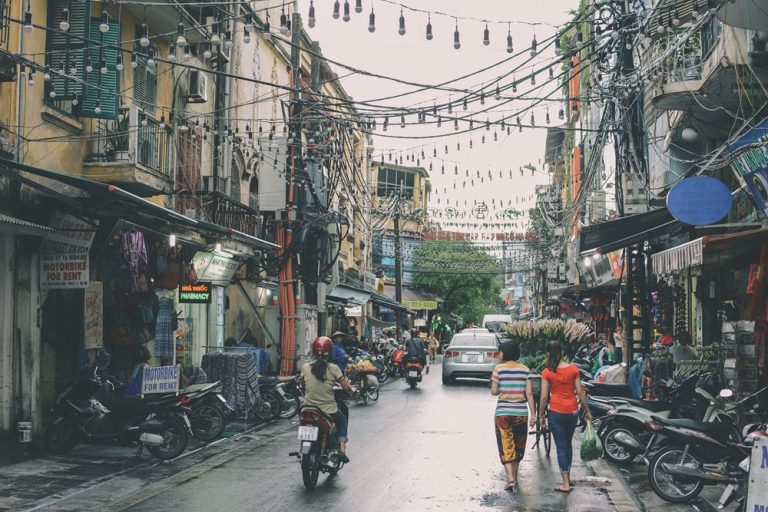
Explore Hanoi's Old Quarter
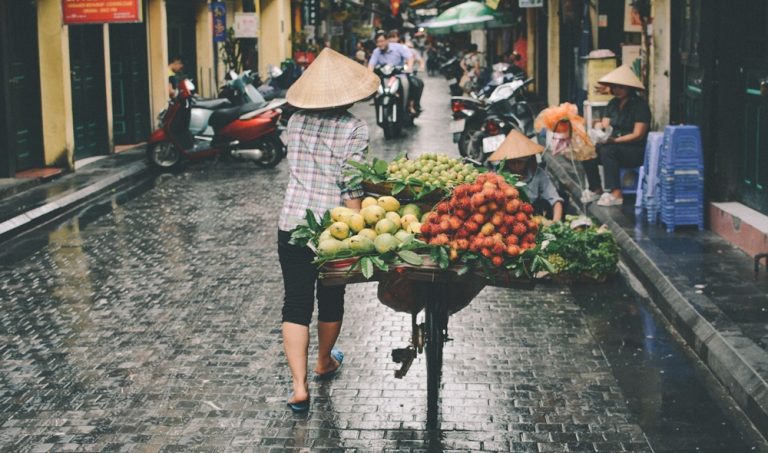
If you want to understand what makes Hanoi such a fascinating city, the Old Quarter is the place to begin. This historic neighbourhood is a maze of narrow streets where traditional shophouses, temples and markets sit alongside cafés, restaurants and tiny street-food stalls. Scooters weave through seemingly impossible gaps, vendors sell everything from fresh fruit to household goods on the pavements, and daily life unfolds around you at almost every turn.
The Old Quarter developed as Hanoi's historic commercial centre, with many streets traditionally associated with particular trades and crafts. Although the neighbourhood has changed enormously over the centuries, you can still see traces of that heritage while wandering streets filled with jewellery shops, traditional medicines, textiles, religious goods and local food. Rather than following a rigid sightseeing route, one of the best things to do in Hanoi is simply explore these streets on foot and see where they lead you.
There are plenty of individual Hanoi attractions scattered throughout the area, but the Old Quarter is really an experience in itself. Stop for a bowl of pho or bún chả, squeeze into a tiny café, browse Dong Xuan Market, discover a small temple hidden between shopfronts or find a seat somewhere and watch the extraordinary rhythm of the streets. The neighbourhood becomes particularly atmospheric towards evening, when food stalls become busier and parts of the area fill with people eating, drinking and socialising.
Its central location also makes the Old Quarter one of the most convenient places to visit in Hanoi at the beginning of your stay. Hoan Kiem Lake lies immediately to the south, while many of the city's other important sights can be reached on foot or with a short Grab ride. Even if you stay elsewhere in Hanoi, you'll almost certainly find yourself returning to the Old Quarter more than once.
Wander through historic streets, bustling markets and hidden corners while discovering the food, culture and everyday life that make Hanoi's Old Quarter unforgettable.
WorldlyRoaming Tip: Don't try to navigate the Old Quarter entirely with your phone in front of you. Choose a general direction, wander down the smaller streets and allow yourself to get a little lost. Some of the neighbourhood's most memorable cafés, food stalls and slices of everyday Hanoi life are found when you're not following a sightseeing checklist.
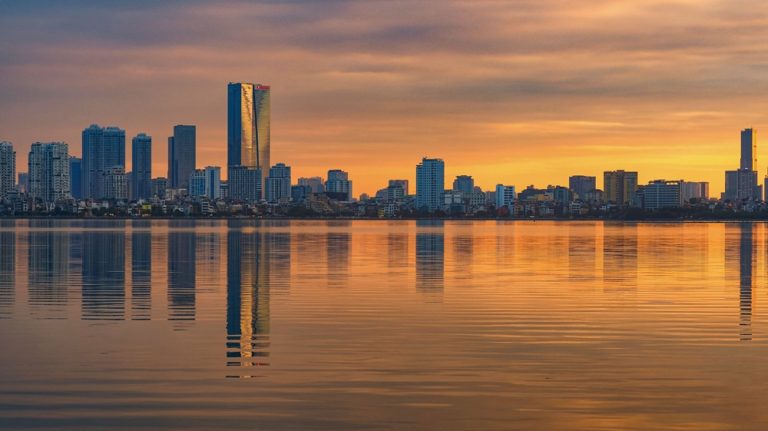
Walk Around Hoan Kiem Lake
At the southern edge of the Old Quarter, Hoan Kiem Lake provides a welcome change of pace from Hanoi's crowded streets. Tree-lined paths circle the water, locals gather along the waterfront and some of the city's most recognisable landmarks rise from and around the lake. Its central location and distinctive atmosphere make it one of the essential things to see in Hanoi.
The lake's name translates as the Lake of the Returned Sword, referring to a famous Vietnamese legend involving Emperor Lê Lợi and a magical sword returned to a golden turtle after defeating Chinese forces in the 15th century. That story remains closely connected to the lake, with the small Turtle Tower standing on an island near its southern end as one of Hanoi's most familiar sights.
A complete walk around Hoan Kiem Lake is relatively easy and gives you a chance to experience a more relaxed side of central Hanoi. Early in the morning, the waterfront fills with residents exercising, practising tai chi and beginning their day, while evenings bring couples, families and groups of friends out to enjoy the cooler air. On weekends, surrounding streets are often transformed into pedestrian areas, creating an especially lively atmosphere around the lake.
Hoan Kiem Lake is also surrounded by cafés, restaurants and several important Hanoi attractions, making it an excellent point from which to continue exploring the historic centre. On its northern side, the striking red Huc Bridge leads across the water to Ngoc Son Temple, which we'll explore next.
Explore the historic heart of Hanoi, from the peaceful shores of Hoan Kiem Lake to the fascinating streets, landmarks and local culture surrounding it.
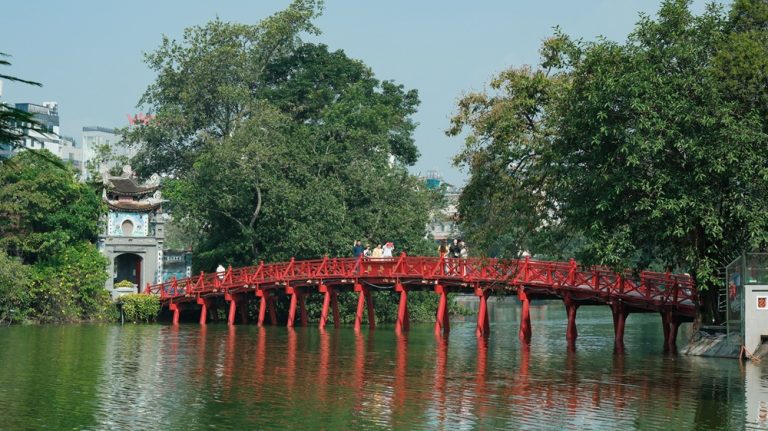
Visit Ngoc Son Temple
Sitting on a small island in the northern part of Hoan Kiem Lake, Ngoc Son Temple is one of the most distinctive Hanoi attractions and an easy addition while exploring the historic centre. Reached by crossing the bright red The Huc Bridge, the temple provides a peaceful contrast to the busy streets of the nearby Old Quarter.
Ngoc Son Temple, meaning Temple of the Jade Mountain, dates largely from the 19th century and is dedicated to several important figures from Vietnamese history and spiritual tradition. Among them is General Tran Hung Dao, celebrated for leading Vietnamese forces against Mongol invasions during the 13th century. The temple complex combines religious significance with traditional Vietnamese architecture, decorative gateways, courtyards and views across the lake.
One of the more unusual things to see inside is a preserved giant turtle associated with the legend of Hoan Kiem Lake. According to the story, Emperor Lê Lợi returned a magical sword to a golden turtle in the lake after defeating occupying forces, giving Hoan Kiem its name, the Lake of the Returned Sword. The turtle has consequently become an important symbol connected with both the lake and Hanoi itself.
Ngoc Son Temple doesn't require a long visit, but its location, history and setting make it one of the most rewarding Hanoi points of interest to combine with a walk around Hoan Kiem Lake. Take some time to admire the temple itself before looking back across the water towards the surrounding city and the red bridge connecting this small historic sanctuary with the heart of modern Hanoi.
Cross the iconic red The Huc Bridge and explore Ngoc Son Temple while discovering the legends, history and cultural landmarks surrounding Hoan Kiem Lake.
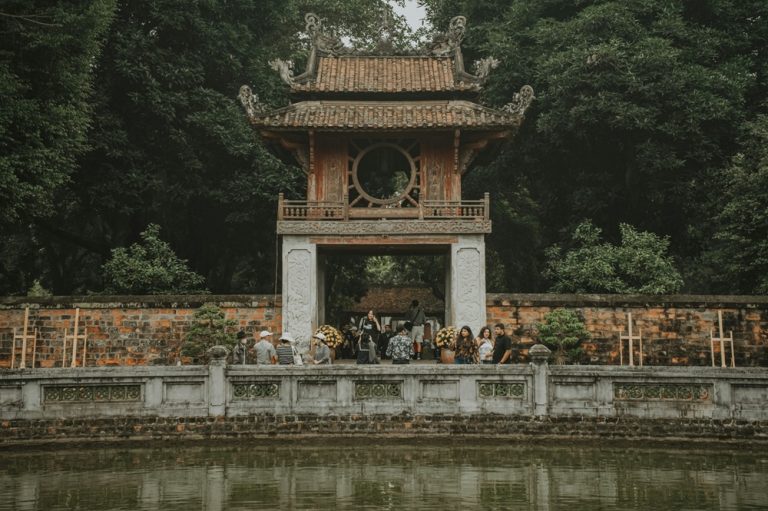
Discover the Temple of Literature
Founded in 1070, the Temple of Literature is one of Hanoi's most important historical and cultural landmarks. Originally established as a temple dedicated to Confucius, the complex later became closely associated with the Imperial Academy, founded in 1076 and widely regarded as Vietnam's first national university. For travellers interested in the country's history, architecture and traditions, it is one of the most rewarding places to visit in Hanoi.
Known in Vietnamese as Văn Miếu, the complex feels remarkably peaceful compared with the traffic-filled streets outside its walls. A series of five courtyards leads through landscaped gardens, traditional gateways and ceremonial spaces, creating a setting that encourages you to slow down rather than rush from one monument to another. The architecture also offers an excellent introduction to traditional Vietnamese design and Confucian symbolism.
Among the most fascinating things to see in Hanoi are the temple's stone doctoral stelae. Mounted on the backs of carved stone turtles, they record the names and achievements of scholars who successfully completed royal examinations during Vietnam's imperial era. The surviving stelae provide a tangible connection to the enormous importance traditionally placed on scholarship and education in Vietnamese society.
The Khue Van Cac pavilion, with its distinctive red wooden structure and circular windows, has become one of the most recognisable symbols of Hanoi. Continue through the complex and you'll reach the ceremonial areas dedicated to Confucius and his disciples as well as buildings associated with the Imperial Academy. Together, they make the Temple of Literature much more than another stop on a circuit of Hanoi attractions: it is one of the best places in the city to understand the intellectual and cultural traditions that shaped Vietnam for centuries.
Explore one of Hanoi's most important historic landmarks and uncover the stories, architecture and traditions behind Vietnam's first national university.
WorldlyRoaming Tip: Visit earlier in the morning if you can. The courtyards and gardens are far more enjoyable when they're quieter, and you'll have more time to notice the architectural details rather than simply following the flow of larger tour groups.
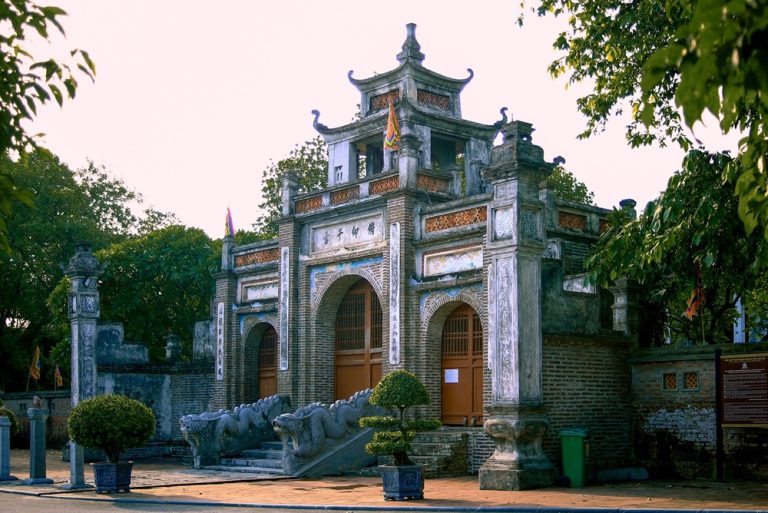
Visit the Ho Chi Minh Mausoleum Complex
Few Hanoi attractions carry as much historical and symbolic importance as the Ho Chi Minh Mausoleum Complex. Located around Ba Dinh Square, the site commemorates Ho Chi Minh, the revolutionary leader who played a central role in the creation of modern Vietnam. Whether or not you're particularly interested in political history, visiting the complex provides valuable context for understanding the country you're travelling through.
The imposing Ho Chi Minh Mausoleum dominates the square and contains the preserved body of Ho Chi Minh. The atmosphere inside is solemn, with visitors expected to remain quiet and follow instructions from guards. Photography is restricted inside the mausoleum, and respectful clothing and behaviour are essential. The experience itself is relatively brief, but seeing the importance attached to the site by Vietnamese visitors is as interesting as the monument itself.
Ba Dinh Square is historically significant in its own right. It was here on 2 September 1945 that Ho Chi Minh proclaimed the independence of the Democratic Republic of Vietnam. Today, the enormous open square remains one of the country's most important ceremonial spaces and provides a striking contrast to the densely packed streets found elsewhere in central Hanoi.
Allow additional time to explore the surrounding complex rather than visiting only the mausoleum. The grounds include the distinctive yellow Presidential Palace and the much simpler Ho Chi Minh Stilt House, where Ho Chi Minh lived and worked for part of his presidency. The modest wooden house, gardens and nearby pond provide a very different atmosphere from the monumental architecture facing Ba Dinh Square.
Nearby, you'll also find the One Pillar Pagoda, one of the most recognisable religious landmarks among the things to see in Hanoi. Originally founded in the 11th century, the small pagoda is designed to rise above the water on a single pillar, resembling a lotus flower emerging from a pond. Its compact size means the visit doesn't take long, but its unusual architecture makes it an easy addition while exploring the wider mausoleum complex.
Together, these sites make the Ho Chi Minh Mausoleum Complex one of the most significant Hanoi tourist attractions for understanding Vietnam's modern history. Give yourself enough time to explore the wider grounds rather than arriving simply to see the mausoleum and immediately moving on.
Discover Ba Dinh Square, the mausoleum and surrounding historic landmarks while learning more about Ho Chi Minh and the events that shaped modern Vietnam.
WorldlyRoaming Tip: Check the mausoleum's current opening schedule before planning your visit, as access is limited to specific days and morning hours and can occasionally be suspended for official events or maintenance. Arrive early, dress respectfully with shoulders and knees covered, and expect security checks before entering.
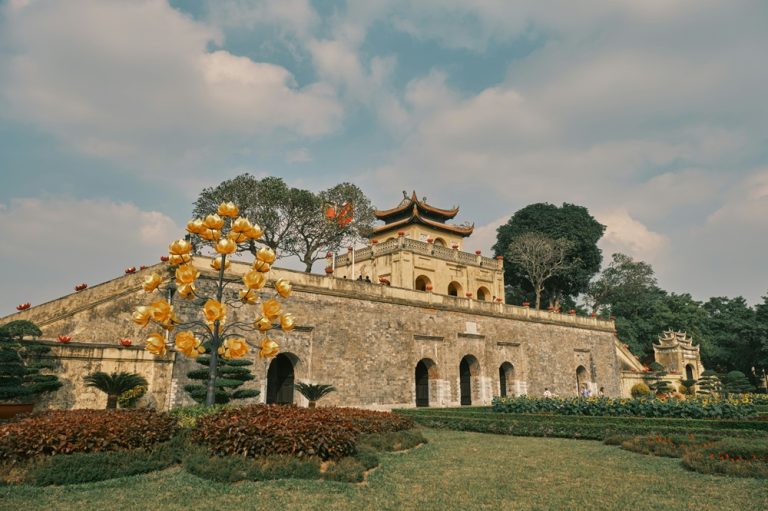
Explore the Imperial Citadel of Thang Long
The Imperial Citadel of Thang Long reveals a much older chapter of Hanoi's history. For centuries, this area served as the political heart of the country, with successive Vietnamese dynasties building their royal and administrative centres here. Today, the surviving monuments and archaeological remains make the citadel one of the most historically important Hanoi points of interest.
Thang Long became the capital of the Đại Việt kingdom in the early 11th century, although evidence uncovered at the site reaches even further into the past. The imperial centre continued to play a major political role for centuries, creating layers of buildings, foundations and artefacts from different periods of Vietnamese history. Its exceptional historical importance led to the Central Sector of the Imperial Citadel of Thang Long being inscribed as a UNESCO World Heritage Site in 2010.
One of the most impressive surviving structures is the Doan Mon Gate, which once provided access to the Forbidden City reserved for the emperor and royal family. You can also see the Hanoi Flag Tower, historic buildings from later periods and extensive archaeological excavations that have uncovered palace foundations, ancient roads, drainage systems, ceramics and other traces of the imperial city that once stood here.
The citadel also played a role in Vietnam's much more recent history. Buildings within the complex were used by the Vietnamese military during the 20th century, and visitors can explore areas connected with the country's wars against France and the United States. This combination of imperial archaeology and modern military history makes the site particularly interesting because several very different periods of Hanoi's past occupy the same historic ground.
Unlike some of Asia's grand surviving palace complexes, much of the original imperial city has disappeared, so the Imperial Citadel is best visited for the history and archaeology rather than sheer visual spectacle. Take time to explore the exhibits and archaeological remains instead of simply photographing the surviving gates. For travellers interested in understanding how Hanoi developed from an imperial capital into the city it is today, it is one of the most rewarding things to see in Hanoi.
Explore the Imperial Citadel of Thang Long and uncover centuries of royal history, archaeology and landmarks at the historic heart of Vietnam's capital.
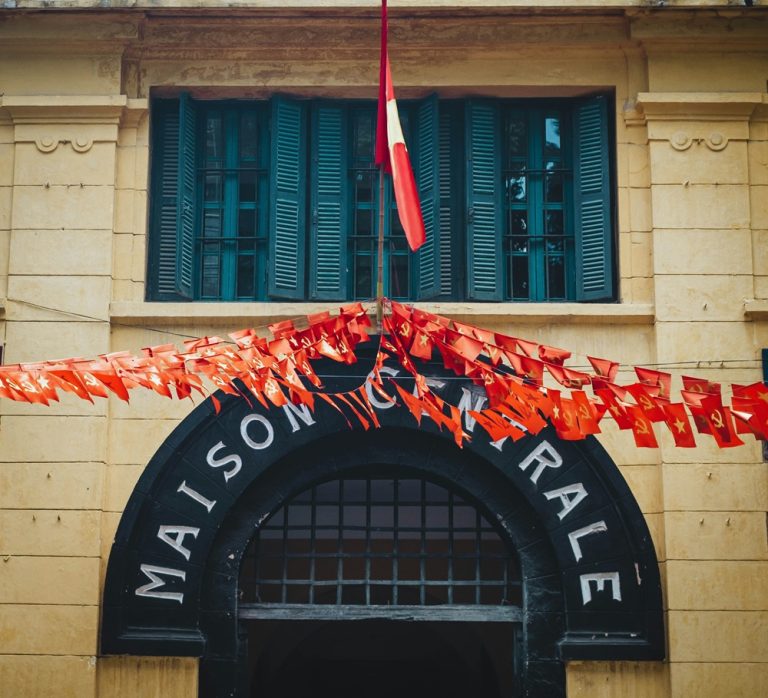
Visit Hoa Lo Prison
For a much darker perspective on Hanoi's history, visit Hoa Lo Prison, a former colonial prison that has been transformed into one of the city's most thought-provoking museums. Originally built by the French colonial authorities in the late 19th century, the prison was designed to incarcerate Vietnamese political prisoners and revolutionaries who resisted French rule.
The surviving section of the prison now forms the Hoa Lo Prison Museum. Exhibits recreate cramped cells and detention areas while displaying photographs, documents and personal objects connected with former prisoners. Particularly confronting sections examine the treatment of Vietnamese political prisoners during the French colonial period, including the prison's original guillotine and accounts of executions, harsh conditions and attempts to escape.
Hoa Lo later became internationally known during the Vietnam War, when captured American pilots were imprisoned here and sarcastically nicknamed it the "Hanoi Hilton." Among its most famous prisoners was future U.S. senator and presidential candidate John McCain, whose flight suit and other objects associated with his captivity have been displayed at the museum. Much of the original prison had been demolished by the 1990s, so what you visit today represents only a portion of the much larger complex that once occupied the site.
What makes Hoa Lo particularly interesting among Hanoi sights is the opportunity to encounter history through the way it is presented and remembered. The museum's interpretation strongly reflects the Vietnamese perspective, particularly in its contrasting treatment of colonial imprisonment and American prisoners of war. Rather than treating every exhibit simply as a neutral historical account, pay attention to the language, photographs and stories chosen to tell each part of the prison's history. That perspective is itself an important part of understanding the museum.
Hoa Lo Prison isn't one of the more cheerful things to see in Hanoi, but it adds important historical context to a visit to the capital. Allow enough time to read the exhibits rather than simply walking through the surviving cells, particularly if you want to understand how the site connects Vietnam's colonial struggle with the much later war that made the prison famous internationally.
Discover the stories behind the infamous "Hanoi Hilton" and explore one of Hanoi's most powerful historical sites with deeper context from a guided experience.
WorldlyRoaming Tip: If you already know the American story of the "Hanoi Hilton," deliberately spend more time on the museum's French colonial sections. Hoa Lo existed for decades before American POWs arrived, and learning why it was built and who was originally imprisoned there completely changes the context of the site. Also keep an eye on how the different periods are presented—the museum itself offers an interesting lesson in how nations remember the same history differently.
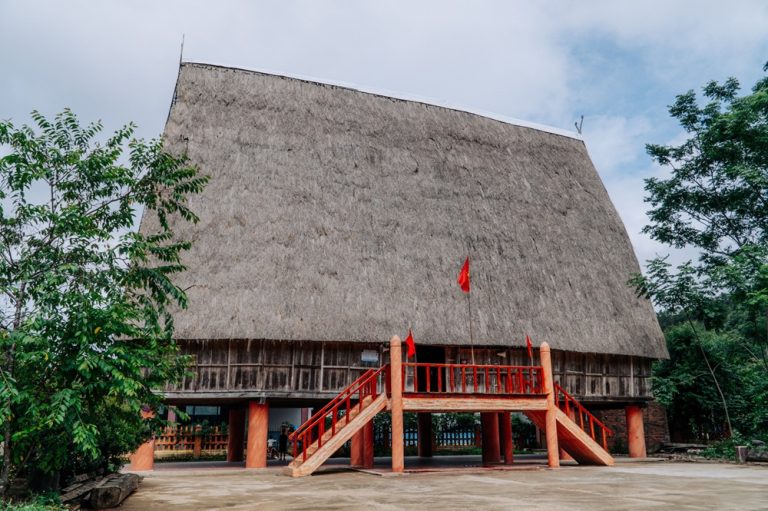
Discover the Vietnam Museum of Ethnology
For a broader understanding of the country beyond the capital, the Vietnam Museum of Ethnology is one of the most interesting Hanoi attractions to add to your itinerary. Vietnam is home to 54 officially recognised ethnic groups, and the museum explores the enormous diversity of their cultures, traditions and ways of life.
Inside the main exhibition spaces, you'll find traditional clothing, jewellery, household objects, agricultural tools, musical instruments and religious artefacts from communities across Vietnam. Photographs, videos and reconstructed scenes provide additional context, helping explain everything from marriage and funeral customs to festivals, spiritual beliefs and everyday village life.
One of the museum's highlights is its large outdoor architectural area, where full-scale traditional houses represent several of Vietnam's ethnic communities. You can walk around and, in some cases, enter structures ranging from communal houses to distinctive stilt homes, making the cultural differences much easier to appreciate than they would be through display cases alone.
The museum is particularly worthwhile if your Vietnam itinerary includes destinations such as Sapa or Ha Giang, where you'll encounter some of the ethnic communities represented in the exhibitions. Visiting beforehand gives useful context to the clothing, architecture and traditions you may later see while travelling through the country's mountainous north.
Because it lies outside Hanoi's main historic centre, the Vietnam Museum of Ethnology requires a little more effort to reach than many other Hanoi points of interest. However, travellers interested in Vietnamese culture rather than simply ticking off monuments will find it one of the most rewarding things to see in Hanoi, particularly because it helps explain just how culturally diverse Vietnam really is.
Explore the Vietnam Museum of Ethnology and discover the traditions, architecture and everyday life of the many ethnic communities that make up Vietnam.
See Tran Quoc Pagoda & West Lake
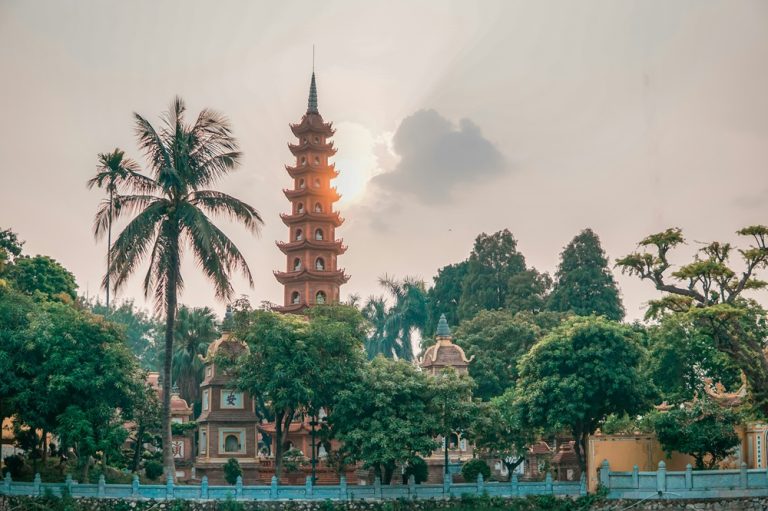
Set on a small peninsula extending into West Lake, Tran Quoc Pagoda offers one of the most photogenic religious settings in Hanoi. With a history stretching back more than 1,500 years, it is considered the oldest Buddhist temple in Hanoi and remains an active place of worship rather than simply another historic monument.
The pagoda's most recognisable feature is its tall red-brick stupa, whose multiple tiers rise above the surrounding trees and lake. Smaller shrines, statues, incense-filled prayer areas and a sacred bodhi tree complete the compact complex. Although Tran Quoc Pagoda doesn't require a great deal of time to explore, its combination of religious significance, architecture and waterside setting makes it one of the most distinctive things to see in Hanoi.
Remember that this remains a functioning Buddhist temple. Visitors should dress respectfully, speak quietly and avoid disturbing people who have come to worship. Taking a few moments to observe the religious activity around you makes the visit considerably more meaningful than simply arriving for a photograph of the pagoda.
Don't leave immediately after visiting the temple, because West Lake is worth exploring in its own right. Known locally as Hồ Tây, Hanoi's largest lake feels remarkably different from the tightly packed streets of the Old Quarter. Its long waterfront is surrounded by temples, cafés, restaurants and residential neighbourhoods, particularly around Tay Ho, which has also become one of Hanoi's most popular areas among international residents.
Combining Tran Quoc Pagoda with some time beside West Lake adds a quieter dimension to a day of Hanoi sightseeing. After visiting several museums and historical Hanoi attractions, the open water and slower pace provide a welcome opportunity to experience another side of the capital.
Visit Hanoi's ancient lakeside pagoda and discover its Buddhist heritage, beautiful architecture and place within the history of Vietnam's capital.
WorldlyRoaming Tip: Instead of treating Tran Quoc Pagoda as a quick photo stop, combine it with a walk along the narrow stretch of road separating West Lake and Truc Bach Lake. You'll see two very different lakes on either side and can continue into the surrounding neighbourhood for coffee or food, turning a short temple visit into a much more interesting exploration of this quieter part of Hanoi.
Experience Hanoi Train Street
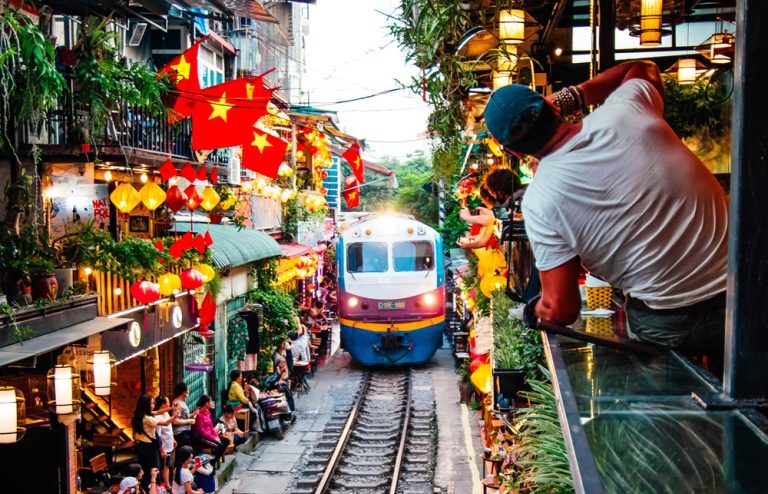
Few Hanoi attractions have become as instantly recognisable as Hanoi Train Street. Here, an active railway line squeezes through an extraordinarily narrow residential neighbourhood, passing so close to homes and cafés that tables and chairs have to be moved away from the tracks when a train approaches. What was once an unusual feature of everyday Hanoi life has become one of the city's most photographed tourist spots.
The railway dates from the French colonial period and still forms part of Hanoi's active rail network. Between trains, sections of the track are lined with small cafés where visitors come for coffee and wait for the unmistakable sound of an approaching locomotive. When one finally appears, the relaxed atmosphere changes quickly as everyone moves away from the railway and the train passes through the narrow corridor just metres away.
Seeing a train pass is undoubtedly one of the more unusual things to do in Hanoi, but Train Street is not an ordinary pedestrian attraction. Access to parts of the railway has repeatedly been restricted by the authorities because of safety concerns, and controls continue to change. Security personnel may restrict entry around scheduled train movements, while cafés operating beside the railway are expected to follow safety requirements. Never step onto the tracks when access is restricted or ignore instructions simply to get a photograph.
It's also worth remembering that this isn't a purpose-built tourist attraction. People live and work beside these tracks, and the railway existed long before social media transformed the neighbourhood into an international attraction. Enjoy a coffee, watch how the street prepares for the approaching train and experience the extraordinary proximity of the railway, but treat the residents and the active tracks with respect.
Plans for rail operations through central Hanoi are evolving, with authorities considering changes that could reduce passenger services through the famous railway café area. That makes it particularly important to check the latest local access arrangements and train information rather than relying on schedules or instructions published in older travel guides.
Discover one of Hanoi's most unusual neighbourhoods and experience the remarkable sight of an active train passing between the houses and cafés lining the railway.
WorldlyRoaming Tip: Don't build your entire afternoon around a train time copied from Google, TikTok or an old blog post. Train Street schedules and access arrangements can change, and Hanoi is currently considering changes to rail operations through the area. Treat seeing the train as a bonus: combine your visit with the nearby Old Quarter or another attraction so that a changed schedule or closed entrance doesn't leave you wasting half a day waiting beside the tracks.
Eat Your Way Through Hanoi's Street Food
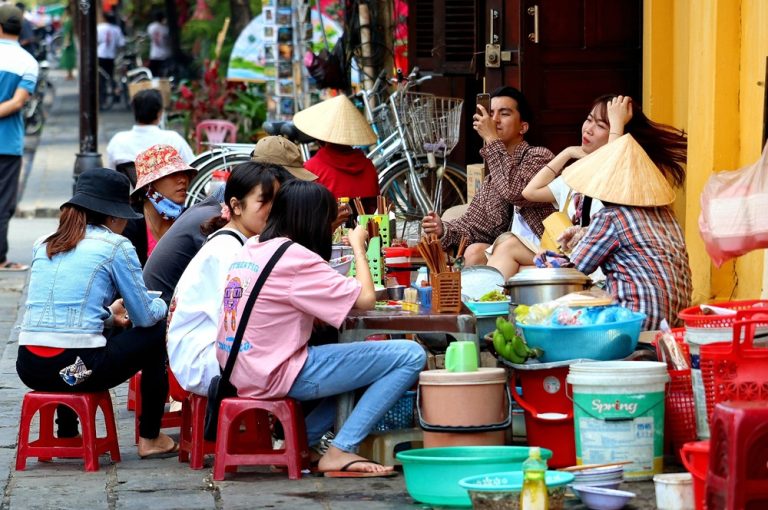
Some of the best things to do in Hanoi happen around a tiny plastic table with a bowl, a pair of chopsticks and the constant movement of the city unfolding around you. Street food is an essential part of experiencing Hanoi, and the capital is one of the best places in Vietnam to discover the flavours of northern Vietnamese cuisine.
Phở may be Vietnam's most internationally famous dish, but Hanoi's food scene extends far beyond noodle soup. Look out for bún chả, with grilled pork served alongside rice noodles, herbs and dipping sauce; bánh cuốn, delicate steamed rice rolls filled with seasoned minced pork and mushrooms; and chả cá, Hanoi's famous turmeric-marinated fish cooked with dill and spring onions.
Part of the experience is eating where Hanoi eats. Some of the city's most memorable meals come from simple family-run restaurants and street stalls specialising in just one or two dishes. A busy stall surrounded by local customers is often a much better indication of what's worth trying than an elaborate menu aimed specifically at tourists.
The Old Quarter is an obvious place to begin exploring Hanoi's street food, with countless stalls and small restaurants packed into its narrow streets. But don't restrict yourself to the most tourist-heavy lanes. Wander a little farther from the main visitor areas and you'll quickly find neighbourhood eateries where the emphasis is firmly on the food rather than the surroundings.
If you're unsure what to order or want to understand what you're eating rather than simply pointing at something that looks good, a Hanoi food tour can be particularly worthwhile. A local guide can introduce dishes you might otherwise overlook, explain how they're eaten and take you into small restaurants and street stalls that can be difficult to discover on your own.
Discover Hanoi through its street food, local specialities and hidden eateries with food and drink experiences that take you beyond the obvious tourist restaurants.
Try Hanoi's Famous Egg Coffee
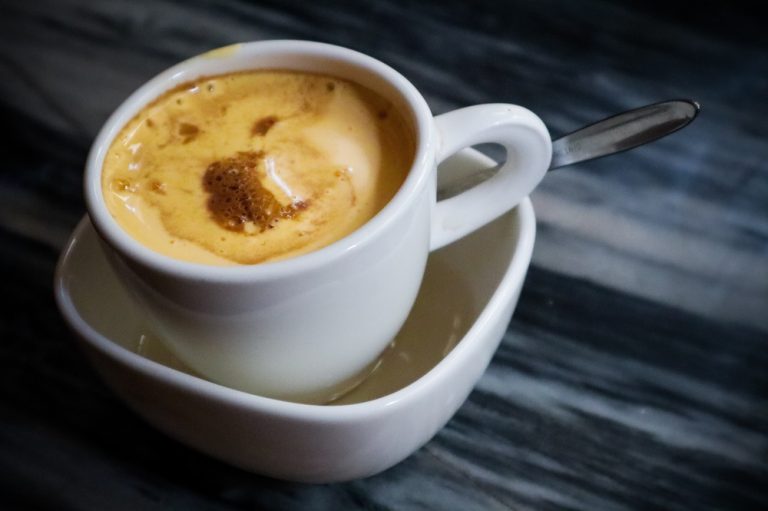
Hanoi takes its coffee seriously, and few drinks are more closely associated with the capital than cà phê trứng, or Vietnamese egg coffee. Created in Hanoi in the 1940s, the drink combines strong Vietnamese coffee with a thick, sweet mixture traditionally made from whipped egg yolk and condensed milk. It may sound unusual, but the result is closer to a rich coffee-flavoured custard than anything resembling eggs in your morning espresso.
The drink is generally credited to Nguyễn Văn Giảng, who worked as a bartender at Hanoi's Sofitel Legend Metropole Hotel. When fresh milk was difficult to obtain during the 1940s, he experimented with egg yolk as an alternative and eventually created the drink that became one of Hanoi's best-known specialities. His family later opened Café Giảng, which remains one of the city's most famous places to try the original recipe.
Egg coffee is usually served in a small cup, sometimes sitting inside a bowl of warm water to keep it hot while you drink it slowly. You'll also encounter iced versions and modern variations across Hanoi's increasingly creative café scene. The thick, creamy topping is sweet enough that this is as much a dessert as a coffee, especially when paired with the intense flavour of Vietnamese robusta underneath.
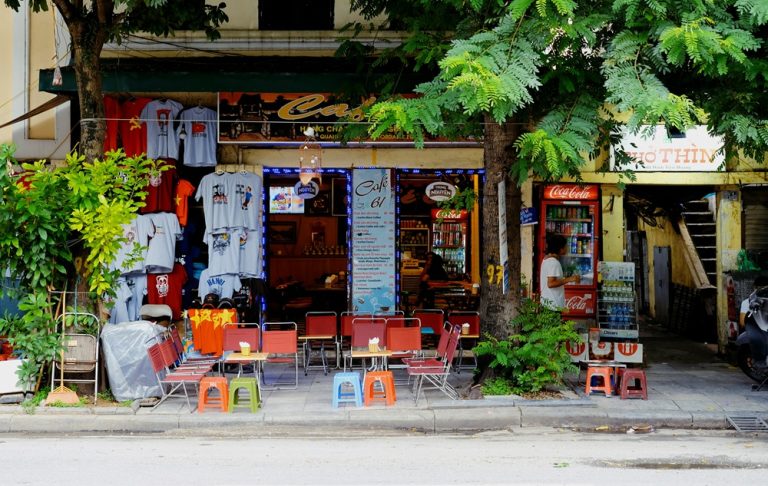
But don't make the mistake of treating egg coffee as something to taste once and immediately move on from. Hanoi's café culture is one of the pleasures of visiting the city, whether you're sitting in a tiny hidden café above the Old Quarter, overlooking a busy intersection from a balcony or watching scooters flow past from a pavement stool. Taking time for coffee without having anywhere particular to be is one of the simplest things to do in Hanoi and one of the easiest ways to enjoy the rhythm of the city.
Taste one of the capital's most distinctive creations and discover the cafés, flavours and stories behind Hanoi's unique coffee culture.
WorldlyRoaming Tip: Try egg coffee at Café Giảng for the historical connection, but don't make it your only Hanoi coffee stop. Afterwards, pick another café simply because its setting catches your attention—a hidden upstairs room, a balcony above the Old Quarter or a tiny pavement setup. Comparing the famous original with Hanoi's everyday café culture turns one unusual drink into a much better experience of the city.
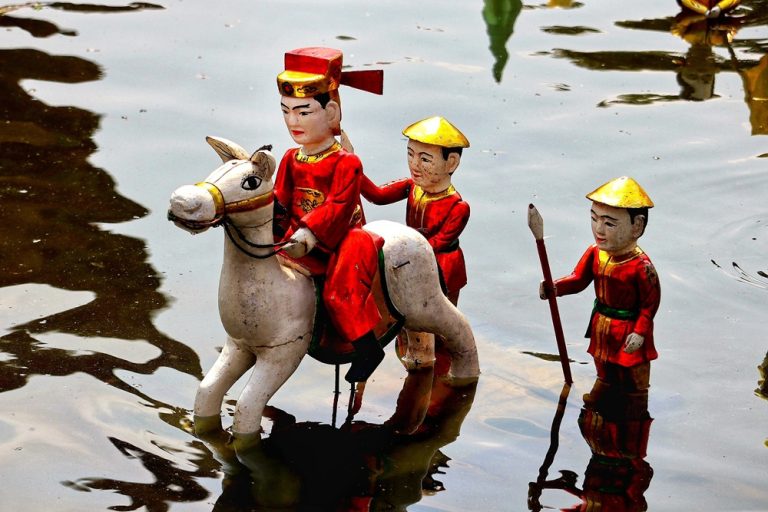
Watch a Traditional Water Puppet Show
For an experience with its roots firmly in northern Vietnamese culture, spend an evening watching a traditional water puppet show. Known as múa rối nước, water puppetry developed centuries ago in the villages of the Red River Delta, where flooded rice fields provided a natural stage for performances during festivals and celebrations.
The concept is wonderfully unusual. Puppeteers stand concealed behind a screen and manipulate brightly painted wooden puppets across a pool of water using long rods and mechanisms hidden beneath the surface. Dragons twist through the water, farmers tend their fields, fishermen chase their catch and legendary creatures appear amid splashes, smoke and flashes of colour.
The performance is accompanied by traditional Vietnamese musicians and singers using instruments such as drums, gongs, flutes and stringed instruments. Stories draw on rural life, folklore, historical legends and traditional celebrations, often with plenty of humour mixed in. You don't need to understand Vietnamese to follow most of what is happening—the combination of music, movement and visual storytelling carries much of the performance.
The best-known place to experience water puppetry in the capital is the Thang Long Water Puppet Theatre, located beside Hoan Kiem Lake. Its central location makes a performance easy to combine with dinner in the Old Quarter or an evening walk around the lake. Shows are relatively short, making this one of the easiest cultural experiences to fit into a busy Hanoi itinerary.
Water puppetry could easily have disappeared as village entertainment became less central to everyday life, but performances in Hanoi have helped preserve the tradition and introduce it to new audiences. It is undeniably popular with visitors today, yet its origins are authentically Vietnamese, making a performance one of the more distinctive things to do in Hanoi rather than simply another evening attraction.
Watch centuries-old Vietnamese legends and village stories come alive through colourful puppets, live traditional music and one of northern Vietnam's most distinctive performing arts.
WorldlyRoaming Tip: If you can choose your seat, don't automatically assume the very front is best. Sitting a little farther back gives you a better view of the entire water stage and the musicians at the side, rather than forcing you to follow individual puppets from close range. And stay for the final moments of the performance—the puppeteers eventually reveal themselves, which makes the mechanics behind what you've just watched much easier to appreciate.
Drink Bia Hơi Like a Local
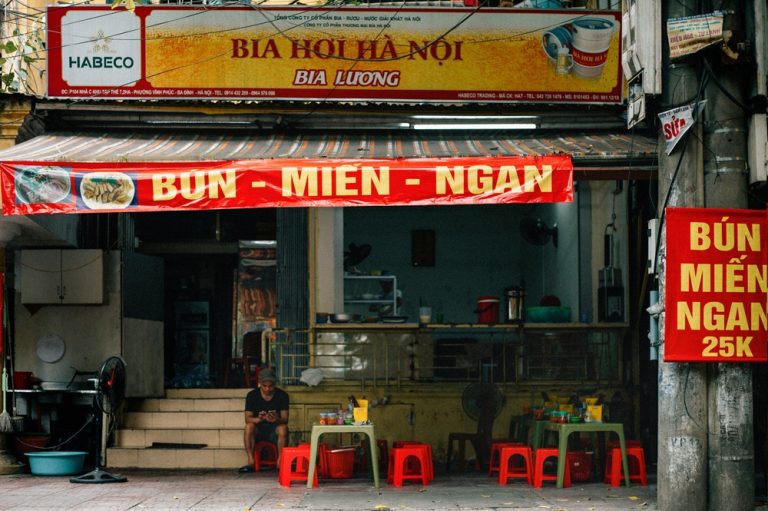
For one of Hanoi's simplest and most sociable experiences, pull up a tiny plastic stool and order a glass of bia hơi. This light, fresh Vietnamese draft beer is particularly associated with Hanoi and northern Vietnam, where it has long been served at informal drinking spots that function as much as neighbourhood gathering places as somewhere to have a beer.
Bia hơi is brewed for rapid consumption rather than long-term storage, giving it a light, crisp flavour and relatively low alcohol content. It is delivered fresh to bars and restaurants and traditionally sold at remarkably affordable prices. Order a glass alongside simple snacks or shared dishes and you'll quickly understand why sitting over bia hơi with friends has become such an established part of Hanoi's social culture.
The place most visitors hear about first is Ta Hien Street in the Old Quarter, commonly known as Bia Hoi Corner. In the evening, tables and tiny stools spill into the street as bars fill with travellers and locals. It's lively, chaotic and fun, and certainly worth seeing if you enjoy nightlife, but today it is as much an international backpacker gathering place as a traditional Hanoi bia hơi experience.
For something more representative of everyday life, look beyond Ta Hien. Neighbourhood bia hơi restaurants can be found throughout Hanoi, often recognisable by groups gathered around low tables sharing pitchers of beer and plates of food. The atmosphere may be less polished and there may be little English spoken, but that's part of the appeal. Bia hơi isn't really about the beer alone; it's about the communal ritual surrounding it.
Spending an hour at one of these informal drinking spots is one of those things to do in Hanoi that doesn't require a monument, ticket or itinerary. Order something to eat, watch the tables fill around you and enjoy a side of the capital that exists primarily for the people who live there rather than those passing through.
WorldlyRoaming Tip: Visit Ta Hien Street for the spectacle, but have your actual bia hơi experience somewhere else. If you spot a busy neighbourhood place with large shared tables and almost no obvious tourists, that's often the better choice. Don't worry if there's no English menu—look at what neighbouring tables are eating and point to something that looks good. The food shared over the beer is often as much a part of the experience as the bia hơi itself.
Explore Hanoi's Markets
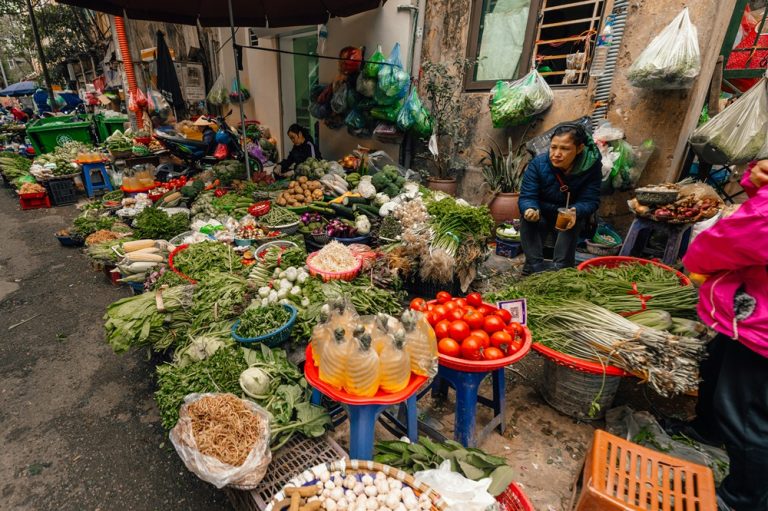
Hanoi's markets offer another way to experience the city beyond its monuments and museums. Some are sprawling commercial centres, others appear along neighbourhood streets early in the morning, and several come alive after dark. Whether you're interested in food, local products or simply watching everyday life unfold, wandering through a Hanoi market is an experience in itself.
The best-known is Dong Xuan Market, a huge covered market on the northern edge of the Old Quarter. Originally established during the French colonial period, it remains one of Hanoi's largest trading centres. Inside, stalls are packed with clothing, fabrics, household goods, souvenirs, dried foods and countless other products, with much of the business geared towards wholesale as well as individual shoppers.
Dong Xuan is worth visiting less for souvenir hunting than for the sheer intensity of the market environment. Narrow aisles overflow with merchandise, traders move goods between stalls and the surrounding streets are filled with vendors and food sellers. The lanes around the market can be just as interesting as the building itself, particularly if you're more interested in local food and street life than shopping.
On weekend evenings, the Hanoi Night Market extends through the Old Quarter between Dong Xuan Market and the Hoan Kiem Lake area. The atmosphere here is much more visitor-oriented, with stalls selling clothes, accessories, souvenirs and snacks. Combined with the pedestrianised streets around the lake, however, it creates a lively setting for an evening wander through central Hanoi.
Don't assume the city's biggest markets are necessarily the most interesting ones. Smaller neighbourhood wet markets provide a very different glimpse of Hanoi, particularly in the morning when residents shop for vegetables, herbs, meat, fish and ingredients for the day's meals. These aren't tourist attractions in the conventional sense, so be considerate of people working and shopping rather than treating the market purely as a backdrop for photographs.
Exploring both a major market such as Dong Xuan and a smaller local market gives you two very different perspectives on commerce and daily life in the capital. For travellers wondering what to do in Hanoi beyond visiting famous sights, markets provide an easy way to see a side of the city that remains firmly connected to everyday life.
Explore bustling markets, local food stalls and hidden corners while discovering the people, flavours and everyday traditions behind Hanoi's street life.
Take a Vietnamese Cooking Class
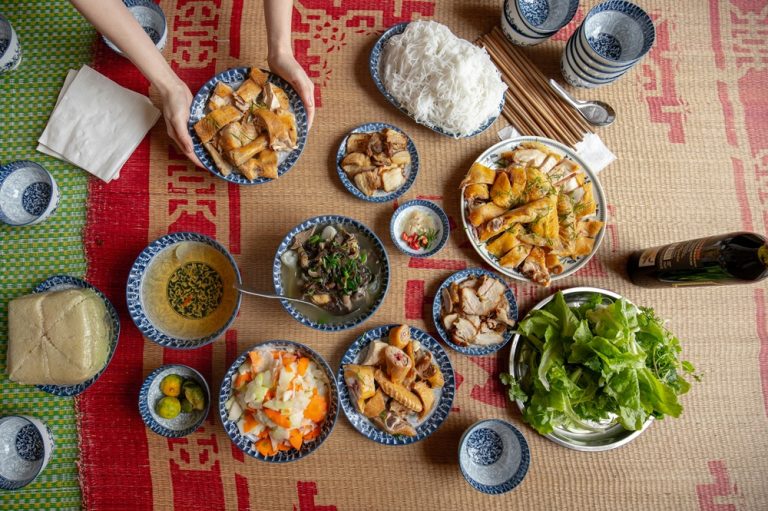
Eating your way through Hanoi is one thing; learning how some of those dishes are actually made gives you a completely different appreciation of Vietnamese food. A Vietnamese cooking class is one of the most hands-on things to do in Hanoi, particularly if you've already spent a few days trying dishes from street stalls and small local restaurants.
Many Hanoi cooking classes begin with a visit to a local market, where you'll learn about the herbs, vegetables, noodles, sauces and other ingredients that form the foundations of Vietnamese cooking. Having someone explain what you're looking at can transform a market that initially seems overwhelming into a much more understandable part of everyday Hanoi life.
Back in the kitchen, classes typically involve preparing several dishes rather than simply watching a demonstration. Depending on the course, you might learn to make fresh spring rolls, Vietnamese dipping sauces, noodle dishes, salads or traditional northern Vietnamese specialities. The emphasis is usually on techniques and flavour combinations that can realistically be recreated at home rather than complicated restaurant cooking.
The real value isn't necessarily mastering one particular recipe. You'll begin to understand how Vietnamese cooks balance salty, sweet, sour, spicy and aromatic flavours, why fresh herbs are used so extensively and how ingredients that you've been eating throughout your trip fit together. That knowledge tends to make every Vietnamese meal you eat afterwards more interesting.
Cooking classes are also a good option when you want something more interactive than another afternoon of sightseeing. After days spent visiting Hanoi attractions, sitting down with a local cook, preparing a meal and then eating what you've made provides a completely different way to experience the city and its food culture.
Visit local markets, discover Vietnamese ingredients and learn how to prepare traditional dishes before sitting down to enjoy the meal you've created.
WorldlyRoaming Tip: If you're taking a cooking class early in a longer Vietnam trip, choose one that includes a guided market visit. Pay attention to the Vietnamese names of herbs, sauces and ingredients rather than only the recipes. You'll start recognising them at markets and restaurants for the rest of your journey, making the class useful long after you've forgotten exactly how many spoonfuls went into the dipping sauce.
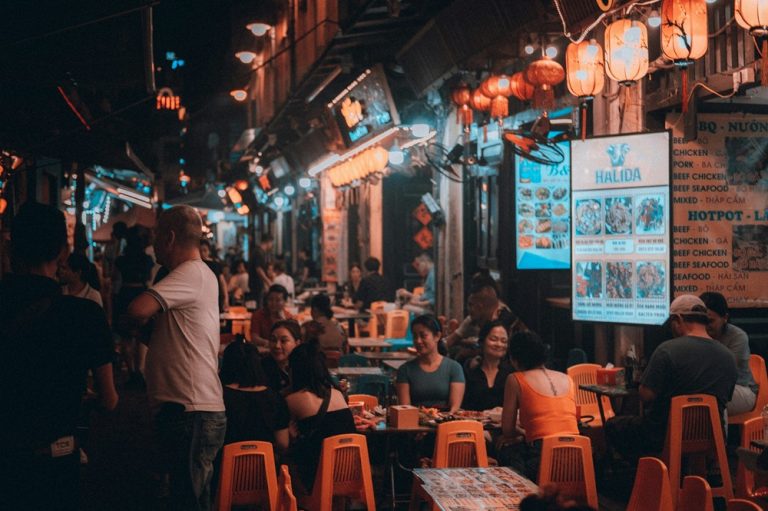
Experience Hanoi After Dark
Hanoi takes on a different personality after sunset. The heat begins to ease, pavements fill with diners, cafés stay busy and thousands of lights reflect across the city's lakes. Even if nightlife isn't normally your thing, experiencing Hanoi after dark is worthwhile simply because so much of the city's social life moves onto the streets in the evening.
Hoan Kiem Lake is a great place to begin. The illuminated Huc Bridge glows red across the water, locals gather along the waterfront and the surrounding streets become particularly lively on pedestrianised weekend evenings. From here, you can walk directly into the Old Quarter, where restaurants, street-food stalls, cafés and bars keep the narrow streets buzzing long after the major Hanoi attractions have closed.
If you want something energetic, the streets around Ta Hien form the centre of the Old Quarter's backpacker nightlife, with tiny bars, bia hơi spots and crowds spilling into the street. Hanoi also has an increasingly varied selection of cocktail bars, rooftop venues and live-music spots, so an evening in the capital doesn't have to mean squeezing onto a plastic stool in the busiest part of the Old Quarter.
But Hanoi at night can be just as enjoyable without visiting a bar at all. Go out for a late bowl of noodles, find a café overlooking the traffic, walk beside one of the lakes or simply wander through streets that felt completely different during the working day. Watching Hanoi rather than sightseeing in Hanoi can be one of the most memorable parts of an evening.
That's ultimately what makes exploring after dark one of the best things to do in Hanoi. There isn't a single nightlife experience you need to tick off. Choose the atmosphere that suits you—chaotic Old Quarter streets, street food, live music, cocktails or a quiet lakeside walk—and see where the evening takes you.
Experience another side of the capital with evening tours, street-food adventures, nightlife and local experiences that reveal Hanoi once the sun goes down.
WorldlyRoaming Tip: If you've already explored the Old Quarter during the day, walk roughly the same route again after dark instead of immediately looking for somewhere completely new. Shops disappear behind food stalls, pavements become dining rooms and quiet corners turn into gathering places. Seeing the same streets in both conditions makes Hanoi's transformation after sunset much more noticeable than simply arriving in the nightlife district for the evening.
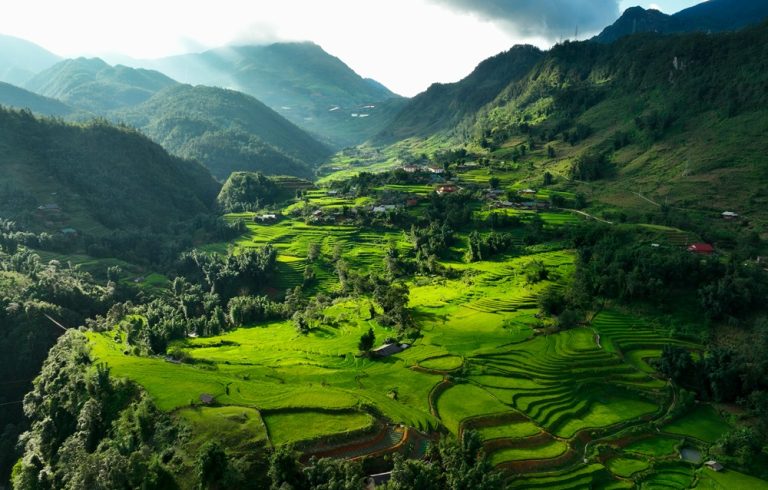
Best Day Trips & Places to Visit from Hanoi
Hanoi isn't only a destination in its own right; it's also the main gateway to some of the most spectacular landscapes in northern Vietnam. Limestone mountains, river valleys, dramatic bays, terraced rice fields and remote mountain roads are all accessible from the capital, making it worth leaving some space in your itinerary for exploring beyond the city.
Among the best Hanoi day trips, Ninh Binh combines karst scenery, rivers and historic temples within reach of the capital, while the extraordinary limestone islands of Ha Long Bay can also be visited on a long day tour. Both destinations reward more time if you have it, but they remain realistic options when your Vietnam itinerary is limited.
Other places to visit near Hanoi require a bigger commitment. Sapa, with its mountain scenery, rice terraces and ethnic minority villages, is better experienced with at least an overnight stay, while the spectacular Ha Giang region deserves several days. Hanoi therefore works not only as a base for day trips but as the natural starting point for a much wider journey through northern Vietnam.
Whether you have a single spare day or several days to continue north, the destinations below are among the most rewarding things to do near Hanoi and offer a striking contrast to the noise, traffic and densely packed streets of the capital.
Escape the capital and discover mountains, rivers, historic sites and spectacular landscapes on some of the best day trips and excursions from Hanoi.
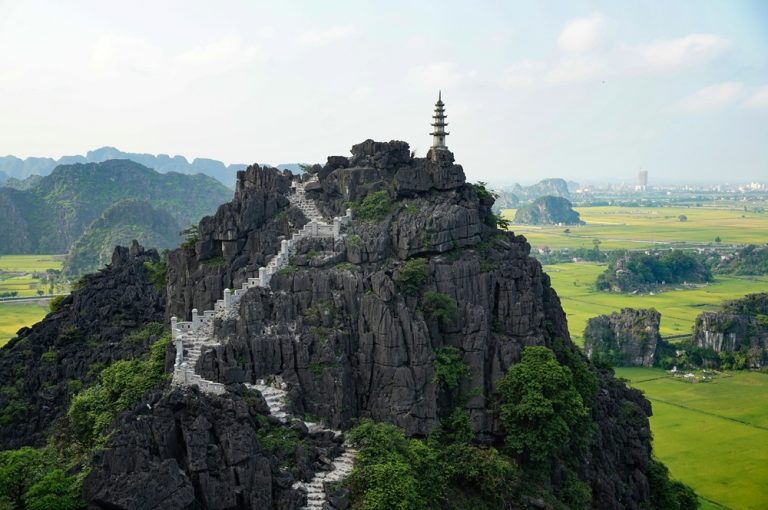
Take a Day Trip to Ninh Binh
Just a couple of hours south of the capital, Ninh Binh offers one of the most dramatic changes of scenery among Hanoi day trips. Towering limestone karsts rise above rivers and rice fields, ancient temples sit beneath forested mountains and small boats disappear into caves beneath the cliffs. The landscape has earned the area comparisons with Ha Long Bay, but here the limestone formations rise from the countryside rather than the sea.
One of the highlights is Trang An, where small rowing boats travel along peaceful waterways surrounded by enormous limestone peaks. Routes pass through low caves and between temples tucked into the landscape, making the journey as much about experiencing the scenery as reaching any particular attraction. Nearby Tam Coc offers another beautiful river journey, with boats travelling between rice fields and karst formations along the Ngo Dong River.
Ninh Binh also has plenty to explore away from the water. Hoa Lu was the capital of Vietnam during the 10th and early 11th centuries, and its surviving temples provide a fascinating historical contrast to the surrounding countryside. For one of the region's most spectacular views, climb the long staircase at Mua Cave to the viewpoints above the valley, where limestone mountains and the river spread out below you.
Combining every major attraction in a single day can make Ninh Binh feel rushed, so most organised excursions concentrate on two or three highlights. A typical day might pair Hoa Lu with Trang An and Mua Cave, or combine Tam Coc with some of the area's temples and viewpoints. That still provides an excellent introduction and makes Ninh Binh one of the most rewarding places to visit near Hanoi when you only have one free day.
If your itinerary allows it, however, consider staying overnight around Tam Coc rather than immediately returning to Hanoi. Once the day-trip groups leave, the surrounding countryside becomes considerably quieter, and an extra day gives you time to cycle between villages, temples and rice fields without trying to squeeze the region into a fixed excursion schedule.
Cruise beneath towering limestone cliffs, explore ancient temples and discover the spectacular countryside of Ninh Binh on a day trip from Hanoi.
WorldlyRoaming Tip: When comparing Ninh Binh tours, look at which boat route is actually included rather than choosing purely by price. Trang An and Tam Coc are sometimes treated as interchangeable in tour descriptions, but they're separate experiences. If the dramatic cave-and-karst boat journey is your priority, make sure the itinerary explicitly includes the one you want instead of discovering on the bus that your tour visits the other.
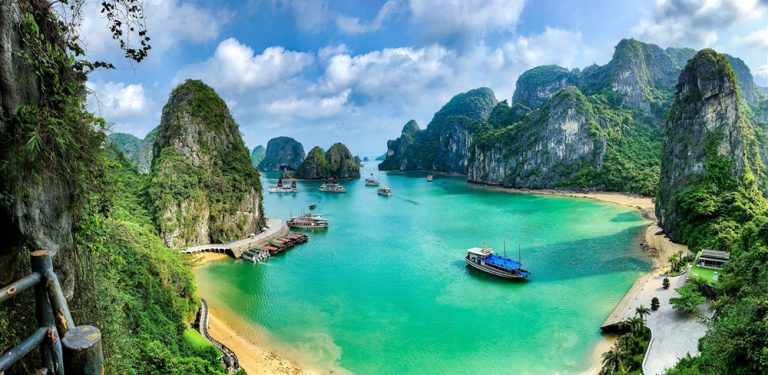
Visit Ha Long Bay from Hanoi
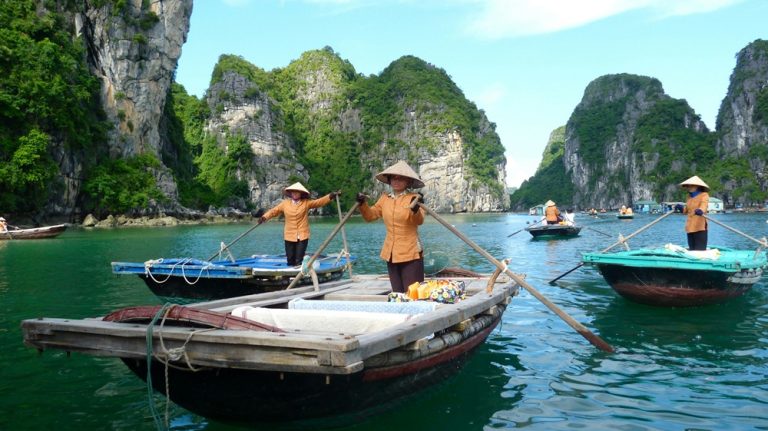
Few landscapes are as closely associated with Vietnam as Ha Long Bay. Thousands of limestone islands and karst formations rise dramatically from the waters of the Gulf of Tonkin, creating an extraordinary seascape of cliffs, caves and sheltered bays. The area forms part of the Ha Long Bay - Cat Ba Archipelago UNESCO World Heritage Site and is one of the most spectacular places you can reach from Hanoi.
A typical Ha Long Bay cruise takes you between the limestone formations, with itineraries often including caves, viewpoints and opportunities to kayak or take a smaller boat into quieter areas of the bay. The scenery is the main attraction, so much of the experience simply involves being out on the water and watching the extraordinary landscape change as your boat moves between the islands.
Visiting Ha Long Bay from Hanoi as a day trip is entirely realistic, although you should expect a long day. Improved road connections have significantly reduced travel times between the capital and the coast, allowing day cruises to spend several hours on the bay before returning to Hanoi in the evening. If your Vietnam itinerary is tight, this makes Ha Long Bay one of the most ambitious but worthwhile Hanoi day trips.
If you have more time, an overnight Ha Long Bay cruise offers a different experience rather than simply a longer version of the day trip. Staying on the water allows you to see the bay after most day boats have returned to port and usually provides additional activities the following morning. Day cruises, however, can still deliver the essential experience without requiring you to sacrifice another night of your itinerary.
You'll also encounter cruises exploring neighbouring Lan Ha Bay and the wider Cat Ba area. These can be excellent alternatives, particularly for travellers interested in kayaking and routes beyond the classic Ha Long Bay circuit. Pay attention to the actual itinerary when booking rather than assuming every cruise departing from the region follows the same route.
Cruise between towering limestone islands, explore caves and experience one of Vietnam's most extraordinary landscapes on a day trip from Hanoi.
WorldlyRoaming Tip: When comparing Ha Long Bay day trips, don't compare them by departure time and price alone. Check how many hours the itinerary actually spends cruising on the bay. Two tours can both occupy an entire day from Hanoi while one gives you considerably more time on the water and the other uses more of the day for transfers, stops and waiting at the harbour. The cruising time is a much better measure of what you're actually buying.
Explore Sapa from Hanoi
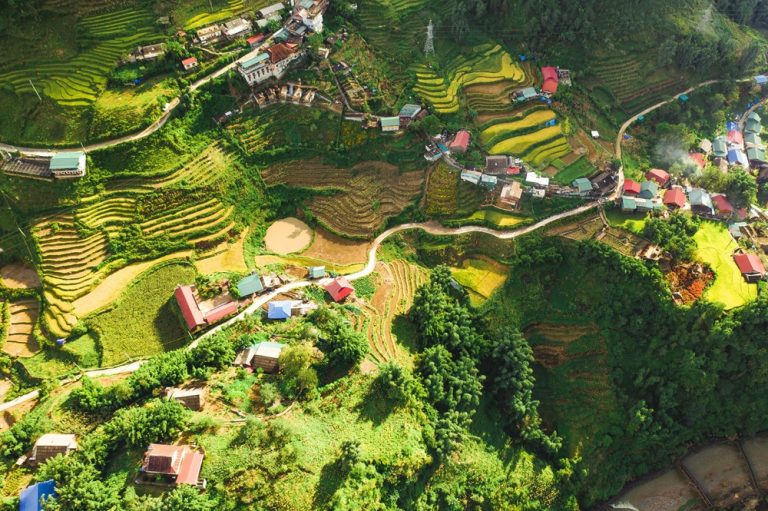
High in the mountains of northern Vietnam, Sapa offers a completely different experience from Hanoi. The region is known for its dramatic valleys, terraced rice fields, mist-covered mountains and villages inhabited by several of Vietnam's ethnic minority communities. Hanoi is the main starting point for reaching Sapa, but unlike Ninh Binh or Ha Long Bay, this isn't a destination you should try to squeeze into a conventional day trip.
The main reason to visit is the surrounding landscape. Sapa trekking routes descend from the town into valleys filled with rice terraces, rivers and villages, with scenery changing dramatically according to the season. Popular areas include the Muong Hoa Valley and villages such as Lao Chai and Ta Van, although there are plenty of opportunities to explore farther beyond the busiest routes.
Sapa is also home to communities including the Hmong, Dao, Tay and Giay, whose languages, clothing and traditions contribute enormously to the region's cultural identity. Village visits and guided treks can provide an introduction to these cultures, but approach them as encounters with living communities rather than attractions created for visitors. Choosing locally connected guides can also help ensure that more of the economic benefit from tourism remains within the communities you're visiting.
Another major attraction is Fansipan, the highest mountain in Vietnam and the wider Indochinese Peninsula. Serious hikers can tackle the mountain on a guided trek, while the much easier cable-car journey makes the summit accessible to travellers who don't want to spend a day or more climbing. On clear days, the views across the surrounding mountains are spectacular, although Sapa's famously changeable weather means the summit can just as easily disappear into cloud.
Travelling to Sapa from Hanoi generally involves an overnight train towards Lao Cai followed by a road transfer, or travelling directly by bus or limousine van. Because the journey takes several hours each way, spending at least two days in the region makes considerably more sense than attempting to rush there and back. Three days gives you even more flexibility for trekking and helps protect your plans from Sapa's unpredictable mountain weather.
For travellers continuing beyond the capital, Sapa is one of the most rewarding places to visit near Hanoi and an excellent introduction to Vietnam's mountainous north. It requires more time than the genuine Hanoi day trips we've covered above, but the combination of rice terraces, mountain scenery and cultural diversity makes that extra commitment worthwhile.
Discover spectacular rice terraces, mountain valleys and ethnic minority villages on guided trips from Hanoi into Vietnam's northern highlands.
Discover Ha Giang from Hanoi
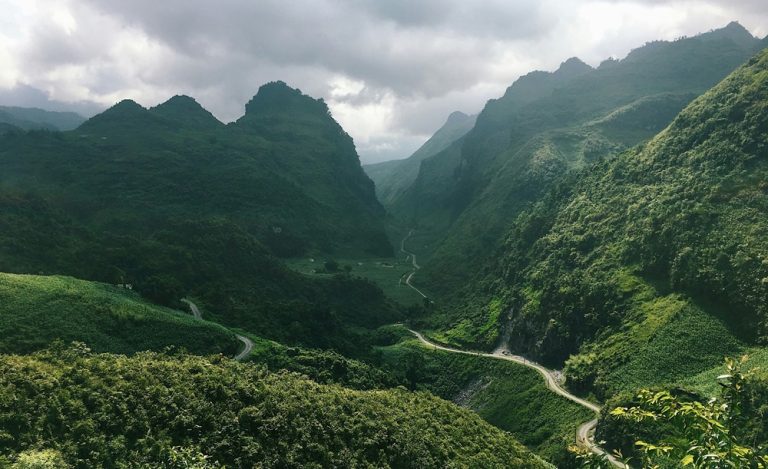
For travellers with several days to spare, Ha Giang opens the door to some of the most spectacular mountain scenery in Vietnam. Located in the far north near the Chinese border, the province is famous for the Ha Giang Loop, a multi-day journey through enormous limestone mountains, deep valleys, remote villages and winding roads that cling to the sides of dramatic mountain passes.
Unlike a conventional destination where you arrive and then explore a collection of nearby attractions, the journey itself is the reason to visit Ha Giang. The Loop takes travellers through an ever-changing landscape, with small towns and villages providing overnight stops between long stretches of mountain road. It's one of those experiences where stopping unexpectedly at a viewpoint, roadside café or village can be every bit as memorable as reaching the major landmarks.
Highlights include the extraordinary landscapes of the Dong Van Karst Plateau, the mountain town of Dong Van and the legendary Ma Pi Leng Pass. The road here cuts high above the Nho Que River, with immense mountains dropping towards the turquoise water far below. Boat trips on the Nho Que River provide an entirely different perspective on the surrounding cliffs and can be incorporated into many Loop itineraries.
Ha Giang is also one of Vietnam's most ethnically diverse provinces, home to communities including the Hmong, Dao, Tay, Nung and Lo Lo. Traditional clothing, markets, agricultural landscapes and village life form an important part of travelling through the region. As in Sapa, these are living communities rather than tourist exhibits, so choosing locally connected guides and interacting respectfully matters.
You don't necessarily need to ride a motorcycle yourself to experience the Ha Giang Loop. Confident and appropriately licensed riders may choose to self-drive, while many travellers opt for an Easy Rider, travelling as a passenger with an experienced local driver. This allows you to concentrate on the scenery without having to tackle unfamiliar mountain roads, sharp bends and changing weather conditions yourself.
Despite sometimes appearing alongside Hanoi day trips in tour listings, Ha Giang is not realistically a day trip from Hanoi. Most Loop itineraries require around three or four days, in addition to the journey between Hanoi and Ha Giang. Overnight buses are commonly used to maximise time, but you should still treat Ha Giang as a separate multi-day journey rather than an excursion squeezed into your Hanoi sightseeing schedule.
If you have the time, Ha Giang provides a spectacular finale to a trip through northern Vietnam. While Sapa centres more heavily on trekking from a mountain base, the Ha Giang Loop is about moving continuously through the landscape. For adventurous travellers looking for places to visit near Hanoi that feel completely removed from the capital, few journeys can compete with it.
Journey into Vietnam's spectacular far north and discover mountain passes, remote valleys and dramatic landscapes on a multi-day Ha Giang adventure from Hanoi.
Where to Stay in Hanoi
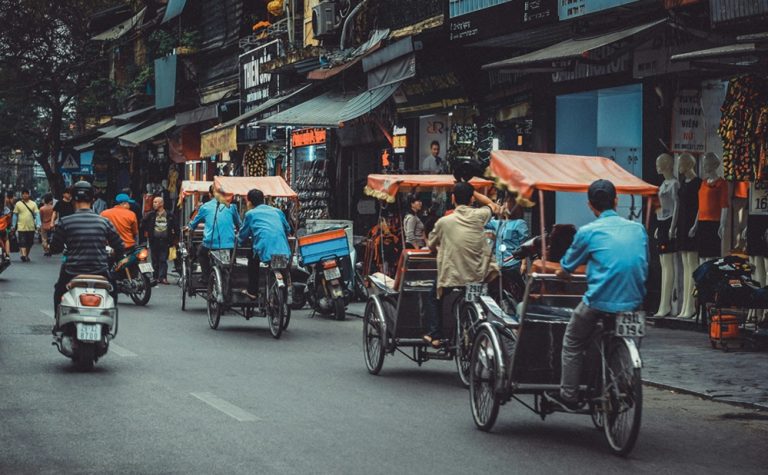
Choosing where to stay in Hanoi largely comes down to how close you want to be to the action. For most first-time visitors, the Old Quarter is the easiest base for sightseeing, food and atmosphere. Hoan Kiem and the French Quarter keep you central while offering somewhat calmer surroundings, while Tay Ho and West Lake suit travellers who prefer more space and a slower pace away from the busiest tourist streets.
Below are a few Hanoi accommodation options in different parts of the city, along with links to browse more hotels in each area if you'd prefer to compare prices, locations and facilities yourself.
Our Favourite Budget Stay in Hanoi
MAD MONKEY HANOI
11 Mã Mây, Phố cổ Hà Nội, Hoàn Kiếm, Hà Nội 111000, Vietnam • +84 246 253 2339
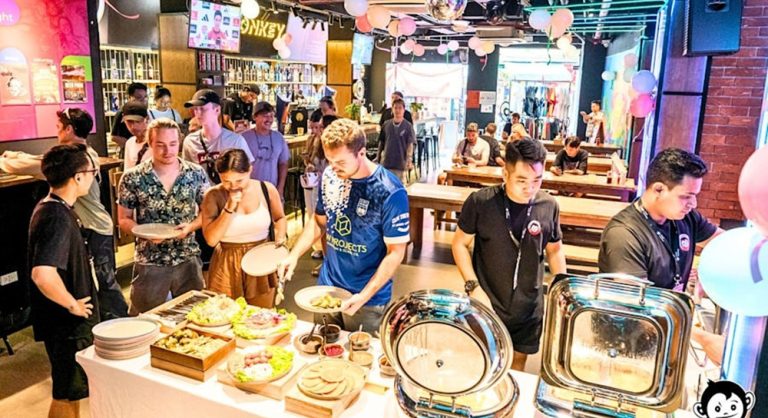
Located in the heart of Hanoi's Old Quarter, MAD MONKEY HANOI is our favourite budget stay in the city, particularly for solo travellers and backpackers looking for a sociable place to stay. The hostel offers both dorms and private rooms, along with communal spaces and organised activities that make it easy to meet other travellers.
Its central location also puts you within walking distance of Hoan Kiem Lake, Hanoi's street-food scene, nightlife and many of the Old Quarter's main attractions.
WorldlyRoaming readers can receive 10% off their stay by booking directly with Mad Monkey and using the discount code WORLDLYROAMING10.
👉 Check availability and current prices for MAD MONKEY HANOI
OLD QUARTER – BEST FOR FIRST-TIME VISITORS
The Old Quarter is the best area to stay in Hanoi if you want to experience the city's energy from the moment you step outside. Hoan Kiem Lake, street food, cafés, markets and many of the attractions we've covered above are within walking distance, making this an especially convenient base for a short first visit. The trade-off is noise and congestion, so travellers looking for peace and quiet may prefer one of the areas below.
Hanoi Center Silk Boutique Hotel & Travel
16 Phố Chân Cầm, Hoan Kiem, Hanoi, Vietnam — +84 349407055
A centrally located boutique option that puts you within easy walking distance of the Old Quarter's restaurants, cafés and historic streets. Its location also makes it convenient for exploring Hoan Kiem Lake and many of central Hanoi's major sights without relying constantly on taxis or Grab. Check current rates and availability for Hanoi Center Silk Boutique Hotel & Travel.
Browse More Hotels in Hanoi's Old Quarter
The Old Quarter has accommodation at almost every price point, so compare locations carefully and check recent guest reviews if street noise is important to you.
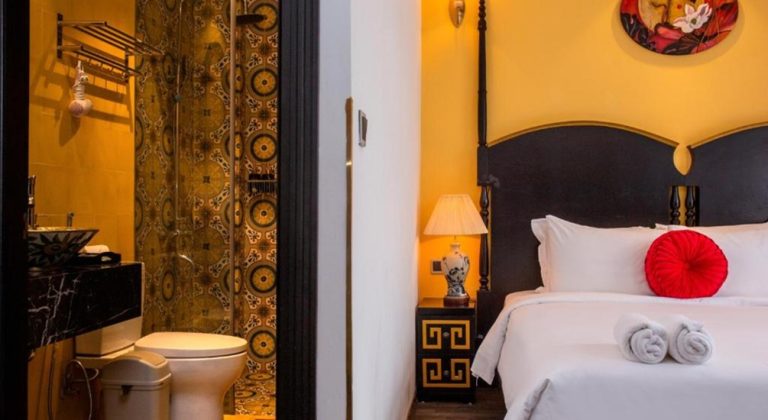
HOAN KIEM & FRENCH QUARTER – BEST FOR A CENTRAL BUT CALMER STAY
Staying around Hoan Kiem and the French Quarter keeps you close to the historic centre while providing a somewhat different atmosphere from the narrow streets of the Old Quarter. You'll still have easy access to Hoan Kiem Lake, restaurants and central Hanoi attractions, but parts of the neighbourhood feel broader, greener and less frantic. It's a good compromise for travellers who want a central location without being surrounded by the Old Quarter's busiest nightlife.
Astoria Hanoi Hotel & Travel
16 Ngõ Huyện, Hoan Kiem, Hanoi, Vietnam — +84 989 886 824
Astoria Hanoi Hotel & Travel provides a convenient base for travellers who want to remain close to the historic centre and Hoan Kiem Lake. The location puts restaurants, cafés and many central sights within easy reach while allowing you to explore Hanoi largely on foot. Check current rates and availability at Astoria Hanoi Hotel & Travel.
Browse More Hotels in Hoan Kiem
Compare accommodation around Hoan Kiem if you want to stay within easy reach of central Hanoi while choosing the particular location and comfort level that works best for your trip.
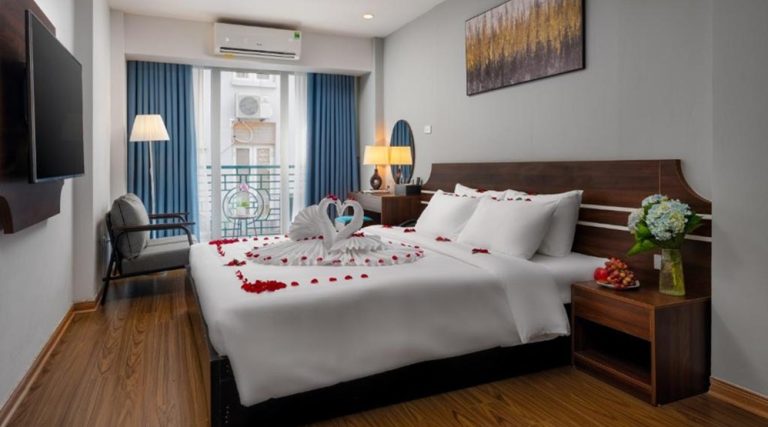
TAY HO & WEST LAKE – BEST FOR A SLOWER SIDE OF HANOI
Tay Ho, beside West Lake, offers a noticeably more relaxed alternative to central Hanoi. The neighbourhood has a large selection of cafés, restaurants and bars alongside the waterfront and is particularly appealing for longer stays or travellers who don't need to walk out of their hotel directly into the main sightseeing area. The compromise is distance: you'll rely more frequently on Grab or taxis when travelling between Tay Ho and the Old Quarter.
Alan Lumière Boutique Hotel Hanoi
61 Phố Yên Phụ 61, 100000 Hanoi, Vietnam — +84 383 430 052
Alan Lumière Boutique Hotel Hanoi offers a boutique base near West Lake for travellers who prefer staying outside the busiest parts of the historic centre. The location provides convenient access to Tay Ho's cafés, restaurants and lakeside atmosphere while central Hanoi remains a relatively short ride away. Check current rates and availability at Alan Lumière Boutique Hotel Hanoi.
Browse More Hotels in Tay Ho & West Lake
Tay Ho has everything from serviced apartments to boutique and upscale hotels, making it particularly worth comparing options if you're planning a longer stay in Hanoi.
Browse All Hotels in Hanoi
Still not sure which neighbourhood suits you? Compare hotels across Hanoi to find the location, facilities and price that work best for your stay.
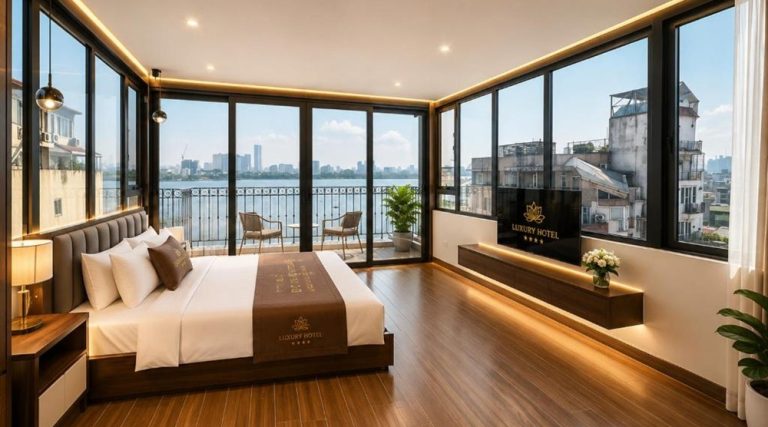
How Many Days Do You Need in Hanoi?
For most first-time visitors, three days in Hanoi is ideal. That gives you enough time to see the major historical sights, explore the Old Quarter, experience the city's food and coffee culture and still leave some space to wander without turning your Hanoi trip into a race between attractions.
One day in Hanoi is enough for a quick introduction. Concentrate on the Old Quarter and Hoan Kiem Lake, choose one or two major historical attractions and finish with street food or a water puppet show. You'll see some of the highlights, but you'll miss much of the everyday atmosphere that makes the city interesting.
With two days in Hanoi, you can comfortably add attractions such as the Temple of Literature, Ho Chi Minh Mausoleum Complex or Imperial Citadel of Thang Long while still making time for markets, cafés and Vietnamese food. Three days gives you considerably more flexibility and allows you to explore areas such as West Lake without sacrificing the historic centre.
If you have four days or more, you can certainly continue exploring Hanoi at a slower pace, but this is also where I'd consider using the additional time elsewhere in northern Vietnam. Ninh Binh and Ha Long Bay are realistic excursions from the capital, while Sapa and Ha Giang deserve several days of their own.
How long you spend in Hanoi also depends on the rest of your journey through the country. Our Vietnam itinerary can help you decide how Hanoi fits into your overall route and how much time to allocate to northern, central and southern Vietnam.
Best Time to Visit Hanoi
The best time to visit Hanoi is generally during October and November or March and April, when temperatures are more comfortable for sightseeing and you're less likely to encounter the intense heat and humidity of summer. Unlike southern Vietnam, Hanoi has a distinctly seasonal climate, so the experience can feel surprisingly different depending on when you arrive.
October and November offer some of the most pleasant conditions of the year. The heavy summer rains begin to ease, humidity becomes more manageable and temperatures are generally comfortable for spending long days walking around the Old Quarter, Hoan Kiem Lake and Hanoi's outdoor attractions. March and April provide another good window as winter fades and temperatures rise before the hottest part of the year begins.
December through February is Hanoi's winter, and visitors are sometimes surprised by how cool the capital can feel. Conditions can be grey, misty and damp, particularly in January and February, and you'll want a light jacket or warmer layers for evenings. The cooler temperatures can still be excellent for sightseeing, but don't arrive expecting the tropical heat you might associate with other parts of Southeast Asia.
May through September brings Hanoi's hottest and wettest weather. Temperatures and humidity rise considerably, with frequent heavy downpours during the summer rainy season. That doesn't mean you should avoid Hanoi entirely—storms can be intense but relatively short-lived—but exploring the city on foot can be more tiring and you'll want some flexibility in your daily plans.
Also consider the timing of Tet, the Vietnamese Lunar New Year, which usually falls in January or February. It's a fascinating time to experience Vietnam, but holiday closures, increased domestic travel and pressure on transport and accommodation can affect your plans. If Hanoi forms part of a longer journey through the country, our Best Time to Visit Vietnam guide compares conditions across northern, central and southern Vietnam so you can choose the best period for your complete trip.

Getting to Hanoi
As Vietnam's capital and one of the country's main transport hubs, Hanoi is straightforward to reach whether you're arriving internationally or travelling from elsewhere in Vietnam. Most overseas visitors arrive by air, while trains, buses and limousine vans connect the capital with destinations throughout the country.
By air: Hanoi is served by Noi Bai International Airport (HAN), located roughly 25–30 kilometres north of central Hanoi. The airport handles both international flights and an extensive network of domestic services, making flying particularly convenient if you're arriving from Ho Chi Minh City, Da Nang or another part of Vietnam. For a broader look at international routes, border crossings and your options for entering the country, see our How to Travel to Vietnam guide.
From Hanoi airport to the city: The simplest option is usually a taxi or a ride booked through Grab, which also allows you to see the estimated fare before confirming your journey. Airport and public buses provide cheaper alternatives if you're travelling on a tighter budget, although the final part of the journey may require a walk or additional transfer depending on where you're staying. Allow extra time during busy periods because Hanoi traffic can significantly affect the journey into the centre.
By train: Hanoi is the northern terminus of Vietnam's main north-south railway, with services connecting the capital to destinations including Hue, Da Nang and Ho Chi Minh City. Trains are considerably slower than flying over long distances, but overnight sleepers can save a hotel night and turn the journey itself into part of the experience.
By bus or limousine van: Road transport is particularly useful when reaching Hanoi from destinations around northern Vietnam. Buses and smaller limousine vans connect the capital with places such as Ninh Binh, Ha Long Bay, Cat Ba and Sapa. Departure and arrival points vary considerably between operators, so check the exact pickup and drop-off location rather than assuming you'll arrive at a central bus terminal.
If Hanoi is one stop on a longer journey, our Getting Around Vietnam guide compares domestic flights, trains, buses and other transport options to help you plan the connections between destinations. If you're continuing all the way south, our guide to exploring Ho Chi Minh City at the other end of Vietnam will help you plan your time in the country's largest city.
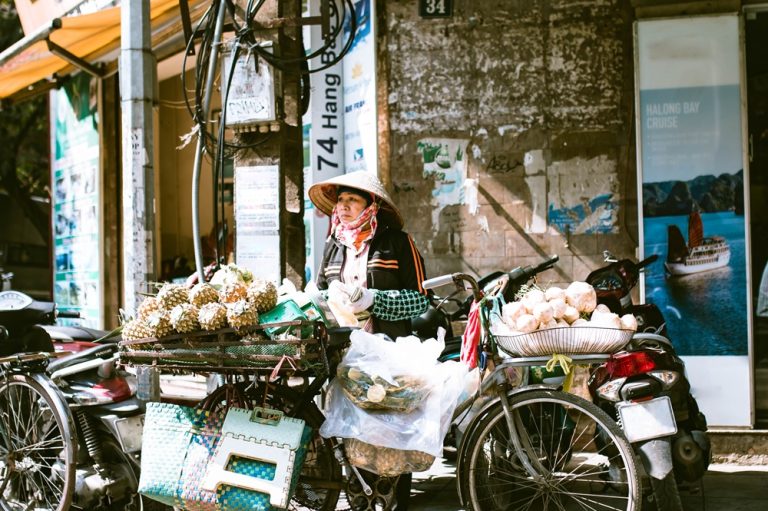
Getting Around Hanoi
Getting around Hanoi is relatively easy once you adjust to the traffic. Much of the historic centre can be explored on foot, while ride-hailing apps, taxis and public buses make it straightforward to reach attractions farther away. The distances aren't necessarily the challenge—the seemingly endless stream of scooters is what takes most first-time visitors a little time to get used to.
Walking: The Old Quarter and Hoan Kiem Lake are best explored on foot, and several major attractions are within walking distance of this central area. Pavements aren't always available for pedestrians—motorbikes, restaurant stools and parked vehicles frequently occupy them—so you'll sometimes find yourself walking along the edge of the road. When crossing busy streets, move predictably and steadily rather than making sudden changes of direction so approaching riders can anticipate where you're going.
Grab: For longer journeys, Grab is one of the most convenient options for visitors. You can request either a car or motorbike ride through the app, see the estimated fare beforehand and enter your destination without needing to explain it to the driver. Motorbike rides can be particularly efficient when Hanoi's traffic is congested, although a car is obviously more comfortable if you're travelling with luggage or several people.
Taxis: Metered taxis remain widely available throughout Hanoi and can be useful when you don't want to use an app. Stick with established taxi companies and make sure the meter is being used rather than negotiating an unclear fare after you've already started the journey. Having your destination available on your phone can also help avoid misunderstandings.
Public buses: Hanoi has an extensive and inexpensive bus network, making buses useful if you're travelling on a tight budget or staying longer in the city. For a short sightseeing visit, however, the routes can be less intuitive than simply walking or using Grab, particularly when you need to make connections between unfamiliar parts of Hanoi.
Motorbike rental: Renting your own scooter gives you independence, but Hanoi is not a sensible place to learn how to ride. Traffic is dense, road behaviour can initially seem chaotic and you need to make sure you're legally licensed to ride the vehicle and properly covered by your insurance. If you don't already have experience riding in busy Asian cities, walking and Grab are generally much easier ways to explore the capital.
If Hanoi is only one stop on your journey, our guide to transport options across Vietnam covers the trains, buses, domestic flights and other connections you'll need when travelling between different parts of the country.
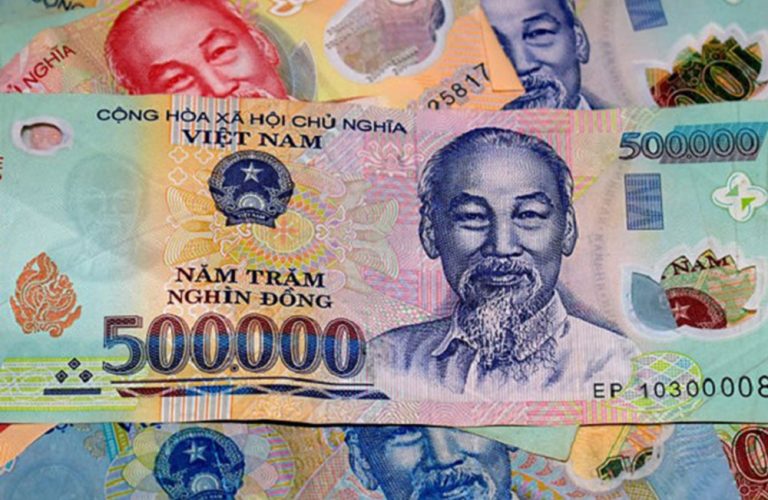
Hanoi Travel Costs
Hanoi remains a relatively affordable destination, particularly if you eat local food, walk around the historic centre and choose accommodation away from the luxury end of the market. Your Hanoi travel cost can rise quickly, however, if you stay in upscale hotels, eat regularly at international restaurants or add several organised tours and excursions to your itinerary.
Accommodation: Budget travellers can often find hostel beds and simple guesthouses for around US$8–20 per night, while comfortable mid-range hotels commonly fall somewhere around US$30–70. Boutique and upscale hotels can easily cost US$80–150+, particularly in desirable central locations. Prices vary considerably according to season and demand, so treat these figures as planning ranges rather than fixed rates.
Food and drinks: Eating local is one of the easiest ways to keep a Hanoi travel budget under control. A bowl of pho, bun cha or another simple local meal can often cost around US$2–5, while cafés and inexpensive restaurants remain very affordable by international standards. Western restaurants, cocktail bars and more polished dining venues can cost considerably more, although Hanoi still offers excellent value across most price levels.
Getting around: If you're staying centrally, many of Hanoi's major sights can be reached on foot. Short Grab or taxi journeys are generally inexpensive, so transport is unlikely to represent a major part of your daily spending unless you're making repeated journeys across the city.
Attractions and activities: Entrance fees for individual temples, museums and historical attractions are generally modest. Your activity budget increases much more noticeably when you add guided food tours, cooking classes and excursions beyond Hanoi. Trips to Ninh Binh and Ha Long Bay, or multi-day journeys to Sapa and Ha Giang, can easily become some of the largest individual expenses of your stay.
As a rough guide, a budget traveller might spend around US$25–40 per person per day in Hanoi, excluding major excursions. Around US$50–90 per day provides considerably more flexibility for a private hotel room, restaurant meals, Grab rides and paid attractions, while travellers choosing upscale accommodation, higher-end dining and frequent organised activities can comfortably spend US$120+ per day.
Remember that your Hanoi trip cost represents only one part of a wider Vietnam budget. Long-distance transport, beach destinations, cruises and organised experiences can change your overall spending considerably. For a country-wide breakdown of accommodation, meals, transportation and activities, see our guide to how much it costs to travel in Vietnam.
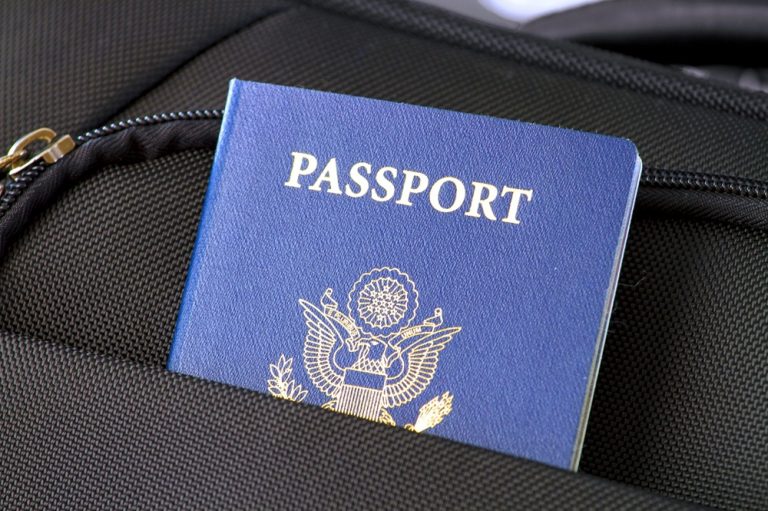
Hanoi Travel Tips & Practical Information
A little preparation makes visiting Hanoi considerably easier, particularly during your first day or two while you're adjusting to the traffic, currency and sheer intensity of the streets. These Hanoi travel tips cover the practical details worth knowing before you arrive.
- Carry some Vietnamese dong: Cards are increasingly accepted at hotels, restaurants and larger businesses, but cash remains extremely useful for street food, markets, small cafés and local shops. Keep smaller notes accessible rather than repeatedly pulling out your entire supply of cash for inexpensive purchases.
- Don't panic when crossing the road: Hanoi traffic can look impenetrable at first, particularly around the Old Quarter. Wait for a reasonable opportunity, walk steadily and predictably and avoid suddenly running, stopping or stepping backwards. Riders are accustomed to navigating around pedestrians whose movements they can anticipate.
- Follow the locals when choosing street food: A busy stall with ingredients being prepared continuously is often more reassuring than an immaculate but completely empty one. High customer turnover means food is less likely to have been sitting around for long, and a crowd of local customers is usually a useful indication that you've found somewhere worth trying.
- Know your fare before you travel: Ride-hailing apps are useful because the price and destination are established through the app. If you're using a conventional taxi, choose an established operator and make sure the meter is being used. Be particularly cautious about unsolicited transport offers around major arrival points and tourist areas.
- Keep mobile data available: Internet access makes navigating Hanoi much easier. You'll use it for maps, Grab, restaurant searches, translations and checking opening hours, particularly when exploring beyond the most tourist-oriented streets. A local SIM or eSIM can therefore be one of the most useful practical purchases of your trip.
- Don't expect English everywhere: You'll encounter plenty of English around hotels and major tourist attractions, but considerably less at small restaurants, markets and neighbourhood businesses. Learning a few Vietnamese words is appreciated, while a translation app can handle the situations where pointing and smiling aren't quite enough.
- Dress appropriately at religious and historical sites: Carry something that allows you to cover your shoulders and knees when visiting temples, pagodas and important ceremonial sites. Requirements can vary, but dressing respectfully saves you from discovering at the entrance that what was comfortable for walking around Hanoi isn't appropriate inside.
- Check your visa before travelling: Vietnam's entry rules depend on nationality, length of stay and the type of entry you're making. Don't rely on an old blog post or assume the requirements haven't changed; use our guide to check Vietnam's entry requirements as part of your pre-trip planning.
Most importantly, give yourself a little time to adjust. Hanoi can feel overwhelming when you first arrive—the traffic, noise and constant activity are part of the experience—but the city becomes considerably easier to navigate once you understand its rhythm. For more information on money, connectivity, transport, etiquette and preparing for your journey, see our practical advice for travelling around Vietnam.
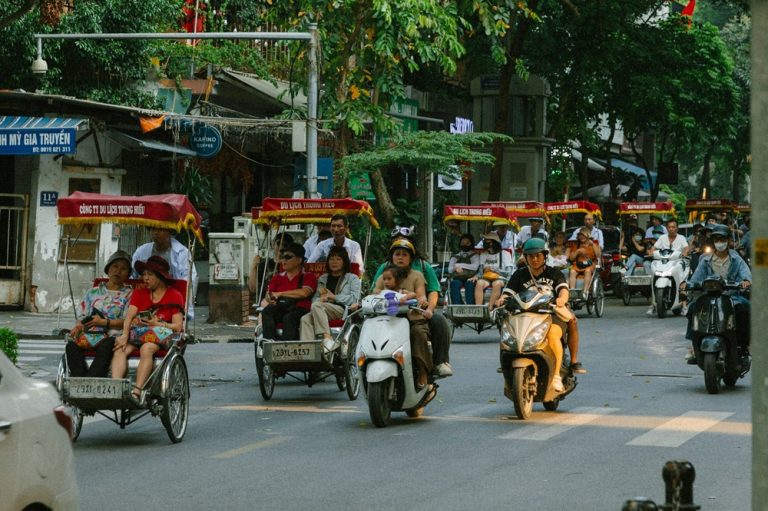
Final Thoughts on the Best Things to Do in Hanoi
The best things to do in Hanoi aren't limited to ticking off temples, museums and historical landmarks. The city is at its most memorable when you combine those sights with the experiences happening between them—getting lost in the Old Quarter, drinking coffee while watching the traffic below, eating at a busy street-food stall and walking around Hoan Kiem Lake as the city changes from day to night.
Give Hanoi two or three days and you'll have enough time to experience its major attractions without rushing through everything. Stay longer and the capital also becomes an excellent gateway to Ninh Binh, Ha Long Bay, Sapa and Ha Giang, opening up some of the most spectacular landscapes in northern Vietnam.
Whether Hanoi is your introduction to the country or another stop on a longer journey, don't treat it simply as somewhere to arrive, see the highlights and leave. Give yourself time to experience the everyday city as well as its famous sights. And when you're ready to continue your journey, our guide to discover more of Vietnam will help you decide where to go next.
Explore More of Vietnam
Hanoi is only one part of a much bigger Vietnam journey. If you're planning to explore more of the country, continue with these WorldlyRoaming destination guides:
- Things to Do in Ninh Binh – limestone landscapes, river journeys and countryside scenery.
- Things to Do in Da Nang – beaches, city life and a convenient base for exploring central Vietnam.
- Things to Do in Hoi An – Ancient Town, local food and the surrounding countryside.
- Things to Do in Nha Trang – beaches, island hopping, cultural sights and coastal experiences.
- Things to Do in Ho Chi Minh City – history, food and the energy of southern Vietnam.
For the bigger picture, start with our Things to Do in Vietnam guide.
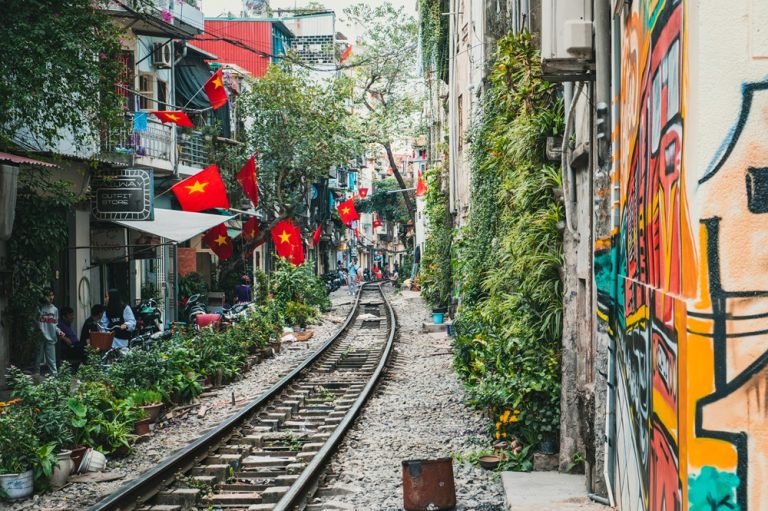
Frequently Asked Questions About Visiting Hanoi
-
What are the best things to do in Hanoi for first-time visitors?
The best things to do in Hanoi for first-time visitors include exploring the Old Quarter, walking around Hoan Kiem Lake, visiting the Temple of Literature, seeing the Ho Chi Minh Mausoleum Complex and exploring the Imperial Citadel of Thang Long. Make time for experiences as well as Hanoi tourist attractions: eat local street food, try egg coffee and watch a traditional water puppet show to experience more of the city's culture. -
What should you not miss in Hanoi?
If you have limited time, don't miss the Old Quarter and Hoan Kiem Lake, which together provide one of the best introductions to the city. Among the most important things to see in Hanoi are the Temple of Literature, Ho Chi Minh Mausoleum Complex and Imperial Citadel of Thang Long. Hanoi's food and café culture should also be part of your visit rather than treating your trip purely as a sightseeing itinerary. -
Is Hanoi worth visiting?
Yes. Hanoi is worth visiting for its combination of history, street life, Vietnamese food, café culture and distinctive neighbourhoods. It can initially feel chaotic, particularly around the Old Quarter, but spending two or three days allows you to move beyond the traffic and discover why the capital is one of Vietnam's most rewarding cities. -
How many days do you need in Hanoi?
Three days in Hanoi is ideal for most first-time visitors. Two days gives you enough time for the major Hanoi attractions and some food and cultural experiences, while three days allows you to explore at a more comfortable pace. If you have additional time, consider using Hanoi as a starting point for Ninh Binh, Ha Long Bay, Sapa or Ha Giang. -
What is the best time to visit Hanoi?
The best time to visit Hanoi is generally October to November and March to April, when temperatures are typically more comfortable for exploring the city. Hanoi has a more pronounced seasonal climate than southern Vietnam, with cool winters and hot, humid, rainy summers. Our guide to choosing when to travel to Vietnam explains how Hanoi's weather fits with conditions elsewhere in the country. -
Where is the best area to stay in Hanoi?
The Old Quarter is usually the best area to stay in Hanoi for first-time visitors because you're within walking distance of restaurants, street food, nightlife and many central attractions. Hoan Kiem and the French Quarter are good alternatives if you want to remain central while staying somewhere somewhat calmer, while Tay Ho and West Lake suit longer stays and travellers who prefer more space away from the busiest tourist streets. -
Is Hanoi easy to explore on foot?
Central Hanoi is very walkable in terms of distance, particularly around the Old Quarter and Hoan Kiem Lake. The challenge is the traffic rather than the distances: pavements are frequently occupied and crossing busy roads takes some adjustment. For attractions farther from the historic centre, Grab and taxis make getting around Hanoi relatively easy. -
What are the best things to do in Hanoi at night?
Some of the best things to do in Hanoi at night include walking around illuminated Hoan Kiem Lake, exploring the Old Quarter, eating street food, drinking bia hơi, visiting the weekend night market and watching a traditional water puppet performance. Hanoi also has rooftop bars, cocktail bars and live-music venues if you want to continue later into the evening. -
What are the best day trips from Hanoi?
Ninh Binh is one of the best day trips from Hanoi, combining limestone karsts, river journeys, temples and spectacular viewpoints. Ha Long Bay is also possible as a long day trip, although overnight cruises allow more time on the water. Sapa and Ha Giang are better treated as multi-day trips from Hanoi rather than day excursions. -
Is Hanoi expensive to visit?
No. Hanoi can be very affordable compared with many international city destinations, particularly if you eat local food, walk around the centre and stay in locally run accommodation. Budget travellers can potentially manage on around US$25–40 per person per day excluding major excursions, while around US$50–90 per day provides considerably more flexibility. For the bigger picture, our guide to planning a Vietnam travel budget covers costs throughout the country.
Travel Resources to Plan, Book & Stay Connected
Use these tools and guides to stay connected abroad, find inspiration for your next trip, and book your flights, stays and gear with confidence.
Disclosure: This article may contain affiliate links. If you make a purchase through a link, I may receive a commission at no extra cost to you. I only share recommendations I believe are genuinely useful, and all opinions are my own. AI was used in this post for research and drafting purposes.

Comment (0)