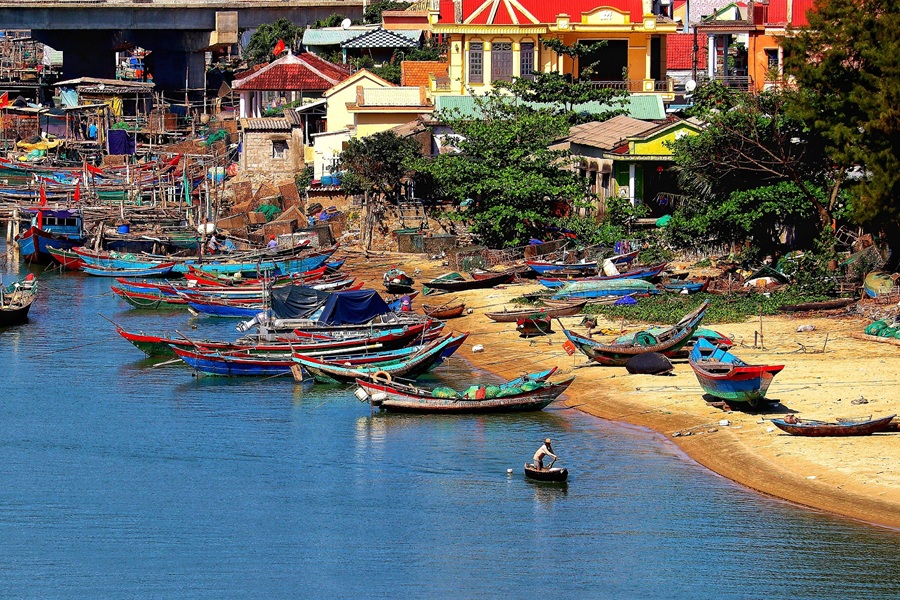
Things to Do in Hoi An at a Glance
- Best for: Historic streets, Vietnamese food, lantern-lit evenings, cycling, beaches and traditional crafts.
- Don't miss: Hoi An Ancient Town, the Japanese Covered Bridge, the Hoai River at night, local food, the surrounding countryside and An Bang Beach.
- How long to stay: Two to three full days gives most travellers enough time to explore the Ancient Town while also experiencing Hoi An beyond its historic centre.
- Good to know: Hoi An is compact and easy to explore on foot or by bicycle, while Da Nang serves as the main transport gateway for flights and trains.
- Best experience: Spend at least one evening in Hoi An. The Ancient Town takes on a completely different atmosphere after dark when its streets and riverfront are illuminated by lanterns.
Planning a wider trip? Start with our Vietnam travel guide, compare routes in our Vietnam itinerary, or explore the best regions and accommodation options in our guide to where to stay in Vietnam.
Why Visit Hoi An, Vietnam?
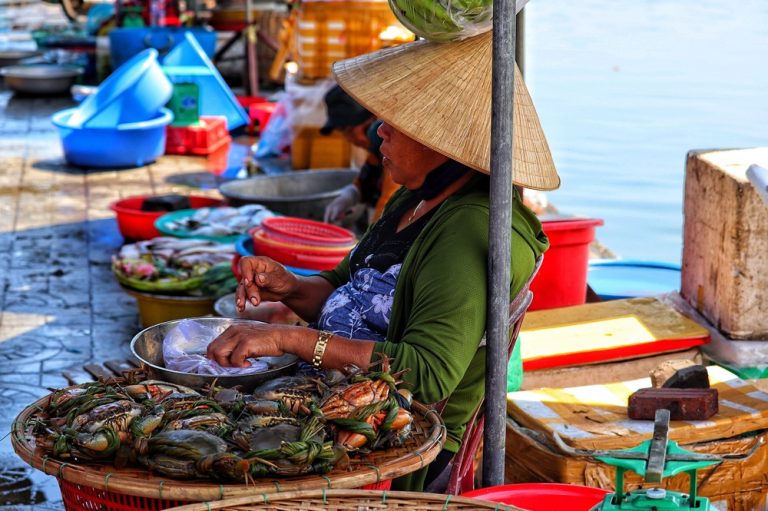
Hoi An is one of those places that feels very different from Vietnam's larger cities. Instead of high-rise skylines and constant traffic, the historic centre is built around narrow streets, traditional houses, colourful lanterns and the Thu Bon River. The heart of the city, Hoi An Ancient Town, is a UNESCO World Heritage Site and one of the best-preserved examples of a historic trading port in Southeast Asia.
Many of the best things to do in Hoi An revolve around this heritage, but the city offers much more than old buildings. You can have clothes made by local tailors, try regional dishes such as cao lầu, cycle through rice fields and villages, take a cooking class, spend an afternoon at An Bang Beach or watch the riverfront come alive with lanterns after sunset.
What makes exploring the things to do in Hoi An particularly enjoyable is how many completely different experiences are packed into a relatively small area. You can visit temples and centuries-old merchant houses in the morning, cycle into the countryside in the afternoon and return to the Ancient Town for dinner and a walk beside the river in the evening. That variety makes Hoi An particularly rewarding for travellers who prefer to slow down rather than rush from one attraction to another.
Hoi An is also easy to combine with Central Vietnam's other major destinations. The city lies around 30 kilometres south of Da Nang, which serves as the main gateway for travellers arriving by air or train. If you have enough time, it is worth experiencing both rather than treating them as interchangeable destinations; our Da Nang travel guide covers the beaches, mountains and modern city experiences that complement a stay in Hoi An.
If you are deciding whether the things to do in Hoi An justify adding another stop to your Vietnam itinerary, for most first-time visitors the answer is yes. Hoi An combines history, food, traditional crafts, countryside and beach access in a way few other Vietnamese destinations do. The Ancient Town can become crowded, particularly in the evening, but staying for more than a quick day trip makes it much easier to experience the quieter side of Hoi An as well.
Best Things to Do in Hoi An
Most of the best things to do in Hoi An combine the city's historic character with experiences you would struggle to replicate elsewhere in Vietnam. The Ancient Town is the obvious starting point, but Hoi An is just as rewarding when you venture beyond its best-known streets to explore local food, traditional crafts, surrounding villages, rice fields and the coast.
You do not need to rush between dozens of Hoi An attractions to enjoy the city. Some of the most memorable experiences are remarkably simple: wandering through the old streets early in the morning, cycling into the countryside, eating a bowl of cao lầu, watching lanterns appear along the river after sunset or spending an afternoon beside the sea.
Explore Hoi An Ancient Town
Hoi An Ancient Town is the historic and cultural heart of the city and the place where most first-time visitors begin exploring. Once an important trading port, the old centre preserves a distinctive mixture of Vietnamese, Chinese, Japanese and European architectural influences that developed through centuries of international trade.
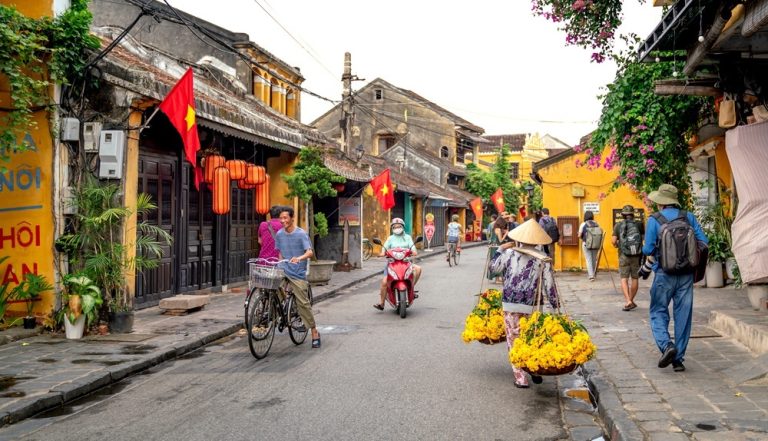
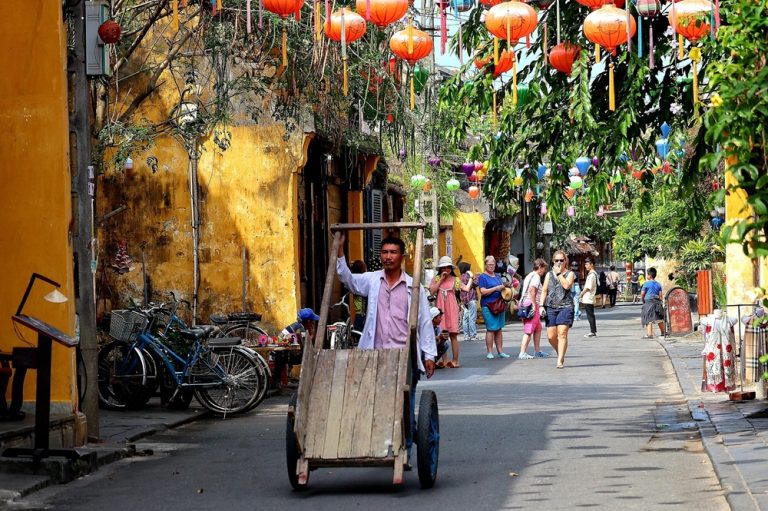
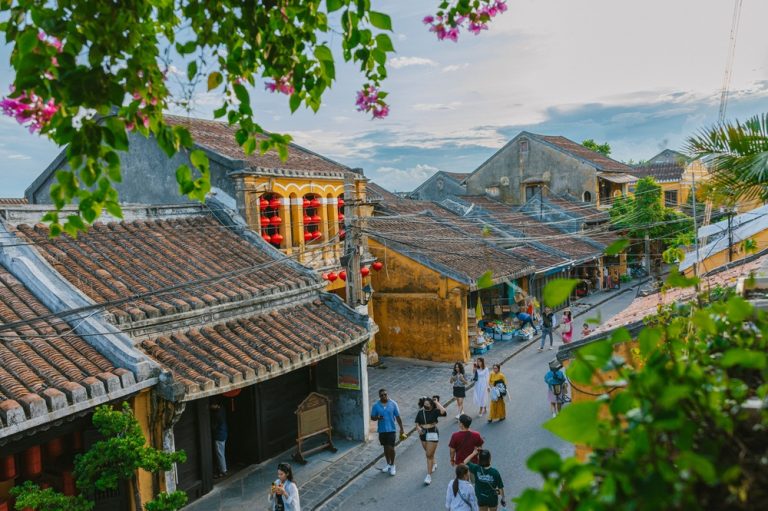
The Ancient Town is compact enough to explore on foot, and wandering without a rigid route is part of the experience. Ochre-yellow façades, wooden merchant houses, temples, assembly halls and narrow streets appear around almost every corner, while the Thu Bon and Hoai riverfronts provide a natural focal point for the old centre.
Among the main Hoi An Ancient Town attractions are the Japanese Covered Bridge, historic merchant houses such as Tan Ky Ancient House, Chinese assembly halls and several small museums devoted to the town's trading and cultural history. Some heritage buildings are included within Hoi An's sightseeing-ticket system, while simply walking through much of the Ancient Town does not require you to enter every individual attraction.
Try to explore the old streets at more than one time of day. Early morning is generally quieter and better suited to appreciating the architecture, while late afternoon gradually brings more people into the centre. After sunset, lanterns illuminate shops, restaurants and the riverside and Hoi An takes on an entirely different atmosphere.
If you are particularly interested in the history behind the buildings rather than simply photographing them, a guided walking tour can add useful context. Hoi An's compact size makes it easy to explore independently, but a knowledgeable guide can help explain the trading families, religious buildings and cultural influences that are easy to overlook when walking through the Ancient Town alone.
Look beyond Hoi An's lantern-filled streets with guided walks and local experiences that uncover the stories, architecture and centuries of trading history hidden throughout the Ancient Town.
Explore Hoi An Ancient Town tours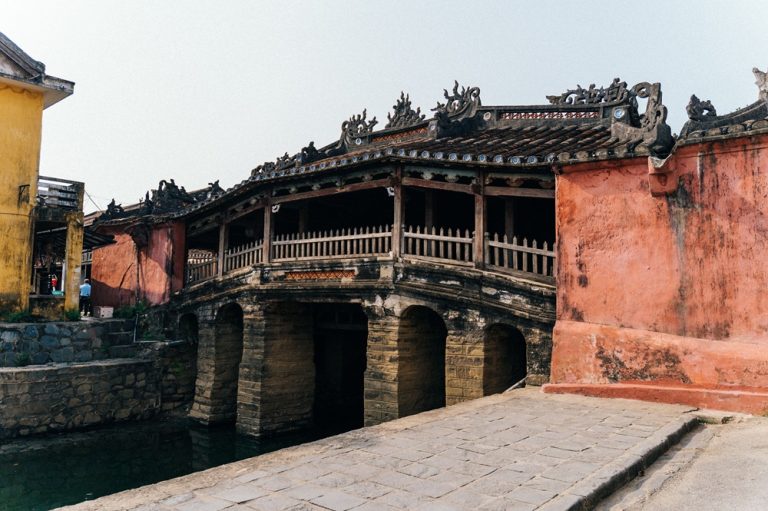
Cross the Japanese Covered Bridge
The Japanese Covered Bridge is one of the most recognisable landmarks in Hoi An Ancient Town and an easy sight to include while exploring the historic centre on foot. The small covered bridge spans a narrow waterway between two parts of the old town and reflects the Japanese presence in Hoi An during the city's centuries as an international trading port.
Although the bridge itself is relatively small, its importance comes from its history and its unusual combination of practical architecture and religious symbolism. A small temple is incorporated into the structure, while the covered wooden walkway and tiled roof make it unlike most other bridges you will encounter during a trip through Vietnam.
The Japanese Covered Bridge is particularly attractive early in the morning, when the surrounding streets are quieter and you can appreciate the structure without the heavier daytime crowds. It is also worth returning after dark, when the bridge and nearby streets are illuminated and the atmosphere of the Ancient Town changes completely.
You will inevitably pass the bridge while exploring central Hoi An, but learning some of the history behind it makes the stop much more meaningful. A guided visit can also place the bridge within the wider story of the Japanese, Chinese and Vietnamese merchant communities that helped shape Hoi An.
Discover the stories behind Hoi An's famous Japanese Covered Bridge and see how this small landmark fits into the much larger history of the Ancient Town and its international trading communities.
Explore Japanese Bridge tours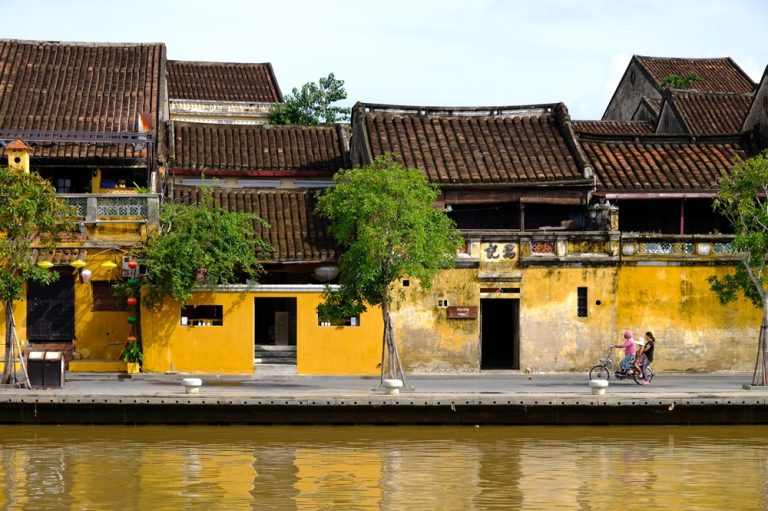
Visit Hoi An's Historic Houses and Assembly Halls
Some of the most interesting places to visit in Hoi An are hidden behind the façades of the Ancient Town's old merchant houses and assembly halls. These buildings reveal much more about the city than you can see simply by walking its streets, particularly the influence of the Chinese merchant communities that played an important role in Hoi An's development.
Tan Ky Ancient House is one of the best-known historic homes in the old town. Its interior combines Vietnamese, Chinese and Japanese architectural influences and provides a glimpse into how prosperous merchant families once lived and conducted business close to the river.
Phung Hung Old House, near the Japanese Covered Bridge, is another worthwhile stop if you are interested in traditional architecture. The building combines residential and commercial features and helps illustrate how Hoi An's merchant houses were adapted to both family life and trade.
Among the Chinese assembly halls, the Fujian Assembly Hall is one of the most impressive. Its elaborate gates, colourful decoration, courtyards and religious spaces make it visually very different from the more restrained merchant houses nearby. The hall became an important gathering and worship space for Hoi An's Fujian Chinese community.
The Cantonese Assembly Hall is another notable heritage building, with ornate carvings, statues and a peaceful courtyard just a short walk from the Japanese Covered Bridge. You do not need to visit every assembly hall and historic house in the Ancient Town, but choosing two or three gives you a much better understanding of Hoi An's cultural mix than simply viewing the buildings from outside.
See Hoi An Ancient Town at Night
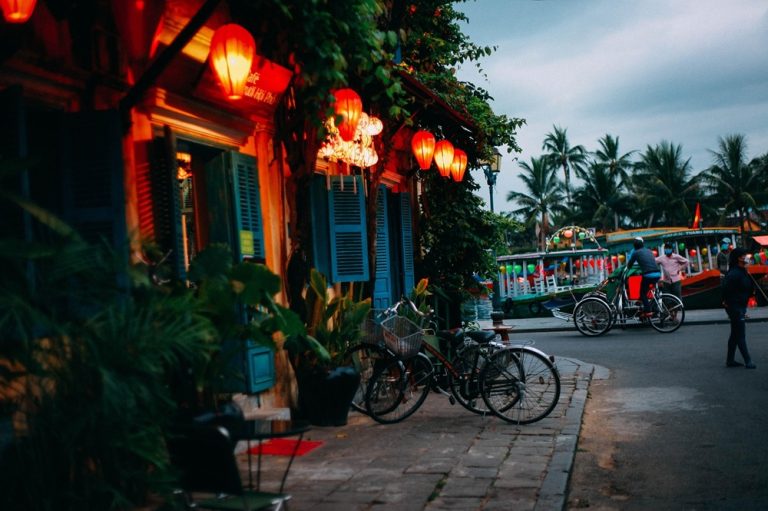
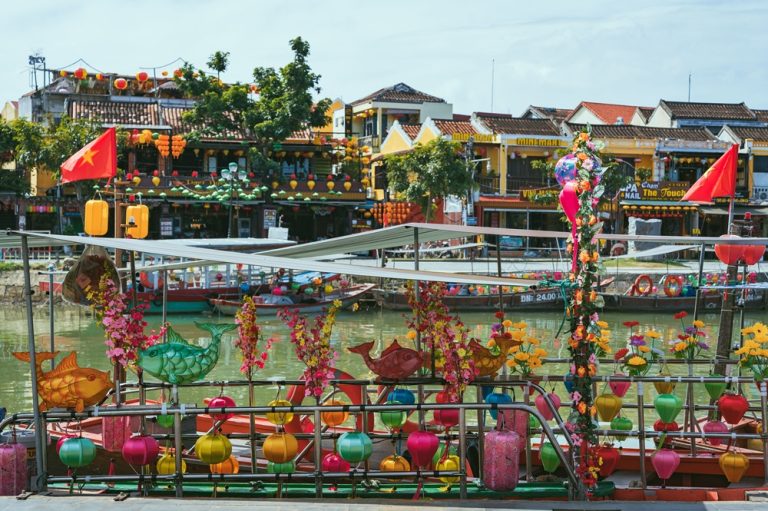
Hoi An Ancient Town is atmospheric during the day, but the old town changes dramatically after sunset. Lanterns begin to glow outside shops, restaurants and historic houses, reflections appear across the Hoai River and the streets around the waterfront become the centre of Hoi An's evening activity.
Walking through the Ancient Town after dark is one of the best things to do in Hoi An at night. There is no particular route you need to follow. Wander along the riverfront, cross An Hoi Bridge, explore the smaller streets behind the waterfront and stop whenever you find somewhere interesting for a drink, food or simply to watch the activity around you.
The atmosphere comes with a trade-off: evening is also one of the busiest times in central Hoi An. The riverfront and the streets around the night market can become crowded, particularly during weekends and busy travel periods. If you want photographs of the historic architecture without large numbers of people, explore early in the morning and return after dark for the lanterns and atmosphere rather than expecting a quiet evening walk.
Hoi An also has a special monthly Ancient Town night associated with the lunar calendar, when traditional activities take a more prominent role. If your visit coincides with one, it can add another dimension to the evening, but you do not need to plan your entire trip around it. Hoi An's lanterns are part of the nighttime atmosphere throughout the year, not something you can only see during a full-moon event.
Take a Lantern Boat Ride on the Hoai River
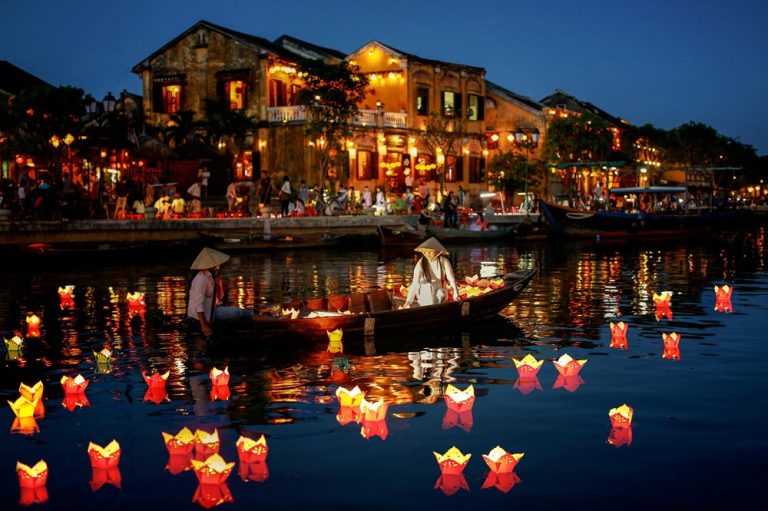
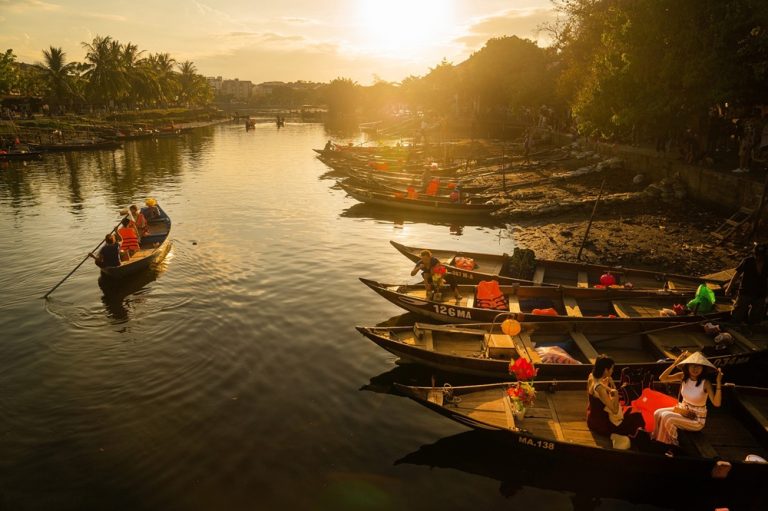
Once darkness falls, small wooden boats begin moving along the Hoai River carrying visitors past the illuminated waterfront. A lantern boat ride is one of Hoi An's most recognisable nighttime experiences and gives you a different perspective on the old town from the water.
The rides are generally short, so think of this as an atmospheric experience rather than a sightseeing cruise. The appeal is being on the river among the lights and lanterns while looking back towards the historic waterfront, rather than travelling any significant distance.
You will also see small floating lanterns being released onto the river. The tradition has cultural and spiritual associations with wishes, remembrance and good fortune, although the experience in central Hoi An today is also firmly part of the city's tourism scene.
It is worth setting expectations accordingly. The river can become busy with boats and the waterfront is rarely peaceful at peak evening times. If you are hoping for a secluded, romantic boat ride, you may find it more commercial than expected. If you approach it as a short and colourful part of an evening in Hoi An, however, it can still be a memorable way to experience the Ancient Town after dark.
Experience Hoi An after the daytime crowds give way to glowing lanterns, busy riverside streets and boats drifting along the Hoai River — and compare the evening experiences available before deciding which ones are worth adding to your night.
Explore Hoi An night experiences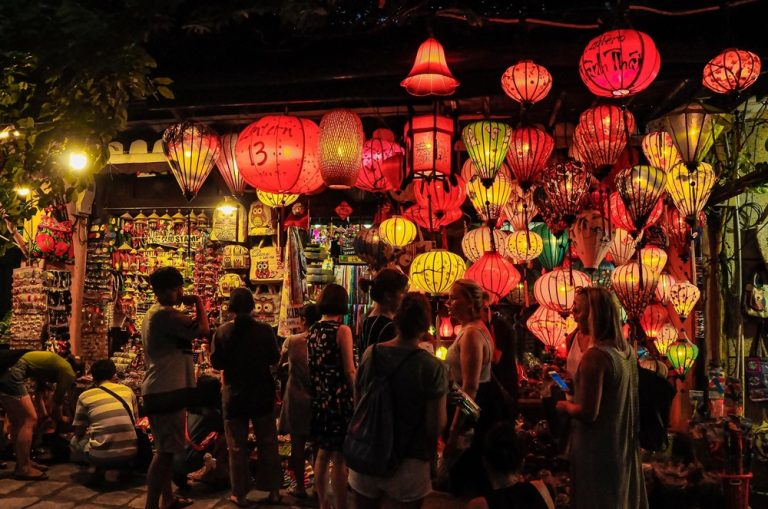
Visit Hoi An Night Market
Once the sun goes down, Hoi An Night Market becomes one of the busiest places on An Hoi Island, just across the river from the Ancient Town. Stalls fill the street with lanterns, souvenirs, clothing, handicrafts and food, making it an easy place to explore as part of an evening beside the Hoai River.
The market is particularly photogenic because of the colourful lantern stalls, but this is very much a tourist market. You will find plenty of inexpensive souvenirs and gifts, although quality varies considerably and bargaining is common. If you are looking for something genuinely handmade or locally produced, take the time to compare stalls rather than assuming everything being sold was made in Hoi An.
Food is another reason to wander through the market, with stalls selling snacks, sweets and quick meals alongside restaurants in the surrounding streets. However, you do not need to rely on the night market for your best meal in Hoi An. Think of the food stalls as part of the evening atmosphere rather than a substitute for exploring the city's wider food scene.
You do not need to dedicate an entire evening to the market. Its location makes it easy to combine with a walk through the Ancient Town, dinner beside the river and a lantern boat ride. Even 30 to 60 minutes is enough for most visitors to browse the stalls and experience the atmosphere before continuing elsewhere.
Turn an evening at Hoi An Night Market into more than a quick wander between the stalls, with local food, lantern-lit streets and nighttime experiences that reveal another side of the Ancient Town.
Explore Hoi An Night Market toursHave Clothes Made by a Hoi An Tailor
Hoi An is famous for its tailors, and having something made to measure can be one of the city's most distinctive experiences. Tailoring here is not simply a modern service created for tourists: Hoi An's long tailoring tradition developed alongside the town's history as an international trading port and remains an important local craft today.
Tailors across Hoi An produce everything from suits and dresses to shirts, trousers and traditional Vietnamese áo dài. Turnaround can be remarkably fast, but fast does not necessarily mean you should leave your order until the last minute. Allowing enough time for measurements, an initial fitting and any final alterations gives you a much better chance of leaving with something that fits properly.
Before choosing a tailor, look at examples of their finished work, discuss the fabric and construction you want and make sure the quoted price includes alterations. Bringing photographs of the style you have in mind can help, but a good tailor should also be willing to explain what will and will not work with your chosen fabric and body shape.
Prices and quality vary considerably between shops, so do not choose solely on the basis of the cheapest quote. If you are ordering an expensive suit, coat or formal dress, spending time comparing workmanship and fabrics is more important than saving a small amount of money.
If having clothes made is one of your priorities, visit a tailor early in your stay in Hoi An. You can then return for fittings without rearranging your final day or worrying about whether alterations will be finished before you leave.
Eat Hoi An's Local Food
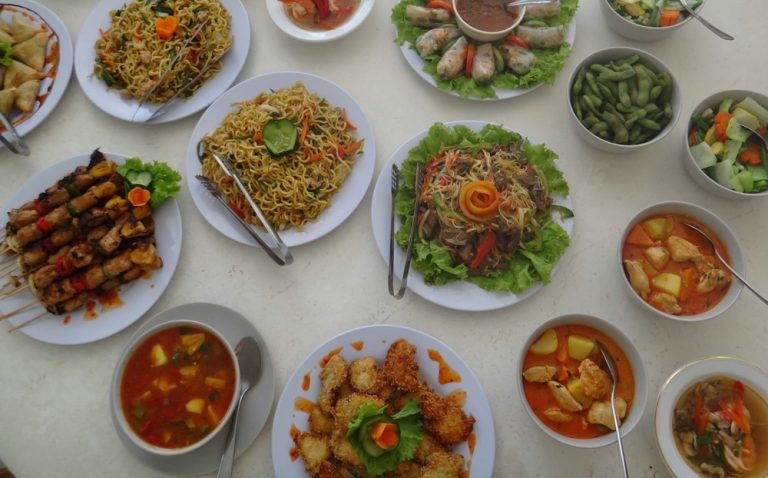
Food is a major part of the Hoi An experience, and the city has several dishes that are closely associated with Hoi An and the surrounding Quang Nam region. Rather than sticking to familiar Vietnamese favourites throughout your stay, make time to try at least a few of the local specialities.
The dish most strongly associated with Hoi An is cao lầu, made with thick, chewy noodles, slices of pork, fresh greens, bean sprouts and crunchy pieces of rice cracker. Unlike pho, it is served with only a small amount of liquid rather than as a bowl of noodle soup. The combination of textures is a large part of what makes it distinctive, and you will see versions of cao lầu on menus throughout the city.
Another Hoi An speciality is white rose dumplings, or bánh bao bánh vạc. These delicate steamed rice-flour dumplings are traditionally filled with shrimp or pork and topped with crispy fried shallots. They make a good dish to share if you want to sample several Hoi An foods during the same meal.
You should also look for cơm gà, Hoi An-style chicken rice, and mì Quảng, a Central Vietnamese noodle dish usually served with meat or seafood, herbs, peanuts and rice crackers. Bánh mì is available throughout Vietnam, but Hoi An also has a particularly strong reputation for it and several shops in and around the Ancient Town specialise in their own versions.
There is no need to experience Hoi An's food exclusively through restaurants aimed at visitors. Markets, simple family-run eateries and small street-food stalls can be just as rewarding. Trying the same speciality in more than one place is often worthwhile, particularly with dishes such as cao lầu, because recipes, toppings and textures can vary considerably.
If you would rather have someone introduce you to several dishes instead of working them out one meal at a time, a food tour can be an efficient way to explore Hoi An's culinary side while learning what you are actually eating and why particular dishes developed here.
Taste your way beyond the obvious tourist restaurants with food experiences that introduce you to Hoi An's signature noodles, dumplings, street food and the stories behind the dishes.
Explore Hoi An food experiencesTake a Hoi An Cooking Class
If eating your way around the city leaves you wanting to understand the food rather than simply taste it, a cooking class is one of the most hands-on experiences you can have in Hoi An. Classes range from straightforward kitchen sessions to half-day experiences combining cooking with visits to markets, farms or nearby villages.
Many classes begin with a visit to a local market, where the guide introduces ingredients before you start cooking. Others incorporate a trip to Tra Que Vegetable Village or activities in the countryside, so it is worth checking exactly what is included rather than choosing a class purely on price.
The dishes vary between classes, but you may learn to prepare Vietnamese favourites alongside Central Vietnamese specialities such as bánh xèo, mì Quảng or cao lầu. A good class should be genuinely hands-on rather than leaving you watching most of the preparation from the sidelines.
Choose the experience according to how much of your day you want to commit. If your main interest is learning a few recipes, a shorter cooking class may be enough. If you also want to explore a market, meet local producers or spend time outside the Ancient Town, a longer experience can combine several Hoi An activities into one morning or afternoon.
Go beyond ordering from the menu and learn how Vietnamese dishes actually come together, with Hoi An cooking classes ranging from hands-on kitchen sessions to market visits and countryside experiences.
Compare Hoi An cooking classes
Ride a Basket Boat in the Coconut Forest
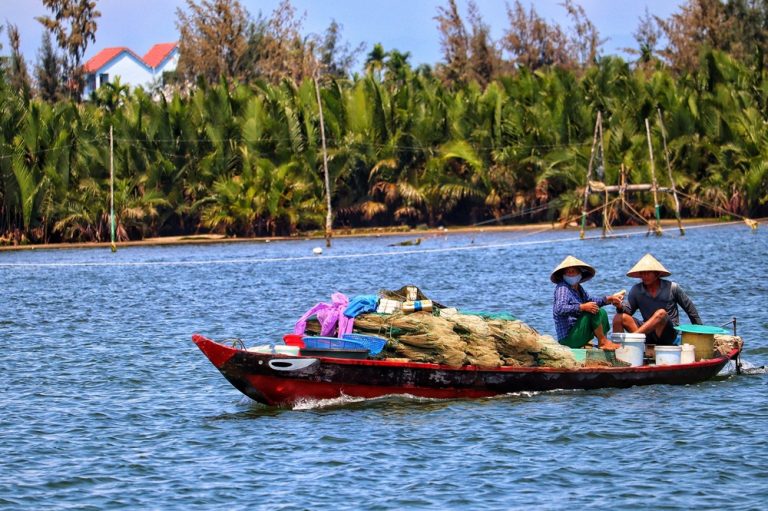
A short journey from central Hoi An takes you into the waterways and nipa palms of the Cam Thanh area, where traditional round basket boats have become one of the most popular experiences outside the Ancient Town. The boats were originally used by local fishing communities, but today basket boat rides through the Bay Mau Coconut Forest are firmly established on Hoi An's tourism circuit.
You sit inside a small circular bamboo boat while a local boat operator paddles through narrow channels between the coconut palms. Depending on the experience you choose, the trip may also include demonstrations of traditional fishing techniques, opportunities to try casting a fishing net and stops for entertainment along the waterways.
It is worth knowing what to expect before you go. This is no longer a quiet, undiscovered excursion through the coconut forest. Popular sections can become busy with other basket boats, music and performances, and some operators offer the fast-spinning basket boat experience that frequently appears in videos from Hoi An.
Whether that sounds entertaining or overly touristy will depend on what you enjoy. If you want a lively and unusual activity, it can be great fun. If you are expecting a peaceful journey through untouched mangroves, the reality may feel considerably more commercial than the photographs suggest. Choosing an earlier departure or a smaller-scale experience may provide a calmer introduction to the area.
Paddle beneath the coconut palms, try traditional fishing techniques or embrace the famously energetic spinning boats — compare Hoi An basket boat experiences before deciding how lively you want your trip to be.
Compare Hoi An basket boat ridesCycle Through the Hoi An Countryside
You do not have to travel far from the Ancient Town before Hoi An begins to feel completely different. Head away from the busy centre and you quickly reach rice fields, vegetable gardens, small villages and quiet rural lanes, making cycling one of the easiest ways to experience another side of the destination.
The relatively flat terrain around Hoi An makes cycling accessible even if you are not a particularly experienced cyclist. You can rent a bicycle and explore independently, especially around the countryside between the Ancient Town and the coast, or join a guided bike tour that takes you farther into local communities.
Going independently gives you the freedom to stop whenever something catches your attention, while a guided ride can be more useful if you want to understand the villages, farming traditions and everyday life you are passing rather than simply cycling through the scenery. Some tours also combine cycling with local food, crafts, farming activities or a basket boat ride.
Morning is generally the most comfortable time to cycle, particularly during hotter months. The roads become considerably less enjoyable under the strongest midday sun, so an early start also leaves the afternoon free for the Ancient Town or the beach.
Leave Hoi An's busy historic streets behind and pedal into rice fields, villages and rural lanes, with guided bike tours revealing places that are easy to ride straight past when exploring alone.
Explore Hoi An bike tours
Visit Tra Que Vegetable Village
Tra Que Vegetable Village sits between Hoi An Ancient Town and An Bang Beach and makes an easy addition to a countryside bike ride. The village is known for growing herbs and vegetables used in local cooking, with cultivated plots creating a noticeably greener and quieter setting than central Hoi An.
You can cycle through the surrounding lanes and stop to look around, but many visitors experience Tra Que through farming or cooking activities that provide more context about how the produce is grown and used. Some experiences involve working in the gardens before preparing a meal with local ingredients.
Tra Que is not somewhere you need to allocate an entire day. It works best as part of a broader countryside outing, particularly if you are cycling between Hoi An and the coast or combining the village with a cooking experience.
If your time in Hoi An is limited, prioritise the Ancient Town and whichever larger experiences appeal to you most. If you have several days, however, Tra Que provides an easy change of pace from the crowded historic centre and fits naturally into a morning spent exploring rural Hoi An.
Spend Time at An Bang Beach
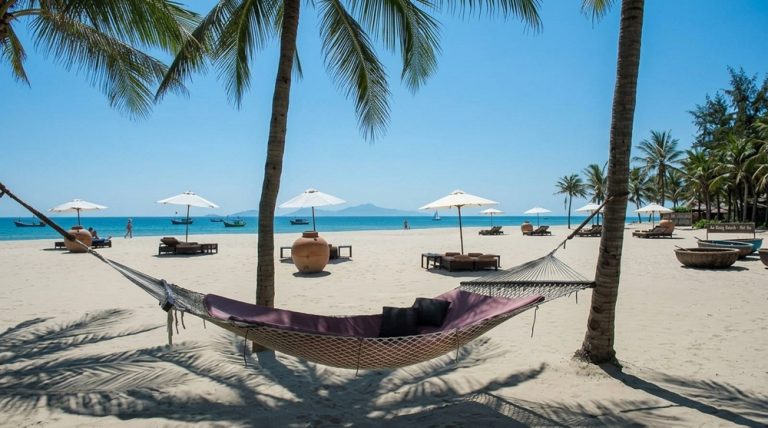
Hoi An is best known for its Ancient Town, but the coast is close enough that you can easily combine sightseeing with time beside the sea. An Bang Beach is one of the most convenient beaches to reach from central Hoi An, making it a good option when you want a break from temples, markets and busy historic streets.
The beach has a long stretch of sand backed by restaurants, cafés and places offering sunbeds. You can swim, relax for a few hours or stay into the evening for dinner near the water. Conditions vary with the season, so the beach experience can look very different depending on when you visit Hoi An.
An Bang is also close enough to reach by bicycle, particularly if you combine it with a ride through the countryside and Tra Que Vegetable Village. If the weather is hot, however, cycling early in the morning or later in the afternoon is considerably more comfortable than making the journey under the midday sun.
You do not need to choose between Hoi An's history and its beach. With several days in the city, it is easy to explore the Ancient Town when temperatures are cooler and spend part of an afternoon at An Bang. Travellers who care more about the coast can also consider staying near the beach and travelling into the historic centre when they want to explore.
Visit the Precious Heritage Art Gallery Museum
For something quieter and more reflective than Hoi An's busiest attractions, the Precious Heritage Art Gallery Museum offers a fascinating look at Vietnam's cultural diversity through photography, traditional clothing and personal stories.
The museum grew from photographer Réhahn's work documenting Vietnam's ethnic communities. Portraits are displayed alongside traditional costumes and information about the people and cultures represented, making this much more than a conventional photography gallery.
It is particularly worthwhile if your Vietnam trip extends beyond the country's major cities and tourist attractions. The exhibits provide context for the extraordinary cultural diversity found across Vietnam and introduce communities that many travellers may otherwise know very little about.
The museum also provides a useful change of pace from the Ancient Town's busier streets. Allow yourself enough time to actually read some of the stories rather than simply walking past the photographs. This is an attraction that rewards curiosity more than rushing.
Step away from Hoi An's busiest sights and discover powerful portraits, traditional clothing and stories revealing the remarkable cultural diversity found across Vietnam.
Explore Precious Heritage experiencesWatch the Hoi An Memories Show
If you want to finish a day in Hoi An with something completely different from wandering through the Ancient Town, the Hoi An Memories Show is a large-scale outdoor performance combining dance, music, elaborate costumes, lighting and theatrical staging.
The production presents episodes inspired by Hoi An's history and development, including its emergence as an international trading port and the different cultural influences that shaped the city. Rather than functioning as a detailed history lesson, the emphasis is on spectacle and visual storytelling.
The scale is what separates the show from Hoi An's smaller cultural performances. A large cast performs across an expansive outdoor stage, with choreography, lighting and scenery used to create a series of historical scenes.
Whether it belongs on your itinerary depends on your travel style. If you prefer spontaneous evenings exploring restaurants and riverside streets, you may be perfectly happy skipping it. If you enjoy theatrical productions or want a polished evening experience built around Hoi An's history, it can be an entertaining addition to your stay.
Because attending the show takes up a significant part of an evening, compare it with the other nighttime experiences you want to have before booking. If you only have one night in Hoi An, you may prefer to spend it exploring the Ancient Town and riverfront. With two or three evenings available, fitting the performance into your itinerary becomes much easier.
See centuries of Hoi An's story unfold through a huge outdoor production of music, costumes, choreography and light — and compare ticket options before giving up one of your evenings.
View Hoi An Memories tickets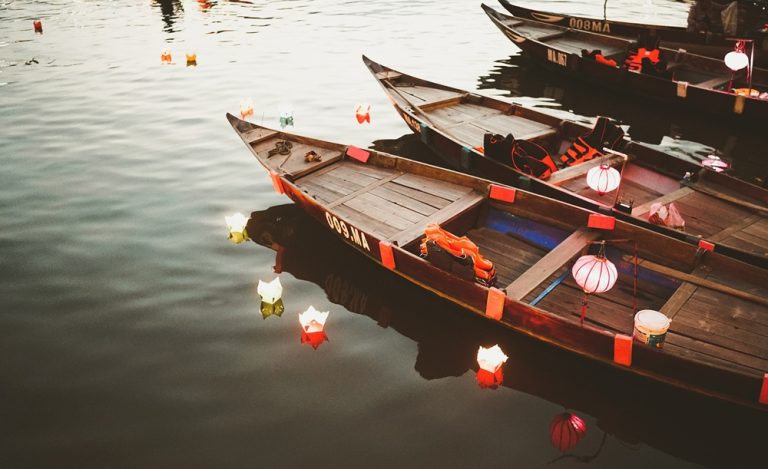
Best Day Trips from Hoi An
Hoi An has enough to keep you busy for several days, but its location in Central Vietnam also puts several very different destinations within reach. The best day trips from Hoi An range from ancient Cham temples hidden among forested hills to tropical islands and the beaches, mountains and city attractions of nearby Da Nang.
You do not need to take all of them. If you only have two days in Hoi An, spending most of that time in and around the city makes more sense. With three or four days, adding one day trip can give you a broader look at Central Vietnam without constantly changing hotels.
Ancient Cham temples, tropical islands, mountain scenery and nearby Da Nang all compete for a spare day in Hoi An — compare the possibilities before deciding which excursion deserves a place in your itinerary.
Explore day trips from Hoi AnMy Son Sanctuary
My Son Sanctuary is one of the most important historical sites you can visit from Hoi An. Set in a mountainous valley west of the city, the archaeological complex contains the remains of Hindu tower-temples constructed by the Champa Kingdom over many centuries.
The UNESCO-listed My Son Sanctuary developed between the 4th and 13th centuries and was an important religious and political centre of the Champa Kingdom. Its surviving brick towers, stone elements and carvings provide a striking contrast to the merchant houses and Chinese-influenced architecture you encounter in Hoi An Ancient Town.
My Son is particularly worthwhile if you are interested in history, archaeology or the cultures that shaped Central Vietnam. The ruins are not as extensive as some of Southeast Asia's enormous temple complexes, but the mountain setting and Cham history give the site a character of its own.
You can visit independently or join a guided excursion from Hoi An. A guide can be especially useful here because understanding what the remaining structures represent adds considerably more to the experience than simply walking between the ruins. An early departure is also worth considering to avoid some of the strongest heat and larger groups later in the day.

Cham Islands
The Cham Islands offer a completely different escape from Hoi An. This small island group lies offshore from the Central Vietnamese coast and is best known among visitors for boat trips, snorkelling, beaches and clear-water coastal scenery.
Most travellers visit as part of an organised day trip, with transport from Hoi An followed by a boat journey to the islands. Depending on the excursion, the day may include snorkelling, swimming, beach time and lunch before returning to the mainland.
The experience is much more dependent on weather and sea conditions than Hoi An's cultural attractions. Do not treat a Cham Islands trip as an automatic year-round addition to your itinerary. Conditions can affect boat services, visibility and how enjoyable the journey itself is, so it makes sense to check the forecast and current operating conditions before committing a day.
If the weather cooperates and you want a break from sightseeing, however, the islands can provide a welcome contrast to the Ancient Town. They are particularly appealing if your wider Vietnam itinerary does not already include significant beach or island time.
Da Nang
Da Nang is close enough to Hoi An that travellers often combine the two, but the destinations offer very different experiences. Hoi An is compact, historic and atmospheric, while Da Nang is a much larger modern city with broad beaches, major landmarks and easy access to mountain and coastal scenery.
You can visit Da Nang as a day trip, but staying there for at least a night or two makes more sense if you want to explore it properly. Attractions such as the Marble Mountains, Son Tra Peninsula and Lady Buddha are easier to appreciate without trying to squeeze the entire city into a few rushed hours.
If Da Nang is part of your route through Central Vietnam, our guide to exploring Da Nang covers what to see, where to go and how to plan your time there. Combining both destinations gives you a much broader experience of the region than choosing one simply because they happen to be close together.
Where to Stay in Hoi An
Choosing where to stay in Hoi An depends largely on whether you want to be close to the historic centre, surrounded by quieter residential streets and countryside, or within walking distance of the beach. For most first-time visitors, the Ancient Town and surrounding streets are the most convenient base, particularly if sightseeing, restaurants and Hoi An's evening atmosphere are your priorities.
Cam Chau offers a quieter alternative between the historic centre and the coast, while An Bang Beach is better suited to travellers who want beach time to be a major part of their stay. None of these areas puts you particularly far from the others, so choosing the right base is more about the atmosphere you want immediately outside your accommodation.
Below are several Hoi An accommodation options in different parts of the city, along with links to browse more hotels in each area if you'd prefer to compare prices, locations and facilities yourself. For accommodation elsewhere in the country, our guide to where to stay in Vietnam covers the main destinations along a typical Vietnam itinerary.
Our Favourite Budget Stay in Hoi An
MAD MONKEY HOI AN
MAD MONKEY HOI AN is our favourite budget option for backpackers, solo travellers and anyone looking for a more social stay. Like Mad Monkey's other Southeast Asian hostels, the emphasis is not simply on providing a bed: communal spaces, organised activities and events make it particularly easy to meet other travellers.
This makes Mad Monkey a very different choice from a quiet boutique hotel or beach resort. If you want privacy and peaceful evenings, one of the alternatives below will probably suit you better. If meeting people and having a social base is part of the experience you want from Hoi An, however, Mad Monkey is the option we would look at first.
WorldlyRoaming readers can receive 10% off their stay by booking directly with Mad Monkey and using the discount code WORLDLYROAMING10.
👉 Check availability and current prices for MAD MONKEY HOI AN

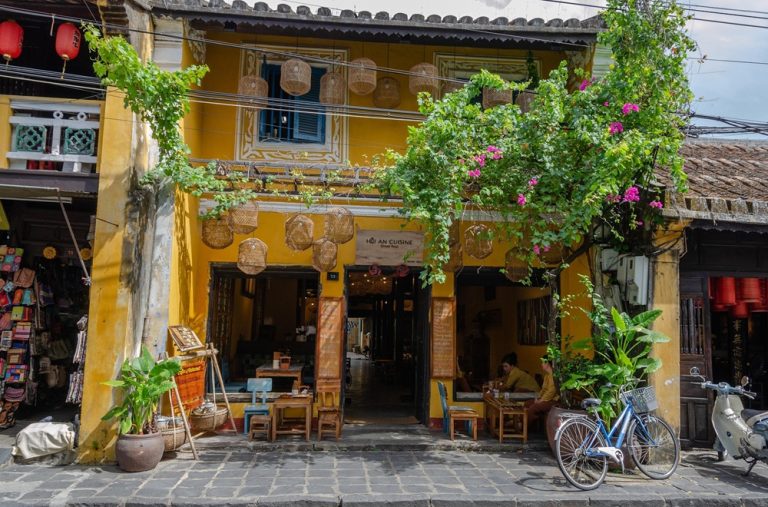
ANCIENT TOWN – BEST FOR FIRST-TIME VISITORS
Staying around Hoi An Ancient Town is the easiest option for most first-time visitors. You will be close to the historic streets, restaurants, cafés, markets and riverfront, while many of the main attractions we've covered above can be reached on foot.
The main disadvantage is that this is also Hoi An's busiest tourist area. If you want to enjoy the convenience without being surrounded by the evening crowds every time you leave your hotel, accommodation just outside the pedestrianised historic core can provide a useful compromise.
SALA HOI AN HOTEL
129 Tran Hung Dao, Cam Pho, Hoi An, Vietnam • +84 963 618 171
SALA HOI AN HOTEL provides a convenient base close to the historic centre for travellers who want easy access to Hoi An's main sights without necessarily staying directly among the busiest streets of the Ancient Town. Its location makes it particularly practical for a first visit when you expect to spend much of your time exploring central Hoi An.
👉 Check availability and current prices for SALA HOI AN HOTEL
Want to compare more options in this part of the city? 👉 Browse more hotels around Hoi An Ancient Town
CAM CHAU – BEST FOR A QUIETER, CENTRAL STAY
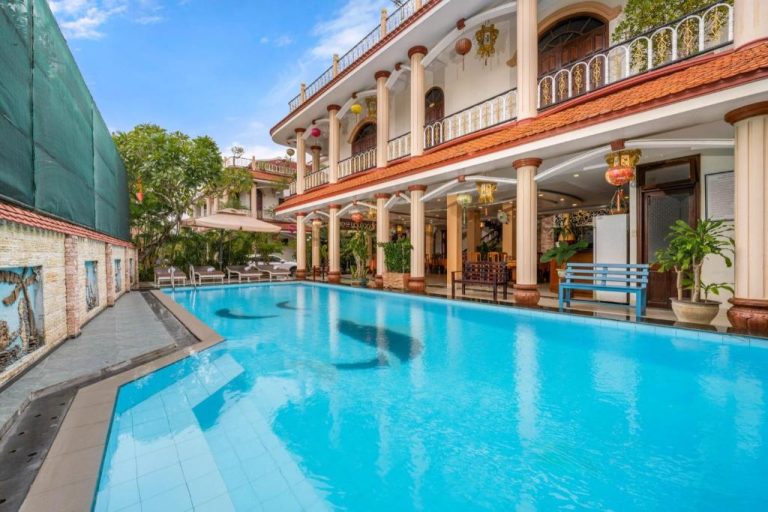
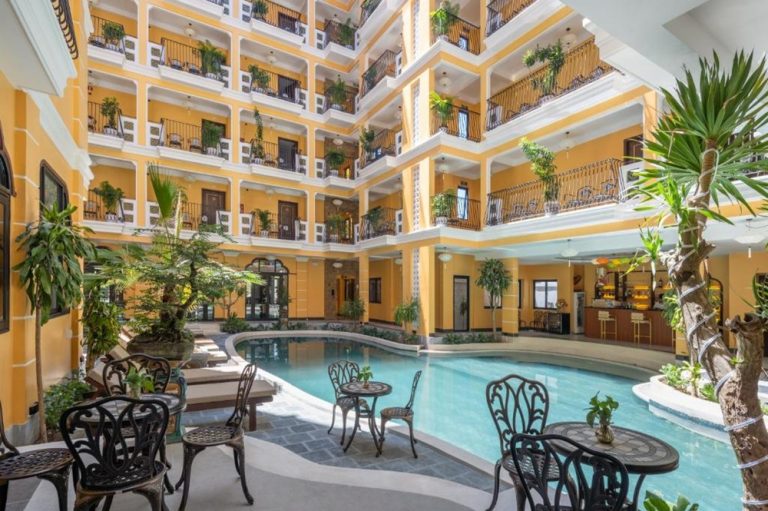
Cam Chau is a good middle ground for travellers who want to remain close to the Ancient Town without staying in the middle of Hoi An's busiest tourist streets. The area stretches towards the countryside and coast, giving it a more relaxed atmosphere while keeping the historic centre within easy reach by bicycle, taxi or a relatively short journey.
This is an especially appealing base if you want to divide your time between the Ancient Town, countryside and An Bang Beach. You sacrifice some of the walk-out-the-door convenience of staying beside the historic centre, but gain quieter surroundings and a location that works well for exploring different sides of Hoi An.
NOLIA HOI AN
Cầu Hói Muống Street Số 01 - 02, 50000 Hoi An, Vietnam • +84 979 98 66 43
NOLIA HOI AN is worth considering if you prefer the more relaxed atmosphere of Cam Chau while still wanting straightforward access to central Hoi An. The location works particularly well for travellers planning to combine sightseeing in the Ancient Town with cycling, countryside activities and trips towards the coast.
👉 Check availability and current prices for NOLIA HOI AN
Prefer to compare accommodation before deciding? 👉 Browse more hotels in Cam Chau
AN BANG BEACH – BEST FOR BEACHES & A QUIETER STAY
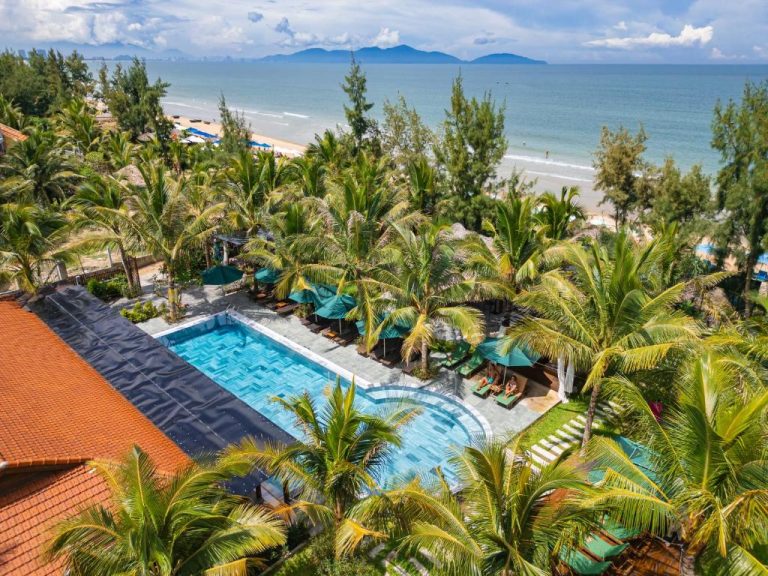
Staying at An Bang Beach changes the rhythm of a Hoi An trip. Instead of heading to the coast when you want a break from sightseeing, the beach becomes part of your everyday surroundings, with the Ancient Town somewhere you visit rather than the centre of your stay.
This area is best suited to travellers who prioritise swimming, beach time and a more relaxed atmosphere. Restaurants and cafés are available around An Bang, while Hoi An's historic centre remains close enough to visit when you want temples, markets, shopping or the lantern-lit riverfront.
HOIANBANG BEACH FRONT VILLA AND RESTAURANT
Kiệt 150 Nguyễn Phan Vinh, 510000 An Bang, Vietnam • +84 935 261 180
HOIANBANG BEACH FRONT VILLA AND RESTAURANT is an option for travellers who specifically want to base themselves beside the coast rather than near the Ancient Town. Its An Bang location makes beach access the priority while still leaving Hoi An's historic centre within easy reach when you want to spend part of the day sightseeing.
👉 Check availability and current prices for HOIANBANG BEACH FRONT VILLA AND RESTAURANT
Looking for a different beachfront stay? 👉 Browse more hotels around An Bang Beach
These are only a few accommodation options across Hoi An's main areas. If you'd rather compare the wider selection before choosing where to stay, 👉 browse more hotels in Hoi An.
How Many Days Do You Need in Hoi An?
For most travellers, two to three full days in Hoi An is a good amount of time. That gives you enough time to explore the Ancient Town without rushing while also experiencing some of the food, countryside and beaches that make Hoi An more than a historic sightseeing stop.
One day in Hoi An is enough to see the highlights, particularly if you are visiting from Da Nang. You can explore the Ancient Town, visit the Japanese Covered Bridge and several historic buildings, try a local speciality such as cao lầu and stay until after sunset to see the lantern-lit riverfront. The downside is that you will experience mostly central Hoi An and have little time for the surrounding countryside or beach.
With two days in Hoi An, the trip becomes much more relaxed. Spend one day exploring the Ancient Town and enjoying Hoi An after dark, then use the second for activities such as cycling through the countryside, visiting Tra Que Vegetable Village, taking a cooking class or heading to An Bang Beach.
Three days in Hoi An is the sweet spot for many first-time visitors. You can explore the historic centre at different times of day, enjoy the countryside and coast without squeezing several activities together, and still have time for experiences such as a food tour, tailoring or a basket boat ride. Three days also gives you more flexibility if the weather disrupts your original plans.
With four days or longer, you can slow the pace considerably or add one of the day trips we've covered above. My Son Sanctuary is the obvious choice for history, while the Cham Islands can be worthwhile when weather and sea conditions are suitable. A longer stay also makes more sense if you want clothes tailored, as it gives you additional time for fittings and alterations.
When deciding how long to stay in Hoi An, consider where it fits within the rest of your trip rather than treating the city in isolation. Our Vietnam itinerary can help you balance Hoi An with Da Nang, Hanoi, Ho Chi Minh City and the other destinations you want to include.
Best Time to Visit Hoi An
The best time to visit Hoi An depends on whether your priority is sightseeing, beach time or avoiding the hottest and wettest periods of the year. Central Vietnam has a different weather pattern from the north and south of the country, so conditions in Hoi An may not match what you experience elsewhere on the same Vietnam trip.
For many travellers, February to April offers some of the most comfortable conditions. Temperatures are generally easier for walking around the Ancient Town and cycling through the countryside, while rainfall is typically lower than during the wetter months later in the year.
From around May into August, Hoi An becomes hotter. These months can still be good for visiting, particularly if An Bang Beach is part of your plans, but sightseeing under the midday sun can become tiring. Early mornings and late afternoons are much more comfortable for walking, cycling and exploring outdoor attractions during hotter periods.
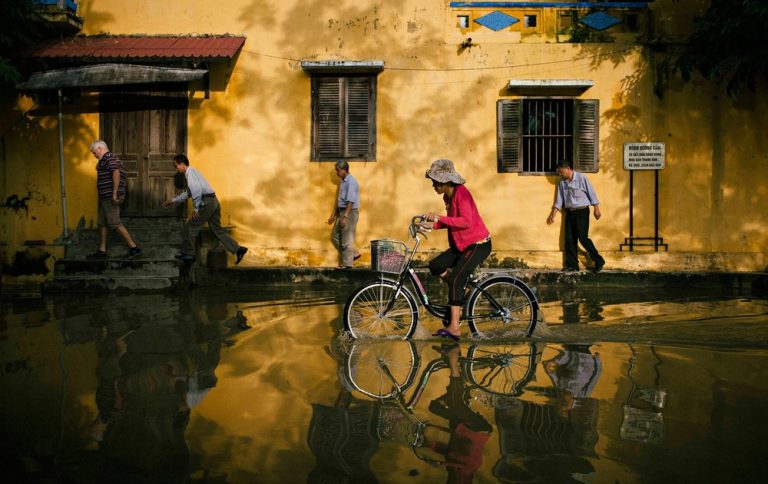
The wetter part of the year generally arrives from around September and becomes particularly significant during the autumn months. Heavy rain and tropical weather systems can affect Central Vietnam, and Hoi An's low-lying Ancient Town is vulnerable to flooding. Flooding does not occur continuously throughout the rainy season, but periods of severe weather can disrupt sightseeing, transport and outdoor activities.
If you visit during the wetter months, flexibility becomes more important. A cooking class, museum or café can work well when conditions deteriorate, while boat trips, cycling, beach days and excursions to the Cham Islands are much more dependent on the weather.
There is no single perfect month for every destination in Vietnam, particularly if you are travelling from north to south. For a broader look at how regional weather patterns may affect your trip, see our guide to the best time to visit Vietnam.
How to Get to Hoi An
Hoi An does not have its own airport or railway station, so most travellers arrive through nearby Da Nang. Da Nang is around 30 kilometres north of Hoi An and serves as the main transport gateway for this part of Central Vietnam.
Getting to Hoi An by Plane
The nearest airport is Da Nang International Airport, which receives domestic flights from major Vietnamese cities as well as international services from destinations elsewhere in Asia. From the airport, you can continue directly to Hoi An by private transfer, taxi, ride-hailing service or shuttle.
The journey from Da Nang Airport to Hoi An usually takes around 45 minutes to an hour, depending on traffic and exactly where you are staying. If you are arriving late, travelling with luggage or simply want the easiest option after a flight, arranging a transfer directly to your accommodation can be particularly convenient.
Getting to Hoi An by Train
Hoi An does not have a train station. If you are travelling through Vietnam by rail, Da Nang Railway Station is the most convenient station for Hoi An. Trains connect Da Nang with destinations including Hue, Hanoi and Ho Chi Minh City, after which you can continue to Hoi An by taxi, transfer or other road transport.
Travelling by train can be particularly appealing if Hoi An forms part of a longer journey through Central Vietnam. The rail route between Hue and Da Nang is one of the more scenic sections of Vietnam's railway network, passing through coastal and mountain scenery before reaching Da Nang.
Getting to Hoi An from Elsewhere in Vietnam
If you are coming from Hanoi or Ho Chi Minh City, flying to Da Nang is generally the fastest way to reach Hoi An. Trains and long-distance buses are alternatives if you prefer overland travel or are stopping at other destinations along the way.
From nearby destinations such as Hue or Da Nang, travelling by road is straightforward. Private transfers offer the most flexibility, while buses and shared transfers can reduce the cost. Your best option will depend on your route, budget and whether you want the journey itself to include stops along the way.
If you are still planning how Hoi An fits into a wider trip, our guide to getting around Vietnam compares the main ways to travel between destinations, while our guide to travelling to Vietnam covers the main options for reaching the country in the first place.
Getting Around Hoi An
Getting around Hoi An is relatively easy because the historic centre is compact and many of the places you'll want to visit are only a short distance apart. Walking and cycling are the best options around the Ancient Town, while Grab, taxis and scooters become more useful when travelling to the beach, countryside or attractions farther from the centre.
Walking Around Hoi An
Walking is the easiest way to explore Hoi An Ancient Town. The historic centre is compact, many streets restrict motorised traffic at certain times, and travelling slowly makes it much easier to notice the merchant houses, temples, cafés, shops and small lanes that give the old town its character.
You do not need transport for most sightseeing within the Ancient Town itself. Comfortable shoes are far more useful than arranging a driver, particularly when several attractions are only a few minutes apart.
Getting Around Hoi An by Bicycle
Bicycles are particularly useful once you move beyond the historic centre. The relatively flat landscape makes it possible to cycle from central Hoi An towards Tra Que Vegetable Village, surrounding rice fields and An Bang Beach without needing to cover enormous distances.
Many hotels and guesthouses offer bicycles or can arrange rentals. Cycling is also one of the most enjoyable ways to explore the countryside independently, although an early start is preferable during hotter months when the midday heat can make even short rides uncomfortable.
Using Grab and Taxis in Hoi An
For journeys that are too far to walk or cycle comfortably, Grab is a convenient option in Hoi An. The app allows you to see the fare before confirming the journey and follow the route on your phone, avoiding the need to negotiate a price with a driver.
Grab or a regular taxi can be particularly useful for travelling with luggage, returning to your hotel after dark or getting between the Ancient Town and An Bang Beach. Availability can vary depending on the time and location, so it is sensible to allow extra time if you need transport for a fixed departure.
Renting a Scooter in Hoi An
A scooter gives you considerably more freedom if you want to explore beyond central Hoi An, particularly the surrounding countryside and coast. However, renting one is not necessary for experiencing the main Ancient Town attractions, and you should only ride if you have the appropriate licence, insurance and experience for local traffic conditions.
If you are not comfortable riding, there is little reason to force it. Hoi An is one of the easier Vietnamese destinations to experience using a combination of walking, cycling and ride-hailing instead.
Hiring a Private Driver
A private driver is unnecessary for everyday sightseeing in central Hoi An but can be useful for longer journeys, airport transfers or day trips where you want greater flexibility. This can work particularly well for couples, families or small groups who can divide the cost.
For a more detailed comparison of trains, buses, scooters, taxis, Grab and private drivers throughout the country, our complete guide to transportation in Vietnam explains when each option makes the most sense.

How Much Does Hoi An Cost?
Hoi An can be a very affordable destination, although how much you spend depends heavily on your accommodation, activities and whether tailoring is part of your plans. Food and everyday transport can remain inexpensive, while custom-made clothing, organised experiences and higher-end hotels can increase your budget quickly.
The prices below are realistic 2026 estimates rather than fixed rates. Accommodation changes with season and availability, tour prices vary by operator and inclusions, and tailoring prices depend enormously on fabric and construction quality.
Currency exchange rate: At the time of writing, US$1 is approximately 26,073 VND. Exchange rates fluctuate, so use this as a quick reference rather than an exact conversion rate for your trip.
| Expense | Typical 2026 Price | What to Expect |
|---|---|---|
| Hostel dorm bed | 300,000–360,000 VND per night | A useful benchmark for a good backpacker hostel in Hoi An. |
| Budget hotel | Around 390,000 VND per night | Simple private rooms can still be remarkably inexpensive, although rates rise during busy periods. |
| Mid-range hotel | Around 650,000–780,000 VND per night | A useful range for comfortable hotels and boutique accommodation. |
| Luxury hotel | Around 1,700,000 VND per night | Luxury resorts and premium properties can cost considerably more, especially in peak season. |
| Bowl of cao lầu | 35,000–50,000 VND | Traditional local eateries are generally cheaper than tourist-oriented restaurants around the Ancient Town. |
| Hoi An Ancient Town sightseeing ticket | 80,000–120,000 VND | Provides access to selected historic monuments, houses, assembly halls and museums according to the ticket purchased. |
| Electric bicycle rental | 60,000–70,000 VND per day | Useful for exploring the countryside, Tra Que and the route towards An Bang Beach. |
| Cooking class | 470,000–910,000+ VND per person | Prices depend on whether the experience includes a market visit, basket boat ride, transfers and a full meal. |
| Tailored shirt | 300,000–700,000 VND | Fabric quality and construction have a major effect on the final price. |
| Tailored two-piece suit | 3,500,000–10,000,000 VND | Local fabrics sit towards the lower end; imported wool, better construction and premium tailoring increase the price substantially. |
👉 On smaller screens, slide the table to the right to view all columns.
For a traveller staying in inexpensive accommodation and eating mainly local food, Hoi An can therefore remain very affordable. Your largest discretionary expenses are more likely to be organised tours, several nights in higher-end accommodation or a significant tailoring order rather than everyday meals and local transport.
Do not budget for tailoring based on the cheapest price advertised outside a shop. The difference between a low-cost tourist suit and something made from better fabric with proper fittings can amount to several million đồng. If you want clothes made, decide what quality you actually want before deciding how much to allocate.
Activities also vary considerably in price because two experiences with similar names may include completely different things. For example, a basic cooking class can cost considerably less than an experience combining hotel transfers, a market visit, basket boat ride, cooking and a meal.
For a complete breakdown of accommodation, meals, transport, sightseeing and typical daily spending across the country, see our guide to budgeting for a trip through Vietnam.
Practical Hoi An Travel Tips
Hoi An is one of the easier destinations to explore in Vietnam, but a little preparation can make your stay considerably smoother. Heat, heavy seasonal rain, cash payments and the amount of time needed for activities such as tailoring are all worth considering before you arrive.
Carry Some Vietnamese Đồng
Cards are accepted at many hotels, restaurants and larger businesses, but cash remains useful for small purchases, particularly at markets, street-food stalls, small cafés and local shops. Carrying smaller denominations also makes everyday transactions easier than repeatedly trying to pay with large notes.
ATMs are readily available around Hoi An, but withdrawal limits and fees vary between banks. Avoid carrying your entire travel budget with you and keep a second payment method somewhere separate from your wallet.
Make Sure You Have Mobile Data
Reliable mobile data makes travelling around Hoi An much easier. You may need it for Grab, navigation, checking opening hours, contacting your accommodation or arranging transport back from places such as An Bang Beach.
If you want to be connected as soon as you arrive in Vietnam without searching for a physical SIM card, our eSIM guide for international travel compares options for getting mobile data abroad.
Plan Around the Heat and Rain
Hoi An is particularly enjoyable on foot or by bicycle, but the middle of the day can become uncomfortable during hotter months. Explore the Ancient Town or countryside earlier in the morning, take a break during the strongest heat and head out again later in the afternoon.
During wetter periods, carry lightweight rain protection and avoid building an itinerary where every activity depends on good weather. Boat trips, cycling and beach days are easier to rearrange when you have some flexibility in your schedule.
Dress for the Weather and Religious Sites
Lightweight, breathable clothing works well for Hoi An's climate, but bring something that allows you to dress respectfully when entering temples and religious buildings. Comfortable walking shoes or sandals are also important because exploring the Ancient Town generally involves considerably more walking than driving.
A reusable water bottle, compact rain protection, sun protection and a small power bank are among the items that can prove genuinely useful during long sightseeing days. Our travel gear recommendations cover practical equipment worth considering before your trip.
Allow Enough Time for Tailoring
If having clothes made is one of the reasons you are visiting Hoi An, visit your tailor near the beginning of your stay rather than on your final day. Even when a shop promises a fast turnaround, leaving time for at least one fitting and any necessary alterations gives you a much better chance of getting the result you want.
Be clear about fabric, design, construction and price before placing an order. For more expensive pieces, comparing several tailors before committing can be worthwhile.
Be Careful in Traffic
Central Hoi An is relatively manageable on foot, but traffic becomes busier once you leave the pedestrian areas. Look carefully before crossing roads and do not assume scooters will automatically stop simply because you have started crossing.
If you rent a scooter, make sure you have the appropriate licence and that your insurance actually covers you. Do not rent one simply because other travellers are doing it. Walking, bicycles, Grab and taxis are enough for most visitors to experience Hoi An comfortably.
Consider Travel Insurance
Hoi An itself is an easy destination to travel around, but a wider Vietnam trip may involve scooters, domestic flights, boat trips, outdoor activities and several changes of accommodation. Medical problems, accidents, cancellations or lost belongings can become considerably more expensive than expected when you are travelling overseas.
Before leaving home, check what your existing policies cover and whether exclusions apply to activities you intend to do. If you still need coverage, you can compare travel insurance options for your trip before travelling.
For more advice covering money, scams, connectivity, transport, cultural etiquette and everyday travel throughout the country, our Vietnam travel tips provide a broader overview. Our Vietnam packing list can also help you prepare for the different climates and activities you may encounter elsewhere on your trip.
Final Thoughts on the Best Things to Do in Hoi An
Hoi An may be compact, but the variety packed into and around the city is what makes it such a rewarding stop in Central Vietnam. The Ancient Town deserves its reputation, particularly when the lanterns appear after sunset, but some of the best things to do in Hoi An take you beyond the historic streets into the surrounding countryside, local food culture and nearby coast.
Give yourself enough time to experience both sides. Explore the old merchant houses and assembly halls, try cao lầu, cycle through the rice fields, spend a few hours at An Bang Beach and return to the riverfront after dark. If you have an additional day, My Son Sanctuary or another excursion can broaden the experience even further.
Hoi An also fits particularly well into a longer journey through Central Vietnam. Nearby Da Nang offers a completely different combination of beaches, mountains and modern city life, so our complete guide to exploring Da Nang is a useful next stop if you are travelling through the region.
If Hoi An is only one part of a larger trip, our suggested route through Vietnam can help you decide how many days to allocate to each destination and how to connect them without spending too much of your holiday in transit.
And if you are still deciding where else to go, our guide to Vietnam's best destinations and experiences brings together the places, attractions and experiences worth considering across the country.
Hoi An is at its best when you don't treat it as a checklist. Give the city enough time to slow down, wander without a plan and experience the quieter mornings as well as the busy lantern-lit evenings. That balance between history, food, countryside and coast is ultimately what makes Hoi An worth adding to a Vietnam itinerary.
Explore More of Vietnam
Hoi An is only one part of a much bigger Vietnam journey. If you're planning to explore more of the country, continue with these WorldlyRoaming destination guides:
- Things to Do in Hanoi – temples, street food and the energy of Vietnam's capital.
- Things to Do in Ninh Binh – limestone landscapes, river journeys and countryside scenery.
- Things to Do in Da Nang – beaches, city life and a convenient base for exploring central Vietnam.
- Things to Do in Nha Trang – beaches, island hopping, cultural sights and coastal experiences.
- Things to Do in Ho Chi Minh City – history, food and the energy of southern Vietnam.
For the bigger picture, start with our Things to Do in Vietnam guide.
Frequently Asked Questions About Hoi An
- What are the best things to do in Hoi An for first-time visitors?
The best things to do in Hoi An for first-time visitors include exploring Hoi An Ancient Town, crossing the Japanese Covered Bridge, visiting historic merchant houses and assembly halls, trying local dishes such as cao lầu, seeing the lantern-lit riverfront at night and exploring the surrounding countryside. If you have more time, add An Bang Beach, a cooking class or a day trip to My Son Sanctuary. - Is Hoi An worth visiting?
Yes. Hoi An is worth visiting for its UNESCO-listed Ancient Town, historic architecture, local food, tailoring, lantern-filled evenings and easy access to beaches and countryside. Although the historic centre can become crowded, staying for two or three days gives you time to experience quieter mornings and areas beyond the busiest tourist streets. - What is Hoi An famous for?
Hoi An is famous for its preserved Ancient Town, colourful lanterns, Japanese Covered Bridge, historic merchant houses, Chinese assembly halls and centuries-old history as an international trading port. The city is also particularly well known for tailoring, cao lầu noodles, cooking classes and its atmospheric riverfront after dark. - How many days do you need in Hoi An?
Two to three full days in Hoi An is ideal for most first-time visitors. One day allows you to see the main Ancient Town attractions, while two or three days gives you time for the countryside, An Bang Beach, local food and activities such as cycling or a cooking class. With four days or longer, you can comfortably add a day trip from Hoi An. - What can you do in Hoi An in one day?
With one day in Hoi An, concentrate on the Ancient Town. Visit the Japanese Covered Bridge, explore several historic houses or assembly halls, eat a local Hoi An speciality and stay into the evening to see the lantern-lit streets and Hoai River. Avoid trying to combine too many countryside and beach attractions with the historic centre in a single day. - What are the best things to do in Hoi An at night?
The best things to do in Hoi An at night include walking through the lantern-lit Ancient Town, exploring Hoi An Night Market, eating beside the river and taking a short lantern boat ride on the Hoai River. The Hoi An Memories Show is another option if you want a larger organised evening performance. - Can you see the Hoi An lanterns every night?
Yes. You do not need to visit during a full-moon festival to see lanterns in Hoi An. Lanterns illuminate shops, restaurants, streets and the riverfront throughout the year, although special lunar-calendar events can create a different atmosphere and include additional traditional activities. - Is the Hoi An lantern boat ride worth it?
A Hoi An lantern boat ride can be worth doing if you want to experience the illuminated waterfront from the river, but expect a short and popular tourist activity rather than a peaceful cruise. The river can become crowded in the evening, so it is best approached as one small part of a night exploring Hoi An. - What food should you try in Hoi An?
Cao lầu is the local dish most strongly associated with Hoi An and should be near the top of your list. Other foods to try in Hoi An include white rose dumplings, cơm gà, mì Quảng and bánh mì. Markets, street-food stalls and small local restaurants are good places to explore Hoi An's food beyond tourist-oriented restaurants. - Is Hoi An good for tailor-made clothes?
Yes. Hoi An is one of Vietnam's best-known destinations for tailor-made clothing, with shops producing suits, dresses, shirts, trousers and áo dài. Quality and prices vary considerably, so compare workmanship and fabrics rather than automatically choosing the cheapest tailor. Place your order early enough to allow time for fittings and alterations. - What are the best day trips from Hoi An?
My Son Sanctuary is one of the best day trips from Hoi An for travellers interested in history and archaeology. Other options include the Cham Islands when sea and weather conditions are suitable and nearby Da Nang for beaches, mountains and city attractions. You can also explore the countryside around Hoi An without committing to a full-day excursion. - Can you visit My Son Sanctuary from Hoi An?
Yes. My Son Sanctuary can easily be visited from Hoi An as a half-day or longer excursion. You can arrange independent transport or join a guided tour. A guide is particularly useful at My Son because understanding the history of the Champa Kingdom and the purpose of the surviving structures adds considerable context to the ruins. - Does Hoi An have a beach?
Hoi An has easy access to the Central Vietnamese coast, with An Bang Beach one of the most popular options close to the city. You can reach An Bang from central Hoi An by bicycle, taxi or Grab, making it easy to combine a morning in the Ancient Town with an afternoon at the beach. - Is An Bang Beach worth visiting from Hoi An?
An Bang Beach is worth visiting if you want to combine Hoi An's cultural attractions with a few hours beside the sea. It is close enough to the city that you do not need to dedicate an entire day to the beach, and it can easily be combined with cycling through the countryside or visiting Tra Que Vegetable Village. - What is the best time to visit Hoi An?
February to April is one of the most comfortable periods for many visitors because temperatures are generally suitable for walking and cycling and rainfall is typically lower than during the wetter part of the year. Hoi An becomes hotter during the summer months, while heavy rain and flooding can affect the Ancient Town during the wetter autumn period. - What can you do in Hoi An when it rains?
Good things to do in Hoi An when it rains include visiting museums and historic houses, taking a cooking class, exploring cafés, shopping or attending a tailoring fitting. Heavy rain can make cycling, beaches and boat activities less practical, so keeping some indoor activities flexible is useful during the rainy season. - Is Hoi An expensive to visit?
Hoi An can be very affordable, particularly if you stay in budget accommodation and eat at local restaurants. Accommodation, food and everyday transport are available across a wide range of prices. Tailoring, organised tours, cooking classes and higher-end hotels are more likely to increase your Hoi An travel budget than basic daily expenses. - How do you get from Da Nang Airport to Hoi An?
Da Nang International Airport is the nearest airport to Hoi An, approximately 30 kilometres away. You can travel from Da Nang Airport to Hoi An by private transfer, taxi, Grab or shuttle, with the journey generally taking around 45 minutes to one hour depending on traffic and the location of your accommodation. - Can you visit Hoi An as a day trip from Da Nang?
Yes. Hoi An is close enough to Da Nang to visit as a day trip, and you can comfortably explore the main Ancient Town attractions and remain until after dark to see the lanterns. However, staying at least one or two nights gives you much more time to experience Hoi An's food, countryside, beach and quieter early mornings. - Is it better to stay in Hoi An or Da Nang?
Stay in Hoi An if you prioritise historic atmosphere, food, walking, cycling and easy access to the Ancient Town. Da Nang is better suited to travellers looking for a larger modern city, extensive beaches and attractions such as the Marble Mountains and Son Tra Peninsula. If your itinerary allows it, staying in both provides two very different Central Vietnam experiences. - What is the best area to stay in Hoi An?
The Ancient Town area is the most convenient place to stay in Hoi An for first-time visitors who want easy access to sightseeing, restaurants and nightlife. Cam Chau is better for a quieter stay between the centre and countryside, while An Bang Beach suits travellers who want the coast to be a larger part of their trip. - How do you get around Hoi An without a scooter?
Hoi An is easy to explore without renting a scooter. Walk around the Ancient Town, use a bicycle for nearby countryside and beach trips, and take Grab or taxis for longer journeys. For most visitors, this combination is enough to explore Hoi An comfortably without driving themselves. - Is Hoi An safe for solo travellers?
Hoi An is generally an easy destination for solo travellers, particularly around the busy Ancient Town and established tourist areas. Normal travel precautions still apply: watch your belongings in crowded areas, use reputable transport, take care when crossing roads and avoid riding a scooter unless you have the correct licence, insurance and experience. - Is Hoi An good for solo backpackers?
Yes. Hoi An works particularly well for solo backpackers because the centre is easy to explore independently and food tours, cooking classes, cycling trips and hostel activities provide opportunities to meet other travellers. Social accommodation such as Mad Monkey Hoi An can make meeting people particularly easy if that is an important part of your trip. - Can you walk around Hoi An Ancient Town?
Yes. Walking is the best way to explore Hoi An Ancient Town because the historic centre is compact and many major attractions are close together. Exploring on foot also makes it easier to discover smaller streets, temples, merchant houses, cafés and shops that you might miss when concentrating only on the major landmarks.
Travel Resources to Plan, Book & Stay Connected
Use these tools and guides to stay connected abroad, find inspiration for your next trip, and book your flights, stays and gear with confidence.
Disclosure: This article may contain affiliate links. If you make a purchase through a link, I may receive a commission at no extra cost to you. I only share recommendations I believe are genuinely useful, and all opinions are my own. AI was used in this post for research and drafting purposes.

Comment (0)