
Things to Do in Da Nang at a Glance
Da Nang combines long sandy beaches, dramatic coastal scenery, cultural sights and some of the best access to Central Vietnam's major attractions. Whether you're planning a short city break or using Da Nang as a base to explore the region, these are the essentials to know before you go.
- Best things to do in Da Nang: Explore the Marble Mountains, discover the Son Tra Peninsula and Lady Buddha, relax on My Khe Beach, visit the Museum of Cham Sculpture and experience the Han River and Dragon Bridge after dark.
- Best for beaches: My Khe is Da Nang's best-known beach, while Non Nuoc and Bac My An offer alternatives depending on where you're staying and the atmosphere you're looking for.
- Best for nature: Son Tra Peninsula rises above the coast just outside the city centre, combining forest, mountain viewpoints and the chance to encounter rare red-shanked douc langurs in the wild.
- Best for culture: The Marble Mountains combine caves, pagodas and viewpoints, while the Museum of Cham Sculpture provides an excellent introduction to the history and artistic heritage of the ancient Cham civilisation.
- Best for food: Don't leave without trying Central Vietnamese specialities such as mì Quảng, bánh tráng cuốn thịt heo and fresh seafood. Da Nang's markets and street-food scene are also worth exploring.
- Best day trips: Hoi An, Ba Na Hills and the Golden Bridge, My Son Sanctuary, the Hai Van Pass and the former imperial capital of Hue are all within reach, making Da Nang an excellent base for exploring Central Vietnam.
- How long to stay: Two or three days gives you time to experience Da Nang itself, but allow longer if you want to use the city as a base for beaches and day trips around Central Vietnam.
Planning a longer journey? Start with our complete guide to things to do in Vietnam, compare routes in our Vietnam itinerary guide, and explore the country's best bases and accommodation in our guide to where to stay in Vietnam.
Why Visit Da Nang, Vietnam?
Da Nang is one of those rare cities where you don't have to choose between a beach holiday and a cultural trip. Set on Vietnam's central coast, the city combines long stretches of sand with forested mountains, Buddhist pagodas, lively markets, excellent food and a riverfront that becomes particularly atmospheric after dark.
For many travellers, the biggest appeal is the variety of things to do in Da Nang without spending hours travelling between them. You can start the morning on My Khe Beach, explore the caves and pagodas of the Marble Mountains, head into the forests of the Son Tra Peninsula in the afternoon and finish the day beside the Han River watching the city lights reflect across the water.
Da Nang is also one of the most useful bases in Central Vietnam. Hoi An lies just south of the city, while the Hai Van Pass and the former imperial capital of Hue are to the north. My Son Sanctuary and Ba Na Hills can also be reached on day trips, meaning you can explore several of the region's major attractions without constantly changing hotels.
But Da Nang shouldn't be treated merely as somewhere to sleep between excursions. The city has a character of its own. Its broad avenues and modern skyline contrast with traditional markets and neighbourhood food stalls, while local dishes such as mì Quảng and bánh tráng cuốn thịt heo give you another reason to explore beyond the beachfront. The surrounding landscape is equally important, particularly the Son Tra Peninsula, where forested slopes meet the sea and rare red-shanked douc langurs still live in the wild.
So, is Da Nang worth visiting? For most travellers exploring Central Vietnam, absolutely. It works particularly well if you want beaches without sacrificing sightseeing, enjoy combining city life with nature, or want a convenient base for exploring Hoi An, Hue and the surrounding region. Two or three days is enough to experience the main Da Nang attractions, while a longer stay gives you time to slow down and add some of Central Vietnam's best day trips.
Best Things to Do in Da Nang
Da Nang's appeal comes from the variety of experiences packed into and around the city. Beaches sit only minutes from busy neighbourhoods, forested mountains rise beside the coastline, and caves, pagodas, markets and museums provide plenty to explore away from the sand. These are the places and experiences worth prioritising when deciding what to do in Da Nang.
Relax on My Khe Beach
My Khe Beach is the stretch of coastline most closely associated with Da Nang, and for good reason. The broad sandy beach runs for several kilometres along the eastern side of the city, with plenty of space for swimming, walking or simply escaping the traffic and heat for a few hours.
The beach is particularly convenient because it doesn't require turning a sightseeing day into a separate excursion. From central Da Nang, you can cross the Han River and be beside the sea within minutes. Hotels, cafés and restaurants line the streets behind the beachfront, but the long shoreline means you can usually walk away from the busiest access points if you prefer a little more space.
Early morning is one of the best times to experience My Khe. The temperature is cooler, local residents come to exercise and swim, and the beach feels noticeably different from the hotter middle of the day. Late afternoon is another pleasant time to visit, particularly if you want to combine the beach with dinner or an evening beside the Han River.
Swimming conditions vary with the weather and season, so pay attention to the warning flags and lifeguard instructions rather than assuming the sea is always calm. During rough conditions, strong waves and currents can make swimming unsuitable even when the beach itself remains open.
You don't necessarily need to dedicate an entire day to My Khe Beach. For travellers primarily interested in sightseeing, a morning swim or a couple of hours in the late afternoon may be enough. If the beach is a major reason you're visiting Da Nang, however, staying on the eastern side of the Han River makes it much easier to build beach time naturally into each day.
Explore the Marble Mountains
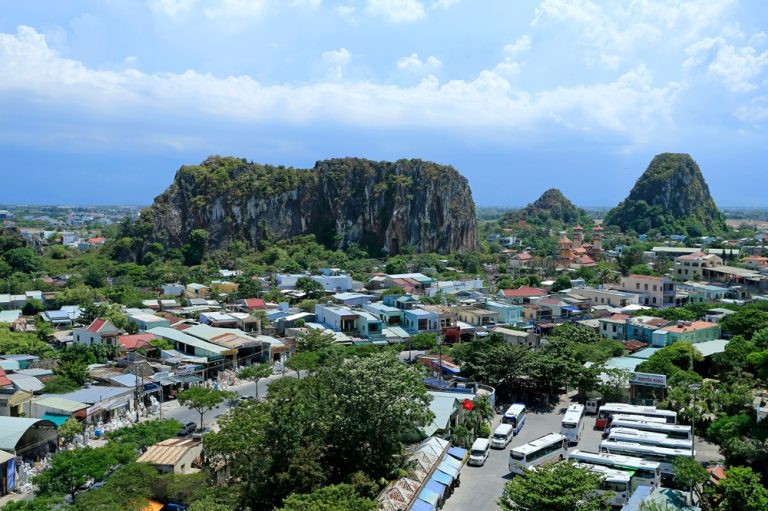
Rising abruptly from the flat coastal landscape south of central Da Nang, the Marble Mountains are one of the city's most rewarding cultural and natural attractions. Known in Vietnamese as Ngũ Hành Sơn, the complex consists of five limestone and marble hills named after the five elements: water, wood, fire, earth and metal.
Although there are five mountains, most visitors spend their time exploring Thuy Son, the Water Mountain. It is the largest of the group and contains the greatest concentration of caves, pagodas, shrines and viewpoints. Rather than being a single sight that you walk up, photograph and leave, Thuy Son is a network of religious and natural spaces that rewards taking your time. Da Nang's city government lists numerous caves and grottoes here alongside Tam Thai and Linh Ung pagodas and viewpoints overlooking the surrounding landscape.
One of the highlights is Huyen Khong Cave, an enormous natural chamber where openings in the rock allow shafts of daylight to fall into the cavern. Buddhist altars and statues occupy the interior, creating an atmosphere very different from the open viewpoints higher on the mountain. Other caves and passages lead through the limestone, while centuries-old religious sites are scattered between them.
The mountain is also home to Tam Thai Pagoda and Linh Ung Pagoda. The latter should not be confused with the better-known Linh Ung Pagoda on the Son Tra Peninsula, which we'll visit later in this guide. The Marble Mountains pagoda occupies the eastern side of Thuy Son and has a long religious history, making the complex much more than a geological attraction.
There are plenty of stairs, and exploring the mountain properly involves repeated climbing and descending. An elevator provides an easier way to reach the upper part of Thuy Son, but it doesn't eliminate the need for steps once you're exploring the caves, temples and viewpoints. Wear comfortable shoes with decent grip, particularly because stone surfaces inside the caves can become slippery.
Allow around two to three hours if you want to explore without rushing. Visiting earlier in the morning can make the climbing more comfortable before the strongest heat of the day. Because several parts of the complex remain active places of worship, dress respectfully when entering pagodas and religious spaces by covering your shoulders and knees.
The Marble Mountains lie roughly 8 km southeast of central Da Nang, making them easy to visit independently by taxi, Grab or motorbike. If you'd rather combine the mountains with other sights and have the logistics organised for you, guided excursions are also widely available.
Opening hours, admission arrangements and access conditions can change, so check the official Marble Mountains website for the latest visitor information before setting out.
Discover the caves, pagodas, viewpoints and sacred spaces of the Marble Mountains with a guided excursion that helps bring the history and significance of this remarkable complex to life.
Discover Son Tra Peninsula
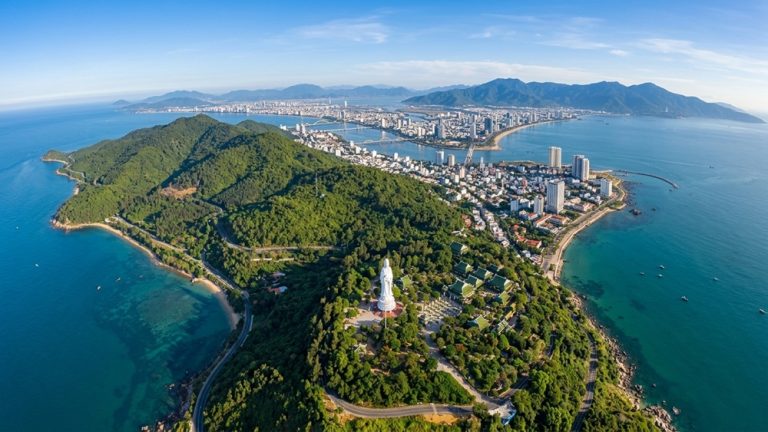
Rising from the sea immediately northeast of Da Nang, the Son Tra Peninsula is where the city gives way to one of its most impressive natural landscapes. Often called Monkey Mountain, the peninsula is covered in forest and surrounded by a rugged coastline, with mountain roads climbing towards viewpoints high above Da Nang and the East Sea.
Son Tra is worth treating as an experience in its own right rather than simply as the location of the Lady Buddha. Exploring the peninsula takes you away from Da Nang's broad avenues and beachfront hotels into dense forest, steep mountain roads and viewpoints where you can appreciate just how dramatically the mountains meet the coast here.
Ban Co Peak is one of the best-known viewpoints on the peninsula. The road climbs high above the city, eventually reaching a viewpoint overlooking Da Nang, the coastline and surrounding mountains. Visibility naturally depends on the weather, and cloud can gather around the higher parts of Son Tra even when conditions beside the beach appear clear.
Another unusual stop is the Son Tra Heritage Banyan Tree, an enormous old tree hidden within the forest. It sits along one of the peninsula's designated visitor routes and provides a very different experience from the coastal viewpoints. The journey through the forest is part of the appeal, particularly if you've spent the previous day exploring central Da Nang.
What makes Son Tra particularly special, however, is that this isn't simply a scenic recreational area. The peninsula protects an important forest ecosystem remarkably close to a major Vietnamese city. Among its best-known inhabitants are the endangered red-shanked douc langurs, which we'll cover separately below because seeing them responsibly requires considerably more thought than simply driving around looking for monkeys.
Do not assume that every rented scooter can be taken across Son Tra. Da Nang currently restricts automatic scooters on several of the peninsula's designated mountain routes because of the steep terrain and road-safety risks. Some roads and branch routes are also closed to tourist traffic, while the road between Ban Co Peak and Bai Bac operates one-way in that direction. These restrictions make it worth deciding how you intend to explore Son Tra before simply renting a scooter and setting off.
The permitted sightseeing hours also change during the year. Visitors are currently allowed on the three designated routes from 7:30 AM to 6:30 PM from March through September and 7:30 AM to 5:30 PM from October through February. Barriers are closed outside those hours. Because access arrangements can change, check the official Da Nang tourism information for Son Tra Peninsula before your visit.
If you're uncomfortable riding a geared motorbike on steep and winding mountain roads, don't treat Son Tra as the place to learn. A taxi, private driver or organised excursion can be a much better choice, particularly if you want to combine the viewpoints and forest with Linh Ung Pagoda without worrying about the peninsula's access restrictions.
Discover the viewpoints, forested mountain roads and natural highlights of Son Tra without having to navigate the peninsula's access restrictions and routes on your own.
Visit Linh Ung Pagoda and the Lady Buddha
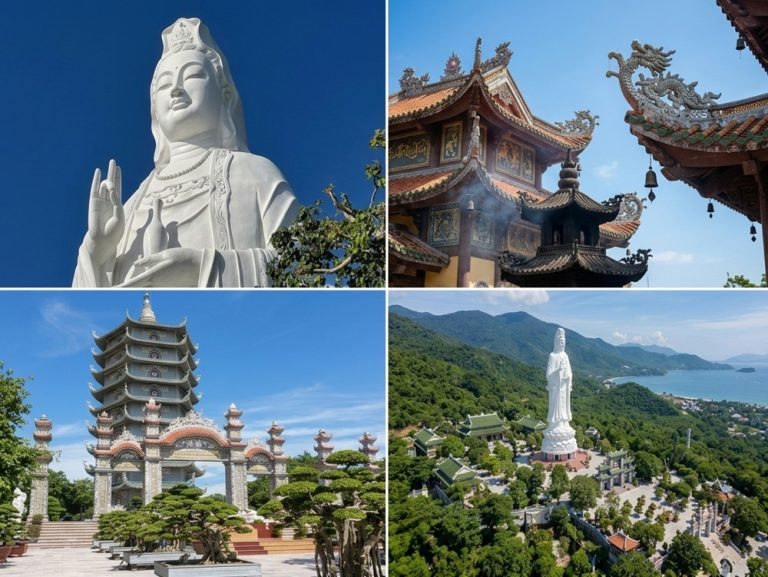
Set high above the coast on Son Tra Peninsula, Linh Ung Pagoda is one of Da Nang's most important Buddhist sites and home to one of the city's most recognisable landmarks: the enormous white Lady Buddha overlooking the sea.
This is Linh Ung Pagoda at Bai But on Son Tra, not to be confused with the other temples of the same name at the Marble Mountains and Ba Na Hills. Construction of the Son Tra pagoda began in 2004 and the complex was inaugurated in 2010. Today, its position between the forested slopes of Son Tra and the sea makes it as memorable for its setting as for its religious significance.
The centrepiece is the 67-metre-high statue commonly known as the Lady Buddha. The figure represents Avalokiteshvara, the Bodhisattva of Compassion, known in Vietnam as Quan The Am. Standing on a huge lotus pedestal and facing out towards the sea, the statue has become closely associated with Da Nang's coastline and the fishing communities below.
Don't rush straight to the statue, however. Walk through the pagoda grounds and you'll find an impressive three-entrance gate, landscaped courtyards and 18 Arhat statues lining the approach to the main sanctuary. Inside the main hall are representations of Shakyamuni Buddha, Avalokiteshvara and Ksitigarbha alongside the Four Heavenly Kings.
The setting is another reason to visit. From the pagoda grounds, the coastline sweeps south towards Da Nang, with the city, beaches and sea opening up below you. Allow around an hour if you're combining Linh Ung with a wider exploration of Son Tra, although it's easy to stay longer if you want time to explore the temple complex rather than simply photograph the Lady Buddha.
Linh Ung remains an active place of worship, so treat it as a religious site rather than simply a tourist attraction. Dress respectfully, keep voices low around worship areas and avoid disrupting people who are praying. Entrance to the pagoda is free.
For current visitor information and more background on the temple, see the official Da Nang tourism information for Linh Ung Pagoda.
Explore one of Da Nang's most important Buddhist sites and discover the Lady Buddha, temple complex and spectacular coastal setting as part of a guided experience.
WorldlyRoaming Tip: Don't stop at the main viewpoint beside the Lady Buddha. Look for the steps near the statue leading down to a small balcony, where you'll find another excellent open view along Da Nang's coastline.

See Da Nang's Red-Shanked Douc Langurs
Son Tra Peninsula isn't only one of Da Nang's most beautiful natural areas. Its forests are also home to one of the world's most extraordinary primates: the red-shanked douc langur (Pygathrix nemaeus), sometimes nicknamed the "Queen of Primates" because of its remarkably colourful appearance.
With red lower legs, black hands and feet, white whiskers, an orange collar and a golden face framed by pale blue eyelids, the red-shanked douc looks almost impossibly elaborate for a wild animal. Seeing one moving through the forest canopy is consequently one of the most memorable wildlife experiences you can have around Da Nang.
More importantly, this isn't an animal to take for granted. Red-shanked douc langurs are Critically Endangered, and the forests of Son Tra protect one of their most important remaining populations. Their survival here is particularly remarkable given that the peninsula rises immediately beside a rapidly growing city.
Doucs spend almost their entire lives in the trees, moving through the upper canopy in social groups and feeding predominantly on young leaves, buds and flowers. They can make spectacular leaps between branches, but their arboreal lifestyle also means they're surprisingly easy to miss even when a troop is relatively close to the road.
Your best chance of spotting them is generally during their more active feeding periods in the early morning and late afternoon. Scan mature forest along the peninsula rather than expecting the animals to appear beside the road. Areas around the forested roads towards Ban Co Peak, the wider Linh Ung area and the northern side of the peninsula can all provide opportunities, although these are wild animals and sightings are never guaranteed.
Binoculars are extremely useful, while photographers will want a telephoto lens rather than attempting to approach the animals. If you do find a troop, stop somewhere safe, remain quiet and watch from a distance. Avoid entering the forest or positioning yourself underneath the animals simply to get a closer photograph.
Never feed a red-shanked douc. Unlike the macaques you may encounter elsewhere on Son Tra, doucs have highly specialised digestive systems adapted primarily to leaves and other plant material. Human food can seriously harm them, while feeding wildlife also encourages unnatural behaviour and increases contact between animals and people.
Habitat fragmentation, development, road traffic and illegal hunting have all placed pressure on Son Tra's langurs. Seeing them should therefore be treated as a wildlife encounter rather than another attraction to tick off your Da Nang itinerary: keep your distance, don't disturb a troop and leave them exactly as you found them.
Join a wildlife-focused tour of Son Tra Peninsula and explore the forest with a local guide who knows where and how to look for Da Nang's critically endangered red-shanked douc langurs.
WorldlyRoaming Tip: When looking for red-shanked doucs, scan the upper forest canopy rather than the roadside. Their colours sound conspicuous, but at a distance they can disappear surprisingly well among leaves and branches. Stop somewhere safe, switch off your engine and spend several quiet minutes searching the treetops with binoculars instead of constantly moving along the road. Early morning and late afternoon generally give you the best chance of catching a troop while it's actively feeding.
Watch the Dragon Bridge Come Alive
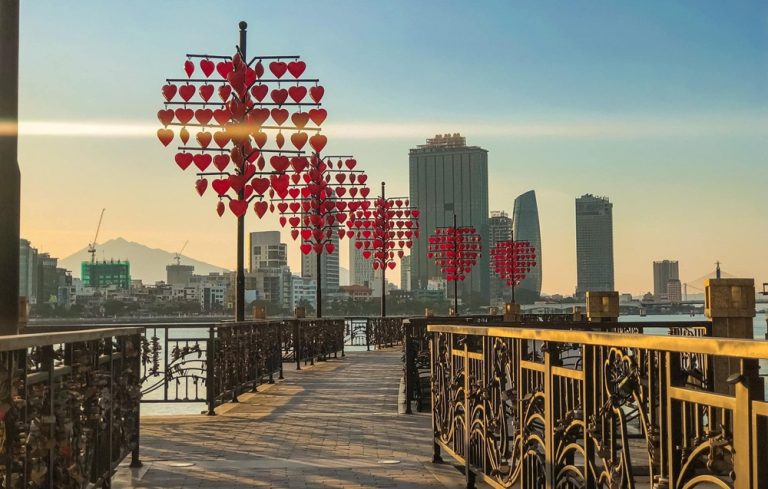
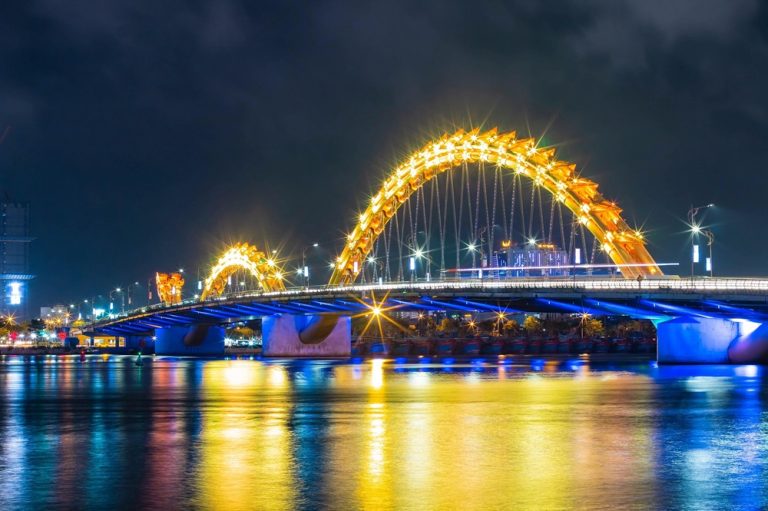
Da Nang is famous for its bridges, but none has become as closely associated with the city as the Dragon Bridge. Stretching across the Han River between the city centre and the beachside districts, the enormous golden dragon is impressive during the day, but it's after dark that the bridge really earns its place among the best things to do in Da Nang.
Opened in 2013, the bridge stretches for 666 metres across the river and was designed in the form of a dragon reaching towards the sea. After sunset, thousands of lights illuminate its sweeping steel body, making the bridge one of the most distinctive features of Da Nang's nighttime skyline.
The experience becomes considerably more dramatic on Friday, Saturday and Sunday evenings at 9:00 PM, when traffic is stopped and the dragon performs its famous fire-and-water show. Flames burst from its mouth before powerful sprays of water follow, while crowds gather on the bridge and along both banks of the Han River to watch.
The performance itself is relatively short, so it's worth making it part of a wider evening beside the river rather than travelling across the city solely for the show. Arrive beforehand, walk along the waterfront, find somewhere for dinner or a drink and watch the riverside become increasingly lively as 9:00 PM approaches.
You can watch from the bridge itself, from the riverbanks or from one of the cafés and elevated venues overlooking the Han River. Another option is to see the illuminated bridge from the water, with evening cruises offering a completely different perspective of Da Nang's skyline and its collection of brightly lit bridges.
The regular fire-and-water performance currently takes place at 9:00 PM every Friday, Saturday and Sunday, as well as on certain major holidays. Special events can affect the schedule, so check the official Da Nang tourism information shortly before your visit if seeing the show is important to you.
See the illuminated Dragon Bridge and Da Nang's riverside skyline after dark, with evening experiences offering some of the best views of one of the city's most recognisable landmarks.
WorldlyRoaming Tip: If you watch the show from the bridge itself, think carefully about where you stand. The water-breathing part isn't just a light mist—spectators close to the dragon's head can get wet. Stand farther back if you'd rather stay dry; if you want to be right beside the action, protect your phone and anything else you don't want soaked.
Walk Along the Han River
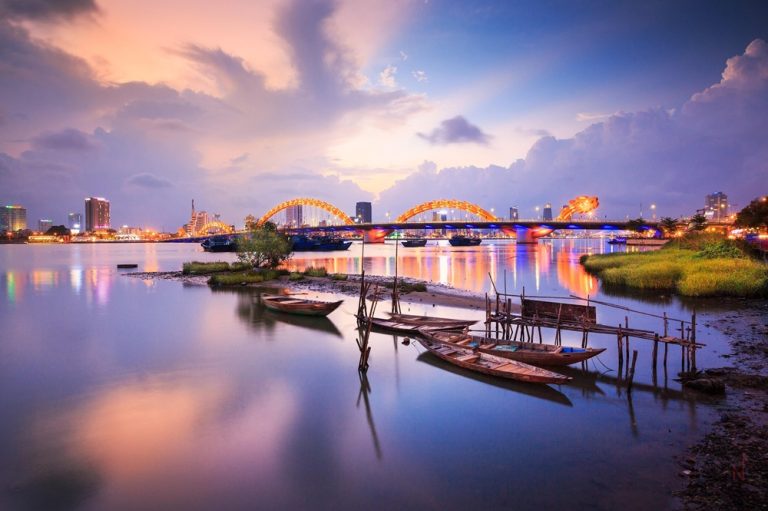
The Han River runs through the heart of Da Nang, separating the city centre from the beachside districts and giving the city much of its distinctive character. While you may cross it several times during your stay, it's worth slowing down and spending some time exploring the waterfront itself, particularly towards the end of the day.
Wide riverside promenades run along sections of both banks, offering an easy escape from Da Nang's busy streets. During the day, the river is relatively peaceful, but the atmosphere changes as the heat begins to fade. Locals come out to walk and exercise, cafés and restaurants become busier and the bridges gradually light up across the water.
The most famous is the Dragon Bridge, which we've already covered above, but it isn't the only bridge shaping Da Nang's skyline. The Han River Bridge, Tran Thi Ly Bridge and Thuan Phuoc Bridge each have distinctive designs, and seeing several of them illuminated at once is one of the pleasures of walking beside the river after dark.
A particularly enjoyable stretch lies around the central waterfront near the Dragon Bridge and Han River Bridge. You can wander without any particular sightseeing agenda, stop for coffee or food and watch boats moving along the river while the lights of the city reflect across the water. It's a simple experience, but one that gives you a much better feel for Da Nang as a living city rather than a collection of individual attractions.
Evening is generally the best time for a walk. Temperatures are more comfortable, the waterfront is livelier and the illuminated bridges create a completely different atmosphere from the daytime. If you're already planning to see the Dragon Bridge fire-and-water show, arriving early and walking along the Han River beforehand is an easy way to turn the performance into a full evening rather than a quick sightseeing stop.
You can also experience the river from the water. Evening cruises travel along the Han River beneath Da Nang's illuminated bridges, offering broader views of the skyline and a relaxed alternative to exploring entirely on foot.
Cruise along Da Nang's Han River after dark and see the Dragon Bridge, illuminated waterfront and city skyline from a completely different perspective.
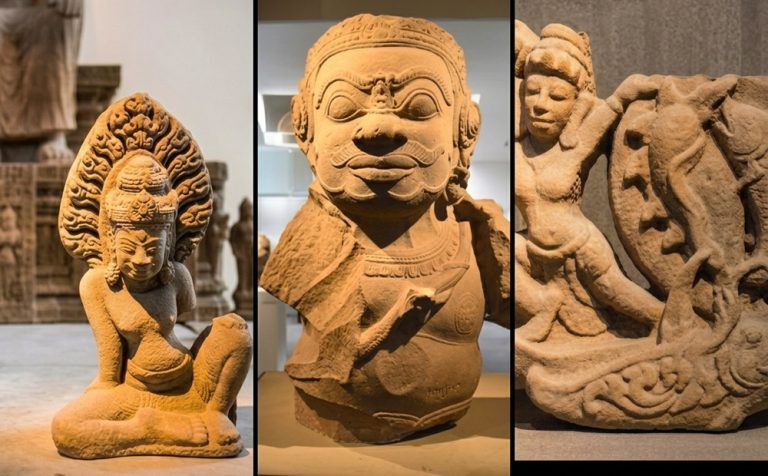
Visit the Museum of Cham Sculpture
If you want to understand the history behind many of the ancient temples and ruins you'll encounter across Central Vietnam, the Da Nang Museum of Cham Sculpture is one of the most worthwhile cultural attractions in the city. Located near the western end of the Dragon Bridge, the museum houses the world's largest collection of Cham sculpture and provides valuable context for the civilisation that once dominated much of this part of Southeast Asia.
The museum was established in the early 20th century, with its first building opening in 1919. Its collection brings together sculptures and architectural fragments discovered at important Cham sites across Central Vietnam, including My Son, Tra Kieu, Dong Duong and Thap Mam. Many of the pieces date from between the 7th and 15th centuries, spanning different periods and artistic styles of the Champa kingdoms.
Rather than displaying the collection simply by type or chronology, many of the galleries are organised according to the archaeological sites where the sculptures were found. That makes the museum particularly useful if you're planning to visit My Son Sanctuary later in your trip, as you'll encounter original sculptures and decorative elements removed from the site while learning more about the Hindu beliefs and symbolism behind them.
Look closely and you'll see representations of Hindu deities including Shiva, Vishnu and Brahma alongside apsaras, sacred animals, elaborate temple decorations and lingas associated with the worship of Shiva. The level of detail preserved in some of the sandstone carvings is remarkable, particularly considering that many are more than a thousand years old.
The museum itself is also part of the experience. Its original architecture was influenced by Cham design, and later extensions have allowed the collection to expand while retaining the character of the historic building. It's compact enough to explore without museum fatigue, but substantial enough to reward visitors who take time to examine the individual galleries rather than rushing through.
Allow around one to two hours for your visit, depending on your interest in history and archaeology. The museum is conveniently located close to the Han River and Dragon Bridge, so it's easy to combine with the riverside attractions we've already covered.
For current opening hours, admission prices and exhibition information, check the official Da Nang Museum of Cham Sculpture website before visiting.
Explore the Museum of Cham Sculpture with a guided experience and discover the history, symbolism and ancient civilisation behind one of the world's most important collections of Cham art.

Explore Han Market
For a taste of everyday commerce in the centre of Da Nang, head inside Han Market. Located just a short walk from the Han River, this two-storey covered market has been one of the city's important trading centres for decades and remains a popular place for both local shoppers and visitors looking for Vietnamese food products, clothing and souvenirs.
The market traces its modern history to the 1940s and was extensively rebuilt in 1989. Today, its stalls sell everything from fresh fruit, flowers and local food products to fabrics, clothes, shoes, bags and household goods. It's compact enough to explore without needing a plan, so simply wander through the different sections and see what catches your attention.
Han Market is particularly useful if you're looking for Da Nang specialties to take home. Stalls sell dried seafood, rice crackers, chilli products, fish sauce, Vietnamese coffee and other regional foods alongside more conventional souvenirs. Even if you don't intend to buy anything, browsing the food stalls provides an interesting introduction to ingredients and flavours you'll encounter elsewhere in Central Vietnam.
The market is also conveniently located for sightseeing. You'll find it at 119 Tran Phu Street, only a few blocks from the Han River, making it easy to combine with the riverside, Dragon Bridge and other central Da Nang attractions rather than treating it as a separate excursion.
Han Market generally operates from 6:00 AM to 7:00 PM daily. Earlier in the day offers more of the traditional market atmosphere, while later visits tend to work well if your main interest is browsing for souvenirs and packaged local specialties.
For current information about Han Market and other traditional markets around the city, see the official Da Nang tourism guide to local markets.
WorldlyRoaming Tip: If you're visiting both of Da Nang's major central markets, give them different jobs. Use Han Market primarily for browsing local specialties and souvenirs, then save your appetite for Con Market, which has a much stronger reputation for street food and local dishes. There's little reason to treat the two markets as interchangeable sightseeing stops.
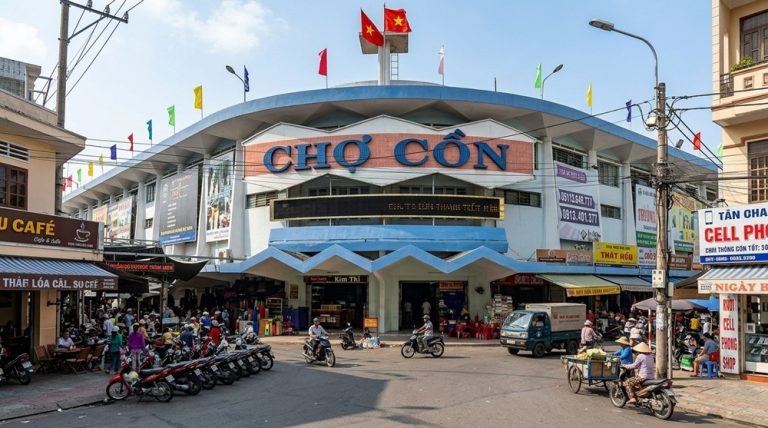
Experience Con Market
If Han Market is the place to browse for souvenirs and local products, Con Market is where you should arrive hungry. One of Da Nang's largest and most established traditional markets, it combines the bustle of an everyday shopping centre with one of the best concentrations of inexpensive local food in the city.
Known locally as Chợ Cồn, the market dates back to the 1940s and takes its name from the raised ground—or cồn—on which it was originally established. What began as a local trading place developed into a sprawling market selling fresh produce, dried foods, clothing, household goods and countless other everyday products.
For travellers, however, the biggest attraction is the food. Con Market is an excellent place to try several of the Central Vietnamese dishes we'll explore later in this guide without visiting a succession of different restaurants. Look for local favourites such as mì Quảng, bún chả cá, bánh xèo, nem lụi and bánh tráng cuốn thịt heo, alongside snacks, desserts, fresh juices and other inexpensive dishes.
There are food vendors both inside the market and around its exterior. The indoor food court is relatively straightforward to navigate, with vendors specialising in different dishes and customers eating shoulder-to-shoulder at small tables. Outside, particularly later in the day, additional stalls create a livelier street-food atmosphere around the market.
Don't feel that you need to recognise everything before ordering. Part of the fun is walking through first, watching what vendors are preparing and seeing what people around you are eating. Portions and prices make it relatively easy to sample several things rather than committing to one large meal, which is exactly why Con Market works so well as an introduction to Da Nang's food culture.
The market is in central Da Nang at 290 Hung Vuong Street and is easy to reach by Grab, taxi or on foot if you're already exploring the city centre. The wider market operates throughout the day, although the afternoon is particularly appealing if food is your priority, as the outdoor food stalls become increasingly active.
Con Market isn't polished or designed primarily for tourists, and that's a large part of its appeal. Come for the food, wander beyond the eating areas and you'll also get a glimpse of the everyday commercial life that continues around Da Nang regardless of who happens to be visiting.
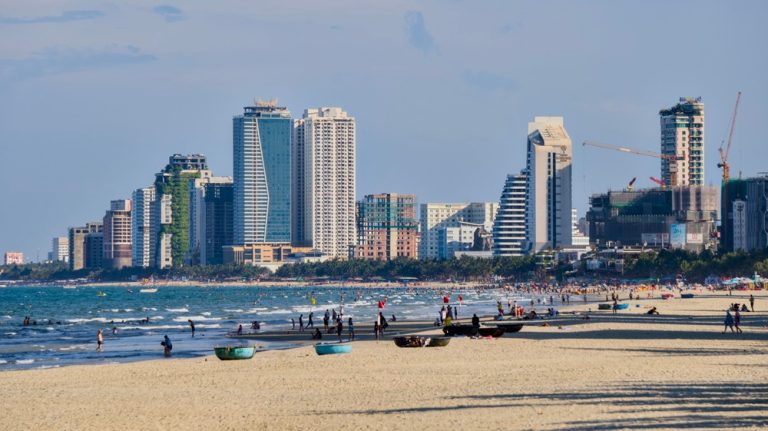
Beaches in Da Nang
Da Nang's coastline is one of the city's biggest attractions, but the beaches don't all offer the same experience. Some are better for first-time visitors who want easy access to restaurants, cafés and accommodation, while others are quieter and better suited to travellers looking for a more relaxed stretch of sand.
We've already covered My Khe Beach in detail earlier in this guide, so rather than repeat the same information here, the table below compares it directly with two other popular beaches in Da Nang to help you decide which one best suits your plans.
| Beach | Best For | Atmosphere | Location | Why Choose It |
|---|---|---|---|---|
| My Khe Beach | First-time visitors, swimming, convenience | Lively and well developed | East of central Da Nang | The best all-round choice if you want beach time combined with easy access to restaurants, cafés and accommodation. See our detailed My Khe Beach section above. |
| Non Nuoc Beach | Relaxation, quieter beach time, combining with Marble Mountains | More peaceful and less urban | South of central Da Nang near the Marble Mountains | A good choice if you want a calmer stretch of coast and an easy combination with the Marble Mountains. |
| Bac My An Beach | Relaxation with convenient city access | Quieter than central My Khe | Immediately south of the main My Khe area | A useful middle ground if you want to stay close to central Da Nang while avoiding the busiest parts of My Khe. |
👉 On smaller screens, slide the table to the right to view all columns.
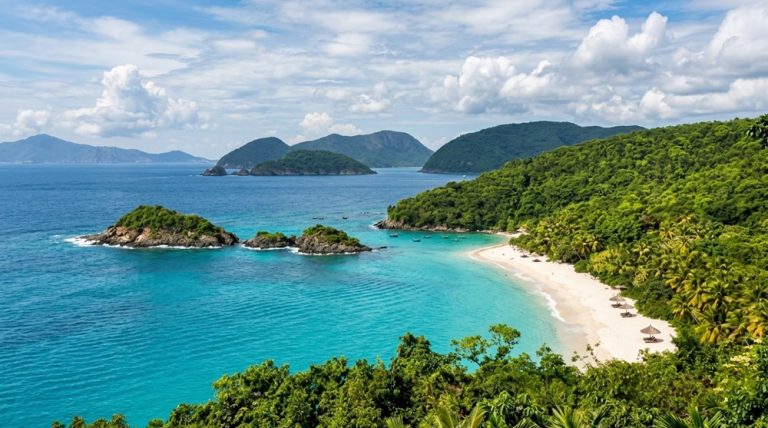
Relax at Non Nuoc Beach
Stretching along the coast beside the Marble Mountains, Non Nuoc Beach offers a noticeably quieter alternative to the busier central stretches of Da Nang's coastline. Its long sweep of pale sand, open sea views and less urban surroundings make it particularly appealing if you want a few relaxed hours by the water without straying far from the city's major attractions.
The beach lies around 8 km southeast of central Da Nang and extends along the coast below the Marble Mountains. Compared with My Khe, development here is more dominated by resorts and residential areas, so you won't find the same concentration of beachfront cafés, restaurants and activity along every section of the shore. That's precisely part of the attraction for travellers looking for somewhere calmer.
Non Nuoc is a good place for swimming, sunbathing and long walks along the sand when sea conditions are suitable. As elsewhere along Da Nang's coast, conditions can change with the season and weather, so pay attention to warning flags and swim in designated areas where lifeguards are present rather than assuming the sea will always be calm.
One of the biggest advantages of Non Nuoc Beach is its proximity to the Marble Mountains. The two attractions are close enough to combine easily, making a morning exploring Thuy Son's caves, pagodas and viewpoints followed by a few hours beside the sea a particularly convenient way to experience both sides of southern Da Nang.
The beach is easy to reach by Grab, taxi or motorbike from central Da Nang. If you're staying elsewhere in the city, there's little reason to devote an entire day solely to Non Nuoc, but it's an excellent addition to a Marble Mountains visit or a worthwhile alternative when you simply want a quieter beach than My Khe.
Relax at Bac My An Beach
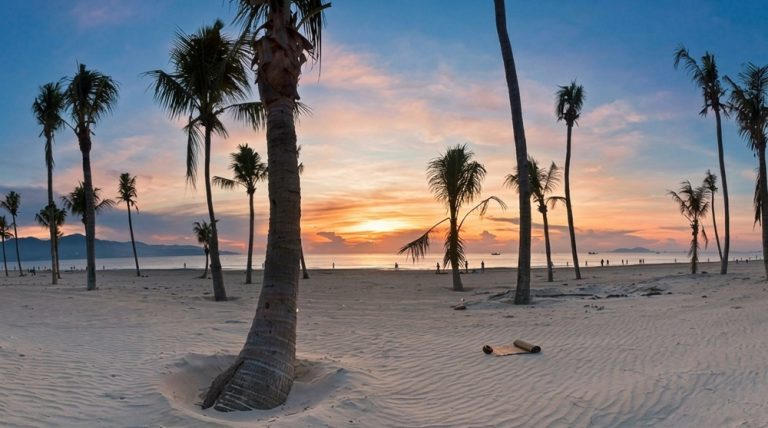
Just south of My Khe, Bac My An Beach offers another attractive stretch of Da Nang's coastline without taking you far from the restaurants, cafés and accommodation of the main beachside districts. It's a particularly good option if you like the convenience of My Khe but would prefer somewhere that generally feels a little less busy.
Bac My An was historically associated with the resort area south of central Da Nang, and several upscale beachfront properties still occupy parts of the coastline. Public sections of the beach, however, allow you to enjoy the same broad sandy shore and views across the East Sea without staying at one of the resorts.
The beach is well suited to swimming, sunbathing and relaxed walks along the coast when conditions are favourable. As with the other beaches around Da Nang, pay attention to warning flags and use designated swimming areas where available, particularly when waves or currents are stronger.
One of Bac My An's main advantages is location. You're still close enough to the My Khe area to have plenty of places to eat and drink nearby, while the Marble Mountains and Non Nuoc Beach are farther south along the same coastal corridor. That makes Bac My An particularly convenient if you're staying on the southern side of Da Nang rather than in the city centre.
Don't expect Bac My An to feel like a remote or undiscovered beach—the surrounding area is firmly part of modern Da Nang. Its appeal is more straightforward: a quieter-feeling stretch of coastline without sacrificing easy access to the city. If My Khe feels busier than you'd like but you don't want to travel as far south as Non Nuoc, Bac My An provides an excellent middle ground.
Food in Da Nang: What to Eat
Da Nang is one of the best places in Vietnam to explore the flavours of Central Vietnamese cuisine. The city's food reflects its coastal setting and its position between Hue and Quang Nam, combining fresh seafood, fragrant herbs, rice noodles, grilled meats and punchy dipping sauces in dishes that are often inexpensive enough to sample several in a single day.
You'll find excellent food everywhere from traditional markets and tiny family-run eateries to seafood restaurants lining the coast. Rather than searching only for familiar Vietnamese dishes such as pho and banh mi, make a point of trying some of the specialties associated specifically with Da Nang and Central Vietnam.
Try Mì Quảng
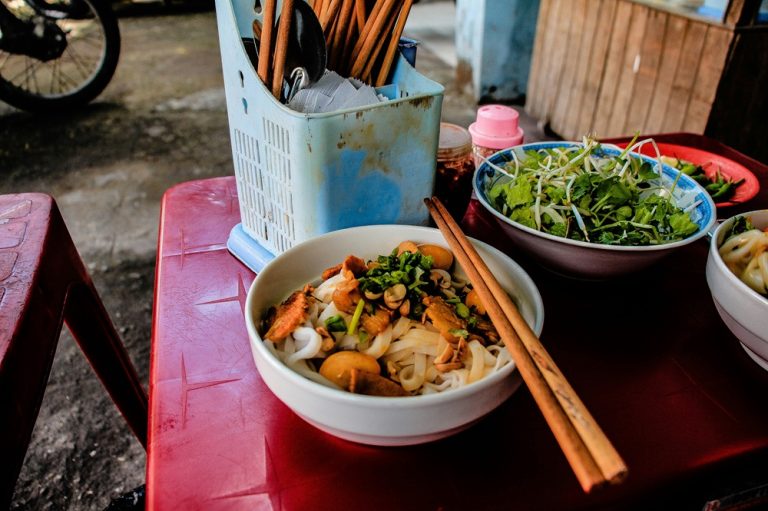
If you try only one regional dish in Da Nang, make it mì Quảng. Originating in neighbouring Quang Nam Province, these broad rice noodles are served with a relatively small amount of intensely flavoured broth rather than swimming in soup. The result sits somewhere between a noodle soup and a dressed noodle dish.
Different versions come topped with combinations of chicken, pork, shrimp, fish or egg, usually accompanied by fresh herbs, banana blossom, roasted peanuts and crisp sesame rice crackers. Add herbs and chilli to taste, break some of the cracker over the noodles for extra crunch and mix everything together before eating.
Eat a Bowl of Bún Chả Cá
Da Nang's coastal location makes bún chả cá, or fish cake noodle soup, another dish worth seeking out. A clear, savoury broth is served with rice noodles and slices of springy fish cake, often accompanied by vegetables, herbs and chilli.
It's lighter than many Vietnamese noodle soups but still substantial enough for breakfast or lunch. You'll see several variations around the city, including bowls combining fried and steamed fish cakes or adding other seafood depending on the vendor.
Try Bánh Tráng Cuốn Thịt Heo
Bánh tráng cuốn thịt heo turns a relatively simple plate of sliced pork into one of Da Nang's most enjoyable hands-on meals. Thin pieces of pork are served with rice paper, rice noodles and a generous assortment of fresh herbs and vegetables, allowing you to assemble each roll yourself.
The defining flavour comes from the dipping sauce, traditionally a strong fermented fish sauce known as mắm nêm. Place the ingredients onto the rice paper, roll everything together and dip it into the sauce. It's fresh, savoury and completely different from simply ordering another bowl of noodles.
Feast on Fresh Seafood
With kilometres of coastline on its doorstep, fresh seafood is an essential part of eating in Da Nang. Seafood restaurants are particularly concentrated around the beachside districts, where tanks and displays allow diners to choose fish, prawns, squid, shellfish and crab before deciding how they want them prepared.
Grilling, steaming and cooking seafood with garlic, chilli, tamarind or lemongrass are all common. Prices vary considerably depending on the species and restaurant, so check whether seafood is priced per dish or by weight and confirm the price before ordering, particularly when choosing directly from live tanks.
Try Bánh Xèo and Nem Lụi
Two dishes that work particularly well together are bánh xèo and nem lụi. Bánh xèo are crisp savoury pancakes made from rice flour batter and typically filled with ingredients such as pork, shrimp and bean sprouts. Nem lụi are seasoned minced-pork skewers grilled over charcoal.
Both are commonly eaten wrapped with rice paper, lettuce and fresh herbs before being dipped into a rich sauce. Ordering them together gives you the combination of crisp pancake, smoky grilled meat, fresh vegetables and herbs that makes Central Vietnamese food so satisfying.
Explore Da Nang's Markets and Street Food
You don't need to eat every meal in a restaurant. Da Nang's markets and streets are packed with small vendors selling noodles, grilled meats, savoury snacks, sweet soups, fresh fruit and inexpensive local dishes throughout the day.
Con Market is particularly worthwhile for food, as we covered earlier in this guide. Its indoor food area and surrounding stalls make it easy to walk around, see what's being prepared and sample several dishes without travelling between different parts of the city. Han Market is useful for packaged specialties and food products you can take home, while Con Market is the stronger choice when your priority is eating.
Exploring independently is part of the fun, but a food tour can be particularly useful if you want to get beyond simply ordering dishes you've already heard of. A local guide can introduce you to smaller vendors, explain unfamiliar ingredients and show you how dishes are traditionally assembled and eaten.
Taste your way through Da Nang with a local guide, from Central Vietnamese specialties and street food to the flavours and dishes that make the city's food scene worth exploring.
WorldlyRoaming Tip: Don't go looking for a single "street food district" in Da Nang—there isn't one. Some of the city's best local food is scattered through traditional markets, neighbourhood eateries and small street stalls across the city. If you're exploring independently, use Con Market as an easy starting point, but don't assume you need to stay around the tourist centre to eat well.
Da Nang After Dark
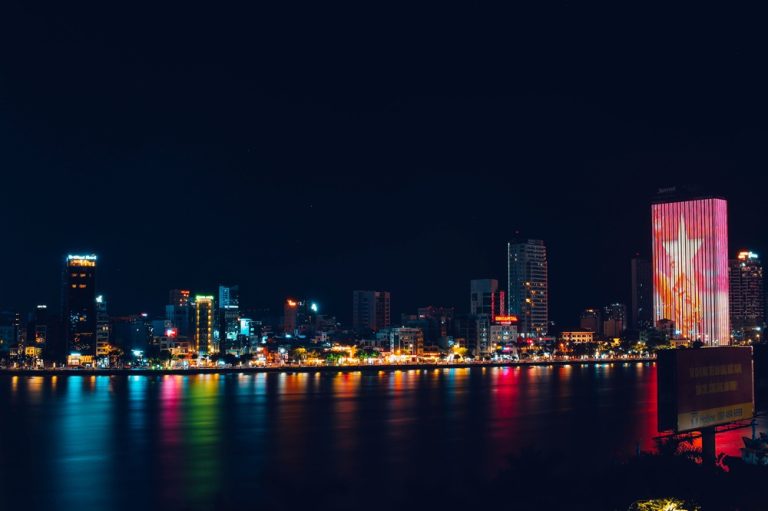
Da Nang doesn't shut down when the sun disappears behind the mountains. In many ways, the city becomes more enjoyable after dark, when the daytime heat fades, the bridges across the Han River light up and locals return to the streets, beaches and waterfront.
We've already covered two of Da Nang's best nighttime experiences earlier in this guide. Walking beside the Han River after sunset gives you views of the city's illuminated bridges, while the Dragon Bridge adds its fire-and-water show at 9:00 PM on Friday, Saturday and Sunday evenings. If you're in Da Nang over a weekend, combining the two makes an easy starting point for an evening in the city.
Explore Da Nang's Night Markets
For something livelier, head to one of Da Nang's night markets. Son Tra Night Market is particularly convenient because it sits close to the Dragon Bridge, making it easy to visit before or after the weekend show. The market fills with food stalls, grilled seafood, souvenirs, clothing and street vendors as evening sets in.
Another option is Helio Night Market, south of the city centre. It's more entertainment-focused, combining a large food area with shopping and live music and performances. If your priority is convenience and you're already exploring the riverfront, Son Tra makes more sense; if you want the market itself to be the evening's entertainment, Helio offers more of a dedicated night-out atmosphere.
Have a Drink Above the City
Da Nang's modern skyline and coastal location also make it a good city for an evening drink with a view. Rooftop bars around the Han River and beachside districts overlook the illuminated bridges, city skyline or coast, and can be particularly enjoyable around sunset when you can watch Da Nang transition from day to night.
You don't need to turn the evening into a major nightlife expedition. A rooftop drink after dinner, followed by a walk beside the river, is often a better way to enjoy Da Nang's nighttime setting than chasing bars across the city.
Spend an Evening by the Beach
The beach is also part of Da Nang's evening life. Around My Khe Beach and East Sea Park, the atmosphere changes considerably once the strongest daytime heat disappears. People walk and exercise along the waterfront, families gather near the beach and the surrounding streets fill with diners heading to seafood restaurants, cafés and bars.
Swimming should be kept to designated hours and supervised areas, but you don't need to be in the water to enjoy the coast after sunset. A walk beside My Khe followed by seafood or drinks nearby provides a much more relaxed alternative to the markets and busier riverside areas.
Da Nang also stages seasonal nighttime events along its beaches, particularly during summer, ranging from music and cultural performances to illuminated beach installations. These programmes change from year to year, so check the official Da Nang tourism website to see what's happening during your visit.
Discover another side of Da Nang after sunset, from illuminated landmarks and bustling night markets to local food, evening cruises and experiences around the city.
Best Day Trips from Da Nang
Da Nang makes an excellent base for exploring Central Vietnam. Within a few hours of the city, you can walk through ancient trading ports, explore imperial monuments, discover the remains of the Champa civilisation and travel across some of the most spectacular mountain scenery on the Vietnamese coast.
Some destinations can be reached easily on your own, while others work particularly well as organised excursions. We'll start with one of Da Nang's most popular day trips: the mountain resort of Ba Na Hills and its famous Golden Bridge.
Visit Ba Na Hills and the Golden Bridge
High in the mountains west of Da Nang, Ba Na Hills is one of the region's most unusual attractions. Rather than a traditional Vietnamese mountain village, it's a large hilltop resort and entertainment complex combining gardens, viewpoints, amusement attractions, European-inspired architecture and one of Vietnam's most photographed modern landmarks: the Golden Bridge.
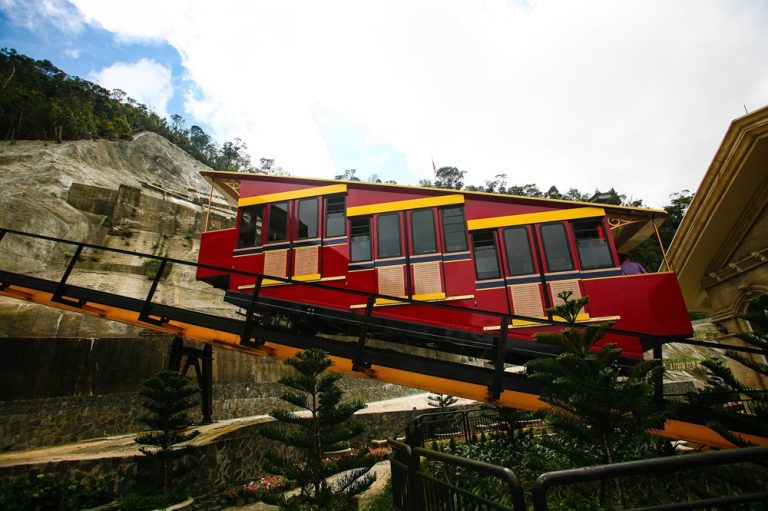
The journey up is part of the experience. Ba Na Hills is reached by an extensive cable-car system that carries visitors from the foothills into the mountains, with increasingly dramatic views across forested slopes towards Da Nang and the coast as you climb.
The main reason many travellers visit is the Golden Bridge, or Cầu Vàng. Opened in 2018, the 150-metre pedestrian bridge curves around the mountainside at roughly 1,400 metres above sea level and appears to be supported by two enormous weathered stone hands rising from the forest. The design has made it one of the most recognisable images of modern Vietnam.
There's considerably more at Ba Na Hills than the bridge itself. You can explore flower gardens, visit Linh Ung Pagoda and its large Buddha statue, wander through the French Village and spend time at Fantasy Park, an indoor amusement area included within the wider complex. Performances and seasonal events also take place throughout the resort.
Ba Na Hills is consequently best treated as a full-day excursion rather than a quick trip to photograph the Golden Bridge. The complex is large, and travelling between its different levels and attractions takes time. It can also become extremely busy, particularly around the bridge, so arriving as early as possible gives you a better chance of experiencing the most popular areas before the largest tour groups arrive.
The mountain location also means the weather can be surprisingly different from Da Nang below. Clouds and mist can roll across the summit even when the coast is clear, and temperatures are generally cooler at altitude. Bring a light extra layer and don't assume blue skies at your hotel guarantee unobstructed mountain views.
Ba Na Hills lies around 25 km west of central Da Nang. You can arrange your own transport and purchase admission independently, but organised day trips are convenient if you'd rather have transfers, tickets and the day's logistics handled together.
For current opening times, cable-car information, ticket prices and attraction updates, check the official Sun World Ba Na Hills website before visiting.
Travel from Da Nang into the mountains to experience the famous Golden Bridge, spectacular cable-car journey, French Village and attractions of Ba Na Hills without organising the day's transport and logistics yourself.
WorldlyRoaming Tip: If the Golden Bridge is your priority, head there as soon as you arrive at the upper complex rather than saving it for later. It's one of Ba Na Hills' busiest locations, and getting there early gives you a better chance of seeing the bridge before the heaviest daytime crowds arrive.
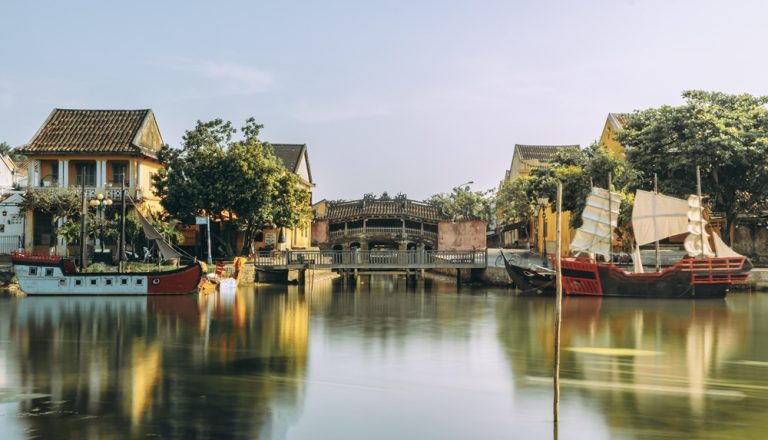
Visit Hoi An Ancient Town
Just south of Da Nang, Hoi An Ancient Town is one of Central Vietnam's most rewarding day trips. Once an important international trading port, its remarkably well-preserved historic centre is filled with yellow-painted merchant houses, temples, assembly halls, narrow streets and lanterns that have made Hoi An one of the country's most distinctive destinations.
Hoi An was inscribed as a UNESCO World Heritage Site in 1999. UNESCO describes the town as an exceptionally well-preserved example of a Southeast Asian trading port that operated between the 15th and 19th centuries, with its buildings and street plan reflecting both indigenous traditions and the influence of foreign merchants who settled and traded here.
You don't need a rigid sightseeing itinerary to enjoy Hoi An. Much of its appeal comes from simply walking through the pedestrian-friendly historic centre, following narrow lanes between old houses and stopping whenever a courtyard, temple or riverside view catches your attention.
Among the best-known landmarks is the Japanese Covered Bridge, originally constructed by Hoi An's Japanese trading community and now one of the symbols of the town. Elsewhere, historic merchant houses and Chinese assembly halls reveal the mixture of Vietnamese, Chinese, Japanese and later European influences that developed during Hoi An's centuries as an international trading port.
The Thu Bon River forms another important part of the old town. Cafés and restaurants occupy historic buildings along the waterfront, small boats travel along the river and the streets become increasingly atmospheric towards evening as colourful lanterns begin illuminating the historic centre.
That's one reason Hoi An works particularly well as an afternoon and evening day trip from Da Nang. You can explore the architecture and heritage sites while they're still open, have dinner in the old town and stay long enough to experience the lantern-lit streets and riverfront after sunset before returning to Da Nang.
Hoi An lies roughly 30 km south of Da Nang and can be reached by taxi, Grab, private transfer or organised excursion. If you're travelling independently, allow enough time to explore slowly rather than treating the old town as a quick photo stop. Guided trips can be worthwhile if you want more historical context or prefer to combine Hoi An with other attractions south of Da Nang.
Discover Hoi An's UNESCO-listed Ancient Town, historic merchant houses, temples and lantern-lit streets on an organised excursion from Da Nang.
WorldlyRoaming Tip: If you're visiting Hoi An as a day trip from Da Nang, don't automatically go first thing in the morning. Arriving in the afternoon lets you explore the heritage sites in daylight, stay for dinner and then see the old town after the lanterns come on. You'll experience two completely different sides of Hoi An in a single visit.
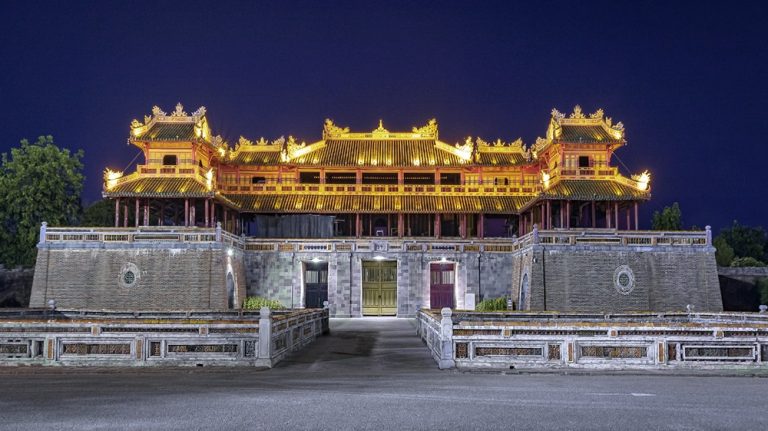
Explore the Imperial City of Hue
North of Da Nang, Hue offers a completely different window into Vietnam's history. The city served as the imperial capital of the Nguyen Dynasty from 1802 until 1945, leaving behind an extraordinary collection of palaces, temples, gates, royal tombs and fortified structures centred around the former Imperial City.
Hue's historic monuments were inscribed as a UNESCO World Heritage Site in 1993. Known collectively as the Complex of Hue Monuments, they reflect the city's role as Vietnam's political, cultural and religious centre under the Nguyen emperors.
The centrepiece is the Imperial City, enclosed within the vast Hue Citadel beside the Perfume River. Pass through the imposing Ngo Mon Gate and you'll enter a complex that once contained ceremonial halls, temples, gardens and the Forbidden Purple City, where the emperor and members of the royal household lived and worked.
War, particularly the fighting around Hue during the Tet Offensive in 1968, caused extensive damage to the complex, and many buildings were destroyed. Restoration has continued for decades, but enough survives—and has been reconstructed—to convey the enormous scale and ambition of Vietnam's former imperial capital.
A day trip shouldn't necessarily end at the Citadel. Hue's heritage extends along the Perfume River, where the Nguyen emperors constructed elaborate royal tombs designed as much as landscaped retreats as burial places. The tombs of Minh Mang, Khai Dinh and Tu Duc are among the best known, each reflecting a very different architectural style and imperial personality.
Thien Mu Pagoda, overlooking the Perfume River from Ha Khe Hill, is another of Hue's most recognisable landmarks. Its seven-storey Phuoc Duyen tower has become a symbol of the city, while the pagoda itself remains an important Buddhist religious site.
Hue lies roughly 90 km northwest of Da Nang, so expect the journey to take around two hours each way depending on traffic and your route. That makes for a long day, particularly if you want to see the Imperial City, royal tombs and Thien Mu Pagoda rather than rushing through a single attraction.
Travelling independently is certainly possible, but Hue is one of the day trips where a knowledgeable guide adds genuine value. The scale of the Imperial City and the history surrounding the Nguyen Dynasty can be difficult to appreciate from the architecture alone, while an organised excursion also removes the need to coordinate transport between Hue's widely separated monuments.
Discover Hue's UNESCO-listed Imperial City, royal heritage and historic monuments on a guided day trip from Da Nang, with transport and sightseeing organised for you.
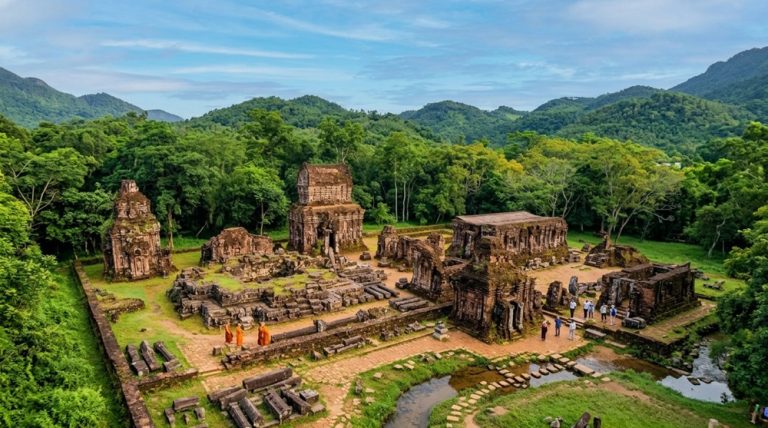
Discover My Son Sanctuary
Hidden in a lush valley southwest of Da Nang, My Son Sanctuary contains the remains of one of the most important religious centres of the ancient Champa civilisation. Surrounded by forested mountains, its red-brick temple towers provide a fascinating contrast to the imperial monuments of Hue and the merchant houses of Hoi An.
My Son was an important spiritual and political centre of the Champa kingdoms for centuries, with construction taking place between the 4th and 13th centuries. The sanctuary was primarily associated with Hinduism, particularly the worship of Shiva, and successive Cham rulers built temples here to honour deities and commemorate their dynasties.
The sanctuary was inscribed as a UNESCO World Heritage Site in 1999. UNESCO recognises My Son as an exceptional example of cultural interchange and an important illustration of the Hindu-influenced Champa civilisation that developed along the coast of present-day Vietnam.
Today, the archaeological site consists of groups of brick temple towers, sanctuaries and other structures scattered through the valley. Some are remarkably well preserved, while others survive only as foundations or fragmented walls. Walking between them reveals intricate carvings, sandstone sculptures and architectural details that hint at how elaborate the sanctuary once was.
My Son also carries visible scars from Vietnam's more recent history. The sanctuary suffered significant damage during the Vietnam War, particularly from aerial bombing, and bomb craters can still be seen around parts of the site. Restoration and archaeological work have continued for decades, preserving surviving structures while helping researchers better understand Cham construction techniques.
If you've already visited the Museum of Cham Sculpture in Da Nang, My Son is especially rewarding. Many sculptures and architectural elements recovered from Cham sites are preserved in the museum, so seeing the temples themselves gives the collection much greater context. Conversely, visiting the museum after My Son helps make sense of details you may have noticed among the ruins.
My Son lies roughly 40 km southwest of Hoi An and around 70 km from central Da Nang. Allow around two hours to explore the archaeological area itself, plus travel time. The site is exposed in places and Central Vietnam can become extremely hot, so an early start is particularly worthwhile.
You can visit independently by arranging your own transport, but a guided excursion has a clear advantage here. Without some understanding of Champa history and Hindu symbolism, the individual temple groups can easily become a collection of beautiful ruins rather than parts of a much larger religious and political story.
Explore the UNESCO-listed temples of My Son with a guide and discover the history, architecture and Hindu traditions of the ancient Champa civilisation.
WorldlyRoaming Tip: Visit My Son as early as you realistically can. Much of the archaeological area is exposed, and exploring the temple groups becomes considerably harder once the midday heat builds. An early visit also gives you a better chance of experiencing the ruins before the largest day-tour groups arrive.
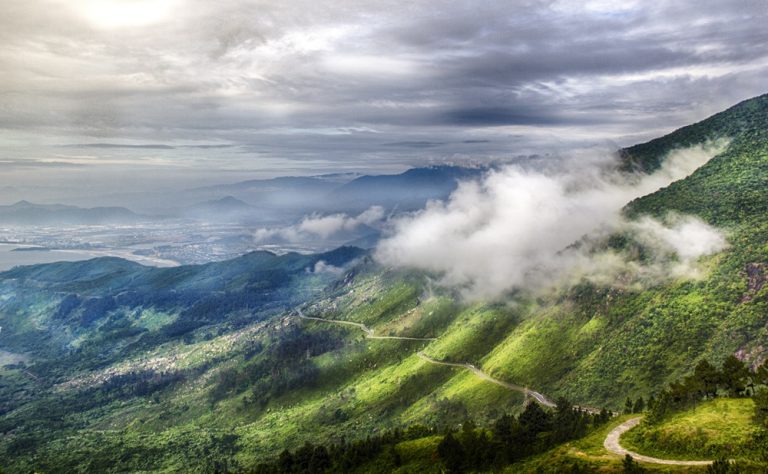
Drive the Hai Van Pass
Few roads in Central Vietnam are as spectacular as the Hai Van Pass. Winding across the mountains between Da Nang and Hue, the route climbs above the coastline through forested slopes, hairpin bends and viewpoints overlooking the sea, making the journey itself every bit as memorable as the destinations at either end.
Known in Vietnamese as Đèo Hải Vân, or the "Ocean Cloud Pass," the road crosses a spur of the Annamite Range that reaches the coast north of Da Nang. For centuries, these mountains formed an important geographical boundary between different regions of Vietnam, while the pass provided a strategic route through otherwise difficult terrain.
Much through-traffic now uses the Hai Van Tunnel beneath the mountains, leaving the old pass road considerably quieter than it once was. That's excellent news for travellers: rather than simply being a necessary route between Da Nang and Hue, the original road has become one of Vietnam's most enjoyable scenic drives.
From Da Nang, the road follows the coast north before beginning its climb above Lang Co Bay. As you gain altitude, viewpoints open across the sea, beaches and surrounding mountains. Weather plays a huge role in the experience—the same clouds that gave the pass its name can sweep across the summit surprisingly quickly, sometimes obscuring the coastline entirely before revealing it again minutes later.
At the top of the pass, you'll find the historic Hai Van Gate, a fortified gateway occupying the strategic boundary between the former territories centred on Hue to the north and Quang Nam to the south. The surviving structures make the summit more than simply a viewpoint and provide a reminder of the pass's importance long before it became a famous road trip.
You don't need to travel all the way to Hue to experience Hai Van Pass. From Da Nang, it's possible to ride or drive to the summit, stop at viewpoints along the way and return to the city. Alternatively, the pass can become part of the journey between Da Nang and Hue, turning what could be a straightforward transfer into one of the highlights of your trip.
Motorbikes provide the greatest sense of freedom, but don't feel pressured to ride the Hai Van Pass yourself simply because it has become an iconic Vietnam motorbike experience. The road includes steep sections and numerous bends, and changing mountain weather can make conditions more challenging. If you're not already a confident and appropriately licensed rider, taking a guided motorbike tour, travelling as a passenger or hiring a private vehicle lets you enjoy the scenery without concentrating on the road.
Travel one of Vietnam's most spectacular coastal roads, stopping at mountain viewpoints, Hai Van Gate and panoramic overlooks without having to tackle the winding pass independently.
WorldlyRoaming Tip: If you're travelling between Da Nang and Hue by private car or organised transfer, check that your route specifically includes the Hai Van Pass rather than the Hai Van Tunnel. The tunnel is faster, which is why ordinary transfers may use it, but you'll miss the mountain road and coastal viewpoints that make the journey special.
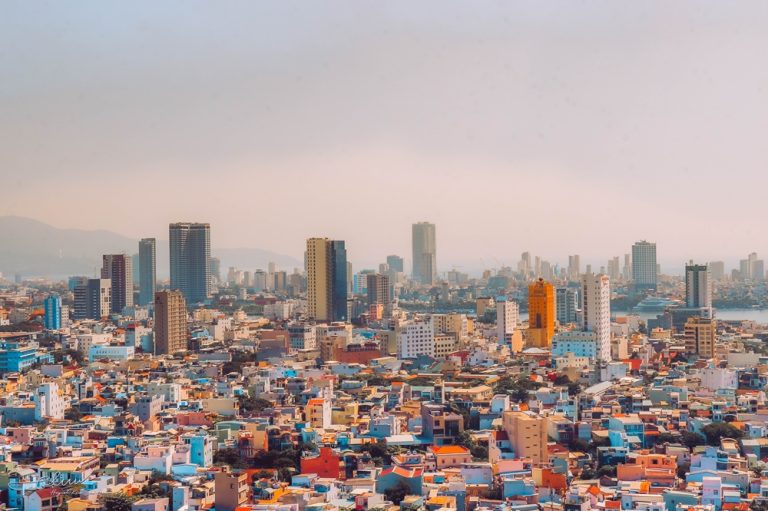
Where to Stay in Da Nang
Choosing where to stay in Da Nang largely depends on whether you want to prioritise the beach, the riverfront or a quieter resort-style setting. For most first-time visitors, My Khe Beach is the easiest all-round base thanks to its combination of beach access, restaurants, cafés and convenient transport. The Han River suits travellers who want to stay closer to the city centre and nightlife, while Son Tra Peninsula and Non Nuoc Beach are better choices if you prefer a calmer stay away from the busiest central areas.
Below are four Da Nang accommodation options in different parts of the city, along with links to browse more hotels in each area if you'd prefer to compare prices, locations and facilities yourself.
If Da Nang is part of a longer journey through the country, our guide to where to stay in Vietnam can also help you choose the best areas and accommodation bases for the rest of your trip.
MY KHE BEACH – BEST FOR FIRST-TIME VISITORS
Staying near My Khe Beach gives you one of the most convenient combinations of beach access and city amenities in Da Nang. Restaurants, cafés and beachfront bars are easy to reach, while the Han River, Dragon Bridge and central attractions remain only a short Grab or taxi ride away. It's the best choice for most first-time visitors who want to enjoy the coast without feeling disconnected from the rest of the city.
Sala Danang Beach Hotel
36-38 Lam Hoanh Street, Phuoc My, Son Tra, Danang, Vietnam — +84 236 3658 555
Sala Danang Beach Hotel is a strong choice for travellers who want to stay close to My Khe Beach while keeping easy access to Da Nang's restaurants, cafés and riverfront attractions. Its location makes it particularly convenient for combining relaxed beach time with sightseeing around the city. Check current rates and availability at Sala Danang Beach Hotel.
Browse More Hotels near My Khe Beach
My Khe has one of Da Nang's largest selections of accommodation, ranging from budget hotels and apartments to upscale beachfront properties, so it's worth comparing locations carefully depending on how close you want to be to the sand.
HAN RIVER – BEST FOR SIGHTSEEING & CITY LIFE
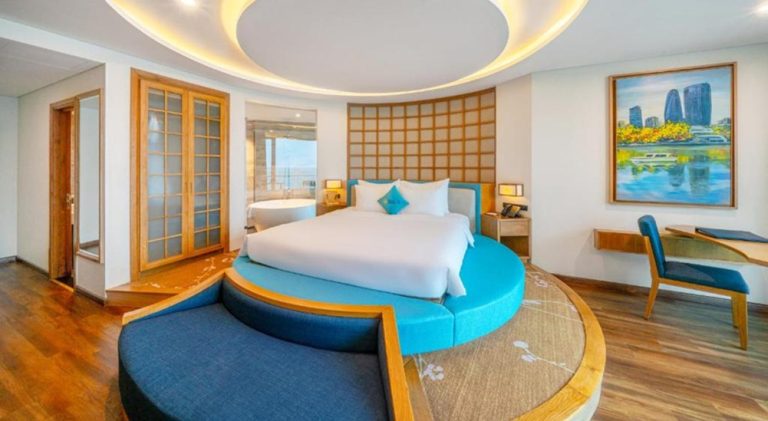
Staying beside the Han River keeps you close to Da Nang's central attractions, restaurants and evening atmosphere. This area is particularly convenient if you want easy access to the Dragon Bridge, riverside promenade, Museum of Cham Sculpture and central markets without basing yourself directly beside the beach. It's also one of the best areas for enjoying Da Nang after dark.
Novotel Danang Premier Han River
36 Bach Dang, Danang, Vietnam — +84 236 3929 999
Novotel Danang Premier Han River is well positioned for travellers who want to stay directly beside the river while remaining close to central Da Nang. The location provides convenient access to the waterfront, restaurants and city attractions, making it a practical base for visitors who prioritise sightseeing and nightlife over immediate beach access. Check current rates and availability at Novotel Danang Premier Han River.
Browse More Hotels near the Han River
Compare accommodation along the Han River if you want to stay close to Da Nang's central sights, illuminated bridges and evening atmosphere while remaining within easy reach of the beach by taxi or Grab.
SON TRA PENINSULA – BEST FOR A QUIETER COASTAL STAY
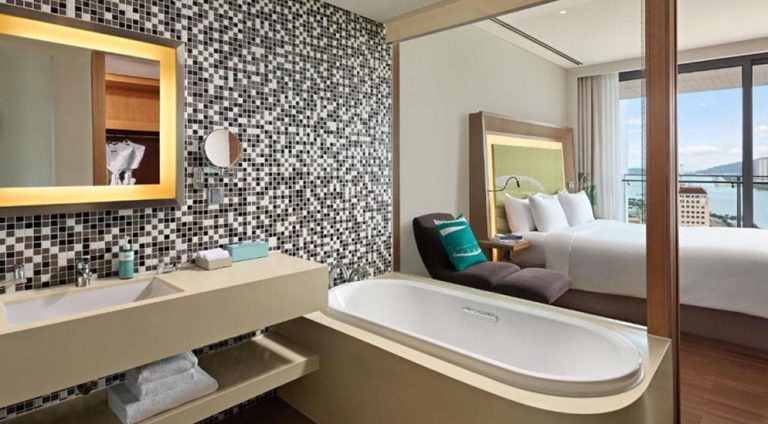
The Son Tra Peninsula side of Da Nang is a good choice if you want a quieter coastal base while remaining reasonably close to the city. The area provides easy access to Son Tra's forested roads, Linh Ung Pagoda and the Lady Buddha, while the beaches and restaurants around the northern end of the city remain close at hand.
voco Ma Belle Danang by IHG
168 Vo Nguyen Giap Street, 55000 Danang, Vietnam — +84 236 3939 969
voco Ma Belle Danang by IHG provides a comfortable coastal base for travellers who want to stay near Son Tra while still having convenient access to Da Nang's beachside restaurants and city attractions. It's particularly suitable if you plan to spend time exploring the peninsula but don't want to stay far from the main urban area. Check current rates and availability at voco Ma Belle Danang by IHG.
Browse More Hotels near Son Tra Peninsula
Son Tra offers a good mix of beachside hotels and quieter accommodation, making it worth comparing options if you want easier access to the peninsula while staying away from Da Nang's busiest central areas.
NON NUOC BEACH – BEST FOR RESORTS & RELAXATION
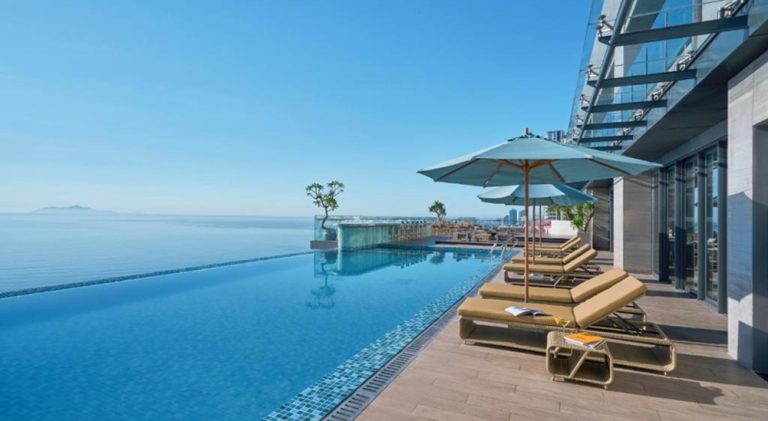
Non Nuoc Beach is the strongest choice if your priority is a peaceful resort-style stay rather than being in the centre of Da Nang. The area is quieter and more spread out, with upscale beachfront properties and easy access to the Marble Mountains. The trade-off is distance: you'll rely more heavily on taxis or Grab when heading into central Da Nang.
Naman Retreat
Truong Sa street, Hoa Hai ward, Ngu Hanh Son district, Danang, Vietnam — +84 236 3959 888
Naman Retreat is designed for travellers looking for a more secluded and relaxing stay along Da Nang's southern coastline. Its location near Non Nuoc Beach and the Marble Mountains makes it particularly appealing for couples and travellers who want a resort atmosphere while keeping Central Vietnam's major attractions within reach. Check current rates and availability at Naman Retreat.
Browse More Hotels near Non Nuoc Beach
Non Nuoc has some of Da Nang's most relaxing beachfront accommodation, making it particularly worth comparing options if you prefer resort facilities, quieter surroundings and easy access to the Marble Mountains.
Browse All Hotels in Da Nang
Still not sure which area suits you best? Compare hotels across Da Nang to find the location, facilities and price that work best for your stay.
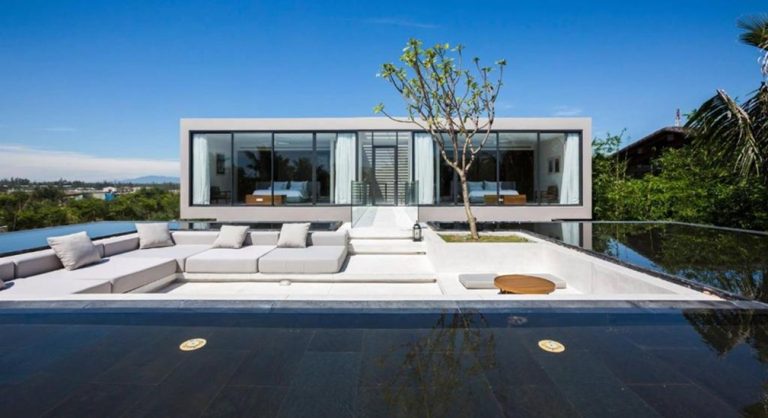
How Many Days Do You Need in Da Nang?
For most first-time visitors, three days in Da Nang is a good starting point. That gives you enough time to explore the city's main attractions, spend some time at the beach and enjoy Da Nang's food and evening atmosphere without trying to squeeze everything into a single day.
How long you actually need depends on what role Da Nang plays in your Central Vietnam itinerary. If you're mainly interested in the city itself, two or three days may be plenty. If you want to use Da Nang as a base for places such as Hoi An, Hue, My Son Sanctuary and Ba Na Hills, four or five days—or longer—becomes much more useful.
Is One Day in Da Nang Enough?
One day is enough for a taste of Da Nang, but you'll need to be selective. You could explore the Marble Mountains in the morning, spend part of the afternoon around My Khe Beach and the Han River, then see the Dragon Bridge and riverside area after dark.
What you shouldn't try to do is combine Da Nang's main city attractions with several major excursions in the same day. Places such as Ba Na Hills, Hoi An and Hue deserve considerably more time than a hurried stop simply to tick them off a list.
Two Days in Da Nang
With two days in Da Nang, you can experience considerably more of the city itself. Use one day for the Marble Mountains, beaches and central attractions, then devote the second to the Son Tra Peninsula, Linh Ung Pagoda and the Lady Buddha before returning to the Han River for the evening.
Two days works particularly well if Da Nang is one stop on a longer Vietnam itinerary and you're planning to stay separately in Hoi An rather than visiting it as a day trip.
Three Days in Da Nang
Three days is what we'd recommend for most first-time visitors. You'll have enough time to see the main Da Nang attractions without rushing, enjoy the beach properly and still have room for one major excursion such as Ba Na Hills, Hoi An or My Son Sanctuary.
It also gives you some flexibility. Da Nang isn't a destination where every hour needs to be filled with sightseeing. Spending a few hours at My Khe Beach, lingering over Central Vietnamese food or walking beside the Han River after dark is part of experiencing the city rather than time that needs to be filled with another attraction.
Four or Five Days in Da Nang
If you have four or five days in Da Nang, the city becomes an excellent base for exploring Central Vietnam. You can comfortably devote two or three days to Da Nang itself and use the remaining time for some of the day trips we've covered above.
For example, you could spend a full day at Ba Na Hills, visit Hoi An during the afternoon and evening, or travel north across the Hai Van Pass to Hue. My Son Sanctuary can also be combined with other sights south of Da Nang depending on how you organise your transport.
Staying longer makes particular sense if you don't want to change hotels repeatedly. Da Nang's central location allows you to explore much of the surrounding region while returning to the same accommodation each evening.
Our recommendation: allow three days if Da Nang is one stop on a longer journey through Vietnam, or four to five days if you want to use the city as your main base for exploring Central Vietnam. If you're also staying separately in Hoi An and Hue, you can comfortably keep the Da Nang portion of your itinerary shorter.
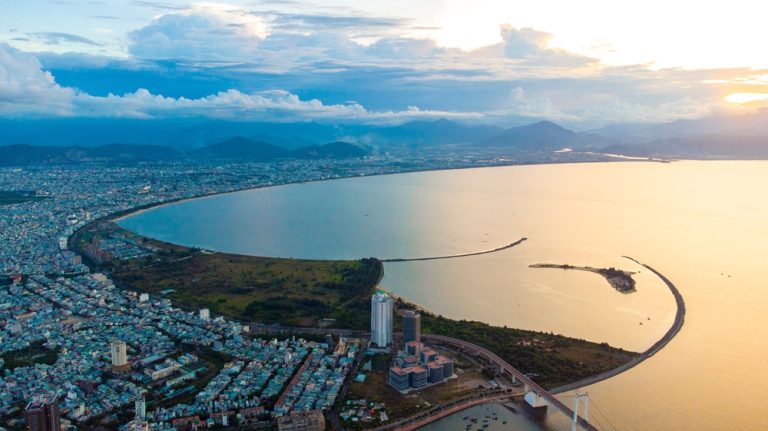
Best Time to Visit Da Nang
The best time to visit Da Nang is generally from February to May, when the weather is typically warm and relatively dry without the more intense heat that arrives later in the year. These months work particularly well if you want to combine sightseeing around the city with time on the beach and day trips across Central Vietnam.
Da Nang's weather doesn't follow exactly the same pattern as Hanoi or Ho Chi Minh City. Central Vietnam has its own seasonal rhythm, so conditions here can be quite different from those elsewhere in the country at the same time of year. If you're travelling through several regions, our Vietnam weather and season guide will help you compare conditions across the country when planning your route.
February to May: The Best Overall Time to Visit Da Nang
For most travellers, February through May offers the best balance. Rainfall generally decreases as Da Nang moves out of its wetter months, temperatures become increasingly warm and conditions are usually comfortable for exploring attractions such as the Marble Mountains, Son Tra Peninsula and the city centre.
Beach conditions also become increasingly appealing during this period. By March and April, warm days make My Khe and Da Nang's other beaches an easy part of your itinerary, while sightseeing remains more comfortable than during the hottest part of summer.
June to August: Hot, Sunny and Good for the Beach
June, July and August can be excellent months if beach time is your main priority. Expect hot temperatures, plenty of humidity and strong sunshine, particularly around the middle of the day. Sea conditions can be inviting, and this is a popular period for enjoying Da Nang's long coastline.
The downside is the heat. Exploring exposed attractions such as the Marble Mountains or My Son Sanctuary can become uncomfortable during the middle of the day, so early mornings and later afternoons are much better for active sightseeing. Sunscreen, water and regular breaks aren't optional extras during the hottest weather.
Summer is also a busy domestic travel period in Vietnam, so popular beaches, attractions and hotels can be considerably busier than you might expect if you're judging the season purely by international visitor numbers.
September to January: Da Nang's Wetter Months
Conditions become less predictable from around September as Central Vietnam enters its wetter part of the year. October and November are particularly prone to heavy rainfall, and prolonged downpours can interfere with beach days, sightseeing and excursions around the region.
This is also the period when tropical storms and typhoons can affect Central Vietnam. That doesn't mean every trip during these months will be disrupted, but travellers should allow more flexibility and pay attention to local weather forecasts, particularly when planning boat trips, mountain excursions or journeys along the coast.
December and January can still bring rain and cloudier conditions, while temperatures are cooler than during summer. Da Nang remains perfectly visitable, particularly if beaches aren't the main reason for your trip, but this isn't the period I'd choose specifically for a sunshine-focused coastal holiday.
When Is the Best Time for Da Nang's Beaches?
If your priority is swimming and spending time on My Khe Beach, Non Nuoc Beach and the surrounding coastline, roughly March through August generally offers the strongest combination of warmth and drier weather. The middle of summer brings the hottest conditions, while March to May provides a more comfortable compromise between beach weather and sightseeing.
Whatever month you visit, treat sea conditions separately from the weather forecast. A sunny day doesn't automatically mean the water is safe for swimming. Pay attention to beach flags and lifeguard instructions, particularly when waves or currents are strong.
When Would We Visit Da Nang?
If we could choose freely, March or April would be our first choice. You have a strong chance of warm beach weather, conditions are generally favourable for exploring the city and surrounding attractions, and you avoid some of the most intense summer heat.
That timing is especially useful for a trip combining Da Nang with Hoi An, Hue and My Son Sanctuary, where you'll probably spend considerably more time walking outdoors than you would on a simple beach holiday.
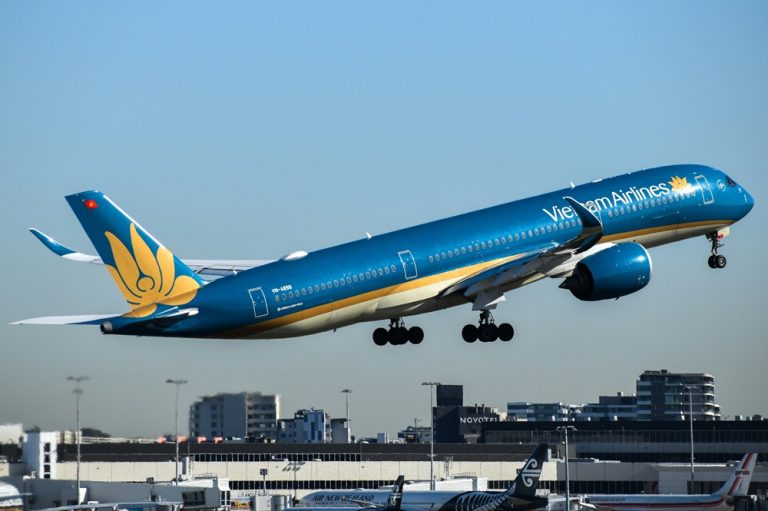
How to Get to Da Nang
Da Nang is one of the easiest cities to reach in Central Vietnam. The city has its own international airport, sits directly on Vietnam's main north-south railway and has frequent road connections with destinations throughout the region. Whether you arrive by plane, train or bus will largely depend on where Da Nang falls within your Vietnam itinerary.
If Da Nang is your first stop in the country, our guide to reaching Vietnam covers the main international gateways and transport options for getting into the country before continuing to Da Nang.
Getting to Da Nang by Plane
Da Nang International Airport (DAD) is by far the quickest arrival point for most travellers coming from elsewhere in Vietnam or directly from another country. Unlike airports located far outside many major cities, Da Nang's airport is only a few kilometres from the city centre, making the onward journey to your hotel relatively straightforward.
Domestic flights connect Da Nang with major Vietnamese destinations including Hanoi and Ho Chi Minh City, while international services connect the city with a number of destinations around Asia. Routes and schedules change, so check current connections when planning your trip rather than assuming a particular international service operates year-round.
From the airport, taxis and ride-hailing services are the simplest options for reaching the city centre or the beach areas around My Khe. Because distances are relatively short, you can often go from collecting your luggage to reaching your hotel considerably faster than at Vietnam's larger metropolitan airports.
For current passenger information and airport services, check the official Da Nang International Airport website.
Getting to Da Nang by Train
Arriving by train is slower than flying, but it's also one of the most interesting ways to reach Da Nang. The city sits on Vietnam's main north-south railway, with services connecting it to destinations including Hanoi, Hue and Ho Chi Minh City.
The most memorable stretch is immediately north of Da Nang, where the railway crosses the mountains around the Hai Van Pass. Trains follow the coastline high above the sea rather than using the road tunnel through the mountains, providing spectacular views across bays, forested slopes and the Central Vietnamese coastline.
If time isn't your main constraint, the train can therefore be more than transportation. It allows you to experience part of the landscape that you'd completely miss by flying, while overnight services can also save you a hotel night on longer journeys.
If you're considering trains as part of a longer journey through the country, our Vietnam transport guide explains the main ways to travel between destinations and when trains, buses, flights or private transfers make the most sense.
Getting to Da Nang by Bus
Long-distance buses and sleeper buses connect Da Nang with destinations throughout Vietnam. They can be inexpensive and useful for routes without convenient rail connections, although journey quality varies considerably between operators and vehicle types.
For shorter regional journeys, buses and shared transfers can make sense from places such as Hue and Hoi An. For very long routes from Hanoi or Ho Chi Minh City, however, I'd compare the price and journey time carefully against trains and domestic flights before committing to many hours on a bus.
How to Get from Hanoi to Da Nang
Da Nang lies a considerable distance south of Hanoi, so flying is the fastest option if your priority is saving time. Direct domestic flights make it possible to move between the two cities without sacrificing an entire travel day.
The train is much slower but offers a completely different experience. Overnight services allow you to cover much of the distance while sleeping, and approaching Da Nang by rail eventually brings you through the dramatic coastal scenery north of the city.
If Da Nang is part of a north-to-south journey, our Hanoi city guide can help you plan the northern end of your route before travelling down the coast.
How to Get from Ho Chi Minh City to Da Nang
From Ho Chi Minh City, flying is again the quickest and most practical choice for travellers with limited time. The overland distance is substantial, making buses and trains much more significant commitments.
Travelling by train can still be worthwhile if the journey itself is part of your Vietnam experience, particularly if you're making intermediate stops rather than travelling directly between the two cities. If you're building Da Nang into a longer south-to-north itinerary, our guide to exploring Ho Chi Minh City can help you plan the southern portion of the trip.
How to Get from Hoi An to Da Nang
Hoi An is only around 30 km south of Da Nang, making travel between the two destinations straightforward. Taxis, Grab and private transfers are the easiest options, and the journey generally takes less than an hour depending on traffic and exactly where you're staying.
Because the two cities are so close, you don't necessarily need to change accommodation. You can stay in Da Nang and visit Hoi An as a day trip, although spending at least one night in Hoi An is worthwhile if you want to experience the Ancient Town after most daytime visitors have left.
How to Get from Hue to Da Nang
Hue lies north of Da Nang, with the Hai Van Pass separating the two cities. You can travel between them by train, bus or private transfer, but this is one journey where choosing the most scenic option can genuinely improve the experience.
The railway follows the mountains above the coast and offers superb views, while a private road transfer can travel over the Hai Van Pass rather than through the faster tunnel. If you choose a private transfer specifically for the scenery, confirm beforehand that the driver will take the pass road and allow time for stops at the viewpoints.
Da Nang's location between Hue and Hoi An is one of its greatest advantages. Rather than treating the city as an isolated beach destination, it can function as a convenient base for exploring a substantial part of Central Vietnam.
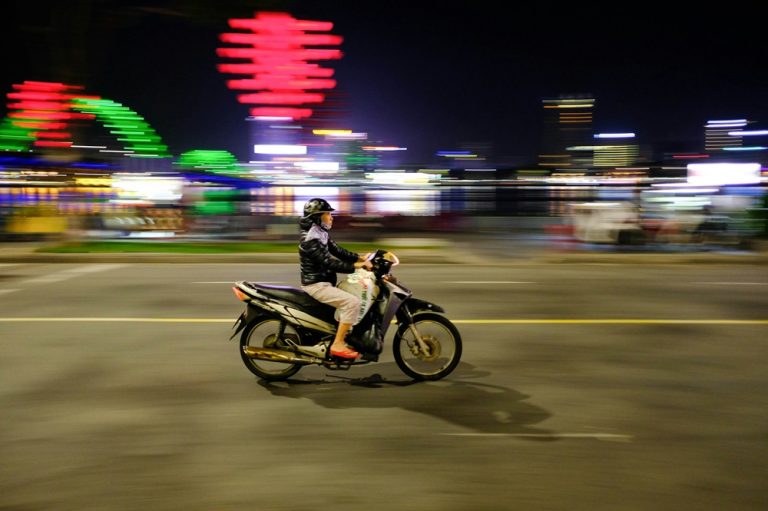
Getting Around Da Nang
Da Nang is relatively easy to get around, but its attractions are spread across a surprisingly large area. The Han River, My Khe Beach, Marble Mountains and Son Tra Peninsula are all in different parts of the city, so you'll probably use a combination of walking and short vehicle journeys rather than exploring entirely on foot.
If Da Nang is one stop on a longer trip, our guide to travelling around Vietnam covers trains, buses, domestic flights and other transport options for moving between destinations around the country.
Walking Around Da Nang
Walking works well within individual areas. The streets around the Han River are easy to explore on foot, and you can comfortably walk between restaurants, cafés and the beach if you're staying around My Khe.
What doesn't work particularly well is treating Da Nang as an entirely walkable city. The distances between major areas quickly add up, while heat and humidity can make even relatively modest walks uncomfortable during the middle of the day.
A better approach is to use a car or motorbike for longer journeys and then explore each neighbourhood or attraction on foot once you arrive.
Using Grab and Taxis in Da Nang
For most visitors, Grab is one of the easiest ways to get around Da Nang. The app lets you request a ride and see the fare before travelling, which removes much of the uncertainty involved in negotiating transport in an unfamiliar city.
Grab is particularly convenient for short journeys between the airport, Han River and My Khe Beach, as well as trips to attractions farther from the centre. Depending on availability, you can choose between car and motorbike services.
If you plan to use it, download the official Grab app and set up your account before you need your first ride.
Conventional taxis are also widely available. They're useful if you don't want to use an app or already find a taxi waiting outside your hotel, restaurant or attraction. As anywhere, use an established taxi company and make sure the meter is being used or agree on the fare beforehand if appropriate.
Renting a Motorbike or Scooter in Da Nang
Renting a motorbike gives you much more freedom, particularly if you want to explore the coastline, Marble Mountains or areas outside central Da Nang on your own schedule. Rental shops are common, and many hotels can also help arrange a bike.
That freedom comes with considerably more responsibility. Da Nang traffic can be intimidating if you're unfamiliar with riding in Vietnam, and you should only rent a motorbike if you're legally permitted to ride, have the appropriate licence and insurance coverage, and are genuinely comfortable in local traffic.
Take particular care when exploring Son Tra Peninsula. Roads become steep and winding as you climb into the reserve, weather can change quickly, and access restrictions can apply to certain types of motorbike on some routes. Check current local rules before setting out rather than assuming your rental bike can be taken everywhere on the peninsula.
Public Transport in Da Nang
Public buses operate in and around Da Nang and can be useful if you're travelling on a tight budget. However, they generally offer less flexibility than Grab or taxis when you're trying to visit several attractions in different parts of the city during the same day.
For most short-stay visitors, public transport is therefore more of a budget option than the easiest way to sightsee. If you're staying longer and aren't in a hurry, it becomes more practical once you've worked out the routes relevant to your accommodation and the places you want to visit.
Getting to Marble Mountains and Son Tra Peninsula
Marble Mountains lies south of central Da Nang and is straightforward to reach by Grab, taxi or motorbike. If you don't want to organise transport yourself, it's also included in many guided excursions around Da Nang and Hoi An.
Son Tra Peninsula requires a little more planning because its attractions are scattered across a much larger mountainous area. Linh Ung Pagoda and the Lady Buddha are relatively easy to reach, but exploring farther into the peninsula involves steep, winding roads and greater distances.
If your main reason for visiting Son Tra is wildlife spotting—particularly the red-shanked douc langurs—a guided excursion can make considerably more sense than simply driving around hoping to find them. Local guides know the areas where the animals are commonly observed and can help you watch them without disturbing the wildlife.
Overall, walking plus Grab is the simplest transport combination for most first-time visitors to Da Nang. You'll retain the freedom to explore individual areas on foot without needing to rent a vehicle simply to travel between them.

Da Nang Travel Costs
Quick currency conversion: Vietnam uses the Vietnamese dong (VND). As a rough guide, 25,000 VND is about US$1, while 30,000 VND is about €1. Exchange rates fluctuate, so use these figures for quick mental calculations rather than exact conversions.
Da Nang remains a relatively affordable destination, particularly when it comes to Vietnamese food, local transport and many of the city's main attractions. You can eat extremely well for very little if you stick to local restaurants, while travellers looking for beachfront hotels, cocktails and organised day trips can easily spend considerably more.
Rather than giving you only a vague daily budget, the table below shows what everyday travel expenses in Da Nang actually cost. Prices vary between neighbourhoods and establishments, particularly around the beachfront and tourist areas, so treat these as realistic planning estimates rather than fixed prices.
👉 On smaller screens, slide the table to the left to see all columns.
| Expense | Typical Price | What to Expect |
|---|---|---|
| Com ga (chicken and rice) | 35,000–60,000 VND | Simple local restaurant or street-food stall |
| Pho | 40,000–70,000 VND | Standard bowl at a local restaurant |
| Mi Quang | 35,000–60,000 VND | One of Central Vietnam's classic noodle dishes |
| Banh mi | 20,000–40,000 VND | Street stall or small local shop |
| Budget local restaurant meal | 40,000–100,000 VND | One main dish, excluding alcohol |
| Mid-range restaurant meal | 150,000–350,000 VND | Sit-down restaurant, depending heavily on cuisine |
| Upscale restaurant meal | 400,000–1,000,000+ VND | Fine dining, hotel restaurants or premium seafood can cost considerably more |
| Vietnamese coffee | 20,000–45,000 VND | Local café; speciality and beachfront cafés cost more |
| Cappuccino | 30,000–75,000 VND | Modern or international-style café |
| Local beer | 15,000–40,000 VND | Shop, local restaurant or inexpensive bar; tourist bars charge more |
| Cocktail | 100,000–200,000 VND | Beach bar, cocktail bar or rooftop venue |
| Bottled water | 5,000–10,000 VND | Convenience store or supermarket |
| Mangoes | 20,000–40,000 VND/kg | Market or supermarket; seasonal variation applies |
| Bananas | 15,000–25,000 VND/kg | Market or supermarket |
| Simple packaged snack | 10,000–30,000 VND | Convenience store or supermarket |
| Short GrabBike ride | 15,000–30,000 VND | Short journey within the central city; demand affects fares |
| Marble Mountains | 40,000 VND | Thuy Son admission; elevator and Am Phu Cave cost extra |
| Museum of Cham Sculpture | 60,000 VND | General admission |
| My Khe Beach | Free | No admission fee |
| Son Tra Peninsula & Lady Buddha | Free | No general admission fee |
| Ba Na Hills | 1,000,000 VND | 2026 non-resident adult admission; optional food and extras cost more |
| My Son Sanctuary | 150,000 VND | 2026 international visitor admission |
| Hoi An Ancient Town | 120,000 VND | 2026 international visitor ticket |
One of the biggest advantages of Da Nang is that many of its signature experiences cost nothing. My Khe Beach, the Dragon Bridge, Linh Ung Pagoda, the Lady Buddha, Son Tra Peninsula and the Hai Van Pass can all be enjoyed without paying a major admission fee. Your sightseeing budget can therefore remain surprisingly low unless you add more expensive attractions and organised excursions.
Ba Na Hills is the obvious exception. At around 1,000,000 VND for adult admission in 2026, it can cost more than several days of eating at local restaurants. Treat it as a separate big-ticket excursion rather than assuming every sightseeing day in Da Nang will cost that much.
How Much Should You Budget Per Day in Da Nang?
A budget-conscious traveller staying in inexpensive accommodation, eating mainly Vietnamese food and using GrabBike or walking can realistically keep everyday spending fairly low. A more comfortable trip with a good hotel, restaurant meals, Grab cars, drinks and paid attractions will naturally increase the total considerably.
As a rough guide, 600,000–800,000 VND per person per day can support a fairly budget-conscious trip before major excursions, while around 1,500,000–2,000,000 VND per day provides substantially more room for comfortable accommodation, restaurant meals, transport and sightseeing. Beachfront resorts, upscale dining and private excursions can push daily spending far beyond these figures.
The important distinction is that your daily spending won't necessarily be consistent. You might have an inexpensive day enjoying My Khe Beach, Son Tra Peninsula and local food followed by a considerably more expensive day at Ba Na Hills or on an organised excursion to Hue.
For a broader picture of accommodation, transport, food and sightseeing expenses across the country, our breakdown of what a Vietnam trip really costs will help you budget for Da Nang as part of a longer journey.

Practical Da Nang Travel Tips
Da Nang is an easy city to travel in, but a few practical details can make your visit considerably smoother. If Da Nang is part of a longer journey, our practical advice for travelling in Vietnam covers money, connectivity, transport, etiquette and other useful information for the rest of the country.
Carry Some Cash
Cards are accepted at many hotels, larger restaurants, shopping centres and more upmarket businesses, but cash remains useful in Da Nang. Small restaurants, street-food stalls, markets and local vendors may prefer or require Vietnamese dong, so don't rely entirely on your cards or phone.
ATMs are widely available around the city. When withdrawing money, check the fee displayed by the machine before confirming the transaction, as charges and withdrawal limits vary between banks. If an ATM or card terminal offers to convert the transaction into your home currency, choosing to pay in Vietnamese dong will generally allow your own bank or card provider to handle the conversion instead.
Stay Connected with a SIM or eSIM
Mobile data is particularly useful in Da Nang because you'll probably use your phone for Grab, navigation, restaurant searches and communicating with accommodation or tour providers. Physical Vietnamese SIM cards are readily available, while an eSIM for international travel can be more convenient if your phone supports one and you want to arrange connectivity before arriving.
Whichever option you choose, having mobile data available from the beginning of your trip makes getting from the airport and moving around Da Nang considerably easier.
Don't Forget Travel Insurance
Da Nang itself is relatively straightforward to visit, but activities such as motorbike riding, hiking, swimming and excursions around Central Vietnam introduce the same risks you'd encounter elsewhere while travelling. A suitable travel insurance policy can provide protection for unexpected medical expenses, cancellations and other covered problems while you're away.
If you're planning to rent a motorbike, check the policy conditions carefully. Simply having travel insurance doesn't automatically mean you're covered while riding: licensing requirements, engine-size restrictions and other conditions can apply.
Pay Attention to Beach Conditions
Da Nang's beaches can look inviting even when swimming conditions aren't ideal. Pay attention to warning flags and lifeguard instructions, and don't assume calm-looking weather means currents are harmless.
This matters particularly during periods of rougher weather and stronger surf. If warnings are in place, enjoy the beach from the sand rather than treating them as optional advice.
Plan Around the Heat
Central Vietnam can become extremely hot and humid, particularly around the middle of the day. Attractions involving significant walking or climbing—such as the Marble Mountains, My Son Sanctuary and parts of Son Tra Peninsula—are much more comfortable early in the morning.
Carry water, use sun protection and don't underestimate how quickly repeated sightseeing outdoors can become exhausting. Our packing guide for a trip through Vietnam covers the clothing and practical items worth bringing for the country's climate and travel conditions.
Take Care in Da Nang Traffic
Traffic in Da Nang is generally less overwhelming than in Vietnam's largest cities, but crossing busy roads can still take some adjustment. Move predictably, watch traffic carefully and avoid sudden changes of direction when crossing.
If you're considering renting a scooter, don't treat Da Nang as the place to learn simply because motorbikes are inexpensive and widely available. Only ride if you're experienced, appropriately licensed and properly insured.
Dress Respectfully at Pagodas and Temples
Linh Ung Pagoda, the Marble Mountains and several other attractions in and around Da Nang are active religious sites rather than simply tourist landmarks. Cover your shoulders and knees when entering sacred spaces, keep your voice down and follow any instructions displayed at the site.
Remove hats where appropriate and avoid climbing onto religious structures or positioning yourself disrespectfully around statues simply for photographs.
English Is Useful, but Not Universal
You'll encounter plenty of English in hotels, tourist restaurants and major attractions, but you shouldn't expect everyone you meet to speak it. Translation apps can be extremely useful in local restaurants, markets and when communicating with drivers or smaller businesses.
Learning a few Vietnamese words is also appreciated. Even simple greetings and a thank you can make everyday interactions considerably warmer.
Electricity and Plug Types
Vietnam uses a 220V electricity supply at 50Hz. You'll encounter several socket configurations, commonly accepting two-pin plugs, and hotel sockets aren't always consistent from one property to another.
A universal travel adapter is therefore useful, particularly if you're travelling through several countries. Check that your devices support 220V before connecting them; most modern phone and laptop chargers do, but not every electrical appliance is automatically dual-voltage.
Protect the Wildlife on Son Tra Peninsula
Son Tra Peninsula is not simply another Da Nang sightseeing attraction. Its forests provide critical habitat for wildlife including the critically endangered red-shanked douc langur, and visitors have a responsibility not to interfere with the animals they're hoping to see.
Never feed monkeys or langurs, keep your distance, avoid loud noises and don't leave the road or established areas simply to get closer for a photograph. If wildlife spotting is an important part of your visit, using a responsible local guide is a much better option than chasing animals through the forest.
Most importantly, don't try to cram every Da Nang attraction into a rigid schedule. The city works particularly well because you can combine sightseeing with beaches, food and slower evenings beside the Han River. Leaving some flexibility in your itinerary also makes it much easier to adjust plans around heat, rain and changing sea conditions.
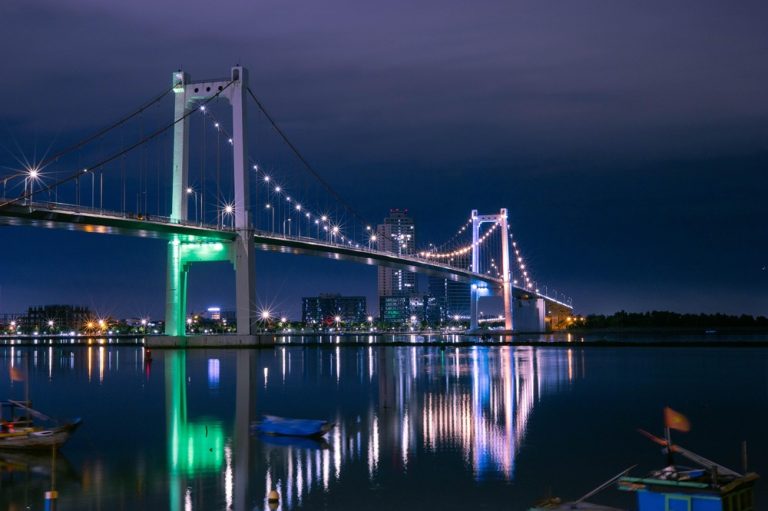
Final Thoughts on Things to Do in Da Nang
Da Nang sometimes gets treated as little more than the airport for Hoi An, but that seriously undersells the city. Spend a few days here and you'll find one of Vietnam's most versatile destinations: long beaches in one direction, forested mountains in another, a lively riverfront through the centre and some of Central Vietnam's most important cultural sites within easy reach.
What makes Da Nang particularly appealing is the variety. You can climb through the caves and pagodas of the Marble Mountains in the morning, relax on My Khe Beach in the afternoon and watch the Dragon Bridge light up after dark. Another day can take you into the forests of Son Tra in search of red-shanked douc langurs, while Hoi An, Hue, My Son Sanctuary, Ba Na Hills and the Hai Van Pass open up an entirely different collection of experiences beyond the city.
That combination earns Da Nang a genuine place among the experiences worth seeking out across Vietnam. It isn't simply a beach break between more famous destinations; it's somewhere that brings together many of the things that make travelling through the country so rewarding.
Its location also makes Da Nang exceptionally easy to incorporate into a longer journey. If you're still deciding how to connect the country's different regions, our suggested routes through Vietnam can help you work out how much time to give Central Vietnam and where Da Nang fits into the wider trip.
Travelling farther north brings a completely different atmosphere, and our guide to experiencing Vietnam's capital covers the food, history, neighbourhoods and sights that make Hanoi such a rewarding contrast to the central coast. Heading south instead, you'll find another side of the country entirely among the highlights of Ho Chi Minh City and the energy of Vietnam's largest metropolis.
But don't rush away from Da Nang simply because those better-known destinations are waiting. Give the city enough time for the beaches, food, mountains and riverfront as well as the headline attractions. Da Nang is at its best when you stop treating it as a gateway to somewhere else and allow it to become part of the journey itself.
Explore More of Vietnam
Da Nang is only one part of a much bigger Vietnam journey. If you're planning to explore more of the country, continue with these WorldlyRoaming destination guides:
- Things to Do in Hanoi – temples, street food and the energy of Vietnam's capital.
- Things to Do in Ninh Binh – limestone landscapes, river journeys and countryside scenery.
- Things to Do in Hoi An – Ancient Town, local food and the surrounding countryside.
- Things to Do in Nha Trang – beaches, island hopping, cultural sights and coastal experiences.
- Things to Do in Ho Chi Minh City – history, food and the energy of southern Vietnam.
For the bigger picture, start with our Things to Do in Vietnam guide.
Frequently Asked Questions About Da Nang
- Is Da Nang worth visiting?
Yes. Da Nang is worth visiting for its combination of beaches, mountains, cultural attractions, food and easy access to some of Central Vietnam's most important destinations. My Khe Beach, the Marble Mountains, Son Tra Peninsula, Linh Ung Pagoda and the Han River give you plenty to experience within Da Nang itself, while Hoi An, Hue, My Son Sanctuary, Ba Na Hills and the Hai Van Pass are all accessible from the city. - What is Da Nang best known for?
Da Nang is best known for My Khe Beach, the Marble Mountains, Son Tra Peninsula, the Lady Buddha and Dragon Bridge. The city is also an important base for exploring Central Vietnam and is close to Hoi An Ancient Town, Hue, My Son Sanctuary, Ba Na Hills and the Hai Van Pass. - What are the best things to do in Da Nang?
Some of the best things to do in Da Nang include exploring the Marble Mountains, relaxing on My Khe Beach, visiting Son Tra Peninsula and Linh Ung Pagoda, seeing the Lady Buddha, walking beside the Han River, visiting the Museum of Cham Sculpture, trying local food and watching the Dragon Bridge after dark. - How many days do you need in Da Nang?
Three days in Da Nang is a good amount of time for most first-time visitors. It allows you to explore the city's main attractions, enjoy the beach and experience its food and evening atmosphere. Consider four or five days if you also want to use Da Nang as a base for day trips around Central Vietnam. - Is two days enough for Da Nang?
Yes. Two days is enough to see many of Da Nang's highlights if you're not planning several day trips. You could combine the Marble Mountains, beaches and central Da Nang on one day, then explore Son Tra Peninsula, Linh Ung Pagoda and the Lady Buddha on the second. - When is the best time to visit Da Nang?
The best time to visit Da Nang is generally from February to May, when conditions are typically warm and relatively dry without the most intense summer heat. March and April are particularly good choices if you want to combine sightseeing with time on the beach. - What is the rainy season in Da Nang?
Da Nang's wetter period generally runs from around September into January, with October and November particularly prone to heavy rainfall. Tropical storms and typhoons can also affect Central Vietnam during this part of the year, so allow some flexibility if you're travelling during the wet season. - What are the best beaches in Da Nang?
My Khe Beach is the most convenient and best-known beach for most visitors, with plenty of accommodation and restaurants nearby. Non Nuoc Beach is a good alternative for travellers looking for a quieter, more resort-oriented coastal setting, while several smaller beaches can be found around the Son Tra Peninsula. - Can you swim at the beaches in Da Nang?
Yes, swimming is popular at Da Nang's beaches when sea conditions are suitable. Always pay attention to warning flags and lifeguard instructions, however, because currents and waves can become dangerous even when the weather appears pleasant. - Where is the best area to stay in Da Nang?
My Khe Beach is the best area for most first-time visitors because it combines easy beach access with restaurants, cafés and convenient transport into central Da Nang. The Han River is better for city sightseeing and nightlife, while Son Tra and Non Nuoc suit travellers looking for quieter coastal surroundings. - Is Da Nang expensive to visit?
Da Nang can be very affordable. Local dishes such as mi Quang, pho and com ga can often be found for around 35,000–70,000 VND, while several major attractions—including My Khe Beach, Linh Ung Pagoda and Son Tra Peninsula—have no general admission fee. Beachfront resorts, upscale restaurants and organised day trips can increase your budget considerably. - Is Da Nang a walkable city?
Da Nang is walkable within individual neighbourhoods but isn't practical to explore entirely on foot. Attractions are spread across a large area, with significant distances between the Han River, My Khe Beach, Marble Mountains and Son Tra Peninsula. Walking combined with Grab or taxis works well for most visitors. - How do you get around Da Nang without a motorbike?
You don't need to rent a motorbike to explore Da Nang. Walking, Grab cars, GrabBike and conventional taxis make it straightforward to reach most attractions. Private transfers and organised tours are also useful for destinations farther outside the centre. - Does Da Nang have an international airport?
Yes. Da Nang International Airport (DAD) serves domestic and international flights and is located only a few kilometres from central Da Nang. Its convenient location makes Da Nang one of the easiest destinations to reach in Central Vietnam. - Can you visit Hoi An from Da Nang?
Yes. Hoi An is roughly 30 km south of Da Nang and is easy to visit by taxi, Grab, private transfer or organised tour. An afternoon and evening visit works particularly well because you can explore the historic centre during daylight and stay to experience Hoi An's lantern-lit streets after dark. - Can you visit Hue as a day trip from Da Nang?
Yes. Hue can be visited as a full-day trip from Da Nang. The journey takes roughly two hours each way depending on traffic and the route, so allow a full day if you want enough time for the Imperial City and some of Hue's other historic monuments. - Is the Golden Bridge in Da Nang?
The famous Golden Bridge is at Ba Na Hills, in the mountains west of Da Nang rather than in the city centre. Ba Na Hills is one of the most popular day trips from Da Nang and is reached by cable car from the resort's lower station. - Can you visit My Son Sanctuary from Da Nang?
Yes. My Son Sanctuary can be visited as a day trip from Da Nang. The UNESCO-listed archaeological site lies southwest of the city and contains the remains of an important religious centre of the ancient Champa civilisation. - Is Da Nang or Hoi An better to stay in?
It depends on the experience you want. Da Nang is better for beaches, transport connections, modern city amenities and exploring the wider region, while Hoi An offers a smaller, more atmospheric historic setting. Because they're only around 30 km apart, many travellers choose to experience both rather than treating it as an either-or decision. - Is Da Nang good for first-time visitors to Vietnam?
Yes. Da Nang is an excellent destination for first-time visitors because it's relatively easy to navigate, has good transport connections and combines beaches, Vietnamese food, cultural attractions and nature without the intensity of Hanoi or Ho Chi Minh City. Its central location also makes it a convenient base for exploring more of the country. - Is Da Nang good for families?
Yes. Da Nang works well for families thanks to its long beaches, range of accommodation, relatively straightforward transport and mixture of outdoor and cultural attractions. Ba Na Hills, the beaches and easier sections of the Marble Mountains can be particularly appealing, although the heat and numerous steps at some attractions should be considered when travelling with younger children. - Does Da Nang have good nightlife?
Yes, although Da Nang's nightlife is generally more relaxed than the nightlife in Vietnam's largest cities. The Han River area has bars, restaurants and illuminated bridges, while My Khe and the beachfront have beach bars, rooftop venues and places for evening drinks. The Dragon Bridge is one of the city's most popular sights after dark. - Is Da Nang better for beaches or sightseeing?
Da Nang works particularly well because you don't have to choose between the two. My Khe and Non Nuoc provide easy beach access, while the Marble Mountains, Son Tra Peninsula, Museum of Cham Sculpture, pagodas and Han River provide plenty of sightseeing. Major cultural destinations such as Hoi An, Hue and My Son are also within reach.
Travel Resources to Plan, Book & Stay Connected
Use these tools and guides to stay connected abroad, find inspiration for your next trip, and book your flights, stays and gear with confidence.
Disclosure: This article may contain affiliate links. If you make a purchase through a link, I may receive a commission at no extra cost to you. I only share recommendations I believe are genuinely useful, and all opinions are my own. AI was used in this post for research and drafting purposes.

Comment (0)